Reviewed · WARSAW TOURS
Warsaw Communism Private Tour in a Retro Fiat
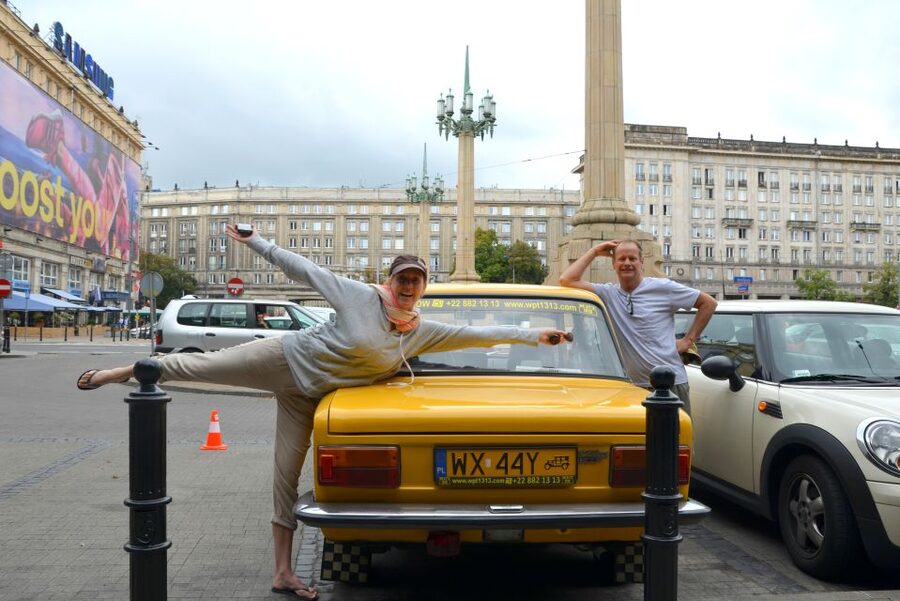
Warsaw’s communist past feels especially vivid from the back seat of a boxy Fiat 125p, the sort of car that once filled Poland’s streets. This private four-hour tour pairs a moving history lesson with major sites, from the Palace of Culture and Science to worker housing and former Party offices.
I like the way the tour connects grand political buildings with ordinary city life. I also like the private format, since your guide can adjust the walking and driving to your interests. The main drawback is simple: the tour costs $105 per person, and much of its value depends on how well your guide brings the subject to life.
Key points at a glance
- Ride in a real Fiat 125p: The historic 1970s or 1980s car gives the tour a sense of place that a standard minibus cannot match.
- See communist Warsaw from several angles: The route links state power, public housing, ministries, and neighborhoods rebuilt after wartime destruction.
- Expect strong English-language guiding: Martin and Max are among the guides named in the experience details, with a focus on clear explanations and questions.
- Enjoy a small Polish tasting: A traditional vodka shot and a Polish doughnut are included during the ride.
- Plan for half driving and half walking: Comfortable shoes matter, though the pace can be adapted to your needs.
- Larger groups use a vintage minivan: Groups of more than four people are transported in a blue historical minivan rather than the Fiat.
Why a vintage Fiat changes the Warsaw history lesson
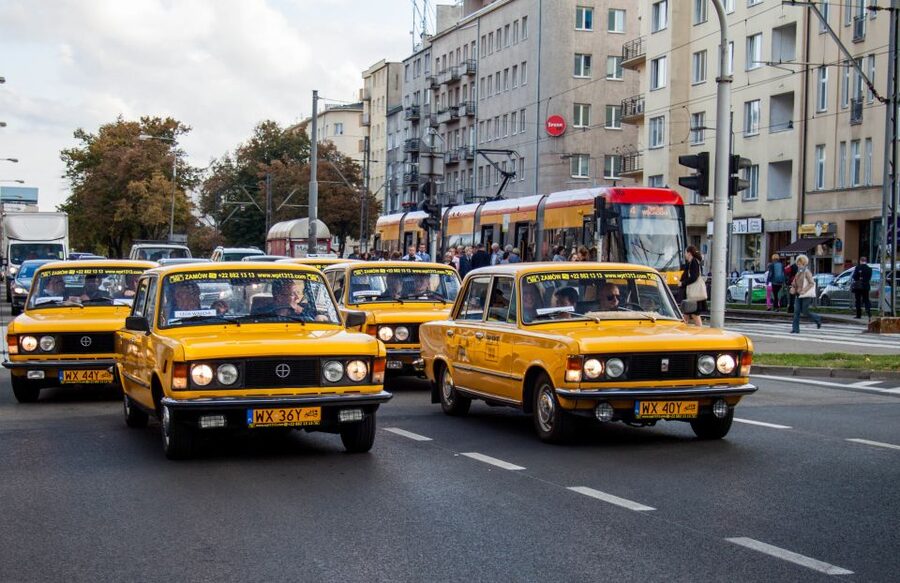
A normal sightseeing bus can show you Warsaw. This tour gives you a small taste of how the city once moved.
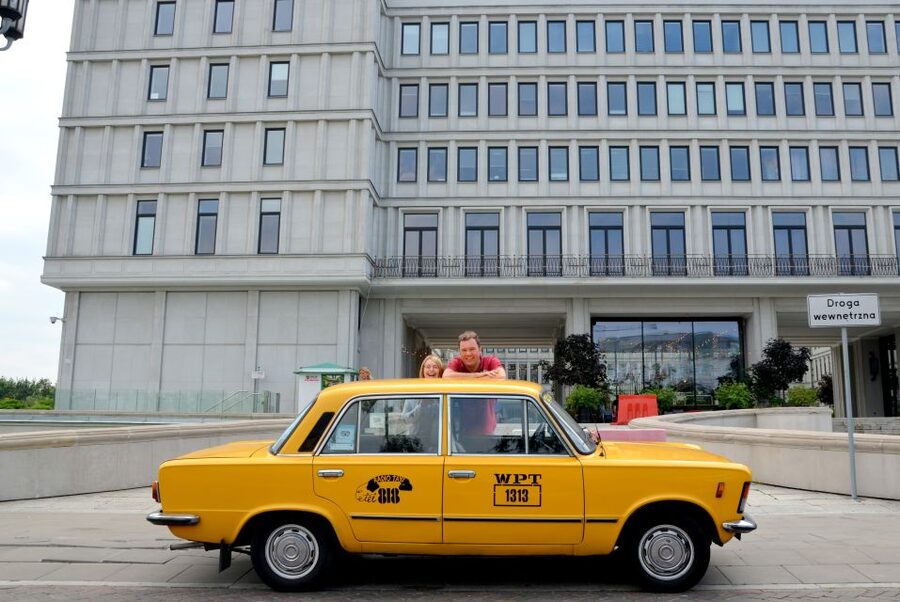
The Fiat 125p was an iconic Polish car during the 1970s and 1980s. Sitting inside a historical vehicle makes the subject less abstract. You are not only hearing about late communist Poland in a classroom-style setting. You are riding through the city in a car closely tied to that period.
The car is part of the attraction, but it is not the whole point. Your professional driver-guide explains how communist rule affected daily life, how the system changed, and what those changes mean for Polish identity today. That broader frame matters, especially if your knowledge of Poland begins and ends with the Cold War label.
The tour is private, so you can ask direct questions instead of waiting for a group to move on. If one building catches your attention, you can ask for more context. The route may shift with traffic, and your agenda can be adjusted around places of particular interest.
You should expect a conversational tour rather than a museum visit. There is no long indoor exhibition or formal lecture listed. The history comes through the guide, the streets, the buildings, and the view from the car window.
A few more Warsaw trips to weigh up
- Private Tour: Warsaw City Sightseeing by Retro Fiat
★ 5.0 · 562 reviews - Warsaw: Warsaw Ghetto Private Walking Tour with Hotel Pickup
★ 4.9 · 369 reviews - Private Tour: Warsaw’s Jewish Heritage by Retro Fiat
★ 5.0 · 208 reviews
Palace of Culture and Science: Warsaw’s unavoidable symbol
The Palace of Culture and Science is the clearest starting point for understanding communist Warsaw. Its huge scale makes an immediate impression, especially when you consider why it was built and how Polish people have viewed it over time.
Your guide explains the construction of the building, shares anecdotes, and discusses its reputation as a gift from Moscow. That phrase sounds generous, but the building’s presence also reflects the power relationship between the Soviet Union and postwar Poland. The palace was not simply another office block. It was a political statement planted in the center of the capital.
You will get time to look at the Stalin-era architecture and hear why the building remains such a loaded symbol. The tour does not treat it as a pretty monument only. It helps you read the structure as part of the political story.
The practical advantage of visiting this site early is that it gives you a visual reference for the rest of the tour. Later, when you see ministries and housing blocks, you can better understand how architecture helped project authority and organize city life.
Do not expect the entire four hours to be spent inside the palace. The experience is built around seeing the building and learning its story as part of a wider drive through Warsaw.
Constitution Square and the housing built for workers
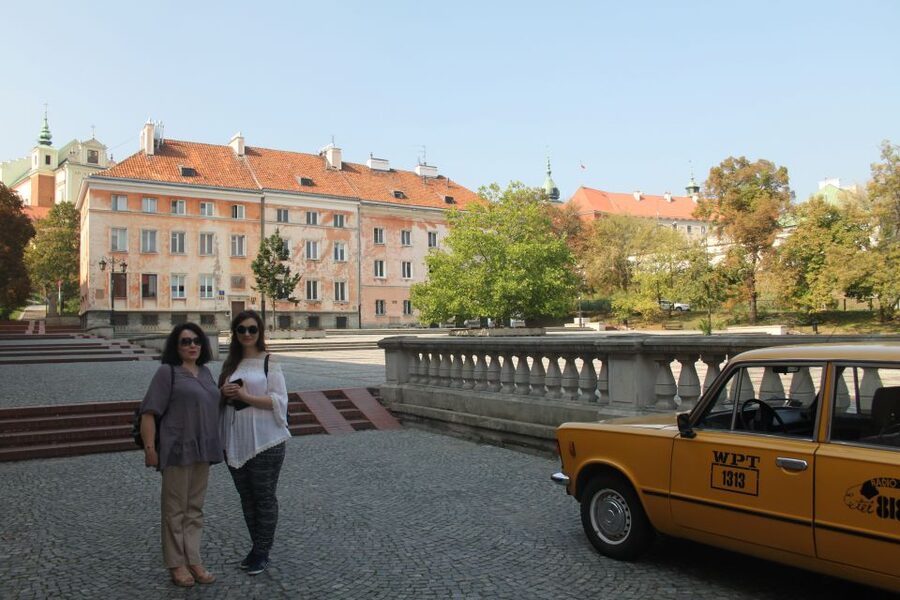
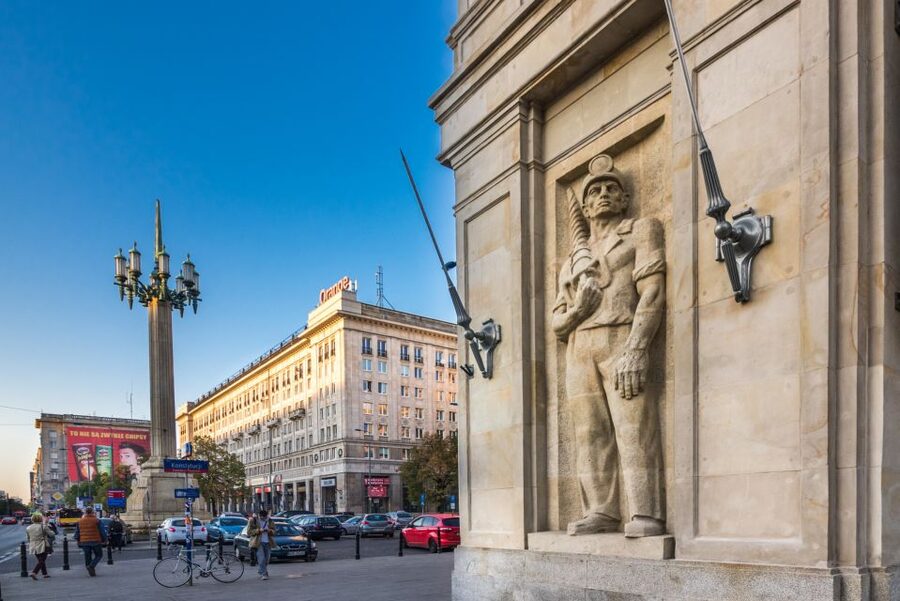
At Constitution Square, the focus shifts from national power to planned urban living.
This Stalin-era district contains representative housing for the working class. The square and surrounding buildings show how communist authorities used architecture to present an image of order, progress, and collective purpose. Large residential projects were not only places to live. They also carried a political message about the kind of society the state claimed to be building.
I find this stop useful because it brings the period down to street level. The Palace of Culture can feel remote and monumental. Housing blocks show how policy affected ordinary residents, families, and neighborhoods.
Your guide explains the architecture and the intended role of the district. Pay attention to the proportions, repeated facades, and broad public spaces. You do not need to be an architecture expert to see that these were planned as more than a collection of private homes.
This is also one of the walking portions of the tour. The complete experience is about half walking and half driving, with a moderate amount of walking. Bring comfortable shoes, and tell your guide if you need the pace or route adjusted.
The ministerial district and the former Party headquarters
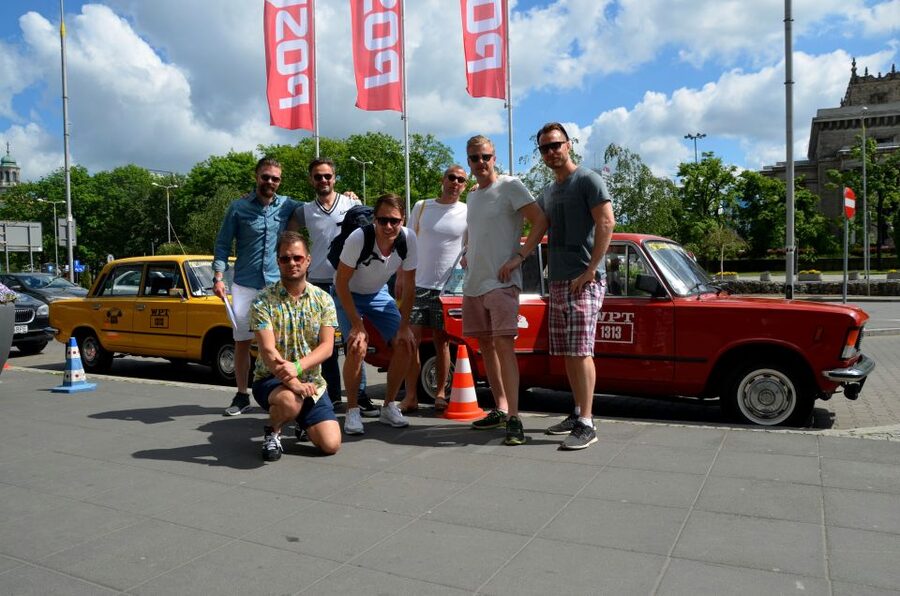
The tour then moves through the former communist ministerial district, including the Ministry of Agriculture. This part of Warsaw reveals how the state operated through institutions as well as symbols.
Government buildings can look dry on a normal city tour. Here, they help explain the physical structure of communist power. Ministries were not scattered randomly. Their placement and architecture formed part of the official center of the city.
You also visit the former House of the Communist Party and learn what the building is used for now. That change in use is one of the more useful details of the route. It shows that political buildings do not vanish when a system ends. They remain in the city, often with new functions and new meanings.
Ask your guide about how the buildings were used during the communist period and how their public role changed afterward. Since this is a private tour, you have room to follow that question instead of staying with a fixed script.
The Ministry of Agriculture and Party headquarters are not simply photo stops. They help you see the difference between a city’s official face and the private life taking place around it.
Same country, a completely different kind of day:
- Warsaw: Chopin Concert in the Old Town
★ 4.8 · 2,287 reviews - Warsaw: Traditional Galar Cruise on The Vistula River
★ 4.6 · 1,640 reviews - Warsaw: Old Town Highlights Walking Tour in English
★ 4.7 · 1,516 reviews - Warsaw Concert: Chopin – Painted by Candlelights with Wine
★ 4.8 · 1,442 reviews
Muranów and the difficult layers beneath new housing
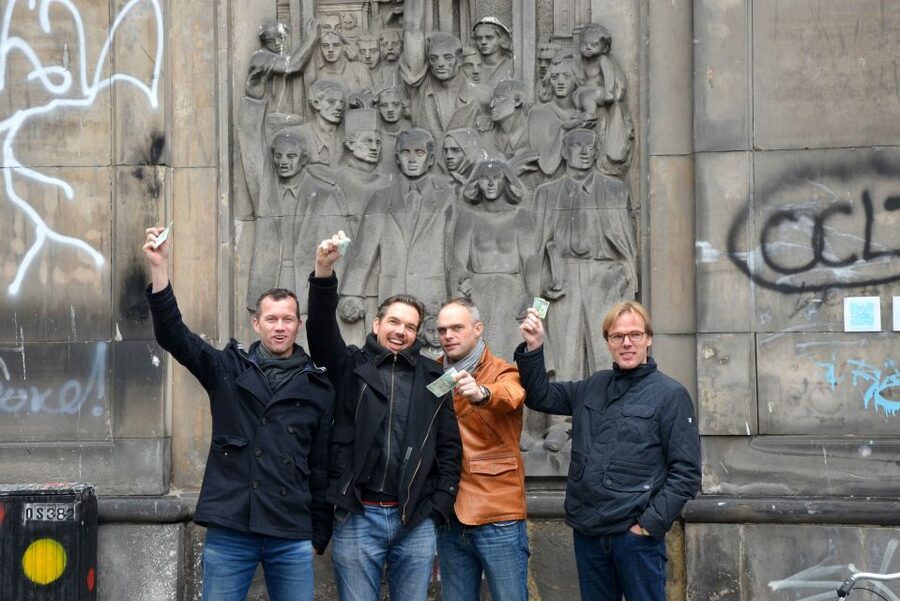
Muranów adds a more painful layer to the tour. Its communist-era housing blocks were built upon the former Jewish Ghetto area.
That location means the architecture cannot be viewed on its own. The neighborhood carries the memory of wartime destruction, displacement, and the later rebuilding of Warsaw. Your guide discusses how the Party influenced architecture and how the housing blocks fit into the city’s postwar development.
For many visitors, this is the point where the tour becomes less about nostalgic cars and more about the complications of rebuilding a capital after catastrophe. The buildings may look like ordinary residential blocks, but their setting gives them a far heavier meaning.
You should give this stop your full attention. It is not just another example of communist housing. It connects urban planning with memory and political control. The guide’s explanation is especially important here because a quick look from the car would not tell you enough.
The route includes walking, but the amount can be adjusted. If you want more time to examine the neighborhood, ask. If you have mobility limits, explain them before or during the tour so the guide can shape the visit around you.
What the guide adds to the experience
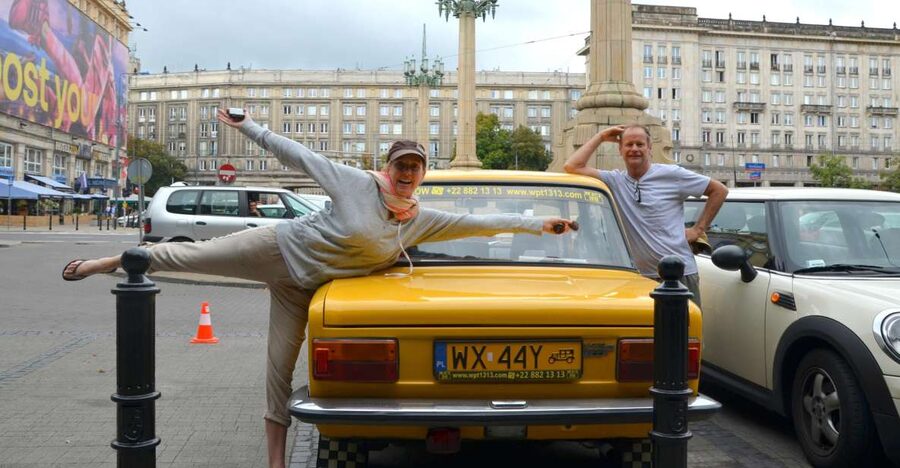
The guide is the deciding factor in a tour like this. The buildings are fixed, but the explanation can make them meaningful or leave them as gray blocks.
Martin is named as one of the guides, and the experience information also identifies Max. The guiding is in English. Specific praise centers on clear explanations of how communism began in Poland, how it affected Polish people, and how it ended. That is the right range for a first visit because it links political events to everyday life.
Martin is also described as good with children. That makes the tour more workable for families, especially since a four-hour history outing can lose younger attention quickly. The car, doughnut, and vodka tasting add variety, while the guide can respond to questions rather than delivering a fixed speech.
The guide also talks about what it means to be Polish today. That brings the tour beyond dates and buildings, though you should expect this part to depend on the conversation and the guide’s approach. Ask questions if you want more detail on modern attitudes, daily life, or the shift away from communism.
A private group gives you a clear advantage. You can ask for more history, more architecture, more local stories, or less walking. You can also request a place of particular interest, though the final route may change because of traffic.
Vodka, doughnut, and the small details that make it personal
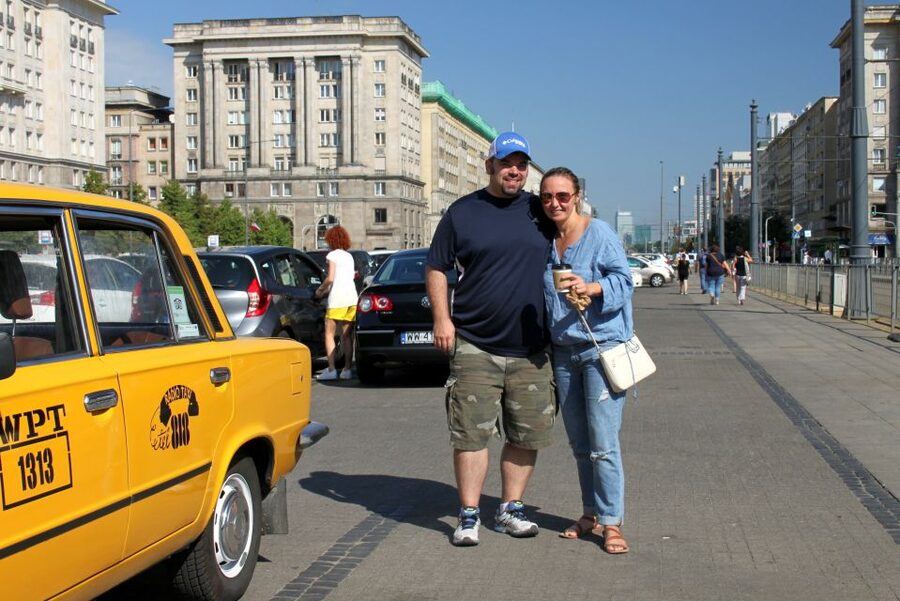
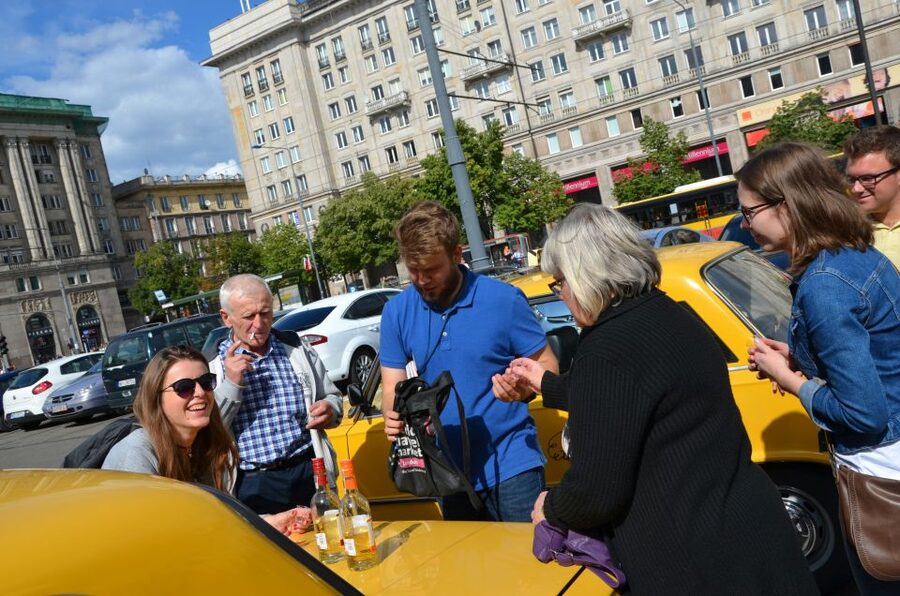
A traditional vodka shot is served on board, along with a Polish sweet, a doughnut. These are modest inclusions, but they give the tour a local touch without turning it into a food tour.
The vodka is presented as part of the ride, so consider your own comfort and drinking preferences. You do not need a full tasting menu to understand why a small Polish snack works here. The doughnut breaks up the history and gives you something familiar during a long drive.
Photos from the tour are emailed afterward. That is useful because the Fiat itself is likely to be one of your favorite subjects, and you may not want to spend the entire ride taking pictures from the back seat.
The tone appears to be informal and friendly rather than solemn throughout. Still, the Muranów portion deals with serious history. The best experience will let the lighter elements of the old car and snack coexist with the harder parts of Warsaw’s past.
Is $105 per person good value?
At $105 per person, this is not the cheapest way to see communist-era Warsaw. You are paying for a private guide, a historical vehicle, hotel pickup and drop-off within the city center, the tasting, and photos.
The value improves if you are traveling with people who want the same subject. You get four hours of personalized time rather than a short city drive with a large group. The guide can adjust the amount of walking, answer your questions, and shape the route around your interests.
The value is also stronger if you are new to Warsaw. The communist period can be hard to understand from monuments alone. A guide who explains the connection between the palace, housing districts, ministries, and Muranów gives you a usable framework for the rest of your visit.
For a group of more than four, the transport changes to a blue vintage minivan. That may be more practical for a larger party, but it does reduce the intimacy and novelty of riding in the Fiat 125p. Check the group size before booking if the car itself is your main reason for going.
If you already know Polish communist history well, you may find some of the material familiar. In that case, the private format and vehicle are the main advantages, along with the chance to request specific places or questions.
Who should book this four-hour tour?
I would recommend this experience to first-time visitors who want historical context without spending the day inside museums. It also suits anyone interested in architecture, political history, cars, or the way cities reveal changes in government.
Families can benefit from the Fiat, snack, and flexible format. Martin’s ability to engage children is a useful sign, though your own children’s tolerance for four hours of history will still matter.
The tour works well for people who prefer a private experience. You are picked up at your centrally located hotel or another central point at your chosen hour, then returned after the tour. That saves time and removes the need to work out several separate stops on your own.
It can also suit wheelchair users because the activity is listed as wheelchair accessible. Still, the tour includes a moderate amount of walking, so discuss your needs with the provider and use the flexible format to limit walking where necessary.
Bring comfortable shoes. Pets are not allowed. The vehicle dates from the 1980s, and the route can change slightly with traffic, so you should expect a real city outing rather than a perfectly fixed sequence.
My verdict on Warsaw in a Fiat 125p
Book this tour if you want communist Warsaw explained through real streets, buildings, and local conversation. The strongest parts are the contrast between the Palace of Culture, workers’ housing, government offices, and Muranów, plus the character of the old Fiat.
I especially like that the experience connects official architecture with ordinary life. The vodka and doughnut are pleasant extras, but the main value comes from the guide’s ability to explain how the system shaped the city and the people who lived in it.
Skip it if you want a short, low-cost overview or if you dislike driving and walking around residential districts. At four hours and $105 per person, it asks for a meaningful slice of your Warsaw schedule.
For most visitors with an interest in Poland’s recent past, the private format makes the price easier to justify. You get a focused history tour, a memorable vehicle, flexible pacing, and a better sense of why modern Warsaw looks the way it does.
FAQ
How long is the Warsaw Communism Private Tour?
The tour lasts four hours, including driving and walking between the main sites.
What vehicle is used for the tour?
The standard vehicle is a historical Fiat 125p from the 1970s or 1980s. Groups of more than four people use a blue vintage minivan.
Which places are included?
The route includes the Palace of Culture and Science, Constitution Square, the former communist ministerial district, the Ministry of Agriculture, the former House of the Communist Party, and communist-era housing in Muranów.
Is the tour conducted in English?
Yes. The tour includes a live English-speaking guide. Martin and Max are named among the guides connected with the experience.
Is hotel pickup included?
Yes. Pickup and drop-off are included from a centrally located Warsaw hotel or another centrally located point.
How much walking is involved?
The tour is about half walking and half driving, with a moderate amount of walking. The route and pace can be adapted to suit your requirements, and comfortable shoes are recommended.
Just added around Warsaw
- World War II Warsaw Old Town, Military Cemetery Walking Tour★ 4.7 · 3 reviews
- Wilanów Palace: 2-Hour Guided Tour with Entrance Tickets★ 4.8 · 8 reviews
- Warsaw: Wolf’s Lair & Swieta Lipka Small-Group Tour + Lunch★ 5.0 · 3 reviews
- Warsaw Zoo Skip-the-Line Entry Ticket with Private Transport★ 4.8 · 3 reviews
- Warsaw Wolf’s Lair with St. Lipka and Mamerki Private Guided★ 4.2 · 3 reviews
- Warsaw: Vistula River Cruise with Your Music & City Views★ 4.6 · 78 reviews
- Warsaw: Private Vodka Tasting Night with Snacks and Pickup★ 5.0 · 7 reviews
- Warsaw Private Wilanow Palace & Garden Tour★ 4.6 · 30 reviews
Warsaw Tours, compared.
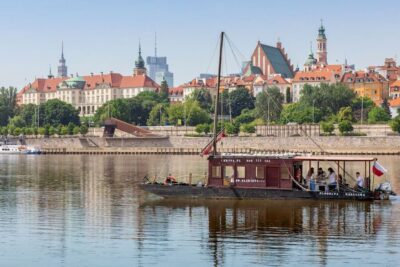
Traditional Galar Cruise on The Vistula River
Read our review →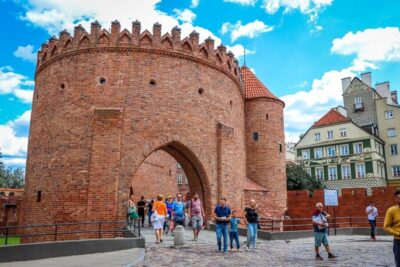
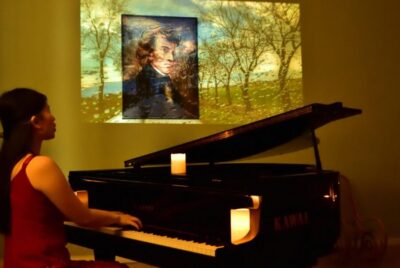
Warsaw Concert: Chopin – Painted by Candlelights with Wine
Read our review →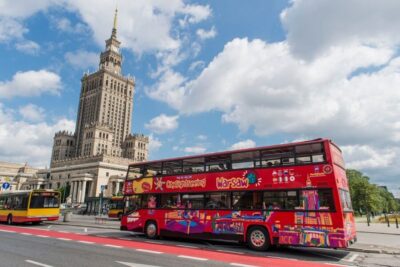
POLIN Museum of the History of Polish Jews Ticket
Read our review →
#1 Pub Crawl Warsaw with Optional Premium 1 Hour Open Bar
Read our review →