

Reviewed · HISTORICAL TOURS
Warsaw: Jewish Heritage & Holocaust Walking Tour
Warsaw’s Jewish past is not tucked inside one museum. It is spread across streets reshaped by war, memorials, fragments of memory, and places that look ordinary until a guide shows you what once stood there. This 150-minute walking tour traces the community from its medieval beginnings through the Holocaust and the Warsaw Ghetto Uprising.
I like the use of prewar photographs and maps, which let you compare today’s rebuilt city with the streets that existed before 1939. I also like the tour’s clear focus on people and daily life, not just dates and monuments. The main drawback is practical: this is a serious, outdoor walk, and the final section can feel very cold in winter. One review also noted a group of up to 30 people, which may make some explanations harder to hear.
Key points at a glance
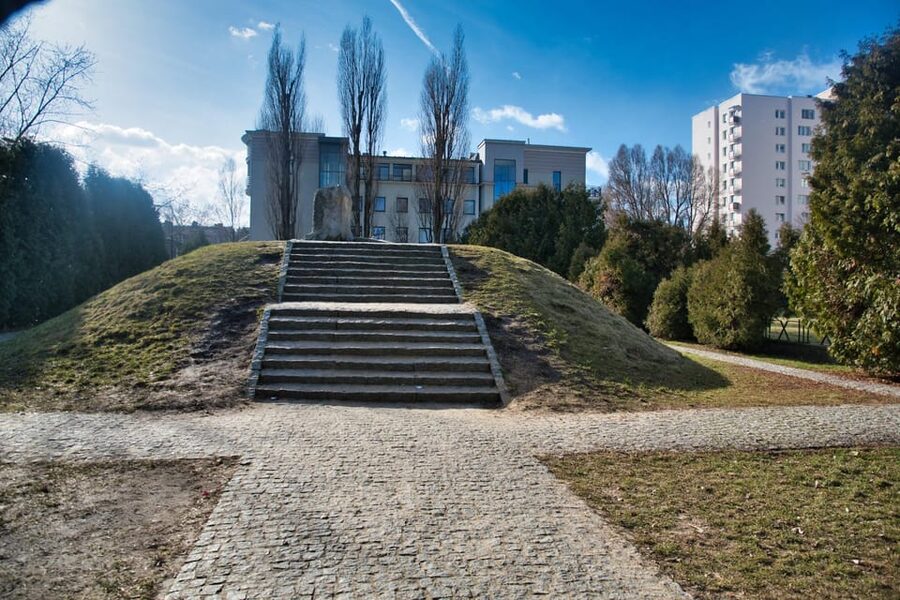
- Six centuries of Jewish life: Follow the story from medieval settlement and expulsions to the 18th-century jurydki and the Haskalah.
- The Big Ghetto: See the area connected with the Warsaw Ghetto and the fighting of the 1943 Uprising.
- Old photographs in the street: Compare prewar images with the city you see today.
- A Holocaust-focused second half: Learn about the Ghetto wall, living conditions, deportations, and Treblinka.
- Guides with strong subject knowledge: Magda, Gawel, Martin, Albert, Goska, and Peter Hardy have all led tours praised for clear and humane explanations.
- Low price, useful timing: At $20 per person, the tour offers 150 minutes of guided context without added entrance fees.
Meeting at Castle Square under the orange umbrella
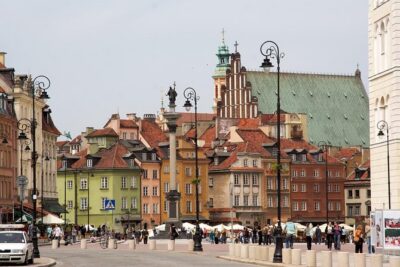
The tour begins at Castle Square by Sigismund’s Column, the 20-meter column topped by a statue. Look for the guide holding an orange umbrella with a British flag. That detail matters in a busy square, especially if several walking tours gather nearby.
Castle Square is in the historic center, but the tour’s subject quickly moves beyond the royal core. You are not simply touring Old Town. You are using the center as a meeting point before following the story of Warsaw’s Jewish community through different parts of the city.
I would arrive a few minutes early. The meeting instructions are specific, but the square can be busy, and finding the orange umbrella is easier before the group sets off. Wear comfortable shoes and carry water. A 150-minute walk is manageable for most people, but it is long enough for poor footwear to become a problem.
The tour is listed as wheelchair accessible. You should still consider the length of the walk and the outdoor conditions when deciding if it suits your needs. No smoking is allowed during the activity.
A few more Warsaw trips to weigh up
- Warsaw: POLIN Museum of the History of Polish Jews Ticket
★ 4.7 · 1,142 reviews - Warsaw: Chopin Concert at Historical Venue in Old Town
★ 4.7 · 445 reviews - Small-Group Historical Guided Tour of Warsaw with pick up/drop off. Public Tour.
★ 4.5 · 343 reviews
From medieval settlement to the Jewish quarter
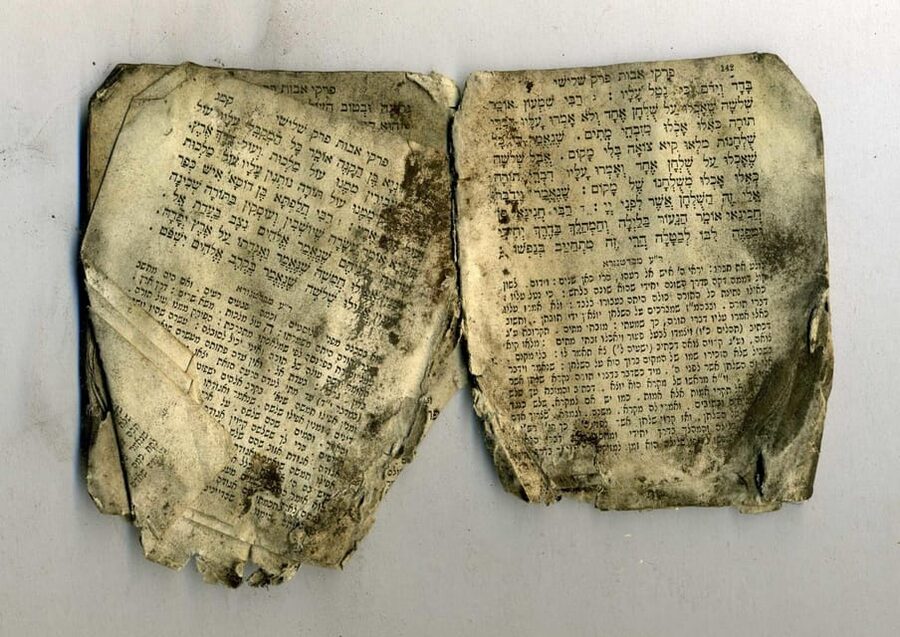
The opening section gives you the background needed to understand Warsaw before the Holocaust. You learn about the origins of Polish Jews, the development of Jewish life in the Middle Ages, and the first expulsions.
This part is important because the Holocaust did not destroy a community that had appeared overnight. Jewish life in Warsaw developed over centuries, with its own religious, economic, cultural, and social patterns. Without that longer view, the later discussion of the Ghetto can feel like a story that begins only in 1939.
The tour also covers the 18th-century Jewish settlements located within the jurydki. These were areas under the control of Warsaw’s magnates rather than the city authorities. That political arrangement helps explain why Jewish settlement patterns changed and why the community developed in particular parts of the city.
You will also hear about the Haskalah, the Jewish Enlightenment. This adds an intellectual and social layer to the walk. The story is not limited to persecution. It includes debates about education, identity, religious life, and the ways Jewish communities responded to a changing Europe.
I appreciate this chronological approach. The first part asks you to see Warsaw’s Jewish community as a long-lived society, not only as a victim of Nazi policy. It also prepares you for the enormous contrast between the prewar community and the destruction that follows in the tour’s later sections.
Prewar Warsaw through photographs and maps
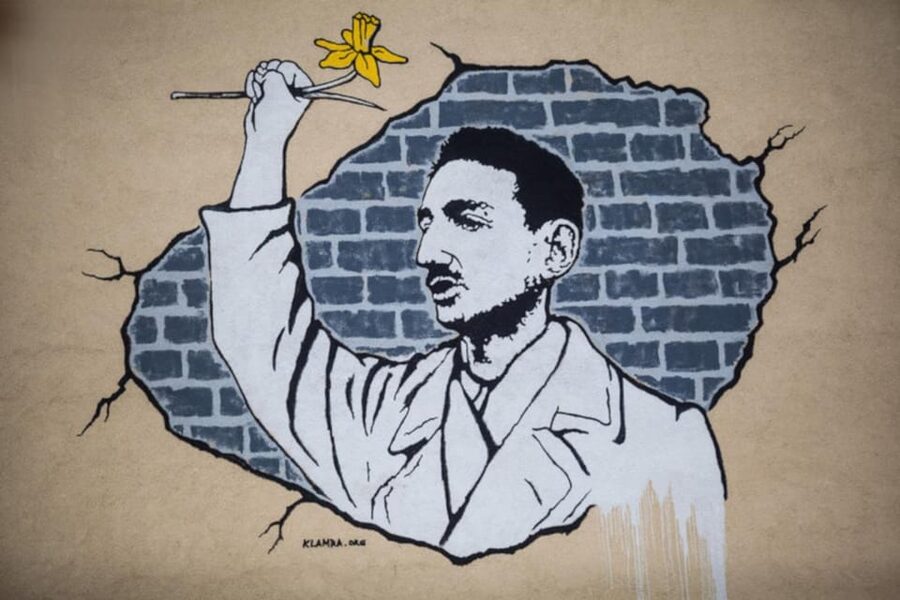
The most useful visual tool on this walk is the collection of old photographs. Your guide uses images of 19th-century and prewar Warsaw to show how the Jewish District once looked and functioned.
This is where the tour becomes especially concrete. A photograph can show crowded streets, buildings, shops, religious life, and ordinary routines in a way that a list of dates cannot. You may be looking at a modern street while seeing, through the guide’s images, the buildings and people that occupied the same space before the war.
The photographs also help explain the scale of the wartime destruction. Warsaw was heavily reshaped, so many places do not announce what happened there. Without visual comparison, it is easy to walk past a rebuilt area and miss its connection to the former Jewish District.
Several guides have been praised for bringing a large amount of material down to a human scale. Magda has been described as clear, warm, and energetic. Gawel has received strong praise for detailed explanations and an engaging delivery. Martin has been singled out for presenting difficult history with compassion and a personal touch.
Those individual styles may vary depending on the date and guide assigned. The tour is conducted in English, and the available guides include Magda, Gawel, Martin, Albert, Goska, and Peter Hardy. You cannot assume you will receive a particular guide unless the booking specifically says so.
The Warsaw Ghetto and life behind the wall
More than half of the tour focuses on the Holocaust of Warsaw’s Jews. The central subject is the creation of the Warsaw Ghetto, the conditions of life behind the wall, and the deportations to Treblinka.
The tour’s value here is its attention to place. You are not only hearing that the Ghetto existed. You are learning how the wall divided the city, how the area was organized, and what daily life became under confinement, hunger, disease, fear, and Nazi control.
This section is emotionally difficult, as it should be. The guide’s job is not to soften the facts, but to explain them carefully and avoid turning suffering into spectacle. The strongest feedback about this experience has focused on guides who handle the subject with patience, accuracy, and humanity.
Albert, for example, has been praised for explaining what is documented and what remains uncertain. That distinction is valuable on a Holocaust tour. It shows respect for evidence and helps you understand why some parts of the story are known through records, photographs, and survivor accounts, while other details must be treated with caution.
You should expect a sober experience rather than a light sightseeing walk. Some guides add warmth and occasional humor while teaching, but the subject remains serious. That balance can make the material easier to absorb without making it feel casual.
The discussion of deportations to Treblinka gives the Ghetto story its grim final phase. The tour connects the forced removal of Warsaw’s Jews with the death camp, helping you understand that deportation was not simply relocation. It was part of a planned process of mass murder.
Same country, a completely different kind of day:
- Warsaw: Chopin Concert in the Old Town
★ 4.8 · 2,287 reviews - Warsaw: Traditional Galar Cruise on The Vistula River
★ 4.6 · 1,640 reviews - Warsaw: Old Town Highlights Walking Tour in English
★ 4.7 · 1,516 reviews - Warsaw Concert: Chopin – Painted by Candlelights with Wine
★ 4.8 · 1,442 reviews
The Big Ghetto and the 1943 Uprising
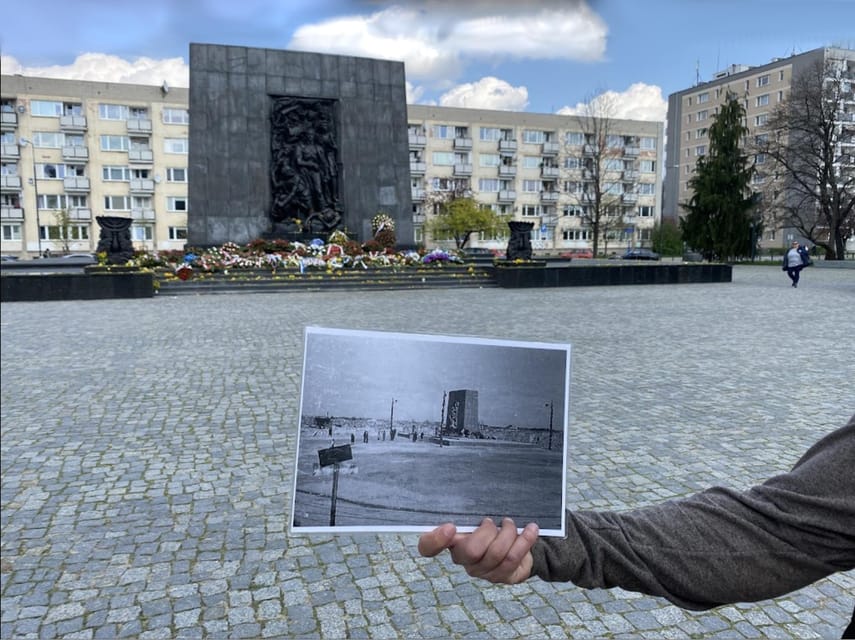
The final portion concentrates on the Big Ghetto and the places connected with the Warsaw Ghetto Uprising. You see the major locations associated with the fighting and learn how the uprising developed from the conditions created by occupation, confinement, and deportation.
This is one of the strongest reasons to choose a walking tour instead of relying only on a museum visit. A guide can point out relationships between sites and explain how the area changed during the uprising. The physical setting gives the story a sense of distance and movement that photographs alone cannot provide.
At the same time, you should keep your expectations realistic. Warsaw was devastated during the war and rebuilt afterward. Not every important location survives as an original building. The experience often depends on the guide’s photographs, maps, explanation, and ability to connect present-day streets with the former Ghetto.
That contrast is central to the tour. A modern building or open space may sit where a dense wartime neighborhood once existed. The absence of visible ruins can make the history harder to grasp, but it also shows why the old images are so useful.
The Uprising section is not presented as a simple heroic ending. It is part of a larger story of resistance under impossible conditions. You learn about the major places involved while keeping sight of the people, choices, and losses behind the events.
How the guides shape the experience
The guide makes a major difference on a history walk, and this tour has a strong record in that area. The most praised qualities are clear English, command of the subject, careful pacing, and a humane way of discussing painful events.
Magda has been noted for impeccable English, enthusiasm, charm, and close attention to detail. Gawel has been praised for making the subject interesting and for answering questions well. Martin’s strength is a compassionate, human delivery that helps connect facts with lived experience.
Albert has been described as organized, well prepared, and careful with sources. Goska has been appreciated for combining serious history with an approachable manner. Peter Hardy has been remembered not only for his teaching but also for helping participants deal with transportation problems after the walk.
These details suggest a tour company with several capable guides, but they do not guarantee a particular style on every departure. Some guides may use more photographs, some may spend longer answering questions, and some may move at a different pace.
Ask questions as you go. The guides are expected to answer them, and the subject benefits from discussion. The best experience will come if you allow time for the explanations instead of treating the walk as a checklist of monuments.
One practical point deserves attention: group size can reach about 30 people. That is still workable outdoors, but a large group may make it harder to hear every word or ask personal questions. If you prefer a quieter, more intimate lesson, check the expected group size before booking if that information is available.
Winter weather and walking comfort
This is an outdoor tour, so the season matters. A December departure can become very cold during the later section, and short winter days may bring darkness before the walk ends. Bring warm layers, gloves, and a hat in cold weather.
The advice to bring a head covering or kippah is worth following. The tour information specifically includes it among the recommended items, so pack one rather than assuming you can find one at the meeting point.
Comfortable shoes are essential. The tour lasts two and a half hours, and you will be standing while listening as well as walking between locations. Water is also recommended, especially if you are taking the tour in warmer weather.
A useful touch is the guide’s willingness to pause briefly when conditions become uncomfortable. On one cold February walk, the guide allowed time for the group to get coffee. Do not count on a formal café stop, but it shows why a little flexibility can help on a serious outdoor tour.
The tour is not suitable for children under 10. That rule makes sense given the Holocaust content, length, and emotional weight. Older children and teenagers may find it valuable, but parents should decide based on maturity and interest.
What the $20 price really covers
At $20 per person, this is a strong value if you want a structured introduction to Warsaw’s Jewish history. The price includes a professional guide and the walking tour itself. It does not include entrance fees to attractions, although the stated experience is centered on walking and outdoor interpretation rather than included museum admissions.
You are paying mainly for context. The streets and memorial locations are free to see, but understanding what happened there requires preparation, maps, photographs, and a guide who can connect centuries of history in a logical order.
The tour lasts 150 minutes, which gives enough time to move from medieval origins to the Holocaust and the Uprising without turning the experience into a rushed one-hour overview. The tradeoff is that the amount of material is substantial. You will need to concentrate, and you may want a quieter activity afterward.
The operator also says that agency and broker commissions, along with taxes, consume a large share of the payment, and encourages tipping if you enjoyed the tour. Tipping is optional, but this information helps explain why you may wish to thank a guide whose work you value.
Free cancellation is available up to 24 hours before the start for a full refund. You can also reserve now and pay later, useful if you are still arranging a Warsaw itinerary. These policies make the $20 commitment fairly flexible.
Who should book this walk
I would recommend it to you if this is your first serious look at Warsaw’s Jewish history and you want the city itself to be part of the lesson. It is also a good choice if you have already visited a Holocaust museum and want to connect the material to real streets and locations.
The tour suits adults, older teenagers, history-minded visitors, and anyone who values a guide’s explanation more than a long list of photo stops. It is especially useful for people who might otherwise walk through rebuilt Warsaw without realizing what was there before the war.
You may want another option if you need frequent indoor breaks, dislike group tours, or prefer a short and informal introduction. The subject is heavy, the walk can be cold, and a group of up to 30 people may feel too large for some visitors.
I would also avoid scheduling this as your only activity immediately before a flight or fixed appointment. One participant had to leave for the airport before properly saying goodbye, and the tour can run beyond the advertised 150 minutes when questions and explanations extend the walk.
Should you book the Warsaw Jewish Heritage and Holocaust Walking Tour?
Book it if you want a serious, affordable introduction led by an English-speaking guide who can connect medieval Jewish life, prewar Warsaw, the Ghetto, Treblinka, and the Uprising. The old photographs and maps are a major advantage because much of the former district was changed or destroyed.
Before booking, check the weather, bring comfortable shoes and a head covering, and prepare yourself for difficult subject matter. If you can accept the outdoor setting and possible group size, the $20 price buys a meaningful two and a half hours of historical context that would be hard to assemble on your own.
FAQ
Where does the tour meet?
The meeting point is Castle Square by Sigismund’s Column, a 20-meter-high column with a statue on top. Look for the guide holding an orange umbrella with a British flag.
How long is the walking tour?
The stated duration is 150 minutes, or two and a half hours.
What language is the tour conducted in?
The tour is conducted in English with a live English-speaking guide.
What historical periods does the tour cover?
It covers the 600-year history of Warsaw’s Jewish community, from the Middle Ages through the 18th-century jurydki and the Haskalah, then continues through 19th-century and prewar life, the Holocaust, and the Warsaw Ghetto Uprising.
Does the tour visit the Warsaw Ghetto?
Yes. It covers the Big Ghetto, the area connected with the Ghetto Uprising, the creation of the Ghetto, life behind the wall, and deportations to Treblinka.
Are entrance fees included?
No. Entrance fees to attractions are not included. The listed activity includes the professional guide and walking tour.
Is the tour wheelchair accessible?
Yes. The activity is listed as wheelchair accessible.
What should I bring, and can children attend?
Bring comfortable shoes, water, and a head covering or kippah. Smoking is not allowed, and the tour is not suitable for children under 10.
Just added around Warsaw
- Taste of Poland, food tour and guided walk with 12 tasting★ 5.0 · 3 reviews
- Skip-the-Line Warsaw Royal Castle Private Guided Tour★ 5.0 · 4 reviews
- Secrets of Warsaw 4-hour Bike Tour★ 5.0 · 25 reviews
- Warsaw: Live Show at Sabat Theatre★ 4.5 · 11 reviews
- Private Warsaw City Tour★ 4.9 · 4 reviews
- Warsaw: WWII Private Tour by Retro Minibus with Hotel Pickup★ 5.0 · 7 reviews
- Private Tour From Warsaw: Łowicz Mazovian Countryside★ 5.0 · 10 reviews
- Packrafting kayaking guided tour Vistula river Warsaw Poland★ 4.5 · 14 reviews
Historical Tours, compared.

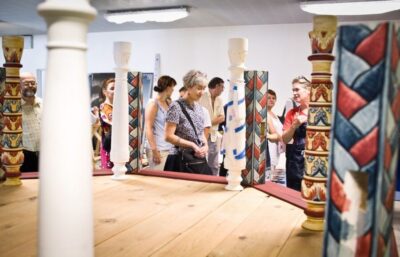
POLIN Museum of the History of Polish Jews Ticket
Read our review →
Gdańsk City Sights & History Guided Walking Tour in English
Read our review →

Small-Group Historical Guided Tour of Warsaw with pick up/drop off. Public Tour.
Read our review →Browse the lists this tour appears in