
Reviewed · HISTORICAL TOURS
Warsaw Jewish Heritage Private Tour in Retro Fiat
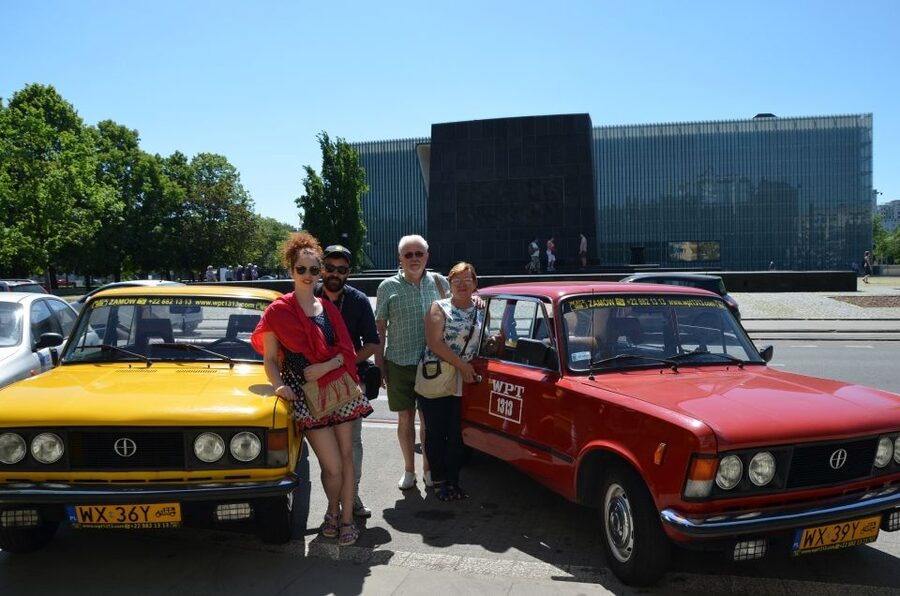
Warsaw’s Jewish story is best understood street by street, and this tour gives you an unusual way to follow it: from the back seat of a 1980s Fiat 125p. You will trace the former Ghetto, stop at its surviving wall, enter the Nożyk Synagogue when open, and walk through places tied to wartime Warsaw.
I like the private format, since guides such as Martin, Maks, and Konrad can adjust the route and explain what you are seeing rather than delivering a fixed speech. I also like the mix of driving and walking, plus the small Polish snacks and souvenir photo. The main drawback is that the synagogue and cemetery are closed on Saturdays, and the tour covers painful subject matter that deserves your full attention.
Key points at a glance
- Ride in a genuine Fiat 125p: The vintage car is more than transport. It gives the tour a strong connection to Warsaw’s recent past.
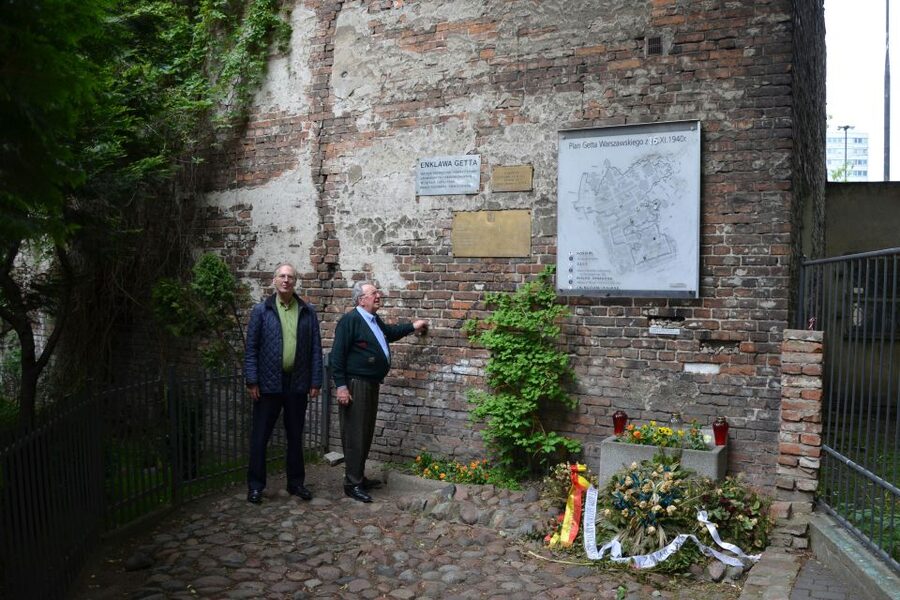
- See rare surviving Ghetto remains: The red-brick wall fragments are among the few physical traces left in the city.
- Visit the Nożyk Synagogue: This is Warsaw’s only synagogue to survive World War II and remain in operation.
- Walk through Muranów and its Jewish Cemetery: Muranów was rebuilt on the rubble of the former Ghetto, making the ground beneath the modern district part of the story.
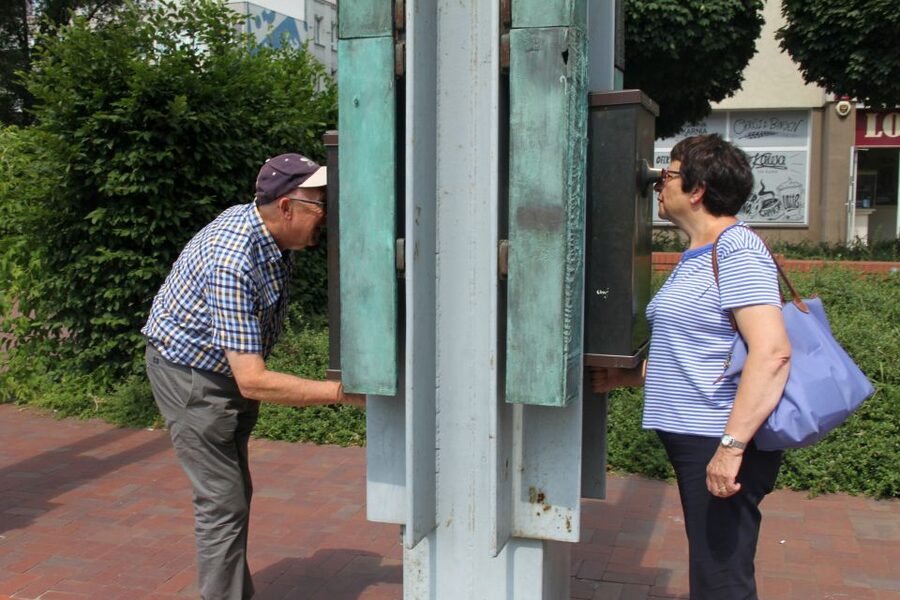
- Pause at the Ghetto Heroes Monument: The monument is one of Warsaw’s most powerful places for reflection.
- Add the POLIN Museum or The Pianist locations: Museum admission costs extra, while the Praga-North film locations can be added if you request them.
Why the Fiat 125p changes the experience
Warsaw has plenty of standard city tours, but this one uses a piece of the city’s postwar life as its moving base. The Fiat 125p was an iconic car in 1980s Poland, and its compact cabin gives the tour an intimate, personal feel.
You are picked up at the lobby of a centrally located Warsaw hotel or another central point. From there, your English-speaking guide drives you between the main sites, stopping for walks when the location calls for more time.
The car is useful in practical ways. It lets you cover several separated parts of the former Ghetto without spending the whole four hours on foot. It also allows the guide to adjust the route for traffic or your interests. One guide, Maks, was particularly praised for handling the vintage car through tight spaces, a reminder that this is an active driving tour rather than a ride on a large sightseeing bus.
Groups larger than four people use a blue vintage minivan instead of the Fiat. That vehicle may be more comfortable for a bigger party, but you should know this before booking if the classic car is a major reason for your interest.
The tour includes Polish sweets, a donut, a vodka shot, and a photo of you with the car sent by email afterward. These details do not replace the historical content, but they make the outing feel personal rather than purely academic.
A few more Warsaw trips to weigh up
- Warsaw: POLIN Museum of the History of Polish Jews Ticket
★ 4.7 · 1,142 reviews - Warsaw: Chopin Concert at Historical Venue in Old Town
★ 4.7 · 445 reviews - Small-Group Historical Guided Tour of Warsaw with pick up/drop off. Public Tour.
★ 4.5 · 343 reviews
Following the former Warsaw Ghetto
The tour focuses on the former Jewish Ghetto, where more than 400,000 Jews were isolated by the Nazi occupation. The wall, built in 1940, cut the area off from the rest of Warsaw and became a physical symbol of forced separation, hunger, fear, and confinement.
Today, much of the original district has changed. Streets were destroyed, rebuilt, or renamed, and modern Warsaw can make it hard to imagine the wartime city. That is where the guide matters most. You will see photographs and hear stories that connect present-day streets with the places they replaced.
The remaining Ghetto wall fragments are especially important because so little of the original construction survives. They are not a grand ruin. You may find them visually modest, but their meaning is enormous. Look closely at the bricks and surrounding buildings. The contrast between an ordinary modern neighborhood and this surviving barrier is part of what makes the stop so affecting.
This is also one of the places where a private tour helps. You can ask your guide to slow down, explain a detail, or answer a question about the boundaries and daily life inside the Ghetto. On a large group tour, you might get only a brief photo stop.
Grzybowski Square and the Nożyk Synagogue
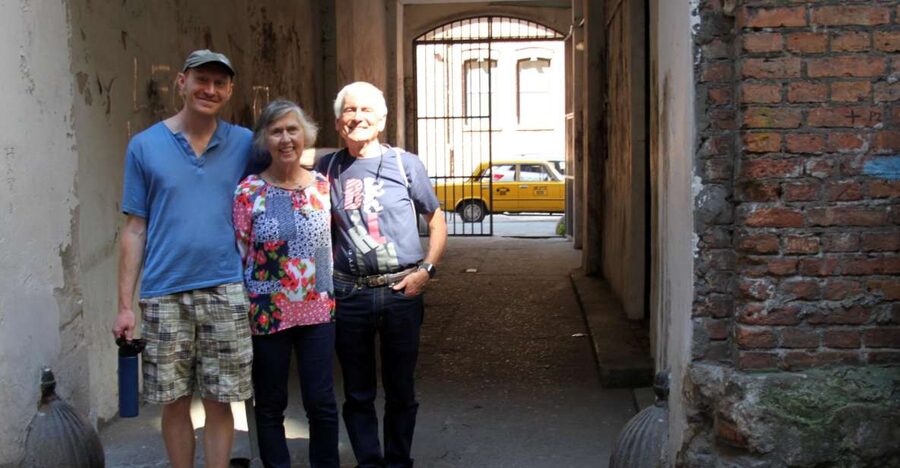
The route passes Grzybowski Square, or Plac Grzybowski, which was once inside the Ghetto. It is an important link between several parts of the route, since the square helps you understand how the former Jewish district extended through central Warsaw.
The Nożyk Synagogue is one of the tour’s most valuable stops. It is the only synagogue in Warsaw to survive World War II and remain in operation. That makes it more than an attractive building. It is a functioning place of worship and one of the clearest links between prewar Jewish Warsaw and the city today.
If you want to go inside, plan carefully. The synagogue is closed on Saturdays, so a Saturday tour will not provide the same experience. Even on other days, entry may require attention from the guide. One guest specifically appreciated the guide’s persistence in helping secure access, but you should not treat entry as automatic.
The tour description does not include entrance fees, so check what you will pay at any site that requires admission. The Nożyk Synagogue is best approached respectfully. Wear sensible clothing, listen to the guide’s instructions, and remember that this is an active religious space, not simply a museum stop.
Muranów, rebuilt over the Ghetto
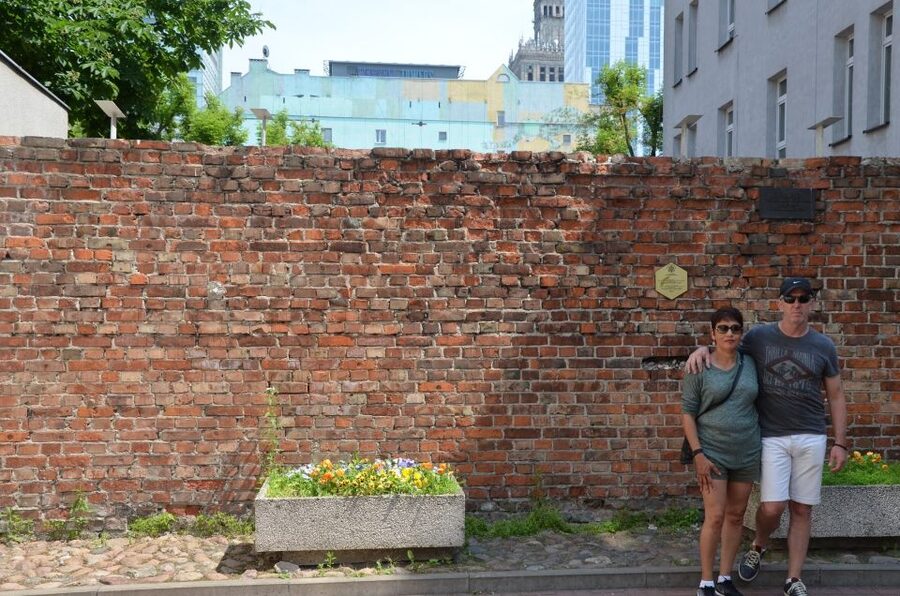
The route then moves into Muranów, the district once known as the Large Ghetto. Much of modern Muranów was built on the rubble left after the destruction of the wartime neighborhood.
That fact changes how you see the area. The apartment blocks and streets may look like ordinary postwar Warsaw, but the district’s foundations carry a painful past. The tour gives you a chance to consider how a city rebuilds after destruction and how much of the past can remain unseen beneath new construction.
Muranów also has street art and modern buildings, so the area is not frozen in memory. The combination can feel jarring, but that is useful. You are not walking through a preserved historical set. You are moving through a living district where remembrance, everyday life, and new architecture exist side by side.
Your guide parks so you can walk around the Jewish Cemetery. The tour requires a moderate amount of walking, but the driving portion reduces the strain of crossing the wider area. Comfortable shoes are a must, especially if you want time at the cemetery and monument.
Same country, a completely different kind of day:
- Warsaw: Chopin Concert in the Old Town
★ 4.8 · 2,287 reviews - Warsaw: Traditional Galar Cruise on The Vistula River
★ 4.6 · 1,640 reviews - Warsaw: Old Town Highlights Walking Tour in English
★ 4.7 · 1,516 reviews - Warsaw Concert: Chopin – Painted by Candlelights with Wine
★ 4.8 · 1,442 reviews
The Jewish Cemetery and its thousands of graves
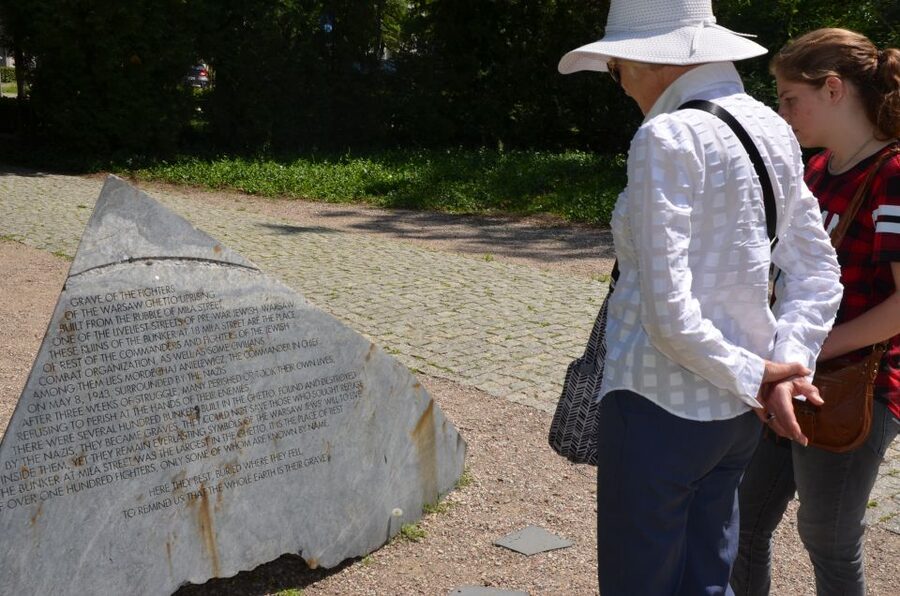
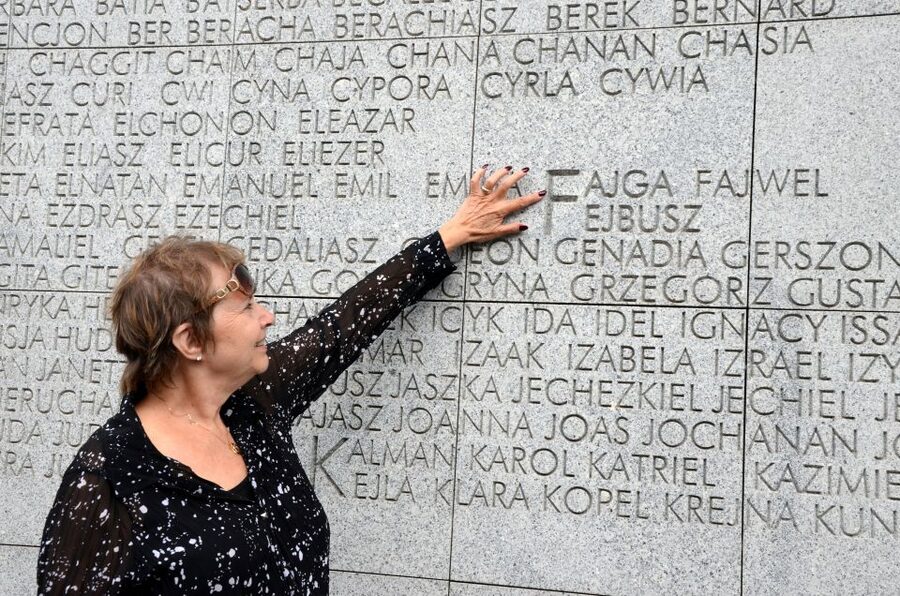
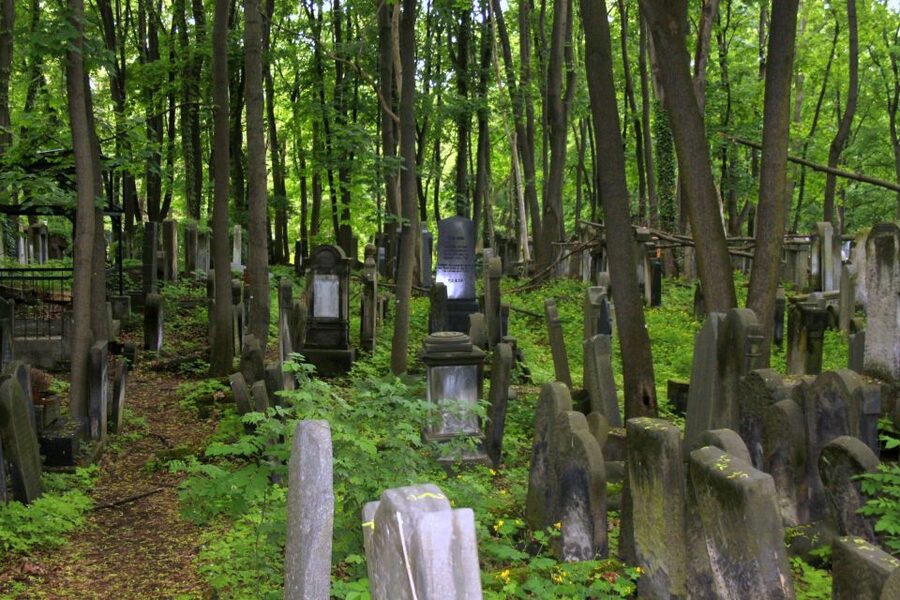
The Jewish Cemetery contains thousands of graves and provides a quieter counterpoint to the road-based portion of the tour. Here, the scale of Jewish life in Warsaw becomes easier to grasp through names, stones, and the sheer number of burials.
You should allow yourself time to look around rather than treating the cemetery as a quick stop. The setting calls for restraint and respect. Your guide can help explain what you are seeing, but the place also works through silence and close observation.
Like the synagogue, the cemetery is closed on Saturdays. This is the most important scheduling detail for anyone hoping to see both sites. If those stops are central to your plans, choose another day.
The half-driving, half-walking format can be adapted to your needs. The tour is private, so tell the guide if you need less walking or would prefer more time at a particular stop. The information provided does not promise a fully step-free route, so anyone with specific mobility needs should ask before booking.
The Ghetto Heroes Monument and the POLIN Museum
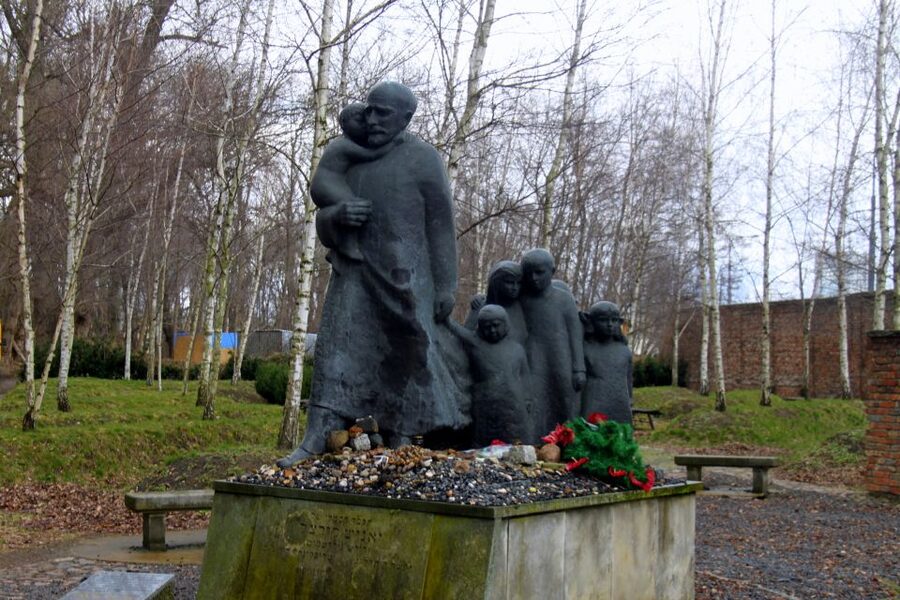
The Ghetto Heroes Monument is one of the tour’s strongest moments. Its scale and design give it the gravity expected of a memorial to the people who resisted the destruction of the Ghetto.
You will have a chance to pause there, and I would not rush this part. The monument works best when you take in the setting and think about the people and events the route has already introduced. After seeing the wall and cemetery, the monument brings the story into one focused place.
Nearby, the POLIN Museum of the History of Polish Jews offers a much larger account of Jewish life in Poland across 1,000 years. Its exhibitions use artifacts and images to move beyond the World War II period and show the breadth of the Jewish presence in Poland.
Museum admission is not included, so you will pay separately if you choose to enter. The four-hour tour can include a look at the museum area, but you should ask the guide how much time is available if you want a serious museum visit. A short tour stop cannot substitute for exploring the full museum.
I see the museum as an optional add-on for people who want broader historical context. If your main goal is to understand the former Ghetto itself, the outdoor stops and guide commentary may be enough. If you want the long story of Polish Jewish culture, plan extra time and budget for admission.
Optional stops connected to The Pianist
If you have seen Roman Polanski’s Oscar-winning film The Pianist, ask the guide about locations used in the movie. The film is set in Holocaust-era Warsaw, and the tour can include some of the settings in Praga-North, also called Praga-Północ.
This option makes sense for film fans who want to connect the movie with the real city. It may be less important if you are focused only on the Ghetto sites, since adding locations can change the balance of the route.
The route is not rigid. Traffic may require small changes, and your guide can tailor the outing to particular points of interest. That flexibility is one of the clearest reasons to choose a private tour instead of a fixed group excursion.
What four hours gives you
Four hours is enough for a focused introduction, not a complete study of Warsaw’s Jewish past. You will see major outdoor landmarks, make selected walks, and have time for explanations from your guide.
The tour’s pace depends on traffic, access, your walking speed, and whether you add the POLIN Museum or The Pianist locations. The guide may need to shorten one stop to give you more time at another. Tell the guide early what matters most to you.
For a first visit to Warsaw, the tour is a useful way to organize a difficult subject. You are not left trying to find scattered wall fragments or interpret a memorial without context. The private car also saves energy, especially in cold weather. One January booking went ahead successfully despite the cold, with the vintage vehicle and flexible format helping keep the experience comfortable.
Still, this is not a light sightseeing ride. The subject is the Nazi occupation and the destruction of Warsaw’s Jewish community. The snacks, car, and vodka shot add local character, but the main experience is serious. You should come prepared to listen.
Price, group size, and practical value
At $105 per person, the tour is most attractive for couples, families, or small groups who value private guiding and door-to-door transport. The price includes hotel pickup and drop-off from central Warsaw, the Fiat, the guide, onboard snacks, a vodka shot, and emailed photos.
Entrance fees are extra, so add the cost of any museum or other paid site you plan to visit. Gratuity is optional. The value is strongest when you make use of the private format by asking questions and shaping the route.
A larger group may find the per-person price easier to justify, but groups over four switch to a blue vintage minivan. If the Fiat itself is the star attraction for you, keep your party size in mind.
You can cancel up to 24 hours ahead for a full refund, and the booking allows you to reserve now and pay later. Those terms are useful if your Warsaw schedule is still shifting.
Who should book this tour
I would choose this tour if you want a concentrated introduction to Jewish Warsaw without spending four hours on foot. It suits first-time visitors, couples, families, and anyone who prefers asking questions in a private setting.
It is also a good fit if you enjoy unusual transport. The Fiat 125p gives the outing a sense of place that a standard sedan would not. Guides including Martin, Maks, and Konrad have been singled out for clear explanations, friendly service, and strong command of the route.
I would think twice if you want a long, unhurried museum visit. The POLIN Museum costs extra and needs more time than a quick stop can provide. I would also avoid Saturday if the Nożyk Synagogue and Jewish Cemetery are must-sees.
Should you book the Warsaw Jewish Heritage Private Tour?
Book it if you want the main Jewish heritage sites tied together by a private English-speaking guide, with the comfort and character of a vintage Fiat. The wall fragments, Nożyk Synagogue, cemetery, and Ghetto Heroes Monument form a serious and worthwhile route.
Choose another plan if you prefer to explore museums independently or want a full day devoted to one subject. For most visitors with four hours to spare, though, this tour offers a practical balance of driving, walking, memorials, and personal explanation. Just avoid Saturday, wear comfortable shoes, and tell the guide which stops matter most to you.
FAQ
How long does the Warsaw Jewish Heritage Private Tour last?
The tour lasts four hours.
What vehicle is used for the tour?
The standard vehicle is a historical Fiat 125p from the 1980s. Groups larger than four people are transported in a blue vintage minivan.
Is hotel pickup included?
Yes. Pickup and drop-off are included from centrally located Warsaw hotels or another central point. The guide picks you up from the hotel lobby.
Is the tour private?
Yes. It is offered for a private group with a live English-speaking guide.
Which synagogue does the tour visit?
The tour visits the Nożyk Synagogue, the only synagogue in Warsaw to survive World War II and remain operational.
Is the Nożyk Synagogue open every day?
No. The synagogue is closed on Saturdays.
Can I visit the Jewish Cemetery during the tour?
Yes, the route includes a walk around the Jewish Cemetery. The cemetery is closed on Saturdays.
Is admission to the POLIN Museum included?
No. Entrance fees are not included, so you pay separately if you choose to visit the Museum of the History of Polish Jews.
What should I bring?
Bring comfortable shoes because the tour includes a moderate amount of walking. Pets are not allowed.
Just added around Warsaw
- World War II Warsaw Old Town, Military Cemetery Walking Tour★ 4.7 · 3 reviews
- Warsaw: Wolf’s Lair & Swieta Lipka Small-Group Tour + Lunch★ 5.0 · 3 reviews
- Wilanów Palace: 2-Hour Guided Tour with Entrance Tickets★ 4.8 · 8 reviews
- Warsaw Zoo Skip-the-Line Entry Ticket with Private Transport★ 4.8 · 3 reviews
- Warsaw Wolf’s Lair with St. Lipka and Mamerki Private Guided★ 4.2 · 3 reviews
- Warsaw: Vistula River Cruise with Your Music & City Views★ 4.6 · 78 reviews
- Warsaw: Private Vodka Tasting Night with Snacks and Pickup★ 5.0 · 7 reviews
- Warsaw Private Wilanow Palace & Garden Tour★ 4.6 · 30 reviews
Historical Tours, compared.
POLIN Museum of the History of Polish Jews Ticket
Read our review →
Gdańsk City Sights & History Guided Walking Tour in English
Read our review →

Small-Group Historical Guided Tour of Warsaw with pick up/drop off. Public Tour.
Read our review →Browse the lists this tour appears in