
Reviewed · OLD TOWN WALKING TOURS
Warsaw: Old Town Highlights Walking Tour in English
Warsaw’s Old Town is more than a pretty square and a few colourful buildings. It is a city rebuilt after near-total destruction, and this tour explains how the Royal Route, the castle, and the old city walls fit into Poland’s long, difficult story. Guides such as Michael, Andrzej, Anna, and Michal use humour and clear storytelling to keep that serious subject approachable.
I like the way the walk links famous names, including Copernicus, Chopin, and Marie Curie, with the streets where their stories still matter. I also like the efficient route: in 150 minutes, you see the Royal Route, Presidential Palace, Warsaw University, Old Town, and Royal Castle without needing public transport.
The main drawback is simple: you are outside for most of two and a half hours. Comfortable shoes and weather-ready clothing matter, especially in rain or cold. The tour continues in poor weather, though the guide looks for cover when needed.
Key points to know before you book
- A wartime story at the heart of the walk: Learn how Warsaw was destroyed during World War II and rebuilt afterward.
- A clear route through central Warsaw: Follow Krakowskie Przedmieście and the Royal Route from the Copernicus Monument toward Old Town.
- Major sights without museum entry: See the Royal Castle, Presidential Palace, Warsaw University, city walls, and Old Town from outside.
- Guides who make serious subjects easy to follow: Michael, Andrzej, Anna, Michal, and other English-speaking guides are praised for humour, pace, and strong storytelling.
- A useful first look at the city: The tour suits a short stay or your first day in Warsaw, when you want a sense of place before exploring alone.
- A paid reservation for a pay-as-you-wish format: The $26 price covers the booking and guide payment, so you are not expected to add a separate tip.
Why this walk gives Warsaw the right introduction
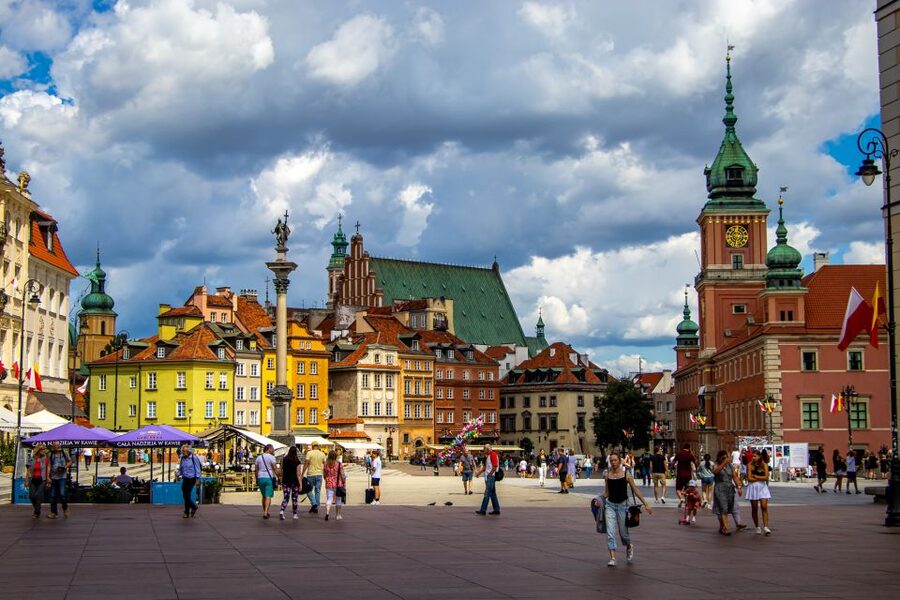
Warsaw can be confusing at first. Its most famous historic district looks old, but much of it was reconstructed after World War II. Broad modern streets sit close to rebuilt palaces, old churches, memorials, and colourful townhouses.
This tour gives you the basic framework. You learn how Warsaw grew as Poland’s political centre, how its people faced Nazi occupation, and how the city rose again after destruction. The guide also connects national events with local places, so you are not just hearing dates while looking at buildings.
That connection is the tour’s main value. A short walk cannot explain every chapter of Polish history, but it can help you understand why Warsaw feels different from many other European capitals. You leave with a better sense of the city’s losses, its survivors, and its present role in European trade, tourism, education, and politics.
The tone matters here. The subject includes occupation, resistance, two major uprisings, and the burning of much of the city. Guides are praised for mixing serious facts with wit, which helps the story stay human rather than turning into a long list of grim events.
More Old Town Walking Tours in Warsaw
- Warsaw: Chopin Concert in the Old Town
★ 4.8 · 2,287 reviews - Warsaw: Old Town Guided Walking Tour
★ 4.9 · 599 reviews - Warsaw: Chopin Concert at Historical Venue in Old Town
★ 4.7 · 445 reviews
Meeting beside the Copernicus Monument
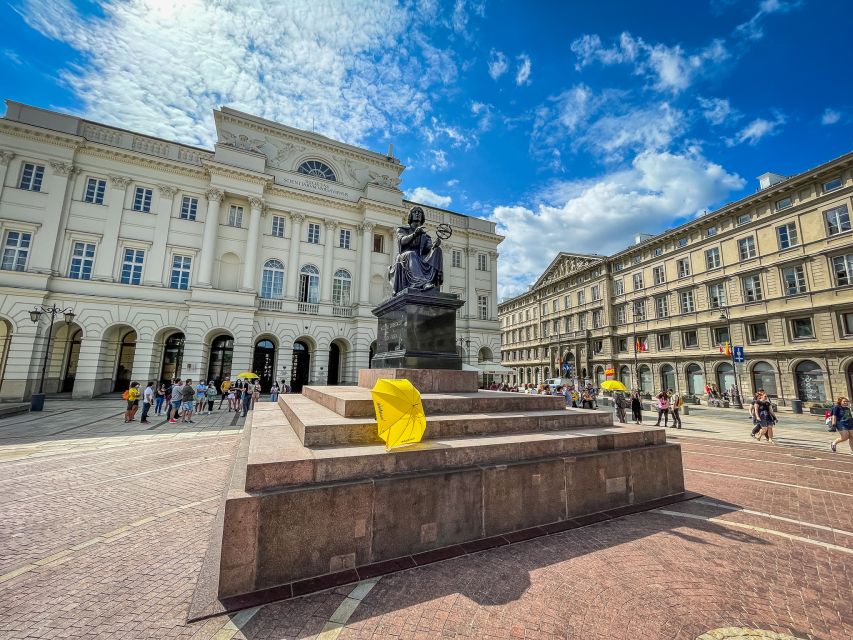
The tour begins beside the Nicolaus Copernicus Monument at Krakowskie Przedmieście Street 2. Look for the guide carrying a yellow umbrella. This is the detail to remember, since the Royal Route can be busy and the meeting point sits in a central area with plenty to look at.
Starting with Copernicus is fitting. He changed how Europeans understood the universe, and his statue gives the guide an easy way to introduce Poland’s contribution to science and culture. From here, you begin along Krakowskie Przedmieście, one of Warsaw’s most important streets.
Arrive with comfortable shoes. The walk lasts 150 minutes, and the route includes streets, public squares, and the Old Town area. No hotel pickup is included, so you need to make your own way to the monument.
The yellow umbrella is also useful in poor weather. The tour runs rain or shine, but the guide looks for shelter if rain or cold becomes uncomfortable. You should still dress for the forecast. One practical tip is to treat this as an outdoor sightseeing walk, not a quick stroll between indoor attractions.
Following the Royal Route along Krakowskie Przedmieście
The Royal Route is the spine of the experience. It links central Warsaw with the historic royal areas, and it gives you a sequence of landmarks instead of isolated stops. As you walk, the guide explains both the buildings in front of you and the people connected with the city.
Krakowskie Przedmieście is especially rewarding because it combines grand public buildings, churches, monuments, and colourful architecture. The route is visually attractive, but the guide’s explanation gives it more weight. You hear how Warsaw developed as a capital and why this corridor remains important.
The Presidential Palace is one of the key sights. You view it from outside and learn about its role in Poland’s political life. This is not a palace interior visit, so anyone hoping to tour rooms or collections should plan a separate activity.
Warsaw University buildings add another layer. They point to the city’s importance as a centre of education, while the broader route introduces famous Polish figures such as Marie Curie. You may already know their names, but seeing them placed within Warsaw’s streets helps connect individual achievement with the city itself.
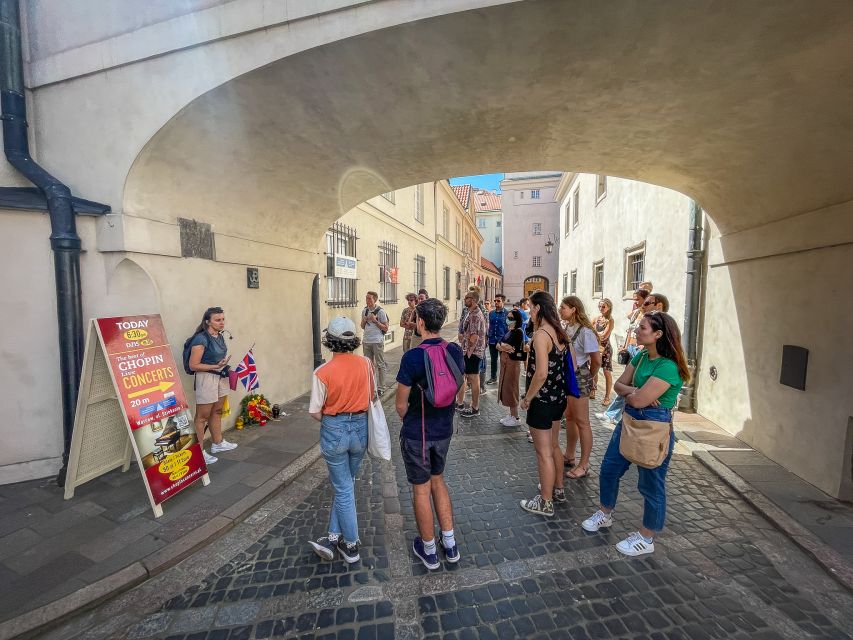
The walk also includes a reference to Chopin and the place where his heart is buried. This is one of the more personal details on the route. Chopin spent part of his life abroad, but his heart was returned to Warsaw, giving the city a powerful link to the composer.
For me, this is where the walk moves beyond a standard list of monuments. Copernicus, Chopin, Curie, presidents, students, and royal figures all belong to different parts of Poland’s story. The guide’s job is to show how those threads meet along one route.
Understanding Warsaw’s destruction and rebuilding
The most important part of the walk is its explanation of Warsaw during World War II. The city suffered enormous damage, and the Old Town was rebuilt after the war. That fact changes how you read every square and façade.
The tour explains the two largest uprisings against Nazi rule. These events are central to understanding Warsaw, but they are also complex. The walk does not treat the city’s wartime story as a simple tale of heroes and villains. Instead, the guide explains the difficult choices, suffering, and consequences surrounding the uprisings.
You will hear how the fighting and reprisals helped leave Warsaw in ruins. The point is not only that buildings were destroyed. The city’s population, cultural life, and urban fabric were badly damaged too.
That makes the rebuilt Old Town especially striking. It is not an untouched medieval quarter, and the guide helps you avoid a common misunderstanding. The rebuilt streets are historic in design, but their postwar reconstruction is part of the story you are seeing.
This context is why a guided walk is useful here. You can admire a handsome square on your own, but you may miss the fact that the scene represents an extraordinary act of recovery. The guide gives the buildings a before-and-after dimension.
Several guides receive praise for making this material clear and engaging. Andrzej is described as an energetic storyteller, while Michal is praised for explaining the history of each place in a way that was easy to follow. Michael is noted for adding substantial historical context, and Anna is praised for presenting the main sights in a friendly, relaxed way.
The exact guide will depend on the departure. What you can reasonably expect is an English-speaking guide who explains the city rather than simply pointing out façades.
Same country, a completely different kind of day:
- Warsaw: Traditional Galar Cruise on The Vistula River
★ 4.6 · 1,640 reviews - Warsaw Concert: Chopin – Painted by Candlelights with Wine
★ 4.8 · 1,442 reviews - Warsaw: City Sightseeing Hop-On Hop-Off Bus Tour
★ 3.6 · 1,415 reviews - Warsaw: POLIN Museum of the History of Polish Jews Ticket
★ 4.7 · 1,142 reviews
Entering the colourful Old Town
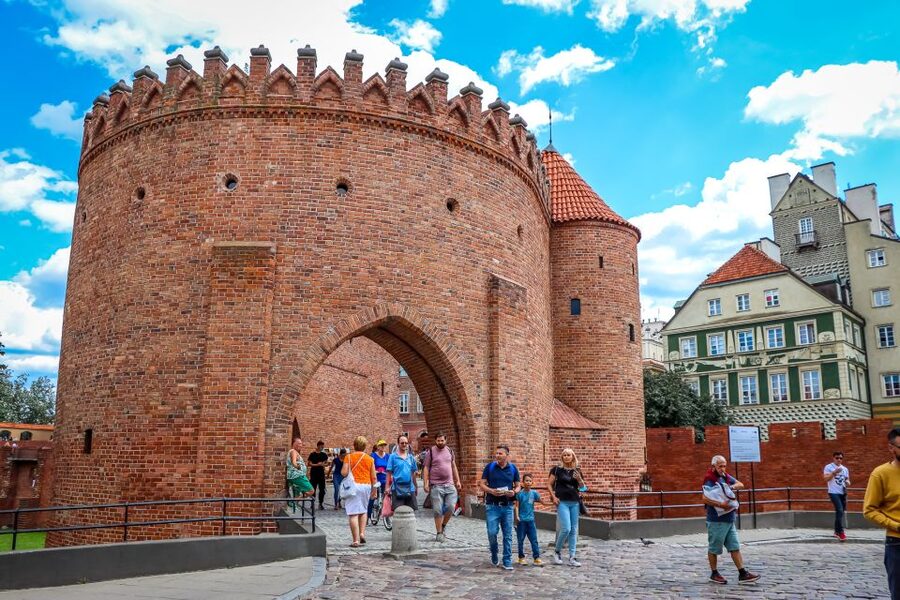
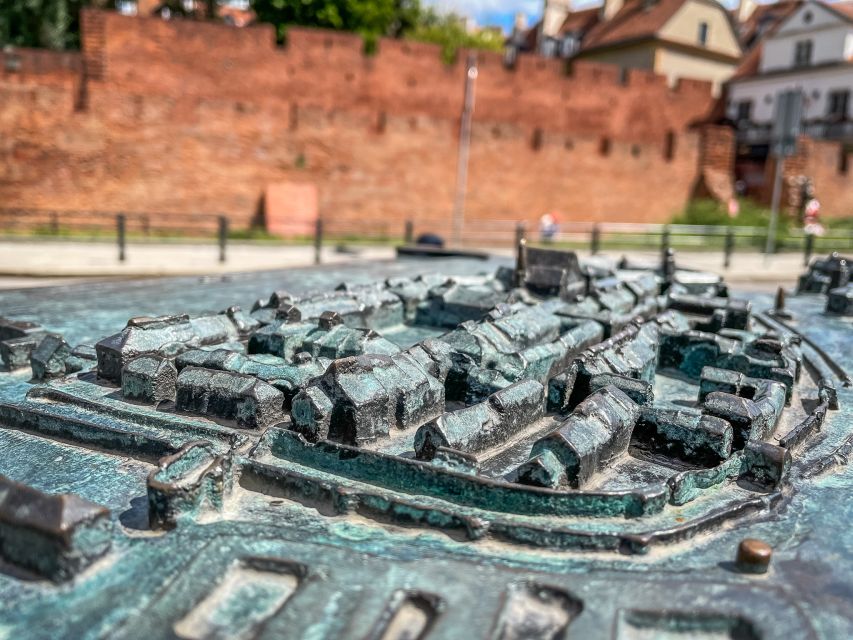
The Old Town is the visual reward of the route. Colourful façades, compact streets, and the enclosing city walls create a sharp contrast with the wider avenues of Krakowskie Przedmieście.
Your guide helps you read the district as both a historic centre and a reconstruction. The walls and layout suggest a much older city, while the postwar rebuilding gives the area a modern chapter that is just as important.
This is a good section for photographs, but do not spend the whole time looking through your phone. The guide’s explanations help you notice why the Old Town looks the way it does and how it relates to Warsaw’s identity.
The pace seems designed for sightseeing rather than a race. One guide is praised for keeping a good pace, and another for completing the route on time despite rain. Still, two and a half hours on foot can feel long if you are not used to walking or if the weather is unpleasant.
The route is listed as wheelchair accessible, which is useful information for planning. Conditions on historic streets can vary, so anyone with particular mobility needs should still contact the provider before booking and ask about the day’s route.
Seeing the reconstructed Royal Castle
The Royal Castle is one of the tour’s major visual moments. The building was reconstructed after its wartime destruction, and its presence helps explain Warsaw’s effort to restore its old centre.
You see the castle from outside rather than touring its rooms. That keeps the walk moving and makes it possible to cover more of the central district, but it also means museum lovers may want to return later for an interior visit.
The castle works well as a stop because it brings together royal, political, wartime, and postwar themes. It recalls Warsaw’s role as a seat of power, while its reconstruction shows how deliberately the city reclaimed its historic centre.
I would pay close attention here to the guide’s explanation of what is original, what was rebuilt, and why restoration mattered. Without that context, the castle is simply an impressive building. With it, the stop becomes a concise lesson in how Warsaw chose to present its past after catastrophe.
What the guides do best
The strongest feature of this experience is the guiding. The score is 4.7 from 1,516 reviews, and the repeated praise is specific: clear English, humour, historical detail, enthusiasm, and a pace that keeps the group moving.
You might meet Michael, Andrzej, Michal, Anna, Lucas, Olivia, Jack, Jacek, or another guide from the team. Names and spelling vary, but the pattern is consistent. Guides are described as funny, articulate, passionate about Poland, and able to answer questions.
That style suits Warsaw. The city’s past is too complicated for a shallow sightseeing script, but a lecture would be too heavy for a walking tour. The best guides use a story, a joke, then a hard fact. That rhythm makes it easier to remember why a monument or street matters.
The English is generally reported as easy to understand. One review specifically praises clear pronunciation, while others mention that guides adapted their explanations and kept a good pace. If you want a tour built around a single specialist, this may feel less predictable because the guide is assigned by departure.
The upside is variety. Several guides are praised for their own personality, from theatrical storytelling to a strong sense of humour. You should expect the broad route and subjects to remain similar, while the tone and emphasis may change slightly.
Is $26 a fair price?
At $26 per person, this is good value if you want a guided introduction to Warsaw’s central historic sights. You are paying for 150 minutes with an English-speaking guide, not for entry to the Royal Castle or other indoor attractions.
The pricing needs a little explanation. This is a general pay-as-you-wish tour format, but the listed payment covers the reservation fee and the guide’s payment. You are not required to decide on an extra reward at the end, as you would be with a truly free walk.
That makes the cost easier to judge. If you only want photographs of the Old Town, you can explore it without paying. If you want the links between Copernicus, Chopin, the Royal Route, the uprisings, and the rebuilt castle explained in one sitting, $26 is a reasonable price.
You also get practical orientation. Guides may point out places worth returning to, and several are praised for sharing tips on how to use the rest of your time in Warsaw. That matters most on a short visit.
Food, drinks, transport, and hotel pickup are not included. Plan the walk as one part of your day, and do not expect a meal stop or a ride between sights.
Who will enjoy this tour most
I would choose this walk on a first visit, especially if you have only a day or two in Warsaw. It gives you a working map of the centre and enough historical context to make later visits more rewarding.
It also suits anyone interested in Poland’s wartime past, political history, music, science, or urban rebuilding. The route covers a broad range, so you do not need to arrive with specialist knowledge.
Families and mixed-age groups may appreciate the humour and outdoor format, though the full 150 minutes requires a reasonable tolerance for walking. The tour can also help you decide which places deserve a longer visit later.
You may want something else if you prefer museums, small private groups, or a highly specialised focus on one subject. The tour does not include indoor admissions, hotel transport, food, or a private guide by default. A smaller private tour can be arranged if you contact the provider, but that is a different option.
Practical details that affect your day
Book with the weather in mind. The tour continues in rain or cold, and the guide seeks cover when possible, but you remain outdoors for most of the experience. In warm weather, shade can make a real difference, so bring suitable clothing and water even though food and drinks are not included.
Wear shoes that can handle a long city walk. This is the one item the operator specifically asks you to bring, and it is sensible advice.
The meeting point is next to the Copernicus Monument on Krakowskie Przedmieście Street 2. Look for the yellow umbrella, and contact the provider at once if you cannot find the guide.
You can cancel up to 24 hours before the tour for a full refund. The reserve-now, pay-later option also helps if your schedule is still changing.
Should you book the Warsaw Old Town Highlights Walking Tour?
Book it if you want Warsaw explained, not just photographed. The route covers the city’s central symbols, but the real benefit is the link between attractive streets and the destruction, resistance, and rebuilding behind them.
I would especially recommend it for a first visit, a short stay, or anyone unsure how to approach Warsaw’s complicated past. The $26 cost is fair for 150 minutes of guiding, and the recurring strengths are clear English, humour, strong historical detail, and an engaging pace.
Skip it if you want a castle interior visit, a private experience, or a short indoor activity. For most visitors who want a solid first look at Warsaw, though, this is a useful and thoughtful way to begin.
FAQ
How long does the Warsaw Old Town walking tour last?
The tour lasts 150 minutes, or two and a half hours.
What language is the tour conducted in?
The tour is conducted in English with a live English-speaking guide.
Where does the tour meet?
The meeting point is next to the Nicolaus Copernicus Monument at Krakowskie Przedmieście Street 2.
How do I find the guide?
Look for the guide with a yellow umbrella. Contact the provider immediately if you have trouble finding the meeting point or guide.
What sights are included?
The walk includes the Copernicus Monument, the Royal Route, Krakowskie Przedmieście, the Presidential Palace, Warsaw University buildings, Chopin’s burial place for his heart, Warsaw Old Town, city walls, and the reconstructed Royal Castle.
Is entry to the Royal Castle included?
No. The tour shows you the Royal Castle from the outside. Indoor entry is not listed as part of the experience.
Is the tour wheelchair accessible?
Yes, the activity is listed as wheelchair accessible.
What should I bring?
Bring comfortable shoes. Since the tour takes place outdoors in most weather, you should also dress suitably for rain or cold.
Can I cancel for a full refund?
Yes. You can cancel up to 24 hours in advance for a full refund.
More Walking Tours in Warsaw
- Half-Day Polish Food Walking Tour with Guide and Dinner
★ 4.5 · 381 reviews - Warsaw: Warsaw Ghetto Private Walking Tour with Hotel Pickup
★ 4.9 · 369 reviews - Old Town Warsaw Walking Tour
★ 4.5 · 333 reviews - Warsaw: Jewish History Guided Walking Tour in English
★ 4.7 · 324 reviews
Just added around Warsaw
- Taste of Poland, food tour and guided walk with 12 tasting★ 5.0 · 3 reviews
- Skip-the-Line Warsaw Royal Castle Private Guided Tour★ 5.0 · 4 reviews
- Secrets of Warsaw 4-hour Bike Tour★ 5.0 · 25 reviews
- Warsaw: Live Show at Sabat Theatre★ 4.5 · 11 reviews
- Private Warsaw City Tour★ 4.9 · 4 reviews
- Warsaw: WWII Private Tour by Retro Minibus with Hotel Pickup★ 5.0 · 7 reviews
- Private Tour From Warsaw: Łowicz Mazovian Countryside★ 5.0 · 10 reviews
- Packrafting kayaking guided tour Vistula river Warsaw Poland★ 4.5 · 14 reviews
Old Town Walking Tours, compared.

Bike Tour of Old Town, Jewish Quarter and the Ghetto
Read our review →

Sightseeing EcoCruise around the Old Town of Gdansk
Read our review →
Old Town & Wawel Castle Walking Tour in English
Read our review →Browse the lists this tour appears in