
Reviewed · WALKING TOURS
World War 2 in Warsaw walking tour in English
Warsaw’s World War II story is not confined to a museum. It is written into streets, squares, memorials, and gaps where whole parts of the city once stood. This 150-minute walking tour connects those places, from the former Nazi German District and Adolf Hitler Square to the Jewish Ghetto and sites linked with the 1944 Warsaw Uprising.
I like the way the guides use old photographs and family stories to show what Warsaw looked like before, during, and after the war. I also like the small-group format, which makes it easier to ask about difficult subjects and hear guides such as Magda, Gosia, Andrew, Piotr, and Albert explain the city from a Polish point of view.
The main drawback is simple: this is a serious, outdoor walk, and the weather matters. In winter, temperatures of minus 17 or even minus 20 Celsius made the full 2.5 hours hard to finish. One participant also found the pace brisk, so older visitors or anyone with limited stamina should plan accordingly.
Key points to know before you go
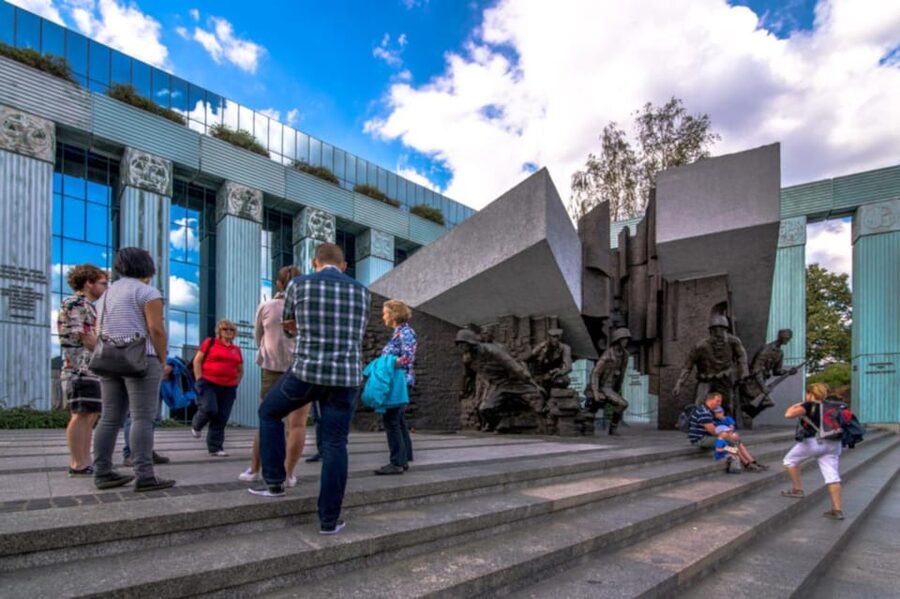
- Warsaw’s two uprisings are central: Learn about the 1943 Jewish Ghetto Uprising and the 1944 Warsaw Uprising, two very different acts of resistance.
- Local guides give the story a human voice: Guides born and raised in Warsaw add family memories and local context to the historical record.
- Historic photographs make vanished streets visible: Archive images help you compare present-day Warsaw with the city before and during the war.
- The route covers more than one viewpoint: The walk addresses civilian life, Nazi occupation, Jewish persecution, Polish resistance, changing borders, and political turmoil.
- The Tomb of the Unknown Soldier may be a moving stop: The changing of the guard has been a highlight for some participants, though the exact route can vary.
- Come ready for real walking: The route is wheelchair accessible and has no reported difficult steps or rough ground, but it lasts two and a half hours outdoors.
Starting beneath the orange umbrella
Your meeting point is easy to identify once you know what to look for: a guide holding an orange umbrella, close to a 20-meter-high column topped by a statue. The umbrella is described as orange, not yellow, so keep that distinction in mind when you arrive.
The tour is conducted in English by a live local guide. Names appearing among the guides include Magda, Gosia, Iga, Piotr, Arek, Peter, Andrew, and Albert. The exact guide depends on the departure, but the pattern is clear: you are getting a Warsaw-based guide who can explain the city in personal as well as historical terms.
You join a group of other visitors, though the format is described as small-group. That balance works well for this subject. You get the energy of a shared experience without the feel of a huge crowd, and the guide can usually respond to questions about family life, politics, military events, or the meaning of a particular memorial.
Arrive prepared to listen while standing outdoors. Comfortable shoes, warm layers in cold weather, and water in warmer months will make a noticeable difference. There is no transport included, so the experience depends on walking between the sites.
A few more Warsaw trips to weigh up
- Warsaw: Old Town Highlights Walking Tour in English
★ 4.7 · 1,516 reviews - Warsaw: Old Town Guided Walking Tour
★ 4.9 · 599 reviews - Half-Day Polish Food Walking Tour with Guide and Dinner
★ 4.5 · 381 reviews
Seeing the city before the war disappeared
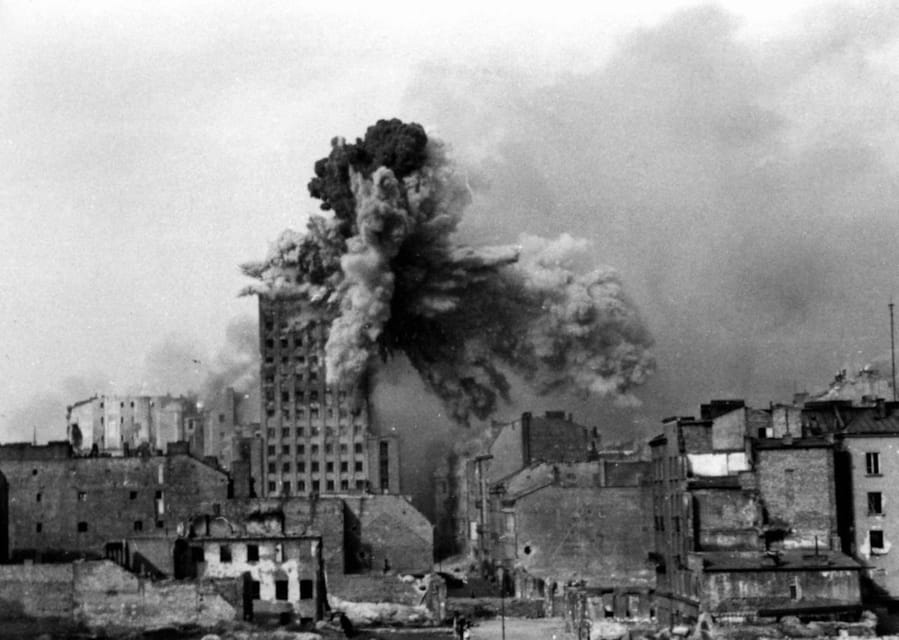
One of the strongest parts of this experience is the contrast between present-day Warsaw and the city shown in historic photographs. Modern buildings and rebuilt streets can make it difficult to picture the wartime city. The guide’s images provide that missing layer.
You may see a familiar street or square as it appears today, then look at a photograph showing bomb damage, military control, or crowds living under occupation. That comparison is more useful than a long list of dates. It lets you understand the scale of the destruction and the work involved in rebuilding Warsaw after 1945.
The guides also explain daily life under the SS. That means the tour is not only about generals, battles, and political decisions. It looks at how civilians lived under surveillance, violence, fear, and shortages. Family stories help put ordinary people back into a story that can otherwise feel remote.
The personal material is handled with care. Several guides are praised for treating the subject seriously while still allowing room for a little humor or a lighter moment when appropriate. That matters on a walk like this. A nonstop stream of horror can become difficult to absorb, but a guide who softens the pace without minimizing the crimes can keep you listening.
The former Nazi German District and Adolf Hitler Square

The route includes the former Nazi German District, an area connected with German occupation and control. You will hear how the city was reshaped under the occupation and how public spaces became part of the machinery of power.
The former Adolf Hitler Square is another important point on the route. Its name alone shows how public space was used for Nazi symbolism. Standing there today, you may find it hard to read the place without help. The guide supplies the political setting and explains how the square fit into the occupying authorities’ vision of Warsaw.
This is where the historic photographs are particularly useful. They show the visual language of occupation, the buildings and ceremonies that once dominated the area, and the gap between the wartime image and the city you see now.
The guide’s Polish perspective is important here, but the strongest presentations do not reduce the story to slogans. They explain the political pressure on Poland, the shifting borders, and the choices forced on people caught between German occupation and the wider war. If you have little background in Polish history, ask questions. The guides are used to explaining complicated events in clear English.
The former Jewish Ghetto and the 1943 uprising
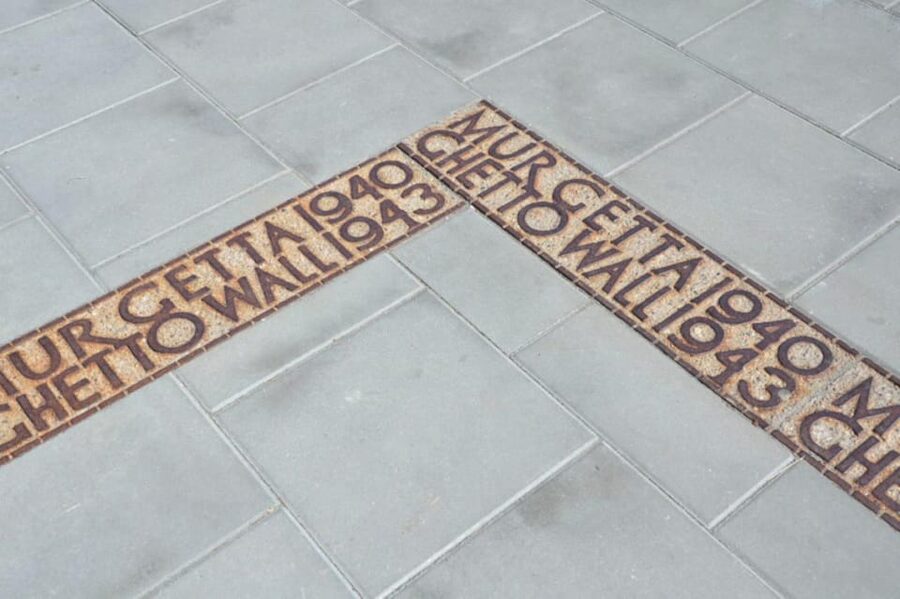
The former Jewish Ghetto brings the most painful section of the walk. Warsaw’s Jewish population was forced into a confined area under Nazi rule, and the ghetto became the setting for starvation, terror, deportation, and organized resistance.
The 1943 Jewish Ghetto Uprising was not the same event as the 1944 Warsaw Uprising, and the tour helps keep those stories distinct. The earlier uprising was a Jewish revolt against the German effort to destroy the ghetto and deport its remaining population. The later uprising involved the wider Polish resistance and took place across Warsaw in 1944.
That distinction is one reason a guided walk is valuable. A map or museum label can give you dates, but the guide can show how the two events relate to different communities, circumstances, and aims. You also get a clearer sense of how civilians were caught up in both.
Expect a quiet and sobering part of the tour. The guides describe not only armed resistance but also civilian life, family separation, and the moral pressure of survival. Personal family memories can make the subject more immediate, though they may also make this section emotionally difficult for younger children.
One family with a 10-year-old found the tour thought-provoking, but suitability depends on the child and on how much detail you feel is right. This is not a light sightseeing walk with a few wartime facts added. The subject is direct and often upsetting.
Same country, a completely different kind of day:
- Warsaw: Chopin Concert in the Old Town
★ 4.8 · 2,287 reviews - Warsaw: Traditional Galar Cruise on The Vistula River
★ 4.6 · 1,640 reviews - Warsaw Concert: Chopin – Painted by Candlelights with Wine
★ 4.8 · 1,442 reviews - Warsaw: City Sightseeing Hop-On Hop-Off Bus Tour
★ 3.6 · 1,415 reviews
Execution sites and the price of occupation
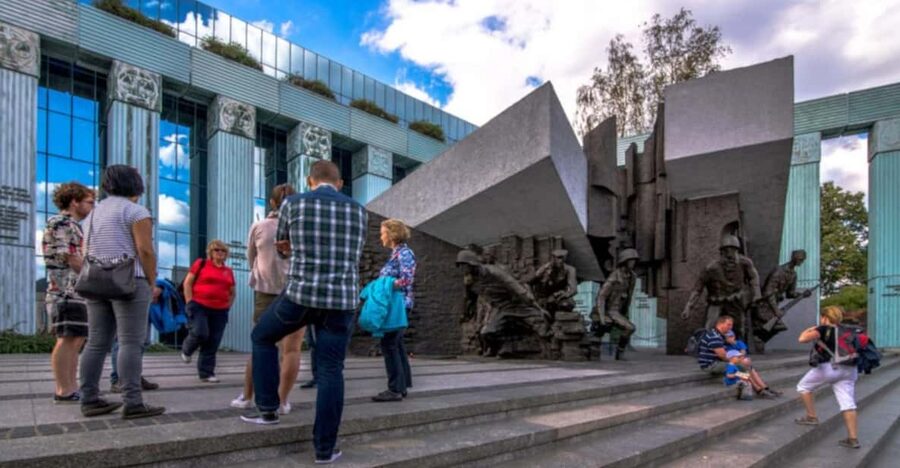
The route also visits execution sites connected with Nazi terror. These stops show how violence was carried out in public and how fear was used to control the city.
The value here comes from location. You are not only hearing that executions happened in Warsaw. You are standing in places tied to those events, while the guide explains what happened and how the sites fit into the occupation. The effect can be stark, especially when the present-day setting looks ordinary.
The tour does not treat suffering as spectacle. The best guides slow down, answer questions, and give the subject its proper weight. Participants have singled out guides for being sensitive when discussing the victims and for explaining the different perspectives of civilians, resistance members, occupying forces, and political authorities.
This section may feel heavy, but it gives the wider story a needed moral center. Warsaw’s destruction was not only the result of military fighting. It also came through deliberate terror, mass killing, repression, and the systematic targeting of civilians.
Following the Polish Resistance in 1944 Warsaw
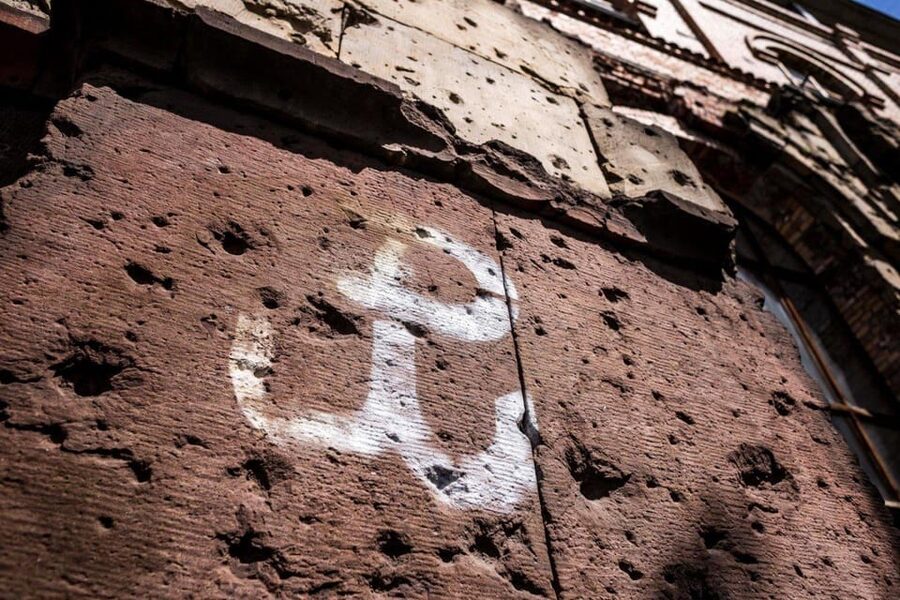
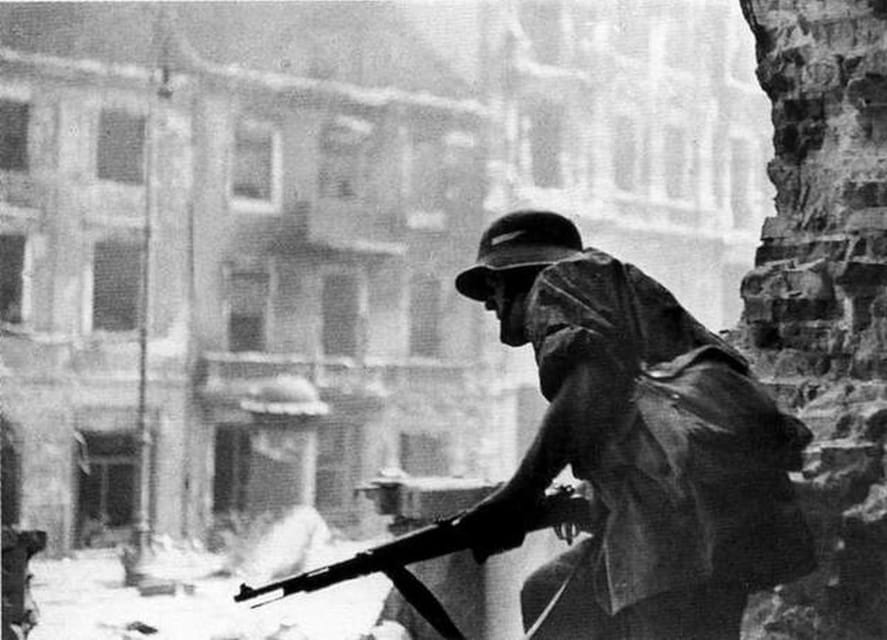
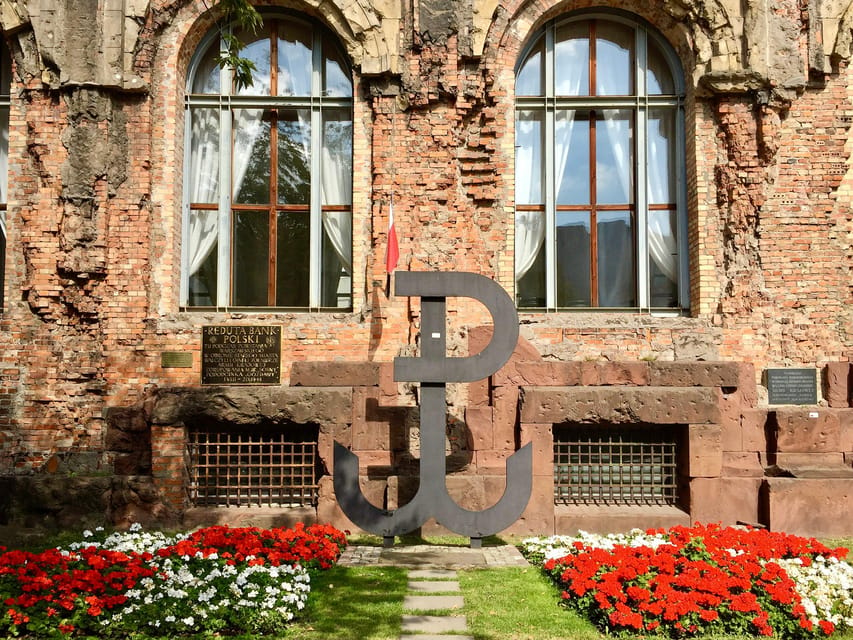
The 1944 Warsaw Uprising forms another major part of the route. You will visit places connected with Polish resistance strongholds and learn how the uprising unfolded in a city already damaged by years of occupation.
The guide explains the resistance in relation to the city around you. Streets and buildings become clues. A route that looks simple on a modern map can carry the memory of barricades, hiding places, communication lines, and defensive positions.
This is also where a good guide helps you understand the difference between military courage and military success. The uprising was a brave attempt to challenge German control, but it ended in defeat and brought further destruction to Warsaw. The tour presents that tragedy alongside the resilience of the people who fought and those who tried to keep civilians alive.
The political setting matters too. Poland’s borders and political future were caught up in the decisions of larger powers. Several guides explain this turmoil clearly, making the walk useful even if your knowledge of the eastern front or wartime Poland is limited.
The storytelling often moves between large events and small details. A guide might explain a resistance position, then add a story about workers, families, or a particular Warsaw building. That combination keeps the tour from becoming a dry military lecture.
The Tomb of the Unknown Soldier and a living city
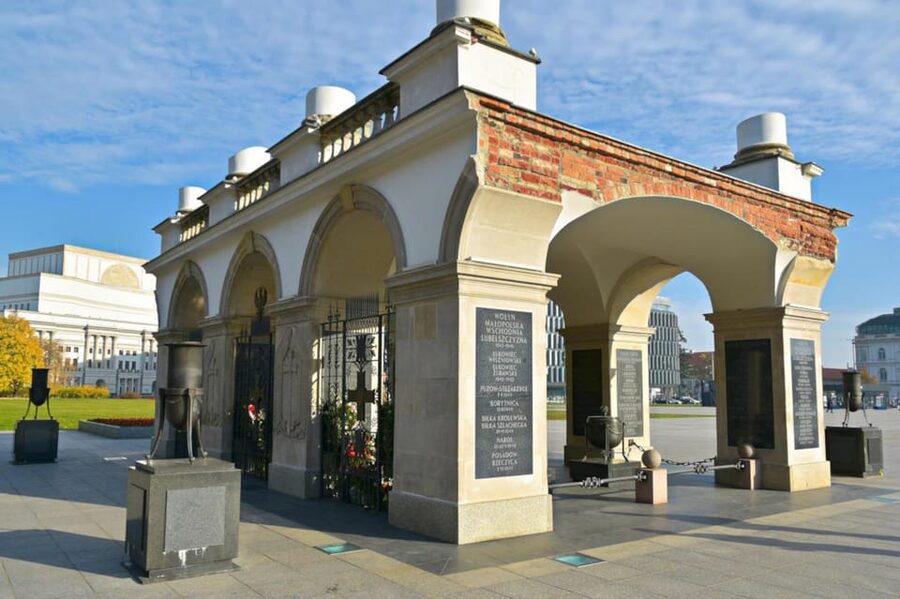
The route can include the Tomb of the Unknown Soldier, and the changing of the guard has been a memorable moment for some participants. It offers a different mood from the execution sites and resistance positions, connecting wartime memory with Poland’s public life today.
You should not assume every departure will pause for the exact same ceremony, since timing and route details can vary. Still, the tomb is a meaningful place to encounter during a Warsaw history walk. It gives you a chance to reflect on the many Polish soldiers and civilians whose names are not known.
The tour also helps you see Warsaw as more than a destroyed wartime city. The guides talk about rebuilding, survival, and national pride without pretending the scars have vanished. That balance is one of the best reasons to take the walk early in your stay.
You may leave with a better sense of why Warsaw feels different from a city whose old center survived largely intact. Much of what you see is reconstructed, restored, or shaped by postwar decisions. The guide helps you read those choices instead of taking the modern streets at face value.
How the guides handle a difficult subject
The guides receive the strongest praise for clear English, personal warmth, and strong command of the subject. Magda is repeatedly described as engaging and considerate, including on extremely cold days. Gosia is praised for keeping people involved across the route, while Andrew is noted for answering questions and explaining events with passion.
Piotr has been particularly effective at maintaining a light atmosphere without making light of the war. Iga is described as serious about the subject while still open to wider discussion. Albert is praised for explaining Poland’s painful and proud past with compassion, directness, and a well-timed sense of humor.
Those details matter because the quality of this tour depends heavily on the individual guide. The basic route is important, but the delivery determines whether the walk feels like a connected story or a string of unrelated stops.
You should also feel free to ask for clarification. One of the useful features of a small group is the chance to discuss difficult questions about Polish politics, civilian choices, resistance, or the treatment of different communities during the war.
Pace, weather, and access
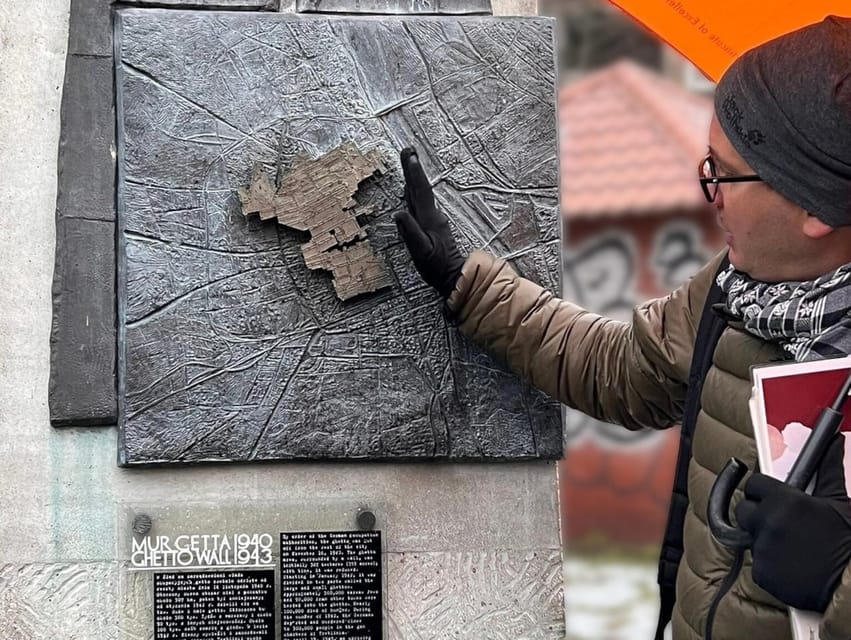
The tour lasts 150 minutes, which is long enough to cover several parts of Warsaw without taking up an entire day. One participant called the timing manageable, while another said the pace felt too quick for an older visitor. Both points are worth taking seriously.
This is a walking tour, not a gentle stroll. You will spend a substantial period on your feet, and the guide needs to keep the group moving between sites. If you have mobility concerns, mention them to yourself when deciding if this format suits you, even though the experience is listed as wheelchair accessible.
The route has been described as free of difficult steps and rough ground. That is encouraging, but accessibility is not the same as comfort. A long outdoor walk can still be tiring, especially in winter or for anyone who needs frequent sitting breaks.
Cold is the clearest practical risk. Tours have gone ahead in conditions around minus 17 and minus 20 Celsius, and some participants could not complete the full route. In such weather, dress for standing still as well as walking, and consider choosing a milder day if your schedule allows.
At the other extreme, the supplied information does not specify heat protection or shade, so bring what you normally need for an outdoor city walk. The guide can make the history compelling, but no storyteller can defeat uncomfortable footwear or poor clothing.
Is $20 good value?
At $20 per person, this is a low-cost way to put Warsaw’s wartime sites into a connected story. You are paying for a professional local guide rather than transport, museum admission, or a private tour.
I consider the price good value if you want historical context and personal interpretation. The photographs, maps, family memories, and explanations of political events add something you cannot get simply by walking from one memorial to another with a guidebook.
The value is also helped by the route’s range. In 150 minutes, you cover the Nazi occupation, the former Ghetto, both uprisings, execution sites, resistance positions, and postwar memory. You will not master every detail, but you will gain a useful framework for further visits.
The limitation is group size and time. You do not control the route, and a shared walk cannot give every stop the attention of a private historian. If you already have advanced knowledge of Warsaw in World War II, you may want a museum visit or specialist tour afterward.
Booking is flexible, with free cancellation up to 24 hours before the start and a reserve-now, pay-later option. Those terms are helpful in winter, when weather can affect your willingness to spend two and a half hours outside.
Who should book this Warsaw walk?
I would choose this tour for a first visit to Warsaw, especially if you want to understand how the city’s modern appearance relates to the war. It also suits families with older children and teenagers who can handle serious material and a sustained walk.
History enthusiasts will appreciate the range of subjects, but you do not need to arrive as an expert. The guides explain the background in accessible English, and the visual material gives newcomers a way into the story.
This is a strong choice if you prefer places and human stories to displays behind glass. It is less suitable if you want a relaxed sightseeing stroll, a private guide, or a tour focused only on military strategy.
Should you book it?
Book it if you want Warsaw’s World War II story explained on the streets where it happened, with local voices, photographs, and family memories. The strongest guides make complicated events understandable and treat the dead, the resistance, and civilian suffering with care.
Think twice if you dislike serious subjects, struggle with two and a half hours of outdoor walking, or will be visiting in extreme cold. For most visitors with suitable clothing and a genuine interest in Warsaw, the $20 cost is modest for the perspective you gain.
FAQ
How long does the World War II in Warsaw walking tour last?
The tour lasts 150 minutes, or two and a half hours.
What language is the tour conducted in?
The live tour guide speaks English.
How much does the tour cost?
The listed price is $20 per person.
Where do I meet the guide?
Look for an orange umbrella near the 20-meter-high column with a statue on top.
What places does the tour visit?
The route covers the former Nazi German District, the former Adolf Hitler Square, the former Jewish Ghetto, execution sites, and locations connected with Polish Resistance strongholds during the 1944 Warsaw Uprising.
Does the tour cover both Warsaw uprisings?
Yes. The tour addresses the 1943 Jewish Ghetto Uprising and the 1944 Warsaw Uprising.
Is the walking tour wheelchair accessible?
Yes, the experience is listed as wheelchair accessible.
Can I cancel for a full refund?
Yes. You can cancel up to 24 hours in advance for a full refund.
Can I reserve now and pay later?
Yes. The reserve-now, pay-later option lets you hold a place without paying at the time of booking.
Just added around Warsaw
- Taste of Poland, food tour and guided walk with 12 tasting★ 5.0 · 3 reviews
- Skip-the-Line Warsaw Royal Castle Private Guided Tour★ 5.0 · 4 reviews
- Secrets of Warsaw 4-hour Bike Tour★ 5.0 · 25 reviews
- Warsaw: Live Show at Sabat Theatre★ 4.5 · 11 reviews
- Private Warsaw City Tour★ 4.9 · 4 reviews
- Warsaw: WWII Private Tour by Retro Minibus with Hotel Pickup★ 5.0 · 7 reviews
- Private Tour From Warsaw: Łowicz Mazovian Countryside★ 5.0 · 10 reviews
- Packrafting kayaking guided tour Vistula river Warsaw Poland★ 4.5 · 14 reviews
Walking Tours, compared.
Gdańsk City Sights & History Guided Walking Tour in English
Read our review →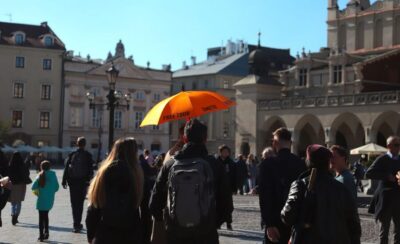
Browse the lists this tour appears in