
Reviewed · WROCLAW TOURS
Wrocław Centennial Hall and Surroundings Private Tour UNESCO
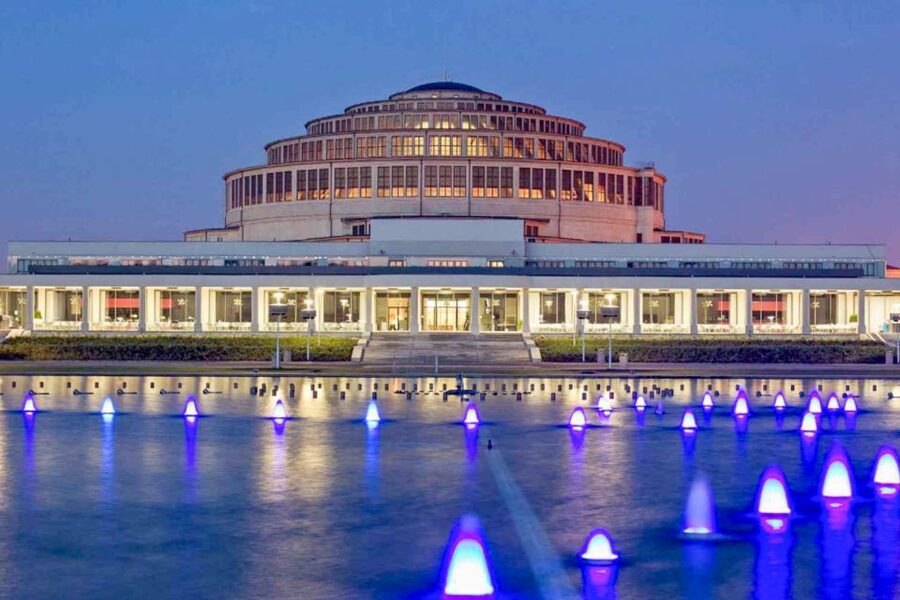
Wrocław’s Centennial Hall is the main event here: a vast concrete dome that changed modern architecture when it opened in 1913. I like that this private tour adds the Japanese Garden and Pergola water features, giving you more than a quick look at one famous building.
I also like the choice between entering the interactive museum and simply studying the hall from outside. A guide can explain the surrounding buildings, including the Four Domes Pavilion and WuWa 1929 exhibition, instead of leaving you to guess what you are seeing. The catch is important: the hall may close for concerts or events, and the garden has seasonal opening hours.
Key points
- UNESCO-listed architecture: See Centennial Hall, opened in 1913 and added to the UNESCO World Heritage list in 2006.
- Private guiding: The tour is for your group only, with guiding in Polish or German.
- A full park circuit: The route takes in Iglica, the Four Domes Pavilion, Pergola, Wrocław Fountain, Japanese Garden, and Centennial Hall.
- Extra admission costs: The multimedia museum costs 8 EUR per person, and the Japanese Garden costs 8 EUR per person.
- Summer is best for the grounds: The water features and Japanese Garden are most appealing when open and operating.
- Optional onward travel: On request, you can finish with a boat trip toward the Old Town, or continue toward the zoo and Afrikanarium.
Why Centennial Hall deserves two hours
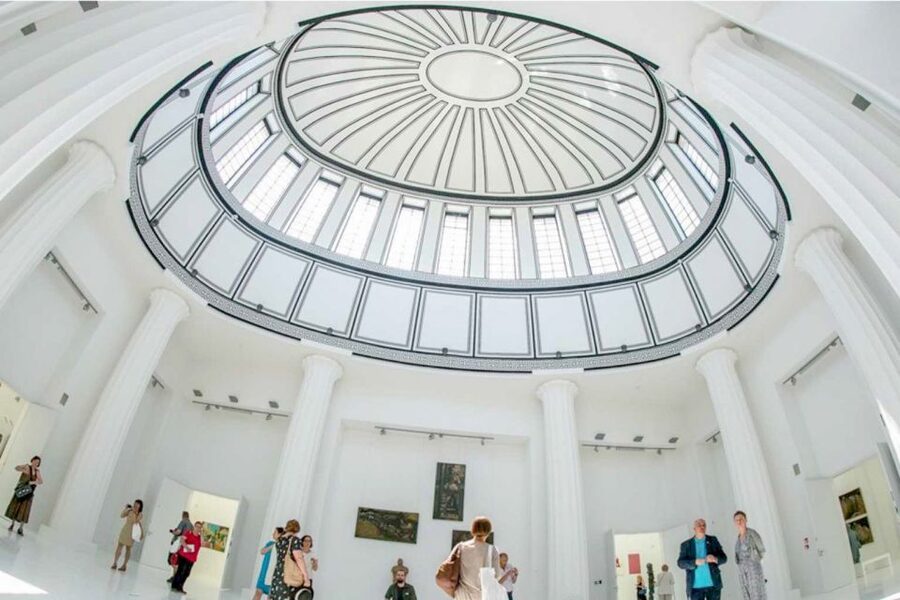
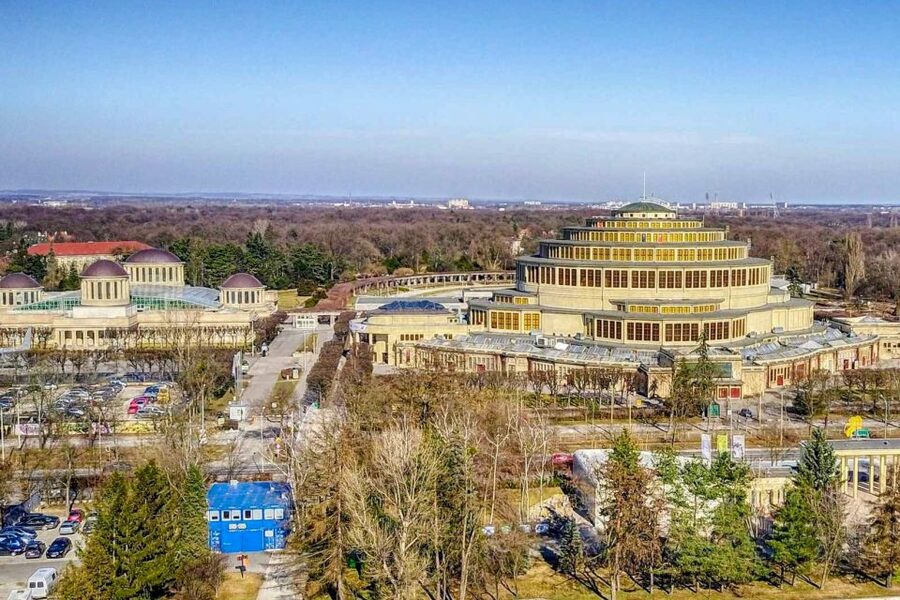
Centennial Hall is not a pretty old palace or a medieval church. It is a giant concrete experiment from the early 20th century, built when architects were testing what reinforced concrete could do. Its enormous dome was a bold engineering statement, and the building still feels oversized and unusual beside Wrocław’s older center.
That is the reason to book this experience. The hall is easier to appreciate when someone explains its scale, purpose, and place in the development of modern architecture. Without that context, you may simply see a large gray building and move on.
The tour begins at the main entrance, known locally by several names. In Polish it is Hala Stulecia, while older German references use Jahrhunderthalle. It was also called Hala Ludowa for a period after the Second World War. These names reflect the city’s changing political and cultural identity, and a good guide can help connect those layers without turning the visit into a lecture.
The tour is advertised at two hours, though the listed stops add up to longer than a quick walk. The plan includes 10 minutes at Iglica, 10 minutes at the Four Domes Pavilion, 10 minutes at Pergola, 10 minutes at the fountain, 30 minutes in the Japanese Garden, a 15-minute break, and 45 minutes at Centennial Hall. Treat two hours as the basic time frame, not a promise that every stop will receive its full listed duration.
A few more Wroclaw trips to weigh up
- Wroclaw: 2-Hour Private Guided Tour by Electric Car
★ 4.8 · 805 reviews - Wroclaw: Private Old Town Guided Walking Tour (2 hours)
★ 4.8 · 275 reviews - 2-Hours Private Electric Car Tour with a Guide, Wroclaw
★ 4.5 · 87 reviews
Iglica and the Four Domes Pavilion

Your first nearby landmark is Iglica, a tall needle-like structure beside the hall. The guide usually gives you a short explanation and a chance to take in the open space around it. It is a brief stop, but it helps you understand the scale of the complex before you enter the main building.
The Four Domes Pavilion is a more distinctive part of the visit. It was designed by Hans Poelzig and forms part of the exhibition area connected with the Wrocław visual arts scene. The pavilion also relates to WuWa 1929, a major modern housing exhibition held in Wrocław.
The WuWa project is especially useful for readers interested in design, architecture, or urban planning. It was not simply a display of isolated houses. It explored practical modern living and new forms of housing, making the pavilion and nearby buildings a valuable counterpoint to the monumental Centennial Hall.
The schedule allows about 10 minutes here, so do not expect a long museum visit unless you arrange extra time. If this subject interests you, ask the guide in advance how much attention can be given to the pavilion and WuWa 1929.
Pergola, Wrocław Fountain, and the summer water display
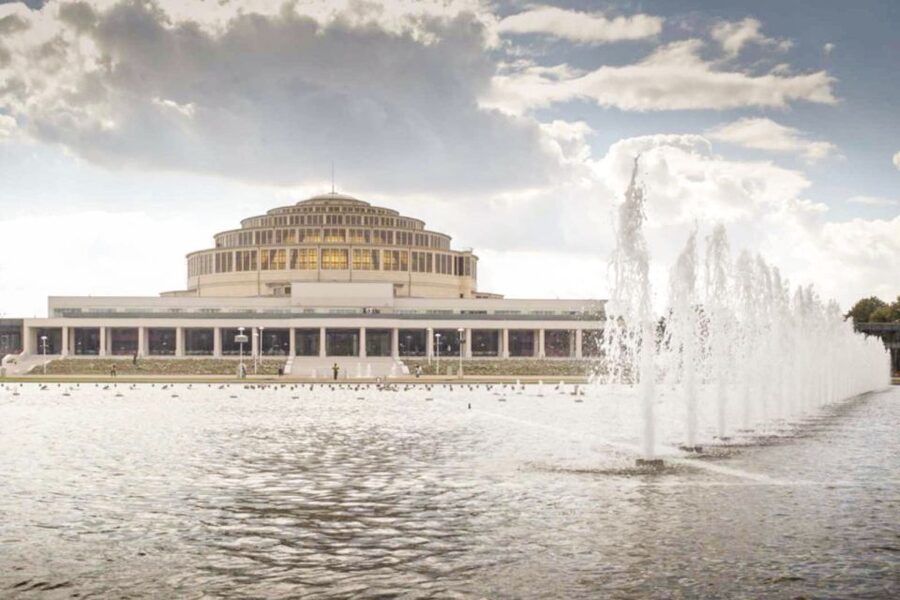
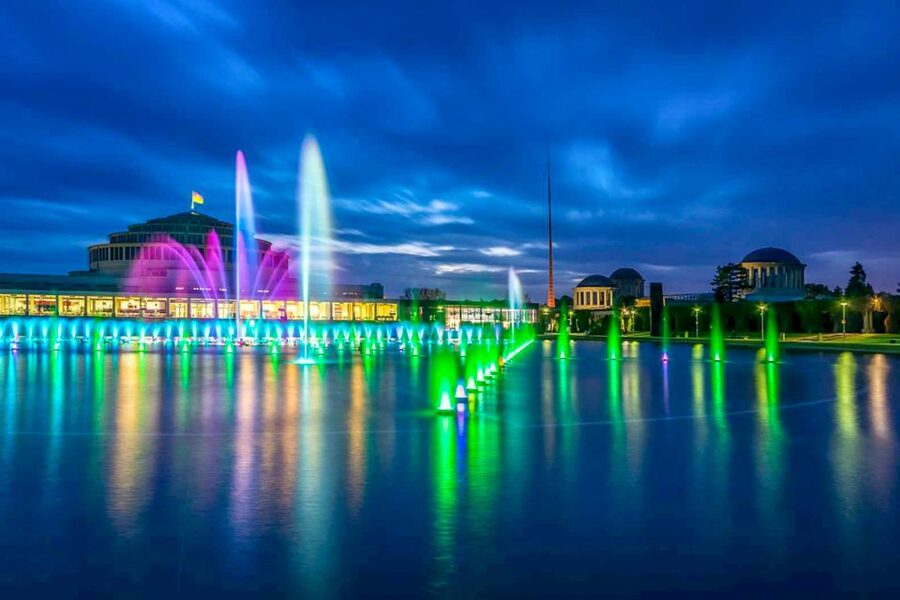
The Pergola curves around the open grounds near the hall. It is one of the most pleasant places on the route, especially when the water features are operating. In warm weather, you can pause beneath the long colonnade, watch the fountains, and take a break from the hard geometry of the concrete buildings.
The Wrocław Fountain is another short stop. Its shows and music events are not guaranteed as part of the tour, so think of this as a chance to see the fountain area rather than a promised performance. The 10-minute visit is enough for orientation and photographs, but not necessarily for a full program.
This section gives the experience a useful change of pace. Centennial Hall is about structure and engineering, while Pergola and the fountain add sound, movement, and open air. I would particularly favor this tour in late spring or summer, when the grounds make a stronger impression.
A short break at Restauracja Pergola follows. You can order Polish food, coffee, beer, or dessert while looking toward the water features. The meal is not included, and the stop is brief, but it gives you a practical place to rest. It also lets you turn the outing into a relaxed half-day visit if you add lunch and extra time around the site.
The Japanese Garden and its seasonal limits

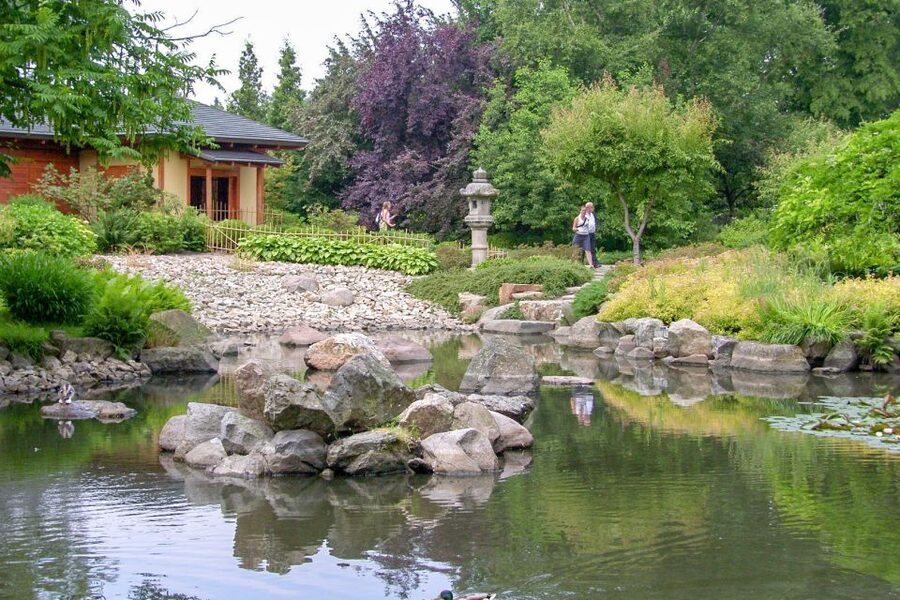
The Japanese Garden is the most peaceful stop on the route. Its paths, water, and planting create a clear contrast with the massive hall nearby. The garden is not just a decorative add-on. It shows how the grounds were planned to offer a quieter experience after the large public spaces around Centennial Hall.
The scheduled visit lasts about 30 minutes, making it the longest outdoor stop. That is enough for a pleasant walk, but you will not have time to linger at every corner. If gardens are a priority for you, arrive with the understanding that the tour may need to move on.
Admission costs an additional 8 EUR per person. The garden also has opening dates and hours that matter. One scheduled tour in November found the garden already closed, and another visit took place while the hall was unavailable because of renovation work. Check both sites before you commit to a date, especially outside summer.
The best practical approach is to ask the provider to confirm the garden and hall status shortly before your tour. The hall renovation was completed in 2023, which removed the long-running closure problem, but concerts and entertainment events can still affect indoor access.
Same country, a completely different kind of day:
- Wroclaw: E-Car Tour and Audio Guide
★ 4.6 · 1,738 reviews - Wrocław: Old Town and Ostrów Tumski Walking Tour in English
★ 4.8 · 311 reviews - Old Town Wrocław Walking Tour
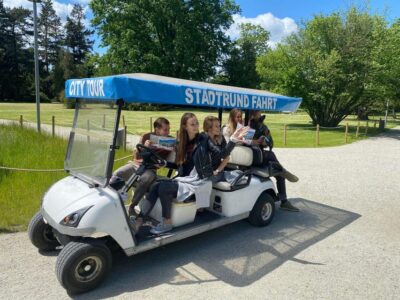
★ 5.0 · 249 reviews - Wroclaw: City Tour Sightseeing By Golf Cart Shared Or Privat
★ 4.8 · 189 reviews
Inside Centennial Hall and the interactive museum
If the hall is open, the interior is the payoff. The dome’s scale is hard to grasp from photographs, and standing beneath it gives you a better sense of the engineering challenge than reading a short description ever could. The guide can also point out how the building functions as an event space rather than as a traditional monument.
The indoor visit is listed at about 45 minutes. That is enough time for a guided look, though the exact route can change if an event is being prepared. Centennial Hall is still used for concerts and entertainment, so its availability is not entirely under the tour operator’s control.
When the main hall is closed, the Cognitive Center of Centennial Hall should remain open. This is a multimedia exhibition about the building, its design, and its construction. It offers a more structured visit than simply viewing the exterior, with interactive material that can help children and adults understand the building.
Admission to the multimedia museum costs 8 EUR per person. That fee is not part of the $40 tour price, so budget $16 in additional entry charges if you want both the museum and Japanese Garden. The guide’s professional service is included, but the separate site tickets are not.
The museum is not quite the same as entering the actual dome. If the hall is closed, you lose the strongest architectural moment, even if the exhibition remains useful. For this reason, I would not book without checking the expected indoor program if seeing the interior is your main reason for coming.
The optional boat ride toward Wrocław’s Old Town
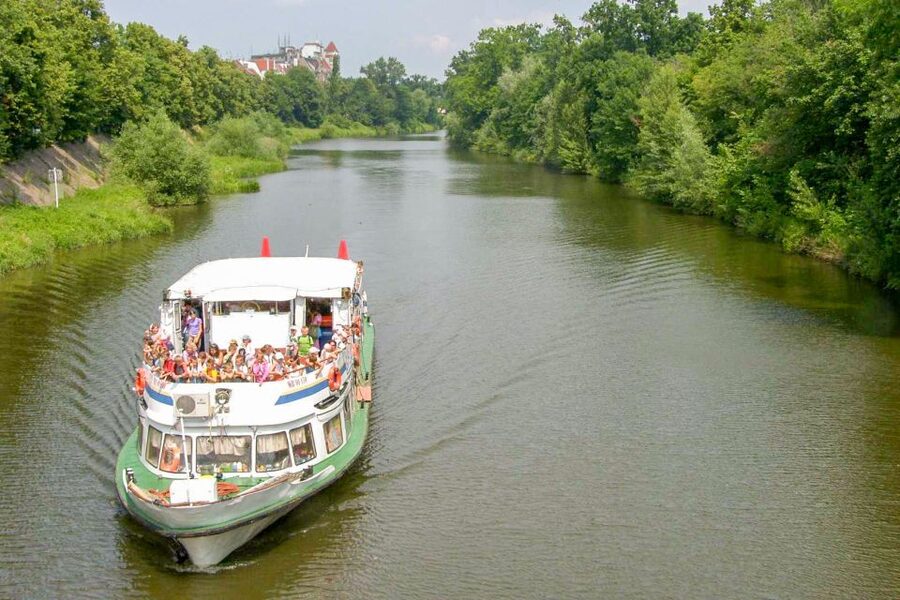
The tour can finish at the Centennial Hall, or you can continue on your own from the pier. On request, a boat trip can take you toward the Old Town. This is a useful option because the hall complex is away from the market square, and a river journey offers a different way to connect the two parts of Wrocław.
The boat ride is not included in the stated tour price, and no duration or fare is provided. Ask for those details before booking the extra activity. Since it is an optional addition, you should also confirm whether the guide travels with you or simply directs you to the pier.
Another possible continuation is the zoo with its Afrikanarium. The experience information does not include the zoo admission or time needed there, so treat it as a separate plan rather than a guaranteed part of the two-hour tour. If you want to visit the zoo, allow much more time than the basic Centennial Hall walk.
What the private format is worth at $40
At $40 per person, the price is reasonable when you are traveling as a small private group and want explanation in Polish or German. You are paying for a licensed guide focused only on your party, not for a large group moving from one stop to the next.
The value depends on how much you use the guide. If you only want photographs of the dome, you can see much of the exterior without paying for a private tour. The guide becomes more useful when you want to understand WuWa 1929, the pavilion, the changing names of the hall, and the relationship between the architecture and the surrounding grounds.
Remember the extra costs. The museum is 8 EUR per person, and the Japanese Garden is another 8 EUR. Food, drinks, and any boat ride are also separate. For a couple or family that wants the full version, the final cost is noticeably higher than the headline price.
The private setup also gives you a chance to shape the outing. Ask for more architecture and less garden, or the reverse. You can request the Four Domes Pavilion, the WuWa material, or a stop at the restaurant. The supplied information does not promise that every optional element will receive equal time, so make your priorities clear at the start.
Guide quality and what to confirm before you go

The strongest experience depends on the guide. One particularly good visit included a guide who answered questions confidently and added a small city tour when cold weather made the outdoor route less comfortable. That flexibility is a real advantage of a private booking.
The language choices are Polish and German. No English option is listed, so English-speaking visitors should confirm language availability before paying. The guide is described as a professional licensed guide, and the private group format means you should be able to ask questions at your own pace.
The main risk is not only weather. Event closures can affect the central building, and seasonal hours can close the Japanese Garden. Ask these questions before your date:
- Will the main hall be open inside?
- Will the Cognitive Center be open if the hall is closed?
- Is the Japanese Garden open on the planned day?
- Can the Four Domes Pavilion and WuWa 1929 receive the intended amount of time?
- Is the boat option running, and what does it cost?
The experience has had a mixed record when closures were announced late. One past visit was affected by a long renovation closure, with too little time for a useful alternative. That problem was made worse by a guide who struggled to adjust the visit. The renovation ended in 2023, but the lesson remains simple: confirm the current program, and do not assume the advertised indoor route is guaranteed.
Who should book this Wrocław tour
I would recommend it to anyone curious about modern architecture, Polish urban design, or the parts of Wrocław that sit beyond the historic center. It also suits families who prefer a private guide and want an interactive museum option instead of a long formal lecture.
The tour works well for German-speaking visitors, since German guiding is available. Polish speakers have the same advantage. If you need English, confirm before booking because it is not listed among the available languages.
You should also book it if you like flexible outings. The garden, restaurant, boat ride, zoo, and museum let you build a longer visit around the basic walk. It is less suitable if you want a guaranteed concert, a full museum day, or a fixed boat transfer to the Old Town.
For the best experience, choose a season when the garden is open and the fountain area is active. Give yourself extra time after the official tour if you want to eat at Restauracja Pergola, visit the zoo, or linger over the architecture.
Should you book it?
Book this private tour if you want the story behind Centennial Hall, not just a photograph of its dome. The combination of UNESCO architecture, WuWa 1929, the Four Domes Pavilion, Japanese Garden, and Pergola makes the outing broader and more worthwhile than a single-building visit.
I would book after confirming indoor access and garden hours. At $40 per person, it offers solid value for a private Polish or German-speaking guide, but the extra admission fees and possible closure changes matter. If the hall is open, the garden is operating, and you enjoy modern design, this is a good way to spend two hours in Wrocław.
FAQ
Where does the Centennial Hall tour begin?
Meet at the big main entrance to Centennial Hall, also called Hala Stulecia or Jahrhunderthalle.
How long does the tour last?
The advertised duration is two hours. The planned stops include several short visits, 30 minutes in the Japanese Garden, a 15-minute break, and about 45 minutes at Centennial Hall.
What languages are available?
The live guide is available in Polish or German.
Is the tour private?
Yes. The guide is reserved for your group, rather than a shared group.
Is entry to Centennial Hall included?
The professional guide is included, but the 8 EUR per person entrance fee for the Centennial Hall multimedia exhibition is not included.
Is the Japanese Garden ticket included?
No. Entry to the Japanese Garden costs 8 EUR per person and must be paid separately.
Can I take a boat to Wrocław’s Old Town afterward?
A boat trip from the pier to the Old Town can be arranged on request. The boat fare and travel time are not included in the stated tour price, so confirm those details in advance.
Just added around Wroclaw
- Wrocław: World War II and the non-existent city of Breslau★ 3.6 · 3 reviews
- Wrocław to Rock City in Adrspach and Project Riese day trip★ 5.0 · 5 reviews
- Wroclaw: WW2 Tour to Project Riese & Gross-Rosen Museum★ 4.8 · 26 reviews
- Wroclaw: University Baroque Tour★ 5.0 · 19 reviews
- Wroclaw : Walking Custom Tour with a Local Guide★ 4.8 · 3 reviews
- Wrocław: Tour of the Old Town in an Imperial E-car★ 4.3 · 13 reviews
- Wroclaw to Rock City in Adrspach and Ksiaz Castle day trip★ 4.9 · 16 reviews
- Wroclaw: 3-Hour Bike Tour in English or Polish★ 4.8 · 66 reviews
Wroclaw Tours, compared.

Old Town and Ostrów Tumski Walking Tour in English
Read our review →
City Tour Sightseeing By Golf Cart Shared Or Privat
Read our review →

Browse the lists this tour appears in