
Reviewed · CYCLING TOURS
Wroclaw: 3-Hour Bike Tour in English or Polish
Wroclaw reveals itself quickly from a bicycle. In three hours, you can move from the baroque Old Town to Cathedral Island, cross the Oder, and reach Centennial Hall without spending your morning waiting in traffic. The route packs in major sights, small monuments, parks, bridges, and city views.
I like the way this tour gives your feet a break while still covering a lot of ground, and I like the mix of grand sights and odd little details, including the Spiż monument of slaughterhouse animals. The main consideration is pace: you see many places, but several stops are brief, and one older account described a ride closer to two hours rather than three.
Key points to know
- Three hours, many districts: The route links Old Town, Cathedral Island, Grunwaldzki Square, Szczytnicki Park, and the Centennial Hall area.
- A story-led ride: Guides including Artur, Anthony, Hubert, and Martin have been praised for clear explanations, local stories, and Polish history.
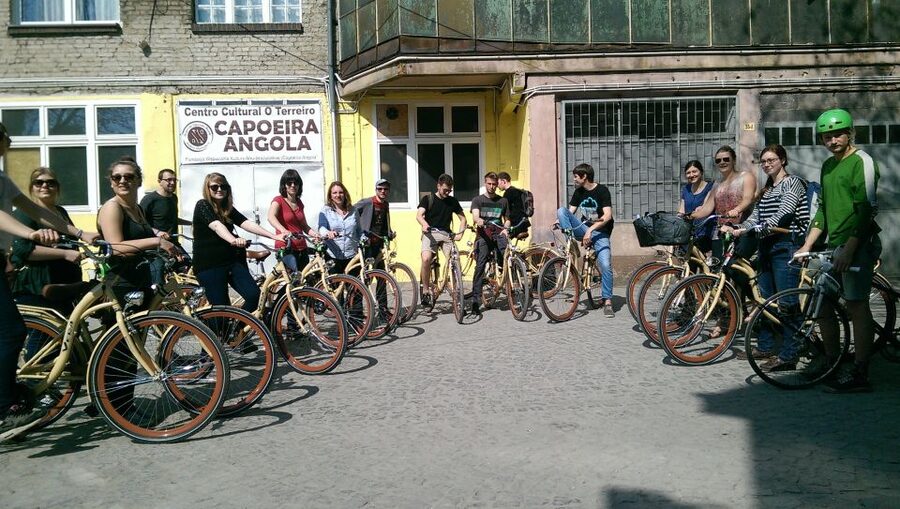
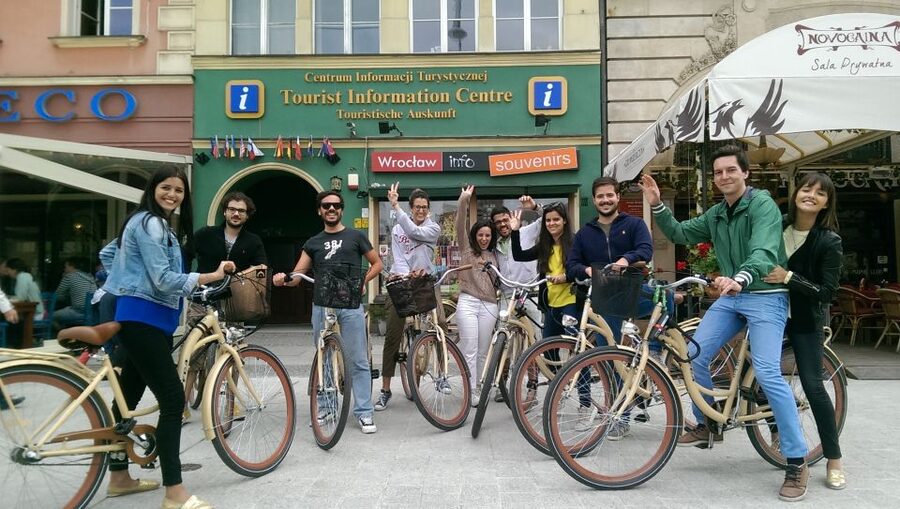
- Well-equipped bikes: City bikes come with lights and security locks, useful for an urban ride that includes bridges and park roads.
- A strong first look at Wroclaw: You cover more ground than on foot and can mark places to revisit later.
- English or Polish guiding: Choose the language that suits you when booking.
- Plan for active sightseeing: Comfortable shoes are required, alcohol and drugs are not allowed, and the tour is not suitable for pregnant women.
Why a bicycle works so well in Wroclaw
Wroclaw is a city of separate pockets. Its market square and old lanes form one clear center, but Cathedral Island lies across the river, while Centennial Hall, the zoo, Japanese Garden, and Szczytnicki Park sit farther east. On foot, you can see these areas, but fitting them together in one short outing takes time and energy.
A bicycle smooths out that problem. You can cross from the Old Town to the Oder islands, then continue toward Grunwaldzki Square and the large park district without treating every leg as a major walk. You also avoid the stop-and-start feel of a vehicle in city traffic.
The point is not speed for its own sake. A guide can keep you moving between sights while stopping to explain what you are seeing. That makes the ride a useful first introduction, especially if you have only a short stay in Wroclaw.
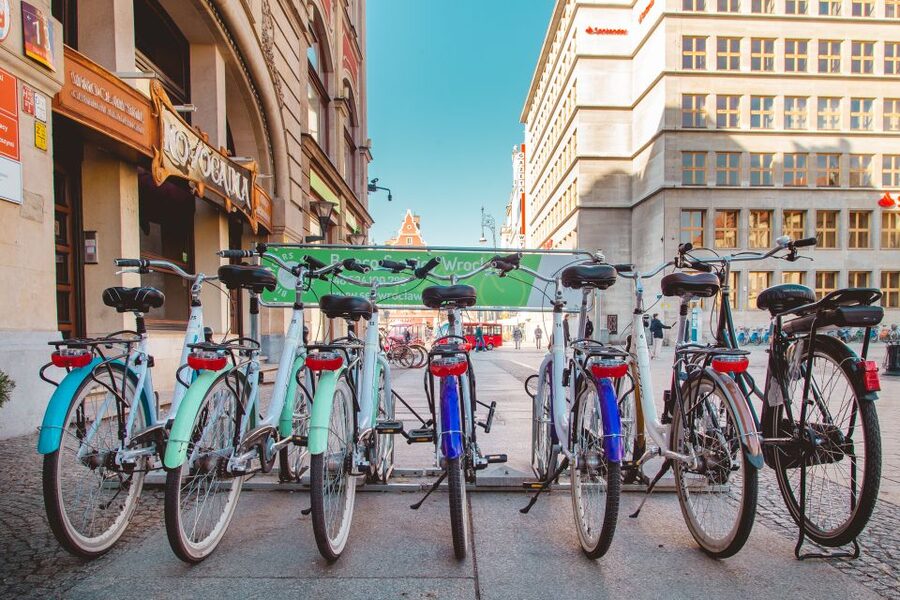
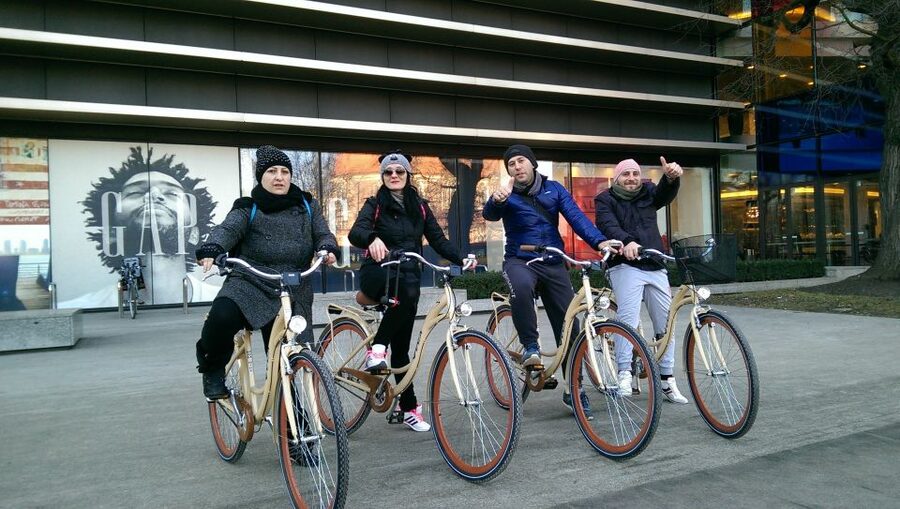
You receive a quality city bike with lights and a security lock. The bikes are described as well maintained and stylish, and the equipment matters more than it may sound. A poor bicycle can turn a pleasant city ride into work. Here, the supplied details and strong comments about the bikes suggest that the basic gear should not be a concern.
A few more Wroclaw trips to weigh up
- Wrocław Bike Rental
★ 4.6 · 13 reviews - Wroclaw: 3-Hour Bike Tour in English
★ 5.0 · 8 reviews - Bike Tour of Wroclaw Old Town, Top Attractions and Nature
★ 5.0 · 5 reviews
Beginning among Wroclaw’s rebuilt Old Town sights

The ride takes in the Main Square, the House of Old Stock Exchange, the Salt Market, and the Old Town Promenade. This is the best place to begin because Wroclaw’s central district gives you the city’s most familiar face: ornate facades, formal squares, narrow lanes, and a mix of architectural periods.
The Old Town’s baroque buildings are especially important because much of central Wroclaw was carefully rebuilt after World War II. A guide can help you read the rebuilt streets as more than pretty scenery. The shapes, facades, and public buildings reflect both the city’s older German past and its later Polish identity.
You also pass Jatki, an old lane associated with the city’s butchers, and the Spiż monument of animals for slaughter. It is an unusual detail on a standard city route. Instead of giving you only grand churches and official buildings, the stop points toward everyday trade and the working life of the old city.
The Old City Prison adds another layer. It is easy to walk past a building like this without knowing what it was used for. A guide’s explanation gives the street more meaning and helps connect Wroclaw’s attractive center with less polished parts of its past.
The Swordsman Monument offers a different kind of pause. These smaller stops are useful because they break up the architectural survey. You are not simply being taken from one famous building to another. You are also given names, stories, and visual clues that can make later wandering more rewarding.
Crossing to Cathedral Island and the Oder
Ostrow Tumski, also called Cathedral Island, is the oldest part of Wroclaw and one of the tour’s main changes of mood. After the commercial and civic center, the route leads you into an area shaped by churches, river crossings, and a quieter sense of place.
The name Cathedral Island can be slightly misleading today because it is no longer a true island, but that detail is exactly the sort of context a good guide can supply. The area’s age and religious importance make it one of the most useful places for understanding how Wroclaw began.
You also pass the Ossolineum, a major cultural and educational institution, and the National Museum. These buildings help widen the picture beyond the Old Town. Wroclaw is not only a reconstructed medieval-style center. It is also a university city with museums, archives, libraries, and public institutions.
The route’s river crossings are part of the appeal. From a bike, you get changing views of the Oder and Wroclaw’s bridges without stopping for a long transfer. The Zwierzyniecki Bridge later adds another memorable crossing as the route heads toward the eastern sights.
From University buildings to Grunwaldzki Square
The University of Wroclaw is another major stop on the central portion of the ride. Its presence helps explain the city’s student energy and intellectual life, while the building itself adds another strong architectural note to the route.
The Market Hall offers a more practical view of Wroclaw. A market is not just a sightseeing object. It shows how a city feeds itself, trades, and uses public space. The route does not promise a food stop, so do not book this tour expecting a meal or a long browsing break. You should see it as a visual and historical stop.
The ride then heads toward Polish Hills and Grunwaldzki Square. These places move you away from the tight medieval street pattern and into broader urban spaces. That shift is useful because it shows how Wroclaw grew beyond its old core.
I would pay attention here to the change in scale. The central streets make you look upward at facades and towers. The wider squares and river roads give you longer views and a better sense of how the districts connect. This is one reason cycling works better than a walking tour for the full route.
Same country, a completely different kind of day:
- Wroclaw: E-Car Tour and Audio Guide
★ 4.6 · 1,738 reviews - Wroclaw: 2-Hour Private Guided Tour by Electric Car
★ 4.8 · 805 reviews - Wrocław: Old Town and Ostrów Tumski Walking Tour in English
★ 4.8 · 311 reviews - Wroclaw: Private Old Town Guided Walking Tour (2 hours)
★ 4.8 · 275 reviews
Centennial Hall, Iglica, and the eastern parks
Centennial Hall is the eastern climax of the ride. It is an architectural masterpiece and a UNESCO World Heritage Site, but the value of seeing it with a guide goes beyond checking off a major attraction.
Its scale and design make more sense when you have room around it. The building belongs to a different architectural story from the baroque Old Town. You move from reconstructed historic streets to a bold modern-era structure, then into the surrounding park and exhibition district.
The nearby Iglica is another distinctive landmark. Its tall, needle-like form is easy to spot and gives the area a clear visual marker. You also pass the Wroclaw Zoo and the Japanese Garden, two attractions that many people might otherwise leave for another day.
The Japanese Garden and Szczytnicki Park bring a welcome change after the stone and traffic of the center. The route gives you a taste of Wroclaw’s open green spaces, though you should not expect a long garden visit. Three hours is enough to see the setting and understand where the attractions are, not enough for a full exploration of every one.
That distinction matters. This is a sightseeing circuit, not a series of extended visits. You may pause at selected sights, but the guide needs to keep the group moving so the full route fits into the allotted time.
What the guides add to the ride
The strongest part of this experience is the guiding. Artur has been praised for his stories and historical facts. Anthony is noted for giving substantial background information, and Hubert is described as a passionate storyteller who links buildings, street names, relics, and local history.
Martin is also praised for explaining Polish history and his city in an engaging way. Those comments point to a useful quality: the tour is not just a person leading a line of bicycles from place to place. The guide is expected to interpret what you see.
The exact personality will depend on your assigned guide, so do not book on the assumption that you will receive a particular person. Still, the repeated praise for several different guides suggests that the operator has more than one strong guide available.
The style seems best suited to you if you enjoy facts, dates, and stories. One account found the tour very informative but wished for less emphasis on dates and more riding around the city. That is a fair warning. If you want a relaxed cycle with little commentary, this may feel talk-heavy. If you want a city orientation with context, that is a strength.
The ride also appears to include short pauses where you can look around more closely. One rider valued being able to stop briefly at sights and explore them in greater depth. Just keep your expectations realistic: this is not a private walking tour at every monument.
A closer look at timing, pace, and comfort
The advertised duration is three hours. That is long enough to cover the main route but short enough to fit into a morning or afternoon. Check the available start times when booking, since the exact schedule is not fixed in the basic activity details.
Arrive at the meeting point 15 minutes early. This gives you time to get organized before the ride begins and avoids cutting into the sightseeing time. Comfortable shoes are specifically recommended, even though you will be cycling. You will still spend time standing beside the bike and walking around stops.
The pace appears generally leisurely rather than athletic. One account described a fun, relaxed ride, while another wished the tour had included more cycling. That tells you the emphasis is on guided sightseeing, not exercise or a fast circuit.
A hot day can make three hours on a bicycle feel longer, especially when you are stopping in open areas. Bring what you need for ordinary outdoor comfort, but stay within the supplied guidance and arrive sober. Anyone under the influence of alcohol or drugs will not be allowed to participate.
The tour is not suitable for pregnant women. The route includes regular cycling, street movement, and stops, so this restriction should be taken seriously rather than treated as a minor footnote.
Is $80 a fair price for three hours?
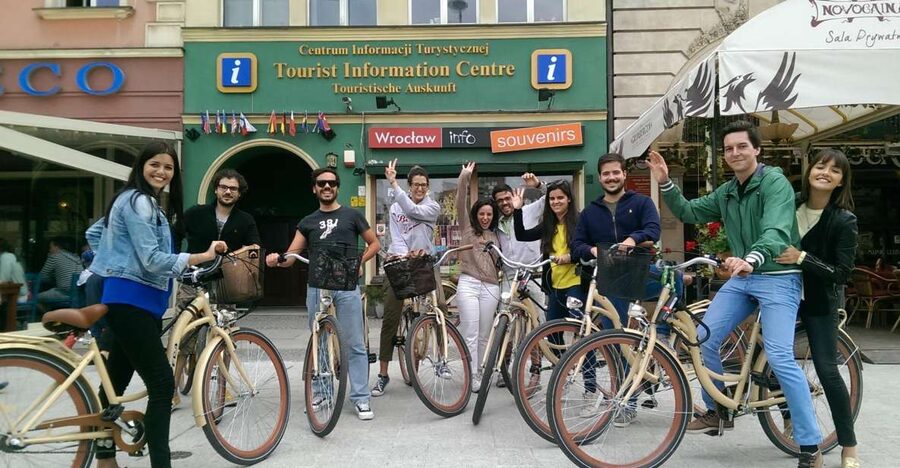
At $80 per person, this is not the cheapest way to see Wroclaw. The value depends on what you want from the outing.
The price includes the city bike, lights, security lock, and an English or Polish speaking guide. You are paying mainly for the route planning and interpretation. If you tried to cover Old Town, Cathedral Island, the museum district, Grunwaldzki Square, Centennial Hall, and Szczytnicki Park alone, you would need to plan the connections yourself and might miss the historical links between them.
The price makes better sense for a first day in Wroclaw, a short city break, or anyone who wants a broad orientation before exploring selected areas on foot. It is less attractive if you already know the city, prefer to rent a bike independently, or want long visits inside museums and monuments.
There is also practical value in avoiding traffic jams and reducing the amount of walking between districts. You see more than a compact Old Town tour can offer, while still keeping the outing to three hours.
Free cancellation up to 24 hours before the start and the option to reserve now and pay later make the booking less rigid. Those policies do not change the tour’s price, but they can help if your Wroclaw schedule is still shifting.
One small point deserves attention: an older account described the experience as lasting only two hours and wished for a longer ride. The current details specify three hours, but I would still confirm the duration and starting time on your booking confirmation.
Who will get the most from this Wroclaw bike tour?
I would choose this tour for a first visit when you want to understand Wroclaw’s layout quickly. It suits active adults, couples, solo visitors, and small groups who like a guide’s explanation but do not want to spend the whole day inside a formal walking tour.
It is especially useful for people staying near the Old Town who plan to visit Centennial Hall, the zoo area, or Szczytnicki Park later. After the ride, you will know how the eastern district connects to the center and which sights deserve a longer return visit.
History-minded visitors should also find plenty to enjoy, particularly if they like the effects of war, rebuilding, changing national identities, and urban growth. The route offers many points for that kind of story, from the reconstructed Old Town to Cathedral Island and the modern design of Centennial Hall.
I would be more cautious if you dislike frequent commentary, have difficulty cycling for three hours, or want to spend serious time inside each attraction. The tour passes the Wroclaw Zoo, Japanese Garden, National Museum, and Centennial Hall area, but the supplied information does not include admission to these places or promise extended visits.
Practical booking advice before you go
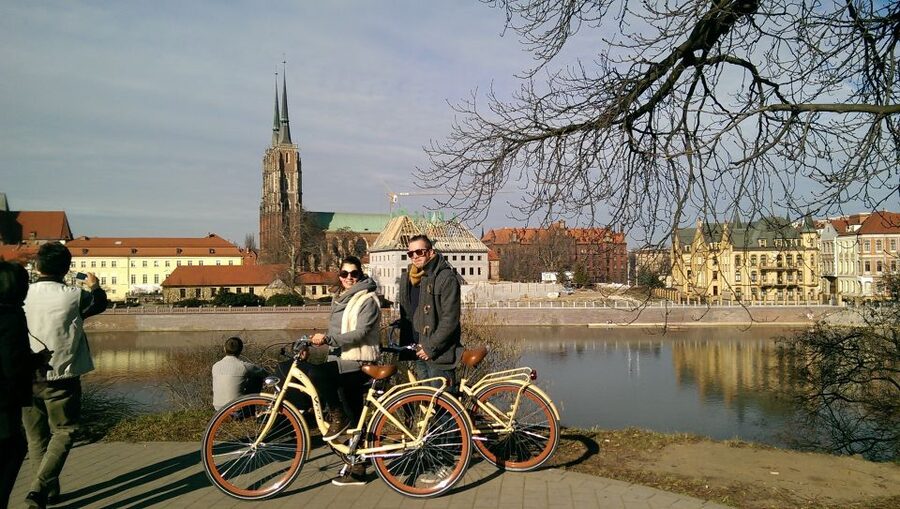
Choose your language carefully. The tour is offered in English or Polish, and the quality of the experience depends heavily on being able to follow the guide’s stories and explanations.
Wear comfortable shoes and arrive 15 minutes before the start. Do not arrive after drinking, and note that pregnant women should choose another way to see the city.
Think of the ride as an orientation rather than a complete visit to every landmark. Bring a short list of places you may want to revisit, especially Centennial Hall, Cathedral Island, the Market Hall, or Szczytnicki Park.
The bikes include lights and security locks. That is useful equipment, but the tour details do not promise helmets, food, entrance tickets, or hotel pickup. Plan on a guided outdoor ride, not an all-inclusive attraction package.
Should you book this tour?
Book it if you want a lively first look at Wroclaw and value stories as much as photographs. The route covers an unusually broad spread of the city, and the combination of Old Town, Cathedral Island, river bridges, Centennial Hall, and Szczytnicki Park gives you a much better sense of Wroclaw than a short central walking tour.
The main tradeoff is depth. You will see many places, but you will not fully explore them all. At $80, the tour is worth it for the guide, the efficient route, and the chance to connect districts without tiring your feet. It is not the best choice for a quiet, unhurried ride or a low-cost bicycle rental.
For most first-time visitors who can comfortably cycle and enjoy clear historical commentary, I would book it near the start of the stay. Use the ride to get oriented, then return on foot to the places that catch your interest.
FAQ
How long is the Wroclaw bike tour?
The tour is advertised as lasting three hours. An older booking account described a shorter two-hour experience, so check the confirmed duration when you book.
What languages are available?
The tour is available with an English or Polish speaking live guide.
What sights are included?
The route includes Wroclaw’s Main Square, Old Town Promenade, Jatki, the Spiż monument of animals for slaughter, Old City Prison, University of Wroclaw, Swordsman Monument, Ossolineum, Market Hall, Polish Hills, Grunwaldzki Square, Zwierzyniecki Bridge, Wroclaw Zoo, Japanese Garden, Iglica, Szczytnicki Park, National Museum, House of Old Stock Exchange, Salt Market, Cathedral Island, and Centennial Hall.
Is bicycle equipment included?
Yes. The tour includes quality city bikes with lights and security locks.
Do I need to bring anything?
You should bring comfortable shoes. The supplied information does not list any other required item.
How early should I arrive?
Arrive at the meeting point 15 minutes before the activity begins.
Can I cancel the booking?
You can cancel up to 24 hours in advance for a full refund.
Do I have to pay when I book?
The reserve-now, pay-later option allows you to book your spot without paying immediately.
Is the tour suitable for pregnant women?
No. The tour is not suitable for pregnant women. People under the influence of alcohol or drugs will also not be allowed to participate.
Just added around Wroclaw
- Wrocław: World War II and the non-existent city of Breslau★ 3.6 · 3 reviews
- Wrocław to Rock City in Adrspach and Project Riese day trip★ 5.0 · 5 reviews
- Wroclaw: WW2 Tour to Project Riese & Gross-Rosen Museum★ 4.8 · 26 reviews
- Wroclaw: University Baroque Tour★ 5.0 · 19 reviews
- Wroclaw : Walking Custom Tour with a Local Guide★ 4.8 · 3 reviews
- Wrocław: Tour of the Old Town in an Imperial E-car★ 4.3 · 13 reviews
- Wroclaw to Rock City in Adrspach and Ksiaz Castle day trip★ 4.9 · 16 reviews
- Wroclaw: Third Reich and World War Two Historical Tour★ 4.9 · 43 reviews
Cycling Tours, compared.
Complete Cracow Bike Tour (small group of maximum 15 people!)
Read our review →
Bike Tour of Old Town, Jewish Quarter and the Ghetto
Read our review →
Full Bike Tour – the Old Town, Jewish Qtr & the Ghetto NEW BIKES
Read our review →
Bike Tour of the Old Town, Kazimierz, and the Ghetto
Read our review →
Half-Day Warsaw City Sightseeing Bike Tour for Small Group
Read our review →Browse the lists this tour appears in