
Reviewed · WARSAW TOURS
From Warsaw: Guided Tour of Treblinka Camp
Treblinka is not a place of grand ruins or preserved barracks. Nazi Germany destroyed most of the camp before the war ended, trying to erase the evidence. What remains is a forest memorial, stone markers, reconstructed details, and an absence that can feel more powerful than a building. This six-hour trip from Warsaw gives that difficult place the context it needs.
I like the hotel pickup and small-group feel, which remove much of the fuss from reaching a remote site. I also like the guides’ personal approach. Leszek, Janusz, Marek, Jan, and others are praised for using maps, memoirs, and clear explanations rather than simply pointing out memorials. The main drawback is price: at $134 per person, this is not a cheap half-day outing, especially for a solo visitor, and some people may want more time at Treblinka instead of additional Warsaw stops.
Key points to know before booking
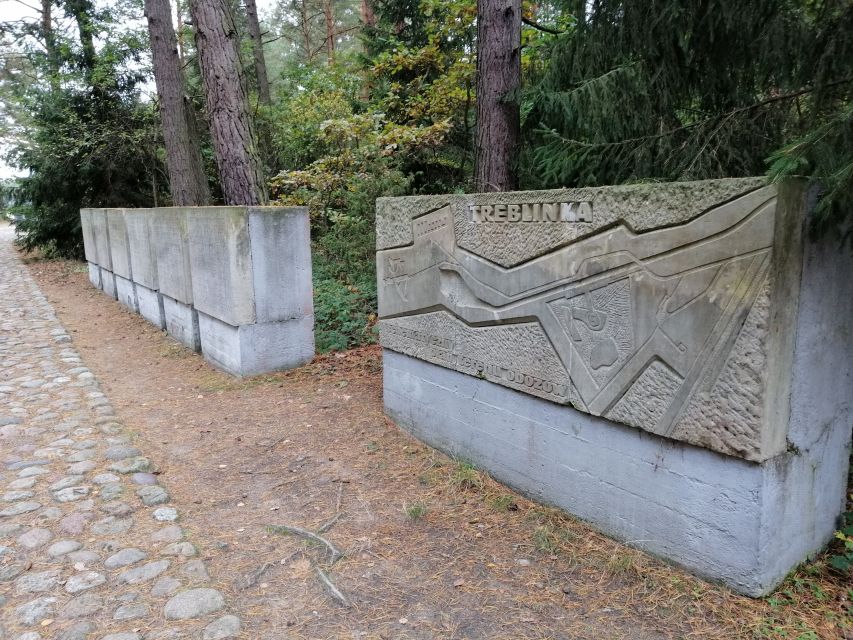
- Treblinka is a memorial site, not a preserved camp complex: Most buildings were demolished, so the visit depends heavily on your guide’s explanation.
- The museum and miniature model provide essential context: They help you understand how the extermination camp was arranged and operated.
- Hotel pickup and drop-off are included: You avoid arranging transport to a remote site northeast of Warsaw.
- Guides are the strongest part of the experience: Leszek, Janusz, Marek, Jan, and other English-speaking guides are praised for detailed explanations and respectful service.
- The tour also covers the Penal Labour Camp: You walk among ruins connected with about 20,000 prisoners held there from 1941 to 1944.
- Bring food, water, and good shoes: Meals are not included, and the visit involves walking outdoors on memorial grounds.
Why Treblinka feels different from Auschwitz
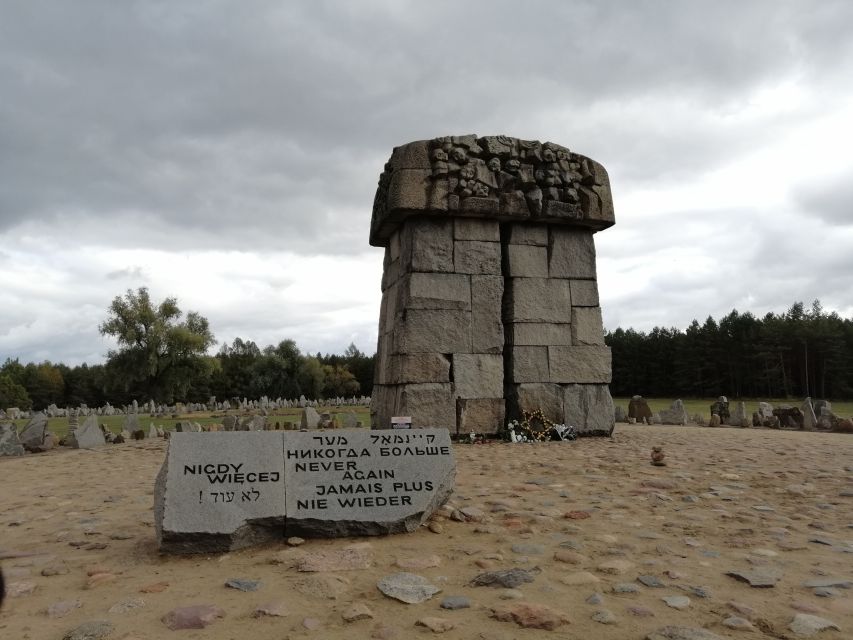
Many people first learn about Nazi camps through preserved buildings, railway platforms, barracks, and piles of personal belongings. Treblinka offers almost none of that. It was built as an extermination camp, and after the prisoner uprising in August 1943, the Nazis dismantled it, removed traces of the murders, and tried to return the site to ordinary use.
That destruction shapes the entire visit. You are not walking into a gas chamber or looking through a row of barracks. You are walking through a place that was intentionally made difficult to read. The memorial work, museum material, and guide’s explanation help you reconstruct what cannot be seen.
Treblinka operated from July 22, 1942, to October 19, 1943, as part of Operation Reinhard, the deadliest phase of the Nazi campaign to murder Europe’s Jews. An estimated 700,000 to 900,000 Jews were killed there, along with about 2,000 Romani people. More Jews were murdered at Treblinka than at any Nazi extermination camp except Auschwitz.
That scale is hard to grasp from statistics alone. A good guide links the numbers to the machinery of deportation, the railway, the camp layout, and the testimonies of people who survived. This is why I would not treat the excursion as a simple transfer to a memorial. The explanation is central to the visit.
A few more Warsaw trips to weigh up
- 3-Hour Guided Cycling Tour of Warsaw
★ 4.9 · 624 reviews - Warsaw: Old Town Guided Walking Tour
★ 4.9 · 599 reviews - Half-Day Polish Food Walking Tour with Guide and Dinner
★ 4.5 · 381 reviews
Leaving Warsaw in a private vehicle
The day begins with pickup at your accommodation in Warsaw. You meet your driver or guide, settle into an air-conditioned vehicle, and travel northeast toward the Treblinka site in Mazovia Province.
The transport is one of the practical strengths here. Recent departures have used comfortable cars or Mercedes minibuses, with punctual drivers such as Kris, Maciej, Mateusz, and Marzena receiving warm praise for friendly service. The exact vehicle and staff can vary, but hotel pickup and drop-off are included.
The drive also gives your guide time to explain the wider setting. Some departures have included Warsaw locations tied to the deportation of Jews from the city, including the Umschlagplatz. That added context can help you understand how people were moved from Warsaw toward Treblinka. At the same time, one point is worth checking before you book: one visitor would have preferred spending more time at Treblinka rather than stopping at Warsaw’s Umschlagplatz.
You should also ask questions during the drive, but keep in mind that one person found a small microphone would have made it easier to hear the guide while the vehicle was moving. This is a minor issue, yet it matters if you have hearing difficulties or want to follow every detail.
Food is not included. Bring a snack and drinks, especially if you prefer not to wait until the return to Warsaw. Some visitors have stopped at a restaurant on the way back, but that is not part of the stated package and should not be counted on.
The museum gives the site a readable shape
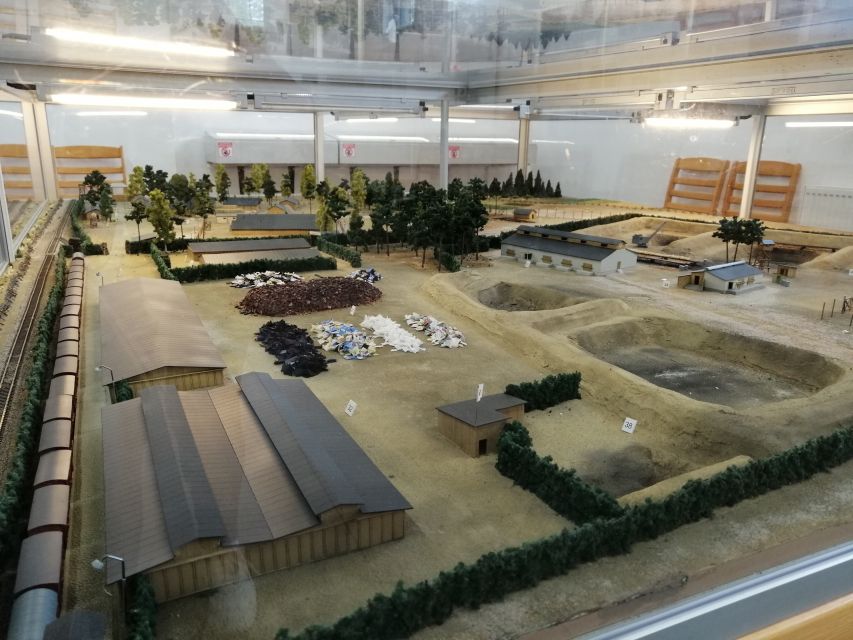
At Treblinka, the museum is your first important stop. It provides information about the camp, the people imprisoned there, and the system built to murder deportees on a mass scale.
The miniature model is especially useful. Since so few original structures survive, the model lets you see how the camp was organized and why the site was so difficult for victims to understand when they arrived. It gives you a physical sense of the architecture before you walk through the memorial grounds.
The museum also includes films and other material. Watching them is worthwhile if you have the time and emotional energy. One visitor specifically advised watching the museum films to gain a fuller understanding of the place and its meaning today.
This is where the guide can make a major difference. Several guides have used maps, memoirs, and briefing material before or during the visit. That approach suits you if you like a serious history lesson and want to understand the sequence of events rather than simply see memorial stones.
I would set aside enough attention for this indoor portion. The outdoor memorial is powerful, but without the museum and model, you may struggle to understand what you are looking at. Treblinka’s lack of visible buildings is meaningful, but it can also be confusing.
Walking through the memorial site
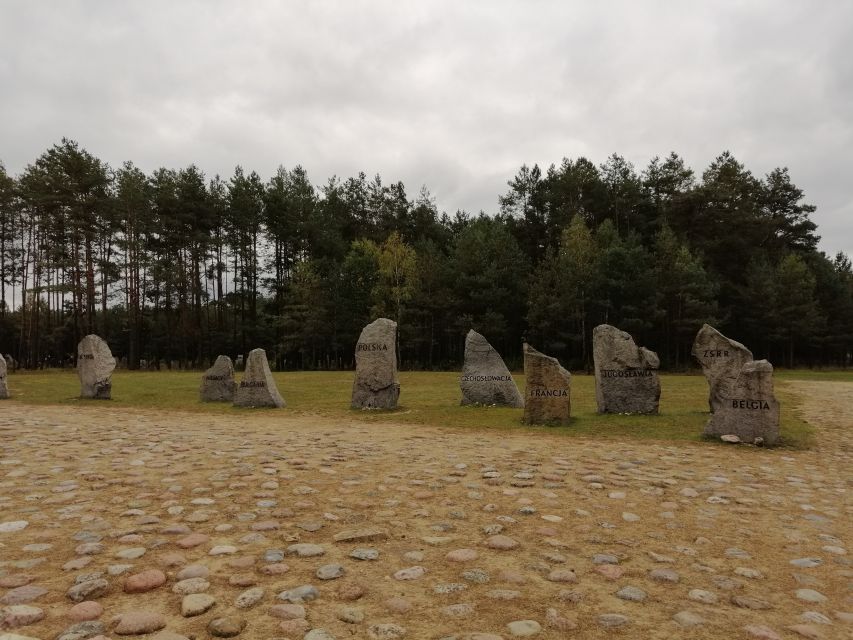
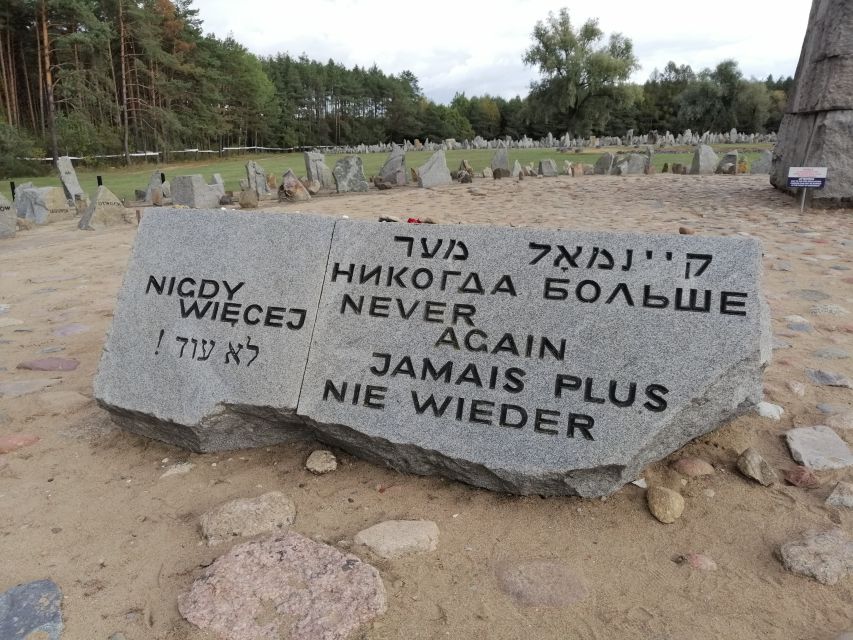
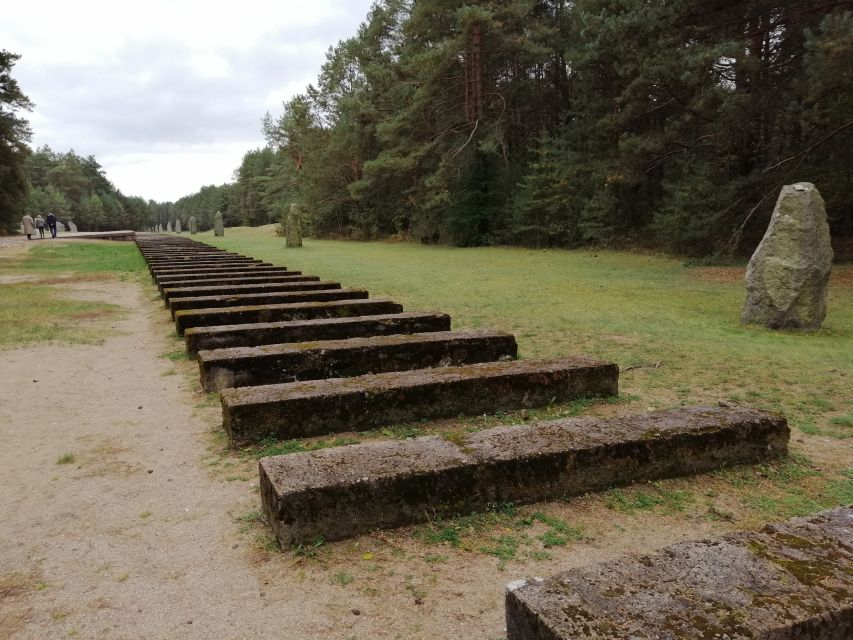
The outdoor memorial is quiet and deliberately stark. You walk among stones and reconstructed features that mark the former camp and the places connected with deportation and murder.
The site does not offer the kind of preserved physical evidence found at Auschwitz. That can disappoint visitors who expect rooms, fences, and intact structures. Yet here, the missing buildings are part of the story. The camp was flattened to conceal the crime, and the memorial’s design asks you to confront that deliberate erasure.
Your guide helps connect the memorial to the camp’s former layout. This is when a patient, clear explanation matters most. Guides have been praised for answering questions, allowing visitors to pause, and treating the site with the right degree of care.
You should expect an emotional visit, but the tour is not presented as a theatrical performance. The best parts are the plain facts, the maps, and the physical act of walking through a place that was meant to disappear. Wear comfortable shoes, since the experience takes place partly outdoors and involves walking between the museum, memorial features, and camp areas.
The word factory is sometimes used to describe Treblinka because the camp was built for rapid, systematic murder. That phrase can sound cold, but it explains the central fact: this was not mainly a detention camp where people were held for long periods. It was created to kill deportees soon after arrival.
Same country, a completely different kind of day:
- Warsaw: Chopin Concert in the Old Town
★ 4.8 · 2,287 reviews - Warsaw: Traditional Galar Cruise on The Vistula River
★ 4.6 · 1,640 reviews - Warsaw: Old Town Highlights Walking Tour in English
★ 4.7 · 1,516 reviews - Warsaw Concert: Chopin – Painted by Candlelights with Wine
★ 4.8 · 1,442 reviews
The Penal Labour Camp adds another layer
The itinerary also includes the ruins of the Penal Labour Camp. This was separate from the extermination camp and operated from 1941 to 1944. About 20,000 prisoners were held there during that period.
Seeing this area broadens your understanding of Treblinka. The site was not only connected with the extermination of Jews and Romani people. It was also part of a wider system of forced labor, punishment, imprisonment, and terror.
The ruins are limited, so again, your guide’s words do much of the work. You may not find a sequence of complete buildings to inspect. Instead, you use what remains, along with the museum and explanation, to understand how the different parts of the complex functioned.
For some visitors, this section is one of the most useful parts of the day because it prevents Treblinka from being reduced to a single set of statistics. It shows the range of Nazi crimes carried out in the area and the different groups caught in that system.
The August 1943 prisoner uprising
Your guide will also tell you about the revolt at the extermination camp in August 1943. About 840 prisoners took part in an attempt to resist the camp’s machinery and escape.
The uprising came during the camp’s final period of operation. Afterward, the Nazis closed the extermination camp, dismantled much of it, and tried to disguise what had happened there. The revolt is important not only because it was an act of desperate courage, but also because it helps explain why the visible remains are so limited.
This part of the story deserves time. It can be easy to view victims only through the lens of suffering, but the uprising shows planning, risk, resistance, and human agency under almost impossible conditions.
Guides such as Leszek and Janusz have been praised for handling this material with patience and care. The tone matters. A good explanation gives you facts without turning the revolt into an adventure story. At Treblinka, respect should always come before drama.
How much does the $134 price make sense?
At $134 per person, the tour costs more than a simple self-guided visit. The value comes from the full package: pickup and return to your accommodation, an English-speaking driver or guide, transport in an air-conditioned vehicle, skip-the-line admission, and a guided visit at a remote and historically complex site.
For two or more people, the price can feel easier to justify because you are sharing the transport and guide service. For a solo visitor, the cost may feel high. One person specifically described the trip as pricey when traveling alone, even while rating the tour itself highly.
You are paying most for specialist interpretation and convenience. Treblinka is not a site where you can simply arrive, follow obvious signs, and understand the camp from preserved buildings. The guide fills in what the Nazis tried to remove.
The price is less attractive if you want a relaxed, long visit focused only on the memorial grounds. The standard duration is six hours, and the day may include Warsaw-related points such as the Umschlagplatz. If your priority is maximum time at Treblinka, confirm the planned stops and timing before booking.
The tour offers free cancellation up to 24 hours before departure and allows you to reserve now and pay later. Those terms are useful if your Warsaw plans are still changing. The experience is wheelchair accessible, but the information provided does not explain every outdoor surface or route, so you may want to confirm the practical details in advance.
Who will get the most from this tour?
I would recommend it most strongly if you have a serious interest in World War II, the Holocaust, memorial design, or how historical evidence is preserved after an atrocity has been physically erased.
It is also a good fit if you want a half-day excursion without arranging a rental car or figuring out transport to a rural site. The door-to-door setup makes the day simple, and the return to your accommodation leaves your evening free.
You should prepare yourself emotionally. Treblinka is a place of mass murder, and the museum films, testimonies, and guide’s explanations can be difficult. This is not a light sightseeing stop to fit between shopping and dinner.
Families with older teenagers may find the tour meaningful, but the subject matter requires maturity. Young children may not gain much from the detailed historical explanation, and the tone of the day is solemn.
If you are mainly interested in preserved architecture, you may prefer Auschwitz, where more physical structures remain. If you want to understand a camp whose evidence was deliberately destroyed, Treblinka offers a different and very important experience.
Practical tips for a respectful visit
Wear comfortable shoes and clothes suitable for walking outdoors. The grounds are quiet and exposed in places, and you will likely spend time moving between the museum, memorial features, and former camp areas.
Bring water and food. The tour does not include meals or drinks, and you should not assume that a restaurant stop will be available. Water bottles have been provided on some departures, but bringing your own is still sensible.
Ask about the day’s schedule at pickup. This is especially useful if you care more about time at Treblinka than Warsaw-related stops. It also gives you a chance to confirm where the guide will provide explanations and how much free time you will have at the memorial.
Listen closely during the drive. The road journey can add useful context about Warsaw, the ghetto, and deportation routes. If you have trouble hearing in a moving vehicle, sit near the guide and mention it early.
Finally, allow the site to be quiet. You do not need to fill every pause with questions or photographs. The absence of buildings, the rows of memorial stones, and the forest around them are part of what you are there to encounter.
Should you book the Treblinka tour from Warsaw?
Book it if you want a serious, guided visit and value door-to-door transport. The strongest reason to choose this excursion is the quality of the human explanation. Guides including Leszek, Janusz, Marek, and Jan have been singled out for detailed, personal presentations, strong English, and respectful answers to difficult questions.
Think twice if $134 feels too high for a half-day outing, if you are traveling alone, or if you want several hours of unhurried walking only at Treblinka. Ask about the schedule first, since some time may be devoted to Warsaw locations.
For most people with a genuine interest in the Holocaust and wartime Poland, I think the guided format is worth considering. Treblinka’s lack of visible remains makes a guide more useful here than at many other memorial sites. You leave not with a list of buildings seen, but with a clearer understanding of how the camp operated, how prisoners resisted, and why the empty ground still carries such weight.
FAQ
Where is Treblinka located?
Treblinka is in Poland’s Mazovia Province, in a forest northeast of Warsaw. The former camp was located about 4 kilometers south of Treblinka train station.
How long does the tour last?
The tour lasts six hours, including hotel pickup, transport to Treblinka, the guided visit, and the return to your accommodation.
Is hotel pickup and drop-off included?
Yes. Pickup and drop-off at your accommodation are included in the tour price.
Is the tour conducted in English?
Yes. The tour includes an English-speaking driver and a live English-speaking guide.
What can I see at Treblinka?
You can visit the museum, view a miniature model of the camp, walk among memorial works and reconstructed areas, see the former Penal Labour Camp ruins, and learn about the 1943 prisoner uprising.
What should I bring?
Bring comfortable shoes, food, and drinks. Meals and beverages are not included.
Just added around Warsaw
- Taste of Poland, food tour and guided walk with 12 tasting★ 5.0 · 3 reviews
- Skip-the-Line Warsaw Royal Castle Private Guided Tour★ 5.0 · 4 reviews
- Secrets of Warsaw 4-hour Bike Tour★ 5.0 · 25 reviews
- Warsaw: Live Show at Sabat Theatre★ 4.5 · 11 reviews
- Private Warsaw City Tour★ 4.9 · 4 reviews
- Warsaw: WWII Private Tour by Retro Minibus with Hotel Pickup★ 5.0 · 7 reviews
- Private Tour From Warsaw: Łowicz Mazovian Countryside★ 5.0 · 10 reviews
- Packrafting kayaking guided tour Vistula river Warsaw Poland★ 4.5 · 14 reviews
Warsaw Tours, compared.
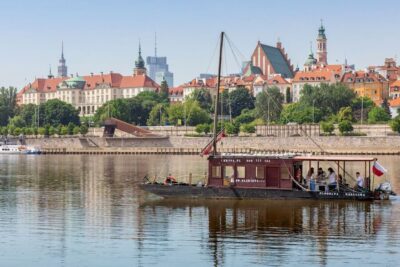
Traditional Galar Cruise on The Vistula River
Read our review →
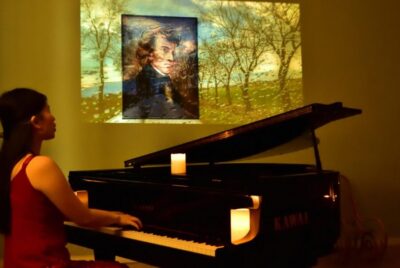
Warsaw Concert: Chopin – Painted by Candlelights with Wine
Read our review →
POLIN Museum of the History of Polish Jews Ticket
Read our review →
#1 Pub Crawl Warsaw with Optional Premium 1 Hour Open Bar
Read our review →
Browse the lists this tour appears in