
Reviewed · HISTORICAL TOURS
Warsaw: Historic Private Tour in Retro Fiat
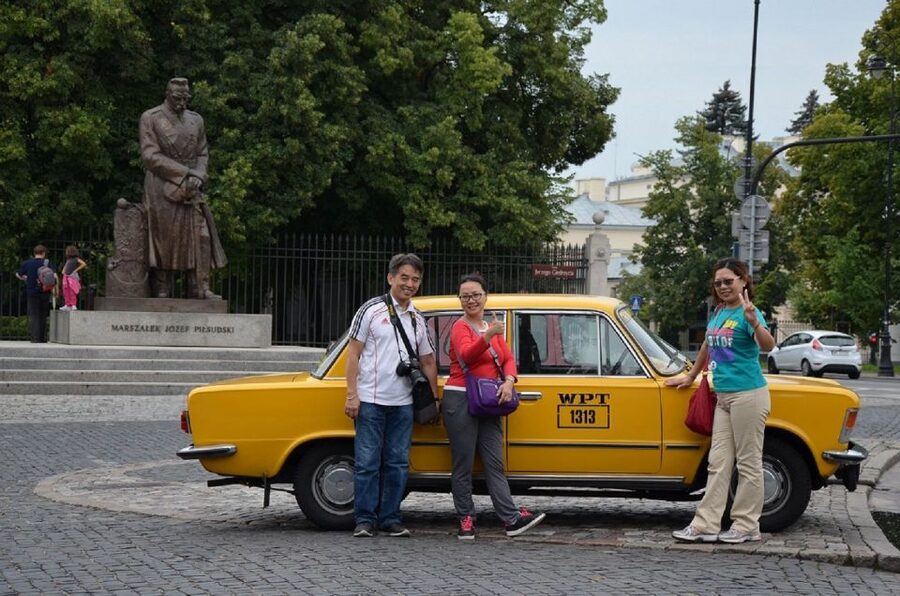
Warsaw’s story makes far more sense when you see its surviving fragments from the back seat of a 1980s Fiat 125p. This private four-hour tour links the rebuilt Old Town, Jewish ghetto remains, Praga’s older streets, and places tied to the Warsaw Uprising. I like the personal pace, and I like that guides such as Karol, Martin, Jurek, and Jakob use photos, stories, and local knowledge to explain what vanished and what survived.
The main drawback is that four hours goes quickly. You will see a lot, but this is an overview rather than a museum-by-museum visit. The car is also historic, so comfort is more modest than in a modern vehicle, and groups of more than four use a blue vintage minivan instead of the Fiat.
Key points to know before booking
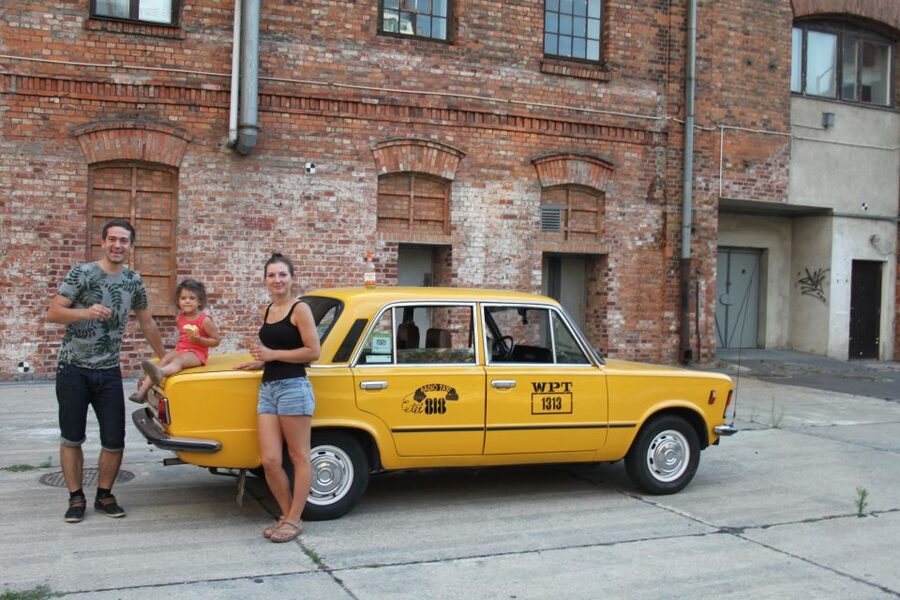
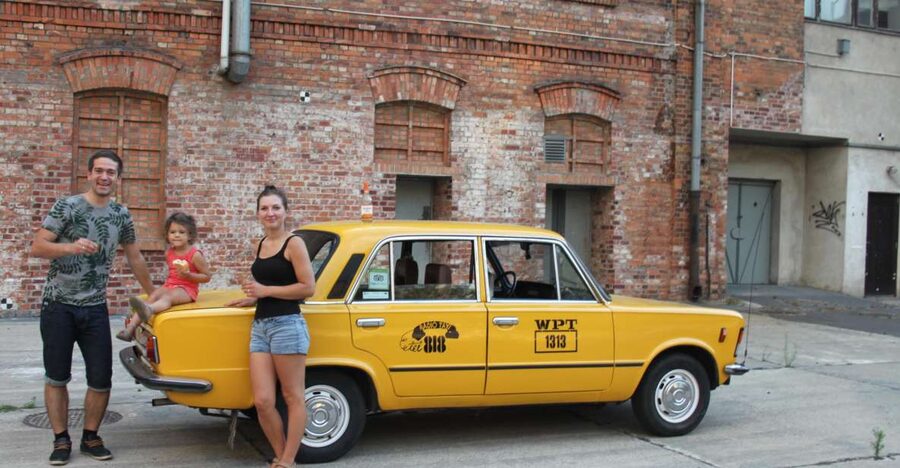
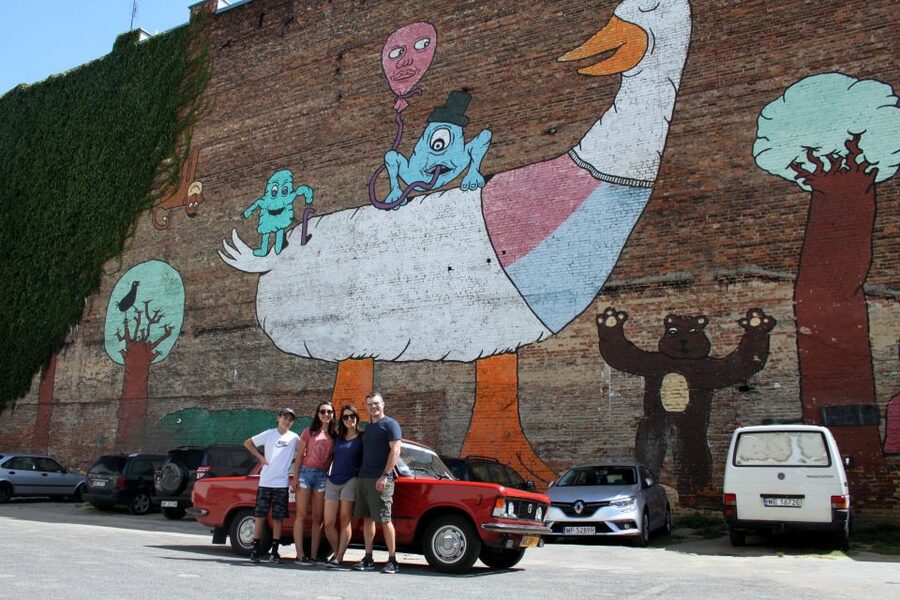
- The Fiat is part of the experience: You ride through Warsaw in a retro 125p, a fitting vehicle for the city’s Communist-era story.
- Half driving, half walking: Expect short stops and walks, so bring comfortable shoes.
- Praga adds a different Warsaw: You see older buildings and tucked-away courtyards that are easy to miss on a standard Old Town walk.
- The Jewish ghetto story is handled on location: The tour visits surviving traces and explains the destruction of Warsaw’s Jewish community.
- You cover several eras in one outing: The route connects prewar Warsaw, wartime destruction, the 1944 uprising, Soviet control, and postwar rebuilding.
- The guide can adapt the route: Traffic, your interests, and what you have already seen may affect the exact order and stops.
Why a retro Fiat is a smart way to see Warsaw
Warsaw is spread out, and its key sights do not all sit in one compact historic center. A walking tour can explain the Old Town well, but it takes more effort to connect that area with Praga, the former Jewish ghetto, the Vistula riverbank, and sites linked to the wartime uprising.
The Fiat solves part of that problem. You get between districts without spending your limited holiday time looking for taxis or public transport. At the same time, you are not sealed inside a large tour bus. The small car feels personal, and people may look twice as you pass.
I also like the vehicle because it fits the subject. The Fiat 125p belongs to the visual world of Communist-era Poland. It turns a simple transfer between sights into a small history lesson. You are not just hearing about life under the old regime while riding in a modern van. The setting supports the story.
Do not expect a luxury ride. The vehicle is historic, and the tour involves walking as well as driving. If you have more than four people, the group uses a blue vintage minivan. That still preserves the period feel, but it is worth knowing if the Fiat itself is your main reason for booking.
A few more Warsaw trips to weigh up
- Warsaw: POLIN Museum of the History of Polish Jews Ticket
★ 4.7 · 1,142 reviews - Warsaw: Chopin Concert at Historical Venue in Old Town
★ 4.7 · 445 reviews - Small-Group Historical Guided Tour of Warsaw with pick up/drop off. Public Tour.
★ 4.5 · 343 reviews
Starting with Warsaw’s rebuilt Old Town
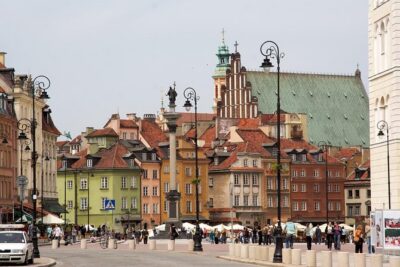
The Old Town is the obvious place to begin understanding Warsaw, but it needs context. Much of what you see today was rebuilt after World War II, following the destruction of the city. The colorful facades and handsome squares look old, yet the story behind them is one of loss, planning, and determined reconstruction.
Your guide takes you through key Old Town landmarks and explains how the area changed during the war and after it. This is where the tour helps you read the city instead of simply photographing it. A square, church, wall, or street corner can carry several layers of meaning once you know what happened there.
I especially like this introduction if you have just arrived in Warsaw. It gives you a quick sense of the city’s shape and helps you decide where to return later on foot. Several guides, including Martin and Karol, have used visual material such as laminated before-and-after photographs to show how parts of Warsaw looked before the war. That comparison can make the scale of the destruction easier to grasp.
The Old Town is also the part of the route most likely to feel familiar to first-time visitors. It is attractive and important, but it is not the whole city. The value of this tour comes from moving beyond its postcard center.
Walking through the former Jewish ghetto
The visit to the remnants of the Jewish ghetto is one of the most serious parts of the afternoon. Before World War II, Warsaw had a large Jewish population and a central place in Jewish life in Poland. The German occupation brought forced confinement, starvation, deportation, and mass murder.
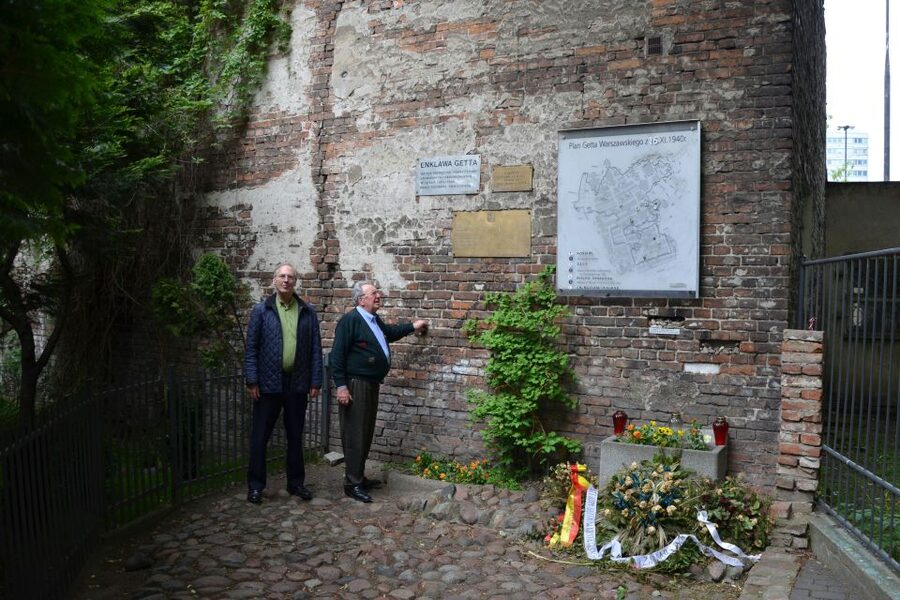
The tour does not treat this as a quick photo stop. Your guide explains the setting and points out what remains, while also making clear how much has disappeared. In Warsaw, absence is often part of the evidence. A surviving wall fragment or memorial site can be important precisely because the surrounding neighborhood has been transformed.
You should allow yourself time to listen here. The subject is painful, and the walking may feel quieter than the rest of the outing. That change in mood is appropriate. The tour’s strength is its ability to place the story in the city itself instead of leaving it as a distant chapter in a museum display.
The exact route can change with traffic and local conditions, so the stops may not appear in the same order each time. Still, the former ghetto remains a central part of the experience. If you want only cheerful sightseeing, this is not the right tour. If you want to understand Warsaw honestly, it is essential.
Praga, older streets, and a different side of the city
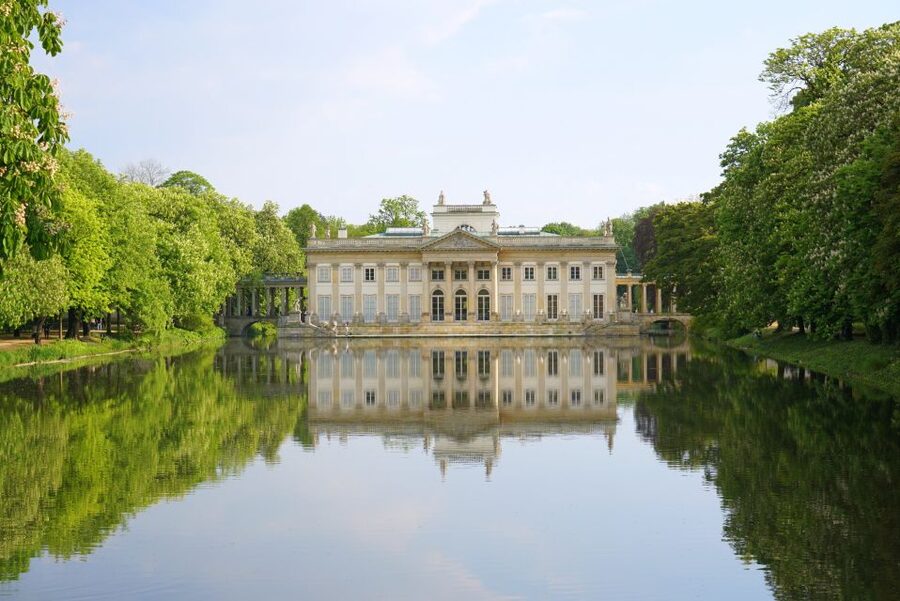
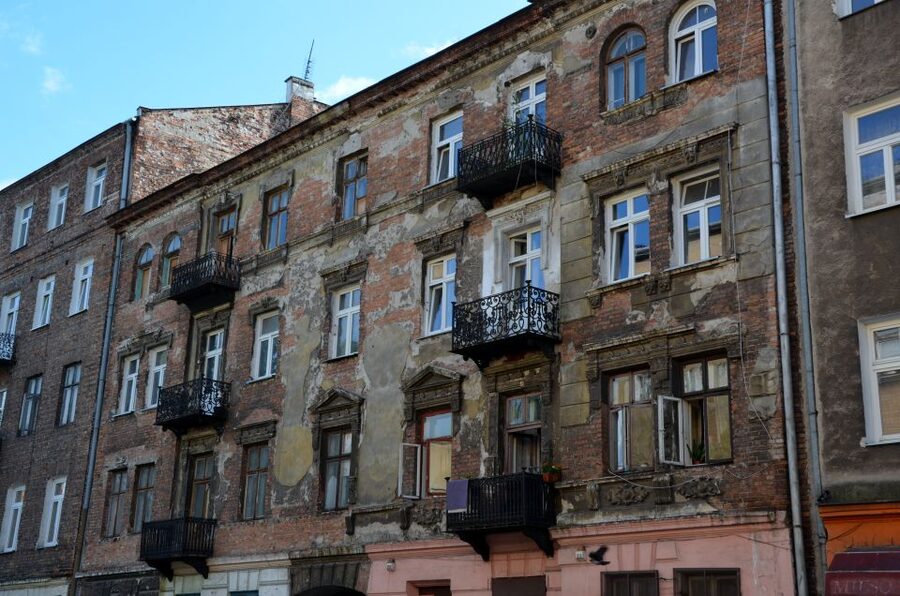
Praga sits on the east bank of the Vistula and has a character distinct from the carefully rebuilt Old Town. The tour takes you into this district to see older buildings and traces of Warsaw that escaped some of the wartime destruction found on the west bank.
Praga is useful because it complicates the usual picture of Warsaw. The city is not only polished squares and reconstructed facades. Here, you might find weathered courtyards, historic details, and buildings that give a stronger sense of how ordinary urban life once looked.
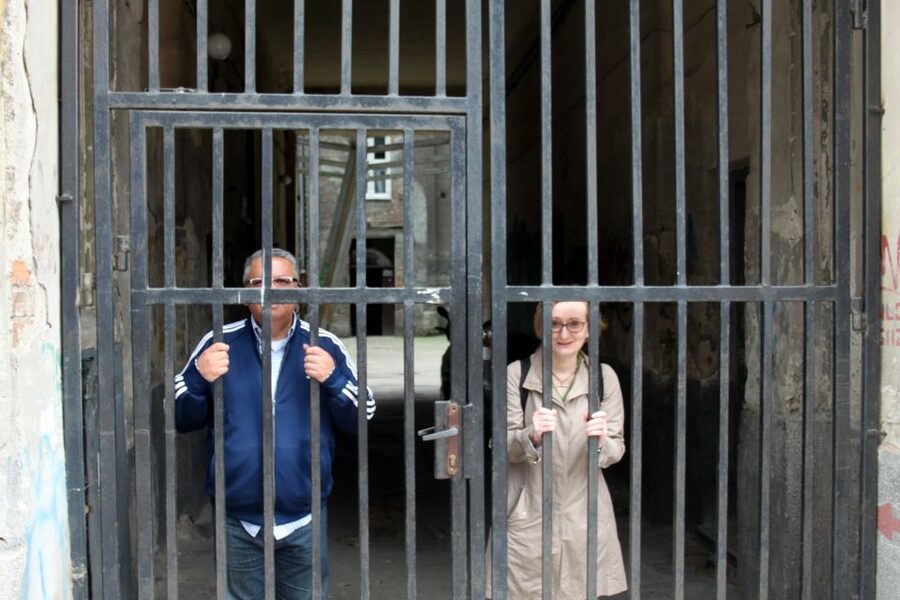
One particularly worthwhile stop can be a secluded courtyard with a Jewish shrine. It is the sort of place you could easily pass without noticing on your own. The guide’s role matters here. You are not simply driven through a neighborhood. You are shown why a modest courtyard or religious marker deserves attention.
The district can also be a good choice instead of Łazienki Park if you have limited time. Some visitors have chosen Praga during the tour and then visited Łazienki independently on another day. That is a sensible split. A four-hour tour cannot cover every major Warsaw sight in depth, and Praga offers something harder to arrange on your own than a park visit.
I would choose Praga if you have already seen the main Old Town streets or want a less polished, more local-feeling side of Warsaw. If you mainly want grand palace grounds and formal gardens, you may prefer to ask whether the route can include another area. The itinerary can be adapted, but the exact changes depend on traffic and your arrangement with the guide.
Same country, a completely different kind of day:
- Warsaw: Chopin Concert in the Old Town
★ 4.8 · 2,287 reviews - Warsaw: Traditional Galar Cruise on The Vistula River
★ 4.6 · 1,640 reviews - Warsaw: Old Town Highlights Walking Tour in English
★ 4.7 · 1,516 reviews - Warsaw Concert: Chopin – Painted by Candlelights with Wine
★ 4.8 · 1,442 reviews
The Warsaw Uprising and the city’s wartime scars
Another major thread is the Warsaw Uprising of 1944, when the Polish underground resistance rose against German occupation. It was the largest armed uprising by civilians during World War II. The event ended in defeat and brought further destruction to the city, but it remains central to Warsaw’s modern identity.
Your guide visits important locations connected with the uprising and explains how the fighting affected the city. The strength of seeing these places by car is the connection between them. You cover more ground than on a short walking route, so the uprising becomes a citywide story rather than a single monument.
I would ask questions here. The tour is private, and that gives you room to pause when a subject catches your interest. Guides such as Pavel and Alexander have been praised for combining facts with folklore and personal stories about Warsaw. That kind of conversation can make a difficult period easier to follow without reducing it to a list of dates.
Do not expect a full specialist study of the uprising. Four hours must also include Praga, the ghetto remains, the Old Town, and postwar Warsaw. Think of this section as a strong orientation. You can then return to a dedicated museum or memorial if you want more detail.
Seeing Communist-era Warsaw from a local point of view
The tour also explains what happened after the war, when Warsaw was rebuilt under the Communist regime and Soviet influence. This period shaped the city’s architecture, streets, public spaces, and daily life. It is an important bridge between wartime destruction and the modern capital you see today.
The Fiat adds a bit of atmosphere to this part of the tour. You are riding in the kind of vehicle associated with the period, while your guide explains how Warsaw was reconstructed and how life changed under the regime. The experience is not a staged Communist theme park. It is a city tour using a period car to help you connect with a difficult part of Poland’s recent past.
This section is especially useful if you have little background on postwar Poland. The guide can explain why some parts of the city feel monumental and planned, while others retain older street patterns or surviving buildings. You may also hear about the difference between the city before the war, the city rebuilt afterward, and the Warsaw you see today.
Because this is a private tour, you can tell the guide how much political and social history you want. Some people prefer architecture and daily life. Others want more detail on Soviet control and the rebuilding process. The format gives you more flexibility than a large group outing.
What the four hours feel like
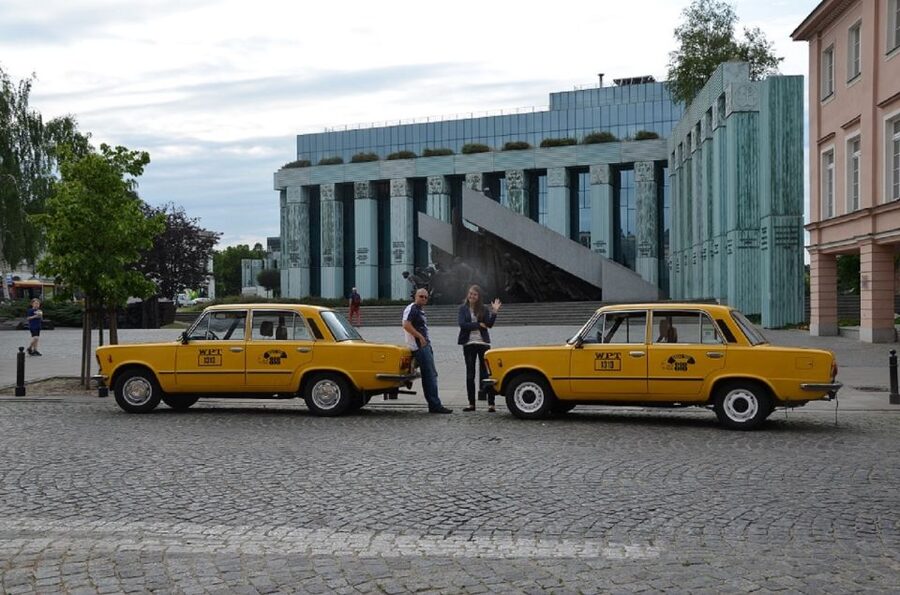
The tour is designed as roughly half driving and half walking. That balance is important. You cover enough distance to see several districts, but you also leave the car to look closely at landmarks, courtyards, memorials, and historic remains.
The pace is described as adaptable. If walking is difficult, the route can be adjusted to suit your needs. Still, you should wear comfortable shoes because the experience does require walking. Ask about the walking plan before departure if you have a firm limit.
Four hours is long enough to get a useful first picture of Warsaw, but not long enough for every stop to become an extended visit. You will probably spend more time listening and looking than entering museums. The tour works best as a framework for the rest of your stay.
An early start can be useful if you want to fit more into the day. One morning outing covered the Old Town, the ghetto remains, and the east bank before the city schedule became crowded. Starting times vary, so check availability when booking.
The route may shift because of traffic. That is normal in a city tour and not a sign that the experience has been reduced. Your guide may change the order of districts or make small adjustments to keep the afternoon moving.
The guides make the private format worthwhile
The guide is the most important variable in any history tour, and this format gives you direct access to one person for four hours. English is the listed tour language. Guides named in past outings include Jurek, Jakob, Karol, Martin, Pavel, Olga, and Alexander.
The consistent strengths are clear: explanations in good English, a relaxed manner, humor when appropriate, and pride in Warsaw without ignoring its painful past. Karol, for example, has shaped the route around what a group had already seen and what it hoped to learn next. Martin has used old photographs to make lost buildings visible again.
That flexibility is more valuable than a fixed speech. Tell your guide on pickup what you already know, what you have visited, and what matters most to you. A history enthusiast may want more time on the uprising. Someone with only one day in Warsaw may need a broad city orientation. A family may prefer shorter explanations and more movement.
The private format also helps with questions. You can stop and ask why a district looks different, how a building survived, or what changed after the war. In a large group, those questions can be difficult to fit in.
Price, inclusions, and who gets good value
At $105 per person, this is not the cheapest way to move around Warsaw. It is private, lasts four hours, includes hotel pickup and drop-off in the city center, and comes with a local English-speaking guide and a historic vehicle. Photos are emailed afterward, and you receive a Polish doughnut and a complimentary vodka shot.
The value depends on how you use it. If you are in Warsaw for several days and enjoy walking independently, you can see many public sights for less. But you will spend more time planning routes, finding Praga, and connecting the former ghetto with the Old Town and other districts.
For a short stay, the calculation is better. You see a broad section of the city in one session, get historical context, and leave with a clearer plan for the next day. The pickup and drop-off also save time if you are staying in the center.
Meals are not included. The doughnut and vodka are small extras, not substitutes for lunch. If you do not drink alcohol, the shot is optional in practical terms, and the main value remains the guide, transport, and access to places that are less obvious on a standard sightseeing route.
Best for a first day, a short stay, or history-focused visitors
I would recommend this tour to you if you have one to three days in Warsaw and want a strong orientation without spending the whole day on foot. It also suits anyone interested in World War II, Jewish Warsaw, the Warsaw Uprising, Communist-era Poland, or postwar reconstruction.
It is a good choice for couples, families, and small private groups who want to set the pace. The car adds fun, but the history gives the outing substance. You get both the memorable vehicle and a serious look at what happened to the city.
I would be more cautious if you want long museum visits, a fixed route, or a modern luxury vehicle. The tour moves between many subjects, and some stops are brief. Visitors with limited mobility should discuss their needs because walking is part of the plan, even though the route can be adjusted.
Book it early in your stay if possible. The best use of the tour is to let it show you what deserves a second visit. You might return to the Old Town for a slower walk, visit a dedicated uprising museum, or spend more time in Łazienki Park after choosing Praga during the Fiat tour.
Should you book the Warsaw Fiat tour?
I would book this if you want Warsaw explained as a connected story rather than a collection of separate sights. The retro Fiat, private guide, and citywide route make it easy to cover ground, while the walking stops keep the experience from becoming a drive-by sightseeing trip.
The strongest reason to choose it is the mix: reconstructed Old Town, Jewish ghetto remains, Praga courtyards, uprising sites, and Communist-era rebuilding. The main caution is pace. You will get an excellent introduction, not a complete study of Warsaw.
For a first visit or a short stay, the $105 price can be fair value, especially with central pickup and drop-off. If you already know the city well and prefer slow, independent exploration, spend the money on museums and meals instead. For most first-time visitors who want history, context, and a memorable ride, this is a smart way to get your bearings.
FAQ
How long does the Warsaw retro Fiat tour last?
The tour lasts four hours. The experience combines driving around Warsaw with walking at historic sites.
What vehicle is used?
Small groups of up to four people are driven in a historic Fiat 125p from the 1980s. Groups of more than four use a blue vintage minivan.
Is hotel pickup included?
Yes. Pickup and drop-off are included from your hotel or another centrally located point in Warsaw.
What language is the tour offered in?
The live tour guide service is offered in English.
Is the tour private?
Yes. It is arranged for a private group rather than a shared large-group tour.
Which parts of Warsaw does the route visit?
The route includes landmarks in the Old Town, the former Jewish ghetto area, the Praga district, locations connected with the Warsaw Uprising, and places that explain postwar rebuilding under the Communist regime.
Does the tour involve walking?
Yes. It is roughly half walking and half driving. Comfortable shoes are recommended, and the route can be adapted to suit your requirements.
What is included besides transportation and the guide?
The tour includes central hotel pickup and drop-off, photos emailed after the outing, a Polish doughnut, and a complimentary vodka shot. Meals are not included.
Just added around Warsaw
- Taste of Poland, food tour and guided walk with 12 tasting★ 5.0 · 3 reviews
- Skip-the-Line Warsaw Royal Castle Private Guided Tour★ 5.0 · 4 reviews
- Secrets of Warsaw 4-hour Bike Tour★ 5.0 · 25 reviews
- Warsaw: Live Show at Sabat Theatre★ 4.5 · 11 reviews
- Private Warsaw City Tour★ 4.9 · 4 reviews
- Warsaw: WWII Private Tour by Retro Minibus with Hotel Pickup★ 5.0 · 7 reviews
- Private Tour From Warsaw: Łowicz Mazovian Countryside★ 5.0 · 10 reviews
- Packrafting kayaking guided tour Vistula river Warsaw Poland★ 4.5 · 14 reviews
Historical Tours, compared.
POLIN Museum of the History of Polish Jews Ticket
Read our review →
Gdańsk City Sights & History Guided Walking Tour in English
Read our review →

Small-Group Historical Guided Tour of Warsaw with pick up/drop off. Public Tour.
Read our review →Browse the lists this tour appears in