
Reviewed · HISTORICAL TOURS
Warsaw: Jewish History Guided Walking Tour in English
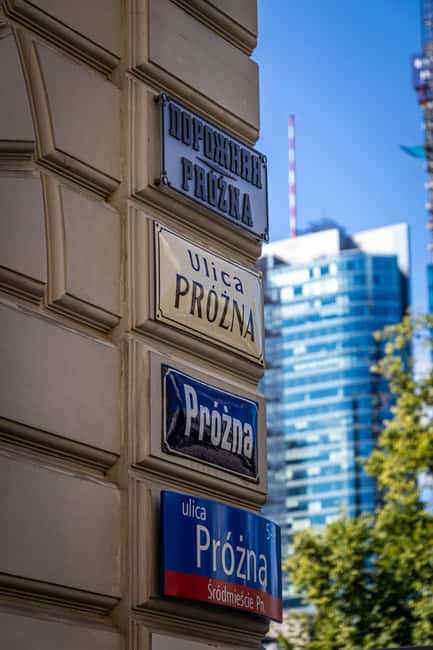
Warsaw’s Jewish past is not confined to a museum. It is under your feet, along streets where the pre-war Jewish community lived, worked, worshipped, and built one of Europe’s great urban cultures. This walking tour connects those places with the destruction of the Holocaust and the city’s later rebuilding.
I like the route’s clear physical markers, especially Nożyk Synagogue, Chłodna Street, and Waliców Street. I also like the guides’ approach: people such as Jacek, Andrzej, Anna, Aga, and Luke have been praised for clear English, humor, careful answers, and a thoughtful way of handling painful subjects. The main drawback is simple: you are outdoors for the full two and a half hours, with no planned café stop.
Key points at a glance
- Nożyk Synagogue: See the only surviving pre-war synagogue in Warsaw.
- Chłodna Street: Learn how a bridge once linked two separate parts of the wartime ghetto.
- Waliców Street: Follow a former ghetto boundary and hear how the area connects to the Warsaw Uprising.
- Pre-war Jewish Warsaw: Understand the artists, writers, actors, journalists, and community life that existed before 1939.
- A guide-led history lesson: Expect questions, photographs or maps from some guides, and room for discussion.
- A full outdoor walk: Wear warm or weatherproof clothing, since you remain outside for the entire 150 minutes.
Why this walking tour matters in Warsaw
Before the Second World War, Warsaw was the second-largest Jewish city in the world. That fact can be hard to grasp when you first look at modern Warsaw, a city reshaped by war and reconstruction.
This tour helps bridge that gap. Instead of presenting Jewish Warsaw only through statistics about persecution and death, the guide begins with a living community. You hear about Jewish residents who took part in the city’s political struggles, including Polish uprisings against occupying powers in the 19th century.
That wider frame matters. It shows that Jewish people were not outsiders passing through Warsaw. They were part of the city’s social, cultural, and political life for centuries.
The interwar period receives particular attention. Jewish Warsaw had hundreds of artists, actors, writers, and journalists, along with a cultural life that was unusually active and varied. Learning about that world before hearing how it was destroyed makes the scale of the Holocaust easier to understand.
I find this one of the strongest reasons to choose the tour. A walk focused only on wartime suffering can leave you with a narrow picture. Here, the story includes ordinary life, achievement, political involvement, terror, resistance, survival, and the Jewish community that exists in Warsaw today.
A few more Warsaw trips to weigh up
- Warsaw: POLIN Museum of the History of Polish Jews Ticket
★ 4.7 · 1,142 reviews - Warsaw: Chopin Concert at Historical Venue in Old Town
★ 4.7 · 445 reviews - Small-Group Historical Guided Tour of Warsaw with pick up/drop off. Public Tour.
★ 4.5 · 343 reviews
Starting at Grzybowski Square and All Saints Church
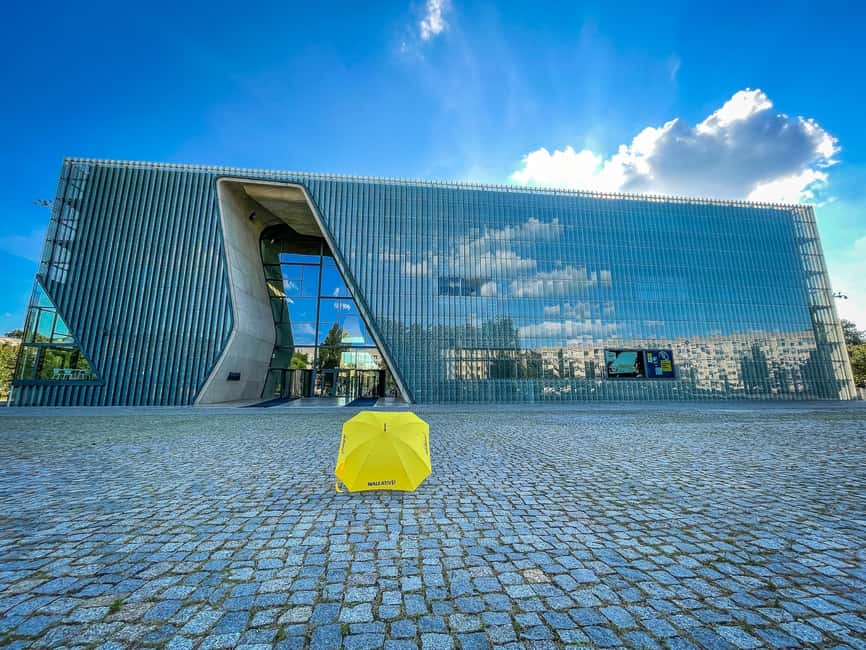
The meeting point is beside All Saints Church at Grzybowski Square. Look for the yellow umbrella, which makes the group easier to find in a busy part of central Warsaw.
Grzybowski Square is a useful starting place because it sits close to several important locations connected with Jewish Warsaw. It also gives the guide a chance to explain how the area looked before the war, when streets and buildings formed part of a much larger Jewish district.
The tour is conducted in English and lasts 150 minutes. You should expect a general walking group rather than a guaranteed private experience. The reservation fee covers your place and the guide’s payment. If you want a smaller private tour, you can contact Walkative Tours after booking to ask about arranging one.
That group format keeps the price at about $26 per person, which is fair for a two-and-a-half-hour guided walk in central Warsaw. You are paying for interpretation, historical context, and the chance to ask questions at the sites, not for transport or admission to a major museum.
Nożyk Synagogue and the Jewish life that survived
Nożyk Synagogue is the only surviving pre-war synagogue in Warsaw. That makes it one of the most important stops on the route, even before the guide explains its place in the city’s history.
The synagogue gives the walk a physical anchor. Many buildings and streets connected with Jewish Warsaw were destroyed, altered, or rebuilt after the war. Here, you can look at a place of worship that links present-day Warsaw with the Jewish community that existed before the Holocaust.
The supplied details describe the synagogue as a place you will see, but you should not assume that the tour includes guaranteed interior admission. One participant specifically wished there had been a chance for everyone to enter, while another had already visited inside separately. If entering the synagogue is important to you, check with the operator before the walk.
Even from outside, the stop is valuable because it leads into a larger discussion. The guide can explain Jewish religious life, community institutions, and the role of Jewish residents in the city. The synagogue is not treated as an isolated monument. It is part of a story about a community that once shaped Warsaw in countless everyday ways.
Some guides use photographs and maps to show what disappeared. That is especially helpful here, since modern streets alone cannot always reveal the scale of what once stood around them.
Chłodna Street and the bridge across the ghetto
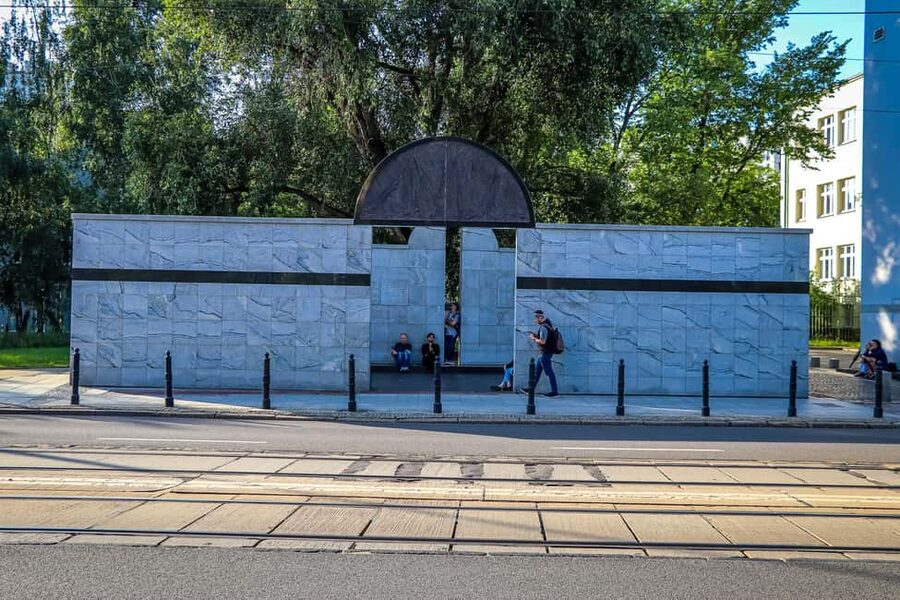
Chłodna Street is one of the tour’s most memorable locations. During the German occupation, a bridge here connected two sections of the Warsaw Ghetto.
The bridge allowed people to cross above the street while traffic continued below. Today, the bridge itself is gone, so the guide’s explanation and visual material become important. You may be looking at an ordinary modern roadway, but the story changes how you read the space.
This is one reason a local walking guide adds real value. A map or book can tell you that the ghetto was divided into sections. Standing on Chłodna Street helps you picture the practical reality of that division, including the barriers, movement restrictions, and forced separation imposed on Jewish residents.
The guide also explains the ghetto not as a vague symbol, but as a place where people tried to maintain family life, religious practice, work, education, and dignity under brutal conditions. The subject is painful, and the strongest guides handle it without turning the walk into a list of horrors.
Several guides have been praised for balancing factual detail with a human tone. Humor may appear during the less painful parts of the walk, but the serious sections are treated with care. Some guides also ask before sharing particularly difficult details, which can help you prepare emotionally.
Same country, a completely different kind of day:
- Warsaw: Chopin Concert in the Old Town
★ 4.8 · 2,287 reviews - Warsaw: Traditional Galar Cruise on The Vistula River
★ 4.6 · 1,640 reviews - Warsaw: Old Town Highlights Walking Tour in English
★ 4.7 · 1,516 reviews - Warsaw Concert: Chopin – Painted by Candlelights with Wine
★ 4.8 · 1,442 reviews
Waliców Street, the former border, and the Warsaw Uprising
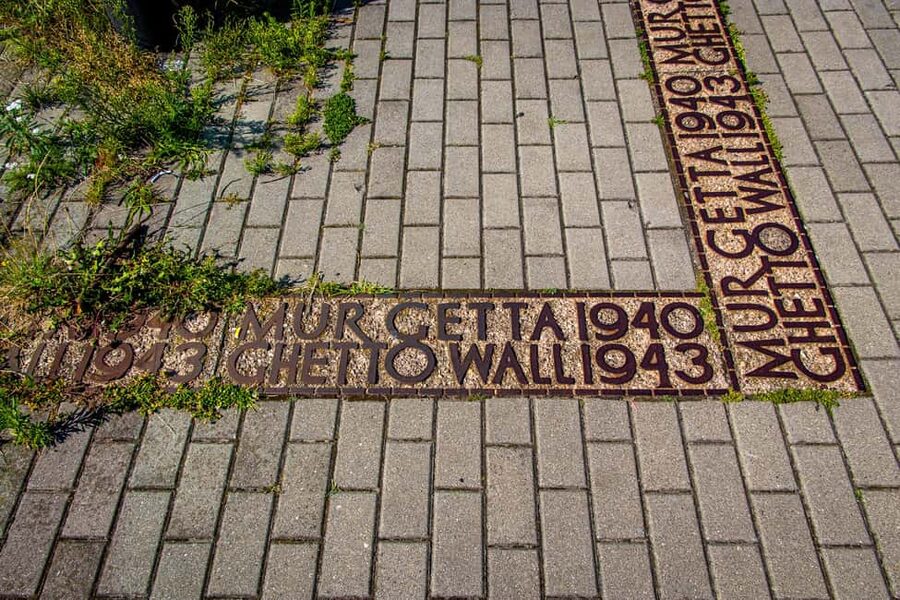
Waliców Street once marked part of the ghetto boundary. It is another location where the contrast between the present-day street and the wartime story can feel sharp.
The guide uses the street to explain how the ghetto was enclosed and how boundaries shaped daily life. The physical traces may not be dramatic, and that is worth knowing in advance. Much of this tour depends on spoken explanation, photographs, maps, and your willingness to imagine a city that was largely destroyed.
Waliców Street also connects the Jewish story with the Warsaw Uprising. This helps place the Holocaust within the wider wartime experience of the city, while still keeping Jewish history at the center.
The Warsaw Uprising and the Jewish resistance were not the same event, and a good guide needs to explain that distinction carefully. The tour’s value lies partly in showing how different wartime struggles overlapped in one city, while also recognizing their separate circumstances and outcomes.
If you prefer tours built around grand monuments and preserved interiors, this may feel understated. If you want to understand how history happened in ordinary streets, it works well. You are not simply looking at old buildings. You are learning how boundaries, occupation, resistance, and destruction altered the city.
From cultural achievement to destruction
The tour’s emotional power comes from the contrast between what Jewish Warsaw had been and what the Holocaust destroyed.
You hear about a community that produced writers, actors, artists, and journalists. Warsaw’s Jewish cultural life was not a minor side note. It was a major part of the city’s identity during the interwar years.
That background gives the later sections more weight. The Holocaust did not only kill individuals. It shattered families, institutions, neighborhoods, languages, businesses, religious communities, and a cultural world that had developed over generations.
I appreciate that the tour also includes stories of bravery and resilience. A walk about Jewish Warsaw should not reduce Jewish people to victims, and this experience makes room for resistance, courage, survival, and renewal.
Guides have been praised for answering questions directly and staying after the scheduled finish to continue conversations. That can be especially useful if you arrive with family connections, prior reading, or questions about specific events. One participant with an ancestral connection to Mila 18 found that the guide was able to add useful context during the walk.
Still, the subject requires emotional attention. This is not a light sightseeing stroll. Even guides who use humor to keep the group engaged are discussing persecution, death, and the destruction of a community. I would choose it when you have enough time and energy to listen properly, rather than squeezing it between hurried attractions.
The guide makes or breaks the experience
The route matters, but the guide is the deciding factor. The names attached to past departures include Andrzej, Jacek, Anna, Aga, Luke, Agneska, Tomasz, Christopher, Olivia, and others. You may not receive a particular guide, so book the tour for its format and subject rather than a named individual.
The strongest qualities reported across the experience are clear English, strong command of the subject, a good walking pace, and a willingness to answer questions. Guides have also used old photographs and maps, which are useful when the original buildings no longer exist.
A few practical differences can affect your experience. In a large group, it may be harder to hear if the guide walks ahead while speaking. Stay close, especially on busy streets, and say something promptly if you cannot hear.
The walk may also finish a little early if part of the group cannot continue. One participant was disappointed that the route was cut short for this reason. That appears to be a group-tour issue rather than the normal plan, but it is a reminder that the pace can be shaped by the slowest walkers and the needs of the whole group.
On the positive side, several guides invite questions rather than delivering a fixed speech. Some add practical Warsaw suggestions at the end, including places to get coffee. That small extra can help you turn the walk into a useful first orientation to the city.
Weather, pace, and what to bring
The entire tour takes place outdoors. In cold weather, that matters. One person described freezing conditions, while another specifically wished for a café break. The route lasts 150 minutes, so check the forecast and dress for standing still as well as walking.
Wear comfortable shoes and bring a warm layer in cooler months. In wet weather, a waterproof jacket or umbrella is sensible. There is no hotel pickup or drop-off, so you make your own way to Grzybowski Square and leave independently at the end.
The pace is generally manageable. A group of four found it comfortable, and another participant felt the time passed quickly. Still, this is a walking tour through city streets, not a seated lecture. You should be ready to walk and stand for the full period.
The tour’s timing also affects how much discussion is possible. Some people wished it had continued longer, which suggests that the 150 minutes can feel short if you ask many questions or want more time at each site. At the same time, the length is enough to give you a strong introduction without taking up an entire day.
Is $26 a fair price?
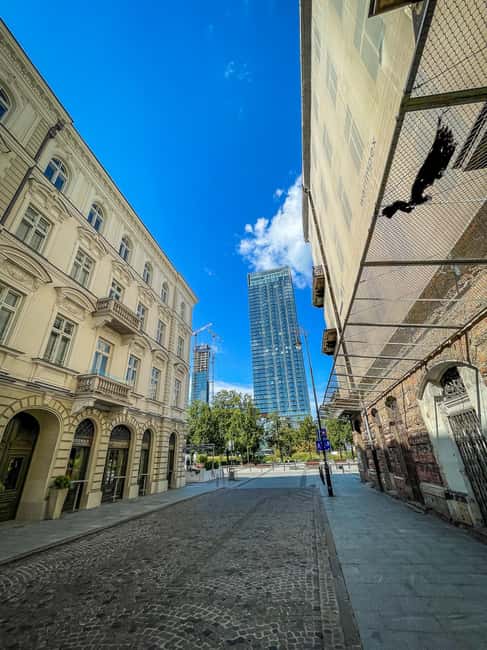
At $26 per person, this is good value if you want context rather than a simple route through central Warsaw.
The price includes a local English-speaking guide and the walking tour. It does not include transport, hotel transfers, or a guaranteed synagogue entrance. You are paying for the guide’s interpretation of places that can otherwise look ordinary or confusing.
That distinction is important. You could walk along Chłodna Street or Waliców Street alone for nothing, but you would miss much of what makes those locations meaningful. The guide connects street corners to maps, old photographs, community life, occupation, the ghetto, the Warsaw Uprising, and modern Jewish Warsaw.
The general-group arrangement keeps the cost modest. If you need a private pace, have mobility concerns, or want extended discussion, ask Walkative Tours about a smaller private tour after booking. That option may cost more, but it would give you more control over the conversation.
Free cancellation up to 24 hours before the tour and the reserve-now, pay-later option also reduce the risk of booking early. I would still avoid leaving this walk for the coldest or wettest day of your visit, since the weather can shape the experience more than the price does.
Who should book this walk?
I would recommend it to you if you want to understand Warsaw beyond its rebuilt streets and major landmarks. It is especially useful if you have little prior knowledge of the Warsaw Ghetto or Jewish life in Poland.
It also suits people who already know the basic wartime story but want to connect it to real places. The pre-war material, the cultural focus, and the discussion of Jewish life today add more than a standard wartime timeline.
Families with a personal connection to Warsaw or Jewish history may find the route particularly meaningful, though the guide cannot promise details about every family or address. The question-and-answer format gives you a chance to raise specific interests.
I would hesitate to choose it if you dislike outdoor tours, need frequent indoor breaks, or want to enter every building along the route. The experience depends on listening and imagination because many original structures are gone.
Final verdict: a serious and worthwhile Warsaw introduction
This is a strong choice for a first look at Jewish Warsaw. Its best feature is the way it joins pre-war community life with wartime destruction and present-day renewal, rather than treating the Holocaust as the whole story.
At $26, the tour offers solid value, especially with a guide who can explain what the street itself no longer shows. Book it if you want an honest, thoughtful walk and are prepared to spend 150 minutes outside. Dress for the weather, stay close enough to hear, and ask questions. If you do, this tour can change the way you see central Warsaw for the rest of your visit.
FAQ
How long is the Jewish history walking tour?
The tour lasts 150 minutes, or two and a half hours.
What language is the tour in?
The tour is conducted in English with a live English-speaking guide.
Where does the tour meet?
Meet next to All Saints Church at Grzybowski Square. Look for the yellow umbrella.
What places does the tour visit?
The route includes Nożyk Synagogue, Chłodna Street and the site of the bridge that joined parts of the ghetto, plus Waliców Street, which was once part of the ghetto border.
Is hotel pickup included?
No. Hotel pickup and drop-off are not included. The tour is a walking experience beginning at Grzybowski Square.
Does the tour include entry to Nożyk Synagogue?
The tour includes seeing Nożyk Synagogue, but entry inside is not guaranteed by the provided activity details.
Can I cancel the tour and receive a refund?
Yes. You can cancel up to 24 hours in advance for a full refund. You can also reserve now and pay later.
Just added around Warsaw
- Taste of Poland, food tour and guided walk with 12 tasting★ 5.0 · 3 reviews
- Skip-the-Line Warsaw Royal Castle Private Guided Tour★ 5.0 · 4 reviews
- Secrets of Warsaw 4-hour Bike Tour★ 5.0 · 25 reviews
- Warsaw: Live Show at Sabat Theatre★ 4.5 · 11 reviews
- Private Warsaw City Tour★ 4.9 · 4 reviews
- Warsaw: WWII Private Tour by Retro Minibus with Hotel Pickup★ 5.0 · 7 reviews
- Private Tour From Warsaw: Łowicz Mazovian Countryside★ 5.0 · 10 reviews
- Packrafting kayaking guided tour Vistula river Warsaw Poland★ 4.5 · 14 reviews
Historical Tours, compared.
POLIN Museum of the History of Polish Jews Ticket
Read our review →
Gdańsk City Sights & History Guided Walking Tour in English
Read our review →

Small-Group Historical Guided Tour of Warsaw with pick up/drop off. Public Tour.
Read our review →Browse the lists this tour appears in