

Reviewed · WALKING TOURS
ROYAL & COMMUNIST WARSAW walking tour in English
Warsaw’s story makes the most sense when you see its two faces together: royal Warsaw, with baroque churches and palace residences, followed by the broad communist center shaped around the Palace of Culture. This 2.5-hour walk connects those parts instead of treating them as separate sights.
I like the local perspective. The guides are Varsovians who grew up in the city, including Arek, Margaret, and Gawel, and the experience aims to explain both major events and ordinary life under communism. I also like the price: at $5 per person, you get a useful first look at much of central Warsaw for less than many short city activities.
The main consideration is pace. You cover many stops on foot, and some are brief exterior explanations rather than full visits inside buildings. A drizzly day also calls for a coat or umbrella, though Margaret has been praised for keeping the group moving sensibly in wet weather.
Key points about this Warsaw walking tour
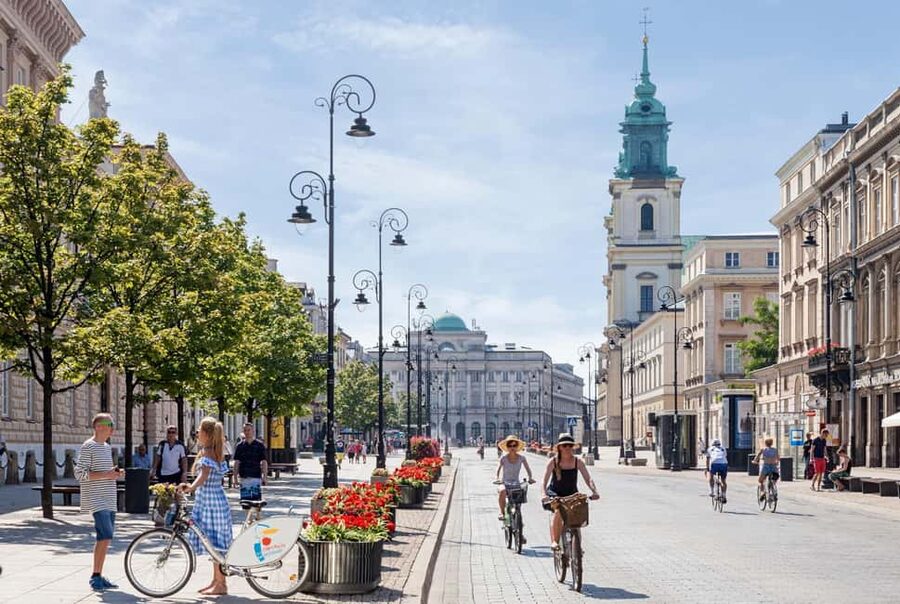
- Two eras in one route: Begin with the Royal Route, then shift to the communist-era city center.
- Local English-speaking guides: Guides such as Arek, Margaret, and Gawel grew up in Warsaw and explain the city from personal experience.
- A strong first tour: The route gives you a quick framework for Warsaw if you have only a few hours to get oriented.
- Major sights without entrance fees: You see Sigismund’s Column, St. Anne’s Church, the University, the Presidential Palace, Holy Cross Church, and the Palace of Culture from the outside.
- A useful contrast: Baroque churches, noble residences, and Chopin’s Warsaw meet Stalin’s monumental city planning.
- Very low price: The $5 cost makes this an easy way to start your visit, though food, drinks, and interior admissions are not included.
Starting at Sigismund’s Column in Castle Square
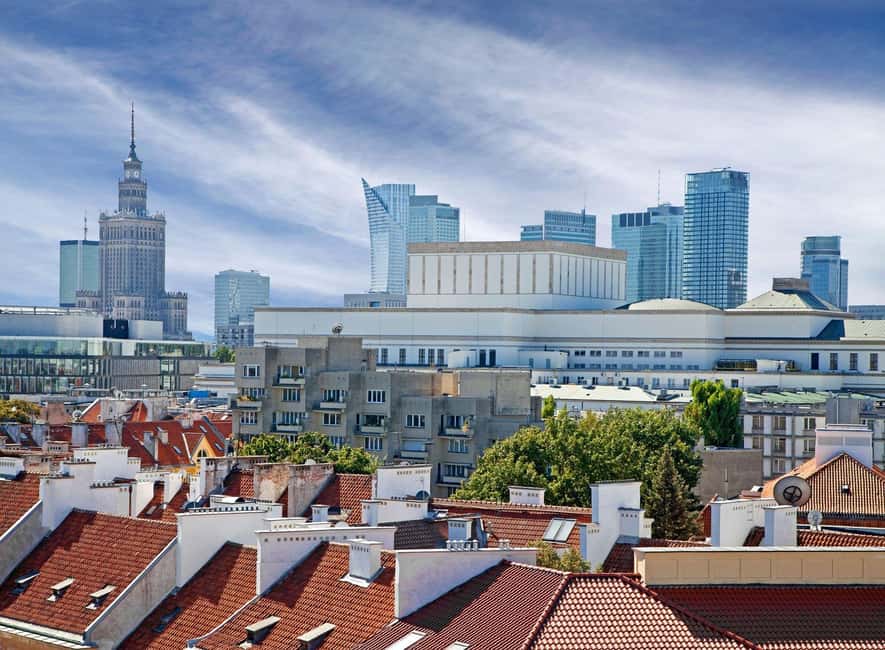
Meet your guide by Sigismund’s Column in Castle Square, at the edge of Warsaw’s Old Town. It is an easy place to recognize, with the column rising in front of the Royal Castle area.
The column honors King Sigismund III Vasa, the ruler who moved Poland’s capital from Krakow to Warsaw in the late 16th century. The tour gives this opening stop about 20 minutes, enough time to set up the city’s royal story before you leave the square.
This is a smart place to begin because the square links several parts of Warsaw at once. You are beside the Old Town, near the Royal Castle, and at the upper end of the Royal Route. From here, the tour shifts from royal power to religious influence, education, politics, art, and finally communist planning.
A few more Warsaw trips to weigh up
- Warsaw: Old Town Highlights Walking Tour in English
★ 4.7 · 1,516 reviews - Warsaw: Old Town Guided Walking Tour
★ 4.9 · 599 reviews - Half-Day Polish Food Walking Tour with Guide and Dinner
★ 4.5 · 381 reviews
St. Anne’s Church and Warsaw’s religious landmarks
The next stop is St. Anne’s Church, with about 20 minutes of guided time. The church represents the religious and architectural side of the old Royal Route, where powerful orders built baroque churches and wealthy nobles established grand residences.
The tour does not treat the route as a string of unrelated façades. Instead, you get the reason this street became so important. In the 17th and 18th centuries, Warsaw’s most powerful families and religious institutions wanted a place close to the royal center.
St. Anne’s also helps you notice the city’s visual contrast. Ornate religious architecture is set against streets that later saw war damage, reconstruction, and communist redesign. You should expect an explanation from outside rather than a guaranteed interior visit, since admissions are not included.
University of Warsaw and the educated city
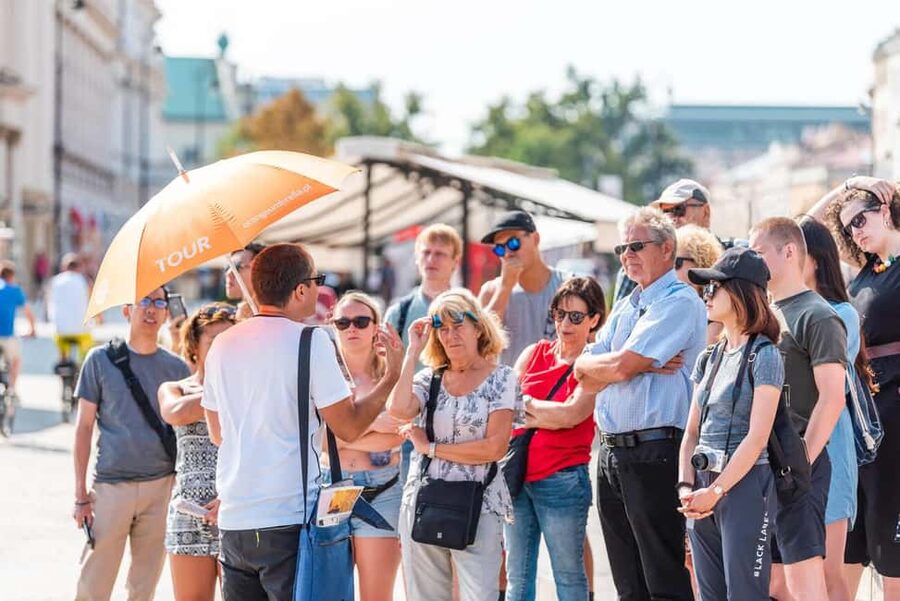
The University of Warsaw receives about 10 minutes. That may sound short, but it works as a quick stop within a tightly packed route.
Here, the guide connects the Royal Route with Warsaw’s intellectual life. You hear about Fryderyk Chopin, who lived in Warsaw, and Marie Curie, who studied in the city. Those details give the elegant avenue a human scale. It was not only a corridor for kings, nobles, and church officials. It was also part of the city where students, artists, and scholars built their lives.
I find this kind of stop useful because it adds depth without turning the walk into a lecture on every institution in town. The guide keeps the focus on how people and places fit into Warsaw’s changing identity.
The Presidential Palace and the old power corridor
The Presidential Palace is another roughly 10-minute stop. Its place along the route shows how Warsaw’s political center continued to develop after the royal period.
The walk uses the palace to explain the Royal Route as more than a pretty avenue. It was a line of power, linking residences, churches, public buildings, and the central institutions of the capital.
You will not spend the whole visit waiting for access to official buildings. This is an exterior-focused city walk, so the value comes from the guide’s explanation and the sequence of places. Keep that in mind if you prefer tours built around long interior visits.
Same country, a completely different kind of day:
- Warsaw: Chopin Concert in the Old Town
★ 4.8 · 2,287 reviews - Warsaw: Traditional Galar Cruise on The Vistula River
★ 4.6 · 1,640 reviews - Warsaw Concert: Chopin – Painted by Candlelights with Wine
★ 4.8 · 1,442 reviews - Warsaw: City Sightseeing Hop-On Hop-Off Bus Tour
★ 3.6 · 1,415 reviews
The Prudential Building and a city rebuilt
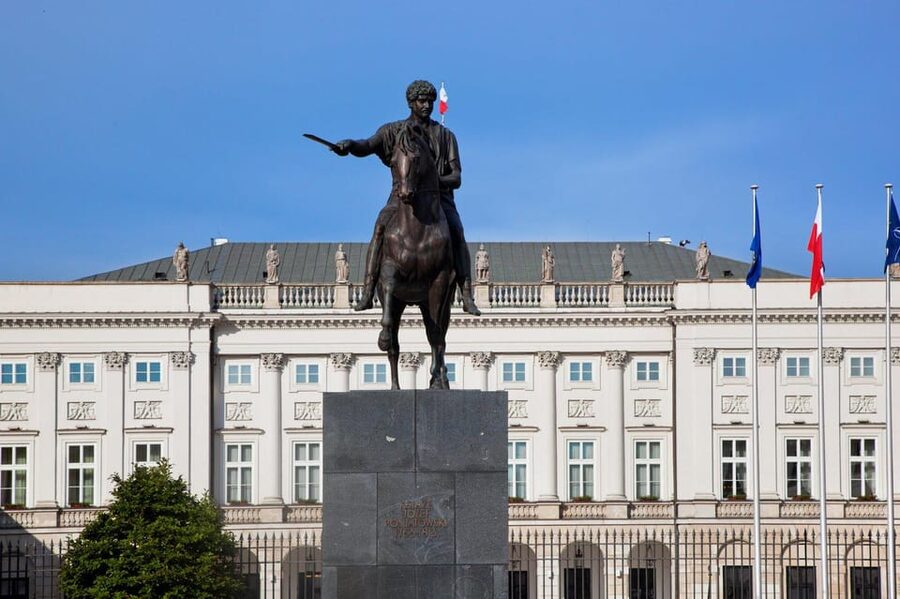
The route then reaches the Prudential Building, now associated with Hotel Warszawa. The stop lasts about 15 minutes, and the building helps shift the story from old Warsaw to the modern capital.
Warsaw was heavily reshaped in the 20th century. The Prudential stop is one of the places where the guide can explain that transition through architecture and urban change. The route’s details list this location twice, so the exact order may vary slightly on the day, or the guide may return to it while discussing the surrounding center.
That small uncertainty is worth noting, but it does not change the main value of the walk. The Prudential Building gives you a reference point for the city center before the tour moves toward its most famous communist landmark.
Holy Cross Church and Chopin’s Warsaw
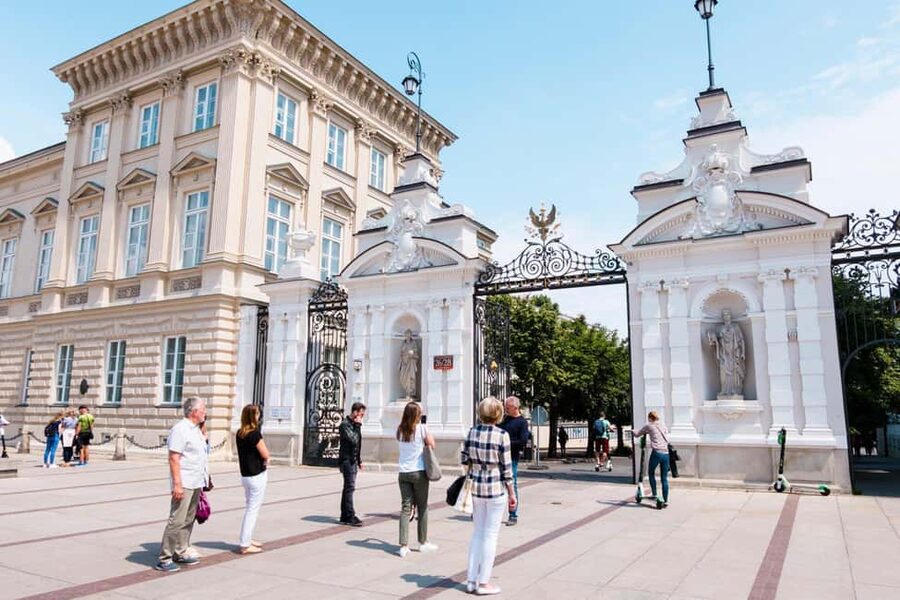
Holy Cross Church receives about 15 minutes. It is especially important in the tour because of its connection with Chopin and the city’s cultural memory.
The church helps connect the grand Royal Route with the people who made Warsaw famous beyond Poland. Chopin lived in Warsaw, and the tour uses his story to show how the city’s streets, churches, schools, and residences shaped its cultural life.
This is also a good reminder that Warsaw’s identity is not limited to kings and political systems. Music, education, religion, and national memory all appear along the same route. The guide’s anecdotes are meant to keep those subjects grounded and approachable.
Adam Mickiewicz and national memory
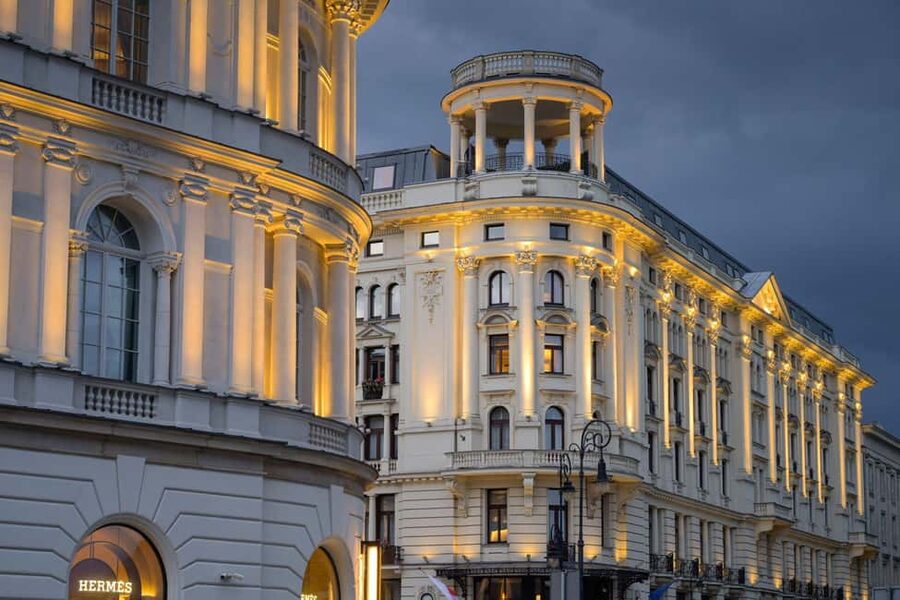
The Monument of Adam Mickiewicz receives another 15-minute explanation. Mickiewicz is one of Poland’s major literary figures, and the monument brings national culture into the walk.
The stop adds a different kind of history. Sigismund’s Column represents monarchy, the Presidential Palace represents political authority, and Mickiewicz represents literature and national feeling. Together, these stops show why the Royal Route matters to Polish identity.
You should expect the guide to use the monument as a place to explain the figure, the setting, and the wider national story. It is less about spending time at a single statue and more about understanding why this section of Warsaw carries so much symbolic weight.
Kubusia Puchatka and a change in scale
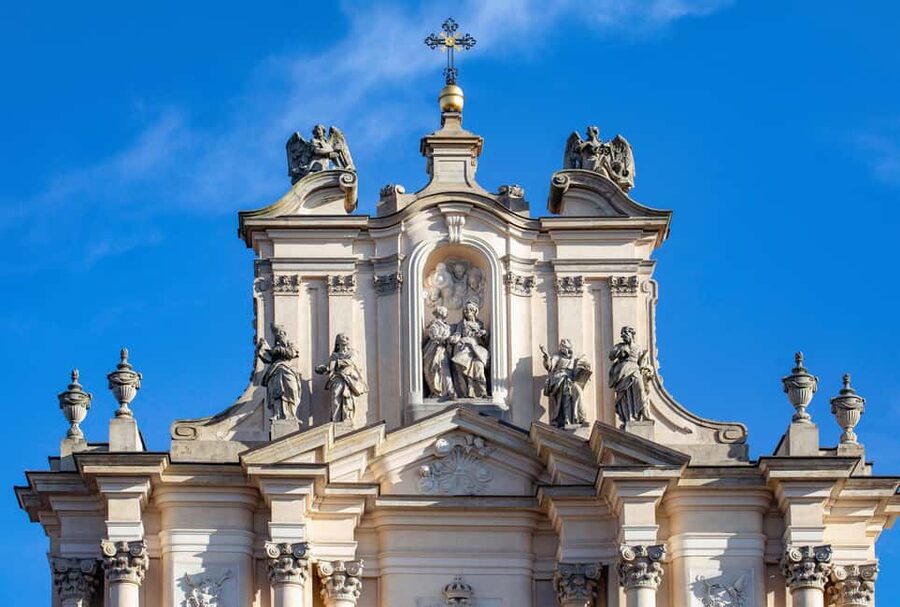
Kubusia Puchatka is a less obvious stop, with about 15 minutes of guided time. Its inclusion helps move you away from the grand monuments and toward the everyday city center.
A useful city walk should not show only the landmarks that appear on postcards. Smaller streets and local references help you understand how residents move through Warsaw today, and how the central districts fit together between the famous buildings.
This stop also helps break up the architecture-heavy rhythm of the Royal Route. After churches, palaces, monuments, and institutions, you get a more ordinary urban reference before the final approach to the Palace of Culture and Science.
The Palace of Culture and Science, Stalin’s gift

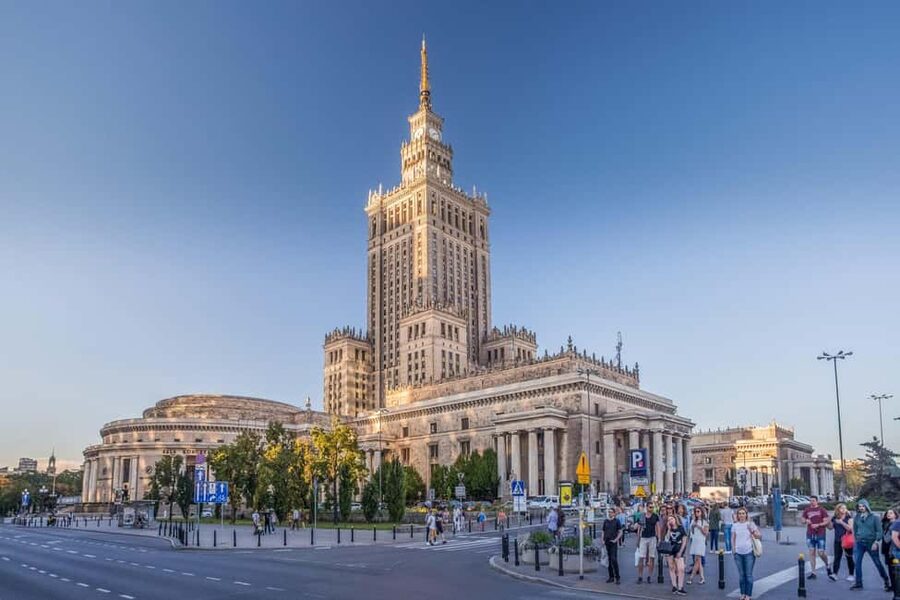
The tour’s final major subject is the Palace of Culture and Science, Warsaw’s most recognizable communist-era building. The stop receives about 15 minutes, and it is the clearest expression of the tour’s second half.
The palace was presented by Stalin to the People’s Republic of Poland. It was intended to give Warsaw a new communist identity, and its size and location made that political message impossible to miss.
The guide explains the building not simply as an unusual skyscraper, but as a piece of power. Its monumental form changed the city center and created the visual anchor for a new urban plan. You can then compare it with the royal buildings from the first half of the walk: one side expresses monarchy, religion, and noble wealth, while the other reflects Soviet influence and communist state planning.
That contrast is the heart of the experience. Warsaw is not a city where every historic layer sits neatly apart from the next. Older palaces and churches meet broad avenues, postwar construction, and Soviet-style blocks. The tour gives you a way to read those differences instead of seeing them as random scenery.
The listed finish is at the Palace of Culture and Science, though the meeting information also says the activity ends back at the meeting point. Because those details do not fully match, confirm the exact finish location when you reserve.
What the guides add to the walk
The tour is led in English by local Warsaw guides. The important distinction is not only language. The guides are described as Poles born and raised in Warsaw, and the experience places particular weight on growing up in communist Poland.
That personal connection can make the second half more useful. A guide who remembers the period can explain how communist-era buildings and planning affected daily life, rather than treating the Palace of Culture as a curious old monument.
The available guide names include Arek, Margaret, and Gawel. Gawel is noted for using many anecdotes, which helped keep the historical material lively. Arek is described as clear and helpful, while Margaret handled a rainy walking day with care. Your guide may be different, but these details give you a good sense of the intended style: solid facts, personal context, and stories that keep the route from feeling dry.
Why the $5 price offers strong value
At $5 per person, this is an unusually inexpensive way to get oriented in central Warsaw. You receive a professional English-speaking guide and a city map, with a full 2.5-hour route connecting the Old Town edge, the Royal Route, and the communist center.
The value is strongest if you are new to Warsaw. The city has a lot to see, and its main sights are spread across different areas. A first walk like this can help you decide which places deserve a longer return visit.
The price does not cover drinks, food, or entrance fees. That matters because the tour is mainly a guided walk around exterior landmarks. If you want to visit the interiors of churches, palaces, or the Palace of Culture, you should plan those separately.
The tour received a 4.6 rating from eight submitted ratings, and the praise focuses on useful information, clear explanations, anecdotes, and value for money. One group noted that the walk lasted exactly 2.5 hours, so the advertised duration appears to be a realistic planning figure.
Pace, weather, and accessibility
You spend 2.5 hours on foot and stop frequently for explanations. The many short segments keep the route moving, but you should wear comfortable shoes and be ready to listen while standing.
Bad weather can affect the experience. The walk still operates in drizzle, but a waterproof jacket or umbrella will make the Royal Route much more pleasant. There is no included food or drink break, so carry water if you need it.
The activity is listed as wheelchair accessible. Since the route includes city streets and many exterior stops, you should still confirm any personal access needs before booking, especially if weather or street conditions are a concern.
Free cancellation is available up to 24 hours before the start for a full refund. You can also reserve now and pay later, which helps if your Warsaw schedule is still changing.
Who should book this Warsaw tour?
I would choose this walk as a first introduction to Warsaw, especially if you have only a few hours in the city. It covers the essential contrast between the royal center and the communist-era heart without requiring you to organize several separate sights.
It is a good match for:
- First-time visitors who want a clear starting point
- History-minded people interested in both monarchy and communism
- Anyone curious about Chopin, Marie Curie, and Polish national culture
- Visitors who prefer local stories to a bus tour
- Budget-conscious people looking for a long guided experience at a low price
- Anyone who wants to return later to the sights that deserve more time
You may want something else if you dislike walking, want extensive time inside museums, or prefer a private guide. The route offers breadth rather than long visits at each stop.
Should you book it?
Book this tour if you want Warsaw explained as a city of sharp contrasts. The route moves from Sigismund’s Column and baroque churches to Chopin, Mickiewicz, the Prudential Building, and Stalin’s Palace of Culture. That combination gives you a practical mental map and a useful sense of why Warsaw looks the way it does.
At $5, the risk is small. Just come prepared for a brisk outdoor walk, modest time at each stop, and exterior sightseeing rather than included admissions. For a first afternoon or morning in Warsaw, this is a sensible, high-value way to get your bearings fast.
FAQ
How long does the Royal and Communist Warsaw tour last?
The walking tour lasts 2.5 hours.
What language is the tour conducted in?
The tour is conducted in English with a live English-speaking guide.
Where does the tour start?
The guide waits by Sigismund’s Column in Castle Square, Warsaw Old Town.
Where does the tour finish?
The activity details list the Palace of Culture and Science as the finish, while the meeting information also says the activity ends back at the meeting point. Confirm the exact ending location when booking.
How much does the tour cost?
The listed price is $5 per person.
What is included in the price?
A professional English-speaking Warsaw guide and a city map are included.
Are food and drinks included?
No. Food and drinks are not included.
Is the tour wheelchair accessible?
Yes, the activity is listed as wheelchair accessible.
Can I cancel the booking?
Yes. You can cancel up to 24 hours in advance for a full refund.
Can I reserve now and pay later?
Yes. The booking option allows you to reserve your place and pay later.
Just added around Warsaw
- Taste of Poland, food tour and guided walk with 12 tasting★ 5.0 · 3 reviews
- Skip-the-Line Warsaw Royal Castle Private Guided Tour★ 5.0 · 4 reviews
- Secrets of Warsaw 4-hour Bike Tour★ 5.0 · 25 reviews
- Warsaw: Live Show at Sabat Theatre★ 4.5 · 11 reviews
- Private Warsaw City Tour★ 4.9 · 4 reviews
- Warsaw: WWII Private Tour by Retro Minibus with Hotel Pickup★ 5.0 · 7 reviews
- Private Tour From Warsaw: Łowicz Mazovian Countryside★ 5.0 · 10 reviews
- Packrafting kayaking guided tour Vistula river Warsaw Poland★ 4.5 · 14 reviews
Walking Tours, compared.
Gdańsk City Sights & History Guided Walking Tour in English
Read our review →
Browse the lists this tour appears in