
Reviewed · WALKING TOURS
A unique walking tour of Jewish Warsaw — past and present
Warsaw’s Jewish story is not confined to a museum. It is written into ordinary streets, a surviving synagogue, fragments of the ghetto wall, empty spaces, and memorials. This three-hour walking tour connects those places into one clear story, from Jewish settlement in Poland to the Warsaw Ghetto Uprising and the community’s present-day renewal.
I like the small group limit of 10, which should make it easier to hear the guide and ask questions. I also like the route’s mix of major memorials and less obvious traces, including the remaining ghetto wall and the Ringelblum Archive memorial. The main drawback is the distance: you will walk about 4.5 to 5 kilometers, so this is not a good choice if long walks are difficult.
Key points to know before booking
- A rare surviving synagogue: Nożyk Synagogue is the only Warsaw synagogue that survived the war and is still used today.
- A route through absence as well as presence: Muranów shows how little of the former Jewish district remains above ground.
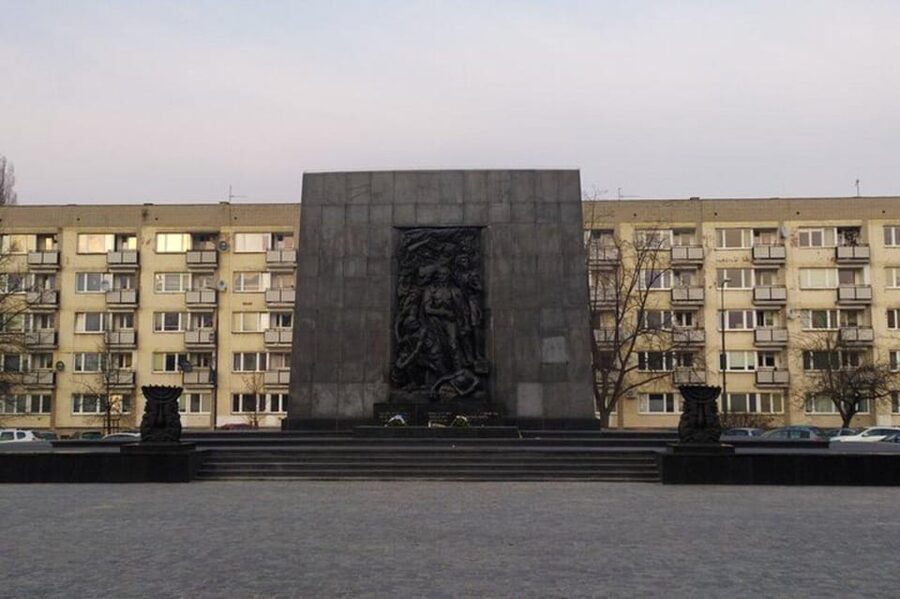
- A direct link to Treblinka: Umschlagplatz marks the place from which about 300,000 Jews were deported.
- Small and personal: The group is limited to 10 people, with an English-speaking live guide.
- More than wartime history: The tour covers nearly 1,000 years of Jewish life in Poland and the current Jewish community in Warsaw.
- Good preparation included: You receive a Warsaw information pack and suggestions for further sights, food, and drinks.
Why this walk matters in Warsaw
Before World War II, about one third of Warsaw’s residents considered themselves Jewish. Warsaw was also home to the largest Jewish population in Europe. Those facts can feel abstract when you read them in a book, but this walk gives them a physical setting.
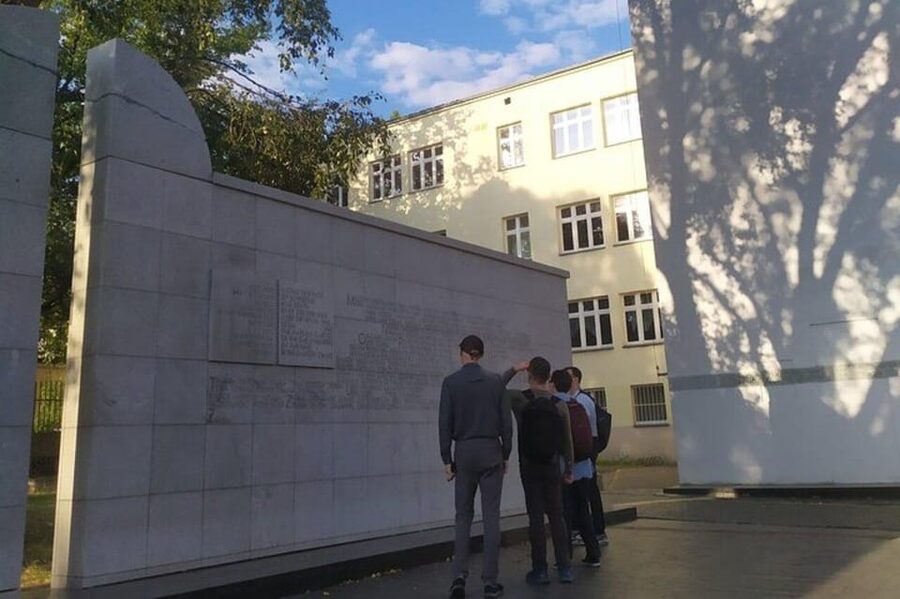
The route helps you see both what survived and what did not. A synagogue remains. Parts of a wall remain. Memorials remain. Yet much of the former Jewish quarter is now made up of streets and buildings that offer few visible clues to the people who once lived there.
That contrast is central to the experience. You are not simply moving from one monument to the next. You are learning how a major Jewish community settled, grew, suffered persecution, resisted, and slowly reappeared after the war.
The subject is painful. The tour includes the deportation of around 300,000 Jews to Treblinka, the ghetto’s destruction, and the 1943 uprising, which began even though its fighters understood they were unlikely to win. A good guide needs to explain these events with care, and the available feedback places strong emphasis on Oliwia’s clear delivery, humor, tone, and command of the subject.
A few more Warsaw trips to weigh up
- Warsaw: Old Town Highlights Walking Tour in English
★ 4.7 · 1,516 reviews - Warsaw: Old Town Guided Walking Tour
★ 4.9 · 599 reviews - Half-Day Polish Food Walking Tour with Guide and Dinner
★ 4.5 · 381 reviews
Starting at Sienna 53
The meeting point is in front of Baguette Mi restaurant at Sienna 53. Look for a guide holding a white and green umbrella.
That detail matters in a city where a busy street corner can make a group hard to spot. Arrive with enough time to identify the meeting point and get ready for the walk. Since the route covers several kilometers, comfortable shoes are more useful than anything fancy.
The tour is conducted in English. With a maximum of 10 participants, you should get a more direct experience than on a large coach tour. A small group also suits a subject that often raises thoughtful questions, though the exact feel will depend on the guide and the people booked for your departure.
Nożyk Synagogue, one of Warsaw’s rare survivors
Nożyk Synagogue is the first major stop. It is the only Warsaw synagogue that survived the war and remains today, making it an essential place to begin.
The guided visit lasts about 15 minutes. That is enough time for an introduction, though not a full museum-style exploration. The synagogue helps place Jewish life in the present tense. You are not looking only at a memorial to a vanished community. You are also seeing a functioning part of Jewish Warsaw.
The synagogue entry fee is not included in the tour price. Check the cost before booking and remember that access can sometimes depend on opening arrangements, though no extra restrictions are specified here. If you want a longer visit, ask the guide whether returning later makes sense.
I like this stop because it prevents the tour from becoming only a story of loss. The wartime destruction is unavoidable, but Nożyk Synagogue provides a surviving link between the city’s past and its current Jewish community.
Hala Mirowska and the everyday city
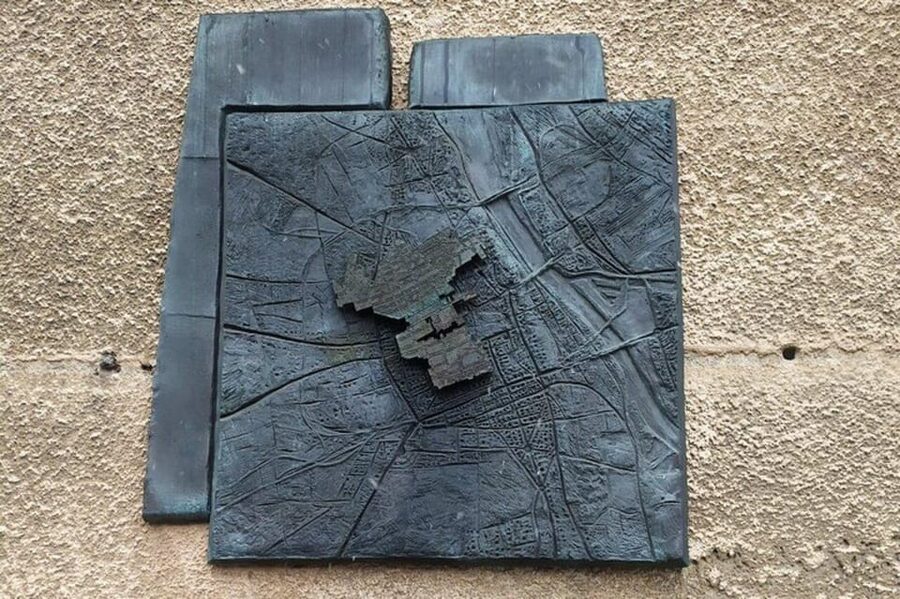
The next stop is Hala Mirowska, with about 10 minutes of guided explanation.
This is a useful change of pace. After the synagogue, the route brings you into a place connected with everyday urban life rather than a formal memorial. The point is not simply to collect famous sights. It is to understand how Jewish life was part of Warsaw’s ordinary streets, markets, work, and neighborhoods.
Ten minutes is brief, so expect context rather than a long stop. You will benefit most if you pay attention to how the guide connects this location to the wider history of Jewish settlement and expansion in Warsaw.
This part of the walk also shows why a walking tour can add value. A museum can explain events through exhibits and documents. On foot, you can see how the story fits into the city’s physical layout.
Same country, a completely different kind of day:
- Warsaw: Chopin Concert in the Old Town
★ 4.8 · 2,287 reviews - Warsaw: Traditional Galar Cruise on The Vistula River
★ 4.6 · 1,640 reviews - Warsaw Concert: Chopin – Painted by Candlelights with Wine
★ 4.8 · 1,442 reviews - Warsaw: City Sightseeing Hop-On Hop-Off Bus Tour
★ 3.6 · 1,415 reviews
Muranów and the shape of a destroyed district
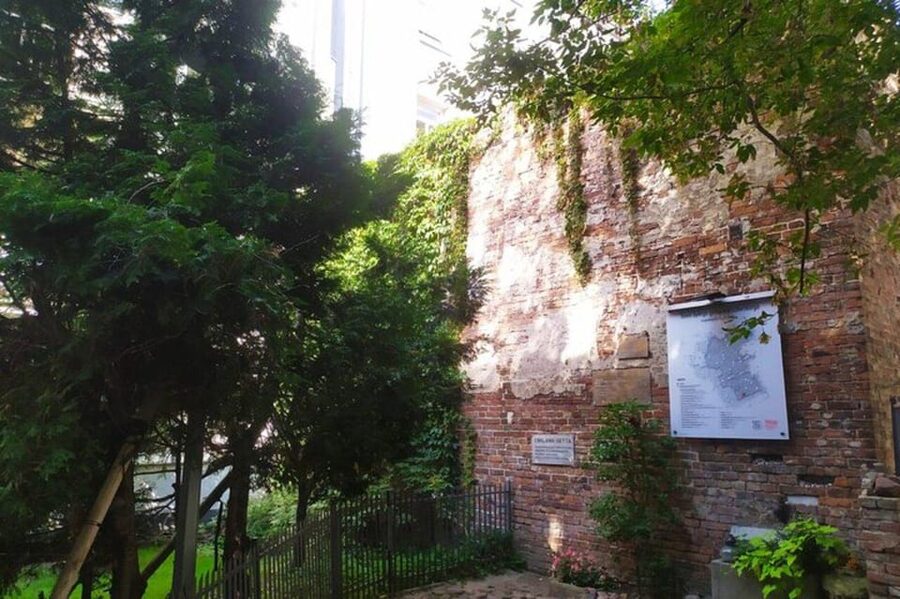
Muranów receives about 30 minutes, making it one of the longest stops on the route.
This is where the tour’s central idea becomes especially clear. Muranów is tied to the former Jewish district and the Warsaw Ghetto, but the visible city does not present a complete picture of what once stood here. The guide’s job is to help you read the area through what is present, what is missing, and what survives only through memory.
The walk introduces the tragic and heroic struggle of the ghetto. You will hear about the people trapped there, the conditions they faced, and the choices that led to the Jewish Uprising in 1943. The tour aims to explain why people resisted even when they knew the uprising would fail.
That question is important. Without context, the uprising can seem like a simple military event. With context, it becomes a story about dignity, defiance, and the refusal to let persecution dictate the final meaning of a community’s life.
The area requires attention. It may not deliver one dramatic view at every turn, and some of the most important points are understated. That is a drawback if you want a sightseeing walk built around grand architecture. It is a strength if you want a guide to make an ordinary street meaningful.
The Ringelblum Archive memorial
The stop marked as the Ringelblum Archive memorial lasts about 10 minutes.
The Ringelblum Archive is linked with the effort to preserve evidence and personal records from Jewish life under Nazi occupation. Here, the tour shifts from buildings and streets to the act of recording history itself.
This is one of the places where visual aids can be especially helpful. The tour includes visual material, and those aids can make it easier to understand people and events that are no longer visible in the city around you.
Expect a short, focused explanation rather than a large exhibit. The value lies in the connection between the memorial and the first-hand accounts of ghetto life that the guide shares. Those accounts give the history a human scale without pretending that a few stories can represent everyone.
POLIN Museum from the outside and within the wider story
The route continues to the POLIN Museum of the History of Polish Jews, with about 10 minutes of guided information.
The tour does not include the museum entry fee, and this walk is not a full museum visit. Think of the stop as an introduction and a chance to understand why the museum matters within the story of Polish Jewry.
If you have time in Warsaw, adding a separate visit to POLIN could make a lot of sense. The walking tour gives you the geography and historical framework first. You can then spend longer with the museum’s displays at your own pace.
Do not assume that the 10-minute stop replaces a museum visit. It does not. Instead, it helps you decide how to use your time there. The included recommendations can also point you toward other places to visit after the tour.
Miła 18 and the Warsaw Ghetto Uprising
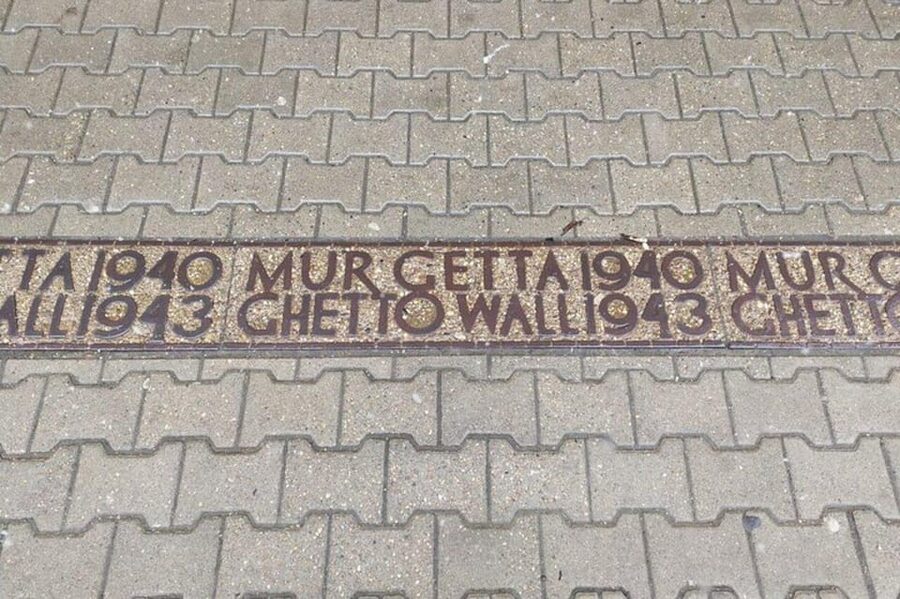
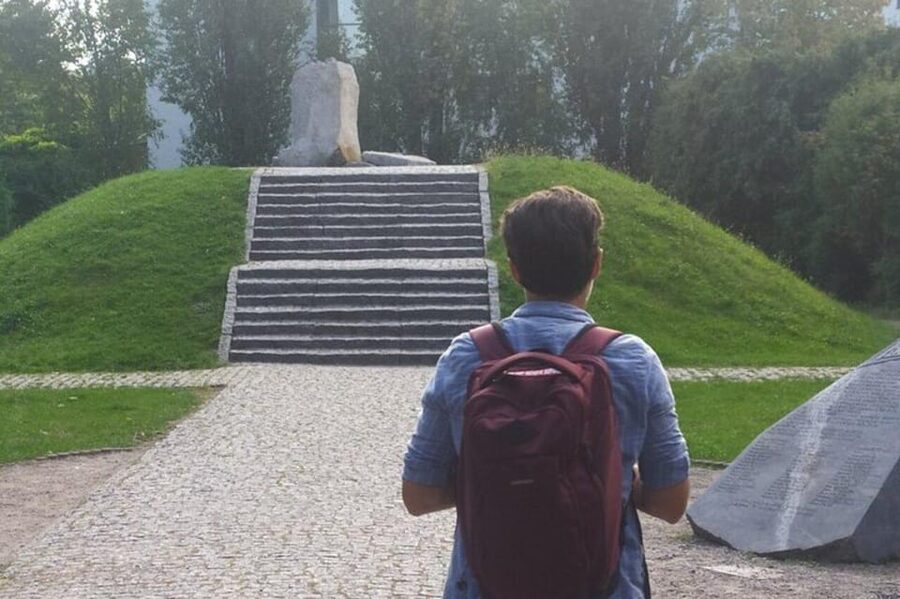
Miła 18 is another focused memorial stop, with about 10 minutes of guided explanation.
This location is strongly associated with the Jewish Ghetto Uprising. The guide explains why the fighters chose resistance despite knowing that the odds were against them. That context makes the stop more than a name on a map.
The strength of this part of the tour depends heavily on the guide’s storytelling. Oliwia is specifically associated with this experience, and the strongest comments about her describe an engaging speaking style, careful explanation, and a firm grasp of the ghetto’s history.
You should expect a serious stop rather than a conventional attraction. The monument and its setting invite reflection, but the guide’s interpretation gives you the information needed to understand the decision to resist.
Finishing at Umschlagplatz
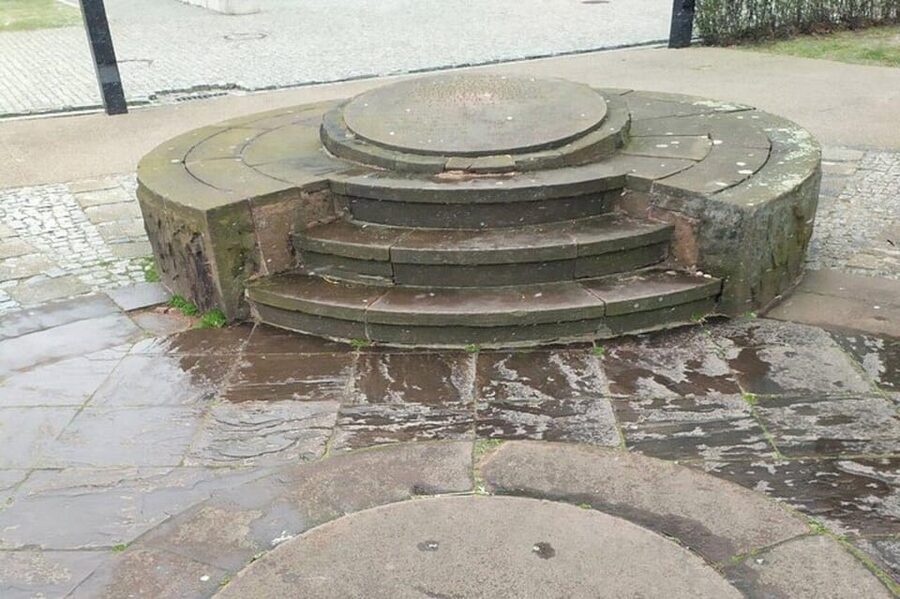
The tour ends at the Umschlagplatz monument.
This was the place from which about 300,000 Jews were transported to Treblinka. Ending here gives the route a clear emotional and historical direction. You have moved from Jewish life and community institutions to the machinery of deportation and mass murder.
The final stop is not an easy one, but it is necessary. The tour does not soften the scale of what happened. At the same time, it keeps the people and their lives in view, rather than reducing Warsaw’s Jewish history to one chapter of wartime suffering.
Because the experience ends at a memorial rather than returning to the starting point, plan your next move before you set out. The supplied information does not specify a return transfer or a meeting-point drop-off. Ask the guide for current suggestions about what to see, eat, or drink afterward.
A guide-led story, not just a list of monuments
The tour’s most praised feature is the guide’s presentation. Several comments single out Oliwia, describing her as engaging, clear, and able to explain difficult material in a way that holds attention.
That matters here. Jewish Warsaw is not a subject you can understand by taking quick photographs of seven locations. You need dates, causes, personal accounts, and explanations of how the city changed. You also need a guide who can keep the tone respectful without making the experience feel flat or mechanical.
The use of humor, intonation, and visual aids can help maintain attention during a three-hour walk. Still, humor should never be the main attraction on a route dealing with genocide and deportation. The available feedback suggests that Oliwia uses a lively speaking style while keeping the subject serious.
Guide quality can vary from one departure to another, so the named guide should not be treated as a guarantee for every booking. The provider is Warsaw UnDiscovered, and the language offered is English.
What $32 gets you
At $32 per person, this is a reasonably priced way to spend three hours with a specialist guide and a small group.
The value comes from the connections between the stops. You could visit some of these places independently, but you would need to research the history, plan the route, find the less obvious memorials, and work out how the sites relate to one another. The tour handles that structure for you.
The price does not include entry to Nożyk Synagogue or POLIN Museum. That keeps the base price lower, but you should budget for those costs if you plan to enter both. The short guided stop at POLIN is useful, but it is not a substitute for the museum’s full admission experience.
You also receive an information pack before the tour, with frequently asked questions, useful links, and recommendations for more places to visit and places to eat or drink. That adds practical value, especially if Jewish Warsaw is only one part of your time in the city.
Walking conditions and who should book
The route covers approximately 4.5 to 5 kilometers over three hours. The pace and number of stops should break up the distance, but this remains a walking tour, not a mostly seated sightseeing experience.
The activity is listed as wheelchair accessible. Even so, the information also warns that it is not recommended for people who have problems walking long distances. If you use a wheelchair or have mobility concerns, confirm the current route and surface conditions before booking.
I would recommend this experience for:
- First-time visitors who want historical context, not just major Warsaw landmarks
- People with a serious interest in Jewish history and World War II
- Anyone who wants to combine memorials with present-day Jewish life
- Visitors who prefer a small English-speaking group
- People planning a later, longer visit to POLIN Museum
I would think twice if you dislike walking, want a light sightseeing experience, or prefer to explore museums without a guide. The subject is emotionally heavy, and the route asks you to give it your full attention.
Useful planning advice
Wear comfortable shoes and allow the full three hours. The route is long enough that rushing from breakfast or another appointment could make the experience less enjoyable.
Bring water, particularly if the weather is warm. The information provided does not list scheduled refreshment breaks, so do not count on one during the tour.
Read the pre-tour information pack if you receive it in advance. It includes frequently asked questions and useful links, which can help you arrive with basic context and use the guide’s time for deeper questions.
Keep your schedule flexible. You can cancel up to 24 hours ahead for a full refund, and the reserve-now, pay-later option lets you hold a place without paying immediately. Starting times vary, so check availability when choosing your date.
Should you book this Jewish Warsaw walk?
I would book it if you want a focused, human explanation of Warsaw’s Jewish past and present, especially if you are willing to walk several kilometers and spend time with difficult material.
The best reason to choose it is the route’s range. You see the surviving Nożyk Synagogue, the former ghetto area, a trace of the wall, memorials connected with resistance, the POLIN Museum, and the deportation point at Umschlagplatz. You also hear how these places fit into nearly 1,000 years of Jewish life in Poland.
Skip it if you only have time for a quick city stroll or if long-distance walking is a problem. But for $32, a group of up to 10, and a guide such as Oliwia who can explain the ghetto’s history with clarity and feeling, this is a strong choice for understanding Warsaw beyond its rebuilt streets.
FAQ
How long is the Jewish Warsaw walking tour?
The tour lasts approximately three hours and covers about 4.5 to 5 kilometers.
What language is the tour conducted in?
The tour is conducted in English with a live English-speaking guide.
Where does the tour start?
The meeting point is in front of Baguette Mi restaurant at Sienna 53. Look for a guide with a white and green umbrella.
Where does the tour finish?
The tour ends at the Umschlagplatz monument.
Is entry to Nożyk Synagogue included?
No. The entry fee to Nożyk Synagogue is not included in the tour price.
Is entry to the POLIN Museum included?
No. The POLIN Museum entry fee is not included. The tour includes about 10 minutes of guided information at the museum.
How many people are in the group?
The group is limited to 10 participants. The activity is listed as wheelchair accessible, but it is not recommended for people who have difficulty walking long distances.
Just added around Warsaw
- Taste of Poland, food tour and guided walk with 12 tasting★ 5.0 · 3 reviews
- Skip-the-Line Warsaw Royal Castle Private Guided Tour★ 5.0 · 4 reviews
- Secrets of Warsaw 4-hour Bike Tour★ 5.0 · 25 reviews
- Warsaw: Live Show at Sabat Theatre★ 4.5 · 11 reviews
- Private Warsaw City Tour★ 4.9 · 4 reviews
- Warsaw: WWII Private Tour by Retro Minibus with Hotel Pickup★ 5.0 · 7 reviews
- Private Tour From Warsaw: Łowicz Mazovian Countryside★ 5.0 · 10 reviews
- Packrafting kayaking guided tour Vistula river Warsaw Poland★ 4.5 · 14 reviews
Walking Tours, compared.

Gdańsk City Sights & History Guided Walking Tour in English
Read our review →
Browse the lists this tour appears in