
Reviewed · MUSEUMS
Archaeological Museum of Krakow Entrance Ticket
The Światowid statue is the main reason to make time for Krakow’s Archaeological Museum. Carved between the 9th and 10th centuries, this four-faced pagan god was found in 1848 near Zbrucz. It gives you a direct look at beliefs that existed before Christianity reshaped Poland.
I like the low price, about $2.13 per person, and the chance to see objects found in the Lesser Poland region rather than only famous royal or religious art. I also like the museum’s unusual setting: a former Barefoot Carmelite monastery that later became St. Michael’s Prison. The main caution is ticket handling. One booking problem was reported when a QR code did not arrive, and the ticket office would not admit the customer without it.
Key points to know before you go
- The four-faced Światowid statue is the museum’s central treasure, dating from the 9th to 10th century and found in 1848 in Zbrucz.
- The main museum occupies a former monastery and prison, giving the visit an unusual setting before you even reach the exhibits.
- The museum covers pagan beliefs and archaeological finds from Lesser Poland, useful context for Krakow’s older past.
- Two additional sites are connected with the museum, St. Wojciech’s Church on the Main Square and the Nowa Huta-Branice branch.
- No guide is included, so you should plan to read the displays and manage your own route.
- The ticket is inexpensive and cancellation is flexible, but check the exact entry instructions and opening hours before setting out.
Why Światowid deserves your attention
Krakow is full of castles, churches, and grand paintings. The Archaeological Museum offers something different: evidence of people and beliefs that came before the city’s Christian identity took firm shape.
Światowid, sometimes described as a pagan god with four faces, is the clear centerpiece. The statue was found in Zbrucz in 1848 and dates to the 9th or 10th century. Its four faces make it visually memorable, but the real value is the question it raises: what did people in this part of Europe believe before written Christian records became the main source of information?
You do not need a specialist background to appreciate it. Look at the form, the material, and the way the statue represents a supernatural figure. Then use the surrounding archaeological displays to place it within the wider world of early pagan beliefs. The museum cannot turn a single object into a complete picture of the past, but it gives you a solid starting point.
For many visitors, Światowid will be the one object they remember. That is not a weakness. A good museum visit often needs one strong anchor, and this statue provides it.
A few more Krakow trips to weigh up
- Auschwitz-Birkenau Museum and Memorial Guided Tour from Krakow
★ 4.5 · 1,510 reviews - Krakow: Rynek Underground Museum Guided Tour
★ 4.6 · 1,122 reviews - Krakow Schindler’s Factory Museum Guided Tour in English
★ 4.5 · 650 reviews
A museum with a surprising past
The building itself helps explain the character of the visit. The Barefoot Carmelites operated a monastery on the site for decades. In the 19th century, the Austrian authorities stationed in Krakow changed the building into a prison.
The prison inherited the monastery’s name and became known as St. Michael’s Prison. That shift from religious house to prison is a striking piece of Krakow’s urban story. After the Second World War, the prison closed, and the Archaeological Museum was established there.
As you move through the museum, keep that sequence in mind. You are not entering a purpose-built modern gallery with a neutral interior. You are visiting a place that has served religious, penal, and cultural roles. The building gives the collections a sense of place without needing a long guided explanation.
The information provided does not specify how much of the former monastery or prison fabric is visible in every room, so you should not expect a dedicated architectural tour. Still, the setting adds a useful layer to a museum that deals with changing societies and beliefs.
What you can see in the main collection
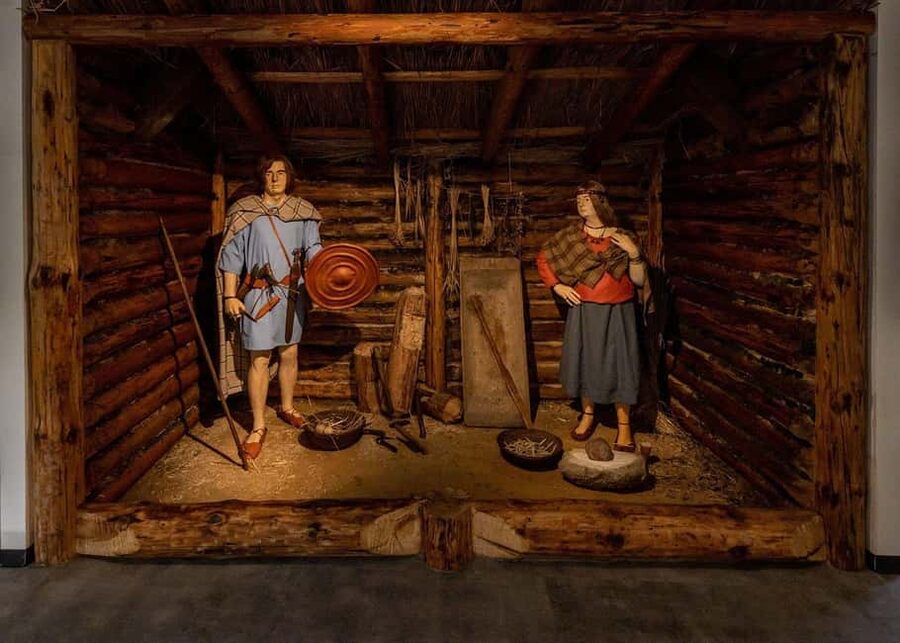
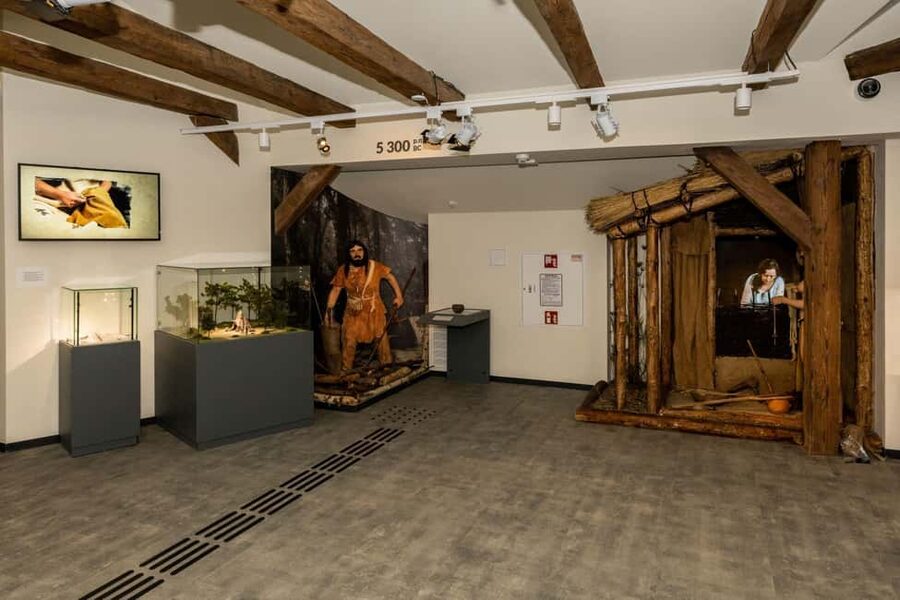
The main building presents archaeological treasures found in Lesser Poland. That regional focus matters. Instead of treating Krakow as an isolated medieval city, the museum places it within a wider area where communities lived, worshipped, worked, and left objects behind.
The collection supports the museum’s look at pagan beliefs, but the supplied details do not provide a complete room-by-room list. That means I would visit with a few clear goals rather than expect a tightly scripted route. First, find Światowid. Then allow time for the other archaeological material and read the labels that explain where objects came from.
This is a good stop for you if you prefer physical evidence to grand storytelling. Archaeological objects can be small, plain, or hard to interpret at first glance. Their value often comes from their age, location, and connection with a particular community. Give yourself time to read rather than rushing from display to display.
The museum is also a useful counterpoint to Krakow’s better-known attractions. The Princes Czartoryski Museum offers famous art, including Leonardo da Vinci’s Lady with an Ermine. The Archaeological Museum asks different questions about the region’s early inhabitants. If you have already spent days looking at royal portraits and church art, this visit can change the pace.
St. Wojciech’s Church beneath the Main Square
One branch is at St. Wojciech’s Church on Krakow’s Main Square. Its underground exhibition covers the history of the square, the church, and the church’s patron, Saint Wojciech.
This location offers a different kind of archaeological visit. The Main Square is one of Krakow’s most recognizable public spaces, but the underground display shifts your attention below the present-day surface. You can see remnants of wooden and stone floors, along with Romanesque walls.
Those remains help explain how the square and church developed over time. The value here is not a single spectacular object. It is the chance to see traces of earlier construction beneath a place you may already have crossed several times.
I would treat this branch as especially useful if you are already exploring the Main Square. It can fit naturally into a walking day, though the ticket information does not provide a guaranteed sequence or exact admission arrangement for every branch. Check the option you book and confirm opening times before planning your route around it.
The underground setting may also appeal to you if you enjoy seeing layers of a city rather than only its restored facades. You can compare the wooden and stone floors with the square above, then consider how much of Krakow’s earlier fabric has disappeared under later building work.
Same country, a completely different kind of day:
- From Krakow: Auschwitz-Birkenau Guided Tour & Hotel Pickup
★ 4.5 · 33,358 reviews - From Krakow: Auschwitz-Birkenau Guided Tour & Hotel Pickup
★ 4.5 · 29,340 reviews - Krakow: Auschwitz Guided Tour with Optional Hotel Pickup
★ 4.5 · 15,280 reviews - Krakow–Zakopane: Cable Car, Chocholow Baths, Cheese & Vodka
★ 5.0 · 10,720 reviews
Nowa Huta-Branice and Krakow’s postwar expansion
The second branch is at Nowa Huta-Branice. It is closely tied to the Nowa Huta district and its metallurgical plant, and archaeological discoveries there began in 1949 during early construction work.
This branch broadens the museum’s scope. You are not looking only at old Krakow in the traditional center. You are also seeing how major construction in the postwar period led to archaeological discoveries.
The supplied information does not list the individual objects or rooms at Nowa Huta-Branice, so I would not promise a particular artifact beyond the branch’s archaeological collections. Its importance lies in the connection between modern building work and the older remains uncovered in the area.
For you, the practical question is time. The activity is described as valid for one to two days, but the exact starting times and arrangements can vary by the option booked. The listing also says the meeting point may vary. Do not assume that every site works as one quick, continuous route from the main building. Check the exact details before you set aside a full day for multiple locations.
If you are already interested in Nowa Huta, this branch may add archaeological context to that part of Krakow. If your stay is short and you want only one compact museum visit, the main building and St. Wojciech’s Church may be easier to fit into your plans.
How much time should you allow?
The ticket is valid for one to two days, according to the selected option and availability. That gives you more flexibility than a fixed guided tour, but it also means you need to read the booking details carefully.
There is no guide included. You decide how long to spend with Światowid, how closely to read the regional displays, and whether the branch sites fit your schedule. This suits independent visitors who do not want to move with a group.
The tradeoff is that you must supply your own structure. I would set three simple priorities:
- See the Światowid statue first.
- Leave time for the Lesser Poland archaeological displays.
- Add St. Wojciech’s Church or Nowa Huta-Branice only after checking their hours and admission details.
The last entrance is 90 minutes before closing. That is an important practical limit. Even if the museum remains open later, arriving too near the end may leave you with too little time to see the collection properly.
Opening hours can change from those shown during booking. Check the local operator’s official website on the day you visit, especially if you are planning around the last entry time or trying to visit more than one branch.
Is the $2.13 ticket good value?
At about $2.13 per person, this is one of the easier cultural purchases to justify in Krakow. The price is low enough that you do not need a three-hour visit to feel you received value. A focused look at Światowid and the main displays can make the ticket worthwhile.
The value becomes stronger if your option gives you access to more than one museum location. St. Wojciech’s Church adds archaeological remains beneath the Main Square, while Nowa Huta-Branice connects archaeology with postwar construction. Since the exact option can vary, verify what your ticket covers rather than assuming every branch is included.
There is also a useful comparison with the Krakow City Card. Card holders receive free entrance to the Archaeological Museum. If you already hold that card, buying this separate ticket would make little sense. The city card also includes access to many other museums and landmarks, including Schindler’s Factory, the Rynek Underground Museum, the Polish Aviation Museum, and the Princes Czartoryski Museum.
For a standalone purchase, the low price helps offset the lack of a guide. You are not paying for a lecture or a guided route. You are paying for entry and the freedom to explore at your own pace.
The ticket problem you should avoid
There is one concrete warning to take seriously. A customer reported not receiving the ticket and being refused at the ticket office because there was no QR code.
That does not prove every booking will have this problem, but it gives you a sensible check to make before leaving your accommodation. Confirm that the voucher or QR code is visible on your phone, and keep the booking information accessible. If the ticket has not arrived, contact the activity provider before you reach the museum instead of waiting until the entrance desk.
The provider is Discover Cracow. The activity allows cancellation up to 24 hours in advance for a full refund, which gives you some protection if your schedule changes. The ticket instructions and meeting point may vary by option, so read the confirmation rather than relying on a general assumption about where to start.
Smoking, alcohol, and drugs are not allowed during the activity. These are straightforward rules, but they matter when you are visiting a historic museum and several possible sites.
Who will enjoy this museum most?
I would recommend this ticket to you if you like archaeology, early European beliefs, and unusual city history. It is also a good choice if you have already seen Krakow’s major royal and artistic attractions and want a quieter subject.
Families with older children may find Światowid an easy object to discuss. Four faces, a pagan god, and a statue found in the 19th century give you a clear story without requiring a long art lecture. The underground remains at St. Wojciech’s Church can also help younger visitors picture how the city changed over time.
Independent visitors are a natural fit because no guide is included. You can spend five minutes or much longer with a display, depending on your interest. That freedom is useful if you are balancing the museum with a full Krakow walking itinerary.
I would be more cautious if you want a polished, guided presentation with a clearly timed route. The information available points to a self-guided museum admission, and the modest price reflects that. You should be ready to make sense of the displays at your own pace.
The overall rating is 3.8 from 31 reviews. That suggests a mixed but respectable experience rather than an automatic must-see for everyone. The ticket delivery complaint is the clearest issue to guard against.
Should you book the Archaeological Museum ticket?
Book it if the Światowid statue catches your interest, you want archaeological context for Lesser Poland, or you are looking for a very inexpensive indoor stop in Krakow. The former monastery and prison setting adds character, and the St. Wojciech’s Church branch offers a useful look beneath the Main Square.
Skip it if your Krakow schedule is already packed with museums and you are not interested in early pagan beliefs or archaeological remains. Also skip the separate ticket if you have a Krakow City Card, since admission is free for card holders.
My practical advice is simple: check the exact branch access, confirm the current opening hours, and make sure the QR code is in your phone before you go. With those details in order, this is a small-cost visit with one genuinely memorable object at its center.
FAQ
Where is the Archaeological Museum of Krakow located?
The main museum is located in the former site of the Barefoot Carmelite monastery, later known as St. Michael’s Prison. The museum also has branches at St. Wojciech’s Church on Krakow’s Main Square and at Nowa Huta-Branice.
What is the most famous object in the museum?
The most famous object is the Światowid statue, a four-faced pagan god dating from the 9th to 10th century. It was discovered in 1848 in Zbrucz.
Is a guide included with the ticket?
No. The ticket includes entrance to the Archaeological Museum, but a guide is not included.
How long is the ticket valid?
The activity information describes the ticket as valid for one to two days. The exact arrangement depends on the option booked and its available starting times.
Can Krakow City Card holders enter for free?
Yes. Entrance to the Archaeological Museum is free for Krakow City Card holders.
How late can I enter the museum?
The last entrance is 90 minutes before closing. Opening hours can change, so check the local operator’s official website for the exact hours before visiting.
Can I cancel the ticket for a refund?
Yes. You can cancel up to 24 hours in advance for a full refund.
Just added around Krakow
- Tour to Wadowice: Hometown of Pope Saint John Paul II★ 4.6 · 12 reviews
- The Jewish Quarter – Walking Tour★ 5.0 · 4 reviews
- From Kraków; to Białka Thermal Baths private tour★ 5.0 · 5 reviews
- St. Mary’s Basilica and more – a short walk with a guide★ 4.7 · 56 reviews
- Krakow: Auschwitz-Birkenau and Wieliczka Salt Mine Day Trip★ 4.7 · 84 reviews
- Krakow: Skip-the-Line Wawel Castle & Old Town Guided Tour★ 4.9 · 23 reviews
- Krakow: Schindler’s Factory Guided Tour★ 4.2 · 12 reviews
- Shooting Range Experience!★ 4.8 · 66 reviews
Museums, compared.

Auschwitz-Birkenau Museum and Memorial Guided Tour from Krakow
Read our review →
POLIN Museum of the History of Polish Jews Ticket
Read our review →


Krakow Schindler’s Factory Museum Guided Tour in English
Read our review →
Auschwitz Birkenau Museum Guided Tour with Pickup
Read our review →
Browse the lists this tour appears in