Reviewed · WARSAW TOURS
Communist Warsaw: private tour by retro minibus with hotel pickup
Warsaw’s communist past is easiest to understand when you see how it reshaped the whole city. This private tour links the Palace of Culture, postwar Muranów, neglected Praga, and the government district in one compact route, using a vintage minibus instead of sending you on a long walking march.
I like the small private group, which gives you direct time with the guide, and I like the way the route shows both official communist ideals and the less polished reality of daily life. The hotel pickup and drop-off also make this a useful choice on a short visit.
The main drawback is the vehicle itself. Some historic minibuses have no air conditioning and no seat belts, though heating is provided in winter. Transfer time from a distant hotel also comes out of the three-hour tour, so a central meeting point may give you more sightseeing time.
Key points to know before booking
- The Palace of Culture sets the tone: Begin with Warsaw’s most famous communist building, given to Poland by the Soviet Union between 1952 and 1955.
- Muranów shows planned postwar rebuilding: See how wartime ruins became a model socialist housing district in the late 1940s.
- Praga reveals the city’s rougher side: Learn how weak state investment encouraged informal trade and private survival networks.
- The retro minibus saves your feet: The vehicle connects the districts, while you walk short distances at each stop.
- Your group stays private: Each minibus holds up to eight people, and only your party joins the experience.
- The route ends in the government quarter: Compare prewar modernism with the heavy style of socialist state architecture.
Why communist Warsaw works best from a minibus
Warsaw is not a city where communist history sits in one tidy museum. It is spread across broad avenues, housing districts, government buildings, rebuilt streets, and neighborhoods that followed very different paths after 1945.
That is why the minibus format makes sense. You ride between districts and get out for focused visits, rather than spending the whole afternoon walking between widely separated sites. The vehicle is used mainly for transfers, not as a moving lecture room, so expect short walking sections at every stop.
The private format matters here. A group of only your own party can ask questions, pause when a building catches your eye, and adjust the conversation to your interests. Each vehicle carries up to eight people, with a fleet of five minibuses available.
The tour lasts about three hours, but hotel transfers are part of that time. If your hotel is far from central Warsaw, you may prefer to meet the guide in the city center. That simple choice can protect a useful part of your sightseeing time.
A few more Warsaw trips to weigh up
- Private Tour: Warsaw City Sightseeing by Retro Fiat
★ 5.0 · 562 reviews - Warsaw: Warsaw Ghetto Private Walking Tour with Hotel Pickup
★ 4.9 · 369 reviews - Private Tour: Warsaw’s Jewish Heritage by Retro Fiat
★ 5.0 · 208 reviews
The Palace of Culture and Science, Warsaw’s unavoidable symbol
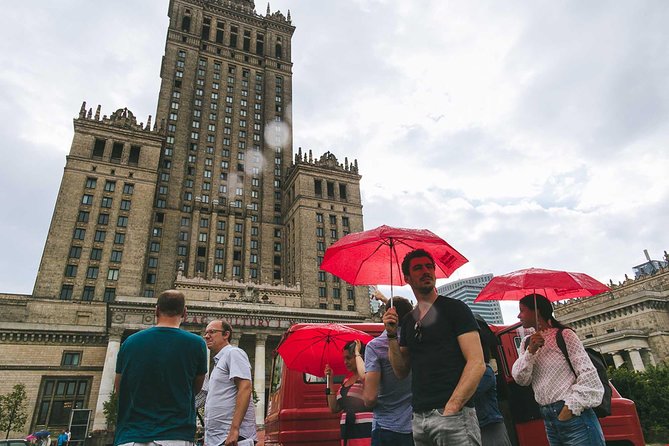
The first stop is the Palace of Culture and Science, the city’s most recognizable communist-era building. It was built from 1952 to 1955 as a gift from the Soviet Union, and its size still dominates the central skyline.
The building is useful as a starting point because it brings up the central tension of Warsaw’s communist past. It was presented as a generous offering, but it also represented Soviet power and influence. That mixed meaning has not disappeared. Many local people still have strong, divided feelings about it.
You spend about 20 minutes here. That is enough for an exterior look and an explanation of the building’s place in the city. It is not enough for a full architectural visit, and the tour does not include the terrace on the 30th floor. If you want the famous high view over Warsaw, you will need to arrange that separately.
I like the short stop. It keeps the tour moving and avoids turning the experience into a single-building visit. You get the political context, then move on to the wider effects of communist planning.
Muranów and the idea of a model socialist neighborhood
Before the Second World War, Warsaw was a capitalist European city with dense tenement housing. After the war, the damage was so extensive that reconstruction became more than a repair job. Communist authorities and modernist architects saw a chance to redesign how people lived.
Muranów grew out of that plan. Built in the late 1940s on wartime ruins, it became a green residential district intended to serve as a model socialist neighborhood. The design reflected a new social order, with housing and public space arranged according to postwar ideas rather than the older city pattern.
You spend around 20 minutes in Muranów. The value is not a single grand sight. It is learning to read the district as evidence of political choices. The open areas, housing blocks, and broad layout make more sense when you understand that reconstruction was also an attempt to build a different kind of society.
This stop also gives the tour needed balance. The Palace of Culture shows power from above. Muranów shows how that power reached into ordinary housing and city planning.
The tour does not present Warsaw as a simple story of good buildings and bad buildings. Instead, you see how some postwar changes offered practical housing while also carrying an official political message. That is a more useful way to understand the city than judging every structure by appearance alone.
The rebuilt Old Town and the route toward Praga
Between the main stops, you pass through the Old Town on the way to Praga. The Old Town is best known for its careful reconstruction after wartime destruction, but this tour adds another layer by pointing out what lies beneath it.
A key traffic route was built under the rebuilt Old Town with help from Soviet engineers who had worked on the Moscow metro. That detail shows how reconstruction extended below street level as well as above it.
You do not get a separate timed stop here, so treat this part as a moving connection between neighborhoods. It is still worthwhile because it links the symbolic rebuilding of Warsaw with the practical transport projects that helped the city function again.
If you want a long walk through the Old Town’s streets and churches, plan that for another part of your visit. Here, the focus is on how the district fits into communist-era reconstruction and transport planning.
Same country, a completely different kind of day:
- Warsaw: Chopin Concert in the Old Town
★ 4.8 · 2,287 reviews - Warsaw: Traditional Galar Cruise on The Vistula River
★ 4.6 · 1,640 reviews - Warsaw: Old Town Highlights Walking Tour in English
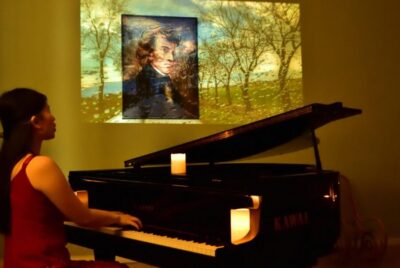
★ 4.7 · 1,516 reviews - Warsaw Concert: Chopin – Painted by Candlelights with Wine
★ 4.8 · 1,442 reviews
Praga Północ and the everyday business of getting by
Praga Północ offers a different view of communist Warsaw. While some parts of the city received large public projects and planned housing, Praga was largely neglected by state investment.
That neglect helped create a different kind of urban life. Behind the courtyards, people exchanged foreign currency, traded Western music, and searched for goods that were difficult to find through official channels. Informal and illegal activity became part of how people managed shortages and limited choices.
The stop lasts about 30 minutes, making it one of the longer visits on the route. That extra time helps because Praga’s importance is not captured by one monument. You are looking at a neighborhood shaped by economic pressure, uneven investment, and private resourcefulness.
I find this one of the most useful stops for understanding life beyond official slogans. Communist Poland had government buildings, grand plans, and public ceremonies, but it also had people working around the system to obtain ordinary goods and cultural products.
The tour keeps this section grounded in place. You see a district that experienced a different version of postwar Warsaw, not simply another example of monumental architecture. Wear comfortable shoes, since the minibus gets you to the area but does not remove all walking.
Śródmieście and the architecture of state power
The final stop is Śródmieście, Warsaw’s government district. Here, prewar modernist architecture meets the grand scale and formal style of socialist realism.
The contrast is revealing. Prewar modernism often favored clean lines and practical forms, while socialist realism used monumental design to express the authority of the state and the importance of collective political goals. In one central area, you can compare the two approaches without needing a long museum explanation.
You spend about 45 minutes here, the longest timed stop. That gives the guide room to explain buildings, statues, and the government center in more detail. A recorded account of the tour specifically praises guide Tom for explaining Warsaw’s buildings and statues across the city, so if Tom is leading your outing, expect a guide who pays close attention to those visual details.
There is also an amusing contradiction connected with the former party headquarters. The leader of communist Poland reportedly refused to move into the building because he felt it looked more like a capitalist bank than the office of a workers’ party.
That story neatly captures the oddity of communist architecture. Buildings were meant to project a clear political message, yet their design could still borrow from the prestige and authority associated with older financial and civic institutions.
What the private format adds for your money
The price is $134.43 per person. That is not the cheapest way to see Warsaw, especially if you are comparing it with a public walking tour or a ride on city transport.
The value comes from what is bundled into the three hours. You receive an English-speaking local guide, private transport, hotel pickup and drop-off, and a route that covers several districts without requiring you to arrange connections between them. All fees and taxes are included.
The strongest value appears when you are traveling with a small party. A private group can make the cost easier to justify because the guide’s attention stays with you. It also suits people who want to ask direct questions about political history, architecture, or daily life without keeping pace with a large group.
For one person or a couple on a tight budget, the cost may feel high. You could see some of these districts independently, but you would need to plan the route, learn the background, and manage the transport yourself. This tour charges for convenience and interpretation as much as for the ride.
Group discounts are available, which may improve the calculation for families or friends traveling together.
Vehicle comfort, walking, and practical limits
The classic minibus is part of the character of the experience, but it is not a modern sightseeing coach. Some vehicles have no air conditioning, and some do not have seat belts because they are historic vehicles permitted under Polish law. All vehicles have heating for winter.
That means you should dress for the season and keep your expectations realistic. On a warm day, the vintage vehicle may feel less comfortable than a newer van. On the other hand, it gives the transfer sections a clear connection to the subject of the tour.
The minibus is mainly for moving between sites. You still walk at each stop, so wear comfortable clothing and suitable shoes. The tour is designed for most people, but it is not a fully vehicle-based experience.
Children must be over 150 centimeters to book instantly online. For a child under that height, contact the operator in advance to check for a mandatory booster seat under Polish law.
Hotel pickup is included, but check your address carefully. If it is not available in the booking selection, send it to the operator. A central meeting point may be the smarter choice if your hotel sits well outside the main area.
Who should book this Warsaw history tour
I would choose this tour if you want Warsaw’s communist period explained through real neighborhoods rather than through one museum. It is especially useful for first-time visitors who want an organized introduction to the city’s postwar shape.
It also fits you if long walks are tiring, if you have only a few hours, or if you prefer a private conversation with a guide. The route covers enough ground to show major contrasts: Soviet symbolism, planned housing, neglected streets, underground transport planning, and state offices.
You may want a different experience if you are mainly interested in entering buildings or spending a long time at the Palace of Culture. The terrace is not included, and the stops are short enough that the tour favors context over extended sightseeing.
The route also works best when you are willing to look closely. Its strongest moments are not always the most photogenic. A housing district, a government building, or a courtyard can tell you more about life under communism than a polished monument if the guide explains what you are seeing.
Should you book it?
Book it if you want a private, efficient introduction to communist Warsaw and like the idea of traveling between districts in a genuine vintage minibus. The route is well balanced, and the strongest stops are Muranów, Praga Północ, and Śródmieście, where political plans meet daily life and practical compromises.
Think twice if you dislike older vehicles, need air conditioning, or want a full walking visit inside major attractions. For everyone else, the combination of hotel transport, a small group, and a guide focused on Warsaw’s buildings and statues makes the $134.43 price reasonable, particularly when shared among a group.
Free cancellation is available if you cancel at least 24 hours before the start time. That gives you some planning room, but last-minute changes are not accepted.
FAQ
How long does the Communist Warsaw tour last?
The experience lasts approximately three hours, including hotel pickup and drop-off time when those transfers are used.
Is hotel pickup and drop-off included?
Yes. Pickup and drop-off at your hotel are included. If your address is not shown during booking, send it to the tour operator.
Is the tour private?
Yes. Only your own group participates. Each retro minibus can hold up to eight people.
Is the tour offered in English?
Yes. The tour includes a professional English-speaking local guide.
Does the tour include the Palace of Culture terrace?
No. The tour visits the Palace of Culture and Science, but it does not include the terrace on the 30th floor.
Can children under 150 centimeters join?
Children over 150 centimeters can be booked online. For a child under 150 centimeters, contact the operator in advance to check booster-seat availability, since Polish law requires one.
Just added around Warsaw
- World War II Warsaw Old Town, Military Cemetery Walking Tour★ 4.7 · 3 reviews
- Warsaw: Wolf’s Lair & Swieta Lipka Small-Group Tour + Lunch★ 5.0 · 3 reviews
- Wilanów Palace: 2-Hour Guided Tour with Entrance Tickets★ 4.8 · 8 reviews
- Warsaw Zoo Skip-the-Line Entry Ticket with Private Transport★ 4.8 · 3 reviews
- Warsaw Wolf’s Lair with St. Lipka and Mamerki Private Guided★ 4.2 · 3 reviews
- Warsaw: Vistula River Cruise with Your Music & City Views★ 4.6 · 78 reviews
- Warsaw: Private Vodka Tasting Night with Snacks and Pickup★ 5.0 · 7 reviews
- Warsaw Private Wilanow Palace & Garden Tour★ 4.6 · 30 reviews
Warsaw Tours, compared.
Traditional Galar Cruise on The Vistula River
Read our review →
Warsaw Concert: Chopin – Painted by Candlelights with Wine
Read our review →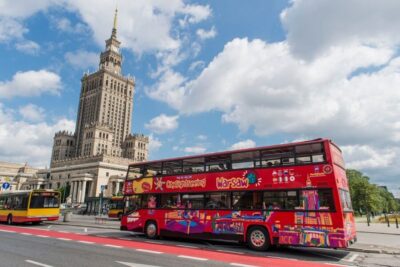
POLIN Museum of the History of Polish Jews Ticket
Read our review →
#1 Pub Crawl Warsaw with Optional Premium 1 Hour Open Bar
Read our review →