
Reviewed · WROCLAW TOURS
Jewels of Lower Silesia
Lower Silesia packs a surprising amount into one day. This trip takes you from Ksiaz Castle, with its grand rooms, gardens, and wartime tunnels, to a palm house filled with unusual plants, then onward to the astonishing wooden Church of Peace in Swidnica. Together, the stops show aristocratic wealth, industrial ambition, wartime destruction, and religious tension.
I like the small size, capped at eight people, and the fact that admission tickets and parking are covered. I also like the guides’ practical style. Adam, Matthias, and Maciej are all praised for clear English, good timing, and useful historical context. The main drawback is the pace: seven to eight hours is a long day, and the castle tunnels involve many stairs.
Key points
- Ksiaz Castle tells several stories at once: Polish Piast roots, Bohemian and Hungarian connections, German aristocratic wealth, and wartime damage all meet here.
- The palm house is more than a garden stop: Exotic plants, lemurs, and peacocks offer a welcome change of pace after the castle.
- Swidnica’s Church of Peace is the emotional high point: Its ornate interior is far grander than its plain exterior suggests.
- A small group makes the day easier: With no more than eight people, meeting times and questions are easier to manage.
- The underground tunnels require stamina: You may encounter a steep route with hundreds of steps, so skip them if your knees or balance are a concern.
- Lunch is not included: Plan to buy food during the day or eat after returning to Wroclaw.
Why These Three Lower Silesian Stops Work Together
This is not simply a castle outing. It is a compact lesson in the forces that shaped Lower Silesia.
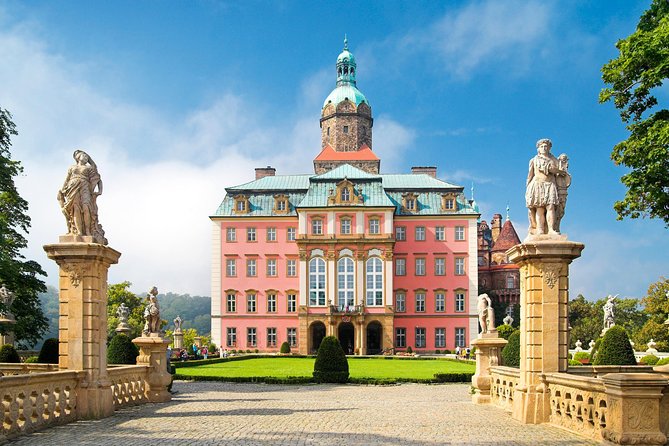
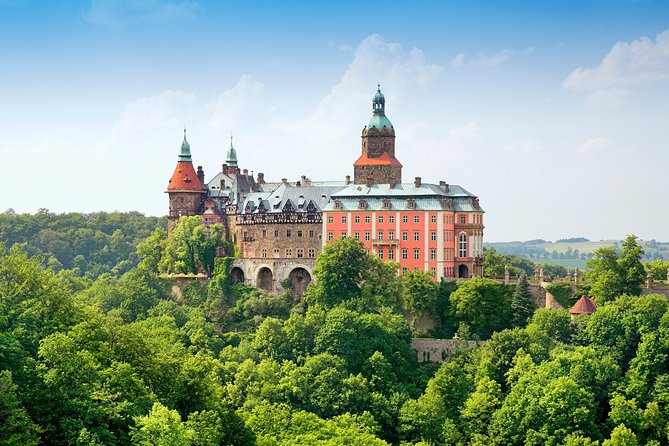
At Ksiaz, you see the old world of dynasties and aristocrats. The castle began with the Swidnica dynasty, descendants of Poland’s Piast royal line, then passed through Bohemian rulers, robber barons, Hungarian ownership, and finally the Hochberg family. The Hochbergs became major industrial entrepreneurs during the 19th century, and their wealth helped create the grand scale you see today.
The palm house adds another side of that wealth. It was not built for practical farming. It was a display of money, taste, and access to plants from faraway climates. Swidnica’s Church of Peace then changes the subject entirely. Its story is about religious conflict and the strict terms imposed on Protestants under Habsburg rule after the Thirty Years’ War.
I like this contrast. You are not looking at three similar monuments. You are moving through royal power, industrial fortune, religious pressure, and the damage left by war.
Other Wroclaw days people book alongside this one:
- Wroclaw: E-Car Tour and Audio Guide
★ 4.6 · 1,738 reviews - Wroclaw: 2-Hour Private Guided Tour by Electric Car
★ 4.8 · 805 reviews - Wrocław: Old Town and Ostrów Tumski Walking Tour in English
★ 4.8 · 311 reviews
Ksiaz Castle: Grandeur With Visible Scars
Allow about three hours for Ksiaz Castle, the longest stop of the day. That time matters because the complex includes more than a single set of rooms. You may see the castle interiors, grounds, gardens, and, depending on the day’s program, the underground tunnels connected with its wartime past.
The castle is visually striking, with a large setting and a long chain of owners. Your guide can help turn that complicated ownership record into something understandable. Adam is especially praised for giving historical context during the drive and at each stop, while Matthias and Maciej are also noted for clear explanations and well-managed timing.
Do not expect every room to look fully furnished. Much of the decoration disappeared after the castle was ransacked during World War II by German and Soviet forces. That loss is part of what makes the visit sobering. The structure remains impressive, but the missing contents remind you that Lower Silesia suffered heavily during the war.
The castle’s mixed condition is worth understanding before you arrive. If you expect a perfectly restored palace, you may find the interiors uneven. If you see it as a surviving monument with layers of damage and rebuilding, the experience is more rewarding.
The gardens and surrounding grounds help fill out the visit. You get a sense of the scale and ambition of the Hochberg estate, not just its formal rooms. The setting also gives the driver-guide room to explain how aristocratic wealth connected with the industrial growth of 19th-century Silesia.
The Tunnels: Important, Interesting, and Physically Demanding
The underground route adds a darker chapter to the castle story. The tunnels were dug near the end of World War II by Jewish labor camp inmates. That fact gives the underground visit real historical weight, but it also comes with a practical warning: there can be hundreds of stairs down and back up.
Some people will find the tunnels a memorable part of the day. Others will reasonably decide that the castle and grounds are enough. The tour does not need to become a test of endurance. If stairs are difficult for you, ask your guide about the day’s route and whether you can skip the tunnel section.
This is one place where the small group helps. With a larger coach tour, you might feel pushed to follow the full route. Here, the guide can give clearer instructions and help you understand where to meet again. Maciej is specifically praised for explaining schedules and meeting points with unusual clarity.
Wear sensible shoes. That is not glamorous advice, but it is the right advice for a day that may include castle grounds, uneven surfaces, and a long stair route underground.
Walbrzych’s Palm House Gives the Day a Softer Turn
The 25-minute visit to Palmiarnia Walbrzych is short, but it breaks up the history in just the right way. Inside the colorful greenhouses, you can walk among rare and unusual plants in a warm, exotic setting.
The palm house also ties directly back to the Hochberg family. It was part of the display of wealth that surrounded the estate. After the castle’s war stories and the severity of the tunnels, the greenhouses offer a calmer look at how the family lived and what they valued.
There is more here than foliage. The grounds include lemurs and peacocks, which add a bit of fun, especially for families. The greenhouses have been described as among the most impressive of their kind, and the short visit gives you enough time to enjoy the setting without turning the entire day into a botanical tour.
Twenty-five minutes is not enough for a slow, detailed plant study. You will need to keep moving. Still, I think the timing works. This is a refreshing pause before the final and most ornate stop.
Same country, a completely different kind of day:
- Wroclaw: Private Old Town Guided Walking Tour (2 hours)
★ 4.8 · 275 reviews - Old Town Wrocław Walking Tour
★ 5.0 · 249 reviews - Wroclaw: City Tour Sightseeing By Golf Cart Shared Or Privat
★ 4.8 · 189 reviews - Auschwitz-Birkenau Tour from Wrocław
★ 5.0 · 129 reviews
Swidnica’s Church of Peace Is the Day’s Great Surprise
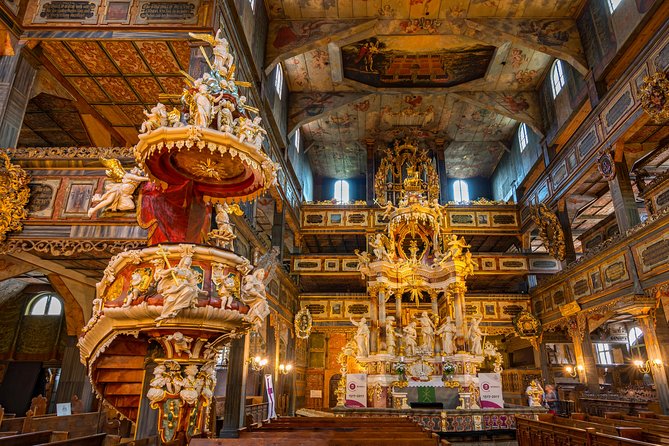
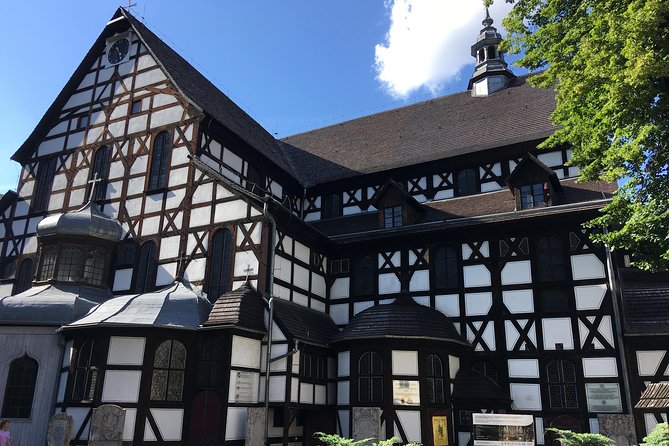
The Church of Peace in Swidnica receives about 35 minutes, and you should make the most of it. From outside, the building may not prepare you for the interior. Inside, the decoration is astonishingly elaborate.
The church was built in the 17th century during Habsburg rule, under strict conditions imposed after Europe’s religious wars. Its construction reflects a difficult compromise: Protestants were allowed to build, but under limitations that shaped the church’s form and materials. Its inclusion on the UNESCO World Heritage list reflects both its artistic importance and its place in European religious history.
The building was made from timber and mortar rather than the kind of stone construction you might expect from a major European church. That makes the interior even more remarkable. Ornate details cover the space, and the contrast between the plain outside and the richly decorated inside is part of the pleasure.
This is where a good guide earns the day’s fee. Without context, you might simply admire the decoration and take photos. With Adam, Matthias, or Maciej explaining the religious and political setting, you can understand why the church had to be built this way and why it matters.
Thirty-five minutes is brief, but it is enough for a focused visit. Give yourself time to stop, look upward, and take in the full interior before you start photographing details.
What the Guide Adds to the Long Drive
The road time is a major part of a seven to eight-hour excursion. That could feel like dead time on a weak tour. Here, the guide’s role is especially important.
Adam is praised for excellent English, humor, and the right amount of context. That last point matters. A guide can bury a day under dates and names, but the best explanations help you understand what you are seeing without turning every mile into a lecture.
Matthias is noted for keeping the group on schedule and providing information during the drive. Maciej is praised for answering questions clearly and explaining meeting points and time limits in a way that makes the day easy to follow.
The guide also serves as driver, so the experience is not built around a large bus and a microphone. The vehicle is air-conditioned, parking is included, and the group limit is eight. That setup gives the trip a more personal feel and reduces the usual fuss at stops.
The exact guide is not guaranteed. You may have Adam, Matthias, Maciej, or another English-speaking guide. What is consistent in the available information is the focus on clear English, historical explanation, and careful timing.
Is $150.03 Good Value for a Full Day?
At $150.03 per person, this is not the cheapest way to see Lower Silesia. It can still be good value if you want a full day arranged for you.
The price covers an air-conditioned vehicle, parking fees, and admission tickets at the castle, palm house, and Church of Peace. You are also paying for the driving time between Wroclaw, Walbrzych, Ksiaz, and Swidnica, plus an English-speaking guide who handles the schedule.
That convenience is the real value. Organizing these three stops independently would require arranging transportation, working out opening times, buying tickets, and managing the return to Wroclaw. A rental car could reduce the cost for a group, but it would leave you responsible for driving and navigation.
Lunch is not included, so keep money and time available for food. The schedule is built around sightseeing rather than a long sit-down meal. You may prefer to eat after the tour returns to Wroclaw, or ask your guide about a suitable stop during the day.
Group discounts may be available, making the cost more attractive for several people booking together. The maximum group size of eight is another reason the price can feel fair. You are not paying for a massive coach operation. You are buying a managed small-group day with entry fees included.
Timing, Meeting Point, and Pace
The tour begins at 8:30 a.m. outside Cinema New Horizons at Kazimierza Wielkiego 19a/21 in central Wroclaw. It ends back at the same meeting point after roughly seven to eight hours.
An early start is useful. Ksiaz Castle needs the largest block of time, and the three stops are spread across Lower Silesia. You should arrive ready for a full day rather than a casual half-day outing.
The timing at each stop is fairly tight. Three hours at the castle gives you room for the main visit and possibly the tunnels, while 25 minutes at the palm house and 35 minutes at the church call for focus. If you like lingering for long photo sessions, this may feel brisk.
The tradeoff is that you see a lot in one day. The schedule gives you a broad view of the region without requiring an overnight stay outside Wroclaw. Adam and the other guides are praised for being prompt and clear at meeting points, which makes a tight schedule much less stressful.
The experience is offered in English, and most people can take part. It is also near public transportation at the start point. Confirmation is sent within 48 hours of booking, subject to availability.
Who Will Enjoy This Tour Most?
I would recommend this day to couples, families, solo visitors, and anyone staying in Wroclaw who wants to see more of Lower Silesia without renting a car.
It suits you especially well if you like places where art and history overlap. Ksiaz gives you architecture and aristocratic power. The tunnels connect the estate to World War II and forced labor. The palm house shows how wealth was displayed. The Church of Peace reveals the long effect of religious conflict.
Families may appreciate the lemurs and peacocks at the palm house, though the tunnels may be tiring for younger children. Older visitors and anyone with mobility concerns should think carefully about the stairs before choosing the underground route.
This is less suitable if you want a slow, unstructured day. You will move on a timetable, and you will spend a fair amount of time in the vehicle. It is also not ideal if your main interest is only castles, since the church is a major part of the experience and the palm house is deliberately included as a change of scene.
Free cancellation is available if you cancel at least 24 hours before the start time. Changes or cancellations made later are not accepted for a refund. The minimum number of participants must also be met, and if the operator cancels for that reason, you will be offered another option or a full refund.
Should You Book Jewels of Lower Silesia?
Book it if you want three very different sights, a small English-speaking group, and a simple way to reach them from Wroclaw. The strongest parts are Ksiaz Castle’s layered past, the palm house’s unexpected animals and plants, and the Church of Peace’s extraordinary interior.
Before booking, be honest about the pace and the stairs. You will spend most of a day out, lunch is extra, and the tunnel route may involve hundreds of steps. If those points work for you, the tour offers a strong mix of beauty, difficult history, and practical organization for a day beyond Wroclaw.
FAQ
Where does the tour start and finish?
It starts at Cinema New Horizons, Kazimierza Wielkiego 19a/21, 50-077 Wroclaw, Poland, at 8:30 a.m. The tour ends back at the same meeting point.
How long does the experience last?
The tour lasts approximately seven to eight hours.
What is included in the price?
The price includes an air-conditioned vehicle, parking fees, and admission tickets for the listed stops.
Is lunch included?
No. Lunch is not included in the tour price.
How many people can join the tour?
The group has a maximum of eight participants.
What is the cancellation policy?
You can cancel up to 24 hours before the local start time for a full refund. Cancellations or changes made less than 24 hours before the start time are not accepted for a refund.
Just added around Wroclaw
- Wrocław: World War II and the non-existent city of Breslau★ 3.6 · 3 reviews
- Wrocław to Rock City in Adrspach and Project Riese day trip★ 5.0 · 5 reviews
- Wroclaw: WW2 Tour to Project Riese & Gross-Rosen Museum★ 4.8 · 26 reviews
- Wroclaw : Walking Custom Tour with a Local Guide★ 4.8 · 3 reviews
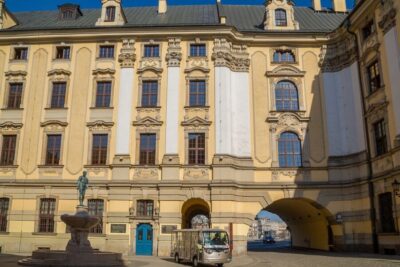
- Wroclaw: University Baroque Tour★ 5.0 · 19 reviews
- Wrocław: Tour of the Old Town in an Imperial E-car★ 4.3 · 13 reviews
- Wroclaw to Rock City in Adrspach and Ksiaz Castle day trip★ 4.9 · 16 reviews
- Wroclaw: 3-Hour Bike Tour in English or Polish★ 4.8 · 66 reviews
Wroclaw Tours, compared.
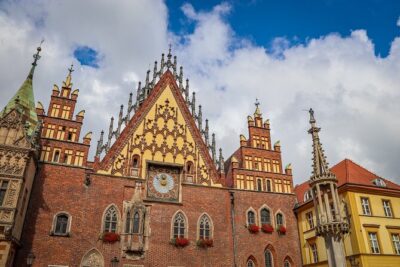
Old Town and Ostrów Tumski Walking Tour in English
Read our review →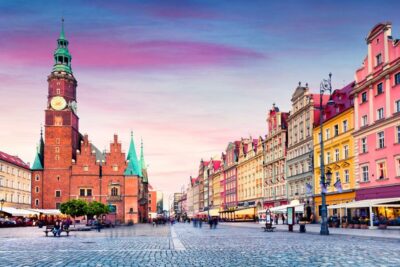
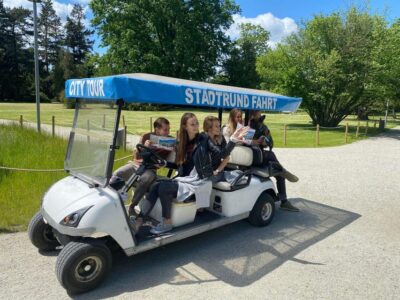
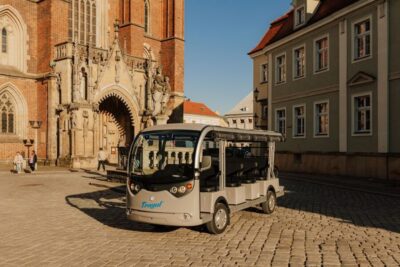
City Tour Sightseeing By Golf Cart Shared Or Privat
Read our review →

Browse the lists this tour appears in