Reviewed · WARSAW TOURS
Jewish Legacy in Warsaw. Private Tour with the best local specialist.
Warsaw’s Jewish story is told most powerfully through places that still sit within the modern city: a surviving synagogue, a small piece of ghetto wall, the departure point for Treblinka, and the bunker where the Warsaw Ghetto Uprising ended. This private tour connects those sites in one day with an English-speaking local specialist.
I like the private format, since your group of up to three can ask questions and set the pace more easily than on a large coach tour. I also like the broad route, which moves beyond the usual museum visit to include the Umschlagplatz, Mila 18, Chlodna Street, and film locations in Praga.
The main concern is reliability. One booking had a guide fail to appear for the 9:00 a.m. pickup, with phone calls unanswered, although the payment was refunded quickly. That appears to be an isolated but serious warning, so confirm the pickup details before the morning of the tour.
Key points at a glance
- A private tour for up to three people: The $361.23 group price works out to about $120 per person for three, with pickup anywhere in Warsaw.
- A strong range of sites: You visit Nozyk Synagogue, POLIN, the ghetto wall fragment, Umschlagplatz, Mila 18, Chlodna Street, and Warsaw Heroes Monument.
- The focus is on physical places: The tour links surviving buildings and memorials to the destruction of Warsaw’s Jewish community.
- POLIN is sampled, not fully toured: You see the museum’s setting and interior design, but the listed visit lasts about 50 minutes.
- The route includes film history: Praga Polnoc contains streets used for Roman Polanski’s The Pianist, with an optional look at the villa connected with The Zookeeper’s Wife.
- Check the morning meeting carefully: Pickup is offered across Warsaw, but the reported no-show makes direct confirmation a sensible precaution.
Why this private Warsaw tour matters
Warsaw’s Jewish legacy cannot be understood from a single memorial. The story is scattered across the city, and that is exactly why this route has value. You move from a working synagogue to the former ghetto area, then to places tied to deportation, resistance, remembrance, and cinema.
A private guide can also help you connect the sites in human terms. The distances between them are not just practical gaps. They show how the ghetto occupied ordinary city streets, how its boundaries cut through Warsaw, and how little of the physical Jewish district survived the war.
The tour is listed at $361.23 for a group of up to three. For three people, that is roughly $120 each. For two people, it is about $181 each, and for one person, the price is much harder to justify. The value depends on what you want: you are paying for a private vehicle or arranged transport, a specialist guide, citywide pickup, and an itinerary that would take effort to assemble alone.
The stated stops add up to roughly three hours and 50 minutes of scheduled visits, before driving time and transitions. That makes this more than a quick orientation, but the exact total length is not provided. Ask how much time will be spent inside POLIN and how the guide plans to handle traffic between the central sites and Praga.
A few more Warsaw trips to weigh up
- Private Tour: Warsaw City Sightseeing by Retro Fiat
★ 5.0 · 562 reviews - Warsaw: Warsaw Ghetto Private Walking Tour with Hotel Pickup
★ 4.9 · 369 reviews - Private Tour: Warsaw’s Jewish Heritage by Retro Fiat
★ 5.0 · 208 reviews
Nozyk Synagogue and a surviving Jewish place of worship
The tour begins at Nozyk Synagogue on Twarda Street, the oldest existing synagogue in Warsaw. The scheduled visit lasts about 20 minutes, so expect an introduction and a concise look rather than an extended religious or architectural tour.
Its survival gives the building unusual weight. Nazi forces destroyed much of Warsaw’s Jewish district, yet this synagogue was not destroyed, partly because of its location and its practical use during the final period of the ghetto. That history makes the stop more than a building photograph.
You should treat this as a short opening chapter. If you want a long interior visit, detailed architectural study, or time for quiet reflection, 20 minutes may feel tight. Still, beginning here gives the rest of the day a physical anchor.
POLIN Museum and the wider story
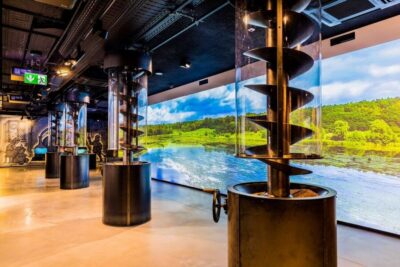
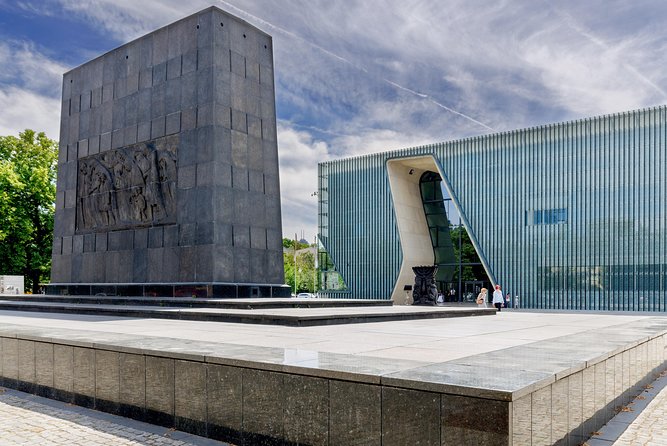
The next stop is POLIN Museum of the History of Polish Jews on Mordechaja Anielewicza Street. The plan allows about 50 minutes, including a look at the museum’s setting and interior design.
That is important to understand before booking. This is not presented as a full museum visit. POLIN is a major institution devoted to the long history of Jewish life in Poland, so its galleries can easily occupy several hours. Here, the emphasis is on the building and its role in bringing Jewish history into public view.
If you have already planned a separate museum visit, this brief stop may be ideal. You get your bearings, see the interior, and place the surrounding memorials in context without spending the entire day indoors. If POLIN is your main reason for visiting Warsaw, plan another visit and do not expect this tour to cover the full collection.
Near the museum, you pass Willy Brandt Square and the monument recalling the German chancellor’s act of kneeling before the Ghetto Heroes Monument. The gesture is linked with apology and reconciliation, adding a later chapter to the story of wartime guilt and remembrance.
The ghetto wall fragment on Zlota Street
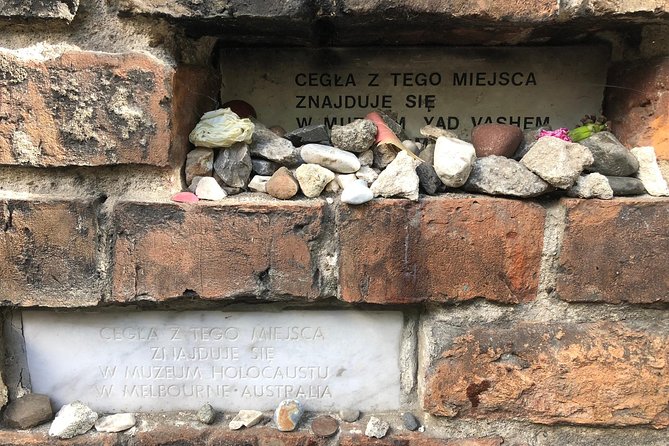
The fragment of ghetto wall at Zlota 60 is a small, easy-to-miss remnant in the middle of today’s city. The scheduled stop is about 20 minutes.
Its size is part of the lesson. You are not looking at a preserved district or a large fortified structure. You are seeing one remaining section of the wall associated with the largest Jewish ghetto created by the Nazis. The contrast between a quiet urban setting and the history attached to the stones can be stark.
The site was officially recognized by Chaim Herzog in 1992 and is visited by many people each year. Your guide’s explanation matters here because the fragment alone cannot tell you how the ghetto functioned or how the surrounding streets changed.
Allow time for the guide to explain what remains and what has disappeared. This is a stop for context and reflection, not a long attraction with extensive facilities.
Same country, a completely different kind of day:
- Warsaw: Chopin Concert in the Old Town
★ 4.8 · 2,287 reviews - Warsaw: Traditional Galar Cruise on The Vistula River
★ 4.6 · 1,640 reviews - Warsaw: Old Town Highlights Walking Tour in English
★ 4.7 · 1,516 reviews - Warsaw Concert: Chopin – Painted by Candlelights with Wine
★ 4.8 · 1,442 reviews
Umschlagplatz, the route to Treblinka
At the corner of Stawki and Dzika Streets, Umschlagplatz marks the place known as the cargo railroad terminal in the ghetto. From here, Jewish residents were deported to Treblinka extermination camp.
The 20-minute visit is short, but the subject is central. This was not simply a railway stop. It was the point where people were forced toward deportation, separated from their homes and communities under Nazi rule.
You may find this one of the most difficult stops emotionally. The setting is part of modern Warsaw, but the purpose of the site was organized removal and murder. A guide can help you understand the mechanics of deportation without reducing the place to a bare statistic.
The tour’s sequence also makes sense. After seeing where the ghetto wall survived, you reach the point where people were expelled from it. The route moves from confinement to deportation in a way that gives the geography real meaning.
Mila 18 and the Warsaw Ghetto Uprising
At Mila Street, the tour pauses for about 20 minutes at the memorial site of Mila 18. This was the largest bunker in the Jewish ghetto and the place where Mordechaj Anielewicz, leader of the uprising, hid with nearly 30 members of the Jewish Fighting Organization.
The site represents armed resistance under impossible conditions. It is not a conventional underground attraction, and you should not expect to walk through a preserved bunker interior. The value comes from the location, the memorial, and the guide’s account of what happened there.
Mila 18 is especially useful for correcting a common misunderstanding. The ghetto was not only a place of passive suffering. Jewish fighters organized resistance, knowing that the odds of survival were extremely low. A good explanation here should cover both the military action and the moral choices facing people trapped inside the ghetto.
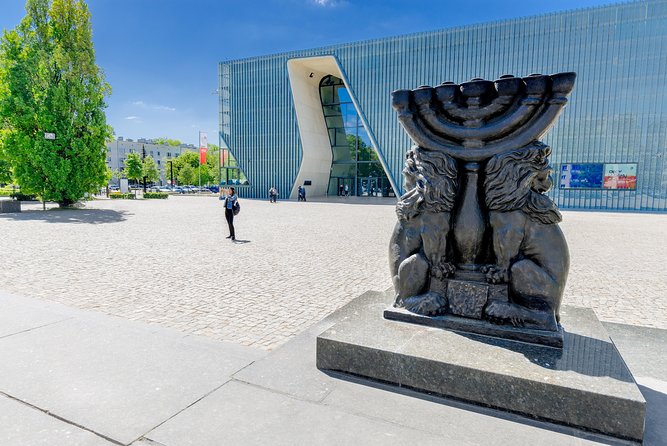
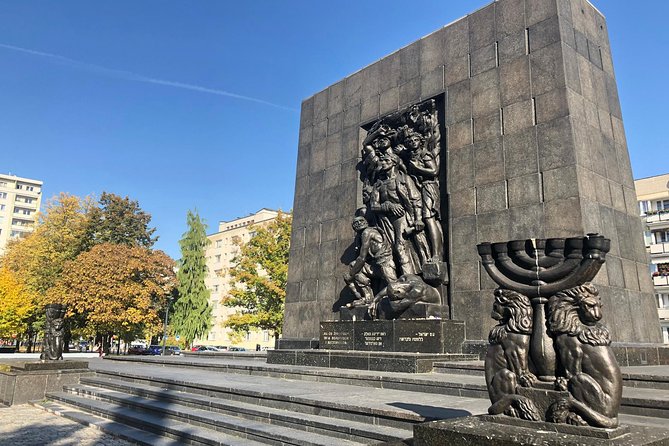
The nearby Monument to the Heroes of the Warsaw Ghetto receives a longer visit of about 50 minutes. That gives you more time to look closely, ask questions, and consider how the monument represents the uprising and the people who endured the ghetto.
The longer stop is welcome because memorials reward attention. Details in the sculpture, its scale, and the open space around it all shape the experience. This is also the place associated with Willy Brandt’s famous gesture of apology and reconciliation, seen on the earlier pass-by.
Chlodna Street and the divided ghetto
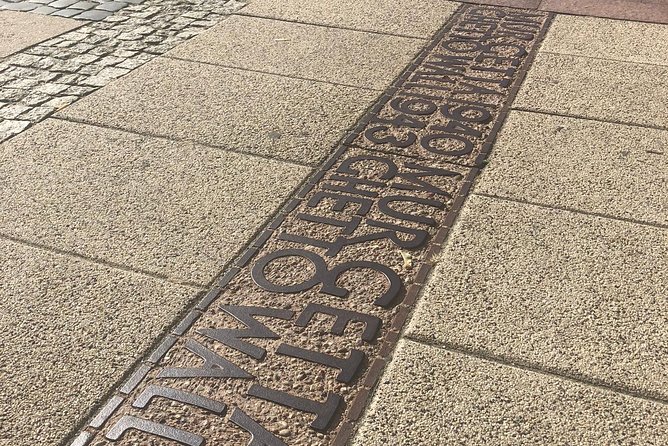
Chlodna Street receives a brief 10-minute stop. Its importance comes from the footbridge that once linked the smaller ghetto section with the larger one.
The crossing separated communities physically and socially. It also became one of the more active parts of the ghetto, described in the tour material as both lively and dangerous. The short visit means you will likely pause at the location, hear its story, and continue rather than spend a long time exploring the street.
This is a good example of why a guide helps. Modern Chlodna Street does not automatically reveal the former bridge or the restrictions imposed on Jewish residents. Without an explanation, you could easily pass through without recognizing what happened there.
The stop also adds a useful detail to the route. The ghetto was not one simple enclosure. It had sections, crossings, barriers, and changing rules. Chlodna helps you picture that broken geography.
Praga Polnoc and Warsaw on film
The final listed stop is Praga Polnoc, with about 40 minutes around streets on Ząbkowska and nearby areas. These locations were used for scenes in Roman Polanski’s The Pianist. The tour also offers an optional visit to the villa connected with The Zookeeper’s Wife, depending on your interest.
This part changes the tone. You move from direct memorial sites to the way Warsaw’s wartime past has been represented through film and literature. For anyone interested in The Pianist, seeing the streets used in the production can add a visual layer to the story.
The film connection should not replace the historical stops. It works best as a final supplement, especially after you have visited places tied directly to the ghetto and uprising. Ask the guide whether the villa visit is possible on your date if that detail matters to you, since it depends on guest interest.
Praga also broadens the tour beyond the former ghetto area. You see another part of Warsaw and consider how the city’s older streets have been used to represent wartime events. The stop may appeal most to film lovers, readers, and people who want a less solemn ending to a demanding day.
Pickup, timing, and group size
Pickup is offered from locations around Warsaw, with a listed start time of 9:00 a.m. That is convenient if you are staying away from the central meeting points or prefer not to navigate public transport before a full day of historic sites.
The tour is private, and only your group participates. For up to three people, this is the right size for a more personal conversation. You can ask for clarification, spend longer at a memorial, or explain that you want more or less time at the film locations.
No guide’s name is provided, so you cannot choose a particular specialist in advance. The experience is offered in English, and confirmation is provided when you book. Service animals are allowed, and the tour is near public transportation. Most people can participate, but the supplied details do not describe walking distances, vehicle access at every stop, or interior access at the sites.
One practical warning deserves attention. A scheduled 9:00 a.m. pickup once failed when the guide did not arrive and could not be reached by phone. The booking was refunded within one business day, which is a positive response, but a missed tour can still disrupt a precious day in Warsaw. Confirm the pickup address, local contact number, and meeting time before setting out.
Who will get the most from this tour?
I would recommend it most strongly to first-time visitors who want a focused introduction to Jewish Warsaw without organizing several separate taxis, museum visits, and memorial stops. The private setup is also useful for families or couples who prefer a quiet pace and direct access to a guide.
It suits people with a serious interest in wartime history, Jewish heritage, the Warsaw Ghetto Uprising, or The Pianist. The range of sites gives you more than a museum-only experience.
I would be more cautious if you want a full day inside POLIN, a specialist architectural tour, or a slow visit at every memorial. The schedule touches many locations, so some stops are necessarily brief. You should also think twice about the price if you are traveling alone.
The emotional weight is real. Umschlagplatz, Mila 18, and the Ghetto Heroes Monument are not casual sightseeing stops. Give yourself room afterward if you need a quieter afternoon.
Should you book the Jewish Legacy in Warsaw tour?
Book it if you want a private, English-language route that connects the main Jewish memorial sites with Nozyk Synagogue, POLIN, Chlodna Street, and Praga film locations. The price makes the most sense for three people, and the pickup service removes much of the day’s transport planning.
Do not book it expecting a full POLIN Museum tour or a leisurely examination of every site. Confirm the morning arrangements carefully because the no-show incident is a genuine concern, even though the refund was handled quickly.
For three people with a clear interest in Warsaw’s Jewish history, this is a useful and wide-ranging way to make sense of a difficult part of the city. For a solo visitor or a museum-first traveler, compare the cost with a shorter walking tour and a separate POLIN visit.
FAQ
Where does the Jewish Legacy in Warsaw tour take place?
The tour takes place in Warsaw, Poland, with visits across several parts of the city, including the former ghetto area and Praga Polnoc.
What time does the tour start?
The listed start time is 9:00 a.m.
Is pickup available?
Yes. Pickup is offered from locations around Warsaw.
How many people can join the private tour?
The price covers a private group of up to three people. Only your group participates.
Is the tour offered in English?
Yes. The experience is offered in English.
Can I cancel for a full refund?
Yes, if you cancel at least 24 hours before the experience start time. Changes or cancellations made less than 24 hours in advance are not accepted for a refund.
Just added around Warsaw
- World War II Warsaw Old Town, Military Cemetery Walking Tour★ 4.7 · 3 reviews
- Wilanów Palace: 2-Hour Guided Tour with Entrance Tickets★ 4.8 · 8 reviews
- Warsaw: Wolf’s Lair & Swieta Lipka Small-Group Tour + Lunch★ 5.0 · 3 reviews
- Warsaw Zoo Skip-the-Line Entry Ticket with Private Transport★ 4.8 · 3 reviews
- Warsaw Wolf’s Lair with St. Lipka and Mamerki Private Guided★ 4.2 · 3 reviews
- Warsaw: Vistula River Cruise with Your Music & City Views★ 4.6 · 78 reviews
- Warsaw: Private Vodka Tasting Night with Snacks and Pickup★ 5.0 · 7 reviews
- Warsaw Private Wilanow Palace & Garden Tour★ 4.6 · 30 reviews
Warsaw Tours, compared.
Traditional Galar Cruise on The Vistula River
Read our review →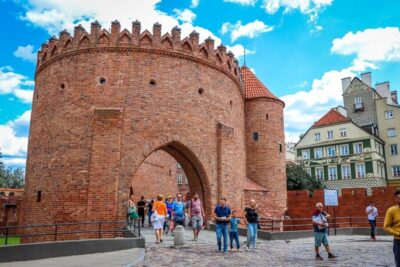
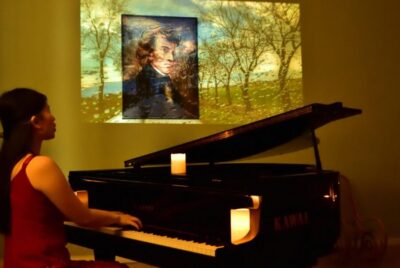
Warsaw Concert: Chopin – Painted by Candlelights with Wine
Read our review →
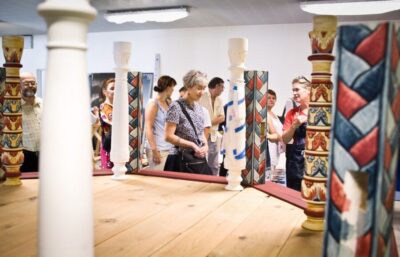
POLIN Museum of the History of Polish Jews Ticket
Read our review →
#1 Pub Crawl Warsaw with Optional Premium 1 Hour Open Bar
Read our review →