
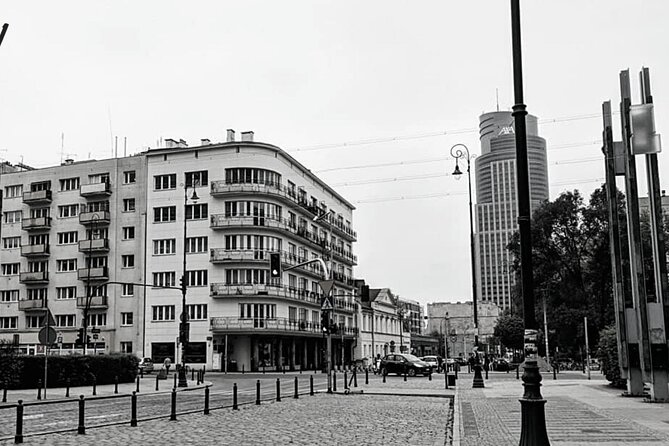
Reviewed · WALKING TOURS
Jewish Warsaw Walking Tour
Warsaw’s Jewish quarter is not a neatly preserved old district. Much of it was destroyed, and that absence is the point. This walking tour uses the few surviving places, street lines, memorials, and fragments of the former ghetto to rebuild the story in your mind. Guides such as Olivia, Jacek, Andrew, and Tomas have been praised for clear explanations, strong storytelling, and a serious subject handled with occasional dry humor.
I like the route for two reasons: it links real places to the history instead of keeping you in a museum, and it ends at POLIN Museum, where you can continue at your own pace. The main drawback is physical and emotional. You will spend about two and a half hours outside, often standing, and the subject is painful. On a cold or windy day, it can feel long.
Key points to know before you book
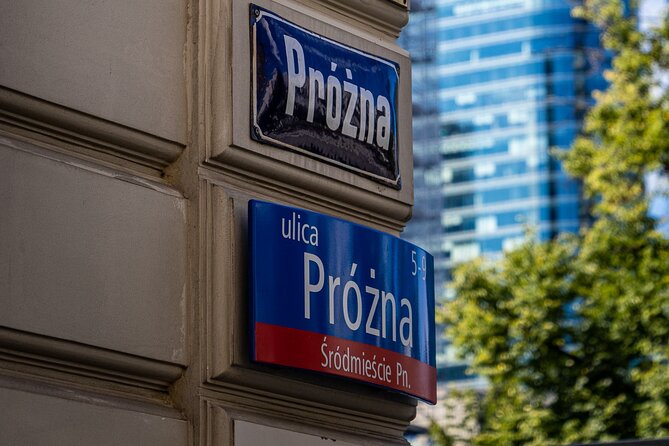
- The route begins at Grzybowski Square, one of the few parts of Warsaw connected with the former ghetto that survived the wartime destruction.
- Nozyk Synagogue is the only surviving pre-war Warsaw synagogue, making it one of the most important stops on the walk.
- Chłodna Street explains the ghetto’s divided layout, including the footbridge that once connected two sections.
- The tour is built around storytelling, since relatively little of the physical Jewish quarter remains.
- The group can reach up to 40 people, so this is a general walking tour rather than a quiet private visit.
- The $26.59 fee covers the reservation and guide payment, though the guide may still invite you to add a tip.
A route through what survived in Jewish Warsaw
This is a history walk, not a sightseeing stroll filled with grand buildings. You will see ordinary streets and open spaces, then learn what they meant when Warsaw’s Jewish population was confined, cut off, and later destroyed during the Second World War.
That distinction matters. If you expect a preserved Jewish quarter with rows of pre-war buildings, you may find the route visually sparse. If you want help reading the city beneath its rebuilt surface, the tour gives you a useful framework.
The walk lasts about 2 hours and 30 minutes. It starts at 10:00 a.m. beside All Saints Church at Grzybowski Square and ends at POLIN Museum of the History of Polish Jews on Mordechaja Anielewicza Street. There is no hotel pickup, and you make your own way to the starting point and away from the finish.
The guide speaks English. Past guides have included Olivia, Jacek, Andrew, and Tomas, but your guide can vary. The strongest descriptions point to guides who explain facts carefully, welcome questions, and use restrained humor without making light of the subject.
A few more Warsaw trips to weigh up
- Warsaw: Old Town Highlights Walking Tour in English
★ 4.7 · 1,516 reviews - Warsaw: Old Town Guided Walking Tour
★ 4.9 · 599 reviews - Half-Day Polish Food Walking Tour with Guide and Dinner
★ 4.5 · 381 reviews
Grzybowski Square: beginning with a surviving corner
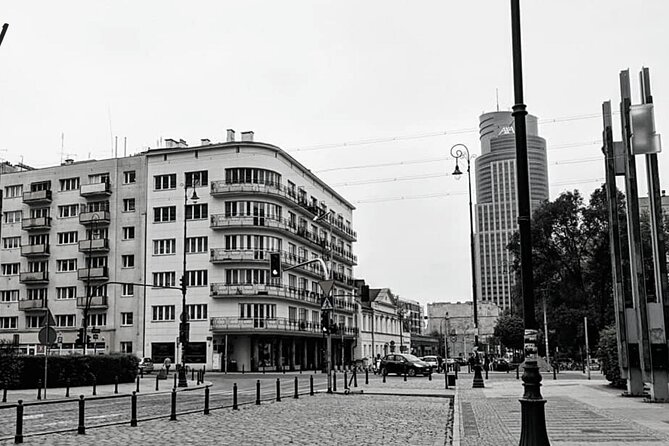
The tour opens at Grzybowski Square, beside All Saints Church. About 20 minutes here gives the guide time to explain why this small area matters.
The square is one of the very few parts of Warsaw connected with the former ghetto that survived the destruction of the city. That makes it a useful first stop. You are not simply looking at a monument and moving on. You are learning to notice how much of the original setting has disappeared.
I like beginning here because it sets the right mood. The walk is not about checking off buildings. It is about understanding a place where the physical evidence is incomplete and the guide must connect locations with the people and events associated with them.
There is no admission charge for this stop. You should still pay attention to the ground beneath the story. The square may look like an ordinary urban space, but the guide’s explanation gives it weight.
Nozyk Synagogue: the route’s most important surviving building
The next major stop is Nozyk Synagogue, the only surviving pre-war Warsaw synagogue. The tour allows about 30 minutes here, which is generous compared with the brief pauses at some other points.
This is likely the most tangible link to Jewish Warsaw before the war. Many other places on the route are marked by memorials, street names, or reconstructed surroundings. Nozyk Synagogue gives you an actual surviving religious building tied to the city’s Jewish community.
The supplied details do not promise an interior visit, so you should not book this walk expecting a synagogue tour. One recurring practical concern is that some people would like to go inside, even briefly, but the route is mainly historical and outdoors. Treat the synagogue as a key exterior stop unless the guide tells you otherwise.
This is also where a strong guide can help you picture a community that is no longer visible in the same way. The value comes from the explanation, not from the length of the stop alone.
Waliców: seeing the former ghetto border
At Waliców, the guide spends about 30 minutes discussing what was once the ghetto border. This stop asks you to imagine a boundary that may not be obvious from today’s streets.
That is one of the tour’s useful habits. Instead of presenting the ghetto as a sealed historic site, the guide shows how its borders ran through the living city. You begin to see Warsaw as a place shaped by walls, restrictions, movement, and forced separation.
Waliców also shows why a walking guide is useful here. A map or museum display can show the ghetto’s shape, but standing on or near a former boundary gives the geography a more direct meaning. You can ask questions and have the guide connect the location to the wider story.
There may not be much to photograph at this stop. That is not a flaw, but it is worth knowing. The reward is context and orientation, not a dramatic monument.
Same country, a completely different kind of day:
- Warsaw: Chopin Concert in the Old Town
★ 4.8 · 2,287 reviews - Warsaw: Traditional Galar Cruise on The Vistula River
★ 4.6 · 1,640 reviews - Warsaw Concert: Chopin – Painted by Candlelights with Wine
★ 4.8 · 1,442 reviews - Warsaw: City Sightseeing Hop-On Hop-Off Bus Tour
★ 3.6 · 1,415 reviews
Chłodna Street and the lost footbridge
Chłodna Street is one of the most memorable stops because it concerns the footbridge that once connected separate parts of the Warsaw ghetto. About 20 minutes is set aside for the monument commemorating it.
The bridge has become a powerful image of the ghetto’s divided streets. From the ground, you can consider how people were forced to move through a restricted urban space, and how a bridge could become necessary simply to connect one section with another.
I find this kind of stop especially effective for first-time visitors to Warsaw. It takes an abstract fact, the division of the ghetto, and gives it a physical point on a modern street. You may not see the original bridge, but the memorial helps make the old arrangement easier to grasp.
This is also a good example of why the tour can feel sad and demanding. The guide is not offering a light city walk with a few historical side notes. The subject concerns persecution, confinement, and loss, and the route asks you to stay with it for several hours.
POLIN Museum and the 1948 Ghetto Heroes Monument
The walk continues toward the POLIN Museum of the History of Polish Jews and the 1948 Monument to the Ghetto Heroes. The tour allows about 20 minutes at POLIN and discusses the monument as part of the closing section.
The museum is a natural endpoint. You finish the outdoor route with a better sense of the places you have just passed, then have the option of making a separate visit inside. Admission to the walking tour’s listed stops is free, but a museum visit is not stated as included, so plan for it as an additional activity.
The Monument to the Ghetto Heroes gives the tour a serious closing point. It connects the sites, borders, and street stories with a memorial designed for remembrance. Allow yourself a little quiet time here after the guide finishes.
The information also identifies a Monument to the Heroes of Warsaw as part of the final stop, described in connection with the Ghetto Heroes. Since the route ends at POLIN Museum, confirm the precise stopping point and monument sequence with the guide at the start if that distinction matters to you.
How the storytelling shapes the experience
The strongest part of this tour is the guide’s ability to fill in what is missing. One guide may use a dry sense of humor to keep the group focused. Another may reward a good answer with a small piece of chocolate. Those touches are minor, but they can make a long outdoor explanation easier to follow.
The guide’s role is especially important because the route has few grand remains. You may walk past modern buildings or open streets while hearing about a vanished neighborhood. A guide such as Jacek has been praised for painting a vivid picture of Jewish Warsaw, while Olivia has been noted for answering many questions and stressing factual accuracy.
Andrew and Tomas have also been singled out by name for clear English and strong command of the material. These comments do not mean you are guaranteed one particular guide, but they do show the style to expect: spoken history, questions, details, and a personal interest in the subject.
I would bring a willingness to listen rather than plan on taking photographs at every stop. One useful observation from the supplied feedback is that the storytelling can be absorbing enough to make you forget your camera for a while. That is a fair trade on a route where the meaning often matters more than the view.
Two and a half hours outside: the practical side
The tour starts at 10:00 a.m. and operates in all weather. Dress for the forecast, but also prepare for conditions to change. A cold, windy day can make two and a half hours feel much longer, especially because parts of the tour involve standing rather than steady walking.
You need a moderate level of physical fitness. The route is described as a lot of walking, but one useful clarification is that you may spend more time on your feet in place than you expect. Wear comfortable shoes and bring water. If sitting matters to you, ask the guide at the beginning about pauses. Guides have sometimes found places for the group to sit, but this should not be treated as a fixed feature.
Children must be accompanied by an adult. Service animals are allowed, and the starting point is near public transportation. The group size can reach 40 people, so arrive ready for a general tour with a mixed pace and several questions.
The route is not presented as wheelchair-specific, and no detailed accessibility information is supplied. If you have mobility concerns, contact Walkative! TOUR before booking and ask about the exact route, standing time, and surfaces.
Is $26.59 good value?
At $26.59 per person, the price is reasonable for a 2.5-hour guided history walk, particularly because the value lies in interpretation rather than paid entry tickets. You are paying for the guide, the route planning, and the link between places that can be hard to understand on your own.
The payment structure deserves a clear explanation. This is a general pay as you wish tour, but in this booking the amount paid covers the reservation fee and the guide’s payment. The guide may still explain that an additional tip is welcome. You should know this before arriving so the request does not catch you off guard.
If you prefer a smaller private group, the provider says it can arrange one on request. That may suit you if you want more time for questions, need a slower pace, or find a group of up to 40 too large for a serious subject. Expect a different price for that arrangement, though no private rate is supplied here.
The tour is booked, on average, 19 days ahead. That suggests you should reserve before your Warsaw visit rather than assume a same-week place will be available.
Who should book this Warsaw walk?
I would recommend it to you if you want a clear introduction to Jewish Warsaw before visiting POLIN Museum. It also suits people who have already walked around Warsaw and want the streets they saw to make more sense.
You will get the most from it if you:
- Want history explained on location
- Are comfortable with a serious and sometimes painful subject
- Can walk and stand outdoors for about 2.5 hours
- Prefer an English-speaking guide to a self-guided map
- Plan to visit POLIN Museum afterward
- Appreciate room for questions and a little dry humor
I would hesitate if you want a short sightseeing loop, extensive interior access, or a route packed with original buildings. Much of Jewish Warsaw was destroyed, and the tour cannot recreate what no longer exists. Its strength is the guide’s ability to explain absence.
The route can also be intense for younger children. Children are welcome only when accompanied by an adult, but parents should decide if the subject and standing time fit their child.
Booking, meeting point, and cancellation details
You meet at All Saints Church, Pl. Grzybowski 3/5, at 10:00 a.m. The walk finishes at POLIN Museum, Mordechaja Anielewicza 6. Hotel pickup and drop-off are not included, and transportation between the attractions is not provided because this is a walking experience.
A mobile ticket is provided, and confirmation arrives when you book. The tour runs in all weather, so suitable clothing is part of the deal.
Free cancellation is available when you cancel at least 24 hours before the start time. Cancellations or changes made within 24 hours are not refunded or accepted. The tour also requires a minimum number of participants. If that minimum is not reached and the experience is canceled, you are offered another date or experience, or a full refund.
Should you book the Jewish Warsaw Walking Tour?
Book it if you want a serious, guide-led introduction to Warsaw’s Jewish past and understand that the physical remains are limited. The combination of Grzybowski Square, Nozyk Synagogue, Waliców, Chłodna Street, and the memorials gives you a useful route through places that can otherwise seem disconnected.
The best reason to choose it is the storytelling. Guides such as Olivia, Jacek, Andrew, and Tomas have been praised for clear English, careful facts, open questions, and a human touch. The main caution is the outdoor format: cold weather, long periods standing, and a group that may be as large as 40 people.
For $26.59, I think it is a fair choice, especially if you pair it with a later visit to POLIN Museum. Bring warm layers, comfortable shoes, and enough time to listen. This is not a tour that gives you a polished old quarter. It gives you the tools to understand the streets that remain.
FAQ
Where does the Jewish Warsaw Walking Tour start?
The tour starts at All Saints Church, Pl. Grzybowski 3/5, 00-115 Warszawa, Poland.
What time does the tour begin?
The stated start time is 10:00 a.m.
Where does the tour end?
The tour ends at the POLIN Museum of the History of Polish Jews, Mordechaja Anielewicza 6, 00-157 Warszawa, Poland.
How long does the walking tour last?
It lasts approximately 2 hours and 30 minutes.
Is the tour offered in English?
Yes. The tour is offered in English and includes a local professional guide.
Is hotel pickup included?
No. Hotel pickup and drop-off are not included, and transportation to and from the attractions is not provided.
What places are included on the route?
The route includes Grzybowski Square, Nozyk Synagogue, Waliców, Chłodna Street, POLIN Museum and the 1948 Ghetto Heroes Monument, and the Monument to the Heroes of Warsaw as described in the final section.
Is admission to the stops included?
The listed stops have no admission ticket charge as part of the walking route. A separate visit inside POLIN Museum is not stated as included.
Can I cancel for a refund?
Yes, if you cancel at least 24 hours before the experience start time. Cancellations or changes made less than 24 hours in advance are not refunded or accepted.
Just added around Warsaw
- Taste of Poland, food tour and guided walk with 12 tasting★ 5.0 · 3 reviews
- Skip-the-Line Warsaw Royal Castle Private Guided Tour★ 5.0 · 4 reviews
- Secrets of Warsaw 4-hour Bike Tour★ 5.0 · 25 reviews
- Warsaw: Live Show at Sabat Theatre★ 4.5 · 11 reviews
- Private Warsaw City Tour★ 4.9 · 4 reviews
- Warsaw: WWII Private Tour by Retro Minibus with Hotel Pickup★ 5.0 · 7 reviews
- Private Tour From Warsaw: Łowicz Mazovian Countryside★ 5.0 · 10 reviews
- Packrafting kayaking guided tour Vistula river Warsaw Poland★ 4.5 · 14 reviews
Walking Tours, compared.
Gdańsk City Sights & History Guided Walking Tour in English
Read our review →
Browse the lists this tour appears in