
Reviewed · WALKING TOURS
Krakow: Plaszow Concentration Camp Guided Walking Tour
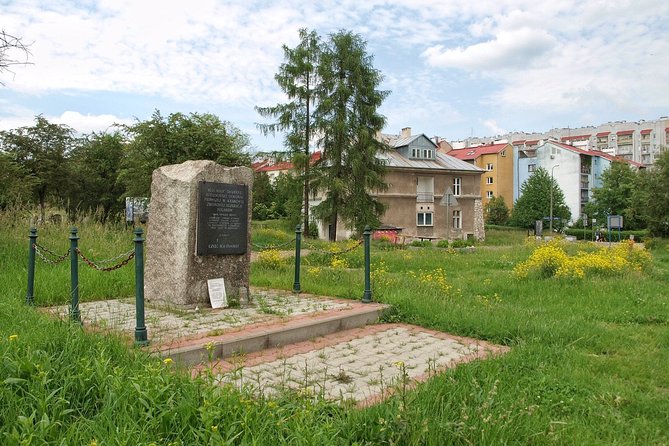
Plaszow is not a polished museum visit. It is an unsettling walk across a former Nazi camp where much has vanished, yet the Grey House, cemetery traces, mass graves, memorials, and camp roads still help you understand what happened. The tour begins at the Kraków ghetto’s Ghetto Heroes Square, then follows the story to the camp itself.
I like the way the guide connects Plac Bohaterów Getta to Plaszow, rather than treating the camp as an isolated stop. I also like the use of old photographs to show what no longer survives. The main drawback is plain: you must walk through an open site with uneven ground, and the visit is emotionally heavy.
Key points to know before booking
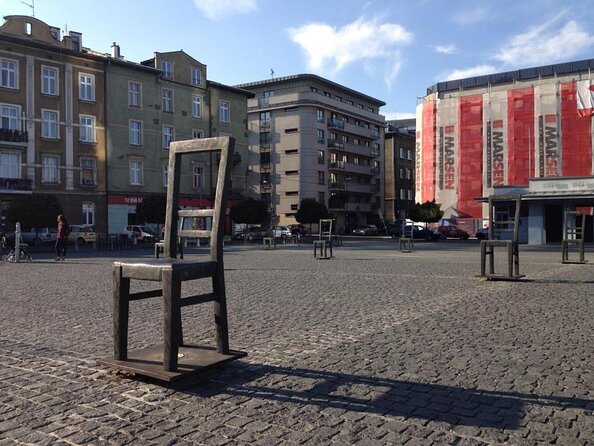
- The tour links two places: Begin at Ghetto Heroes Square, the former departure point for ghetto transports, then continue to Plaszow.
- The camp is mostly an outdoor site: Expect memorials, remaining structures, cemetery traces, and open ground rather than preserved interiors.
- Guides carry much of the experience: Bartholomew, Barbara, and Phil have led tours praised for clear explanations, photographs, and thoughtful answers.
- Schindler’s story is part of the wider history: Learn how work permits and the move to Brunnlitz helped save more than a thousand Jewish lives.
- Plan for walking: The tour lasts about two hours, and comfortable shoes are important.
- The small group limit is 25 people: That gives the guide a workable size for questions without making this a private tour.
Why Plaszow needs a guided walk
Plaszow can be hard to understand on your own. The former camp is not presented as a complete collection of buildings with signs at every turn. Nazi Germans destroyed much of the evidence, and later changes to the site made the original layout difficult to read.
That is where the guide matters. You are shown where the living, hospital, administrative, and industrial sections once stood. A path, a memorial, or a low remnant may look ordinary until you learn what occupied that spot. Old photographs help bridge the gap between the present-day setting and the crowded, controlled camp that once filled it.
I value this kind of visit because it asks you to pay attention. You are not moving from one preserved room to another. Instead, you are piecing together a place through testimony, surviving features, photographs, and memorials.
The camp was created in October 1942 on the grounds of two Jewish cemeteries. It first served as a forced-labor camp for Jews from the liquidated Kraków ghetto. From July 1943, a penal-labor section also held Poles. In January 1944, Plaszow became a concentration camp, and later that year it was used as a transit camp for Hungarian Jews sent onward to Auschwitz.
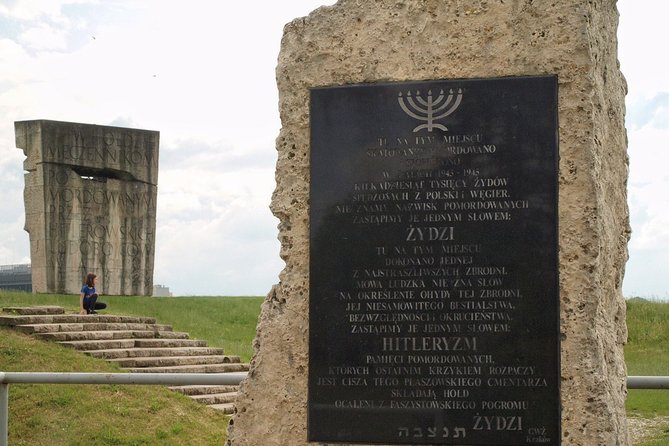
More than 35,000 people were imprisoned at Plaszow during its existence. Around 6,000 were murdered. Executions took place at several points within the camp, and mass graves and memorials now mark some of those places.
A few more Krakow trips to weigh up
- Old Town Krakow & Wawel Castle Walking Tour
★ 5.0 · 1,508 reviews - Creepy Krakow: 2-Hour City Walking Tour
★ 4.7 · 1,131 reviews - Krakow: The Old Town Walking Tour
★ 4.8 · 794 reviews
Starting at Ghetto Heroes Square
The tour begins outside Apteka pod Orłem at Plac Bohaterów Getta 18, beside Ghetto Heroes Square. This is a strong starting point because the square explains how people entered the camp system before you ever reach Plaszow.
During the Nazi occupation, the square was called Plac Zgody. It was the logistical center of the Kraków ghetto, used for control, registration, and the departure of transports. After the war, it was renamed Ghetto Heroes Square in memory of those who suffered there.
You spend about 15 minutes here. That may sound brief, but it gives you an important frame for the rest of the walk. The guide explains how the ghetto was administered and how this public space became linked to separation, forced movement, and deportation.
I suggest arriving early. The meeting instruction is to arrive 10 minutes before the start, and late arrivals cannot join after the group leaves. This is not a place where you want to rush in, locate the guide, and begin already distracted.
Getting from the square to Plaszow
The experience is sold as a guided walking tour, but one account describes the group taking a tram from Heroes Square to Plaszow. That means you should pay close attention to the meeting instructions you receive and follow the guide’s directions on the day.
The end point is listed at the bus stop at 57 Kamienskiego Street, rather than back at the starting point. This matters when planning the rest of your afternoon. You will not finish at the same place where you began.
The route takes you from the ghetto’s urban setting toward the former camp site. That change helps show how the Nazi system moved people from a confined city district into forced labor, imprisonment, and murder. It also makes the tour feel like a connected historical route, not a series of unrelated facts.
The total experience lasts about two hours. The timing is long enough for a meaningful explanation, but short enough to fit into a day of sightseeing in Kraków. Since you will be outside and walking, wear comfortable shoes and choose clothing suited to the weather.
Reading the remains at Plaszow
You spend about an hour at the main Plaszow site, with a further 45 minutes devoted to the camp’s details and major memorials. The exact pace depends on the group and the guide, but the focus is clear: understand what stood here and what happened here.
The Grey House is one of the key surviving features. The ruins of the pre-burial hall provide another physical link to the former Jewish cemeteries. You are also shown traces of the cemeteries themselves, along with the roll-call square and routes where pieces of gravestones were once used to pave roads.
These fragments are difficult to process. A gravestone is meant to preserve a person’s name and memory. Seeing cemetery material reused as paving makes the destruction of Jewish life tangible without needing dramatic presentation.
The guide also explains the camp’s internal organization. Plaszow included living quarters, hospital facilities, administrative areas, and industrial sections. Knowing this layout helps you understand that it was not simply a place where prisoners were held. It was a working system of forced labor, surveillance, punishment, and killing.
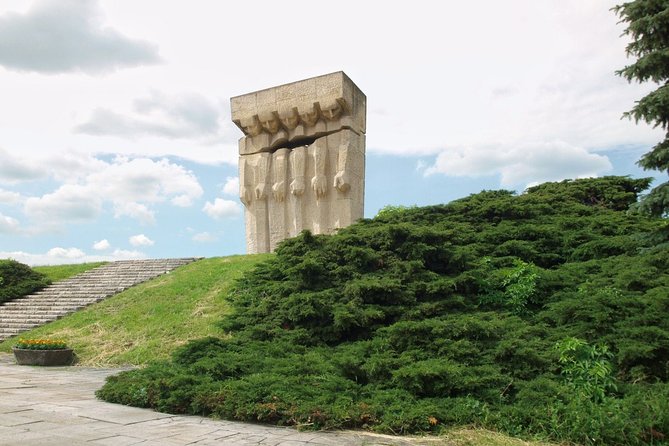
At several points, the tour pauses at memorials. The Monument of Torn-Out Hearts is the best-known landmark, but the mass graves and other memorial points are just as important. The pauses give you time to listen rather than hurry past.
Because much of the camp has disappeared, photographs are especially useful. Bartholomew, Barbara, and Phil have been praised for using images to show the buildings and features that once occupied the site. For me, that is one of the strongest reasons to take a guided tour here. A photograph can turn an empty patch of ground into a location with a clear purpose and human scale.
Same country, a completely different kind of day:
- From Krakow: Auschwitz-Birkenau Guided Tour & Hotel Pickup
★ 4.5 · 33,358 reviews - From Krakow: Auschwitz-Birkenau Guided Tour & Hotel Pickup
★ 4.5 · 29,340 reviews - Krakow: Auschwitz Guided Tour with Optional Hotel Pickup
★ 4.5 · 15,280 reviews - Krakow–Zakopane: Cable Car, Chocholow Baths, Cheese & Vodka
★ 5.0 · 10,720 reviews
The Schindler connection, beyond the film
Oskar Schindler is an important part of this tour, but Plaszow is not simply a film-location outing. His enamelware business employed Jewish prisoners registered through the camp, and he worked to obtain permits that protected them from further transports.
Later, Schindler arranged for the workers to be transferred to his wartime factory in Brunnlitz. More than a thousand people were saved through these efforts. The story is widely known because of Schindler’s List, but seeing the places tied to the camp gives the story a harder edge.
The tour can also help correct a common misunderstanding. Schindler did not save every Jewish prisoner at Plaszow, and the camp’s story is far larger than one rescuer. You learn about the camp’s forced-labor structure, its Polish penal section, its executions, and its role in the deportation system.
If you have watched Schindler’s List, you will recognize connections between the film and the places discussed. One useful feature of the tour is that the guide can separate cinematic storytelling from the documented setting. That makes the film a starting point, not a substitute for learning about Plaszow itself.
What makes the guides important
This tour depends heavily on the person leading it. The site cannot carry the visit on its own, since many structures are gone and the remaining features are spread across open ground.
Bartholomew has been praised for making the history clear and memorable. Barbara has guided groups from Heroes Square to the former labor camp while showing photographs, answering questions, and explaining the site as they walked. Phil has been described as taking time to visit the main points and explain what happened in detail.
Those names do not guarantee who will lead your departure, so treat them as examples of the guides used for this experience. The important point is that you need a guide who can explain both the physical site and the human story without turning the visit into a rushed lecture.
The group can include up to 25 people. That is not an intimate private walk, but it is still a manageable size for a historic site. If you have a question, ask it. The guide’s answers are a major part of the value.
The emotional weight of the visit
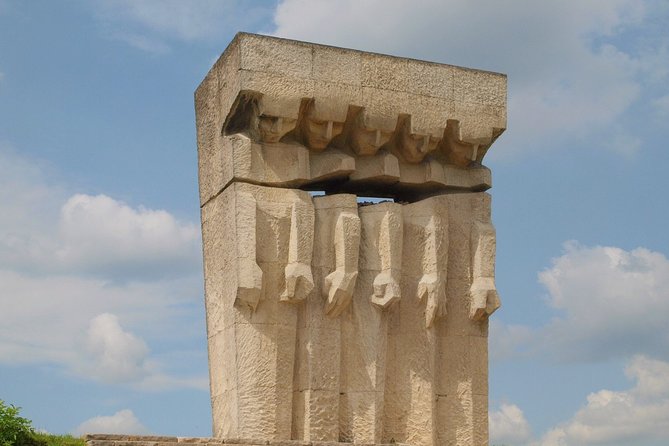
Plaszow is a place for quiet attention. The tour covers imprisonment, forced labor, executions, mass graves, and transports to Auschwitz. You should not expect a light sightseeing stop that can be fitted between coffee and shopping without affecting your mood.
I think the outdoor setting makes the visit especially demanding. The absence of many buildings does not make the history less serious. In some ways, it requires more imagination and concentration from you. You must listen, look at the photographs, and consider what the memorials are marking.
The guide’s tone matters. The best approach is factual, respectful, and willing to leave space for silence. The tour’s high praise for Bartholomew, Barbara, and Phil centers on explanation and patience, which are exactly the qualities this subject needs.
This experience may suit you if you want to understand Kraków’s wartime history beyond the Old Town and beyond the film version of Schindler’s story. It may not suit you if you want a preserved museum with extensive indoor displays or if you find open-air Holocaust sites too difficult.
Is $30.04 a fair price?
At $30.04 per person, this tour is priced as a guided historical walk rather than a full-day excursion. There is no admission charge at the stops, so most of what you are paying for is the guide’s time, organization, route planning, historical explanation, and use of visual material.
I think the price is reasonable if you want context. Plaszow is not easy to interpret by simply walking around it. A guide helps you understand the camp’s structure, identify surviving features, connect the site to Ghetto Heroes Square, and place Schindler’s actions within the wider Nazi system.
The value is also tied to the two-hour length. You are getting a focused visit rather than losing an entire day. On the other hand, if you already know Plaszow well and mainly want to photograph the memorials, you may prefer to visit independently.
The tour is offered in English, and group tours operate in one language only. Select English when booking if that is the language you need. The group limit is 25 people, which keeps the price below a private guide while allowing questions.
Free cancellation is available if you cancel at least 24 hours before the local start time. Changes or cancellations inside that window are not accepted for a refund.
Who should book this Plaszow tour?
I would choose this tour if you want a serious, site-based history lesson and prefer to have the camp explained as you move through it. It is particularly useful if you have seen Schindler’s List and want to understand the real places and events behind the film.
It also suits anyone interested in Kraków’s Jewish history, the Nazi occupation, forced labor, or the connection between the former ghetto and Plaszow. You do not need to know the history in advance. The guide builds the story from the first stop.
You should have a moderate level of physical fitness. Comfortable shoes are essential because the tour involves walking across an open former camp site. The exact transport between the square and Plaszow may follow the guide’s directions, with one account describing a tram ride.
I would think twice if you want a highly preserved concentration camp museum. Plaszow is valuable precisely because the site is incomplete, but that also means you will rely on the guide and your imagination more than you would at a place with intact barracks and exhibition rooms.
Should you book it?
Book this tour if you want to connect Ghetto Heroes Square with Plaszow and learn how the camp operated from someone who can point out what remains. The photographs, cemetery traces, Grey House, mass graves, camp sections, and Schindler connection make the visit far more useful than a quick, unguided walk.
Skip it if your Kraków plans cannot make room for a solemn outdoor visit or if you need a fully preserved museum setting. For most visitors focused on wartime history, the $30.04 cost buys the one thing Plaszow lacks most: clear explanation.
FAQ
How long does the Plaszow tour last?
The tour lasts approximately two hours.
Where does the tour begin?
It begins at Apteka pod Orłem, Plac Bohaterów Getta 18, Kraków.
Where does the tour end?
It ends at the bus stop at 57 Kamienskiego Street.
What language is the tour offered in?
The tour is offered in English. Group tours operate in one language, so select your preferred language when booking.
Is admission to the sites included?
There is no admission charge listed for the tour stops.
How large can the tour group be?
The maximum group size is 25 people.
Should I arrive early?
Yes. You are asked to arrive 10 minutes before the start. Late arrivals cannot join once the group has departed, and the ticket cannot be refunded in that situation.
Do I need a certain fitness level?
A moderate level of physical fitness is recommended. The experience includes walking at the former camp site, so comfortable shoes are a sensible choice.
Can I cancel for a refund?
Yes. You can cancel up to 24 hours before the experience’s local start time for a full refund. Cancellations or changes made less than 24 hours before the start are not refunded or accepted.
Just added around Krakow
- From Krakow: Zakopane and Dunajec River Rafting Tour★ 4.6 · 31 reviews
- From Krakow: Zakopane and Gubałówka Cable Car Private Tour★ 4.3 · 12 reviews
- From Krakow: Zakopane Full-Day Tour with Lunch Option★ 4.4 · 62 reviews
- From Krakow: Zalipie and Painted Village Guided Tour★ 4.0 · 4 reviews
- From Krakow: Zakopane Tatra Mountains & Hot Springs Tour★ 3.0 · 29 reviews
- From Krakow: Zakopane and the Tatra Mountains★ 4.7 · 36 reviews
- From Krakow: Hot Springs and Zakopane with Gubałówka★ 4.7 · 25 reviews
- Zakopane & Tatra Mountains Private Full-Day Tour from Krakow★ 4.5 · 33 reviews
Walking Tours, compared.
Gdańsk City Sights & History Guided Walking Tour in English
Read our review →
Browse the lists this tour appears in