
Reviewed · WALKING TOURS
Krakow Walking Tour with Audioguide on Your Smartphone
Krakow’s story unfolds on foot, from the medieval Barbican and St. Florian’s Gate to Wawel Hill and the former Jewish quarter of Kazimierz. This self-guided route gives you 26 recordings by a professional historian, plus an offline map, so you can stop for coffee, pause the narration, or linger at a church without holding up a group.
I like the low price of $8.27 and the freedom to start at your own pace. I also like that the route reaches beyond the postcard center, ending with Kazimierz and Ghetto Heroes’ Square. The tradeoff is simple: you must download and activate the app, bring your own headphones, and handle navigation yourself.
Key points about the Krakow audio walk
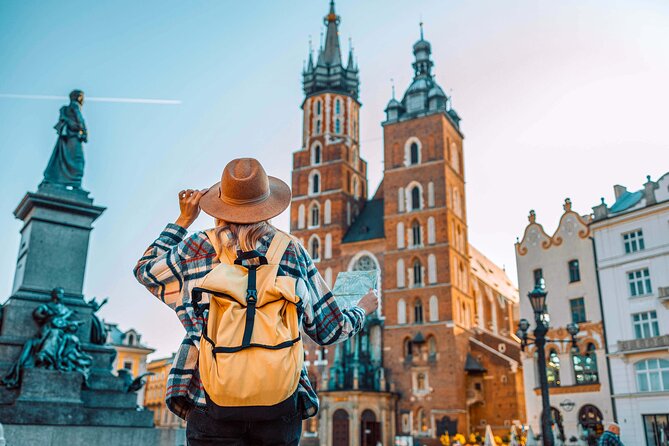
- Barbican to Kazimierz: Follow a historic route through Krakow’s Old Town, Wawel Hill, and the former Jewish district.
- 26 historian-narrated recordings: Hear background on major landmarks without joining a fixed group.
- Flexible one-year access: Use the tour at the approximate time chosen during checkout, and return to recordings whenever you like.
- Offline map included: Downloading the route before you leave can make finding each stop easier.
- No entry tickets included: The walk takes place in public streets, but optional interiors such as Wawel Castle or the Old Synagogue cost extra.
- Bring your own gear: You need a charged smartphone and headphones. No guide, transport, or device is supplied.
What this $8.27 Krakow tour really offers
At $8.27 per person, this is best viewed as a low-cost orientation walk rather than a full guided tour. You get a prepared route, spoken context, landmark illustrations, and a GPS map. That can be enough to give structure to your first afternoon in Krakow, especially if you prefer wandering alone.
The tour lasts about two and a half hours, but that timing is flexible. The audio can be paused and restarted, and you can spend longer at Market Square, stop for food in Kazimierz, or skip a section if the weather turns unpleasant.
The audio content is available for one year in your chosen language, and English is offered. The date and time selected at checkout are approximate, so you are not tied to a narrow departure slot. That flexibility is useful for independent sightseeing, but remember that no person will be waiting at the meeting point.
You start at the Krakow Barbican on Basztowa Street and finish back at the same meeting point according to the supplied details. The route itself leads through much of the central city and onward toward Kazimierz, so check the app’s directions carefully before setting off.
A few more Krakow trips to weigh up
- Old Town Krakow & Wawel Castle Walking Tour
★ 5.0 · 1,508 reviews - Creepy Krakow: 2-Hour City Walking Tour
★ 4.7 · 1,131 reviews - Krakow: The Old Town Walking Tour
★ 4.8 · 794 reviews
Starting with Krakow’s medieval defenses
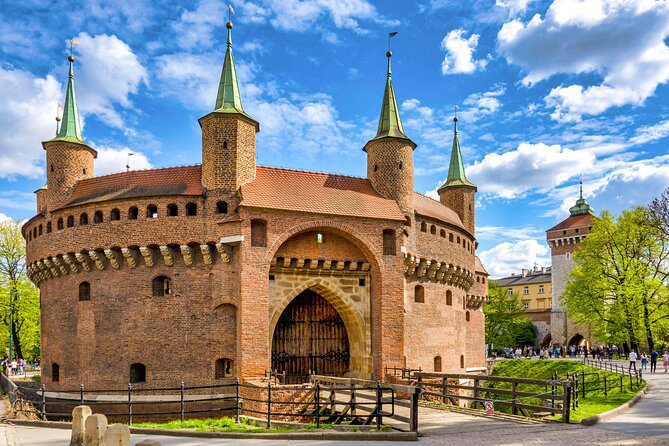
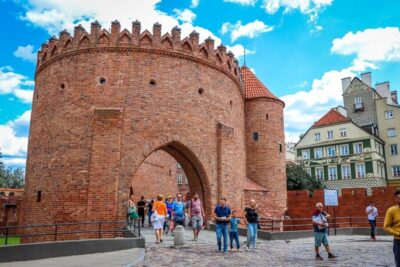
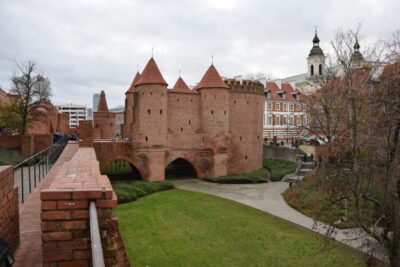
The Barbican is a strong opening. This broad, circular brick fortress once guarded the northern approach to Krakow. Its seven turrets and thick walls make the city’s medieval defenses easy to picture, even if you only view the building from outside.
The audio gives you a reason to look beyond the shape of the fortress. The courtyard, wall thickness, and defensive design all help explain how Krakow protected its gates and trade routes. Historical reenactments, exhibitions, and cultural events may take place here, but the ticket does not include admission to any such activity.
From the Barbican, the route continues to St. Florian’s Gate. This 14th-century Gothic tower is 33.5 meters high and carries a later Baroque roof. Walk through its arch and you enter the Royal Route, the historic path toward the center of town.
The suggested stop here is about 10 minutes, which is enough for an exterior look and a short recording. It is not enough for a long architectural study, particularly if the street is crowded. The app lets you pause, so you can move aside and listen without blocking the passage.
Florianska Street and the first view of the Old Town
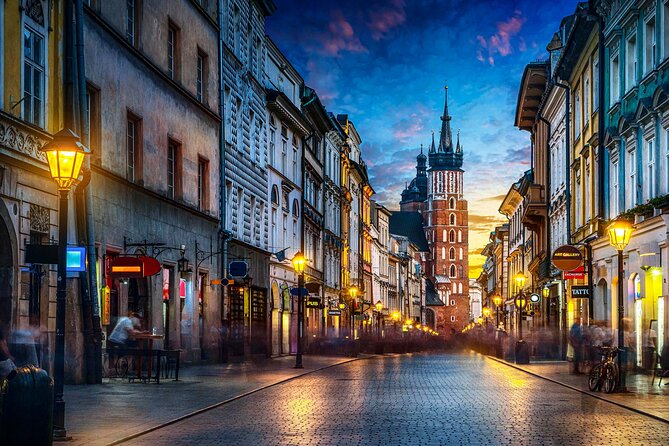
Florianska Street links St. Florian’s Gate with Main Market Square. Its medieval townhouses now share space with shops, cafes, restaurants, and souvenir sellers. That mix makes it a useful place to see Krakow as a living city rather than a string of preserved monuments.
I would not rush this section. The suggested 10 minutes keeps the tour moving, but you may want extra time for photographs or a short break. The audio provides context for the street’s past, while the storefronts show how the route functions today.
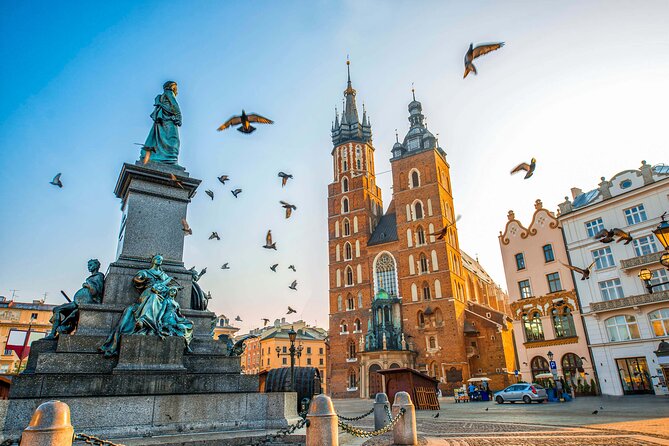
St. Mary’s Basilica is one of the major sights along the way. Its twin towers are deliberately unequal: the taller Bugle Tower carries the hourly trumpet call, while the shorter tower houses bells. Inside, the Gothic church is known for its ornate nave, stained glass, and the large wooden altarpiece made by Veit Stoss.
The tour can explain why the basilica matters, but entrance is not included. The same applies to other interiors on the route. If you want to visit, check opening arrangements locally and budget separately. The audio walk works perfectly well as an exterior tour, but it should not be mistaken for an admission package.
Main Market Square, Krakow’s grand civic room
Market Square is the natural center of the Old Town. It is one of Europe’s largest medieval squares, framed by landmarks such as St. Mary’s Basilica, the Cloth Hall, and the Town Hall Tower.
The recording helps you read the square as more than an open space. Look at the surrounding facades, then notice how cafes, stalls, street performers, and daily traffic have filled the same civic center for centuries. The suggested 10-minute stop gives you the basic picture, but this is another place where I would pause the app and enjoy the setting.
The Cloth Hall is especially easy to spot. It occupies the middle of the square and remains one of Krakow’s most recognizable buildings. The tour’s public route does not include shopping or entrance costs, so any purchases or optional visits are up to you.
The Town Hall Tower offers a different kind of stop. At 70 meters, it is the last remaining piece of Krakow’s original 14th-century Town Hall. Its winding staircase leads to city views and historical displays, but climbing the tower requires a separate ticket.
That distinction matters. The audio guide can point out what you are seeing and explain the tower’s role, but paid attractions remain outside the $8.27 price. If you want to climb, allow more than the route’s general walking time.
Same country, a completely different kind of day:
- From Krakow: Auschwitz-Birkenau Guided Tour & Hotel Pickup
★ 4.5 · 33,358 reviews - From Krakow: Auschwitz-Birkenau Guided Tour & Hotel Pickup
★ 4.5 · 29,340 reviews - Krakow: Auschwitz Guided Tour with Optional Hotel Pickup
★ 4.5 · 15,280 reviews - Krakow–Zakopane: Cable Car, Chocholow Baths, Cheese & Vodka
★ 5.0 · 10,720 reviews
Collegium Maius and the university quarter
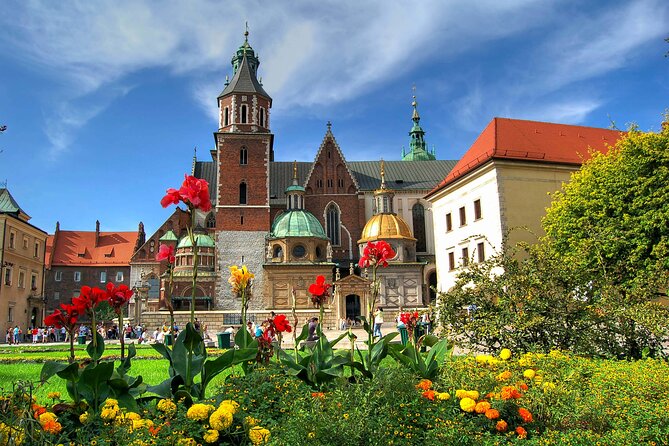
The walk then turns toward Jagiellonian University, founded in 1364. Collegium Maius is the university’s oldest building, with a medieval courtyard, arcades, lecture rooms, library, and former professors’ quarters.
This is one of the more rewarding historical shifts in the route. Krakow is not only a royal city. It is also an academic city, and the university helps explain its long intellectual life. Nicolaus Copernicus studied here, a detail that gives the old courtyard a strong human connection.
The supplied route also identifies Collegium Iuridicum, another part of the university complex. You can expect Gothic and Renaissance architecture and a short introduction to the institution’s role in Krakow. The suggested stop is about 10 minutes and admission is listed as free for the tour stop, though specific university interiors may have their own access rules.
Collegium Maius can reward a slower visit. The audio walk offers an introduction, not a full museum tour. If historic instruments, lecture rooms, or university collections catch your interest, you may want to return later with more time.
Kanonicza Street and the climb to Wawel Hill
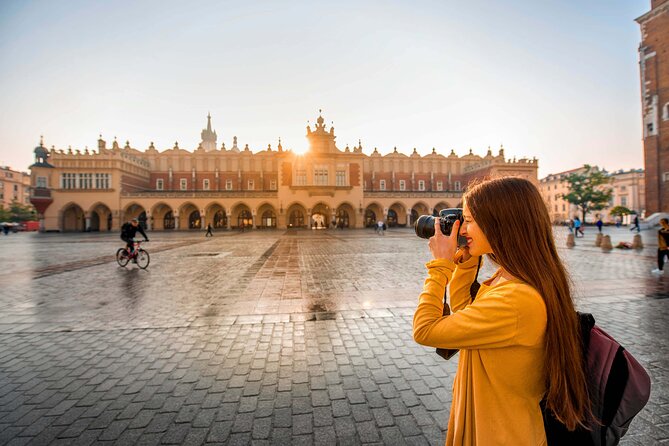
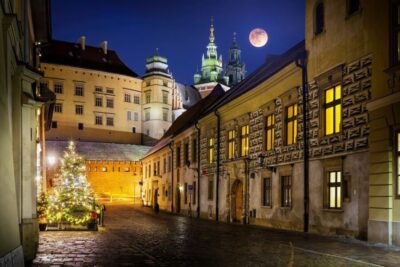
Kanonicza Street is one of the prettiest parts of the route. Its cobblestones and preserved Renaissance and Baroque houses create a quieter mood than Florianska Street. Many buildings were once linked to clergy and scholars, and the street leads naturally toward Wawel Hill.
The Palace of Bishop Erasmus Ciolek is a notable point here. This early-16th-century Renaissance palace now houses a branch of the National Museum. Its collection includes Polish medieval sculpture, religious icons, and early modern paintings.
Again, the walking tour provides the setting and explanation, not the museum admission. If you enjoy art, this is a sensible place to stop the route and make a separate visit. If your main aim is to see Krakow’s streets and major landmarks, the exterior and audio segment may be enough.
Wawel Cathedral is the next major landmark. Polish kings and queens were crowned, married, and buried here. Inside are royal tombs, chapels, the Sigismund Bell, sacred objects, and decorated altars.
Wawel Castle sits nearby and carries the royal story further. Its state rooms, Renaissance courtyard, Royal Apartments, Crown Treasury, Armory, tapestries, and art collections require separate tickets. You can also look out toward the Vistula River from Wawel Hill.
I like having both Wawel Cathedral and Wawel Castle on the route because they show two sides of Polish power: religious ceremony and royal government. But do not expect to cover their interiors during a two-and-a-half-hour walk unless you skip other sections and arrange admission separately.
From royal Krakow to Jewish Kazimierz
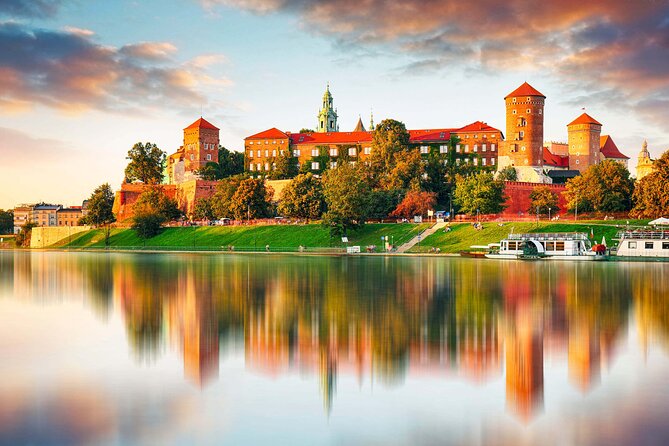
The route later reaches Tempel Synagogue in Kazimierz. Built in 1862, it uses Moorish Revival design, with gilded stucco, detailed woodwork, and colored stained glass. It was connected with progressive Judaism and now hosts religious services, concerts, and cultural events.
The synagogue is a valuable reminder that Krakow’s identity is not only medieval and royal. Kazimierz carries the story of a Jewish community that shaped the city’s culture and daily life. The audio can introduce that setting, while a separate visit gives you the chance to see the interior.
Okrąglak adds a more ordinary, modern touch. This circular market building is known for food stalls, especially zapiekanki, the open-faced Polish sandwiches associated with Krakow street food. It is a good place to stop if you want something quick rather than a formal meal.
Because the route is self-guided, you can pause here without losing a group. That is one of the tour’s best practical features. The app does not force you to choose between learning about the city and eating lunch.
Szeroka Street and the memory of Kazimierz
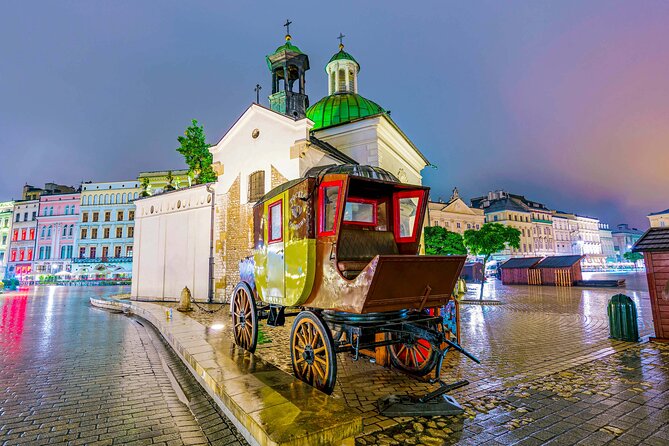
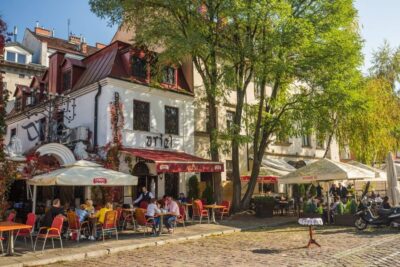
Szeroka Street is a central stop for Jewish Krakow. It is lined with cafes, restaurants, Judaica shops, and major sites including the Old Synagogue and Remuh Synagogue with its adjoining cemetery.
The Old Synagogue dates to the 15th century and now serves as a museum. Its displays cover religious objects, historical documents, Jewish traditions, and community life. The building is important not only for its age, but also for what it helps you understand about the Jewish presence in Krakow before World War II.
A self-guided recording can give you the names and broad context, but this is a place where careful attention matters. The subject is serious, and the route moves through spaces connected with both community life and loss. Allow extra time if you want to visit the museum or reflect at the synagogues.
The suggested Szeroka Street stop is about 10 minutes and does not include admission. That is enough to orient yourself, but not enough for all the museums and religious sites nearby. Think of the tour as a first layer, then return to Kazimierz if this part of the city speaks to you.
Jan Karski and Ghetto Heroes’ Square
The Jan Karski Monument provides a quieter pause. The statue shows Karski seated on a bench with a book. He was a Polish resistance fighter and diplomat who reported the horrors of the Holocaust to the Allies.
The monument is in Planty Park near the Old Town, according to the supplied route details. It offers a moment to consider the choices made by one person during a terrible period. The stop is free and takes about 10 minutes.
The final major point is Ghetto Heroes’ Square in Podgórze. During World War II, this was part of the Krakow Ghetto and a place connected with deportations. Today, 70 empty metal chairs represent the people who were taken from the community.
This is not a casual sightseeing stop. The memorial asks you to slow down and look closely. The audio may help frame what happened, but silence and personal reflection are also part of the visit. Because the route ends back at the Barbican, use the app map to confirm the final directions rather than assuming the last memorial is the endpoint.
How the app works in real use
You must download the audio guide app for iPhone or Android, activate your purchase, and follow the route on the in-app map. The tour includes an offline map with GPS navigation and illustrations to help identify landmarks.
I recommend downloading the tour before you begin. One person found navigation a little cumbersome when relying on both the app and Google Maps, and downloading the maps in advance is a sensible fix. It also reduces the need to stop on a street corner while trying to work out the next turn.
Bring headphones and a fully charged phone. Neither is supplied. Since the route is outdoors, weather has a real effect on comfort. At minus 14 degrees Celsius, pausing to listen or study a building becomes far less pleasant, even though the app itself remains flexible.
The activity is listed with a maximum of 20 participants, but there is no human group moving with you. That number appears to describe the booking capacity, not a walking party led by a guide. You can expect to walk independently.
Who will get the most from this walk?
I would choose this tour if you want a cheap first look at Krakow and like controlling your own pace. It suits solo visitors, couples, and families who do not want to follow a guide’s timetable.
It is also useful for a return visit. One year of access means you can use the route now, then revisit sections later. That works particularly well for Wawel, Kazimierz, and the university quarter, where a quick introduction can lead to a longer independent visit.
I would choose a live guide instead if you want questions answered on the spot, help entering attractions, or a person to explain sensitive subjects in Kazimierz and at Ghetto Heroes’ Square. The app gives prepared narration, but it cannot adjust its explanation to your interests.
The tour is also less suitable for anyone expecting every major building to be included inside the ticket price. Admission fees are separate, and the stated route involves walking on city streets. Most people can take part, but the practical experience depends on your comfort with a long urban walk and phone-based directions.
Cancellation is free up to 24 hours before the local start time. Inside that window, the payment is not refunded, and late changes are not accepted.
Should you book the Krakow audio walk?
Book it if you want a flexible, inexpensive city introduction with strong coverage of Krakow’s central sights and Kazimierz. The best features are the pause and restart controls, the 26 recordings, the one-year access period, and the chance to explore without a fixed departure time.
Prepare properly by downloading the route, activating the purchase before you reach the Barbican, charging your phone, and bringing headphones. Plan extra time and money for Wawel Castle, Wawel Cathedral, the Town Hall Tower, synagogues, or museums you want to enter.
Skip it if you want a human guide or if very cold weather will keep you from enjoying an outdoor walk. At $8.27, though, it is a fair-value way to get your bearings, learn the main story, and decide which parts of Krakow deserve a second visit.
FAQ
Where does the Krakow walking tour start?
The tour starts at the Krakow Barbican on Basztowa Street, Krakow, Poland.
Where does the tour finish?
The activity ends back at the meeting point.
How long does the tour take?
The walking tour takes approximately two hours and 30 minutes.
Is this a guided tour with a person?
No. This is a self-guided audio tour. No human guide will be waiting at the meeting point.
What language is offered?
The tour is offered in English.
What does the price include?
The price includes one year of access, 26 audio recordings narrated by a professional historian, the mobile app for iPhone and Android, landmark illustrations, and an offline route map with GPS navigation.
Do I need to bring headphones?
Yes. You must bring your own headphones. Headphones and smartphones are not included.
Are entrance tickets included?
No. Entrance fees and tickets are not included. The walking route itself uses city streets, and no entry fee is required to follow the route.
Can I use the tour at any time?
Yes. The audio guide can be used at any time, and the date and time selected during checkout are approximate.
Can I cancel for a full refund?
Yes, if you cancel at least 24 hours before the experience start time. Cancellations made within 24 hours are not refunded.
Just added around Krakow
- From Krakow: Zakopane and Dunajec River Rafting Tour★ 4.6 · 31 reviews
- From Krakow: Zakopane Full-Day Tour with Lunch Option★ 4.4 · 62 reviews
- From Krakow: Zalipie and Painted Village Guided Tour★ 4.0 · 4 reviews
- From Krakow: Zakopane and Gubałówka Cable Car Private Tour★ 4.3 · 12 reviews
- From Krakow: Zakopane Tatra Mountains & Hot Springs Tour★ 3.0 · 29 reviews
- From Krakow: Zakopane and the Tatra Mountains★ 4.7 · 36 reviews
- From Krakow: Hot Springs and Zakopane with Gubałówka★ 4.7 · 25 reviews
- Zakopane & Tatra Mountains Private Full-Day Tour from Krakow★ 4.5 · 33 reviews
Walking Tours, compared.
Gdańsk City Sights & History Guided Walking Tour in English
Read our review →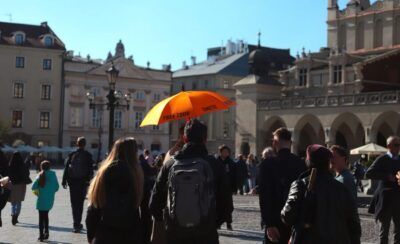
Browse the lists this tour appears in