
Reviewed · WALKING TOURS
Life Behind the Iron Curtain Warsaw Walking Tour
Warsaw’s communist past is easiest to grasp when you see it in ordinary streets, not just in a museum. This walk links Constitution Square, censorship memorials, party offices, shops, railway stations, and the Palace of Culture into one clear story about daily life behind the Iron Curtain.
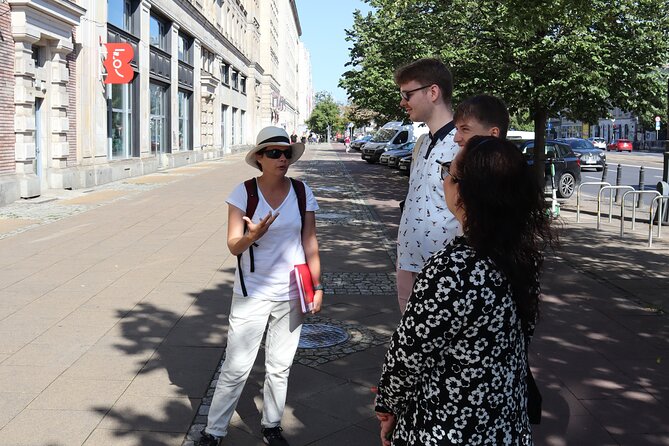
I like the small maximum of 10 people, which gives the guide room to answer questions. I also like the use of visual aids and family stories from guides such as Olivia, Oliwia, and Agnieszka. The main drawback is simple: this is a long outdoor walk, so it is a poor fit if you have trouble covering distance on foot.
Key points at a glance
- See the planned communist city center: Constitution Square and Marszałkowska Street reveal how public space was shaped for parades and mass gatherings.
- Learn how control worked: Mysia 3 introduces censorship and espionage, while the former Communist Party headquarters shows where the country was directed.
- Connect politics with daily life: The former Central Department Store explains why buying basic goods could be such a challenge.
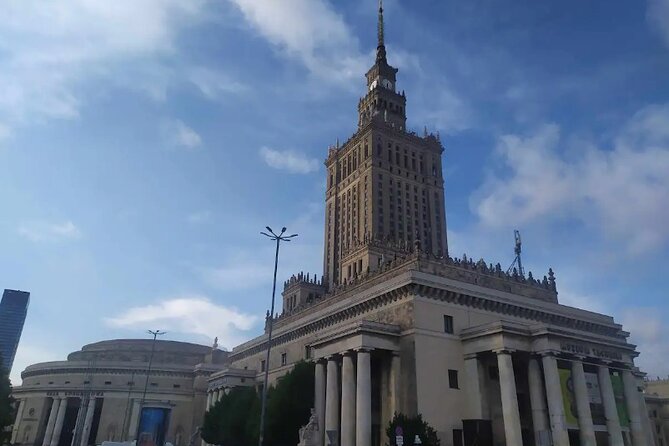
- Finish with Warsaw’s most disputed building: The Palace of Culture and Science provides a fitting end to the walk and a chance to pay extra for its viewing terrace.
- Expect a personal, story-led tour: Guides use visual material and, when relevant, family experiences to explain how communism affected ordinary people.
- Allow about two and a half hours: The tour ends near the Palace of Culture and Science, close to public transportation.
Why this walk makes communist Warsaw easier to read
Warsaw can look polished and modern at first glance. Yet the center still contains large public squares, stern government buildings, railway stations, department stores, and the Palace of Culture, all tied to the Polish People’s Republic. On your own, you might pass these places without seeing the political purpose behind them.
This tour gives those streets a common thread. You learn how the state planned public space, managed information, controlled trade, and organized movement through the city. The focus is not only on leaders and dates. It is also on queues, shortages, travel, work, and the small ways people dealt with a system that reached into daily life.
That balance is the strongest feature of the experience. The tour explains architecture, but it does not stop there. It also asks what these buildings meant to people who had to use them.
Guides named Olivia, Oliwia, and Agnieszka have been praised for clear explanations, good stories, and personal family connections to the period. Oliwia was very young when her family left Warsaw during communism, but she draws on the experiences of parents and grandparents. That kind of secondhand family memory can help you understand how recent this period remains without pretending the guide personally lived through every event.
A few more Warsaw trips to weigh up
- Warsaw: Old Town Highlights Walking Tour in English
★ 4.7 · 1,516 reviews - Warsaw: Old Town Guided Walking Tour
★ 4.9 · 599 reviews - Half-Day Polish Food Walking Tour with Guide and Dinner
★ 4.5 · 381 reviews
Constitution Square sets the political stage
The meeting point is Plac Konstytucji, or Constitution Square. You begin here with about 20 minutes devoted to the square and the idea behind it: a new city center for the Polish People’s Republic.
This is a useful opening because the space itself makes an argument. Its scale and layout were not accidental. A public square of this sort could serve as a civic gathering place, a ceremonial setting, and a route for official displays. Your guide explains what the planners wanted the square to represent and how its design fit the political goals of the time.
I like starting here because you do not need much background to understand the basic point. The buildings and open space make the state’s ambition visible. The guide’s visual aids add detail that is hard to pick out from the pavement alone.
You should expect to spend much of the tour outdoors, so weather matters. There is no admission charge at this stop, and the square is an easy place to find at the start of your day in central Warsaw.
Marszałkowska Street was built for movement and display
From Constitution Square, the group walks along Marszałkowska Street for about 20 minutes. This broad avenue was used for parades and marches, and the guide points out one of the best-known sites connected with the Polish People’s Republic.
The street helps you see how public movement could become political theater. A wide road is practical, but it can also frame a procession and put the state in full view. Here, the tour shifts from one symbolic square to a larger urban route, showing how Warsaw’s center was built to handle organized crowds.
This part will appeal to anyone interested in city planning and architecture. It is also a good point to listen for the difference between a street used by ordinary people and a street designed to display official power.
The walk is not only about communist-era structures. Warsaw has changed, and some buildings now serve different purposes. That contrast is useful. You see how the city has adapted while traces of the old system remain in place.
Socialist realism at the Ministry of Agriculture
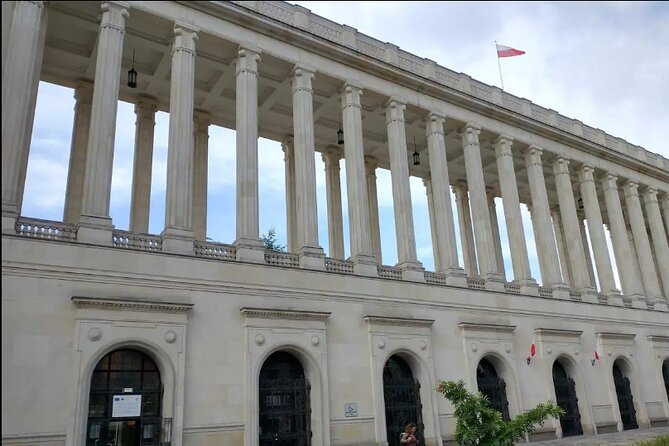
The Ministry of Agriculture and Rural Development receives about 15 minutes. Its building is presented as a clear example of socialist realism, the official style that shaped many public structures in the period.
Your guide explains the features of this style and why buildings were designed in that manner. This matters because socialist realism was not simply a decorative choice. Architecture was expected to communicate ideas about authority, order, labor, and the state.
The stop gives you a practical way to read the façades you will see elsewhere in Warsaw. Instead of hearing a broad label and moving on, you learn what the style was meant to do and how it supported the political message of the period.
There is no entry fee. The discussion takes place outside, so the value comes from the explanation rather than access to an interior.
Same country, a completely different kind of day:
- Warsaw: Chopin Concert in the Old Town
★ 4.8 · 2,287 reviews - Warsaw: Traditional Galar Cruise on The Vistula River
★ 4.6 · 1,640 reviews - Warsaw Concert: Chopin – Painted by Candlelights with Wine
★ 4.8 · 1,442 reviews - Warsaw: City Sightseeing Hop-On Hop-Off Bus Tour
★ 3.6 · 1,415 reviews
Mysia 3 shows how speech was controlled
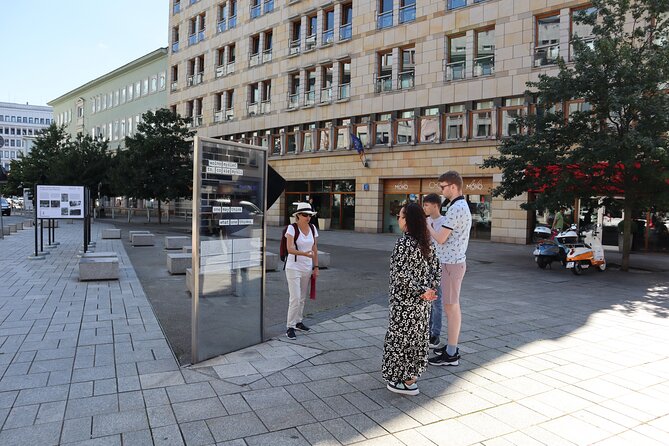
Mysia Street brings the tour to the Free Speech Memorial and a 20-minute conversation about censorship and espionage. This is one of the most important stops because it moves the subject from concrete and street plans to the handling of information.
The memorial gives the topic a physical point of reference. Your guide explains how censorship affected what could be printed or shared, and how espionage fit into the wider system of surveillance and control.
This is also where the tour can become especially personal. The most effective explanations of this period connect national policy with ordinary choices: what people could read, what they could discuss openly, and what they had to keep private. The guide’s family stories can add a human scale to a subject that might otherwise sound abstract.
I would pay close attention here, even if your main interest is architecture. Understanding communication controls helps explain why the political changes after the fall of communism mattered so much to people who had lived under the old system.
The former party headquarters reveals who held power
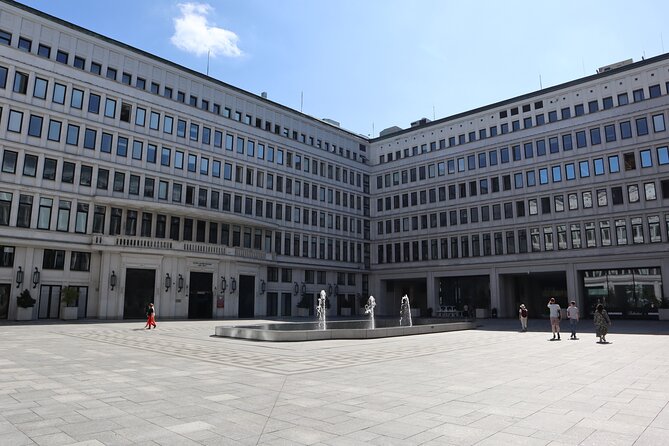
At Nowy Świat 6/12, you see the building that now houses the Banking and Finance Center. During the Polish People’s Republic, this was the headquarters of the Communist Party, the place from which the country was managed.
The building’s present use creates a useful contrast. The façade remains part of the city, but its political role has changed. Your guide explains what happened here and how the site fitted into the structure of power.
I like this stop because it avoids treating communism as a distant subject. The former headquarters is in the middle of present-day Warsaw, surrounded by the normal business of the capital. You can see how quickly the meaning of a building can change after a political system ends.
The stop lasts about 15 minutes. There is no listed admission charge, and the tour focuses on the exterior and its historical role.
The former Cedet makes shortages understandable
The Central Department Store Cedet gives you a direct look at consumer life. The stop lasts about 15 minutes and focuses on one of the hardest parts of the period: buying everyday goods.
Political control can sound remote until you connect it to shopping. The former department store helps the guide explain shortages, limited choice, and the effort involved in obtaining ordinary items. You learn that life behind the Iron Curtain was not only shaped by government offices and slogans. It was also shaped by the practical question of what you could find in a shop.
This may be the most relatable part of the walk. You do not need a special interest in twentieth-century politics to understand the frustration of trying to buy basic things. The guide’s explanations and family accounts help put the economic system into human terms.
The building also shows how a commercial site can carry a political story. A department store sounds ordinary, but in this context it becomes evidence of how the economy worked for people on the ground.
Railway stations explain travel under the old system
The next stop covers Warsaw Central Railway Station and Downtown Railway Station, with about 15 minutes devoted to local, regional, and international travel during the Polish People’s Republic.
Rail travel is a smart subject for this tour because movement was never just a timetable matter. The stations connected Warsaw with other parts of Poland, but travel across borders could involve different rules and restrictions. Your guide explains the local, regional, and international sides of that system.
The stop also helps tie the earlier subjects together. The state controlled offices, information, goods, and public events, and travel formed another part of that structure. At the same time, railway stations were places where ordinary people moved through the city for work, family, and daily needs.
You do not enter a separate attraction here. The value comes from seeing the stations as working parts of Warsaw while learning how they functioned in an earlier political era.
The Palace of Culture is the right final stop
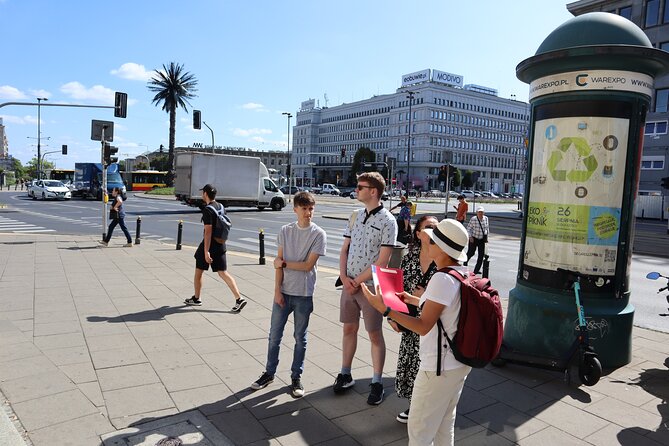
The walk ends in front of the Palace of Culture and Science, with about 30 minutes for the building’s story. This is the most symbolic and controversial stop on the route.
The palace is hard to miss, but size alone does not explain why it matters. Your guide discusses its political meaning, its place in Warsaw, and the reasons it remains a debated building. By this point, you have already seen the public squares, ministries, party offices, shops, and stations that shaped the communist center. The palace brings those themes together in one imposing structure.
The tour ends near Emilii Plater 54, close to the palace. If you want to continue the subject from above, the viewing terrace costs an additional 28 PLN. That fee is not included, so decide in advance if you want to add it after the walk.
I like ending here rather than at a general city landmark. The Palace of Culture is not just a photo stop. It gives you a final question to consider: how should a city treat a powerful symbol associated with a system many people rejected, but that remains part of the urban view?
What the guides add beyond the buildings
The guides are central to the experience. Olivia is described as engaging and able to connect family experience with broader events. Agnieszka has been praised for cheerful delivery, strong stories, and a large store of information. Oliwia also brings family accounts from parents and grandparents into her explanations.
Those details matter because the tour covers a period that is still close to living memory. A guide can explain the political structure, but personal stories help you understand how that structure affected home life, shopping, speech, and expectations for the future.
The tour also includes an information pack before you arrive, with frequently asked questions, useful links, and other preparation material. Visual aids are included during the experience. Afterward, you receive suggestions for more places to visit, along with recommendations for eating and drinking in Warsaw.
That extra help is valuable if this is your first visit. It can save you from spending your limited time on random choices and may help you connect this walk with other parts of the city.
Is $28.57 a fair price?
At $28.57 per person, the tour is priced as a focused small-group experience rather than a basic orientation walk. You receive about two and a half hours of guiding, an English-speaking guide, visual aids, pre-tour information, and recommendations for the rest of your stay.
The maximum group size is 10. That matters more here than it would on a simple route through the old town because the subject often invites questions. A small group should also make it easier to hear personal explanations and keep up with the guide.
All the main stops are viewed without admission charges. The one optional cost is the Palace of Culture viewing terrace, priced at 28 PLN. If you skip the terrace, there is no required extra entry fee mentioned for the walk itself.
I consider the price reasonable for you if you want context rather than a quick list of landmarks. It is less useful if you only want photographs or a general introduction to Warsaw. The tour earns its value through interpretation, not paid access to attractions.
Who should book this walk?
I would recommend it to you if you are interested in modern European history, architecture, political change, or the way large systems shape ordinary life. It also suits repeat visitors who have already seen Warsaw’s main sights and now want to understand the city’s communist-era center.
The tour is a good fit for adults and older children who can follow a discussion about censorship, party control, shortages, and travel restrictions. It can also work well early in a Warsaw visit because the guide provides ideas for places to eat, drink, and visit afterward.
You should think twice if you have trouble walking long distances. The experience lasts around two and a half hours and moves between eight stops. It is offered in English, and most people can participate, but the route remains an outdoor walking tour rather than a seated talk.
Service animals are allowed, and the meeting point is near public transportation. Confirmation is provided when you book. Free cancellation is available up to 24 hours before the start time, which gives you some flexibility if your plans change.
My verdict on Life Behind the Iron Curtain
Book this tour if you want Warsaw’s communist past explained through places you can still see today. The strongest parts are the link between architecture and daily life, the small group size, and the guides’ use of family stories to make a recent period easier to understand.
Skip it if your main goal is a fast overview of medieval Warsaw, World War II, or the city’s older monuments. This walk stays focused on the Polish People’s Republic, from its planned public spaces to the final discussion at the Palace of Culture.
For most visitors with a solid two and a half hours and comfortable walking shoes, it is a thoughtful use of time. You leave with more than a set of photographs. You gain a clearer sense of why modern Warsaw looks the way it does and why the city still argues with parts of its past.
FAQ
Where does the Life Behind the Iron Curtain Warsaw Walking Tour start?
The tour starts at Constitution Square, Plac Konstytucji, 00-647 Warszawa, Poland.
Where does the tour end?
It ends near the Palace of Culture and Science, at or near Emilii Plater 54, 00-901 Warszawa, Poland.
How long does the walking tour last?
The tour lasts approximately 2 hours and 30 minutes.
What language is the tour offered in?
The tour is offered in English.
How many people can join the tour?
The maximum group size is 10 people.
Is the Palace of Culture viewing terrace included?
No. Entry to the viewing terrace is not included and costs 28 PLN.
Are admission tickets included at the other stops?
The listed stops have no admission ticket charge. The viewing terrace at the Palace of Culture and Science is the stated exception.
Is the tour suitable for people who have trouble walking long distances?
The tour is not recommended for people who have problems walking long distances.
Are service animals allowed?
Yes, service animals are allowed.
Can I cancel for a full refund?
Yes. You can cancel at least 24 hours before the experience start time for a full refund. Cancellations made less than 24 hours before the start time are not refunded.
Just added around Warsaw
- World War II Warsaw Old Town, Military Cemetery Walking Tour★ 4.7 · 3 reviews
- Warsaw: Wolf’s Lair & Swieta Lipka Small-Group Tour + Lunch★ 5.0 · 3 reviews
- Wilanów Palace: 2-Hour Guided Tour with Entrance Tickets★ 4.8 · 8 reviews
- Warsaw Zoo Skip-the-Line Entry Ticket with Private Transport★ 4.8 · 3 reviews
- Warsaw Wolf’s Lair with St. Lipka and Mamerki Private Guided★ 4.2 · 3 reviews
- Warsaw: Vistula River Cruise with Your Music & City Views★ 4.6 · 78 reviews
- Warsaw: Private Vodka Tasting Night with Snacks and Pickup★ 5.0 · 7 reviews
- Warsaw Private Wilanow Palace & Garden Tour★ 4.6 · 30 reviews
Walking Tours, compared.
Gdańsk City Sights & History Guided Walking Tour in English
Read our review →
Browse the lists this tour appears in