
Reviewed · WALKING TOURS
Life Behind the Iron Curtain Warsaw Walking Tour
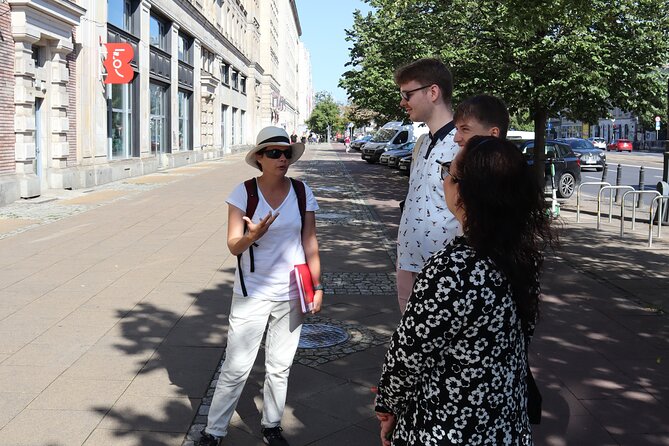
Warsaw’s communist past is easiest to understand through its streets, not just a museum display. This walk takes you from Constitution Square along parade-ready Marszałkowska Street to the Palace of Culture, using buildings and public spaces to explain how ordinary people coped with shortages, censorship, travel limits, and official absurdity. I especially like the personal family stories and the way the tour connects grand state projects with daily life. I also like that it treats humor as a survival tool, not a footnote. The main drawback is the distance: three kilometers on foot can feel long if you have mobility problems or visit on a hot day.
The tour works best with an engaging guide, and Oliwia and Agnieszka have earned especially strong praise for their clear English, dry wit, and ability to answer questions. You should allow about two and a half hours, wear comfortable shoes, and meet the guide under a white and green umbrella at Constitution Square. The Palace viewing terrace costs extra, so do not assume it is part of the tour price.
Key points at a glance
- Constitution Square reveals a planned communist city center: See the monumental setting designed for public ceremonies, parades, and political display.
- Marszałkowska Street shows power in motion: Its broad scale made it useful for marches and official spectacles.
- Personal stories explain daily survival: Learn how people found goods in empty shops, handled rationing, and used humor against an inflexible system.
- The Free Speech Memorial opens the subject of censorship: The stop also brings in underground publishing, surveillance, and espionage.
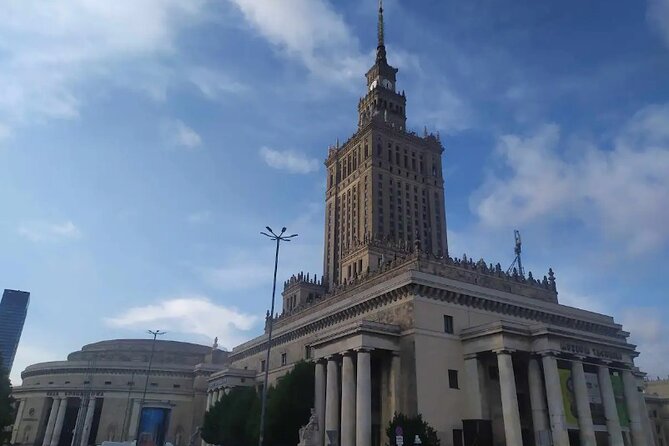
- The Palace of Culture makes the political message impossible to miss: You see one of Warsaw’s most controversial buildings and can add its viewing terrace for a separate fee.
Why this walk makes communist Warsaw easier to understand
The phrase Iron Curtain can sound abstract. It brings to mind borders, military alliances, and Cold War speeches. This tour brings the subject down to the level of shopping, travel, work, newspapers, and the jokes people told when the official story made little sense.
That change of scale is the tour’s great strength. You are not simply told that the communist state controlled the economy. You hear how that control affected a normal shopping trip, why stores could be empty yet still involve long queues, and why a shop assistant asking what can I get you became such a sharp joke.
The tour also explains how Poles managed to function under a system that made ordinary tasks difficult. Ingenuity mattered. So did patience, informal networks, and humor. The tone is serious about oppression, but it is not gloomy from start to finish.
I would choose this walk if you want social history rather than a list of dates. It gives you a better sense of how political change reached into private life. The personal accounts shared by guides such as Oliwia and Agnieszka make that connection especially direct.
A few more Warsaw trips to weigh up
- Warsaw: Old Town Highlights Walking Tour in English
★ 4.7 · 1,516 reviews - Warsaw: Old Town Guided Walking Tour
★ 4.9 · 599 reviews - Half-Day Polish Food Walking Tour with Guide and Dinner
★ 4.5 · 381 reviews
Constitution Square and the planned center of Warsaw
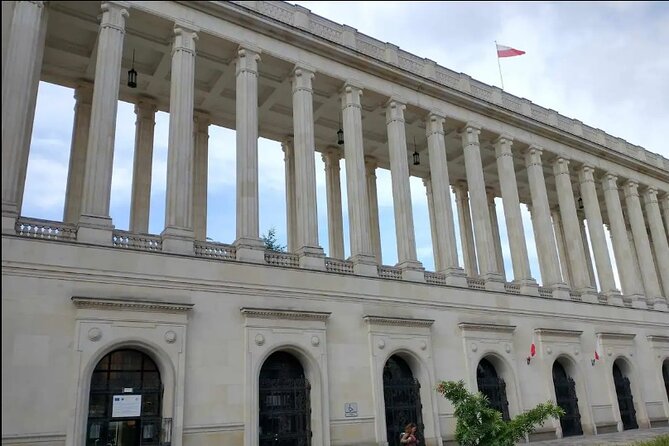
The tour starts at Constitution Square, a broad and imposing space built to serve the new communist vision of Warsaw. The square was meant to become the city’s new center, and its scale tells you a great deal about the government that commissioned it.
This was architecture meant to impress from a distance. Large facades, formal lines, and open space gave the authorities room for ceremonies and public gatherings. The design was not only about housing or offices. It was also about presenting a picture of order, strength, and collective purpose.
Your guide explains socialist realism here and at later stops. The style can look handsome at first glance, with its grand proportions and decorative detail. Yet many Poles dislike what it represents. These buildings were created under a system that used architecture as political messaging, and that memory still shapes how people see them.
I like beginning here because the square gives you a visual lesson before the tour gets into more personal stories. You can see how a city center was reshaped to fit an ideology. You also get an immediate sense of the difference between a space designed for everyday urban life and one designed for state theater.
Marszałkowska Street and the city built for parades
From Constitution Square, the route follows Marszałkowska Street. This broad road was used for parades and marches, so its width had a political purpose as well as a practical one.
Your guide points out how the street helped create a setting for public spectacle. Large groups could move through the city in an organized way, while the surrounding architecture reinforced the message of a powerful state. It is easier to understand this when you are standing in the space itself rather than looking at an old photograph.
The road also helps explain how communist planning favored scale. Wide avenues and large blocks gave the authorities control over movement and presentation. At the same time, these areas formed part of the daily city, filled with people going to work, shopping, or catching a train.
This is a walking tour, not a series of indoor visits, so the street sections matter. They let you read the city as a political document. In warm weather, the pace includes stops in the shade when possible, but you should still bring water and dress for two and a half hours outside.
The Free Speech Memorial and the price of saying the wrong thing
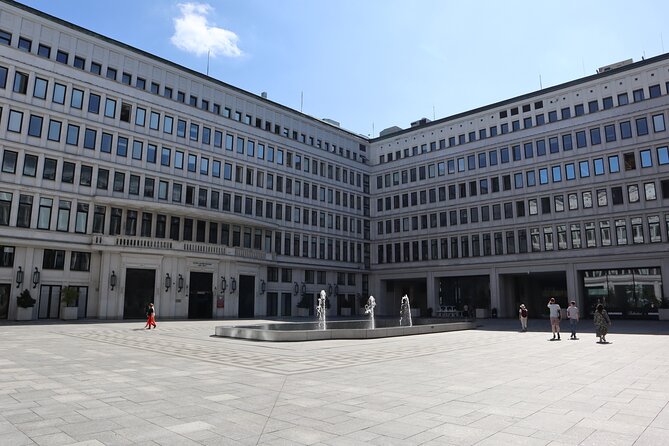
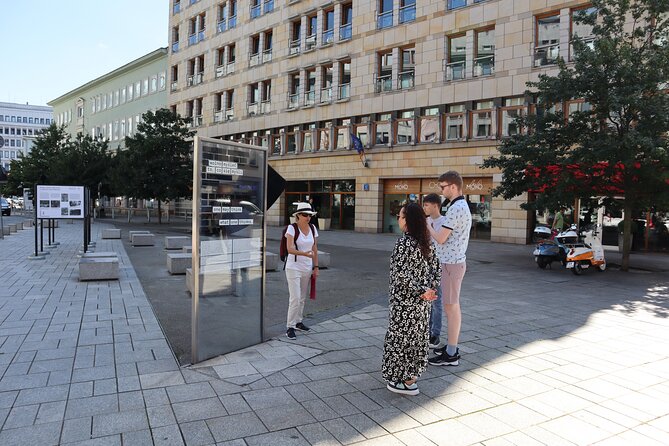
The Free Speech Memorial shifts the story from buildings to ideas. Here you talk about censorship, underground communication, and espionage, along with the risks of controlling what could be printed or discussed openly.
The subject is important because censorship was not limited to a few forbidden headlines. It shaped newspapers, books, public speech, and the flow of information. The memorial gives the guide a clear place to explain how people responded when official channels could not be trusted.
I find this one of the most useful stops for visitors who know the broad outline of communist rule but want to understand its daily reach. The discussion shows why independent publishing mattered and why information could carry real danger.
The guide also connects censorship with espionage. That broadens the story beyond the simple idea that the state controlled the press. It points to a society where information had political value and where speaking, printing, or passing something along could have consequences.
Same country, a completely different kind of day:
- Warsaw: Chopin Concert in the Old Town
★ 4.8 · 2,287 reviews - Warsaw: Traditional Galar Cruise on The Vistula River
★ 4.6 · 1,640 reviews - Warsaw Concert: Chopin – Painted by Candlelights with Wine
★ 4.8 · 1,442 reviews - Warsaw: City Sightseeing Hop-On Hop-Off Bus Tour
★ 3.6 · 1,415 reviews
Communist Party headquarters and the machinery behind the system
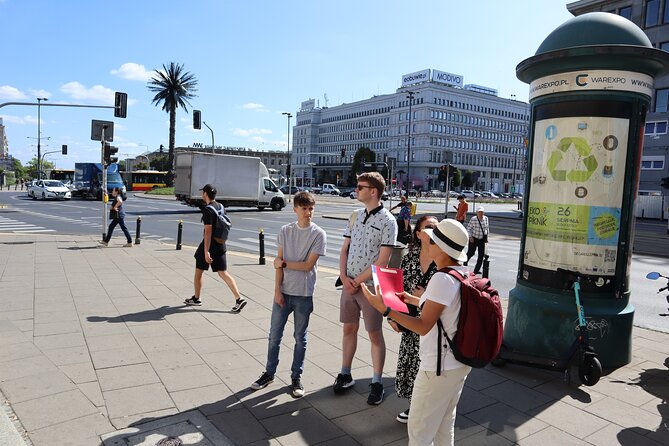
The stop at the former Communist Party headquarters brings the political structure into view. You are not only looking at a building. You are considering where decisions were made and how the official system shaped life far beyond the party offices.
This is a good moment to ask questions. The tour is designed for conversation, and the guides have been praised for taking time with questions rather than rushing from one landmark to the next. If you are curious about work, censorship, travel, rationing, or the transition after communism, this is a useful point to raise it.
The value here comes from linking the headquarters to the practical stories told elsewhere. The state’s control was not an idea floating above the city. It affected shops, jobs, movement, public speech, and the way people planned their days.
Cedet and the strange logic of empty shops
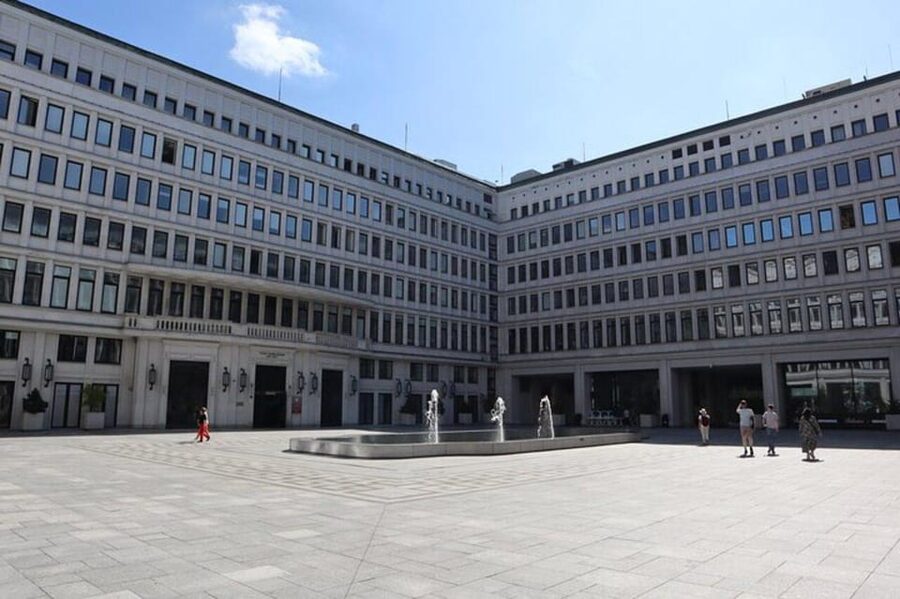
Central Department Store Cedet helps explain the contradiction between official promises and actual shopping. Department stores suggested modern abundance, yet the communist economy often left shelves empty.
Your guide discusses how people could still buy things when the shops appeared to have little to offer. That story is less about a clever trick than about the informal systems people built around shortages. You learn why shopping demanded patience, contacts, timing, and a willingness to adapt.
The joke about a shop assistant asking what can I get you captures the absurdity neatly. If there was little or nothing available, the question sounded detached from reality. The humor was pointed, but it also helped people cope with a system that made basic purchases unnecessarily hard.
This stop gives the tour a welcome domestic scale. Grand squares and party offices can explain power, but Cedet helps you picture a parent or worker trying to find ordinary goods. That is where the period becomes more than architecture.
Warsaw Central Station and restrictions on movement
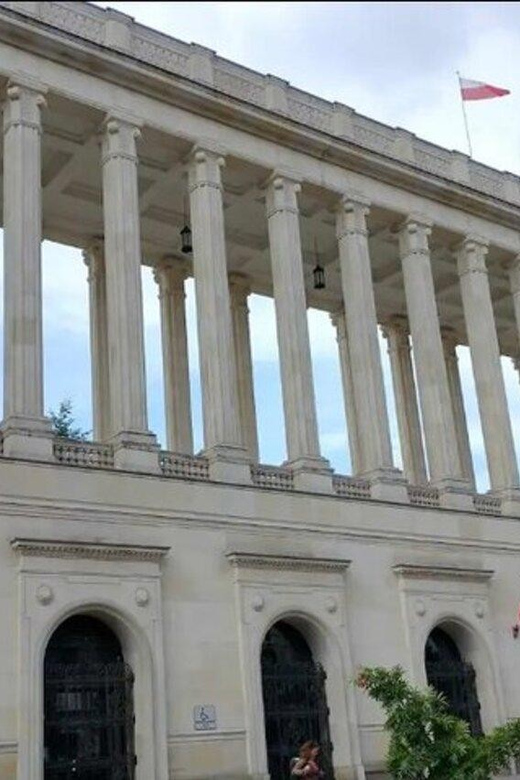
Warsaw Central Station adds another useful subject: travel. A railway station normally suggests freedom to go somewhere else, but under communist rule the state also found ways to limit how far Poles could travel.
The tour explains how the authorities made foreign travel difficult and how restrictions affected people’s sense of the outside world. The station becomes a reminder that movement was not simply a matter of buying a ticket and choosing a destination.
This stop also changes the rhythm of the walk. After formal squares and political buildings, a transport hub brings the focus back to ordinary people moving through the city. It helps you see how state control could affect not only what you bought or read, but also where you could go.
The tour does not promise entry into every building on the route. The emphasis is on the setting, the explanation, and the conversation around it. That suits anyone who prefers context over a quick collection of interior attractions.
The Palace of Culture and Science, Warsaw’s most loaded landmark
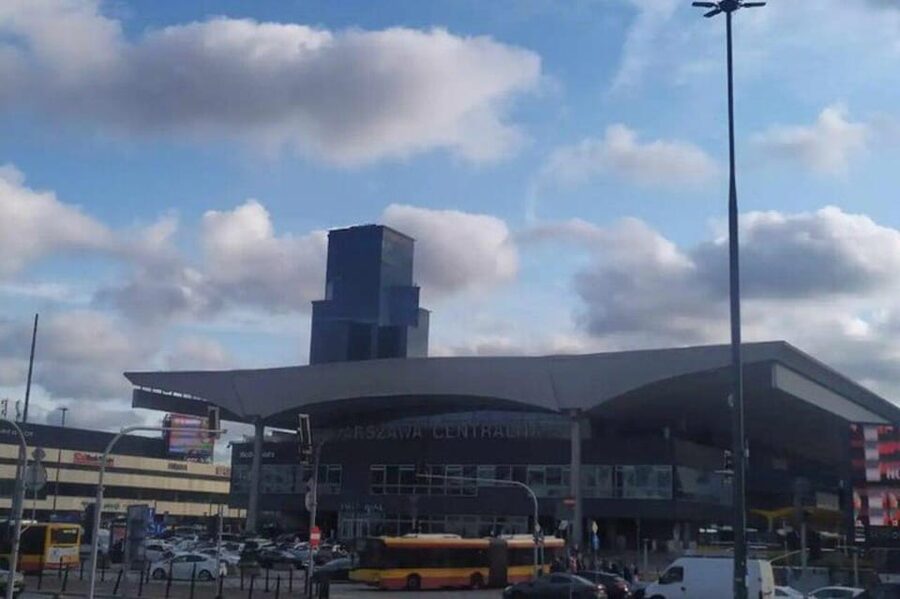
The Palace of Culture and Science is the finale, and it is hard to imagine a more effective ending. The building is one of the city’s most controversial landmarks, for more than one reason, and the guide explains why.
Its size and design make the communist message plain. It was a gift from the Soviet Union, and its presence in central Warsaw has long carried political weight. At the same time, the building is part of modern Warsaw’s everyday identity, which makes attitudes toward it complicated.
That tension is exactly what makes the stop worthwhile. You are not asked to reduce the palace to a simple symbol of oppression or admire it as just another landmark. You consider how a building can be disliked, useful, imposing, and familiar all at once.
The viewing terrace is not included in the $32 tour price. If you want to go up, plan on paying the separate entry fee. The tour itself finishes at Emilii Plater 54, near the palace area, so you can decide afterward if the extra view suits your plans.
What the $32 price gets you
At $32 per person, this is not the cheapest way to spend two and a half hours in Warsaw, but the price makes sense if you value a guided interpretation of the city. You get an English-speaking guide, visual aids, an information pack before the tour, and practical suggestions for places to visit, eat, and drink afterward.
The strongest value comes from the human explanation. You could walk past Constitution Square, Cedet, the station, and the Palace of Culture on your own, but the political links between them would be easy to miss. The guide turns separate buildings into one story.
Small groups or private arrangements are available. That matters here because the subject works best when you can ask questions and hear personal examples. Several guides, especially Oliwia and Agnieszka, are described as warm, witty, and willing to adapt the discussion to the group.
The tour also offers reserve now and pay later booking, plus free cancellation up to 24 hours before the start. Those terms are useful if your Warsaw schedule is still changing, though you should always check the available start time before booking.
Who will enjoy this Warsaw walking tour
I would recommend it to first-time visitors who want to understand modern Poland beyond the Old Town. It is also a strong choice if you have already seen Warsaw’s historic center and want a different side of the city.
You will get the most from it if you enjoy:
- Social and political history told through real places
- Personal stories and dry humor
- Architecture with an explanation of what it meant
- Small-group conversation and questions
- Walking tours that connect public spaces with daily life
The tour is in English, and the available group formats include private and small-group options. It is wheelchair accessible, but the route covers about three kilometers on foot and is not recommended for people who have trouble walking long distances.
I would be cautious about booking it as your only Warsaw activity if your main interest is medieval architecture, royal interiors, or wartime museums. The focus here is the communist period and its effect on everyday Polish life.
Practical tips for a better two-and-a-half hours
Meet at Constitution Square and look for the guide with the white and green umbrella. A message with useful links and a map link can help you find the meeting point, but you should still allow a few extra minutes.
Wear comfortable shoes. The distance is modest for a city walk, yet the full 150 minutes includes standing, walking, and listening. On a warm day, shade stops help, but water and weather-appropriate clothing remain sensible.
Read the pre-tour information pack if you have time. It includes frequently asked questions and useful links, and it can help you arrive with a few subjects ready to discuss.
Keep the end of the tour flexible. Since the route finishes near the Palace of Culture and the viewing terrace is not included, you can choose to add the extra visit or continue exploring central Warsaw.
Should you book the Life Behind the Iron Curtain tour?
Book it if you want Warsaw explained from the viewpoint of ordinary people, not only through monuments. The combination of Constitution Square, parade streets, censorship, empty shops, travel limits, and the Palace of Culture gives you a clear picture of how public power entered private life.
I would especially choose it with Oliwia or Agnieszka if their tour times fit your plans. Their personal connections, humor, and willingness to answer questions appear to be central to the experience.
Skip it if you dislike walking or want a tour focused mainly on interiors. For everyone else, $32 is a fair price for a thoughtful, human account of a period that can otherwise seem remote and overly political.
FAQ
Where does the Life Behind the Iron Curtain tour start?
The tour starts at Constitution Square in Warsaw. Look for the guide holding a white and green umbrella.
Where does the tour finish?
The walk finishes at Emilii Plater 54, near the Palace of Culture and Science.
How long does the tour last?
The tour lasts about 150 minutes, or two and a half hours.
How far do you walk?
The route covers approximately three kilometers.
What language is the tour offered in?
The tour is offered in English with a live English-speaking guide.
Is the Palace of Culture viewing terrace included?
No. Entry to the Palace of Culture and Science viewing terrace costs extra.
Is the tour wheelchair accessible?
Yes, the activity is listed as wheelchair accessible. However, it is not recommended for people who have problems walking long distances.
Are private or small-group options available?
Yes. You can choose a private or small-group format when available.
Can I cancel the booking?
Yes. You can cancel up to 24 hours in advance for a full refund. Reserve now and pay later booking is also available.
Just added around Warsaw
- Taste of Poland, food tour and guided walk with 12 tasting★ 5.0 · 3 reviews
- Skip-the-Line Warsaw Royal Castle Private Guided Tour★ 5.0 · 4 reviews
- Secrets of Warsaw 4-hour Bike Tour★ 5.0 · 25 reviews
- Warsaw: Live Show at Sabat Theatre★ 4.5 · 11 reviews
- Private Warsaw City Tour★ 4.9 · 4 reviews
- Warsaw: WWII Private Tour by Retro Minibus with Hotel Pickup★ 5.0 · 7 reviews
- Private Tour From Warsaw: Łowicz Mazovian Countryside★ 5.0 · 10 reviews
- Packrafting kayaking guided tour Vistula river Warsaw Poland★ 4.5 · 14 reviews
Walking Tours, compared.
Gdańsk City Sights & History Guided Walking Tour in English
Read our review →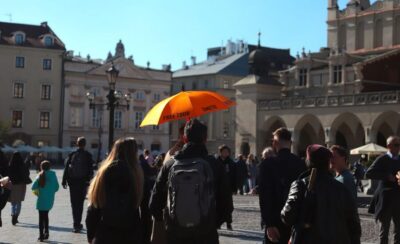
Browse the lists this tour appears in