
Reviewed · CITY TOURS
Main City in Gdańsk – tour in Polish
Gdańsk’s old center is more than a pretty row of restored façades. It is a city shaped by Baltic trade, amber, war, shifting borders, and the stubborn will of its people. This 150-minute Polish-language walk gives you a useful first look at that story, with stops at the Prison Tower and Torture Chamber, Great Armory, Artus Court, and Main Town Hall.
I like two things here: the route covers the main sights without turning into a photo-stop sprint, and the guides bring plenty of personality. Kasia, known for her energetic style, Marcin, praised for colorful and well-grounded explanations, and Klaudia, noted for her expressive storytelling, have all led this walk. The main consideration is simple: if you do not understand Polish, this is not the tour for you.
Key points to know before you book
- Gdańsk’s difficult past is part of the walk: Hear how trade, World War II, Nazi rule, and the Solidarity movement shaped the city.
- The route includes four major landmarks: You see the Prison Tower and Torture Chamber, Great Armory, Artus Court, and Main Town Hall.
- The guides make the history lively: Kasia, Marcin, and Klaudia are singled out for humor, energy, clear explanations, and strong contact with the group.
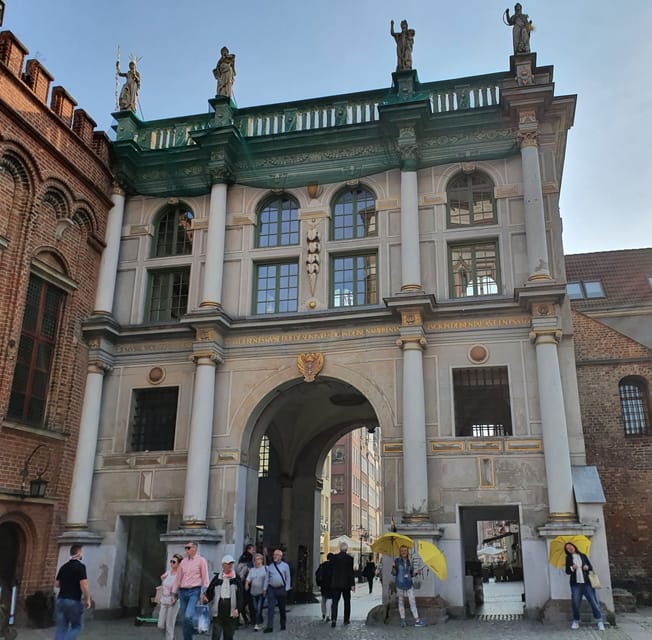
- Meet at the Golden Gate: Look for the yellow umbrellas at Złota Brama.
- The tour lasts 150 minutes: That is enough time for context, questions, and a proper look at central Gdańsk.
- The payment model needs attention: The listed price is $26 per person, but the activity operates on a pay-what-you-see-fit model, with a guide tip paid when you reserve through GetYourGuide.
Start at the Golden Gate, where Gdańsk opens its story
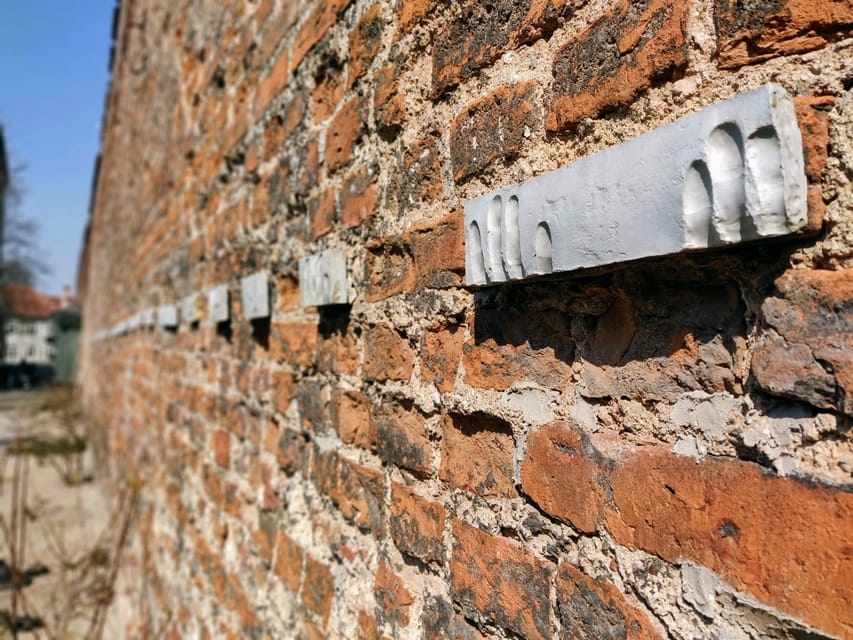
The meeting point is the Golden Gate, or Złota Brama, one of the clearest entrances into Gdańsk’s historic center. Look for the yellow umbrellas. That small detail matters in a busy city center, especially if several groups gather nearby.
From here, the walk puts Gdańsk’s central sights into one connected story. You are not simply moving from one old building to another. The guide explains how the city grew through Baltic trade and how its location made it valuable, wealthy, and repeatedly contested.
Gdańsk has carried several names, including Danzig and Dantzig, reflecting its complicated political and cultural past. The city drew merchants from many parts of Europe and developed a strong local identity. Its wealth came through the port, with grain, timber, and amber moving through the region.
That amber connection gives the city an especially useful theme. Amber was known as the gold of the Baltic Sea, and its trade helped make Gdańsk prosperous. You can expect the guide to use this commercial past to explain why the city’s grand civic buildings look more like the work of a major European trading center than a small provincial town.
A few more Gdansk trips to weigh up
- Gdansk: City Cruise on Historical Polish Boat
★ 4.8 · 2,913 reviews - Gdańsk City Sights & History Guided Walking Tour in English
★ 4.8 · 876 reviews - Gdansk: City Sightseeing Tour by Golf Cart/Buggy Guided Tour
★ 4.9 · 510 reviews
The Prison Tower and Torture Chamber reveal the darker side
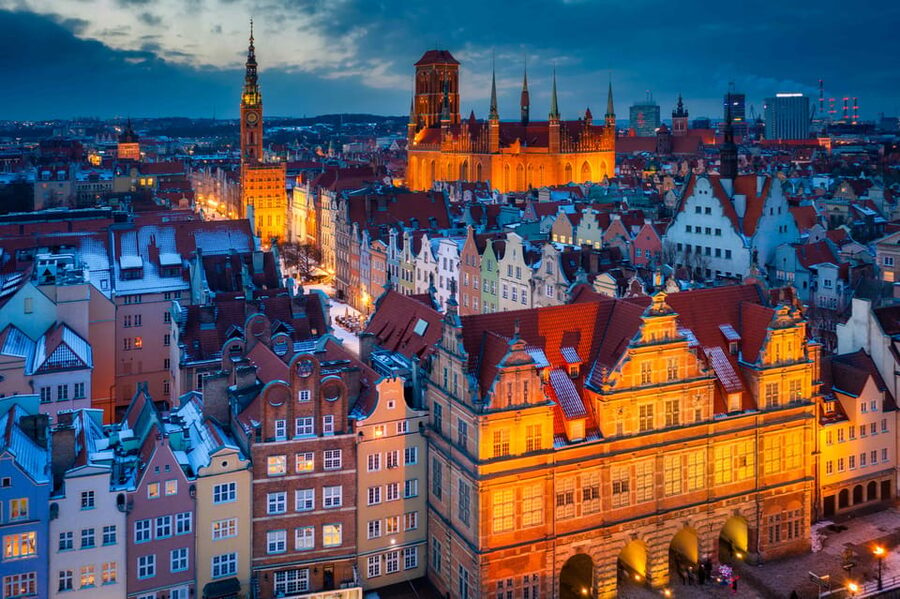
The Prison Tower and Torture Chamber provide an important change of mood. Gdańsk’s ornate streets can make the old center feel almost theatrical, but these structures remind you that historic cities were also places of punishment, law, fear, and public control.
This stop is valuable because it keeps the tour from becoming a parade of handsome façades. The guide can connect the city’s wealth to the systems that protected property and enforced authority. The exact depth of the stop may depend on the group and guide, but the site gives the historical walk a darker edge.
I would pay attention here to how the guide describes the contrast between civic pride and human hardship. That contrast runs through Gdańsk’s story. The city produced merchants, artists, and major thinkers, but it also lived through violence and political pressure.
For families, this may be one of the more serious parts of the walk. The tour is not presented as a children’s entertainment program, so younger visitors may need help with the more difficult parts of the city’s past.
The Great Armory shows how trade became civic pride
The Great Armory is one of the tour’s best reminders that Gdańsk’s wealth was meant to be seen. Its role in the city’s historic center reflects the importance of defense, commerce, and public display.
I like this part of the route because it helps you read the city as a merchant power. Rather than viewing the building only as a decorative landmark, you can ask why a trading city invested so heavily in grand architecture. The answer is tied to money, status, and the need to show that Gdańsk mattered.
A good guide will also help you notice the city’s mixed influences. Gdańsk was shaped by people and ideas arriving from different corners of Europe. That gives the architecture a broader feel than a single local style, and it helps explain why the city’s central buildings seem designed to impress visitors and residents alike.
The Great Armory is also a useful place to hear about the city’s changing identity. Gdańsk was not always comfortably part of one modern nation-state. Its names, rulers, and political roles changed over time, and the guide uses the old center to make those changes easier to follow.
Artus Court turns merchants into a cast of characters
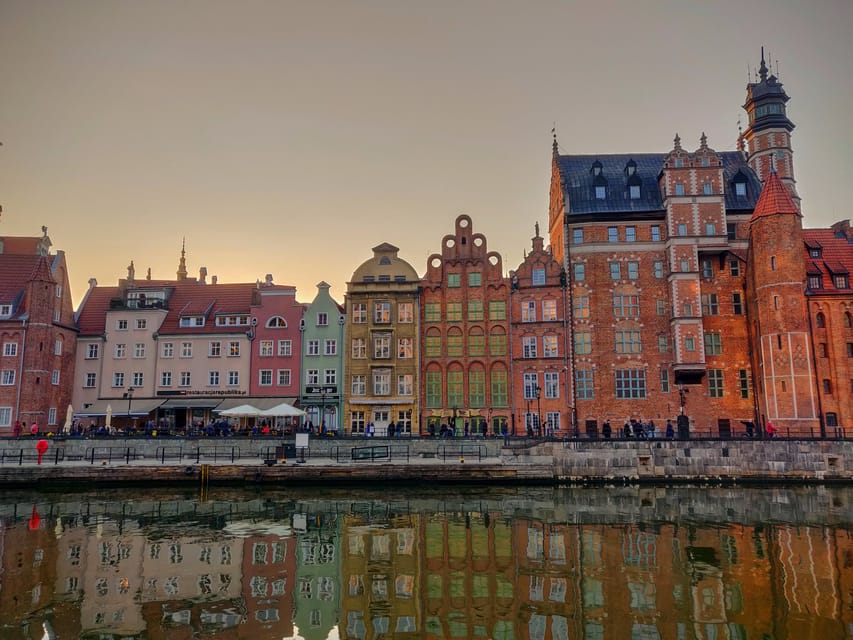
Artus Court is where the story of Gdańsk’s trading elite becomes especially easy to picture. The court is linked to the city’s merchants and public life, so it gives the guide a natural setting for explaining how wealthy residents saw themselves.
This is the sort of stop where personality matters. A dry list of dates would miss the point. With an expressive guide such as Klaudia or an energetic one such as Kasia, you can expect stories and anecdotes to carry the explanation. Kasia was praised for shifting comfortably between humor and serious history, while Klaudia was noted for keeping close contact with the group.
Artus Court also connects Gdańsk to the wider Baltic world. The city’s wealth did not develop in isolation. Goods, people, and ideas moved through the port, and the local elite used places like this to display their place in that network.
The guide may also place Gdańsk’s famous residents into this larger picture. Daniel Fahrenheit, Arthur Schopenhauer, and Günter Grass were born here, and their names help show the city’s reach beyond trade and politics. You should not expect a full literary or scientific biography of each person, but their connection adds texture to the walk.
Same country, a completely different kind of day:
- Gdańsk: Sunset Cruise on a Historic Polish Boat
★ 4.9 · 977 reviews - Gdansk: Firearm Shooting Experience with Instructor
★ 4.8 · 866 reviews - Gdansk: Guided Round-Trip Cruise to Westerplatte
★ 4.3 · 865 reviews - Gdańsk: Sightseeing EcoCruise around the Old Town of Gdansk
★ 4.6 · 719 reviews
The Main Town Hall ties the city together
The Main Town Hall is a natural place to gather the major themes of the tour. It represents civic power, local government, and the confidence of a city that grew wealthy from its position on the Baltic.
Here, the guide can bring together Gdańsk’s commercial success and political uncertainty. Napoleon later created the first Free City of Danzig, while Hitler made Gdańsk one of the major Nazi centers in Europe, with the headquarters of the NSDAP there. Those chapters show why the city’s history cannot be reduced to its elegant architecture.
The Main Town Hall also makes sense as a stop for discussing the city’s role in World War II. One of the first armed clashes of the war took place in Gdańsk, during the defense of the Polish Post Office in the Free City of Gdańsk. That event gives the city a direct place in the opening days of the conflict.
A strong guide will keep these subjects connected rather than treating them as unrelated tragedies. Gdańsk’s location made it desirable, its wealth made it important, and its political status made it vulnerable. The town hall helps you see those forces at work.
Gdańsk’s twentieth-century story does not end in 1945
One of the best reasons to choose this walk is that it extends beyond medieval and early modern architecture. Gdańsk is also central to the story of the fall of communism in Eastern Europe.
The shipyard workers’ strike led by Lech Wałęsa began in this city and helped start the end of communist rule in this part of Europe. That gives the walk a modern political edge. You are not just hearing about a distant royal or merchant past. You are learning how ordinary workers and organized protest helped change the region.
The activity centers on the Main Town, so it is not a dedicated shipyard tour. You should not book it expecting a long visit to the shipyard or a full treatment of the Solidarity movement. Still, the connection is important because it shows how Gdańsk’s identity continued to be shaped by people who challenged outside control.
I find this broader time span useful when visiting a city like Gdańsk. The old buildings are easier to understand once you know that the city has repeatedly had to define itself against larger political forces.
Why the guides matter on a Polish-language walk
The strongest praise for this experience focuses on the guides, not simply the buildings. That is worth noting because central Gdańsk can be visited independently, but the meaning behind the façades is harder to assemble without help.
Kasia, described as Dynamit, is associated with a lively approach that can shift from jokes to serious subjects without losing the group. Marcin is praised for being colorful, interesting, and substantial in his explanations. Klaudia is described as expressive, enthusiastic, and good at maintaining contact with the group.
Another guide received strong praise for keeping the group engaged even during snow and wind. That detail tells you something practical: the walk continues in poor weather, so dress for the conditions. Gdańsk can be cold and windy in winter, and a 150-minute outdoor walk is long enough for weather to affect your comfort.
The guide also answers questions during the walk. That matters if you enjoy learning through conversation rather than listening to a fixed speech. The Polish language is the key limitation, but for Polish speakers this format should feel more natural and flexible than a tour translated into another language.
Is $26 a fair price for 150 minutes?
At $26 per person, the listed cost is reasonable for a two-and-a-half-hour guided walk in a major historic center. You are paying for a guide who links architecture, trade, war, and modern politics, not for a series of separate admission tickets.
The payment wording deserves careful attention. This activity follows a pay what you see fit model, and the reservation through GetYourGuide includes a tip for the guide. Treat the $26 figure as the stated per-person amount, but check the final booking screen so you understand how the tip and payment are shown.
The value depends on how much context you want. If you already know Gdańsk well and mainly want photographs, you may prefer to walk independently. If this is your first visit, the tour can save you from seeing the Great Armory, Artus Court, and Main Town Hall as isolated monuments.
The 150-minute length is also a good middle ground. A shorter walk might rush through the difficult historical subjects. A much longer tour could feel heavy if the weather turns poor. Here, you get enough time for questions and explanation without giving up most of your day.
Practical details that affect your choice
The walk is operated by Walkative Tours and is wheelchair accessible. The meeting point is fixed at the Golden Gate, and the yellow umbrellas make the group easier to find.
You can cancel up to 24 hours in advance for a full refund, and you can reserve now while paying later. Those policies are useful if your Gdańsk plans may shift, though you should still check the available start times when booking.
The language is Polish. This is not a minor detail. The humor, anecdotes, and explanations depend on understanding Polish, so choose another activity if you need English or a different language.
The current supplied rating is 5 out of 5 from 14 reviews. That is a small sample, but the praise is consistent in a few specific areas: guide enthusiasm, clear historical storytelling, humor, answering questions, and keeping a strong connection with the group.
Who will get the most from this walk?
I would recommend this tour to a first-time visitor who wants to understand central Gdańsk before exploring alone. It suits you especially well if you enjoy history that moves from medieval trade to World War II and then into the fall of communism.
It is also a good pick for Polish speakers who want a lively local-language experience. The guides named in the feedback appear to have different personalities, but the common thread is energy and strong command of the material.
You may want something else if you prefer museums, interiors, or a quiet self-guided stroll. The activity is a guided walk, and the supplied details do not promise entry into every building. It is also less suitable if you cannot manage 150 minutes outdoors or if the Polish language is not comfortable for you.
Should you book the Main City in Gdańsk walk?
Book it if you want the old center to make sense as a whole. The Prison Tower, Great Armory, Artus Court, and Main Town Hall give you the main visual anchors, while the stories of amber, merchants, Nazi rule, World War II, and Lech Wałęsa give those buildings weight.
The best reason to choose it is the guide-led storytelling. The strongest guide descriptions point to humor, passion, detailed answers, and a warm connection with the group. Just remember the two limits: the walk is in Polish, and the pay-what-you-see-fit tip structure means you should check exactly how the $26 charge appears when booking.
FAQ
Where does the Gdańsk walking tour meet?
The group meets at the Golden Gate, or Złota Brama. Look for the yellow umbrellas.
How long does the tour last?
The tour lasts 150 minutes, or two and a half hours.
What language is the tour conducted in?
The live tour guide speaks Polish, and the additional language information also lists Polish.
Which sights are included?
The walk includes the Prison Tower and Torture Chamber, the Great Armory, Artus Court, and the Main Town Hall in Gdańsk.
How much does the experience cost?
The stated price is $26 per person. The tour also operates on a pay-what-you-see-fit model, with a guide tip paid when making a reservation through GetYourGuide.
Is the tour wheelchair accessible?
Yes. The activity is listed as wheelchair accessible.
Can I cancel or pay later?
Yes. You can cancel up to 24 hours in advance for a full refund, and you can reserve now while paying later.
Just added around Gdansk
- Guided Winter Kayak Tour in Gdańsk & Hot Chocolate Treat★ 5.0 · 51 reviews
- Gdansk Highlights Bicycle Tour★ 5.0 · 65 reviews
- Electric Scooter Tour: Old Town Tour – 1,5-Hour of Magic!★ 5.0 · 19 reviews
- Elblag Canal Tour from Gdansk★ 4.5 · 22 reviews
- #1 Polish Vodka Tasting Experience in Gdansk★ 5.0 · 87 reviews
- Delicious Gdansk Craft Beer Tour★ 5.0 · 4 reviews
- DAILY Stutthof Concentration Camp with Guide and Transport★ 4.5 · 10 reviews
- Cruises on the Motlawa River★ 4.5 · 66 reviews
City Tours, compared.
City Sightseeing Tour Eco Electric Buggy Golf Cart
Read our review →
Gdańsk City Sights & History Guided Walking Tour in English
Read our review →
Extended City Sightseeing Tour – Eco Buggy Golf Cart
Read our review →
Browse the lists this tour appears in