
Reviewed · HISTORICAL TOURS
Private Tour: Warsaw’s Communist History by Retro Fiat
Warsaw’s Communist past is easier to grasp from the back seat of a Polish Fiat 125p. This private tour connects Stalinist buildings, old housing districts, censorship memorials, and a former black market while your guide fills in the human stories behind them. The car itself draws smiles as it rolls through town.
I like the private format, which gives you room to ask questions and adjust the pace. I also like the mix of major landmarks and ordinary neighborhoods, especially Praga and Mariensztat. The main drawback is that the tour’s quality depends heavily on your individual guide, and one poor experience reported very little explanation beyond a drive around the city.
Key points at a glance
- Ride in a genuine Fiat 125p: The Polish-made car is part of the experience, not just transport.
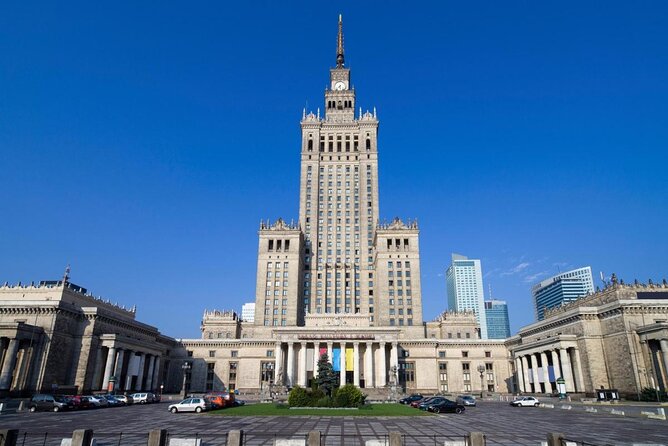
- See Stalin’s Warsaw up close: The Palace of Culture and Constitution Square explain how Socialist Realism shaped the capital.
- Go beyond the usual city route: Praga, Bazar Różyckiego, and Mariensztat add everyday life to the political story.
- Ask for a tailored discussion: Guides such as Jacob, Karol, Olga, Martin, Pawel, Max, and Konrad have been praised for adapting the tour to personal interests.
- Plan for a four-hour history lesson on wheels: Hotel pickup and drop-off make the half-day easy to fit into a Warsaw itinerary.
- Check small extras before setting off: A snack, vodka tasting, or souvenir photograph may not always be provided, so confirm what is included.
Warsaw’s Communist past from a Fiat 125p
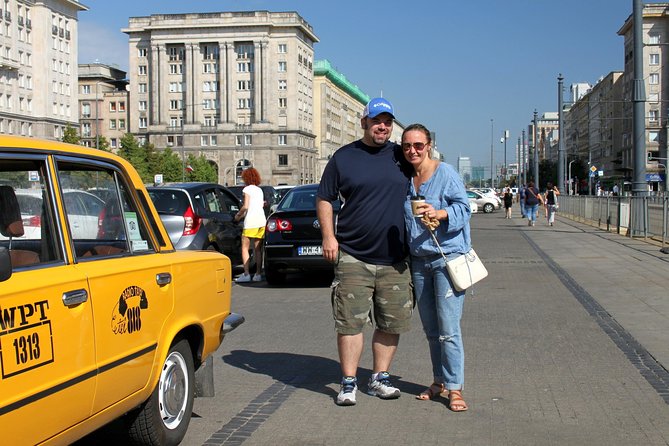
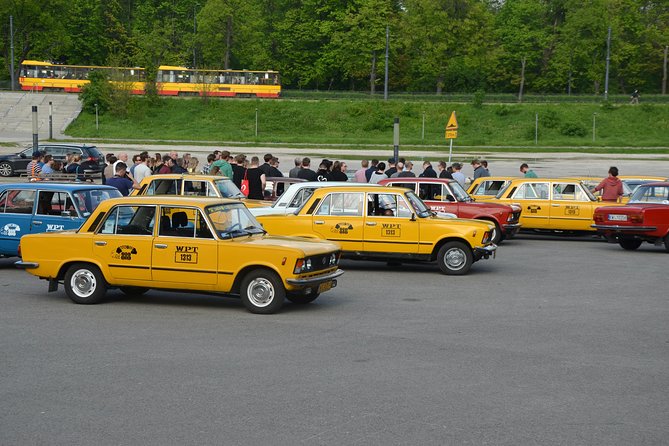
The Fiat 125p gives this tour its charm before the history even begins. This boxy Polish car was a familiar sight during the Communist period, when getting any car at all could be a challenge. Riding through modern Warsaw in one creates a useful contrast: glass offices and new apartments pass by, while you sit in a vehicle tied to the years being discussed.
The car is also a practical choice. You can cover several districts in four hours without spending the whole morning walking between scattered sites. You will still get out for short visits, but the driving links them together and lets your guide point out details you could easily miss from a standard sightseeing bus.
This is a private activity, so only your group participates. That matters here. Communist history can raise awkward questions about censorship, shortages, political control, family experience, and the changes after 1989. A private setting gives you more freedom to ask about those subjects than a large group tour would.
The guide is the key ingredient. Past guide names include Jacob, Karol, Conrad, Konrad, Marcin, Martin, Max, Olga, Pawel, and Adam. The strongest experiences came from guides who connected official history with personal or family memories. Several guides were praised for fluent English, flexible routes, and willingness to discuss the continuing effect of old decisions on Polish life.
A few more Warsaw trips to weigh up
- Warsaw: POLIN Museum of the History of Polish Jews Ticket
★ 4.7 · 1,142 reviews - Warsaw: Chopin Concert at Historical Venue in Old Town
★ 4.7 · 445 reviews - Small-Group Historical Guided Tour of Warsaw with pick up/drop off. Public Tour.
★ 4.5 · 343 reviews
The Palace of Culture and Science: Stalin’s gift to Warsaw
Your first major stop is the Palace of Culture and Science, the city’s most recognizable Communist-era building. At the time of its construction, it was presented as a gift from the Soviet Union to Poland. The political meaning was less generous: the enormous structure reminded Warsaw who held power.
The building is a textbook example of Socialist Realist architecture. It was designed to look grand, commanding, and useful all at once. Inside are theaters, museums, a cinema, pubs, and other public spaces, so it is not merely a monument frozen in the past. It remains part of daily Warsaw, even as many residents have mixed feelings about it.
You get about 30 minutes here, and admission is not included. The stop is mainly an exterior introduction unless you choose to pay separately for an attraction inside. That is worth knowing if you expect an observation deck or museum visit as part of the tour. The itinerary gives you the history and architecture, not an included indoor tour.
I find this an effective opening because it sets up the central question of the experience: was Communist architecture built for ordinary people, or to display state power? Your guide can explain how the building was used as a public facility while also serving as a symbol of Soviet influence.
Constitution Square and the Socialist Realist ideal
Plac Konstytucji, or Constitution Square, shows Socialist Realism on a more human scale. The square is surrounded by planned apartment buildings and decorative details meant to project order, strength, and a bright future.
You will have about 30 minutes here, with no admission charge. Take time to look above street level. The design was not random. Housing, shops, broad streets, and monumental decoration were arranged to create a model Communist district.
That model had limits. The buildings were intended to demonstrate how the state could provide modern homes, yet the system could not build such projects for everyone. One particularly interesting point from the tour is that an early apartment block was considered too luxurious to serve as the standard for future construction. That detail helps you see the gap between official plans and ordinary housing.
The square also works well as a place to ask how people actually lived. The architecture tells you what the government wanted to show. A strong guide adds what residents received, what they lacked, and how daily routines were shaped by the system.
The Ministerial District and the Monument of the Free Word
The route continues through Warsaw’s Communist ministerial district, created in the Socialist Realist style. These government buildings were designed to project authority, discipline, and permanence. Their broad forms and controlled decoration contrast with the more improvised feel of older parts of Warsaw.
A short stop at the Monument of the Free Word brings the subject down to one of the regime’s most serious tools: censorship. The stop lasts only about five minutes, but it opens a large subject. Newspapers, books, theater, radio, and public speech all passed through official controls. The monument recalls the effort to circulate ideas despite those limits.
Do not expect a museum visit here. This is a brief outdoor stop, and its value comes from the explanation rather than the amount of time spent on site. If censorship interests you, ask your guide for examples of how it affected writers, journalists, or ordinary conversations.
The tour is at its best when a guide treats these places as part of a connected system. Government buildings controlled policy. Censorship controlled information. Housing districts shaped daily life. Together, the stops show how power reached beyond party offices and into the street.
Same country, a completely different kind of day:
- Warsaw: Chopin Concert in the Old Town
★ 4.8 · 2,287 reviews - Warsaw: Traditional Galar Cruise on The Vistula River
★ 4.6 · 1,640 reviews - Warsaw: Old Town Highlights Walking Tour in English
★ 4.7 · 1,516 reviews - Warsaw Concert: Chopin – Painted by Candlelights with Wine
★ 4.8 · 1,442 reviews
The former Party House at Charles de Gaulle Square
At the Statue of Charles de Gaulle, you will hear about the former Communist Party House, sometimes described as Poland’s White House. This is a quick 15-minute stop, but it adds an important political address to the architectural story.
The building was linked to the people who directed Communist Poland. That makes the site useful for discussing the country’s leaders, the Polish United Workers’ Party, and the difference between public slogans and private power. Your guide can place the building in the wider network of ministries, party offices, and state institutions you have already seen.
The statue itself is not a Communist monument, but it provides a clear meeting point and a reason to pause in the area. This is one of the tour’s shorter stops, so you should think of it as a focused explanation rather than a full visit.
Praga Północ, where more of old Warsaw survived
The tour then crosses to Praga Północ, a district on the eastern side of the Vistula. Unlike much of central Warsaw, parts of Praga were not badly destroyed during the Second World War. That gives the area a different look and makes it valuable for understanding what the postwar authorities inherited.
Praga also helps explain the contrast between old streets and Socialist-era rebuilding. You may see older facades beside Communist housing blocks and newer development. Several routes have included less familiar streets here, rather than staying only among the city’s best-known monuments.
Allow about 30 minutes. The tour may involve a short walk, so wear shoes suitable for pavement and uneven urban surfaces. This part is less about one grand landmark and more about reading the city around you.
Praga has also changed over time. Some older areas are being renovated and redeveloped, creating sharp contrasts between worn buildings and restored ones. A guide can use those changes to show how Warsaw still lives with the physical and social results of the Communist period.
Bazar Różyckiego and the realities of shortage
Bazar Różyckiego is one of the most memorable stops because it brings Communist history into the world of shopping. During the Communist period, it was known as Warsaw’s most famous black market.
The market represents the gap between official supply and real demand. State shops might have empty shelves or long waits, while informal sellers offered goods through personal contacts and unofficial channels. This is where the political story becomes practical: people needed food, clothing, household items, and spare parts, and they found ways to get them.
You get around 15 minutes here. It is not a full market tour or food stop, and food and drinks are not included in the price. Still, the place can be more revealing than another government building because it shows how people managed under the system.
Ask your guide how the market functioned and what kinds of goods were difficult to find. The answer will help you understand why personal networks mattered so much in Communist Poland.
Mariensztat Square and planned postwar housing
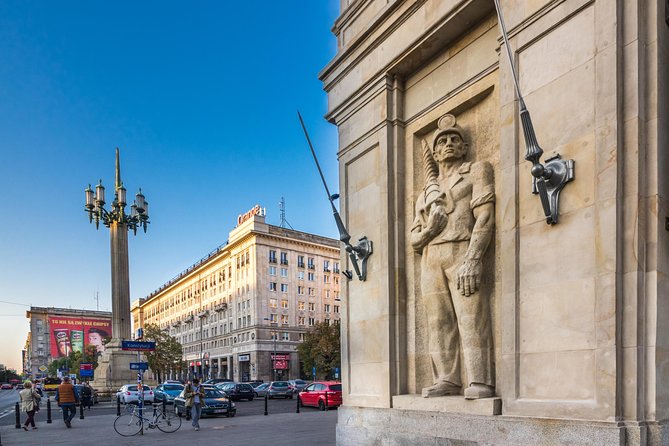
Mariensztat Square offers another look at state-built housing. The district’s Communist-era blocks were part of the postwar effort to rebuild Warsaw and provide homes after the city’s wartime destruction.
You will spend about 20 minutes here. The scale is more intimate than the Palace of Culture or a ministry complex, which makes it easier to consider the ordinary household. The buildings were intended to create a functioning neighborhood, not just an impressive backdrop for state ceremonies.
This stop also shows the tension between reconstruction and control. Rebuilding was necessary, and many people needed homes. At the same time, the new city was planned according to political ideas about how citizens should live, work, and move through public space.
The district pairs well with Constitution Square. One shows a grand representative housing project. The other gives you a more neighborhood-level view. Together, they make the architectural story less abstract.
What the guide adds to the buildings
The strongest reason to choose a private tour is the chance to turn architecture into conversation. A guide can point to a building, then explain who used it, what it was meant to communicate, and how people experienced it.
Several guides have been praised for sharing family memories and personal experiences from the transition away from Communism. Olga, for example, was singled out for connecting the period to what her family endured. Other guides, including Jacob, Marcin, Martin, Pawel, and Konrad, were praised for answering questions and adjusting the discussion.
That does not mean every departure will feel identical. One poor account described a guide who asked what the group wanted to see but did not follow a clear Communist-focused route. Much of the time was spent driving through tourist areas with little historical explanation. If this subject matters to you, state clearly at the start that you want the listed Communist-era stops and ask for a structured route.
The best approach is to arrive with a few questions. You might ask about housing, censorship, party leadership, the black market, or how Warsaw changed after the transition to capitalism. The private format gives your guide room to follow those threads.
Price, timing, and what you receive
The listed cost is $108.24 per person for about four hours. Value depends on the size of your group. For one or two people, it is a fairly substantial half-day expense, but you are paying for a private car, a driver-guide, hotel pickup and drop-off, and a route that covers several districts.
For a small group, the price becomes easier to justify. You are not paying separate taxi fares between distant sites, and you avoid the time needed to work out public transport connections. You also get a tour built around your group rather than a fixed large-bus commentary.
The tour includes transport in a private Fiat 125p and an English-speaking local driver-guide. Food and drinks are not included unless specifically stated. One past booking expected a snack, a Polish vodka shot, and a souvenir photograph but did not receive them. The operator offered an apology and a free return tour, but the practical lesson is simple: confirm any extras before departure.
Hotel pickup and drop-off are offered. If your hotel is outside the normal pickup area, contact the operator to find another meeting point. The stated central meeting point is Dworzec Centralny, and the activity ends back at the meeting point if you do not use hotel transport.
The tour is normally booked about 23 days ahead. That suggests you should reserve early if your Warsaw dates are fixed, especially if you want a particular morning or afternoon. Confirmation is provided at booking, and free cancellation is available up to 24 hours before the start time.
Who will enjoy this tour most
I would choose this tour if you want Warsaw history beyond the Old Town and wartime destruction. It is particularly useful if you are interested in the Cold War, Soviet influence, urban design, political power, or the daily problems created by shortages and censorship.
It also suits people who prefer questions and conversation to a memorized speech. The private setting gives you the chance to ask for more detail, request a slower look at a site, or focus on family stories and social change.
The tour may be less satisfying if you want indoor museums, long visits at each stop, or a tightly timed walking route. Most stops are short, admission is not included at the Palace of Culture, and the experience takes place mainly outdoors and in the car.
You should also avoid treating the Fiat as a luxury vehicle. Its appeal is character, not space. If your group is large or you want a roomy ride, confirm the vehicle arrangement before booking.
Should you book Warsaw’s Communist History by Retro Fiat?
Book it if you want a personal, story-led look at Warsaw’s Socialist period, especially with two or more people who can share the private cost. The Fiat 125p makes the ride memorable, while the sequence of Palace of Culture, Constitution Square, government buildings, Praga, Bazar Różyckiego, and Mariensztat gives you a useful framework for understanding the city.
I would book it early and send the operator a note about your interests. Ask for the full Communist-focused itinerary, confirm the pickup point, and check whether any snack, vodka tasting, or photo is included on your departure.
Skip it if you want a museum-heavy visit or if your main interest is medieval Warsaw. For the right audience, though, this is an unusually direct way to connect buildings, political control, and everyday life, all from a car that belongs to the period.
FAQ
How long does the tour last?
The tour lasts approximately four hours.
What vehicle is used?
Transport is provided in a private Polish Fiat 125p, a vintage car associated with the Communist period.
Is the tour private?
Yes. Only your group participates in the activity.
Is hotel pickup available?
Yes. The guide can pick you up from your hotel lobby or meet you in front of the building. If your hotel is outside the pickup area, contact the operator to arrange another solution.
Where does the tour end?
The activity ends back at the meeting point. Hotel drop-off is included when hotel pickup is arranged.
Is the tour offered in English?
Yes. The tour is offered in English with a local driver-guide.
Which main sites are included?
The route includes the Palace of Culture and Science, Plac Konstytucji, the Communist ministerial district, the Monument of the Free Word, the former Communist Party House near the Statue of Charles de Gaulle, Praga Północ, Bazar Różyckiego, and Mariensztat Square.
Is admission to the Palace of Culture and Science included?
No. Admission to the Palace of Culture and Science is not included.
Are food and drinks included?
No. Food and drinks are not included unless specifically stated.
Can most people participate?
Yes. The activity information states that most people can participate and that the tour is near public transportation.
Can I cancel for a full refund?
Yes. You can cancel at least 24 hours before the experience start time for a full refund. Changes or cancellations made less than 24 hours before the start time are not accepted for a refund.
Just added around Warsaw
- Taste of Poland, food tour and guided walk with 12 tasting★ 5.0 · 3 reviews
- Skip-the-Line Warsaw Royal Castle Private Guided Tour★ 5.0 · 4 reviews
- Secrets of Warsaw 4-hour Bike Tour★ 5.0 · 25 reviews
- Warsaw: Live Show at Sabat Theatre★ 4.5 · 11 reviews
- Private Warsaw City Tour★ 4.9 · 4 reviews
- Warsaw: WWII Private Tour by Retro Minibus with Hotel Pickup★ 5.0 · 7 reviews
- Private Tour From Warsaw: Łowicz Mazovian Countryside★ 5.0 · 10 reviews
- Packrafting kayaking guided tour Vistula river Warsaw Poland★ 4.5 · 14 reviews
Historical Tours, compared.
POLIN Museum of the History of Polish Jews Ticket
Read our review →
Gdańsk City Sights & History Guided Walking Tour in English
Read our review →

Small-Group Historical Guided Tour of Warsaw with pick up/drop off. Public Tour.
Read our review →Browse the lists this tour appears in