
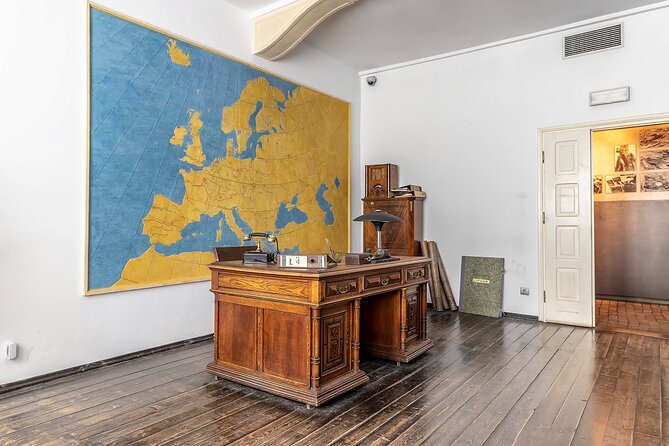
Reviewed · SCHINDLERS FACTORY TOURS
Schindler’s Factory Visit & Skip-the-Line Entry
Schindler’s Factory Museum is less a shrine to one man than a powerful account of Krakow under Nazi occupation. The tour follows the city’s story from before the war through persecution, the ghetto, Płaszów, and liberation, using reconstructed streets, photographs, film, and eyewitness testimony.
I like two things in particular: the guide gives the displays a human voice, and the exhibition uses unusual settings, including a tram carriage, a hairdresser, a photographer, and a narrow ghetto apartment. The included admission and reserved entry can also save valuable time at one of Krakow’s busiest museums.
The main drawback is pace. The 90-minute visit can feel rushed, especially in a large group of around 20 people. You may have to choose between listening to the guide and stopping to read or study every display.
Key points to know before you book
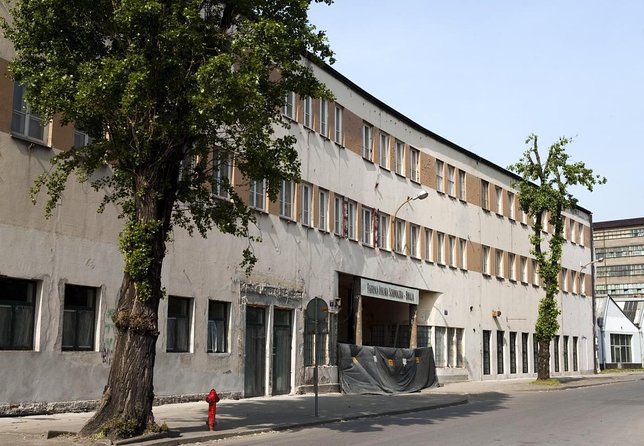
- This is mainly a museum about Krakow during World War II, not a full biography of Oskar Schindler.
- The exhibition uses immersive sets and multimedia, including a tram, wartime street scenes, film, and a ghetto apartment.
- A guide is especially useful here, since the displays move quickly through complex events and personal stories.
- Groups can be large, and narrow rooms may feel crowded at busy times.
- Bring the exact ID used for booking, since every ticket carries the visitor’s full name.
- The $50.46 price is easiest to justify when entry slots are scarce, but less so if you only want to see Schindler’s personal story.
What the Schindler’s Factory visit is really about
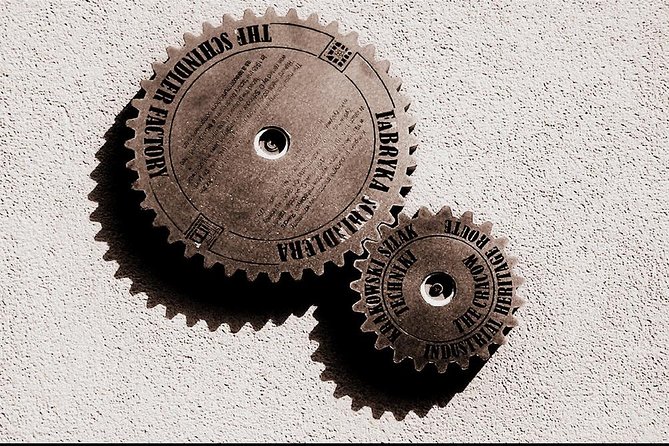
The name draws people in because of Steven Spielberg’s 1993 film Schindler’s List. You enter expecting a close look at Oskar Schindler, his enamelware factory, and the Jewish workers he helped protect.
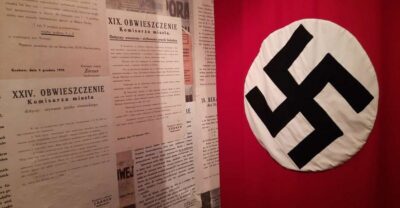
That is only part of what you get. The museum’s main exhibition tells the story of Krakow and its Polish and Jewish population during the German occupation. Schindler appears within that larger account, alongside the machinery of Nazi rule, daily life under occupation, forced displacement, the Krakow ghetto, and the Płaszów camp.
That distinction matters. If you want a small museum devoted mainly to Schindler’s character and business, you may leave disappointed. The factory building remains, but the factory itself was moved to the Czech Republic near the end of the war. The current museum is a historical exhibition housed in the former factory site, not a working enamelware plant.
I find the broader approach worthwhile. Schindler’s actions make more sense when you understand the world around him: the city before the war, the arrival of the Germans, the division of communities, and the increasing danger faced by Jewish residents. The result is a tour about one rescuer, but also about thousands of people caught in events they did not control.
More Schindlers Factory Tours in Krakow:
- Krakow: Oskar Schindler’s Factory Entry Ticket & Guided Tour
★ 4.2 · 3,793 reviews - Krakow: Schindler’s Factory Tour with Entrance Ticket
★ 4.5 · 3,182 reviews - Krakow: Schindler’s Factory Skip-the-Line Ticket
★ 4.4 · 3,105 reviews
Walking into occupied Krakow
The visit begins at Fabryka Emalia Oskara Schindlera, the Polish name for Schindler’s Factory. After admission, your guide leads you through the permanent exhibition for about an hour and a half.
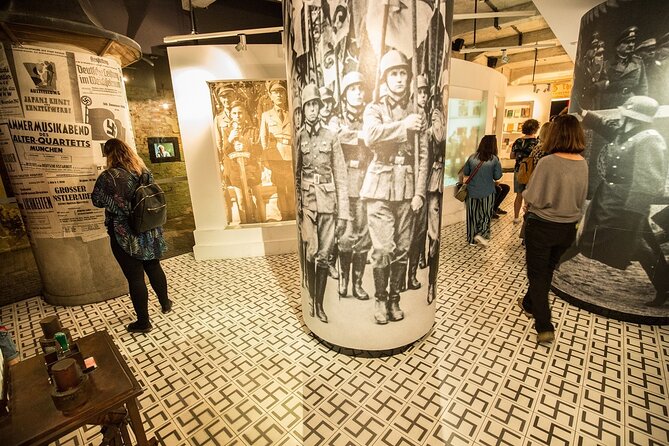
Rather than presenting a row of isolated objects, the museum creates a route through wartime Krakow. You walk along recreated cobbled streets and enter rooms designed to suggest ordinary city life. A hairdresser and photographer help show how familiar businesses and public spaces were altered by occupation.
These details are useful because they keep the story grounded. A uniform or official notice can explain Nazi control, but a shop, apartment, or tram helps you picture how people moved, worked, and tried to maintain daily routines.
You will also encounter rare photographs, recorded testimony, and multimedia presentations. Some displays ask you to listen and watch while moving through the space. Others rely on objects, images, or carefully arranged rooms. The mix gives the tour several viewpoints, though it can also make the route feel busy.
Your guide’s job is to connect these parts. The strongest guides add dates, names, and cause-and-effect links that are easy to miss when you walk through alone. Guides such as Helen and Barbara have been singled out for clear English, strong preparation, and a sensitive way of presenting painful material.
The museum’s tone is serious. This is not a light sightseeing stop, and the subject matter includes persecution, deportation, forced labor, and mass killing. Allow yourself a little quiet time afterward. The tour moves on, but the material may take longer to process.
The tram and the changing face of the city
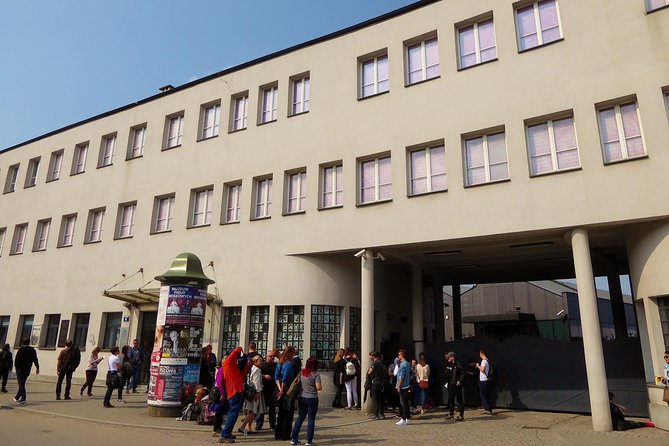
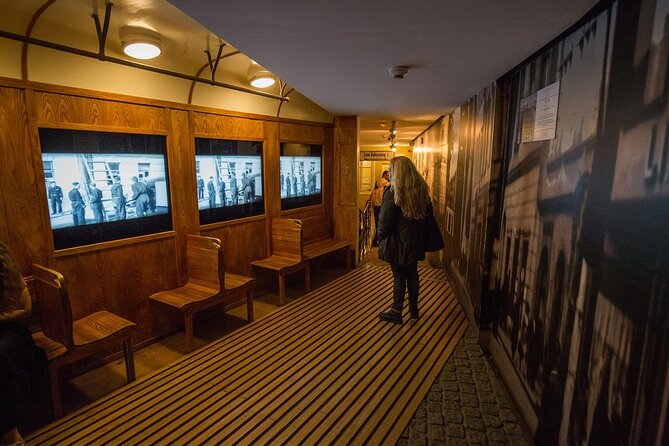
One of the exhibition’s most memorable features is a tram carriage. Through its windows, a film shows city life during the occupation.
The tram is an effective choice. Public transport is ordinary, even dull, in normal circumstances. Here it becomes a moving viewpoint on a city whose rules, streets, and population were being transformed. The carriage places you among other passengers and makes the shift from normal life to wartime control easier to imagine.
The exhibition also gives attention to Krakow before the war. That opening context helps you understand that the city was not simply a backdrop for Nazi policy. It was home to established Polish and Jewish communities, with workplaces, shops, religious life, schools, and neighborhoods that were later disrupted or destroyed.
You may find that the amount of information is considerable for a 90-minute tour. The guide cannot explain every photograph or allow everyone time to read every panel. If you enjoy studying museum text at your own speed, a guided visit may feel too fast.
Still, I would choose the guide for a first visit. The museum’s chronology and visual effects can be hard to follow without context. The guide helps you see how one stage led to the next instead of treating the exhibition as a collection of wartime images.
The ghetto apartment and Płaszów section
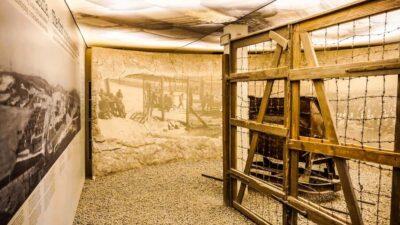
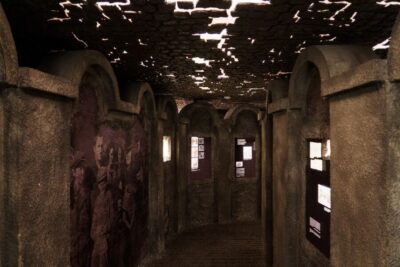
The route leads into a narrow labyrinth representing the ghetto, including a Jewish apartment. This is one of the exhibition’s strongest spaces because it shifts attention from broad political events to cramped personal life.
The apartment suggests what it meant to live under forced confinement. The narrow layout and limited sense of space are not there merely for atmosphere. They remind you that the ghetto was a controlled environment, where families faced fear, uncertainty, and the loss of basic freedom.
From there, the exhibition follows the people of the ghetto toward Płaszów. The transition is stark, and the guide’s explanation is important. Without it, you might see the sequence as a dramatic set of rooms. With it, you can follow the policy of persecution and the human consequences more clearly.
The museum also presents the experiences of Polish people living under occupation, not only those of Jewish residents. Several sections explain the wider history of Poland, the German occupiers, and the conditions imposed on the city. This broader view is one reason the visit can feel more like a Krakow history museum than a Schindler memorial.
That focus is both a strength and a limitation. It gives you a better understanding of the city and its people, but it leaves less time for Schindler himself. The part devoted specifically to his personal story is smaller than the film may lead you to expect.
A few more Krakow trips to weigh up
- From Krakow: Wieliczka Salt Mine Tour & Skip the Line Ticket
★ 4.4 · 3,925 reviews - Schindler’s Factory in Krakow: Guided Tour & Skip the Line Ticket
★ 4.5 · 1,714 reviews - Auschwitz-Birkenau: Skip-the-Line Ticket and Guided Tour
★ 4.2 · 1,034 reviews - Auschwitz Birkenau Guided Tour/Skip The Line/PickUp/Guide ENG
★ 4.5 · 930 reviews
Oskar Schindler beyond the movie
The exhibition places Oskar Schindler within the wartime story rather than presenting him as the only subject. You learn about the factory owner, the German occupation, and the people connected to his factory.
For film fans, visiting the actual factory building adds a physical link to Schindler’s List. You can connect the story on screen with a real place in Krakow. The museum also adds facts about Schindler that may not be familiar if your main knowledge comes from the film.
At the same time, keep your expectations precise. You are not touring a preserved enamelware production line. You are not spending 90 minutes examining factory tools, machinery, or Schindler’s business records. The factory setting matters, but the permanent exhibition’s main subject is Krakow during the war.
I see this as a good reason to watch the film before visiting, but not a requirement. If you have seen it, you will recognize the emotional setting and may notice connections to the story. If you have not, the guide gives enough background to make the museum understandable.
The visit also avoids reducing the period to a single heroic figure. Schindler’s rescue efforts matter, but so do the people who were persecuted, displaced, imprisoned, and killed. The museum’s wider frame helps keep that balance.
Why the guide makes a difference
You can visit the museum without this tour, but the guide adds real value. The displays are dense, the route is carefully staged, and the story covers several years of occupation in a short time.
A good guide tells you where to look, explains why an exhibit matters, and fills in information that may not be obvious from the labels. This is especially helpful with the photographs and eyewitness accounts, which can be moving but require context.
The strongest feedback about the tour centers on the guides’ command of the subject and their ability to speak clear English. Helen has been praised for a sensitive, prepared presentation, while Barbara has been noted for making the material easy to follow. Individual guide assignments can change, so treat those names as examples rather than a promise.
Headsets are used on the tour, and they have generally worked well. That matters in a crowded museum, where standing close to the guide is not always possible. You can hear the explanation while looking at the display in front of you.
There is one caution: English delivery may vary. One experience found the guide’s English difficult to follow at times. If you miss a point, ask for clarification when possible, and try to stay near the guide as the group moves between rooms.
Group size, queues, and the skip-the-line promise
The tour advertises skip-the-line entry, and that can be valuable because timed admission to Schindler’s Factory Museum is popular. Several visitors have entered without facing the full public queue, which is the main practical reason to book ahead.
Do not assume the arrival process will be perfectly obvious. Confusion outside the museum has occurred, with people unsure where to wait or which representative to approach. One group also encountered a mismatch between the time shown on a guide’s sign and the booked start time.
Arrive early and look for the tour representative, but do not rely on a single sign if the time appears different from your booking. If no one is immediately visible, check inside before assuming the tour has been cancelled. A quick check avoided a missed start for one visitor who arrived at 10:27 for a 10:30 tour.
The skip-the-line benefit also has limits. It means help with the museum’s admission process, not instant movement through every room. Once inside, you may still wait behind another group as it finishes a section.
Group size is the largest practical weakness. Groups of around 20 can feel crowded in narrow spaces, and people at the back may struggle to see a display. Large groups also create a ripple effect: one room fills, the next group waits, and your guide has less freedom to pause.
Is $50.46 good value?
At $50.46 per person, this is not the cheapest museum visit in Krakow. You are paying for admission, a guided experience in English, and help securing a timed entry. The value depends on what you want from the visit.
I think the price is easier to defend during busy periods, when advance entry may be difficult to arrange and the museum queue is long. It also makes sense if you want a clear explanation rather than a self-guided walk through a complex exhibition.
The value is weaker if your main goal is a slow, detailed look at the displays. The tour lasts about 90 minutes, and several parts may feel rushed. You may not have enough time to read every panel, study every photograph, or pause at each multimedia station.
If you are visiting with teenagers, the recreated streets, tram, film, and interactive elements give the subject a more direct form than a plain display of text and objects. The material remains serious, but the changing environments can help younger visitors stay connected to the story.
I would also consider the cost against your schedule. If this is your only chance to enter the museum, the reservation can be useful. If you have plenty of time and are visiting outside peak periods, an independently arranged ticket may offer more freedom, if available.
Practical details that can make the visit smoother
The museum is near public transportation, so you do not need a special transfer as part of this experience. The tour itself is a walking visit through the exhibition, with plenty of standing and movement between rooms.
Wear comfortable shoes and expect to remain on your feet for much of the 90 minutes. The route includes narrow areas, and a big group can make it harder to move at your preferred pace.
Give your full legal name for every person at booking. The museum uses personalized tickets, and the name on each ticket must match the passport or ID you bring. Without the correct identification, admission may be refused.
From January 1, 2026, the selected time may be only a preference. Museum scheduling can change, so do not build a tight connection immediately afterward. Allow extra time in your day, especially if the museum assigns a different entry slot.
The experience is offered in English. Confirmation arrives when you book, and most people can participate. Free cancellation is available up to 24 hours before the start time. Cancellations or changes inside that period are not accepted for a refund.
Who should book this Krakow museum tour?
I would choose this tour if you want an organized introduction to Krakow during the German occupation, especially if you have seen Schindler’s List or want help understanding the city’s wartime story.
It suits first-time visitors who prefer a guide, families with older children or teenagers, and anyone who values a reserved museum entry. It is also a sensible choice if you have limited time and want the main narrative explained in one visit.
I would hesitate if you dislike timed tours, large groups, or a quick pace. Independent museum visitors may prefer to read every panel and spend longer with the photographs. You should also adjust your expectations if you are looking mainly for Schindler’s biography or a preserved factory interior.
Should you book Schindler’s Factory Visit?
Book it if the combination of reserved entry and a strong English guide matters to you. The museum’s staging, including the tram, ghetto apartment, wartime streets, photographs, and eyewitness material, creates a serious and memorable account of Krakow’s occupation.
Just understand what you are buying. This is a guided museum visit about the city, its Polish and Jewish inhabitants, and the machinery of Nazi rule, with Schindler as one important part of the story. It is not a small museum devoted only to the factory owner.
For the best experience, arrive early, confirm where to meet, bring matching ID, and leave room in your schedule. If you can accept the group size and brisk pace, the tour offers a useful, humane way into one of Krakow’s most important museums.
FAQ
How long does the Schindler’s Factory tour last?
The guided visit lasts approximately 1 hour and 30 minutes.
What language is the tour offered in?
The experience is offered in English.
Is museum admission included?
Yes. Admission to Schindler’s Factory Museum is included in the tour price.
Does the tour focus only on Oskar Schindler?
No. The exhibition mainly explains Krakow during the Nazi occupation, including the experiences of Polish and Jewish residents. Oskar Schindler and his factory form an important part of the story, but not the entire visit.
Do I need to bring identification?
Yes. Bring a passport or other identification document. The full name on your personalized ticket must match the name on your ID.
Are tour times guaranteed?
From January 1, 2026, the selected time is only a preferred time and may change due to the museum’s scheduling. The exact time is not guaranteed.
Is the museum near public transportation?
Yes. The museum is located near public transportation.
Can I cancel for a full refund?
Yes, if you cancel at least 24 hours before the experience start time. Cancellations and changes made less than 24 hours before the start are not accepted for a refund.
Just added around Krakow
- Tour to Wadowice: Hometown of Pope Saint John Paul II★ 4.6 · 12 reviews
- The Jewish Quarter – Walking Tour★ 5.0 · 4 reviews
- From Kraków; to Białka Thermal Baths private tour★ 5.0 · 5 reviews
- St. Mary’s Basilica and more – a short walk with a guide★ 4.7 · 56 reviews
- Krakow: Auschwitz-Birkenau and Wieliczka Salt Mine Day Trip★ 4.7 · 84 reviews
- Krakow: Skip-the-Line Wawel Castle & Old Town Guided Tour★ 4.9 · 23 reviews
- Krakow: Schindler’s Factory Guided Tour★ 4.2 · 12 reviews
- Shooting Range Experience!★ 4.8 · 66 reviews
Schindlers Factory Tours, compared.
Oskar Schindler’s Factory Entry Ticket & Guided Tour
Read our review →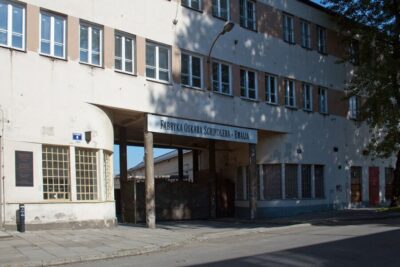
Schindler’s Factory Tour with Entrance Ticket
Read our review →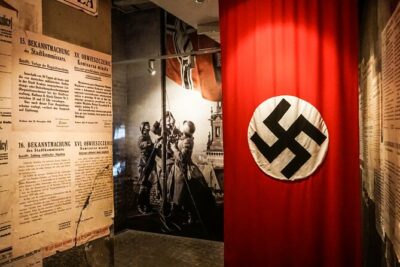
Schindler’s Factory in Krakow: Guided Tour & Skip the Line Ticket
Read our review →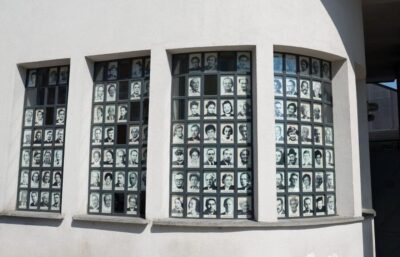
Schindler’s Factory Ticket with Guided Tour Option
Read our review →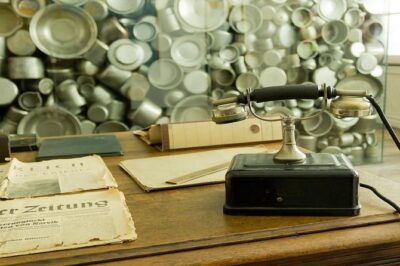
Krakow Schindler’s Factory Guided Tour with Admission Ticket
Read our review →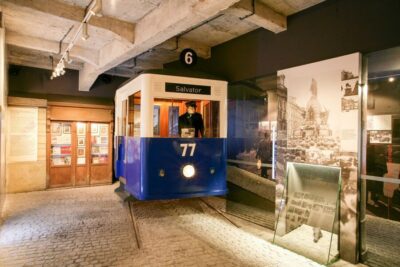
Schindler’s Factory Guided Tour with Entry Ticket
Read our review →Browse the lists this tour appears in