
Reviewed · WROCLAW TOURS
The secrets of World War II
Gross-Rosen is the heart of this experience. You walk through the former Nazi concentration camp in Rogoźnica, then connect its wartime story to Ksiaz Castle and the secret Riese tunnels. That link makes this more than a collection of sights: it shows how forced labor, military planning, and Hitler’s underground headquarters fit together.
I like the hotel pickup and round-trip transport, especially because these sites lie well beyond Wroclaw. I also like the three-way contrast between a memorial site, a grand castle, and a cold underground complex. The drawback is clear: this is a long nine-hour day, and parts of the sightseeing may be led by the individual venues rather than your tour host.
Key points to know before booking
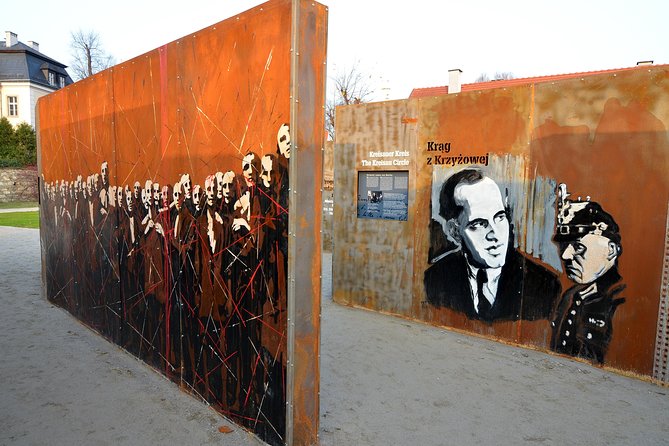
- Gross-Rosen comes first, giving you a quiet setting for a serious visit before the day becomes busier.
- Ksiaz Castle adds the wider wartime story, including the unfinished headquarters project linked to Hitler’s organization Todt.
- Osowka takes you underground, into the largest and most complex section of the Riese project in Lower Silesia.
- Hotel pickup and transport are included, with an air-conditioned minibus, an English-speaking driver, and hotel or hostel drop-off.
- The group is intended to be small, with the highlights listing up to nine people, although the additional booking information gives a maximum of 15.
- Pack snacks, because lunch is not included and the schedule leaves little room for a proper meal.
Why these three WWII sites work together
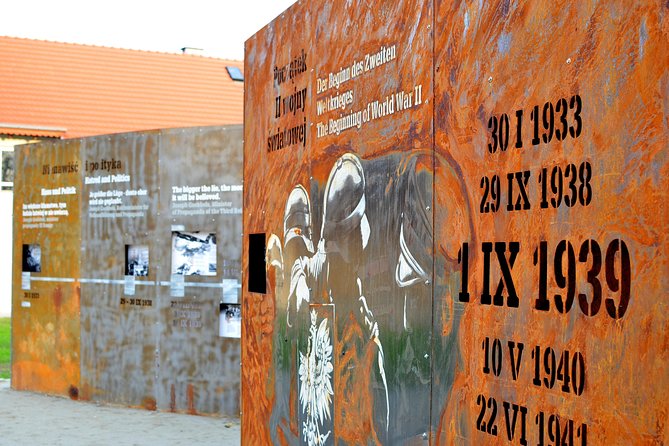
This tour covers three very different places connected to Nazi Germany’s wartime activity in Lower Silesia. That variety helps you understand the region without spending the entire day in one type of museum.
Gross-Rosen shows the human cost of the Nazi camp system. Ksiaz Castle shows how a historic residence was drawn into military planning. Osowka reveals the underground construction project intended to protect and support Hitler’s headquarters.
The locations also create a useful rhythm. You begin with a place for remembrance, move to a castle with striking architecture and a complicated wartime past, then finish in tunnels built under extreme conditions. The subject remains heavy throughout, but the settings are not repetitive.
Your tour host or driver provides the link between the stops. Guides named in past bookings include Jakub, Pawel, and Tomek, while another booking praised a guide called Eric, though the spelling may vary. The strongest experiences depend partly on who is assigned that day. The supplied information identifies an English-speaking driver and sightseeing in your chosen language, so confirm the language arrangement when you book if detailed English commentary at every site matters to you.
Other Wroclaw days people book alongside this one:
- Wroclaw: E-Car Tour and Audio Guide
★ 4.6 · 1,738 reviews - Wroclaw: 2-Hour Private Guided Tour by Electric Car
★ 4.8 · 805 reviews - Wrocław: Old Town and Ostrów Tumski Walking Tour in English
★ 4.8 · 311 reviews
Gross-Rosen: a difficult first stop, and the right one
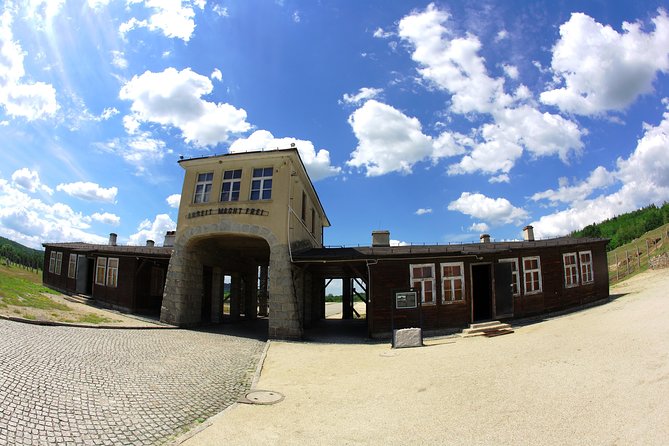
The former Gross-Rosen concentration camp in Rogoźnica was the largest Nazi-German concentration camp in Lower Silesia. The site is associated with especially harsh conditions and penal work in the quarries. Its motto, Vermichtung durch Arbeit, means annihilation through work.
About 40,000 prisoners died there. They came from Poland, Jewish communities, Russia, France, Hungary, and other parts of occupied Europe. Those facts are stark, and the visit is not designed as light sightseeing. You should expect a serious, reflective stop rather than a conventional attraction.
The scheduled visit lasts about two hours, with admission included. That is the most generous block of time on the tour, and I think that is a good choice. Rushing through Gross-Rosen would undercut the reason for coming.
Starting early can also matter. The tour begins at 7:00 a.m., and the first stop may feel quiet before other groups arrive. That gives you more space to think and look carefully rather than moving through the site in a crowd.
One practical point needs attention. A past booking reported that the local guides spoke Polish and that an audio guide was provided. This means your main tour host may not lead every part of the Gross-Rosen visit in English. If you want detailed English interpretation, ask exactly what is included on your date.
The site can be emotionally demanding. I would not schedule a party meal or packed sightseeing immediately after it. Give yourself some quiet time on the minibus as you move to the next stop.
Ksiaz Castle and the wartime project beneath it
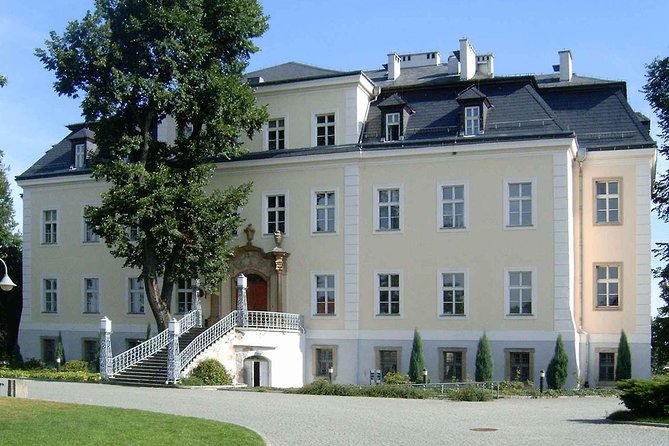
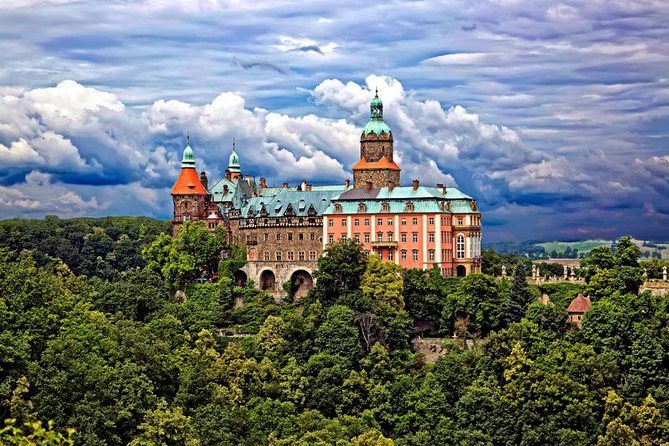
Ksiaz Castle is the third-largest castle in Poland. It sits about 395 meters above sea level beside the Pelcznica River, surrounded by forest and built against a rocky cliff. Its grand setting can feel far removed from the camp you have just visited.
That contrast is part of the point. During the war, the castle became connected to a major military construction plan. In 1943, Hitler’s paramilitary organization Tod began building one of his main headquarters there. The castle was also tied to the wider Riese complex, including the underground sites near Osowka and Wlodarz.
You have about 90 minutes here, and admission is included. That is enough to see the castle and understand its wartime connection, but it is not enough for every corner if you want a slow architectural visit. If your main interest is medieval or aristocratic Poland, you may wish the castle received more time. For a WWII-focused tour, the shorter stop keeps the day moving.
Ksiaz is also the visual change of pace you need. After the stark camp, you see a large historic residence in a forested setting. The castle’s size and position help explain why it was selected for military use, even if the details of the Riese project remain uncertain.
The important thing is not to treat Ksiaz as a separate castle excursion. Its wartime story makes sense when paired with Osowka. The two stops show the above-ground and underground sides of the same regional construction effort.
Osowka: entering the Riese complex
The Osowka Complex is part of the Nazi German project codenamed Riese, carried out between 1943 and 1945. The name means giant, and the scale of the work remains striking.
The site is often described as an underground city. It has not revealed all its secrets, which gives the visit an unusual air, but the real value is not mystery for its own sake. You are seeing a huge wartime construction effort whose purpose and full design are still not completely clear.
The scheduled visit lasts about one hour, with admission included. The tunnels provide the most physical part of the day. You should have a moderate level of fitness, and enclosed underground spaces may not suit everyone.
One booking compared the caves to an Indiana Jones setting. That captures the atmosphere, but keep the context in mind. These were not adventure tunnels built for entertainment. They were part of a Nazi military project carried out during the final years of the war, under conditions connected to forced labor and enormous human suffering.
The underground stop is especially effective after Ksiaz. At the castle, you hear about plans and headquarters. At Osowka, you confront the scale of the construction itself. The pairing turns an abstract wartime story into something you can physically see.
Same country, a completely different kind of day:
- Wroclaw: Private Old Town Guided Walking Tour (2 hours)
★ 4.8 · 275 reviews - Old Town Wrocław Walking Tour
★ 5.0 · 249 reviews - Wroclaw: City Tour Sightseeing By Golf Cart Shared Or Privat
★ 4.8 · 189 reviews - Auschwitz-Birkenau Tour from Wrocław
★ 5.0 · 129 reviews
What your guide actually does
This experience includes an English-speaking driver, assistance from a tour host, transport, and sightseeing in your chosen language. Several past bookings praised guides for more than simply getting from place to place.
Jakub was described as punctual and helpful. Pawel was praised for answering questions about Poland and the Wroclaw region, speaking several languages, and offering food suggestions. Tomek was also singled out for being helpful and informative. These details suggest that the quality of the day can improve greatly when your host takes an active role.
Still, you should set realistic expectations. At least one part of the tour may be self-guided or led by a guide employed by the individual venue. The tour host may explain the connections during the drive and help with timing, but this is not necessarily a private historian accompanying you inside every building and tunnel.
That distinction matters because the price is $239.10 per person. You are paying for transport from Wroclaw, a full day of access to three distant locations, included admissions, and help managing a complicated route. You are not automatically paying for a dedicated expert lecture at every single stop.
The nine-hour schedule and transport
Pickup begins around 7:00 a.m. Hotel or hostel pickup is included, as is return transport. The vehicle is an air-conditioned minibus, and the driver handles the route between Wroclaw, Rogoźnica, Walbrzych, and the Osowka area.
That convenience has real value. You could drive yourself, but you would need to organize three separate attractions, manage directions, watch opening times, and handle parking. The tour also provides a person who can help connect the sites and keep the day on schedule.
The trade-off is time in the vehicle. Nine hours is a full day, and much of the experience takes place away from Wroclaw. If you prefer slow visits, long lunches, and spontaneous stops, this schedule may feel tight.
The small-group format helps. The main description gives a maximum of nine people, while the additional information lists a maximum of 15. That is worth clarifying before payment. Either way, it is designed to be smaller than a large coach outing, and a smaller group makes pickup, questions, and timing easier.
The roads near the rural and underground sites may not be smooth. One past booking specifically praised the driver’s handling of questionable roads. That is a small but useful detail if you are comparing this with a self-drive day.
Food, clothing, and physical effort
Lunch is not included. Bring snacks or buy something along the way, because the itinerary moves through three sites and does not promise a dedicated meal break. One past booking specifically advised carrying food for the long day.
Wear practical clothing and shoes suitable for walking. The tour requires a moderate level of physical fitness, and Osowka involves an underground visit. The information does not specify exact temperatures, stair counts, or accessibility details, so ask the provider if you have mobility concerns.
Gross-Rosen can also be physically and emotionally tiring. Two hours there is substantial time, and you may want something warm to drink or a quiet evening after returning to Wroclaw.
The tour requires good weather. If poor weather causes cancellation, you are offered another date or a full refund. You can cancel for a full refund up to 24 hours before the start time. Changes or cancellations made inside that 24-hour window are not accepted for a refund.
Who will get the most from this day
I would choose this tour if you want to understand WWII in Lower Silesia but do not have a car or do not want to plan a complicated regional route. It is particularly suited to people who want memorial history, military construction, and local Polish context in one day.
It also works well for first-time visitors to Wroclaw. The sites are not all on the usual city itinerary, and the drive gives you a wider view of the region beyond the city center.
You should think twice if you dislike early starts, long minibus days, underground spaces, or emotionally serious sites. You may also prefer independent travel if you already have a car and want to decide how long to spend at each location.
The tour has a 4.8 rating from 18 reviews, with 94 percent recommending it. That is encouraging, but the small number of ratings means you should still pay attention to the structure of the day and the guide arrangement rather than relying on the score alone.
Is $239.10 a fair price?
The price is high compared with a simple self-drive outing, especially if you have your own car. One past booking made exactly that point, saying the sites could have been visited independently for less money.
The value improves if you are staying in Wroclaw without a vehicle. You receive pickup, round-trip transport, an air-conditioned minibus, assistance from a host, an English-speaking driver, three admission tickets, and hotel or hostel drop-off. There are no extra tour charges listed, though lunch remains your responsibility.
The biggest value is time and coordination. Gross-Rosen, Ksiaz Castle, and Osowka are not a simple walk from one another. A good host also gives you context between the stops, answers regional questions, and helps the day feel connected rather than random.
I would call it worthwhile for a visitor who values ease and a carefully chosen route. I would call it less attractive for a confident driver who wants a long castle visit or prefers to explore each museum at a personal pace.
Should you book The Secrets of World War II?
Book it if Gross-Rosen is your priority and you want to place that camp within the wider wartime story of Lower Silesia. The strongest version of the day gives you a quiet, moving visit to the camp, a helpful host such as Jakub, Pawel, or Tomek, and enough explanation to connect Ksiaz with the Riese tunnels.
Before booking, confirm the group size, the language used inside each venue, and how much commentary your host provides. Bring snacks, expect a serious nine-hour day, and choose practical clothing.
For a visitor without a car, this is a useful and unusual way to reach three important sites. For an independent driver, the price may be harder to justify. The decision comes down to what you value more: control and lower cost, or a planned route with transport and local assistance.
FAQ
What is included in the tour price?
The price includes hotel or hostel pickup, round-trip transfer in an air-conditioned minibus, assistance from a tour host, an English-speaking driver, sightseeing in your chosen language, admission to the listed sites, and drop-off at your hotel or hostel.
Is lunch included?
No. Lunch is not included, so bring snacks or plan to buy food during the day.
What time does the tour begin?
The tour begins at 7:00 a.m.
How long does the experience last?
The tour lasts approximately nine hours.
Which sites are visited?
The tour visits the Gross-Rosen Museum in Rogoźnica, Ksiaz Castle in Walbrzych, and the Osowka underground complex.
Is the tour suitable for children?
Children must be accompanied by an adult. The tour also requires a moderate level of physical fitness.
Can I cancel for a full refund?
Yes. You can cancel at least 24 hours before the start time for a full refund. Cancellations or changes made less than 24 hours before the start time are not accepted for a refund. If poor weather cancels the experience, you will be offered another date or a full refund.
Just added around Wroclaw
- Wrocław: World War II and the non-existent city of Breslau★ 3.6 · 3 reviews
- Wrocław to Rock City in Adrspach and Project Riese day trip★ 5.0 · 5 reviews
- Wroclaw: WW2 Tour to Project Riese & Gross-Rosen Museum★ 4.8 · 26 reviews
- Wroclaw: University Baroque Tour★ 5.0 · 19 reviews
- Wroclaw : Walking Custom Tour with a Local Guide★ 4.8 · 3 reviews
- Wrocław: Tour of the Old Town in an Imperial E-car★ 4.3 · 13 reviews
- Wroclaw to Rock City in Adrspach and Ksiaz Castle day trip★ 4.9 · 16 reviews
- Wroclaw: 3-Hour Bike Tour in English or Polish★ 4.8 · 66 reviews
Wroclaw Tours, compared.
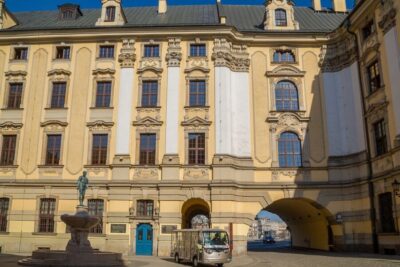
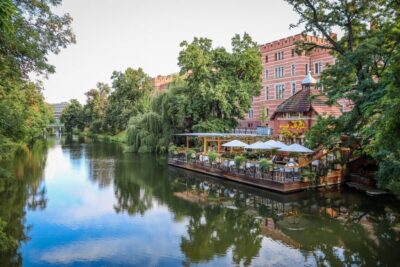
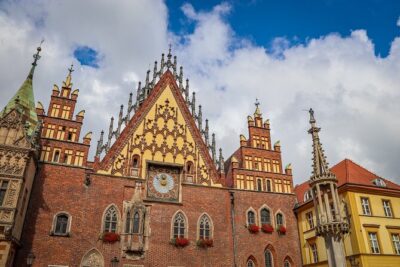
Old Town and Ostrów Tumski Walking Tour in English
Read our review →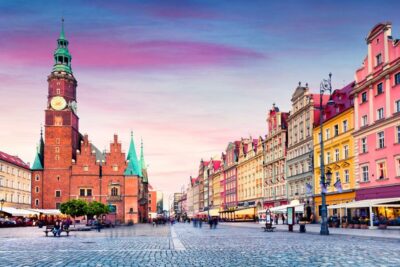
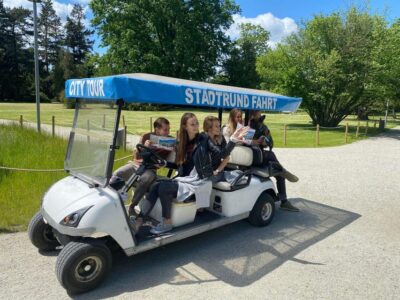
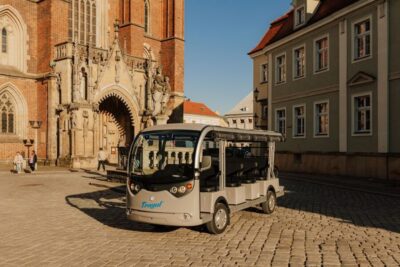
City Tour Sightseeing By Golf Cart Shared Or Privat
Read our review →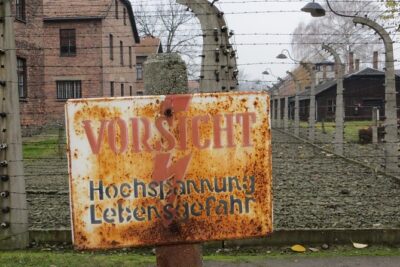

Browse the lists this tour appears in