
Reviewed · AUDIO TOURS
University of Wrocław: Audio Guide & Admission
Wrocław University hides some of the city’s most striking interiors behind a working academic façade. In about 45 minutes, you’ll see Aula Leopoldina, Oratorium Marianum, the Imperial Staircase, and the Mathematical Tower, with an English mobile audio guide leading the way.
I like the compact timing and the chance to see Austrian Baroque decoration without giving up half a day. I also like the clear connection between the university and wider European culture, from Johannes Brahms to ten Nobel Prize winners linked to Wrocław. The main drawback is that university events can close some rooms, so the full visit is not guaranteed on every date.
Key points at a glance
- Aula Leopoldina and Oratorium Marianum: The visit focuses on the university’s grandest historic interiors, not just its exterior.
- A 45-minute route: The short format works well before or after a walk through Wrocław’s Old Town.
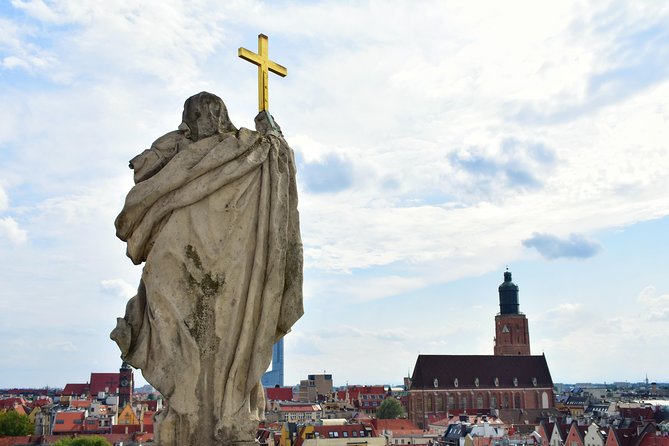
- Mathematical Tower views: You can look across the historic center and toward the Odra River.
- Brahms and Nobel Prize connections: The audio guide places the building in a larger story of music, science, and academic life.
- English mobile audio guide: You can explore with a phone-based guide rather than joining a long group program.
- Potential room closures: Events at the university may limit access to one or more scheduled rooms.
Why Wrocław University deserves a visit

Wrocław is easy to like from street level. Its Market Square, colorful façades, bridges, and riverfront do much of the work. But the University of Wrocław gives you a closer look at the city’s intellectual and imperial past, especially in rooms where decoration carries as much weight as the written history.
The attraction is not a complete university campus tour. It is a focused visit to important historic spaces inside the university complex. That distinction matters. If you want a broad lecture about modern student life or every corner of the institution, this will feel limited. If you want a quick look at some of the city’s finest Baroque interiors, the format makes good sense.
I especially like that the experience connects architecture with people and ideas. You are not only looking at painted ceilings and ceremonial rooms. You also learn why Johannes Brahms composed the Academic Overture for Wrocław’s Alma Mater and hear about ten Nobel Prize winners originating from the city. Those details give the rooms a purpose beyond decoration.
The tour is offered in English and uses a mobile ticket with an audio guide. That gives you a degree of independence, though you should arrive with a charged phone and a reliable way to access the ticket and guide. The meeting point is by the Szermierz statue at plac Uniwersytecki, in front of the University of Wrocław.
A few more Wroclaw trips to weigh up
- Wroclaw: E-Car Tour and Audio Guide
★ 4.6 · 1,738 reviews - Wrocław’s Old Town: A Self-Guided History Tour
★ 4.5 · 10 reviews - Krakow: Vistula River Sightseeing Cruise with Audio Guide
★ 4.4 · 820 reviews
Entering Aula Leopoldina
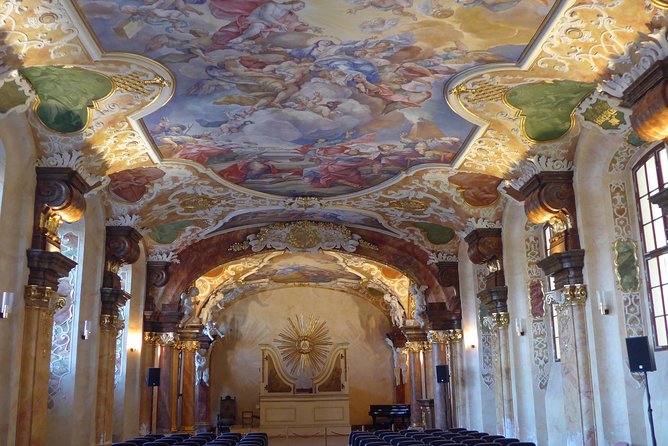
Aula Leopoldina is the main visual prize. This ceremonial hall is presented as a major example of Austrian Baroque, so expect a room designed to impress. Here, scale and ornament are part of the message: the university wanted visitors to understand its importance before a single word was spoken.
The audio guide should help you read the space rather than simply glance around it. Pay attention to the relationship between the architecture, painted decoration, and academic ceremony. A room like this was built to project authority, learning, and loyalty to its founders and patrons.
You will spend roughly 30 minutes at the Wrocław University Museum, which includes Aula Leopoldina, Oratorium Marianum, and the Imperial Staircase. That is enough time for a focused visit, but not enough for a slow architectural study of every detail. If you enjoy ceiling paintings, ornamental stucco, and formal historic interiors, you may wish the schedule were longer.
The practical advantage of the room-by-room approach is clarity. You can concentrate on a few important spaces rather than wandering through a large museum with little sense of what matters. The drawback is that this is a short introduction. You will need to use your own eyes as much as the audio guide and accept that some small details may pass quickly.
Oratorium Marianum and the Imperial Staircase
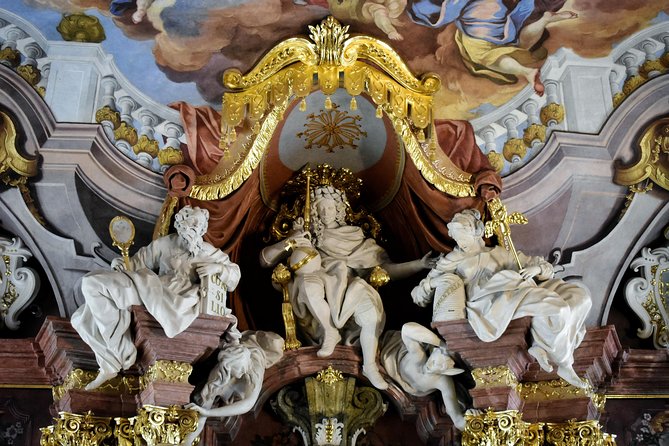
Oratorium Marianum adds a different mood to the visit. Its name points to its religious function, while the surrounding university rooms remind you that education and faith were closely linked in the institution’s earlier life. The room is part of the reason this experience feels different from a standard city walking tour.
The Imperial Staircase is another useful stop because it turns a passageway into a statement of power. Grand staircases are rarely just practical routes in Baroque buildings. They frame movement, direct attention, and make an ordinary arrival feel ceremonial.
You do not need specialist art knowledge to appreciate these rooms. The guide’s job is to explain why the spaces look the way they do and how they fitted into university life. One Spanish-language review singled out Matías for explaining the history clearly and connecting it with the visitor’s current life in Berlin. Since the published tour language is English and the product is described as an audio guide, you should not assume Matías will personally lead your departure. Still, the comment points to the kind of useful context that makes this visit work best: local history tied to wider European connections.
Take your time with the transitions between rooms. The interiors are the point, but the route also helps you see how a university complex can carry several layers of history in a small area. You are moving through a place of worship, ceremony, teaching, and public prestige within a compact visit.
The Mathematical Tower and Wrocław from above
The final 15 minutes take you to the Mathematical Tower. From here, you can admire views over Wrocław’s historic Old Town and the Odra River. The view gives the visit a needed change of pace after the enclosed Baroque rooms.
This is not presented as a long rooftop experience. Think of it as a short outlook that helps you place the university within the city. From above, the surrounding streets and river are no longer separate points on a map. They become part of the university’s setting.
I like this finish because it gives you something visual and open after the museum rooms. It also makes the tour easier to remember. You begin with decoration and formal interiors, then end by looking across the city those rooms helped shape.
The tower is particularly useful if you have just arrived in Wrocław and are still getting your bearings. You can identify the historic center and the Odra River before continuing on foot. The supplied details do not specify how long you can remain at the viewpoint beyond the stated 15-minute stop, so plan on a brief visit rather than an extended photography session.
Same country, a completely different kind of day:
- Wroclaw: 2-Hour Private Guided Tour by Electric Car
★ 4.8 · 805 reviews - Wrocław: Old Town and Ostrów Tumski Walking Tour in English
★ 4.8 · 311 reviews - Wroclaw: Private Old Town Guided Walking Tour (2 hours)
★ 4.8 · 275 reviews - Old Town Wrocław Walking Tour
★ 5.0 · 249 reviews
The Brahms connection and ten Nobel Prize winners
The university’s cultural story reaches beyond its walls. The audio guide explains why Johannes Brahms composed the Academic Overture for Wrocław’s Alma Mater. That is a fine detail because it shows how the university’s reputation reached the world of music, not only academic circles.
You will also learn about ten Nobel Prize winners originating from Wrocław. The information is presented as part of the university visit, giving you a reason to see the institution as more than a beautiful historic building. It links the city to major achievements in intellectual and scientific life.
I find these connections more useful than a list of dates. Dates can help establish a timeline, but Brahms and the Nobel Prize links provide memorable hooks. After the tour, you are more likely to remember the university as a place connected with music, research, and international recognition.
The exact subjects and biographies of those prize winners are not specified in the experience details, so you should not book this expecting a full Nobel-focused lecture. Instead, treat the information as part of the broader story told during the visit.
Is $17.74 a fair price?
At $17.74 per person, this is a reasonable price for admission to several important university interiors and the Mathematical Tower, especially if you want a short, organized cultural stop. The value depends on what you would otherwise do with those 45 minutes.
If you would simply walk past the building, the ticket adds access to rooms you might not see on your own. It also gives you an English audio guide and a planned route through the most significant spaces. That is useful in a city where many historic buildings look impressive from outside but offer little public access inside.
The price is less compelling if you prefer to spend several hours in one museum or want an extensive live-guided tour. This is a compact experience. You are paying for access, interpretation, and a concentrated look at specific rooms, not an all-day academic history program.
For many visitors, the best value comes from fitting it between other Wrocław sights. The meeting point is central at plac Uniwersytecki, near public transportation, and the activity ends back at the same point. You can pair it with an Old Town walk without creating a complicated transport plan.
Timing, meeting point, and group size
The published duration is approximately 45 minutes, divided into about 30 minutes at the Wrocław University Museum and 15 minutes at the university’s Mathematical Tower. That makes the visit easy to schedule, but allow a little extra time around the start if you need to find the Szermierz statue and access your mobile ticket.
The start point is listed as Szermierz, University of Wrocław, plac Uniwersytecki, 50-137 Wrocław, Poland. The activity ends at the same meeting point. It is near public transportation, and most people can participate.
The maximum group size is 40 people. That is not a tiny private tour, so do not expect constant personal attention. With a mobile audio guide, the group limit may matter less than it would on a lecture-heavy walking tour, but busy conditions could still affect how easily you view a room or move through a staircase.
Because this is an active university, the building is not simply a museum operating for tourists alone. Events may close some rooms on a given day. If that happens, the provider may contact you with an alternative date or time. If rescheduling is not possible, you may miss one or more of the rooms described here.
That uncertainty is the most important practical point. If Aula Leopoldina is your main reason for booking, check any update carefully and keep your schedule flexible enough to consider another time.
Who will enjoy this experience most?
I would recommend this visit to anyone who wants a short architectural and cultural stop in central Wrocław. It suits first-time visitors who want context for the city, as well as repeat visitors who have already seen the Market Square and want to look inside a significant building.
It is also a good match for you if:
- You like ornate historic interiors.
- You want an English-language explanation rather than a silent admission ticket.
- You enjoy linking architecture with famous cultural and academic figures.
- You value a fixed 45-minute visit that leaves the rest of the day open.
- You want a city viewpoint without committing to a long excursion.
You may want to skip it if your priority is outdoor sightseeing, modern university life, or a lengthy museum visit. The experience concentrates on a few rooms and one viewpoint. It does not promise access to every part of the university.
Families and mixed-interest groups may find the short length helpful. Someone interested in architecture can focus on the rooms, while another person can listen for the Brahms and Nobel Prize connections. Since most people can participate and the site is near public transport, it is a practical choice for many city itineraries.
Booking, cancellation, and a sensible plan
Confirmation is provided at booking, and free cancellation is available up to 24 hours before the local start time. A cancellation made less than 24 hours before the start is not refundable, and changes in that final 24-hour period are not accepted.
The experience also requires a minimum number of participants. If the provider cancels because that minimum is not met, you will be offered another date or experience, or a full refund.
I would book this earlier in your Wrocław stay if the university’s interiors are high on your list. That leaves room to accept another time if an event affects access to the rooms. Since the visit is short, it is easy to place near a meal, a city walk, or another central attraction.
Should you book the University of Wrocław audio guide?
Book it if you want to see Wrocław’s most impressive university interiors in a compact visit, with enough explanation to connect Baroque design to Brahms, Nobel Prize winners, and the city around you. The $17.74 price is fair for admission, the English mobile guide, and the Mathematical Tower viewpoint.
I would not book it expecting a long guided tour or a guarantee that every room will be open. The university’s events can change the route, and the 45-minute schedule keeps the treatment focused.
For most first visits to Wrocław, I think it is a smart add-on. The interiors are the draw, the city view rounds things out, and the short timing keeps the experience from taking over your day.
FAQ
How long does the University of Wrocław experience last?
The experience lasts approximately 45 minutes. About 30 minutes are allocated to the Wrocław University Museum, followed by about 15 minutes at the university and Mathematical Tower.
What rooms are included?
Admission includes Aula Leopoldina, Oratorium Marianum, and the Imperial Staircase, described as notable examples of Austrian Baroque interiors. The visit also includes access to the Mathematical Tower.
Is the audio guide offered in English?
Yes. The experience is offered in English and includes a mobile audio guide.
Where does the visit start?
The meeting point is Szermierz, University of Wrocław, plac Uniwersytecki, 50-137 Wrocław, Poland.
Where does the activity end?
The activity ends back at the starting meeting point.
How much does the experience cost?
The listed price is $17.74 per person.
Can all rooms always be visited?
No. Access to certain rooms may be limited when the University of Wrocław is hosting events. You may be offered an alternative time or date, but if rescheduling is not possible, some rooms may be unavailable.
What is the cancellation policy?
You can cancel up to 24 hours before the local start time for a full refund. Cancellations or changes made less than 24 hours before the start are not accepted for a refund.
Just added around Wroclaw
- Wrocław: World War II and the non-existent city of Breslau★ 3.6 · 3 reviews
- Wrocław to Rock City in Adrspach and Project Riese day trip★ 5.0 · 5 reviews
- Wroclaw: WW2 Tour to Project Riese & Gross-Rosen Museum★ 4.8 · 26 reviews
- Wroclaw: University Baroque Tour★ 5.0 · 19 reviews
- Wroclaw : Walking Custom Tour with a Local Guide★ 4.8 · 3 reviews
- Wrocław: Tour of the Old Town in an Imperial E-car★ 4.3 · 13 reviews
- Wroclaw to Rock City in Adrspach and Ksiaz Castle day trip★ 4.9 · 16 reviews
- Wroclaw: 3-Hour Bike Tour in English or Polish★ 4.8 · 66 reviews
Audio Tours, compared.
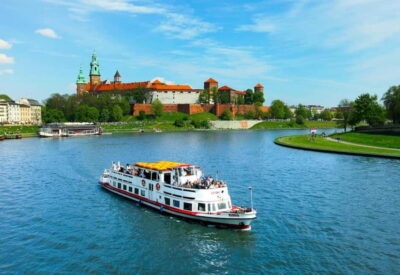
Vistula River Sightseeing Cruise with Audio Guide
Read our review →
Sightseeing Cruise on Vistula River with Audio Guide
Read our review →Vistula River Sightseeing Cruise with Audio Guide
Read our review →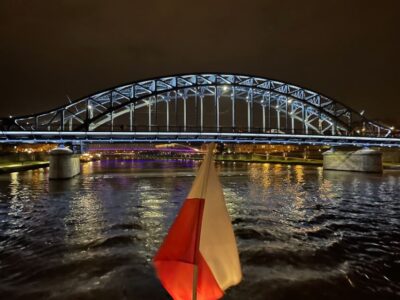
Vistula Night Cruise by Gondola w/ Audio Commentary
Read our review →
The Birthplace of Poland: A Self-Guided Audio Tour of Poznań
Read our review →Browse the lists this tour appears in