
Reviewed · WALKING TOURS
Warsaw City Full-Day Private Panoramic Car & Walking Tour
Warsaw reveals itself best through its contrasts: rebuilt royal squares, quiet park paths, painful wartime memorials, and the rough-edged streets of Praga. This private eight-hour tour gives you a useful citywide introduction without forcing you to figure out tram routes or piece together distant sights on your own.
I like the mix of major landmarks and less polished neighborhoods, especially the courtyard shrines and murals in Praga. I also like the human scale of the day: you walk when a place deserves time, then return to the car when Warsaw’s wide distances make driving the sensible choice. The drawback is that eight hours can feel full, and admission fees are not included.
Key points to know before booking
- Warsaw in one day: Cover the Old Town, Royal Route, Lazienki Park, Jewish heritage sites, and Praga in a single private outing.
- A guide-led history lesson: Learn how Warsaw was rebuilt after World War II and hear the story of the 1944 uprising and the Warsaw Ghetto.
- Quiet time in Lazienki: Walk past the Palace on the Water, Orangery, Amphitheater, Chopin monument, rose garden, ducks, and swans.
- A different side of the city: Cross the Vistula to old Praga for Ząbkowska Street, courtyard shrines, murals, and the historic Różycki Bazaar.
- Private transport matters: Hotel pickup and transportation during the tour save time between neighborhoods that are spread across the capital.
- Good value for a small group: At $64 per person, the price is strongest when shared by several people who want a private guide and car.
Why this tour works for first-time Warsaw visitors
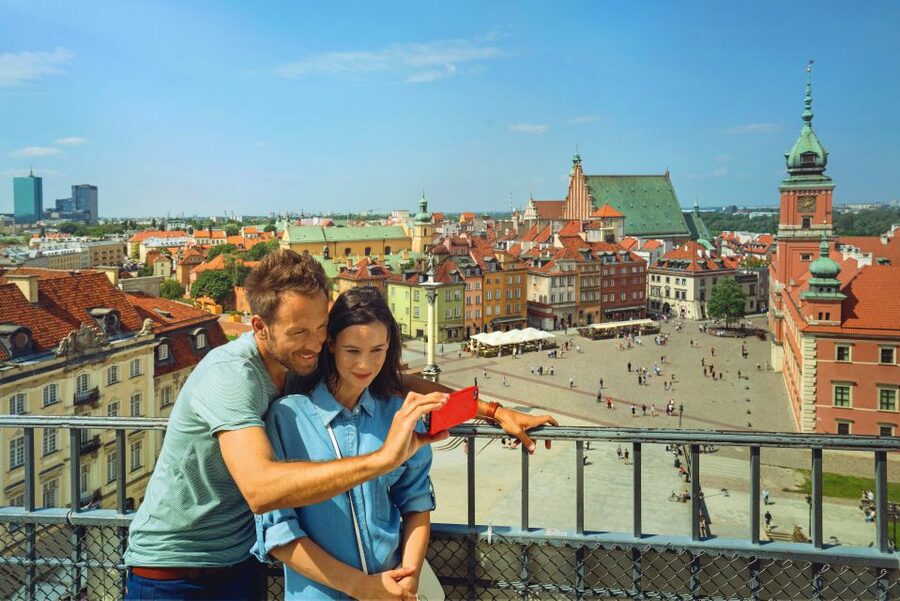
Warsaw is not a compact city where every important sight sits around one square. The historic center is easy to walk, but Lazienki, the former Jewish ghetto area, and Praga are spread out. A private car lets you see the city as a whole instead of spending much of the day transferring between neighborhoods.
The format also gives you a guide for the parts of Warsaw that need context. A rebuilt Old Town can look old at first glance, but its story is really one of destruction, memory, and careful reconstruction. Praga can look untidy beside the polished center, yet that is part of its appeal. The tour helps you read those differences rather than simply pass through them.
Because the group is private, you are not tied to the pace of strangers. Guides have included Sebastian, Woitek, and Jacek on past bookings. Woitek was praised for combining humor with serious historical detail, while Jacek was noted for adjusting his explanations and pace for both younger and older participants. Your assigned guide may be different, but the private setup gives you a better chance to ask questions and shape the rhythm of the day.
A few more Warsaw trips to weigh up
- Warsaw: Old Town Highlights Walking Tour in English
★ 4.7 · 1,516 reviews - Warsaw: Old Town Guided Walking Tour
★ 4.9 · 599 reviews - Half-Day Polish Food Walking Tour with Guide and Dinner
★ 4.5 · 381 reviews
The Old Town, rebuilt with care
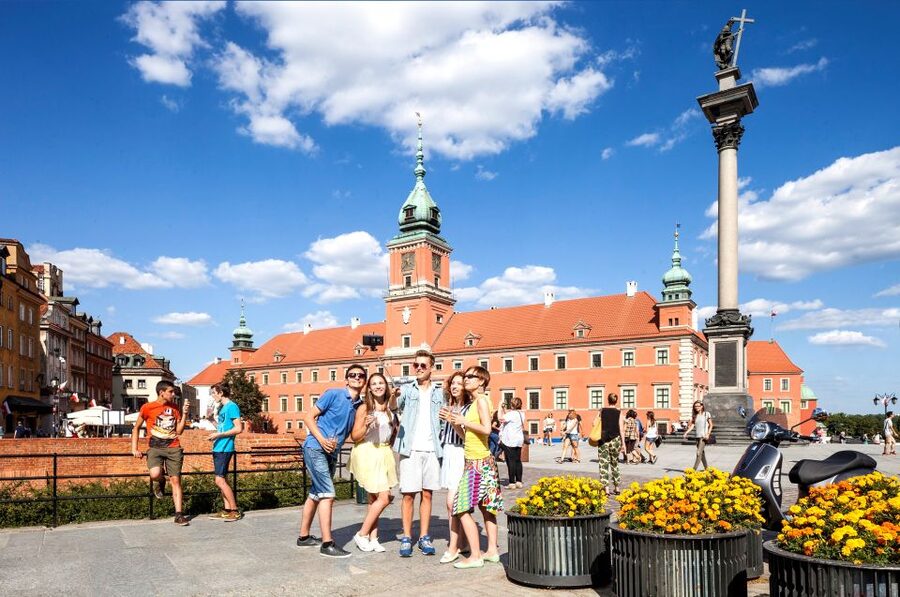
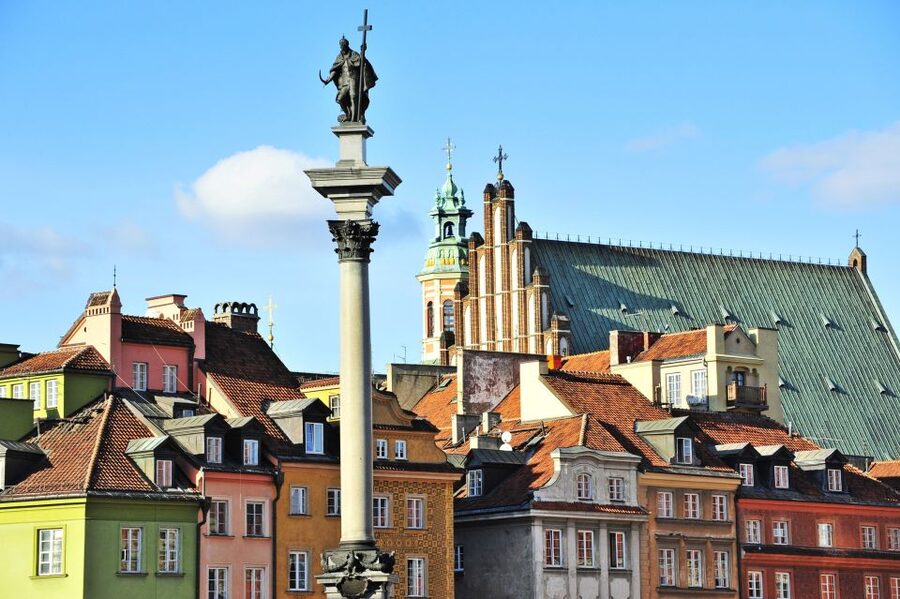
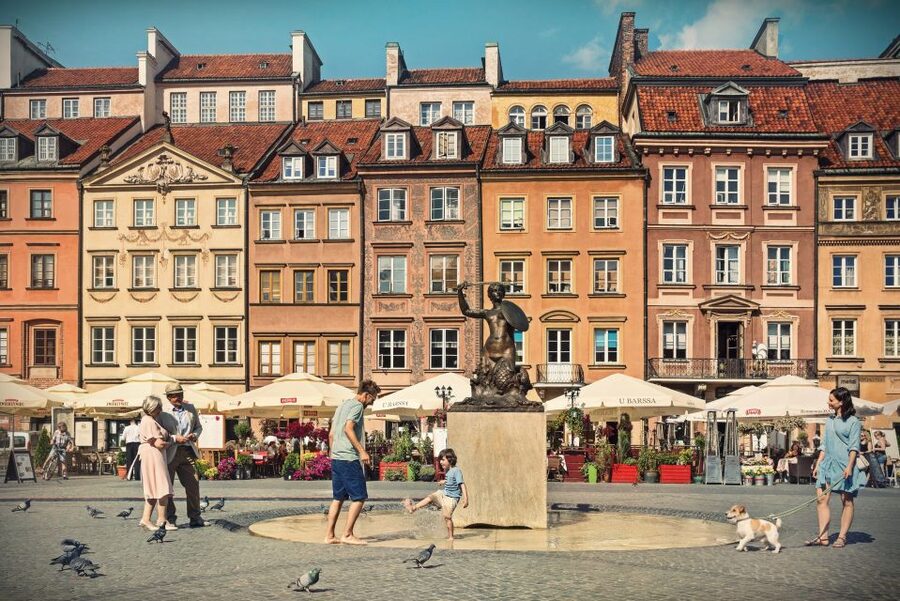
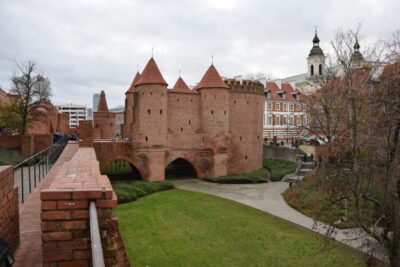
The Old Town is the natural starting point. You walk among colorful tenement houses and narrow streets toward the former royal residence at the Royal Castle. The area is now on the UNESCO World Heritage List, but its importance is not only architectural.
Warsaw’s Old Town was left in ruins after World War II. Much of what you see today was painstakingly rebuilt, with buildings representing styles and periods from the 13th through the 20th century. That makes this a place where appearance alone can mislead you. Your guide can point out how the restored streets fit into the larger story of a city determined to recover its identity.
The Royal Castle gives the district its political weight. It was the residence of Polish monarchs and remains one of the clearest reminders that Warsaw was once a royal capital. The tour does not include admission fees, so you should treat the castle mainly as an exterior stop unless you choose to pay for entry.
You also pass Krasinski Palace, a grand Baroque building, and the modern columns of the Supreme Court. That pairing is useful: Warsaw’s architecture is not frozen in one period. Old royal buildings, reconstructed streets, and modern civic structures sit close together.
The nearby Warsaw Uprising Monument adds a more difficult layer. The 1944 uprising was a major attempt by Polish resistance forces to fight German occupation before Soviet control took hold. A stop here is valuable because it connects the city’s physical reconstruction with the human cost behind it.
Allow yourself comfortable walking shoes for this part. The Old Town is the kind of place where you will want to pause for details, photographs, and short explanations rather than rush from one landmark to the next.
The Royal Route and Warsaw’s former court
The Royal Route links former royal residences and forms one of Warsaw’s most representative stretches. It connects the old royal center with areas that once served the monarchy and the city’s elite.
This section works well by car and on foot. You see the scale of the capital, then get out where a closer look makes sense. Your guide can explain how Warsaw’s royal past shaped its streets and public buildings without turning the walk into a list of names and dates.
The route also helps you understand how the city extends beyond the Old Town. If you only visit the market square and castle, you miss the broader pattern of Warsaw as a seat of government, culture, and royal power. The Royal Route fills in that gap.
There is one practical limitation: the supplied plan names the main sights but does not promise long interior visits. Since entry fees are separate, anyone hoping to tour several museums or palaces should ask the guide how much time remains and budget for extra tickets.
Lazienki Park, Chopin, and the Palace on the Water
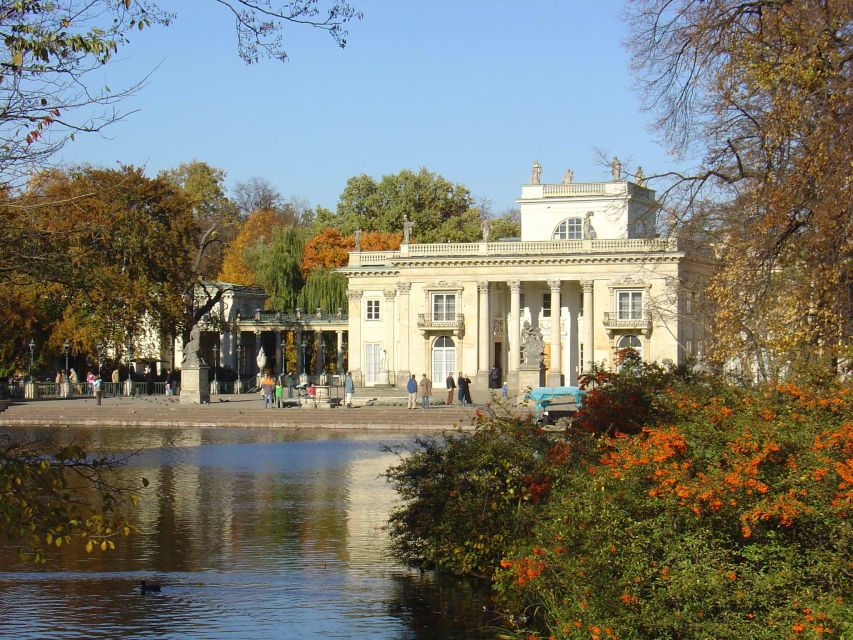
Lazienki is the day’s pause button. Warsaw’s largest park offers lawns, water, formal gardens, and elegant buildings, giving you a break from monuments and city traffic.
The park’s most famous memorial honors Frédéric Chopin, Poland’s celebrated composer. It is a popular stop, but it also fits the setting. Chopin’s connection to Poland is often presented through music, and this monument gives the subject a physical place in the city.
You walk toward the Palace on the Water, one of the park’s signature buildings, then see the Orangery and Amphitheater. The Island Theatre is another highlight, set among paths and water where ducks and swans add a peaceful soundtrack. The rose garden offers a quieter spot to slow down.
Lazienki also carries the marks of wartime destruction. The royal complex was badly damaged and plundered during the German occupation. After years of restoration, it was returned to the Polish people as a museum in 1960. That restoration story echoes the Old Town, but the park presents it in a gentler setting.
I would value this stop even if you are not especially interested in royal architecture. The chance to walk beside the water and sit among the gardens keeps the full-day schedule from becoming a solid block of urban sightseeing. Still, weather matters here. Rain or cold can make the park walk less enjoyable, and the tour does not promise a particular amount of free time in each garden.
Same country, a completely different kind of day:
- Warsaw: Chopin Concert in the Old Town
★ 4.8 · 2,287 reviews - Warsaw: Traditional Galar Cruise on The Vistula River
★ 4.6 · 1,640 reviews - Warsaw Concert: Chopin – Painted by Candlelights with Wine
★ 4.8 · 1,442 reviews - Warsaw: City Sightseeing Hop-On Hop-Off Bus Tour
★ 3.6 · 1,415 reviews
Warsaw’s Jewish heritage and the Warsaw Ghetto
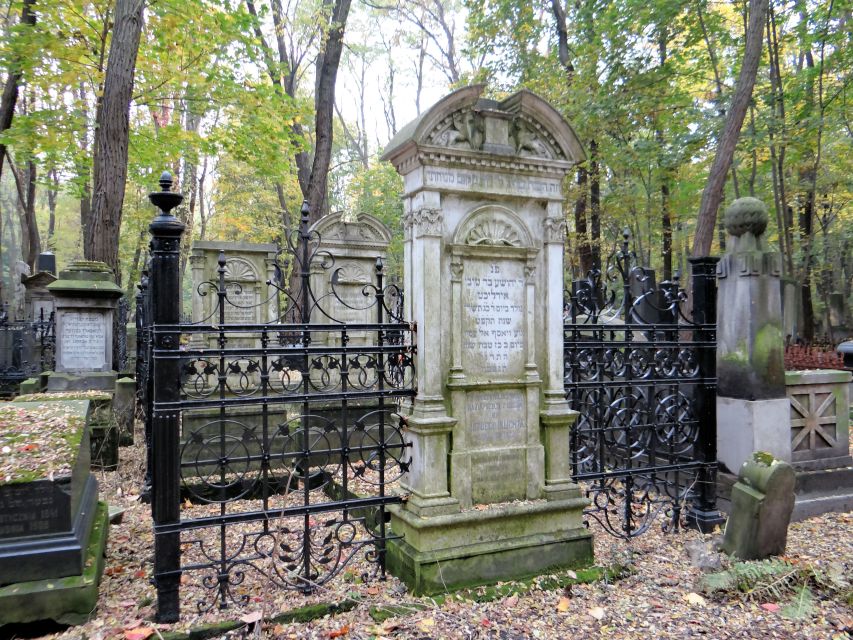
The Jewish section of the tour is the most emotionally serious. Polish Jews and Christian Poles lived side by side for seven centuries, leaving traces in architecture, customs, food, cultural events, and memorial sites. Warsaw’s Jewish story is also inseparable from the destruction carried out during World War II.
At the Monument to the Ghetto Heroes, you confront the memory of Jewish resistance and the lives lost in the Warsaw Ghetto. The Umschlagplatz Monument marks the place where Jewish people were assembled and transported to the extermination camp at Treblinka. These are not casual photo stops. Give yourself time to listen and absorb the guide’s explanation.
You also see fragments of the ghetto wall and walk through part of the former ghetto area. The surviving pieces are modest, which is precisely why they can be easy to miss without guidance. A private guide can show you what remains and explain how the wartime boundaries once cut through ordinary streets.
This section requires a thoughtful pace. It may be uncomfortable, but skipping it would leave out one of the central truths of Warsaw. The tour presents Jewish life as more than a wartime story, while also dealing directly with the Holocaust and the destruction of the community.
If you are traveling with children or younger family members, the private format helps. You can ask your guide to explain the subject at an appropriate level, pause when needed, or spend more time on the cultural story before moving into the memorial sites.
Crossing the Vistula into old Praga
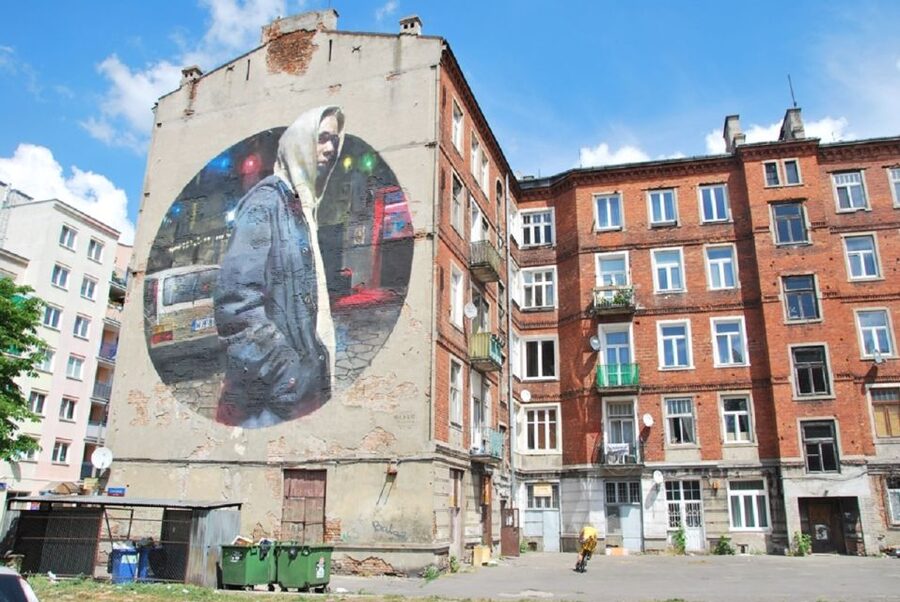
Crossing the Vistula changes the feel of the day. Praga, on the eastern side of the river, offers a less polished and more local-looking side of Warsaw. The tour focuses on old Praga, especially Ząbkowska Street.
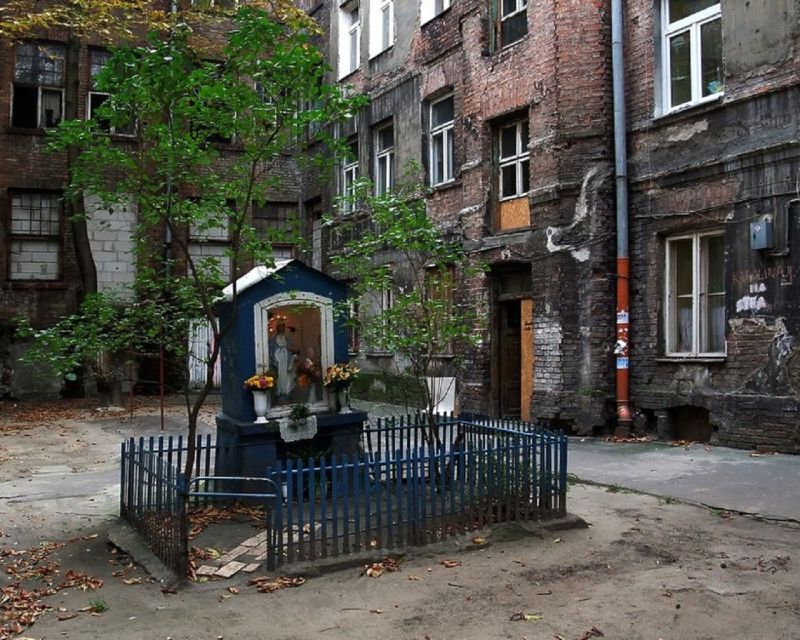
Here, you look for details rather than grand monuments. Courtyard shrines appear in unexpected corners, and original murals bring color to walls and side streets. The appeal is in the surprises: you may pass through a plain entrance and find a small religious image or an old courtyard that tells you more about neighborhood life than a formal palace could.
Ząbkowska Street is the main walk, but the surrounding area is the real lesson. Praga gives you a useful counterpoint to the reconstructed Old Town. It has its own character, and the tour does not polish away every rough edge.
The Różycki Bazaar is Warsaw’s oldest market. It is a practical stop for seeing the city’s food culture and everyday commerce. The tour information specifically points to pyzy and flaki, two Polish dishes you may have the chance to taste there. Food is not included in the tour price, so carry some Polish złoty or confirm payment options with your guide.
A word of caution: the market and neighborhood are not presented as a formal museum visit. You should expect atmosphere, street details, and food rather than a carefully arranged exhibit. That is exactly what makes Praga worthwhile, but it may not suit someone who wants only grand interiors and polished squares.
How the private car changes the day

Transportation is included throughout the tour, with pickup at your hotel lobby. Your guide will be holding a sign with your name. That simple arrangement matters because the itinerary crosses several parts of the capital and includes both walking and driving.
The car is especially useful between the Old Town, Lazienki, the Jewish memorial area, and Praga. You avoid losing time to public transportation and can rest between walks. At the end, you return to your hotel in a luxury car, which is a comfortable finish after eight hours on the move.
The tradeoff is that driving can make the day feel scheduled. You are seeing a lot of Warsaw, not spending half a day in one district. If you already know the city and want a slow morning in a single neighborhood, this may be too broad. If you have only one full day, the coverage is the point.
Since the tour is private, ask about the balance between car time and walking at the start. The published plan includes both, but it does not give exact minutes for every stop.
Is $64 per person a fair price?
At $64 per person, this tour offers solid value for anyone who wants a private guide and transportation for a full eight hours. The price becomes even more attractive for a small private group, since the cost is charged per person while the guide and car serve the whole party.
You are paying for more than transport. The real value lies in linking several parts of Warsaw that are easy to visit separately but harder to understand as one story. The guide connects royal power, wartime destruction, Jewish heritage, postwar rebuilding, and modern neighborhood life.
Admission fees are not included, and tips are also separate. That is normal for a private city tour, but you should keep extra money available if you decide to enter the Royal Castle or another paid site. The itinerary works without paid admissions, yet interior access would add depth for visitors who enjoy museums and historic rooms.
The 5.0 rating from 11 verified bookings points to very strong satisfaction, with repeated praise for the guides, the historical explanations, and the amount covered in eight hours. The small number of ratings means I would treat that score as encouraging rather than final proof for every type of visitor.
Who should book this Warsaw tour?
I would choose this tour if you have one full day in Warsaw and want a clear introduction to the city’s main stories. It is also a strong fit for families, couples, and small groups who prefer a private pace and hotel pickup.
It suits you especially well if you want:
- A guide who can explain difficult history in person
- A mixture of walking, scenic parks, memorials, food, and neighborhood streets
- A way to reach Praga and Lazienki without arranging transport yourself
- The flexibility to ask questions or adjust the pace within a private group
- A broad first look before choosing which areas to revisit alone
You may want something else if your priority is museum interiors, a relaxed café day, or a single focused subject. The schedule covers a great deal, and some stops will be viewed from outside unless you pay for admission and arrange enough time.
Cancellation is free up to 24 hours before the start, and you can reserve now while paying later. The guide service is offered in Spanish, English, German, Polish, Russian, French, Italian, and Portuguese, which makes this a practical option for many language groups.
Should you book it?
Book this tour if you want Warsaw explained as a living city rather than a collection of postcard sights. The Old Town and Royal Route give you the royal framework, Lazienki supplies a welcome stretch of calm, the Jewish monuments address the city’s hardest chapter, and Praga shows you a less formal present.
The best reason to book is the combination of private guidance and transport. You cover a lot without spending the day lost in logistics. Just expect a full schedule, plan for separate admission fees and food, and wear shoes suitable for several walks. For a first visit, $64 per person is a reasonable price for this much coverage and personal attention.
FAQ
How long does the Warsaw private tour last?
The tour lasts eight hours.
Is hotel pickup included?
Yes. You meet the guide in your hotel lobby, and the guide will hold a sign with your name.
Is this a private group tour?
Yes. The experience is arranged for a private group.
Which languages are available?
The live guide service is available in Spanish, English, German, Polish, Russian, French, Italian, and Portuguese.
Are admission fees included?
No. Entry or admission fees are not included in the price.
Can I cancel for a full refund?
Yes. You can cancel up to 24 hours in advance for a full refund.
Just added around Warsaw
- World War II Warsaw Old Town, Military Cemetery Walking Tour★ 4.7 · 3 reviews
- Wilanów Palace: 2-Hour Guided Tour with Entrance Tickets★ 4.8 · 8 reviews
- Warsaw: Wolf’s Lair & Swieta Lipka Small-Group Tour + Lunch★ 5.0 · 3 reviews
- Warsaw Zoo Skip-the-Line Entry Ticket with Private Transport★ 4.8 · 3 reviews
- Warsaw Wolf’s Lair with St. Lipka and Mamerki Private Guided★ 4.2 · 3 reviews
- Warsaw: Vistula River Cruise with Your Music & City Views★ 4.6 · 78 reviews
- Warsaw: Private Vodka Tasting Night with Snacks and Pickup★ 5.0 · 7 reviews
- Warsaw Private Wilanow Palace & Garden Tour★ 4.6 · 30 reviews
Walking Tours, compared.
Gdańsk City Sights & History Guided Walking Tour in English
Read our review →
Browse the lists this tour appears in