
Reviewed · HISTORICAL TOURS
Warsaw: Jewish Heritage 4-Hour Private Tour
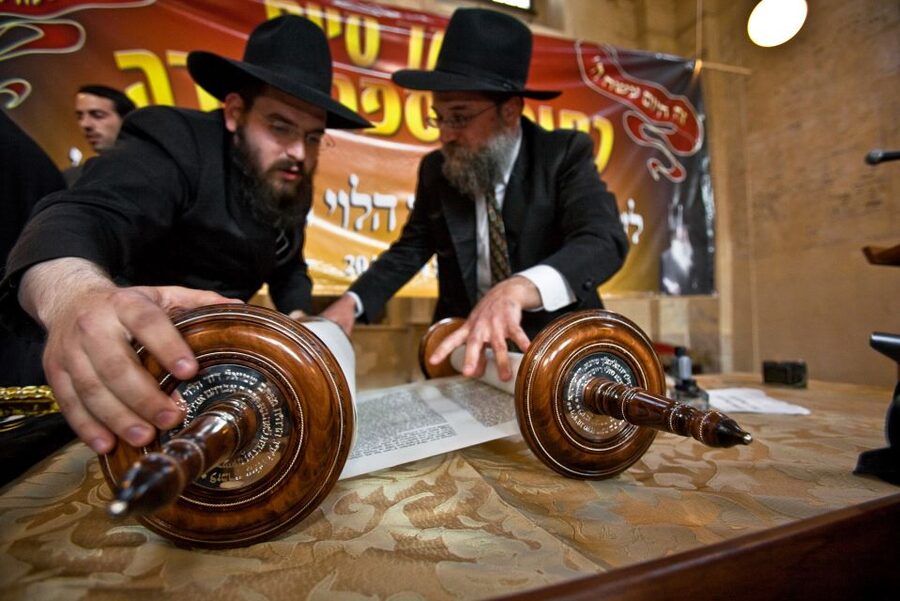
Warsaw’s Jewish past comes into focus through places that are both famous and painfully quiet. You’ll follow the former ghetto boundary, pause at Umschlagplatz, visit the vast Okopowa Cemetery, and hear how Jewish life shaped the city before the Second World War.
I like the private format, which lets your guide adjust the pace and explain difficult subjects with care. I also like the mix of memorials, surviving buildings, and cemetery paths. The main consideration is that four hours goes quickly, and admission to sites such as POLIN Museum is not included.
Key points to know
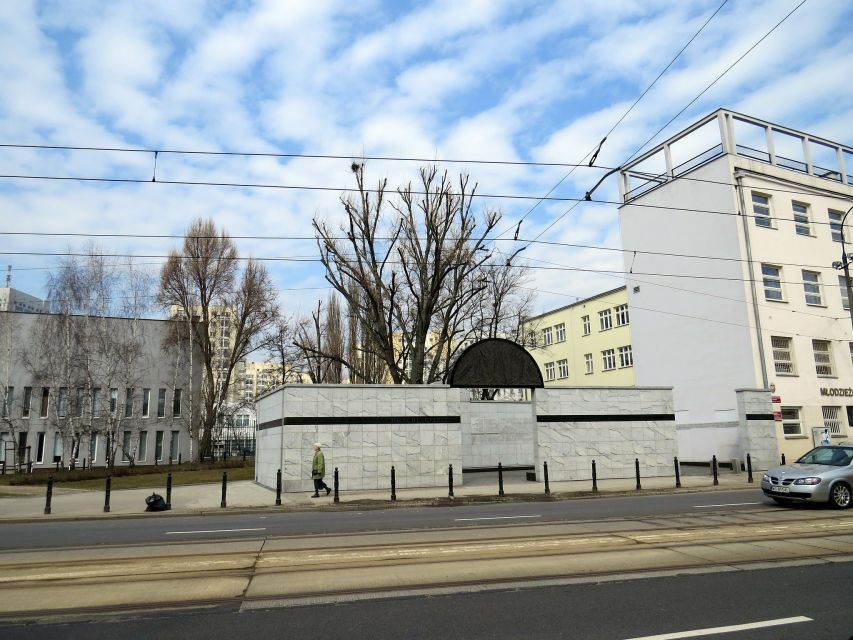
- Umschlagplatz brings the deportations into sharp focus, with more than 400 victims’ names carved into the monument.
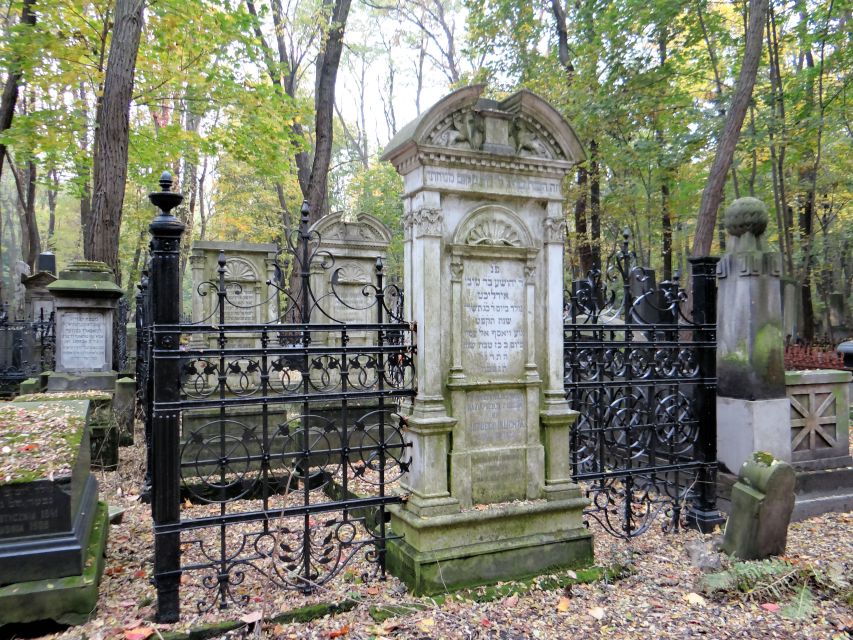
- Okopowa Jewish Cemetery contains the graves of important Polish Jewish figures, including Ludwik Zamenhof and Ischok Leib Perec.
- The private guide can adapt the tour, as Wojciech did for one couple by changing the pace and ending at POLIN Museum.
- Nożyk Synagogue survived the Holocaust, making it one of the most important surviving Jewish religious sites in Warsaw.
- The Footbridge of Remembrance uses a multimedia installation to recall the bridge that once connected the small and large ghettos.
- Hotel pickup and transportation are included, useful when you want to cover several far-flung locations in one morning or afternoon.
Why Jewish Warsaw matters before you begin
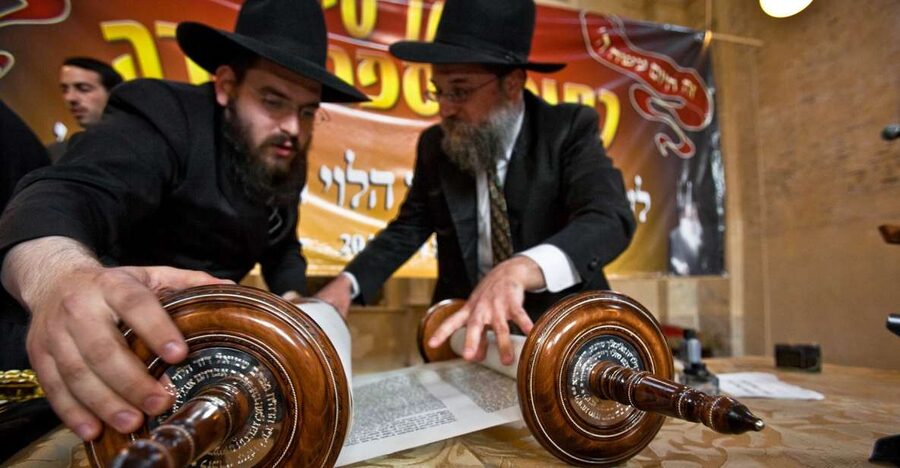
Before the Second World War, Warsaw was one of Europe’s great centers of Jewish culture. Only New York had a larger Jewish population, and Jewish traditions shaped daily life, architecture, art, literature, trade, and politics across the Polish capital.
That context matters because this tour is not only about wartime destruction. The Holocaust is central, and rightly so, but the route also points toward the Jewish community that existed for centuries before 1939 and the small but continuing Jewish presence today.
Your guide meets you in your hotel lobby, with your name used for identification, then takes you around Warsaw by included transportation. Since this is a private group, you are not tied to the interests or walking speed of strangers. That makes a real difference when the subject is emotional and the route includes several stops.
The tour lasts four hours. That is enough time to connect the main sites, but not enough for long visits inside museums or a slow examination of every memorial. I would treat it as a guided introduction and use the final advice about POLIN Museum to plan a separate visit.
A few more Warsaw trips to weigh up
- Warsaw: POLIN Museum of the History of Polish Jews Ticket
★ 4.7 · 1,142 reviews - Warsaw: Chopin Concert at Historical Venue in Old Town
★ 4.7 · 445 reviews - Small-Group Historical Guided Tour of Warsaw with pick up/drop off. Public Tour.
★ 4.5 · 343 reviews
The former ghetto and the Monument to the Ghetto Heroes
The route usually centers on the former Jewish ghetto, where your guide explains how the Nazi authorities isolated Warsaw’s Jewish population during the German occupation. Much of the original district was destroyed, rebuilt, or altered, so a guide helps you read the modern city and understand where the ghetto once stood.
At the Monument to the Ghetto Heroes, you’ll hear about the Warsaw Ghetto Uprising of 1943. A few hundred Jewish fighters resisted German forces equipped with heavy artillery and aircraft. The monument honors those who fought and died, but the wider story also includes the many civilians trapped in the ghetto.
This is a powerful opening because it gives the tour a human focus. You are not simply looking at a block of stone. You are learning about resistance, fear, courage, and the impossible choices forced on people under Nazi rule.
From here, the Memorial Route of the Martyrdom and Struggle of Jews leads toward other important sites. Commemorative stones along the way recall key figures and events connected with the ghetto. Your guide can connect these markers to the larger story, which is useful because the memorials can otherwise feel scattered across ordinary streets.
Umschlagplatz and the meaning of a quiet memorial
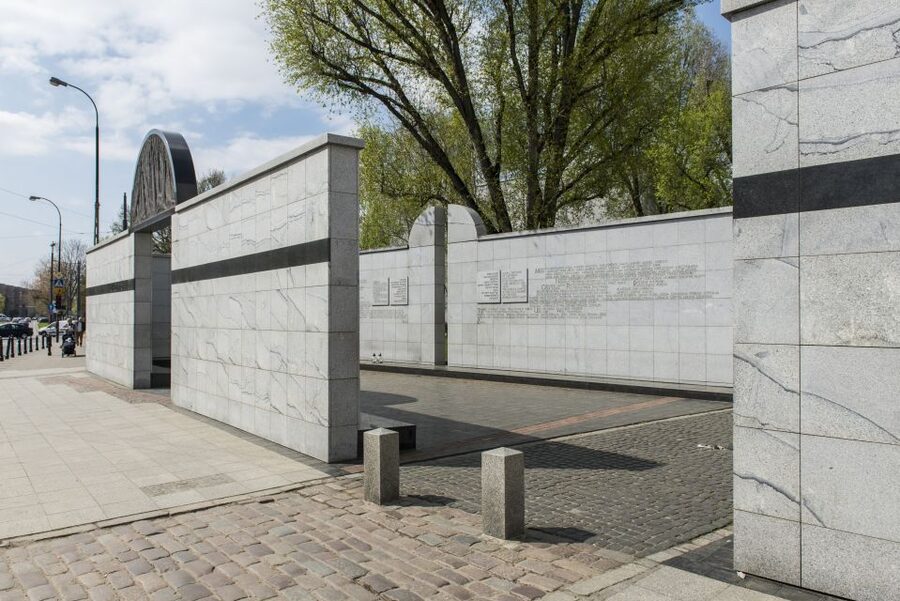
Umschlagplatz was the deportation point from which Warsaw Jews were sent to extermination camps. Today, the monument is a place for reflection and prayer, with a form that recalls both the walls of the ghetto and a railway wagon.
More than 400 victims’ names are engraved on its walls. The design is restrained, and the setting can feel stark. That lack of spectacle is part of its force. You have room to pause, listen, and think about the people represented by those names.
I would not rush this stop. Ask your guide to explain how Umschlagplatz fitted into the deportation process and how it relates to the former ghetto. The subject is heavy, but a private tour gives you the freedom to take a moment without worrying about holding up a large group.
The tour’s tone is serious here and throughout the ghetto route. It is not an entertainment stop, and that is appropriate. If you prefer a lighter sightseeing experience, this may feel intense. If you want a clear account of Warsaw’s Jewish wartime history, it is essential.
Okopowa Street and the Jewish Cemetery
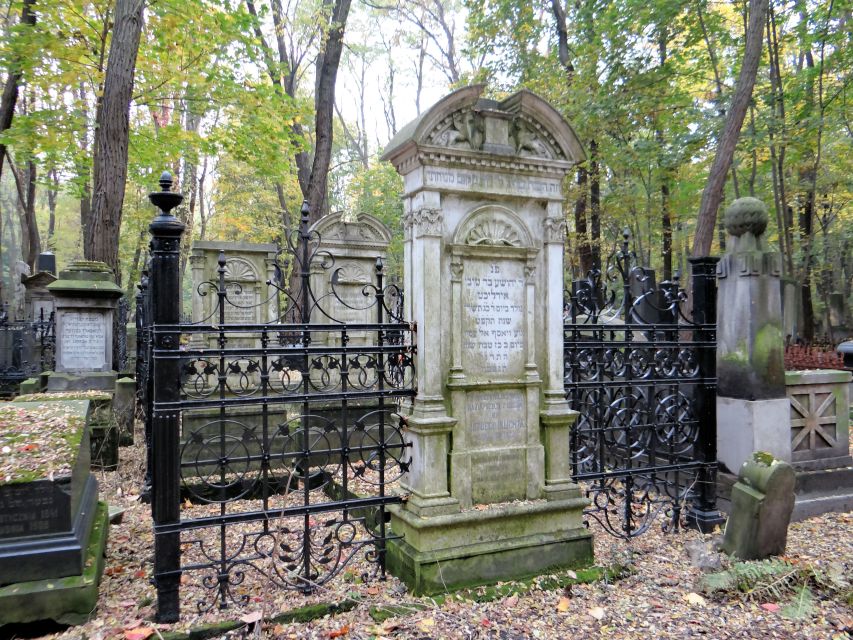
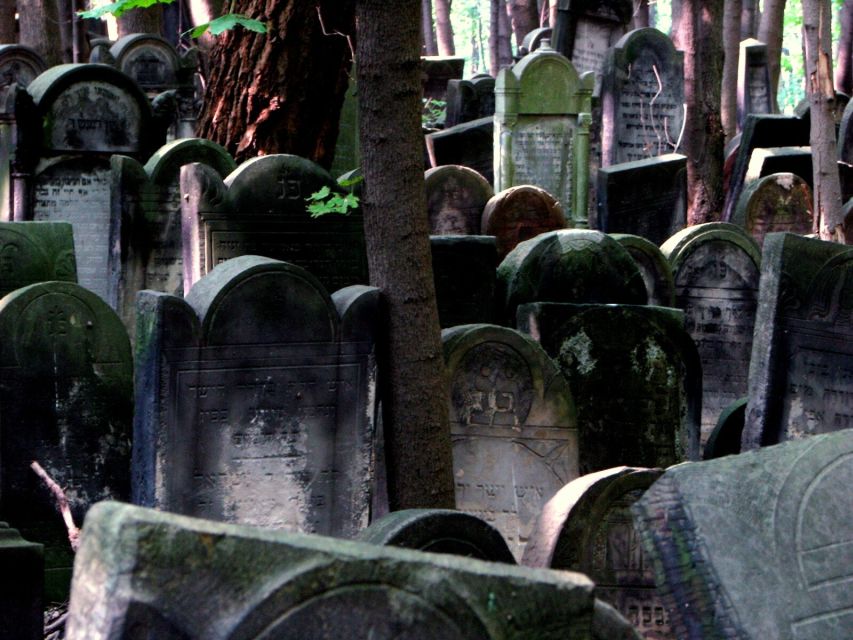
On Okopowa Street, you’ll visit the Jewish Cemetery, one of the largest Kirkuts in Europe. Its size helps you understand the scale and endurance of Jewish Warsaw across generations.
A cemetery visit adds something that the ghetto memorials cannot. Instead of focusing only on mass suffering and wartime death, it points to family life, scholarship, writing, religion, and public achievement. The cemetery is connected to the community that existed before the Holocaust, not just the catastrophe that followed.
Among those buried here is Ludwik Zamenhof, founder of Esperanto. The writer Ischok Leib Perec is also buried here. These names give the site a wider cultural reach, and your guide can explain why these figures mattered.
You’ll also see the symbolic grave of Janusz Korczak, the educator and protector of children who was murdered at Treblinka with the children in his care. His story is one of the tour’s most painful reminders that the Holocaust destroyed entire communities, including children and the adults who tried to protect them.
The cemetery is a place where comfortable shoes and a little patience help. The experience is not simply a quick photo stop. You’ll get more from it if you listen to the stories behind the names and allow time for the atmosphere to register.
Same country, a completely different kind of day:
- Warsaw: Chopin Concert in the Old Town
★ 4.8 · 2,287 reviews - Warsaw: Traditional Galar Cruise on The Vistula River
★ 4.6 · 1,640 reviews - Warsaw: Old Town Highlights Walking Tour in English
★ 4.7 · 1,516 reviews - Warsaw Concert: Chopin – Painted by Candlelights with Wine
★ 4.8 · 1,442 reviews
Chłodna Street and the Footbridge of Remembrance
The Footbridge of Remembrance crosses Chłodna Street, the road that once separated the small and large ghettos. The original bridge no longer exists in its wartime form, but a wooden structure and multimedia art installation recall its purpose and the tragic separation it represented.
This stop makes the geography of the ghetto easier to grasp. Maps and dates can feel abstract. Standing above the street helps you picture how people were cut off from one another, even within the enclosed district.
The installation also brings a modern artistic response to the site. It does not recreate the past in a literal way, but it reminds you that Warsaw is still working out how to mark places where so much was lost.
I like this stop because it links physical space with memory. Still, it is not a preserved wartime structure in the same way as a surviving synagogue or cemetery. Your guide’s explanation is important here, since the meaning comes from the history of the location and the artwork together.
Traces of the ghetto wall in today’s city
The former ghetto boundary survives in fragments. You’ll see sections of the wall as well as iron slabs set into pavements to show where the ghetto once ran.
These details are easy to miss on an independent walk. Warsaw has been rebuilt extensively, and modern streets do not always reveal what happened there. The pavement markers let you follow an invisible border through the present-day city.
I find this part especially useful for understanding the scale of the ghetto. A single wall fragment can seem isolated, but the markers help connect separate points into one larger outline.
Do not expect a preserved district with original buildings at every turn. This is a city rebuilt after immense wartime destruction. The tour’s value comes from helping you interpret what remains, what has been reconstructed, and what is marked only by a memorial.
Nożyk Synagogue, a surviving religious landmark
Nożyk Synagogue was built in the Neo-Romanesque style and survived the Holocaust period. It is one of the most significant surviving Jewish religious buildings in Warsaw.
The synagogue gives the route a different mood from the ghetto memorials. It represents worship, community, and Jewish life as an ongoing tradition rather than only a memory of wartime loss.
Entry arrangements are not included in the tour price, so you should regard the stop primarily as part of the guided sightseeing unless your guide confirms that you can go inside. The supplied tour details specifically exclude admission fees, and the four-hour schedule may limit interior time.
Even from the outside, the building matters. It helps you picture the religious institutions that once served a large Jewish population and shows that not every trace of that world disappeared.
Próżna Street and the surviving atmosphere of Jewish Warsaw
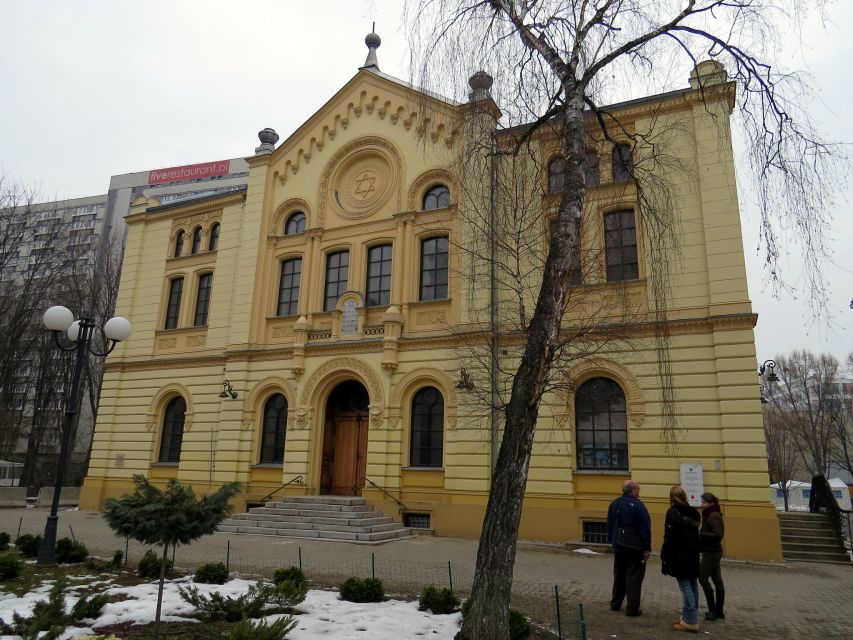
Próżna Street is included because it preserves more of the atmosphere associated with Jewish Warsaw than many other parts of the city. Its buildings and street setting offer a rare sense of continuity in a city where so much was destroyed.
This is not a substitute for seeing the former ghetto memorials. It is a complement to them. After hearing about deportation and the uprising, Próżna Street gives you a glimpse of the urban world in which families lived, worked, worshipped, and built communities.
The word atmosphere can be slippery, so keep your expectations realistic. You are not stepping into an untouched prewar neighborhood. You are seeing a surviving piece of the city, interpreted through your guide’s knowledge of what stood here and how Jewish life shaped Warsaw.
A guide who can adjust the experience
The private format is one of the tour’s strongest features. Guides are available in English, Spanish, German, Russian, Polish, French, Italian, and Portuguese, and pickup is arranged at your hotel lobby.
The guide assigned to you may differ. Wojciech received particular praise for sharing stories alongside historical facts, adjusting the pace, and tailoring the route to the group’s interests. Ziggy was also singled out for his helpful manner and strong command of the subject.
That flexibility is valuable on a four-hour route. You might want more time at the cemetery, a slower explanation of the uprising, or a quicker passage through certain memorials. In a private group, you can ask.
The tone of a guide matters greatly here. You need someone who can explain the facts clearly while treating the victims and their descendants with care. The strongest feedback emphasizes cultural sensitivity, warmth, professionalism, and the ability to make a difficult subject understandable without turning it into a dry lecture.
Is $42 per person good value?
At $42 per person, the tour is not the cheapest way to see Warsaw. One person noted that it felt a little expensive, but still considered it worth the cost. That judgment makes sense when you look at what is included.
You receive four hours with a private local guide, hotel pickup, and transportation between sites. The route covers locations spread across the city, including the cemetery, former ghetto, synagogue, Próżna Street, and memorials. Arranging that sequence alone would take planning, and public transport or taxis would add both cost and time.
The price is strongest for couples, families, or small groups who value personal attention. A solo visitor pays the full per-person rate for a private experience, so the value is less obvious if you are comfortable researching and walking independently.
Admission fees are not included. Plan for any entry costs separately, especially if you want to visit POLIN Museum afterward. The tour itself can point you toward the museum, but it is not the museum visit.
Saving time for POLIN Museum
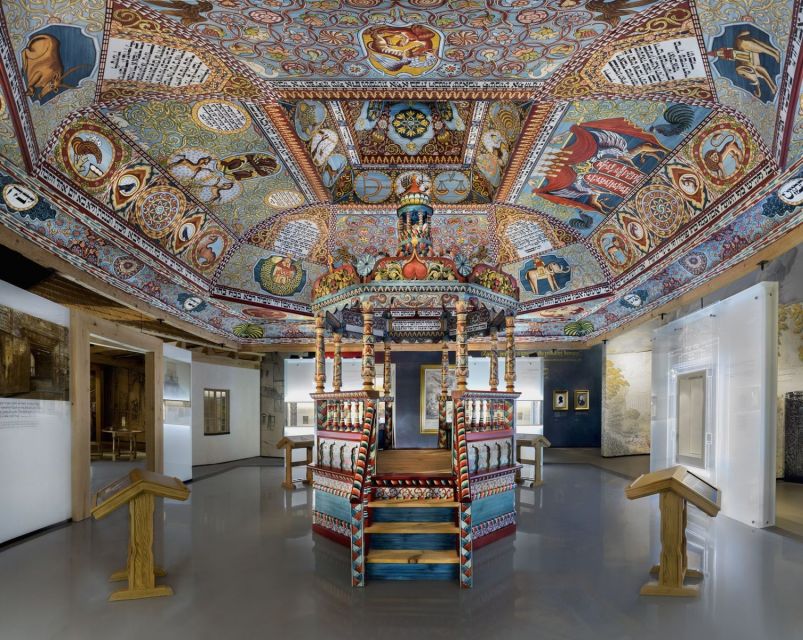
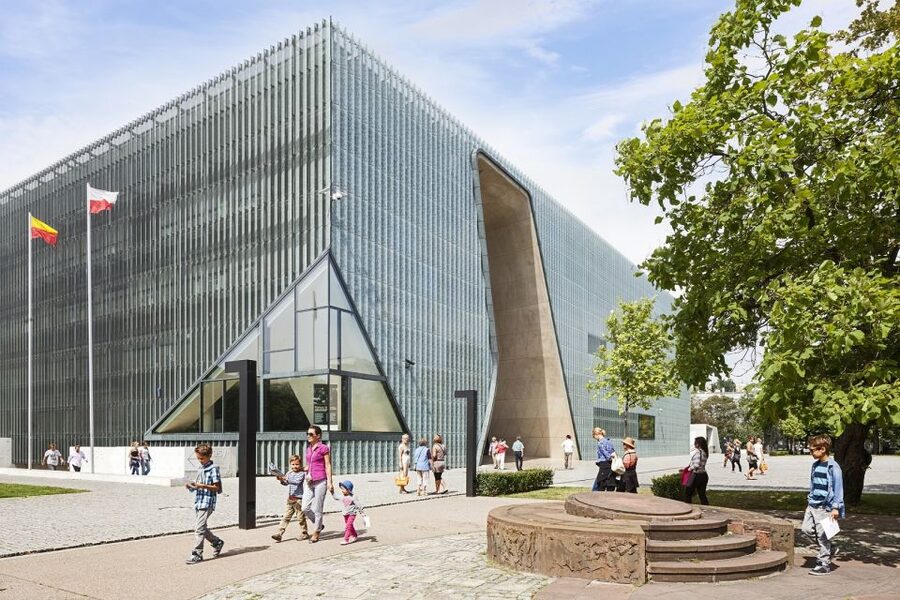
POLIN Museum of the History of Polish Jews is suggested as a follow-up visit. The four-hour tour can help you decide how to use your time there, but it does not replace the museum.
One couple arranged to finish at POLIN Museum and then spent several more hours inside. That is a sensible plan if your schedule allows it. Ask in advance about ending there, since the tour includes transportation and the guide can advise you on what to see next.
The museum is particularly useful after the tour because you’ll already have geographic and historical reference points. Memorials that seemed separate will make more sense, and names introduced at the cemetery or along the Memorial Route may stay with you.
Do not try to force a full museum visit into the four-hour schedule. The outdoor route is already dense, and the subject benefits from pauses. Treat POLIN as a second part of your Warsaw Jewish heritage day.
What the four hours feel like
The tour is full rather than leisurely. You move between several sites, with transportation helping reduce wasted time. At each stop, the guide provides historical explanation and space for questions.
The emotional pace also changes. The Monument to the Ghetto Heroes and Umschlagplatz are stark. The cemetery broadens the story toward community and culture. Próżna Street and Nożyk Synagogue point to survival and continuity, while the Footbridge of Remembrance shows how modern Warsaw remembers the past.
That range keeps the tour from becoming a single long account of wartime suffering. Still, the Holocaust remains the central subject, and you should be ready for difficult material.
Your guide may shape the balance. Some groups may want more background from the Middle Ages to the present day. Others may focus on the ghetto and Holocaust. A private booking gives you room to make that preference clear.
Who should book this tour?
I would choose this tour if you want a strong first introduction to Jewish Warsaw and prefer explanation over self-guided sightseeing. It suits people with limited time, families who need transportation, and anyone who wants to ask direct questions without a large group around them.
It is also a good choice if you want to visit several locations that are not all close together. The cemetery, ghetto markers, synagogue, Próżna Street, and memorials form a much clearer story when someone connects them.
You may want a different plan if you prefer spending hours at one museum or reading every plaque alone. Four hours cannot provide an exhaustive account of Jewish life in Warsaw, and admission to museums is extra.
Wear practical shoes, keep an open schedule, and tell the guide what matters most to you. If you are interested in Jewish history, the tour’s mix of prewar culture, wartime tragedy, and present-day remembrance makes the $42 cost reasonable, especially when shared by a small private group.
Final verdict
Book it if you want a carefully guided route through Warsaw’s Jewish landmarks, with transportation and hotel pickup taking care of the logistics. The strongest reasons are the private attention, the range of sites, and guides such as Wojciech and Ziggy, whose storytelling and flexibility add human meaning to difficult history.
Skip it only if you plan to spend the whole day at POLIN Museum or prefer to explore memorials without a guide. For most first-time visitors with four hours to spare, this is a thoughtful and efficient way to understand what Jewish Warsaw was, what the Holocaust destroyed, and what the city still remembers.
FAQ
How long does the Warsaw Jewish Heritage tour last?
The tour lasts four hours.
Is this a private tour?
Yes. It is arranged for a private group rather than a shared group tour.
What does the tour cost?
The listed price is $42 per person.
Is hotel pickup included?
Yes. Your guide waits in the hotel lobby with your name, and transportation is included.
Which languages are available?
The tour is available in English, Spanish, German, Russian, Polish, French, Italian, and Portuguese.
Does the tour visit the Jewish Cemetery?
Yes. The route includes the Jewish Cemetery on Okopowa Street, one of the largest Kirkuts in Europe.
Is admission to museums and other sites included?
No. Entry or admission fees are not included.
Can I visit POLIN Museum during the tour?
The tour can provide advice about what to see at POLIN Museum, and you may be able to arrange a drop-off there. A museum visit is not included in the four-hour tour.
Can I cancel the booking for a refund?
Yes. Cancellation up to 24 hours in advance qualifies for a full refund. You can also reserve now and pay later.
Just added around Warsaw
- World War II Warsaw Old Town, Military Cemetery Walking Tour★ 4.7 · 3 reviews
- Warsaw: Wolf’s Lair & Swieta Lipka Small-Group Tour + Lunch★ 5.0 · 3 reviews
- Wilanów Palace: 2-Hour Guided Tour with Entrance Tickets★ 4.8 · 8 reviews
- Warsaw Zoo Skip-the-Line Entry Ticket with Private Transport★ 4.8 · 3 reviews
- Warsaw Wolf’s Lair with St. Lipka and Mamerki Private Guided★ 4.2 · 3 reviews
- Warsaw: Vistula River Cruise with Your Music & City Views★ 4.6 · 78 reviews
- Warsaw: Private Vodka Tasting Night with Snacks and Pickup★ 5.0 · 7 reviews
- Warsaw Private Wilanow Palace & Garden Tour★ 4.6 · 30 reviews
Historical Tours, compared.
POLIN Museum of the History of Polish Jews Ticket
Read our review →
Gdańsk City Sights & History Guided Walking Tour in English
Read our review →

Small-Group Historical Guided Tour of Warsaw with pick up/drop off. Public Tour.
Read our review →Browse the lists this tour appears in