
Reviewed · SCHINDLERS FACTORY TOURS
Krakow: Schindler’s Factory Tour with Entrance Ticket
Schindler’s Factory is less a museum about one man than a carefully staged account of Krakow under Nazi occupation. You move through cramped rooms, old photographs, personal objects, and reconstructed scenes that show how war changed daily life for Jewish and non-Jewish residents alike. Oskar Schindler’s story is here, but it sits inside the larger tragedy.
I like the skip-the-line entry, especially when queues can stretch far beyond your 90-minute visit. I also like the guides’ personal storytelling. Guides such as Anna, Helena, Joanna, Kinga, and Dominique have been praised for clear explanations and family connections to wartime Poland. The main drawback is that groups can reach 25 people, and the tight galleries can feel crowded or move too quickly for careful reading.
Key points to know before you book
- This is mainly a Krakow wartime museum: Schindler appears throughout the story, but the exhibition focuses on occupation, the ghetto, persecution, and everyday life.
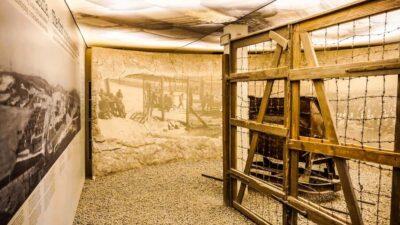
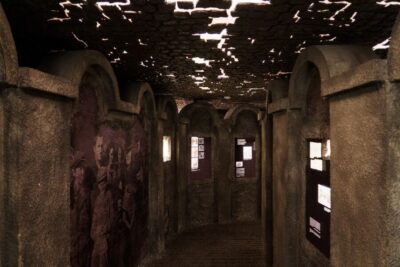
- The narrow rooms are part of the experience: Dim corridors, confined spaces, and symbolic design create a troubling sense of pressure and fear.
- A guide adds real value: The museum contains a lot to absorb, and a good guide helps you understand why the displays and room designs matter.
- Skip-the-line entry can save serious time: You enter with your booked group while a long queue may be forming outside.
- Schindler’s office is included: You see the room connected directly with the factory owner, though the building no longer contains the original factory machinery.
- Plan for a serious, emotional visit: Disturbing photographs and wartime subjects make this unsuitable for anyone seeking a light museum stop.
What Schindler’s Factory actually tells you
The name can create a slightly misleading expectation. If you come looking for a full museum about Oskar Schindler, his enamel business, and the making of the film Schindler’s List, you may be surprised.
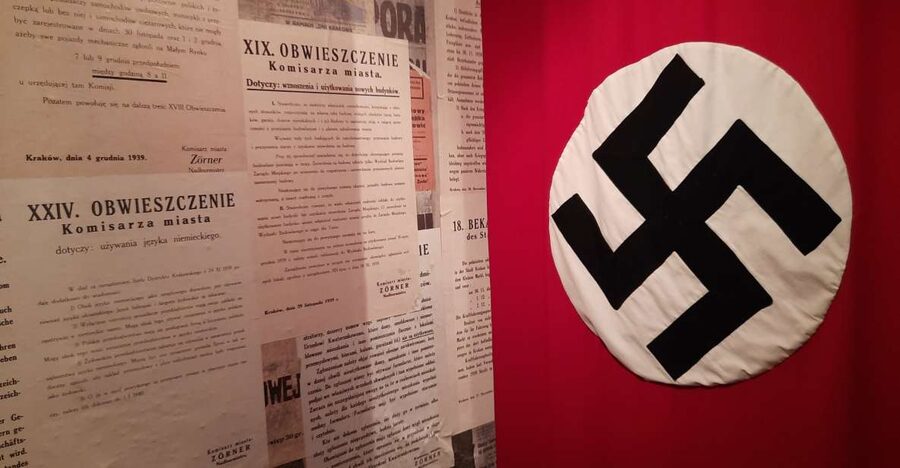
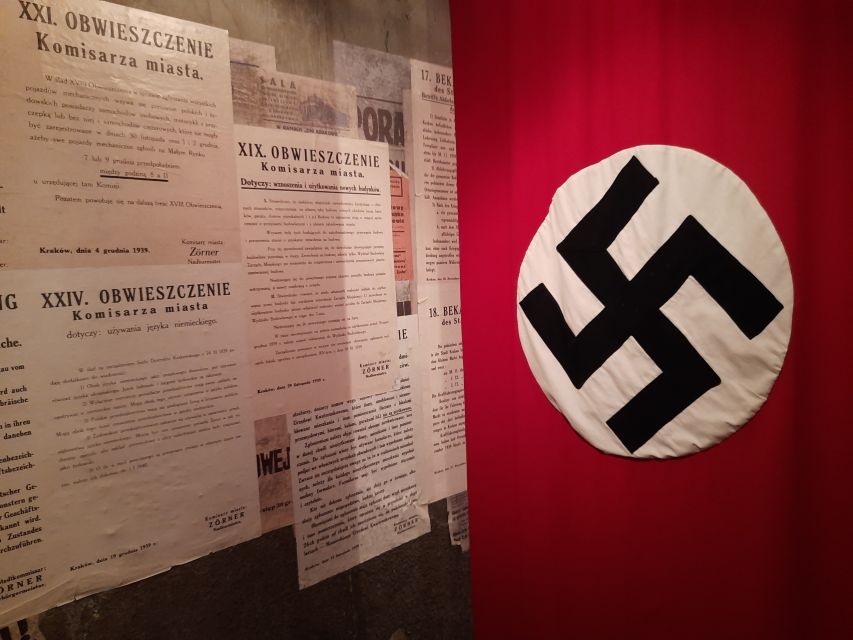
The main exhibition is called Krakow under Nazi Occupation 1939 to 1945. Its subject is the city itself. You learn how German rule affected Krakow’s streets, homes, workplaces, schools, Jewish community, and public life. Schindler’s role is important, but it is one thread in a much larger account.
That broader approach is a strength. It prevents the story from becoming a simple portrait of a charming industrialist who saved workers. You see the setting in which his actions mattered: a city under occupation, Jewish residents facing persecution and deportation, and a community being destroyed.
I would prepare yourself for a museum that asks you to think about systems as well as individuals. The exhibition shows the machinery of oppression, but it also leaves room for courage, compromise, fear, and survival. Schindler’s factory provided refuge to more than a thousand Jewish workers, yet the tour keeps that act within the scale of the wider disaster.
This is why the experience can feel more useful than a narrow biography. You leave with a better understanding of wartime Krakow, not just a collection of facts about Schindler.
More Schindlers Factory Tours in Krakow:
- Krakow: Oskar Schindler’s Factory Entry Ticket & Guided Tour
★ 4.2 · 3,793 reviews - Krakow: Schindler’s Factory Skip-the-Line Ticket
★ 4.4 · 3,105 reviews - Krakow: Schindler’s Factory Tour with Entrance Ticket
★ 4.6 · 1,737 reviews
Entering the former enamel factory
The museum occupies the former factory associated with Oskar Schindler. That connection gives the visit an immediate sense of place, even though you should not expect to see a working factory floor or original industrial machinery.
The building today is a museum. The factory setting provides the physical frame, but the rooms have been arranged for the exhibition. You will see displays, photographs, artifacts, and reconstructions rather than rows of historic equipment.
Your guide normally meets you outside the museum, with the tour operator identified on a laminated card. The meeting point can vary according to the option you book, so check your confirmation carefully. Arrive at least 10 minutes early. This matters here because late arrivals cannot join once the group has gone inside, and the ticket is not refunded.
Skip-the-line entry is one of the clearest practical benefits. The museum is popular, and one booking experience found a queue of roughly an hour and a half outside while the group walked in at its appointed time. The exact wait changes, of course, but a timed entry can protect a large part of your day.
Bring the identification document used for booking. Museum tickets are personalized, and the name on your ticket must match your ID. Without the correct document, museum staff may refuse entry.
The first galleries: a city before and during war
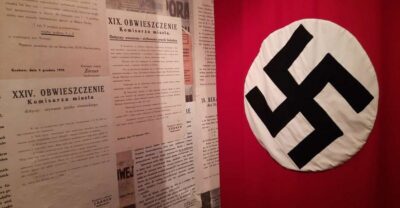
The tour begins by setting the scene. Instead of rushing straight to Schindler, the guide explains Krakow before and during the occupation. This gives you the context needed to understand how quickly normal life was dismantled.
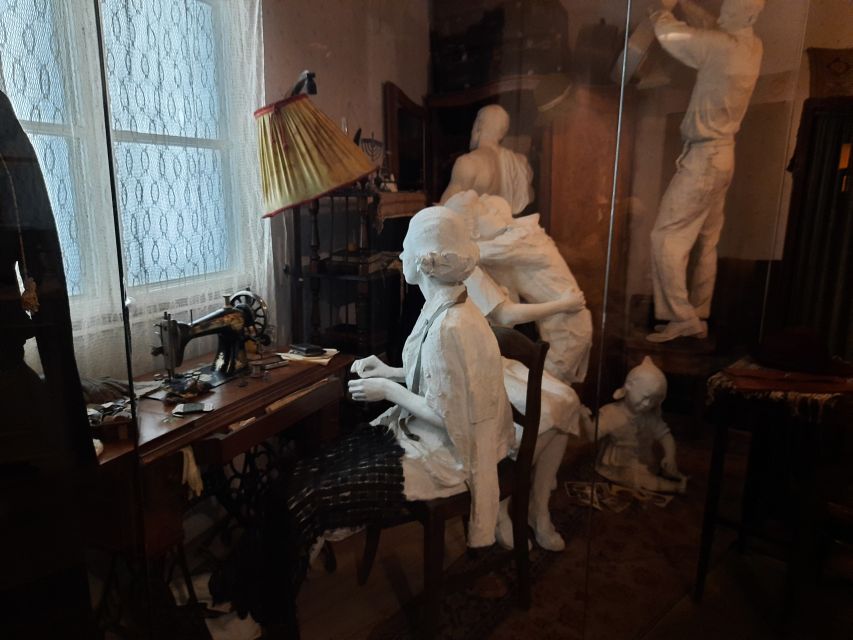
The displays use original photographs and objects alongside reconstructed interiors. That mix helps turn broad political events into something closer to daily experience. You may see how public spaces, homes, work, and social relations were altered by German rule.
This is also where the guide’s role becomes important. Several sections contain written information and visual material that can be hard to absorb in a short visit. A strong guide points out the details that carry the most weight and explains why a particular photograph or object matters.
Guides have been praised for bringing in family memories and personal accounts. Some have referred to relatives’ experiences, while others have shared stories connected to people saved by Schindler. These personal links can make the material feel immediate without turning the tour into a private family story.
The quality of the guide matters a lot. Anna, Helena, Joanna, Kinga, Dominique, Agnieszka, and Ivana, also called Jana, have all been singled out for clear delivery and a strong command of the subject. Your guide will depend on the date and language you choose, but you should expect a live presentation rather than an audio guide.
Narrow rooms and the physical feel of the exhibition
The museum’s design is not neutral. Much of the route passes through narrow, dimly lit rooms and confined corridors. The layout is meant to echo the fear, pressure, and lack of control experienced under Nazi rule.
This can be effective, but it has a practical downside. A group of up to 25 people is allowed, and some galleries are tight. When the museum is busy, people may need to squeeze past one another, and it can be hard to stop in front of every photograph.
Some people find the symbolic design memorable. One guide explained details such as the meaning of a soft or uneven floor, giving physical features a place in the story. These touches reward close attention, but they also mean you may spend less time simply reading every panel.
If you like to examine museum displays at your own pace, this format may test your patience. The guide keeps the group moving, and some parts can feel fast. One useful approach is to treat the 90-minute tour as an introduction, not as enough time to study every line of text.
The atmosphere is deliberately unsettling. Old photographs, especially those showing real events and human suffering, can be disturbing. I would not schedule this immediately before a celebratory meal or a packed evening of entertainment unless you are comfortable shifting between very different moods.
A few more Krakow trips to weigh up
- Krakow to Auschwitz Birkenau Guided Tour with Transfer and Ticket
★ 5.0 · 8,197 reviews - Krakow: Wieliczka Salt Mine Fast-Track Ticket & Guided Tour
★ 4.5 · 5,872 reviews - Auschwitz Birkenau Guided Tour with Ticket Hotel Pickup Small Van
★ 5.0 · 4,769 reviews - From Krakow: Wieliczka Salt Mine Tour & Skip the Line Ticket
★ 4.4 · 3,925 reviews
Krakow’s Jewish community and life in the ghetto
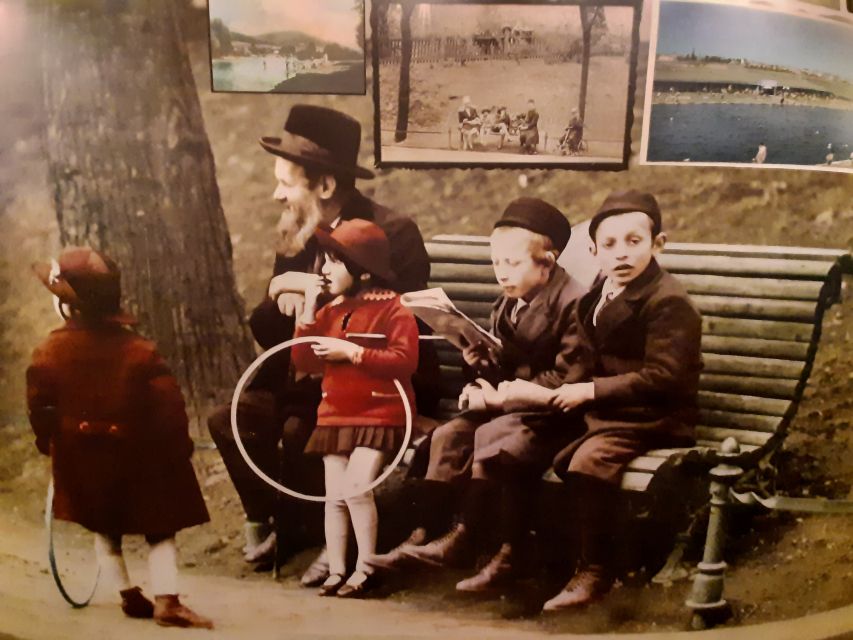
A central part of the tour deals with Krakow’s Jewish residents and the destruction of the city’s Jewish community. The guide explains persecution, deportations, and the conditions created by the occupation.
The value here is the focus on lived experience. Rather than treating the war as a list of dates and military movements, the exhibition shows how people lost homes, rights, work, safety, and family connections. You get a sense of how restrictions grew and how ordinary choices became dangerous.
This section also helps correct a common misunderstanding. The museum is not only about rescue. Schindler’s efforts are meaningful partly because the tour shows the terrible limits surrounding them. More than a thousand Jewish workers found protection through his factory, but thousands of others faced deportation and murder.
The guide can connect the personal stories with the physical city. You are not simply hearing about an abstract wartime place. You are learning about Krakow, the same city you are exploring today, and the people who lived there before the war and during the occupation.
For me, this is where the tour earns its time and price. The museum’s subject is painful, but it gives you a clearer understanding of Krakow than a Schindler-only presentation would.
Oskar Schindler’s role and the factory office
Schindler appears within the larger story as a businessman whose factory became a place of protection for Jewish workers. The tour explains his actions without allowing his personal story to swallow the history around it.
You will also see his office. This is one of the most direct links between the museum and the man whose name draws many people here. Still, the visit is not a tour of original machinery, production rooms, or a preserved industrial workplace.
That distinction is worth knowing before you pay. The factory name is historically important, but the experience is closer to a modern museum about wartime Krakow than a factory tour.
Several guides have added stories about people Schindler helped. Those accounts can give human shape to a story you may already know from film or popular culture. At the same time, some people may find that there is less detail about Schindler than expected.
I see that as the right balance for this museum. Schindler was one person. The occupation affected an entire city and community. Understanding both the rescue and the catastrophe gives you a more honest picture.
Why a guided visit is worth the $49 price
At $49 per person, this is not the cheapest museum admission in Krakow. The price includes the licensed guide, skip-the-line admission, and a 90-minute tour. Groups of 15 or more receive headsets, which help you hear in busy galleries.
The value depends on how you like to visit museums. If you are happy reading every panel alone and willing to wait in line, independent entry may suit you better. If you have limited time or want the exhibition explained as you go, the guide can make the difference between a confusing display and a clear story.
I would especially consider the tour if you are visiting Krakow for a short stay. The skip-the-line access protects your schedule, while the guide selects the main points in a museum that can otherwise feel dense.
Group size is the main concern. A maximum of 25 people is not enormous, but it can feel large in narrow rooms. Some tours may be smaller, and one booking even operated with a single participant, creating a private-tour feel. You cannot count on that, so book with the expectation of a shared group.
The language choice also matters. Group tours operate in one language only. English, French, German, Italian, and Spanish are available, and you should select your preferred language when booking.
How to make the 90 minutes work better
Arrive early, carry your ID, and do not plan around the exact minute printed on your confirmation. Tour times are approximate and may shift because of museum scheduling. Choose a preferred time, but understand that the final start time is not guaranteed.
Before entering, decide what you want from the visit. If Schindler himself is your main interest, pay close attention to the factory section, the office, and the guide’s comments about the workers he protected. If you want a fuller picture of wartime Poland, listen for the sections on Krakow’s Jewish community, occupation policy, and daily life.
Use the guide’s route as your framework. You may not have enough time to read every display, but you can note the sections you want to revisit. The exhibition is visually strong, and the setting can make it difficult to concentrate on small text while a group is moving.
Headsets are provided for groups of 15 or more. They should help, but a tight room can still make stopping and listening awkward. Stay close enough to your guide to follow the story, especially when the group turns into another gallery.
Give yourself emotional space afterward. This is not a quick celebrity museum. The photographs and accounts are disturbing, and the subject deserves more attention than a rushed stop between lunch and shopping.
Who will get the most from this tour
I recommend this experience to first-time visitors who want a clear introduction to Krakow during World War II. It also suits anyone who knows the film version of Schindler’s story but wants to understand the wider events behind it.
Families with older teenagers may find the guided format useful. One parent found that a teenage son gained more from the museum with a guide than he would have by reading the displays alone. The material is serious, so parents should judge what their children are ready to see.
History enthusiasts will appreciate the detail, but you do not need specialist knowledge. The strongest guides explain the subject in plain English and connect dates, places, and personal stories.
I would hesitate to recommend it to anyone expecting a cheerful attraction, a preserved factory with machinery, or a short portrait of Schindler alone. I would also think twice if you dislike guided pacing or crowded galleries.
Free cancellation is available up to 24 hours before the tour, and you can reserve now and pay later. Those terms help if your Krakow schedule is still changing, but the personalized ticket rules remain important.
Should you book Schindler’s Factory?
Book it if you want the wider story of wartime Krakow, not just a biography of Oskar Schindler. The strongest reasons are the expert live guides, the skip-the-line entry, the careful use of photographs and reconstructions, and the chance to see Schindler’s office.
Think twice if $49 feels high for a 90-minute museum visit or if you prefer a slow, self-guided pace. The group may be crowded, the rooms are confined, and the tour can move faster than you would like.
For most first-time Krakow visitors, I would book it and arrive ready for a serious experience. Just set your expectations correctly: this is a museum about a city under Nazi occupation, with Schindler’s factory as its setting and his rescue work as one important part of the story.
FAQ
How long is the Schindler’s Factory tour?
The guided visit lasts 90 minutes.
What is included in the price?
The $49 price includes a licensed expert guide, skip-the-line admission to Schindler’s Factory, and the 1.5-hour guided tour. Headsets are included for groups of 15 or more.
Is the museum mainly about Oskar Schindler?
No. The exhibition focuses mainly on Krakow under Nazi occupation from 1939 to 1945, including Jewish and non-Jewish daily life, persecution, deportations, and the destruction of Krakow’s Jewish community. Schindler and his factory are part of this wider story.
Which languages are available?
Live tours are available in English, French, German, Italian, and Spanish. Each group tour operates in one language.
Do I need identification to enter?
Yes. Bring an ID card or another identification document. The name and surname on your personalized ticket must match your document, or entry may be denied.
How early should I arrive?
Arrive 10 minutes before the scheduled start. Latecomers cannot join after the group has left, and their tickets cannot be refunded.
Can I cancel the booking?
You can cancel up to 24 hours in advance for a full refund. You can also reserve now and pay later.
Just added around Krakow
- Tour to Wadowice: Hometown of Pope Saint John Paul II★ 4.6 · 12 reviews
- The Jewish Quarter – Walking Tour★ 5.0 · 4 reviews
- From Kraków; to Białka Thermal Baths private tour★ 5.0 · 5 reviews
- St. Mary’s Basilica and more – a short walk with a guide★ 4.7 · 56 reviews
- Krakow: Auschwitz-Birkenau and Wieliczka Salt Mine Day Trip★ 4.7 · 84 reviews
- Krakow: Skip-the-Line Wawel Castle & Old Town Guided Tour★ 4.9 · 23 reviews
- Krakow: Schindler’s Factory Guided Tour★ 4.2 · 12 reviews
- Shooting Range Experience!★ 4.8 · 66 reviews
Schindlers Factory Tours, compared.
Oskar Schindler’s Factory Entry Ticket & Guided Tour
Read our review →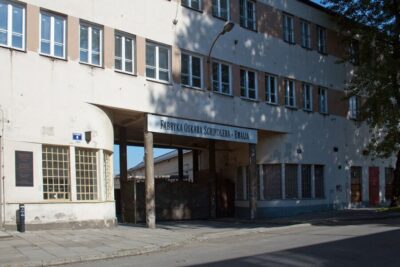
Schindler’s Factory Tour with Entrance Ticket
Read our review →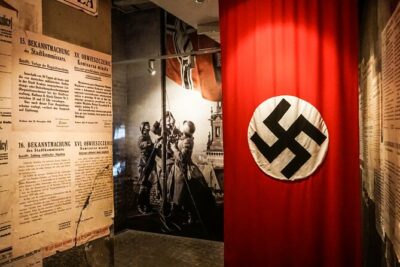
Schindler’s Factory in Krakow: Guided Tour & Skip the Line Ticket
Read our review →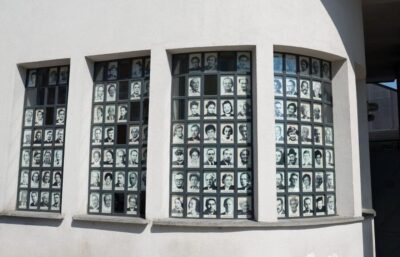
Schindler’s Factory Ticket with Guided Tour Option
Read our review →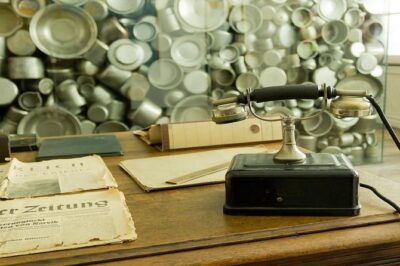
Krakow Schindler’s Factory Guided Tour with Admission Ticket
Read our review →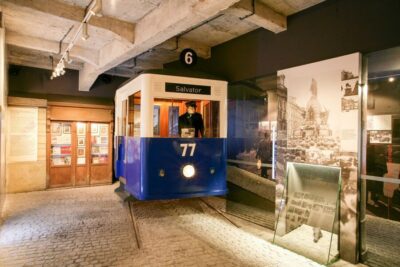
Schindler’s Factory Guided Tour with Entry Ticket
Read our review →Browse the lists this tour appears in