
Reviewed · SKIP THE LINE
Wroclaw: Skip the Line Panorama Raclawicka and Ostrow Tumski Guided Tour
The real prize here is the Panorama Raclawicka, a huge circular painting designed to make you feel surrounded by the 1794 Battle of Raclawice. Add Cathedral Island, old churches, bridges, and Wroclaw’s playful gnomes, and you get a brisk introduction to a city with several layers of history.
I like the private format, since your guide can adjust the route instead of marching a fixed group from stop to stop. I also like the skip-the-line entry to both the Panorama Raclawicka and National Museum, especially when your time in Wroclaw is short.
The main caution is pace. The tour is advertised at two to four hours, yet the route covers a remarkable number of places. One review praised the guide’s love for Wroclaw but noted that the group ran out of time, so decide early which stops matter most to you.
Key points to know before booking
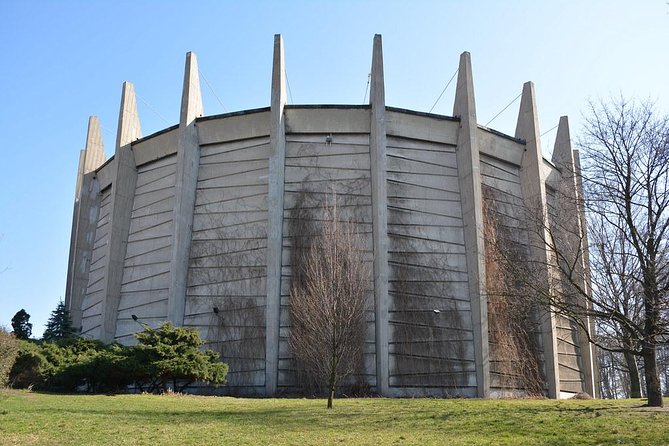
- The Panorama Raclawicka is the tour’s unusual centerpiece, with a rounded building and a painting that uses special perspective.
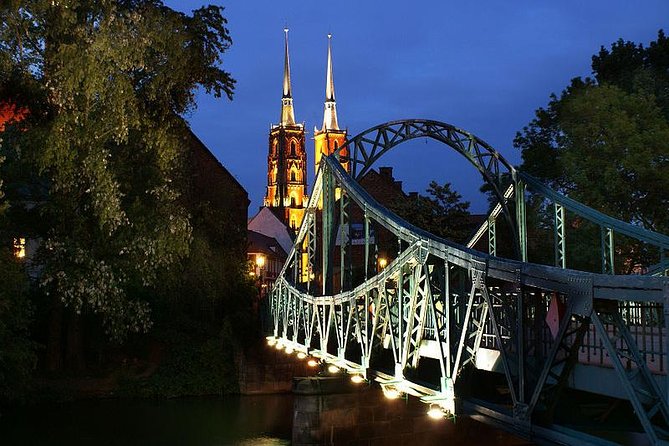
- Ostrow Tumski, or Cathedral Island, brings Wroclaw’s oldest quarter into focus, with churches, colorful streets, bridges, and river views.
- Skip-the-line admission covers two major museums, the Panorama Raclawicka and National Museum.
- A private certified guide can reshape the route, useful if you want more churches, art, city history, or time for photographs.
- The gnome hunt adds a light, local touch, since the small figures appear on sidewalks, windowsills, and lampposts.
- The $145.41 price is easier to justify for a group, particularly if several people can share the private guide and qualify for a group discount.
Why the Panorama Raclawicka deserves your first attention
The Panorama Raclawicka is not a standard framed painting in a gallery. The artwork occupies a specially designed, rounded space, and its perspective is meant to blur the boundary between painted scene and real surroundings.
That design is the point. You are not simply looking at a battle from across a room. You are placed inside a carefully arranged historical scene, with the curved surface helping the image appear to continue around you.
The subject is the Battle of Raclawice, fought in 1794. A guide adds useful context here because the painting is tied to Polish national memory, not just military art. You can look at the work on your own, but an explanation of the battle and the painting’s place in Polish identity makes the visit far more meaningful.
The scheduled visit is about 30 minutes. That is enough for a focused introduction, but not a long museum session. If you are an art lover, you may want to ask your guide at the start whether the Panorama will receive the full attention it deserves or be treated as one quick stop among many.
The skip-the-line ticket matters most when demand is high. You avoid spending part of a short city visit waiting to enter, though you should still keep the day flexible because this is a private walking route with many possible stops.
A few more Wroclaw trips to weigh up
- From Krakow: Wieliczka Salt Mine Tour & Skip the Line Ticket
★ 4.4 · 3,925 reviews - Auschwitz-Birkenau Skip-the-Line Guided Tour
★ 4.3 · 3,617 reviews - Krakow: Schindler’s Factory Skip-the-Line Ticket
★ 4.4 · 3,105 reviews
Wroclaw’s gnomes keep the walking tour playful
Wroclaw’s small gnome figures are an easy detail to miss if you keep your eyes fixed on monuments. They sit at ground level, perch on windowsills, and hang from lampposts. Many are linked to the trade or character of the area where they appear.
I like this part of the experience because it changes how you walk through the city. Instead of looking only at grand facades, you start scanning doorways and pavement edges. Children usually enjoy the search, but adults quickly get drawn in too.
The gnomes are not given a formal timed stop, so treat them as a thread running through the route. If you spot one, point it out and ask your guide about it. Since the tour is private, you have a better chance of pausing for a photograph than you would on a large group walk.
Cathedral Island reveals Wroclaw’s oldest quarter
Ostrow Tumski, also called Cathedral Island, is the historic heart of the route. Its colorful buildings, old streets, church towers, and riverside setting give you a strong sense of Wroclaw’s earliest urban core.
The quarter is especially good for walking because the sights are close enough to connect on foot, yet varied enough to keep the hour moving. You might go from a church interior to a bridge view, then pause beside the river or study photographs showing how the area looked at the end of the Second World War.
That wartime context is important. Wroclaw changed hands and suffered heavy damage during the war, and old photographs help you compare the city’s present appearance with its battered past. The restored buildings can look timeless until you learn how much rebuilding took place.
The tour allots about an hour to Ostrow Tumski. That is a sensible amount for an overview, but not enough for every interior and viewpoint. Tell your guide if you prefer architecture, religious art, wartime stories, or city views. The route is customizable, and your choices will matter.
St. John the Baptist Cathedral and the city from above
The Archcathedral of St. John the Baptist is one of the major visual anchors of Cathedral Island. Its restored exterior, stained-glass windows, and interior details make it worth more than a quick look from outside.
A tower viewpoint is also mentioned, offering a view across Wroclaw. Tower access is not included in the tour admission, so ask about the current arrangement and any extra cost before making it part of your plan. The listed cathedral visit is about 15 minutes, which may be enough for a short introduction but could feel tight if you want both the interior and the tower.
Several other religious buildings can be added at your request. One is a striking Baroque church described as among the most impressive in Europe. Another is the Greek Catholic cathedral, mainly Gothic and plain in appearance, with a beautiful Baroque chapel on its south side.
The Church of Our Lady on the Sand offers another change of mood. Built in Gothic style, it has a large single nave and Gothic altarpieces. A moving nativity scene in one chapel adds a more personal, curious detail, with an old nun attending it. The stop is listed at about 10 minutes, and entry is free.
Do not expect to enter every church automatically. Some interiors are possible on request, so raise the subject early. Church access can also affect the timing of the rest of the walk.
Same country, a completely different kind of day:
- Wroclaw: E-Car Tour and Audio Guide
★ 4.6 · 1,738 reviews - Wroclaw: 2-Hour Private Guided Tour by Electric Car
★ 4.8 · 805 reviews - Wrocław: Old Town and Ostrów Tumski Walking Tour in English
★ 4.8 · 311 reviews - Wroclaw: Private Old Town Guided Walking Tour (2 hours)
★ 4.8 · 275 reviews
Tumski Bridge and Wroclaw’s river views
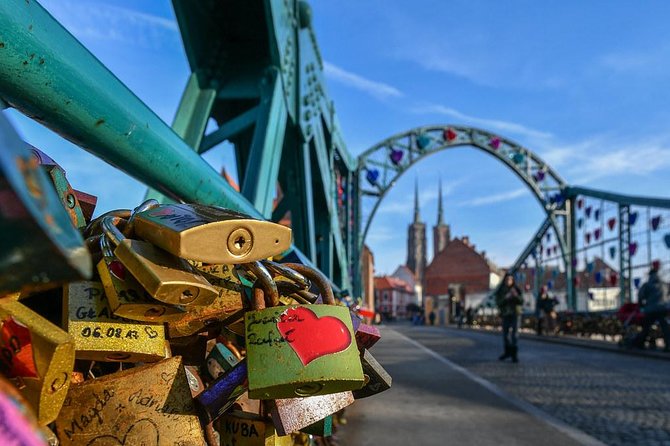
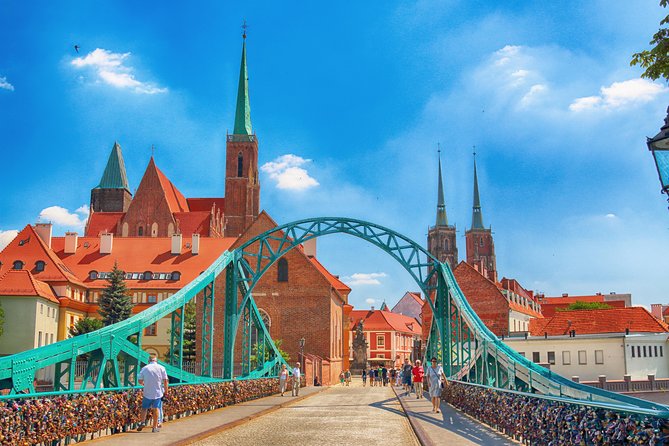
Tumski Bridge is a short stop, about 10 minutes, but it earns its place. The bridge is known for the many padlocks attached to it, giving the crossing a romantic feel and an obvious photograph.
The bridge also helps you understand Wroclaw’s geography. The Oder River breaks into channels around several islands, and bridges link the historic center to Cathedral Island and nearby districts. Boats, floating restaurants, bars, and riverside paths add movement to the view.
The water is not just background scenery. It explains why Wroclaw has so many bridges and why the islands form such a pleasant part of the city. Bielarska Island, for example, offers a quiet place with benches and room to stroll. The route can also include Słodowa Island, a small, attractive spot with views toward old buildings and the river.
Słodowa Island is listed at about 15 minutes. That is enough to pause, take photographs, and rest your feet. It is less useful if your main goal is museum time, so this is another place where your guide’s flexibility can help.
The National Museum adds art after the walking
The National Museum gives the tour an indoor second half. You can see paintings and sculptures by Silesian and Polish artists, along with works from farther afield. The collection provides a useful counterpoint to the streets and churches because it shows how the region’s art fits into a wider cultural setting.
About an hour is planned here, with admission included. That is a much more generous museum visit than the 30 minutes at the Panorama Raclawicka, though the building contains enough material to occupy much longer.
Skip-the-line entry is valuable if you want a structured museum stop without sacrificing the rest of the afternoon. Still, you should not expect to see every room in detail. Ask your guide to point you toward the galleries that best match your interests.
The surrounding area adds more architectural stops. The Ossolineum is a handsome palace building with a garden where you can walk. A university museum includes four rooms, one of them a tower with city views. Entry to that museum may be possible on request, so treat it as an optional addition rather than a guaranteed part of the core visit.
Monuments, churches, and smaller stops along the route
The route includes several places that may appeal more to architecture fans than to first-time sightseeing lists. You may see a monument in front of the Church of the Holy Cross, a church with two levels, slender windows, and tall towers, and an installation remembering Chinese students and Polish solidarity with people who opposed communism.
These details make the walk less predictable. You are not simply moving between the city’s two biggest ticketed attractions. You are also seeing how Wroclaw marks religious, political, and social memory in public spaces.
Another viewpoint offers a look toward Tumski Island and its cathedral from above. The exact order of these stops can change, since the tour is private and the guide may adjust the itinerary.
That flexibility is one of the strongest reasons to book this format. If you want only the major sights, the guide can keep the route focused. If you enjoy side streets, monuments, church interiors, and city stories, you can ask for a broader walk.
What the private guide changes
This is not a large shared walking tour. Only your group participates, and a personal certified guide leads the route. That makes the experience more conversational and gives you a practical chance to ask questions as you go.
One especially positive detail is the guide’s clear affection for Wroclaw. A well-informed guide can point out the main sights, explain why they matter, and suggest subjects or places for further study after the walk. That personal connection is valuable in a city whose story includes Polish, German, religious, artistic, and wartime chapters.
You should not assume that every stop will receive equal time. The guide may cover a long list of places, and the duration can range from two to four hours. A shorter version will feel like a highlights walk. A longer version may include more churches, islands, monuments, and museum time.
At the beginning, tell the guide what you care about most. You might choose:
- The Panorama and Polish history
- Cathedral Island churches
- Art at the National Museum
- Wroclaw’s river and bridges
- City photography
- Gnomes and lighter city details
This small conversation can prevent the common problem of trying to do everything and enjoying none of it fully.
Is $145.41 per person a fair price?
At $145.41 per person, this is not a budget walking tour. Its value depends heavily on the size of your group and how much use you make of the private format.
The price includes a certified personal guide and admission to the Panorama Raclawicka and National Museum. Those two tickets matter, as does the time saved by skip-the-line access. You are also paying for a route that combines museums, churches, bridges, islands, monuments, and local stories in one visit.
For one person or a couple, the cost may feel high compared with a basic city walk. For a family or group using the private booking and available group discounts, the calculation looks better. You share the guide rather than paying separately for several short tours, and you can shape the route around your own interests.
I would book it when Wroclaw is part of a short Poland itinerary and you want an efficient first look. I would hesitate if you prefer slow museum visits, long café breaks, or independent wandering. The tour covers a lot, and its value drops if you spend the whole time wishing it would slow down.
Meeting point, timing, and small practical details
The stated meeting point is Plac Katedralny 50, 50-329 Wroclaw, Poland. The end point is in Ostrow Tumski. The area is near public transportation, which makes the tour reasonably easy to reach without a car.
The total duration is approximately two to four hours. Some stops have suggested times: about 30 minutes at the Panorama, one hour at Ostrow Tumski, 15 minutes at St. John the Baptist Cathedral, 10 minutes at Tumski Bridge, one hour at the National Museum, 10 minutes at the Church of Our Lady on the Sand, and 15 minutes at Słodowa Island.
Those figures add up to a full outing before optional churches, monuments, gnome stops, or walking between sites. Wear comfortable shoes and keep your schedule open. Check the email sent the day before, since it contains important tour information.
Most people can participate, and confirmation arrives when you book. The activity is non-refundable and cannot be changed after cancellation, so confirm your date and group details carefully before paying.
Who should book this Wroclaw tour?
I would recommend it most strongly to first-time visitors who want a fast, guided orientation and to families or groups who value a private route. It also suits anyone who wants both major museum entries and a walking tour without arranging separate tickets and guides.
Art fans will appreciate the Panorama Raclawicka and National Museum. Architecture lovers will enjoy the churches, Ossolineum, bridges, and old streets. Children may respond best to the gnome search and the variety of islands and viewpoints.
You may want another type of experience if you prefer a slow, single-subject visit. The Panorama alone deserves careful attention, and the National Museum could easily fill more than an hour. A private guide can reduce the rush, but cannot make a long list of sights fit into an unlimited day.
Should you book the Panorama Raclawicka and Ostrow Tumski tour?
Book this tour if you want a private overview with two important museum entries, especially when your Wroclaw stay is short. The guide’s ability to adjust the route is useful, and the mix of art, churches, river islands, gnomes, and wartime context gives you more than a standard monument walk.
Before booking, accept the tradeoff: the tour tries to cover a great deal. Tell the guide your top priorities at the start, and ask about tower access or church interiors before the clock begins to run. If you do that, the $145.41 price can make sense for a group seeking structure, context, and saved waiting time.
FAQ
Where does the tour begin?
The meeting point is Plac Katedralny 50, 50-329 Wroclaw, Poland.
Where does the tour end?
The tour ends in Ostrow Tumski, Wroclaw.
How long does the tour last?
The approximate duration is two to four hours.
Is this a private tour?
Yes. Only your group participates, and a personal certified guide leads the experience.
Are tickets to the Panorama Raclawicka included?
Yes. Admission to the Panorama Raclawicka is included, with skip-the-line entry.
Is admission to the National Museum included?
Yes. The tour includes admission to the National Museum and skip-the-line access.
Is entry to St. John the Baptist Cathedral included?
No. Admission to the cathedral tower is not included. The cathedral visit is listed as about 15 minutes.
Can the itinerary be changed?
Yes. The tour is private and customizable, so you can discuss adjustments with the guide. Some church and museum entries are possible on request.
Is the booking refundable?
No. The experience is non-refundable and cannot be changed for any reason after cancellation or an amendment request.
Just added around Wroclaw
- Wrocław: World War II and the non-existent city of Breslau★ 3.6 · 3 reviews
- Wrocław to Rock City in Adrspach and Project Riese day trip★ 5.0 · 5 reviews
- Wroclaw: WW2 Tour to Project Riese & Gross-Rosen Museum★ 4.8 · 26 reviews
- Wroclaw: University Baroque Tour★ 5.0 · 19 reviews
- Wroclaw : Walking Custom Tour with a Local Guide★ 4.8 · 3 reviews
- Wrocław: Tour of the Old Town in an Imperial E-car★ 4.3 · 13 reviews
- Wroclaw to Rock City in Adrspach and Ksiaz Castle day trip★ 4.9 · 16 reviews
- Wroclaw: 3-Hour Bike Tour in English or Polish★ 4.8 · 66 reviews
Skip the Line, compared.
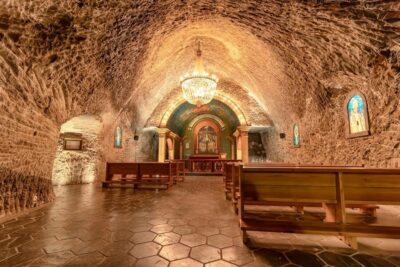
Wieliczka Salt Mine Tour & Skip the Line Ticket
Read our review →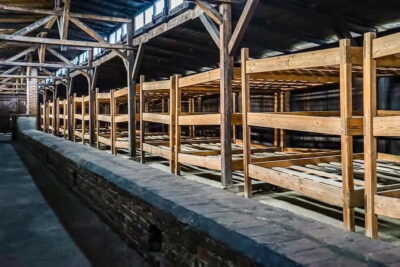
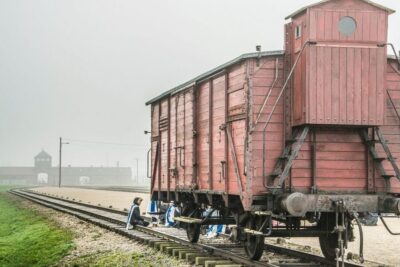
Auschwitz-Birkenau: Skip-the-Line Entry Ticket & Guided Tour
Read our review →
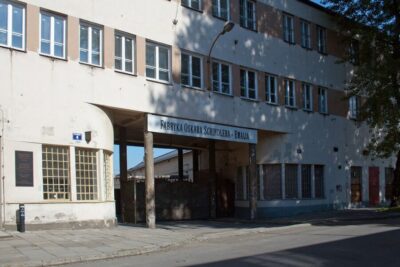
Schindler’s Factory in Krakow: Guided Tour & Skip the Line Ticket
Read our review →
Auschwitz-Birkenau Skip-the-Line Ticket and Guided Tour
Read our review →Auschwitz-Birkenau: Skip-the-Line Entry Ticket & Guided Tour
Read our review →Auschwitz-Birkenau: Skip-the-Line Ticket and Guided Tour
Read our review →Browse the lists this tour appears in