
Reviewed · JEWISH GHETTO TOURS
Warsaw: Warsaw Ghetto Private Walking Tour with Hotel Pickup
Warsaw’s former Jewish ghetto survives mostly in fragments, which makes this tour so useful. Your guide connects present-day streets with wartime photographs, maps, and personal stories, showing where the ghetto walls ran, where people were gathered for deportation, and how the 1943 Warsaw Ghetto Uprising unfolded.
I like the private format, since you can ask questions and set the pace. I also like the guide’s visual aids. Marzena and Mary are repeatedly singled out for clear, patient storytelling, while one guide even adjusted the walk for a 77-year-old participant. The main drawback is the price: $84 per person is a serious outlay for three hours, and hotel pickup details need checking before you book.
Key points to know before you go
- A history lesson tied to real streets: Maps and old photographs help you understand places that were largely destroyed.
- A private group with time for questions: The tour can adjust to your pace and level of background knowledge.
- Three major symbols: You visit the former ghetto wall fragments, Umschlagplatz, and the Monument to the Ghetto Heroes.
- The surviving synagogue: A donation of 20 PLN, 5 EUR, or 5 USD is expected for entry.
- A solemn subject for mature visitors: The tour is not suitable for children under 14 and includes substantial walking.
- Pickup wording can be confusing: Hotel pickup is advertised, but some bookings have required meeting the guide at Prozna Street 9.
Why this three-hour walk matters
This is not a tour of grand surviving buildings. Much of the Warsaw Ghetto was destroyed during and after the war, then rebuilt as modern Warsaw. You often look at an ordinary street and need a guide to explain what once occupied that space.
That is the central value here. The tour builds a clear story from the Nazi creation of the ghetto in 1940, through daily life under confinement, mass deportations, armed resistance, and the destruction that followed the uprising. You are not simply shown a plaque and given a date. You are helped to picture the vanished city around you.
Before the Second World War, Warsaw had the second-largest Jewish community in Europe, and Jewish residents made up about 30 percent of the city’s population. In less than three years, that community had been shattered. The scale is difficult to grasp from statistics alone, so connecting those numbers to streets, walls, and collection points gives the history a human size.
The tour presents a painful subject in a direct, respectful way. It discusses Nazi policy and the Holocaust without turning the suffering into spectacle. That tone matters, especially at places linked to deportation and mass death.
More Jewish Ghetto Tours in Warsaw
- Warsaw: Ghetto, Jewish Cemetery & POLIN Museum Private Tour
★ 4.8 · 132 reviews - Tour of the Warsaw Ghetto
★ 5.0 · 119 reviews - Warsaw: 2-Hour Tour of Daily Life in the Ghetto Warsaw
★ 4.9 · 26 reviews
A clear timeline from 1940 to 1943
The tour begins with the establishment of the ghetto. In 1940, Nazi authorities forced more than 400,000 Jews from Warsaw and nearby areas into roughly four square kilometers. The result was extreme overcrowding, with hunger, exhaustion, and disease killing around 100,000 people inside the ghetto.
Your guide explains the machinery behind this system and the supposed logic used to justify it. The point is not to treat Nazi planning as clever administration. It is to show how bureaucracy, segregation, starvation, forced labor, and deportation worked together as part of a plan of destruction.
That chronological approach is one of the strongest parts of the experience. You learn what happened first, then see how each step made the next one possible. Warren described this structure as a way of linking the Nazi plan to the places where it was carried out, and that is exactly the kind of organization that helps a difficult history make sense.
The tour also makes room for everyday life. You hear about the conditions inside the ghetto, not just the final deportations. This helps explain why people faced impossible choices, how families tried to survive, and why resistance developed even when the odds were so poor.
Finding the last street and fragments of the wall
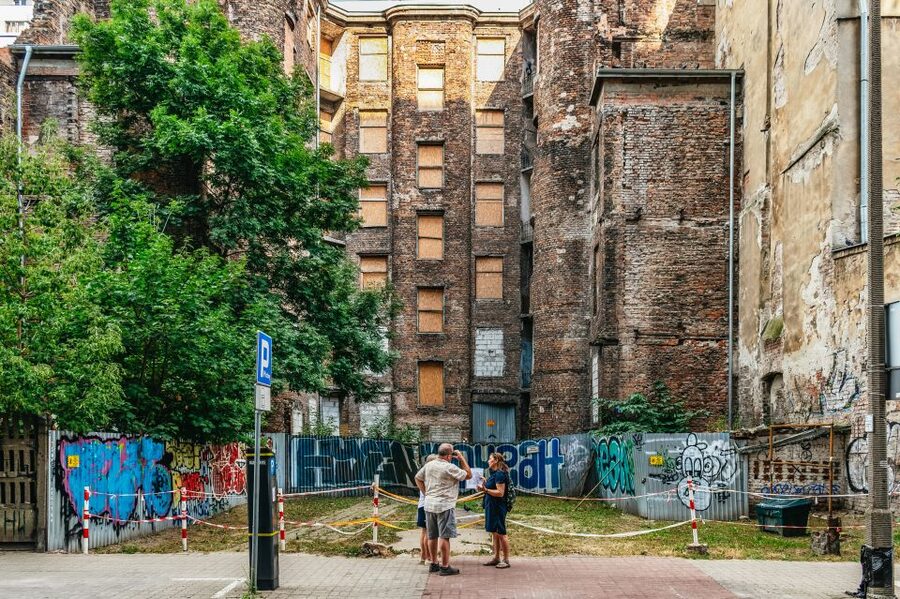
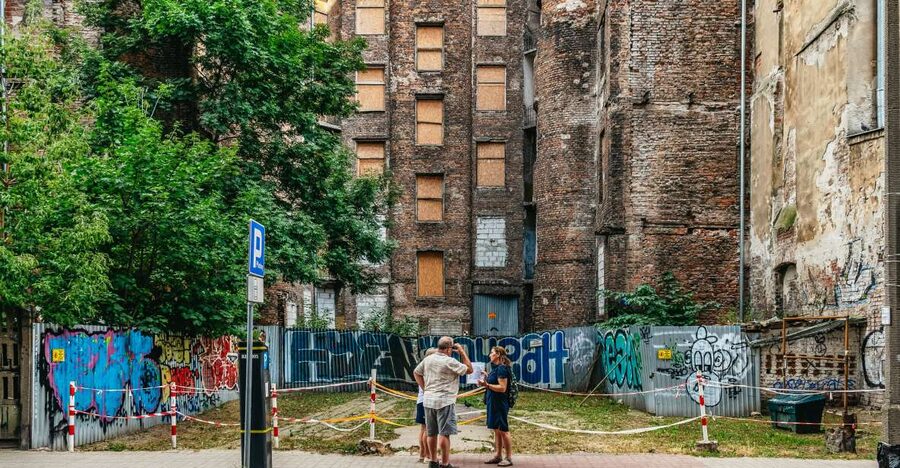
One of the most effective parts of the walk is seeing the last street of the ghetto and surviving fragments of its walls. These are modest remains, not a complete preserved district. That can be disappointing if you expect a large open-air museum, but the small scale also forces you to pay attention.
Old photographs are particularly helpful here. Guides have used printed photographs, maps, and images on tablets to compare wartime scenes with today’s streets. A wall fragment becomes more meaningful when you can see how it fitted into the former boundary and understand who was trapped behind it.
The physical remains also make an important point about memory. The ghetto is no longer intact, and many original buildings disappeared, but the city still contains traces that can be read. Your guide helps you find those traces instead of walking past them.
Wear comfortable shoes. The tour lasts three hours and covers a fair amount of ground, although the private format allows the guide to stop and adjust the pace. If you have limited mobility, note that the activity is specifically not suitable for people with mobility impairments.
Umschlagplatz and the mechanics of deportation
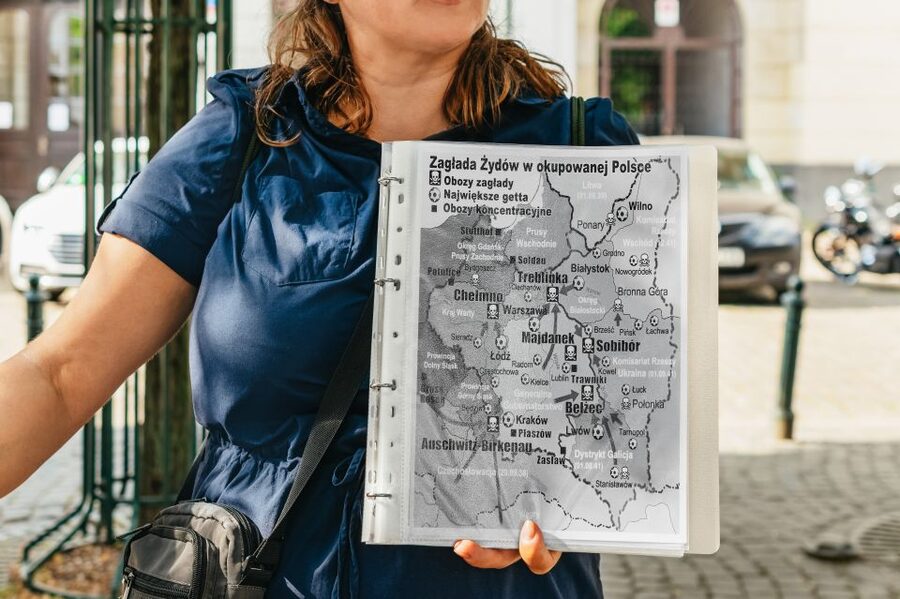
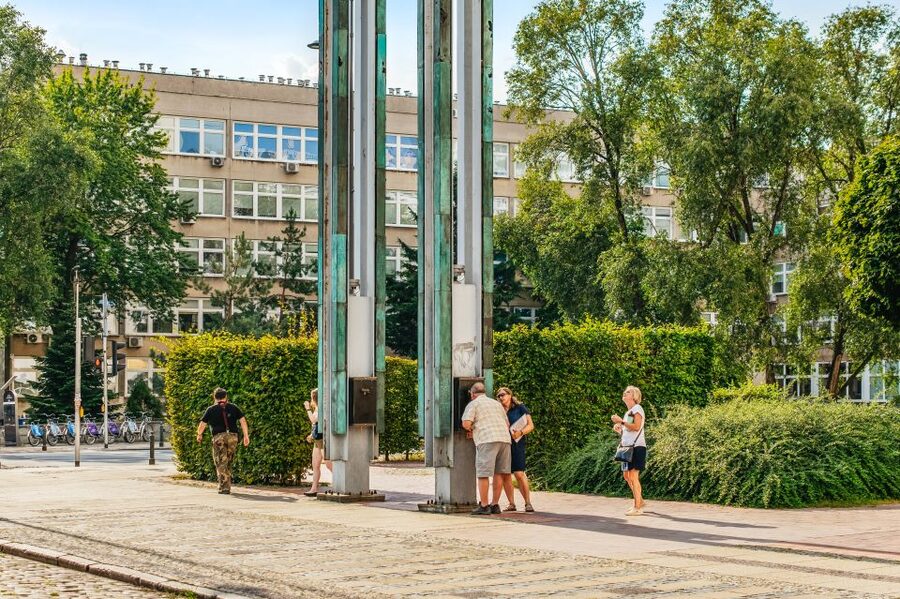
Umschlagplatz, the former collection point, is one of the tour’s key stops. This is where Jews were assembled before deportation, including transports sent to Treblinka extermination camp. More than 300,000 people from the Warsaw Ghetto were killed at Treblinka.
The site’s importance comes from its role in the process. Deportation was not an abstract event happening somewhere far away. People were forced to a specific place, gathered there, and loaded onto trains. The tour explains this machinery in relation to the broader plan for the Final Solution.
Expect this part to be emotionally heavy. It is not designed as light sightseeing, and you should leave enough mental space afterward rather than scheduling it between rushed activities. The guide’s role is to provide context and answer questions, but no guide can make the subject easy.
Same country, a completely different kind of day:
- Warsaw: Chopin Concert in the Old Town
★ 4.8 · 2,287 reviews - Warsaw: Traditional Galar Cruise on The Vistula River
★ 4.6 · 1,640 reviews - Warsaw: Old Town Highlights Walking Tour in English
★ 4.7 · 1,516 reviews - Warsaw Concert: Chopin – Painted by Candlelights with Wine
★ 4.8 · 1,442 reviews
The Warsaw Ghetto Uprising in its own setting
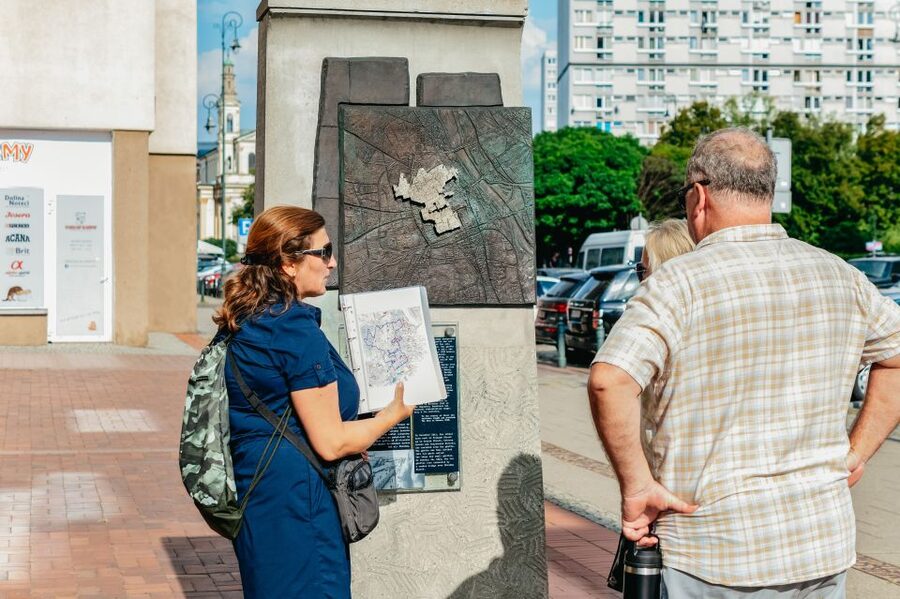
The tour then moves toward the 1943 uprising. When the Nazis tried to complete the liquidation of the ghetto, Jewish fighters took up arms. Their resistance against heavily armed German forces lasted nearly a month.
The imbalance of power was enormous, but the uprising is not presented only as a military episode. Your guide explains why people resisted, who helped them, and what the act of fighting meant after years of persecution, starvation, and mass deportation.
The places connected with the uprising carry extra force because so little of the original district remains. You may be looking at a rebuilt street, but the photographs and explanation show how the area looked during the revolt. Sarah described this use of present-day locations and wartime images as especially helpful, and I agree with the method: it lets you see both the physical change and the historical continuity.
The Nazis destroyed the ghetto in revenge and in an attempt to erase it. Only a small number of Jews survived, among them Władysław Szpilman, whose story was later portrayed in the film The Pianist. The tour places his survival within the wider destruction rather than treating it as a separate movie story.
The Monument to the Ghetto Heroes
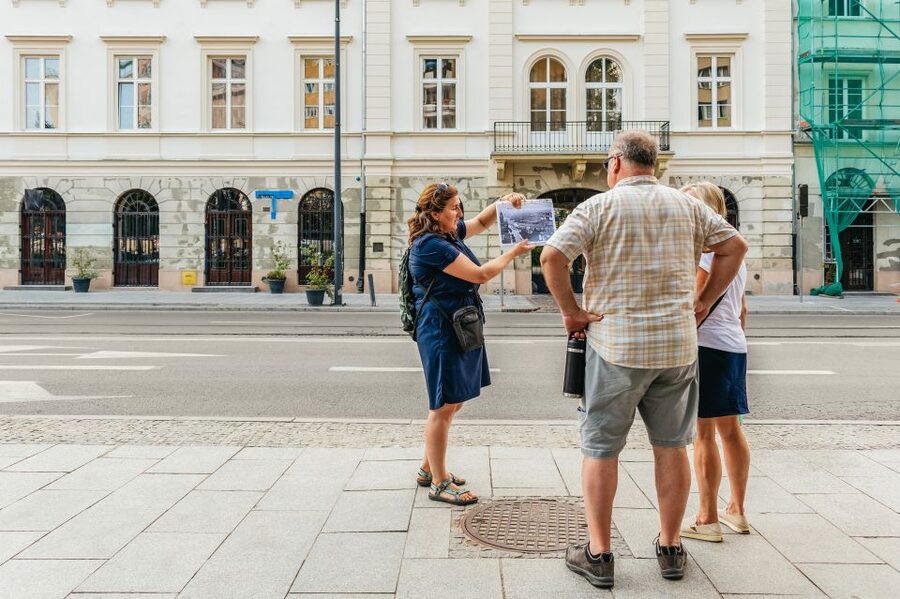
The Monument to the Ghetto Heroes is another central stop. Its symbolism is tied to the people who fought in the uprising, and your guide explains why the monument matters within Warsaw’s postwar memory.
This is also a good place to pause and ask questions. Because the tour is private, you are not competing with a large crowd to hear the explanation or squeeze in a final question. The guide can adjust the detail to your interests, from military resistance to Jewish life in Warsaw before the war.
Several participants found that the guide’s background material made the monument easier to understand. Without that context, you might admire the sculpture but miss the choices in its design and location.
The tour may finish near the POLIN Museum of the History of Polish Jews. This is not listed as an included museum visit, so do not assume museum admission or touring time is part of the three hours. If your walk ends there, leave at least two extra hours if you plan to visit the museum afterward.
Visiting the synagogue that survived
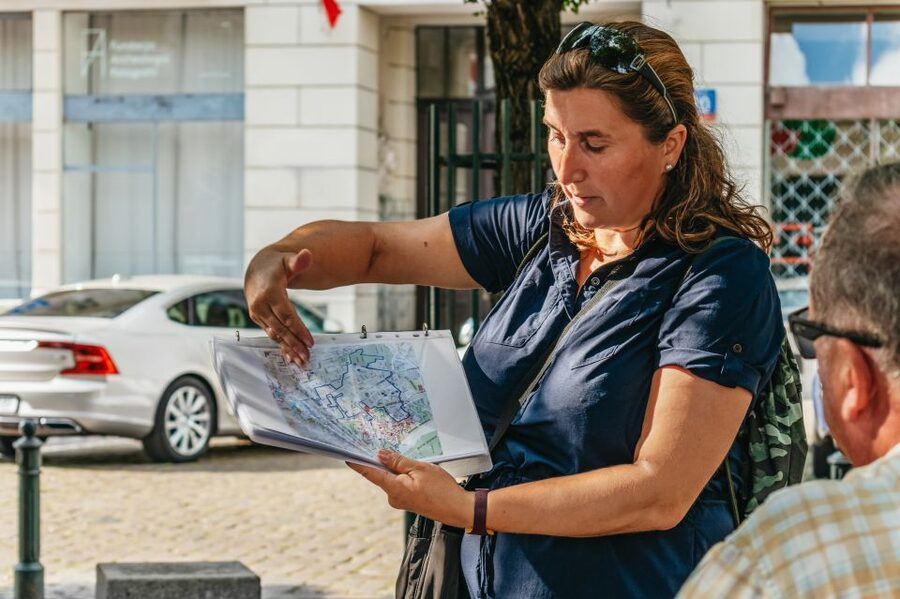
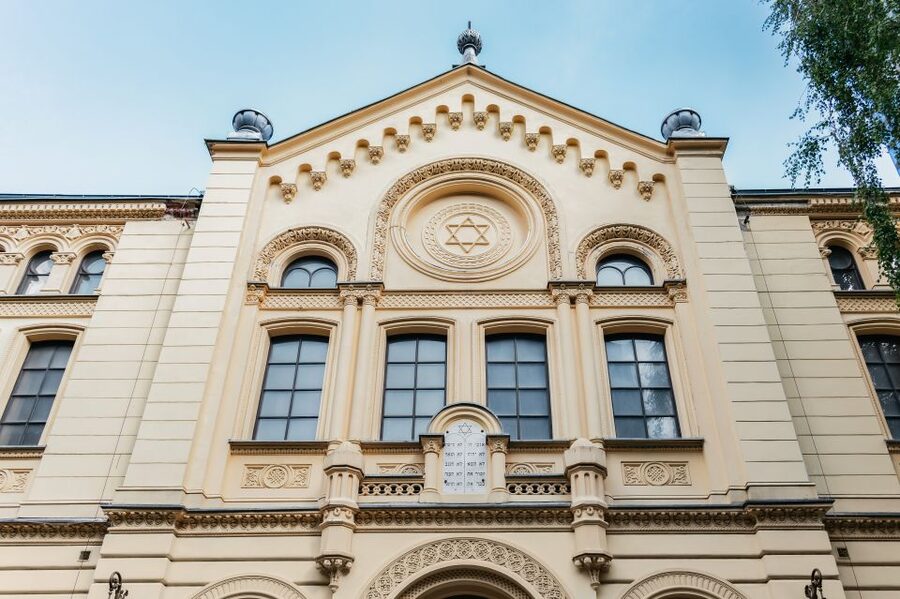
The itinerary includes Warsaw’s only synagogue that survived the Second World War and remains in operation. The visit adds a living place of worship to a tour otherwise focused on vanished streets and destroyed communities.
A donation for the synagogue is not included. Bring 20 PLN, 5 EUR, or 5 USD in cash. You should also bring a head covering or kippah, since appropriate dress and respect are required for the visit.
This stop may be brief compared with a museum visit, but it is important for what it represents. The tour is not only about death and destruction. A functioning synagogue offers a reminder that Jewish religious life in Warsaw did not become merely a historical subject.
The experience is best approached quietly. Comfortable shoes are useful, but a hat, sunscreen, and suitable clothing also matter on a sunny day. Cash is worth carrying for the synagogue donation.
The guides make the difference
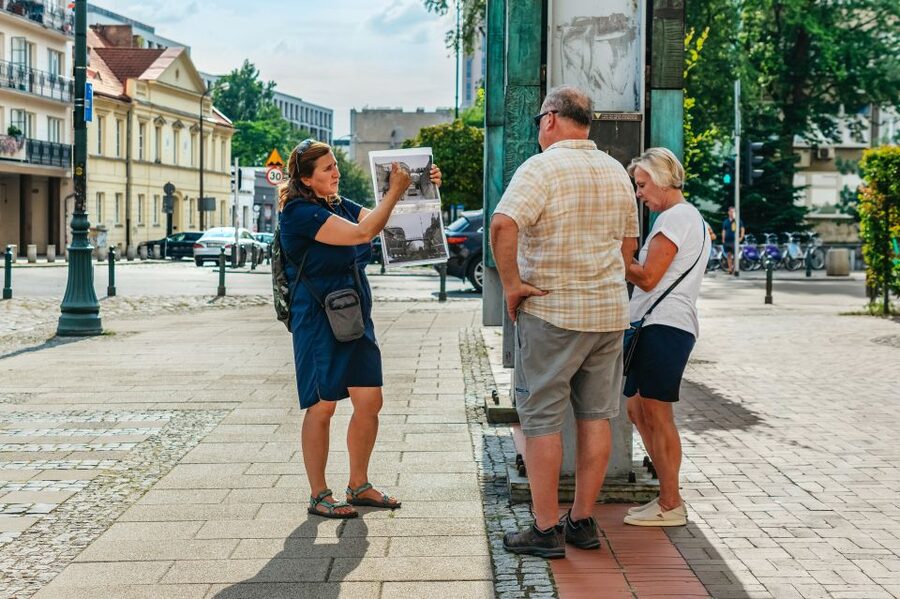
The strongest feature of this tour is the guiding. Marzena receives especially high praise for keeping the full three hours engaging, answering detailed questions, and using photographs to show the difference between wartime Warsaw and the city you see now. She has also adapted the pace for older participants and adjusted the tour to suit a group’s background.
Mary has been praised for a well-organized route, strong command of the subject, and the ability to explain both the ghetto and wider Warsaw history. She has also helped participants use public transport during the tour when needed. Eva and Wojtek have guided the experience as well, with Wojtek noted for comparing historical photographs on a tablet.
Guide assignments can change, so you should not treat a particular name as guaranteed. Still, the repeated praise for Marzena and Mary tells you what to expect from the best version of the tour: patient explanations, a chronological story, visual evidence, and room for serious questions.
This is not the right choice if you prefer to wander silently or spend most of your time inside museums. It is a good match if you want someone to explain why a particular corner matters and how it fits into the larger story.
Is $84 per person fair value?
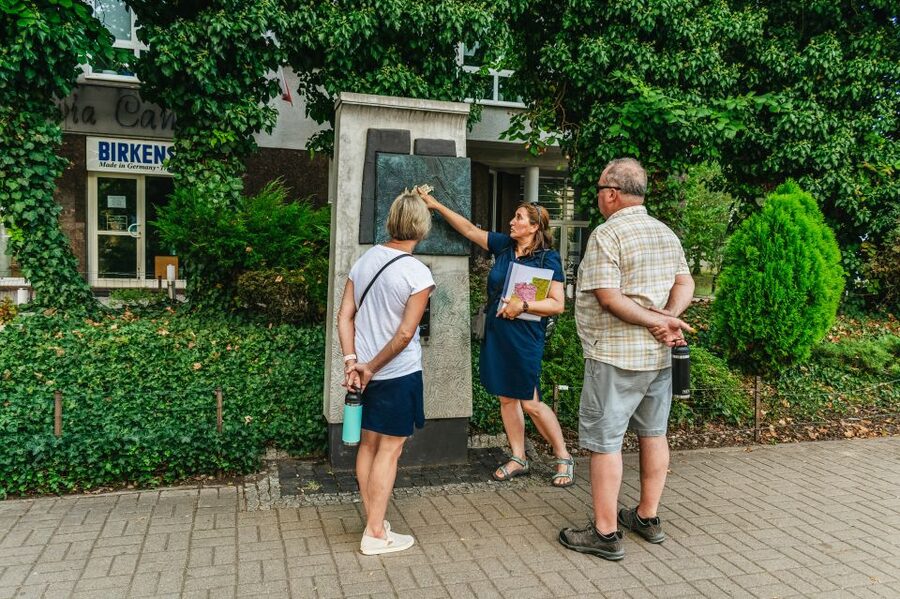
At $84 per person, this private tour costs more than a basic group walk. The value depends on how much you want from the experience.
You are paying for a licensed guide, private-group attention, transportation by car, a city plan, information booklets, and the option of hotel pickup and drop-off. The guide’s visual materials and ability to adapt the pace are also important, especially because many sites are difficult to recognize without help.
For a couple or small group, the price can make sense. You get three hours focused on your questions rather than a standard speech delivered to a crowd. If you have already read widely about the Holocaust, a private guide may still add value by locating lesser-known traces and explaining surviving buildings.
The cost is harder to justify if you want only a quick overview or plan to visit several paid museums on the same day. One participant felt the price could prevent more people from booking, and that is a fair concern. Add the synagogue donation, food, and any separate museum admission to your budget.
Free cancellation up to 24 hours before the start and reserve-now-pay-later terms reduce the financial risk when your plans are still moving. Those terms do not make the tour cheap, but they do make advance planning easier.
Pickup, meeting point, and practical snags
The information about hotel pickup is not perfectly clear. Hotel pickup and drop-off are included in the stated details, but some bookings have instructed participants to meet the guide instead. One person specifically noted that the advertised pickup did not occur.
Confirm the arrangement before the day of the tour. If you are meeting in the city center, the stated point is Prozna Street 9, between Bistro Charlotte Menora and Strefa Restaurant. Look for a guide holding a PolinTours sign.
Transportation by car is included, though the experience itself is primarily a walking tour. Since private tours can be adapted, ask about the exact pickup plan and walking demands if those details affect your decision.
Do not bring oversize luggage or large bags. Bring comfortable shoes, a hat, sunscreen, a head covering or kippah, and cash for the synagogue donation. English and German are available.
Who should book this tour?
I would recommend it to adults and teenagers aged 14 or older who want a serious, place-based introduction to the Warsaw Ghetto. It works especially well for first-time visitors who know the broad outline of the Holocaust but need help understanding Warsaw’s particular story.
It also suits people with strong prior knowledge. A guide carrying old photographs and maps can reveal details you would miss alone, and a private format gives you room to ask precise questions.
Families with younger children should choose a different activity. The subject is difficult, and the age restriction is clear. People with mobility impairments should also avoid this tour because it involves walking and is not listed as suitable for them.
Should you book it?
Book this tour if you want Warsaw’s Holocaust history explained on the streets where it happened, with a private guide who can slow down, answer questions, and use photographs to bridge the gap between the vanished ghetto and modern Warsaw.
The price is the chief caution, and you should confirm hotel pickup rather than assuming it is automatic. But for a small group that values careful interpretation, the combination of real sites, visual material, the surviving synagogue, and uprising landmarks makes the three hours worthwhile. Schedule the POLIN Museum separately afterward if you want a fuller picture of Jewish life in Poland.
FAQ
How long is the Warsaw Ghetto private walking tour?
The tour lasts three hours.
What languages are available?
The live guide is available in English or German.
Is this a private tour?
Yes. The activity is organized for a private group.
Does the tour include hotel pickup and drop-off?
Hotel pickup and drop-off are included in the activity details, but pickup instructions can vary. Confirm the arrangement in advance. The stated meeting point is Prozna Street 9 if you are asked to meet there.
Where is the stated meeting point?
The meeting point is Prozna Street 9, between Bistro Charlotte Menora and Strefa Restaurant. Look for a guide holding a PolinTours sign.
What places are visited?
The tour includes fragments of the former ghetto walls, the last street of the ghetto, areas that once lay inside the ghetto, the surviving synagogue, Umschlagplatz, and the Monument to the Ghetto Heroes.
Is entry to the synagogue included?
No. A donation of 20 PLN, 5 EUR, or 5 USD is required for synagogue entry.
What should I bring?
Bring comfortable shoes, a hat, sunscreen, a head covering or kippah, and cash.
Can I bring large luggage?
No. Oversize luggage and large bags are not allowed.
Is the tour suitable for children?
It is not suitable for children under 14.
Can people with mobility impairments take the tour?
The activity is listed as unsuitable for people with mobility impairments.
Can I cancel the booking?
You can cancel up to 24 hours in advance for a full refund. Reserve-now-pay-later is also available.
More Walking Tours in Warsaw
- Warsaw: Old Town Guided Walking Tour
★ 4.9 · 599 reviews - Half-Day Polish Food Walking Tour with Guide and Dinner
★ 4.5 · 381 reviews - Old Town Warsaw Walking Tour
★ 4.5 · 333 reviews - Warsaw: Jewish History Guided Walking Tour in English
★ 4.7 · 324 reviews
Just added around Warsaw
- Taste of Poland, food tour and guided walk with 12 tasting★ 5.0 · 3 reviews
- Skip-the-Line Warsaw Royal Castle Private Guided Tour★ 5.0 · 4 reviews
- Secrets of Warsaw 4-hour Bike Tour★ 5.0 · 25 reviews
- Warsaw: Live Show at Sabat Theatre★ 4.5 · 11 reviews
- Private Warsaw City Tour★ 4.9 · 4 reviews
- Warsaw: WWII Private Tour by Retro Minibus with Hotel Pickup★ 5.0 · 7 reviews
- Private Tour From Warsaw: Łowicz Mazovian Countryside★ 5.0 · 10 reviews
- Packrafting kayaking guided tour Vistula river Warsaw Poland★ 4.5 · 14 reviews
Jewish Ghetto Tours, compared.

Bike Tour of Old Town, Jewish Quarter and the Ghetto
Read our review →
Kazimierz, Schindler’s Factory & Ghetto Guided Tour
Read our review →
Full Bike Tour – the Old Town, Jewish Qtr & the Ghetto NEW BIKES
Read our review →
Bike Tour of the Old Town, Kazimierz, and the Ghetto
Read our review →
Jewish Quarter and Ghetto Electric Golf Cart Tour
Read our review →Browse the lists this tour appears in