
Reviewed · JEWISH GHETTO TOURS
Warsaw: 2-Hour Tour of Daily Life in the Ghetto Warsaw
Warsaw’s former Jewish Ghetto is not a single preserved quarter waiting behind a gate. Much of it was destroyed, rebuilt, or absorbed into the modern city. That makes this two-hour walking tour especially useful: it connects scattered traces, including a surviving street, fragments of the wall, the site of the Footbridge, Mila 18, and Umschlagplatz, while explaining how daily life worked inside the ghetto.
I like the way the tour joins large historical events to ordinary problems such as hunger, disease, overcrowding, forced separation, and finding ways to resist. I also like that it ends near the POLIN Museum, giving you a clear next step instead of leaving the story half-finished. The main drawback is the pace: two hours, combined with public transport and several serious stops, can feel tight if you want long pauses at every site.
Key points to know before you book
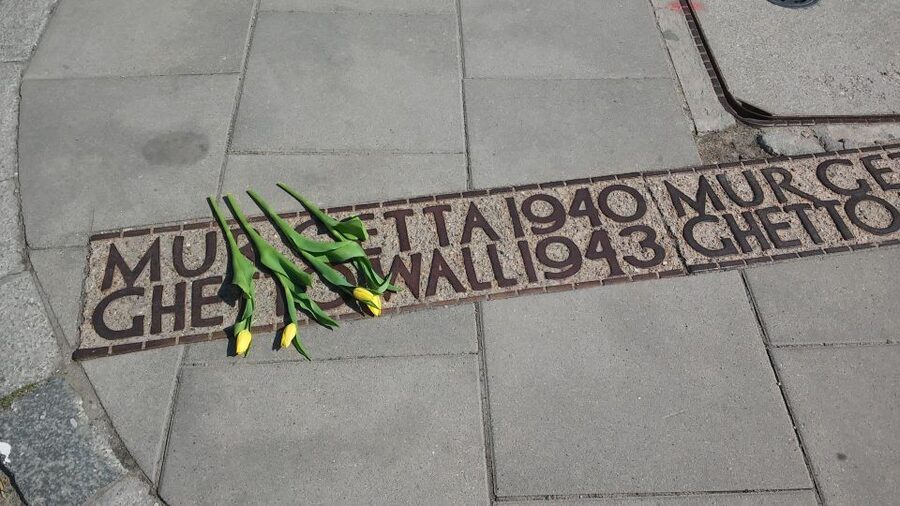
- See the last preserved ghetto street and get a clearer sense of the built environment that once enclosed hundreds of thousands of people.
- Visit Mila 18, the bunker site linked to the 1943 Warsaw Ghetto Uprising.
- Stand at the former Footbridge site on Chłodna Street, one of the most striking reminders of how the ghetto was divided.
- Learn about Oneg Shabbat, the secret group that recorded daily life and hid its archive in metal cases and milk cans.
- Finish near POLIN Museum, where you can spend at least 2.5 hours with the core exhibition.
- Expect a serious, adult history tour, offered in English or German and not intended for children under 12.
Why the Warsaw Ghetto needs a guided walk
The ghetto was created by the Nazis in 1940 in the heart of Warsaw. About 460,000 Jewish people from Warsaw and nearby areas were forced into roughly four square kilometers. The numbers are hard to picture, but a guide can help turn them into a physical understanding of cramped streets, blocked movement, scarce food, and constant fear.
Around 100,000 people died in the ghetto from exhaustion, hunger, and disease. More than 300,000 were deported to the Treblinka extermination camp. In 1943, residents rose against the Nazi attempt to destroy the ghetto entirely. The uprising was met with brutal force, followed by the destruction of the area.
You will not see an intact medieval quarter or a preserved wartime district. Instead, you will move through present-day Warsaw, stopping at places where traces survive or where an important event took place. That is the value of this format. The guide helps you read a city that no longer explains its past at street level.
This is also why the tour is best taken with some emotional preparation. The subjects include deportation, death, blackmail, indifference, resistance, and destruction. The approach is educational and focused on documented events, but the material is painful.
More Jewish Ghetto Tours in Warsaw
- Warsaw: Warsaw Ghetto Private Walking Tour with Hotel Pickup
★ 4.9 · 369 reviews - Warsaw: Ghetto, Jewish Cemetery & POLIN Museum Private Tour
★ 4.8 · 132 reviews - Tour of the Warsaw Ghetto
★ 5.0 · 119 reviews
The last preserved street and fragments of the wall
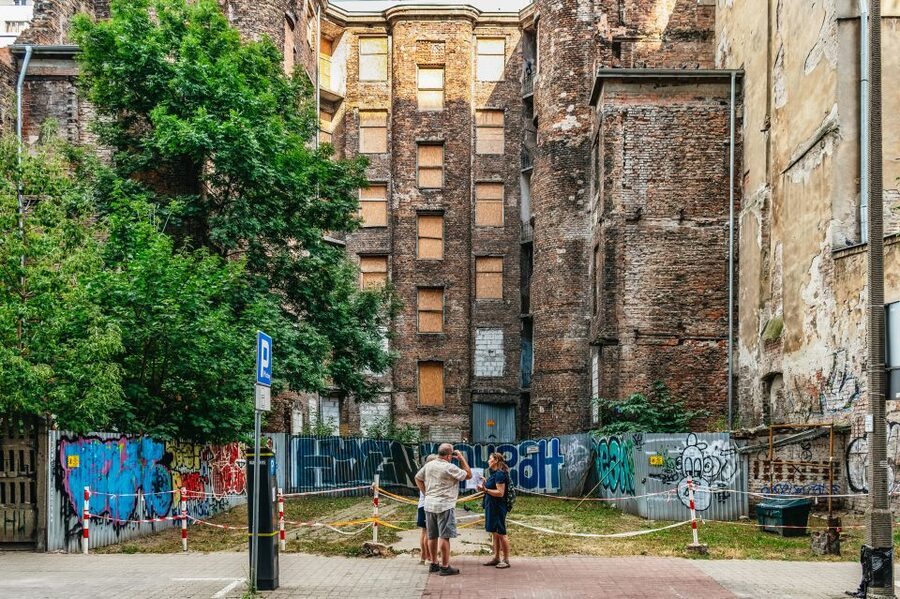
One of the most useful parts of the route is the visit to the last preserved street of the ghetto. You can look at the remaining urban fabric and consider how different the area once was. A street is more revealing than a list of statistics because it shows the scale of the setting where people tried to live under impossible conditions.
The tour also stops at remains of the ghetto wall. These fragments are modest, so do not expect a grand fortification or a large museum display. Their power comes from their exact function: this was a barrier imposed on a civilian population, cutting people off from the rest of Warsaw.
The guide explains how daily life was shaped by that wall. Movement, food supply, work, family contact, and access to news all became urgent problems. The tour’s focus on everyday life helps keep the story from becoming only a timeline of Nazi orders and military events.
I find this part particularly helpful early in the walk. Once you understand the physical limits of the ghetto, later stops at the Footbridge, Mila 18, and Umschlagplatz carry more weight.
Chłodna Street and the former Footbridge
The former Footbridge over Chłodna Street is one of the route’s most memorable locations. The bridge connected two sections of the ghetto while allowing traffic on the street below to continue. Today, you are visiting the location rather than crossing an original structure, but the site explains the strange, divided geography imposed on the area.
It is a good example of how a place can look ordinary now while carrying a disturbing past. Your guide can explain why the bridge was needed and how this forced separation affected people inside the ghetto. The stop also relates to the world shown in Roman Polanski’s film The Pianist, whose main character was connected to real places in Warsaw.
For film fans, this adds a useful layer, but you do not need to know the movie to appreciate the stop. The real value is seeing how the ghetto was not one simple enclosed block. It was divided, controlled, and constantly reshaped by Nazi policy.
Because the Footbridge itself no longer survives, this is a stop where explanation matters more than visual spectacle. You will get the most from it if you listen closely rather than expect a major monument.
Mila 18 and the 1943 uprising
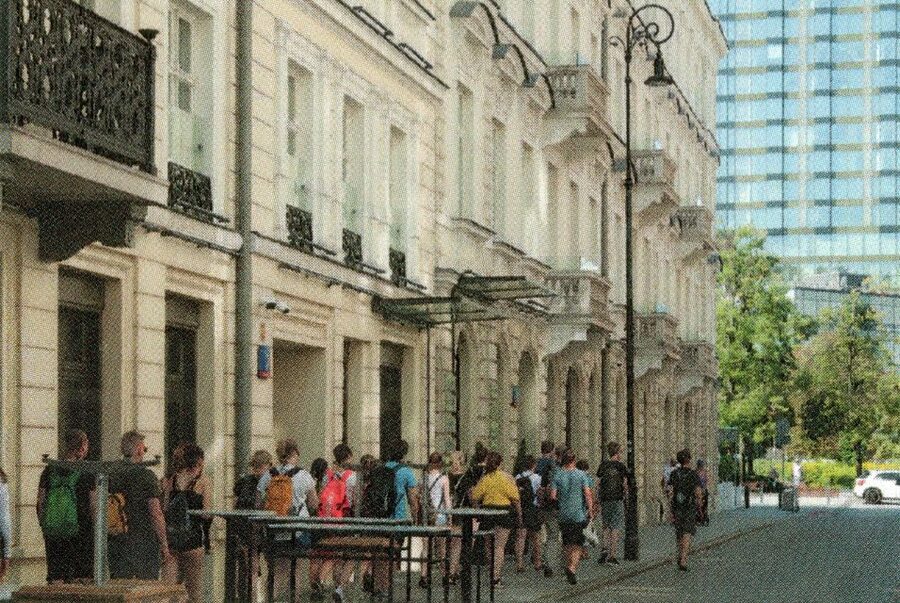
At 18 Mila Street, the tour reaches the location of the bunker known as Mila 18. It is tied to the Warsaw Ghetto Uprising, which began when German forces tried to carry out the final liquidation of the ghetto in 1943.
This was not a conventional military battle. Jewish resistance fighters faced a vastly stronger force, with limited weapons and little chance of outside rescue. The uprising became a symbol of resistance, but the tour also places it within the wider story of starvation, deportation, and the systematic destruction of the ghetto.
The bunker site is important partly because it resists a simple heroic story. You will learn about courage, but also about the desperate conditions that made organized resistance so difficult. The guide explains why the uprising broke out and what followed when Nazi forces destroyed the district in retaliation.
Mila 18 is not a polished attraction with a long list of things to see. It is a place for context and reflection. Give yourself time to listen and avoid treating this stop as just another photo opportunity.
Same country, a completely different kind of day:
- Warsaw: Chopin Concert in the Old Town
★ 4.8 · 2,287 reviews - Warsaw: Traditional Galar Cruise on The Vistula River
★ 4.6 · 1,640 reviews - Warsaw: Old Town Highlights Walking Tour in English
★ 4.7 · 1,516 reviews - Warsaw Concert: Chopin – Painted by Candlelights with Wine
★ 4.8 · 1,442 reviews
Umschlagplatz and the machinery of deportation
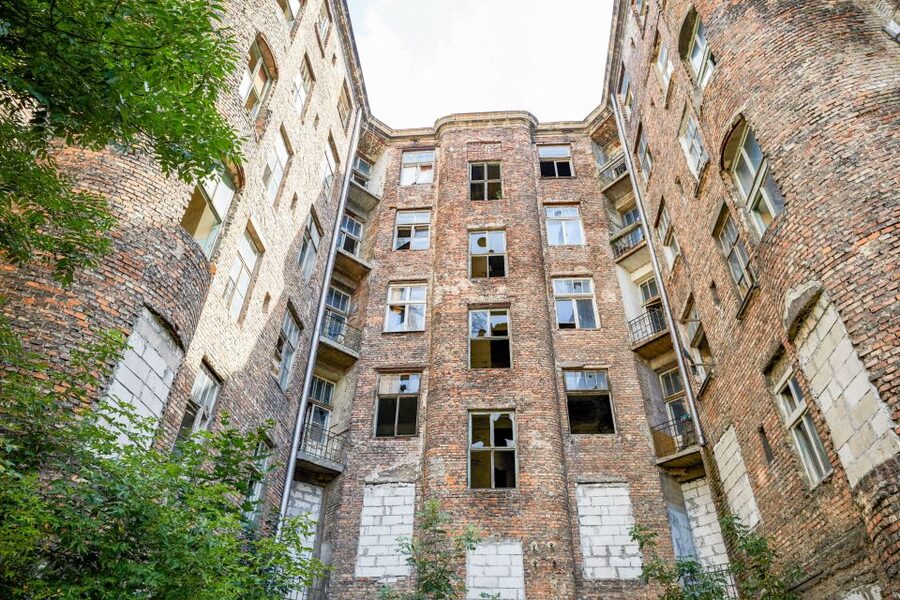
Umschlagplatz was the gathering point from which people were deported to Treblinka. The stop shifts the focus from life within the ghetto to the process that emptied it.
This is where the grim numbers become more specific. More than 300,000 people were sent away to the extermination camp. The site helps you understand that deportation was not an abstract wartime movement. People were assembled, controlled, and transported from a defined place in the city.
The guide also explains the wider system of fear and pressure, including blackmail and indifference. Those subjects can be difficult, but they matter because life in the ghetto was shaped not only by direct Nazi violence. People also faced impossible choices, uncertain information, and the danger of betrayal.
I appreciate having Umschlagplatz included in a short tour because it links the daily-life theme to the fate of the people trapped there. Without this stop, a walk through surviving streets could feel disconnected from the deportations that defined the ghetto’s final years.
Oneg Shabbat and the archive hidden in milk cans
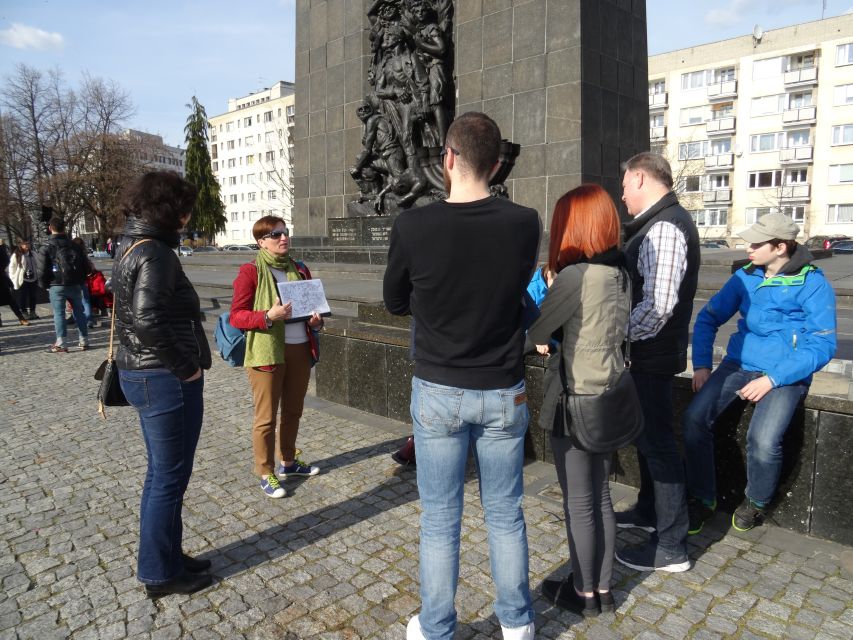
A major strength of this experience is its attention to the Underground Archive of the Warsaw Ghetto. The secret organization Oneg Shabbat set out to document life in the ghetto, preserving records of hunger, persecution, deportation, and the experiences of ordinary people.
The archive was hidden in metal cases and milk cans, then survived the war. It is now included in UNESCO’s Memory of the World register, which recognizes important documentary records preserved by humanity.
This detail gives the tour a second kind of memorial. The wall fragments and former sites show where events happened. The archive preserves what people recorded and witnessed. It reminds you that the history of the ghetto was not written only by those who imposed the system or by later historians.
You will not examine the full archive during this two-hour walk, but learning about it adds depth to the stops. It also prepares you for POLIN Museum, where the history of Polish Jews is presented on a much larger scale.
The surviving synagogue and the major memorials
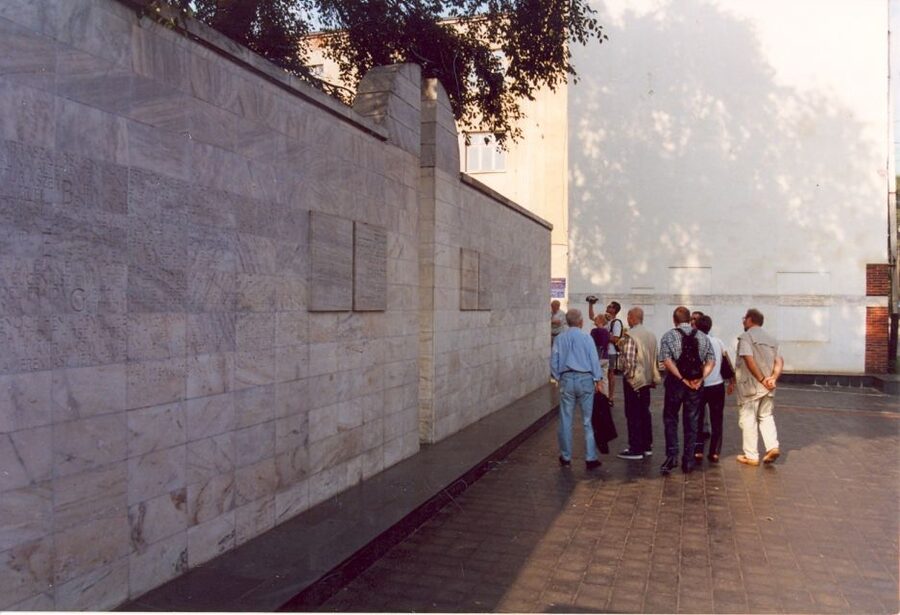
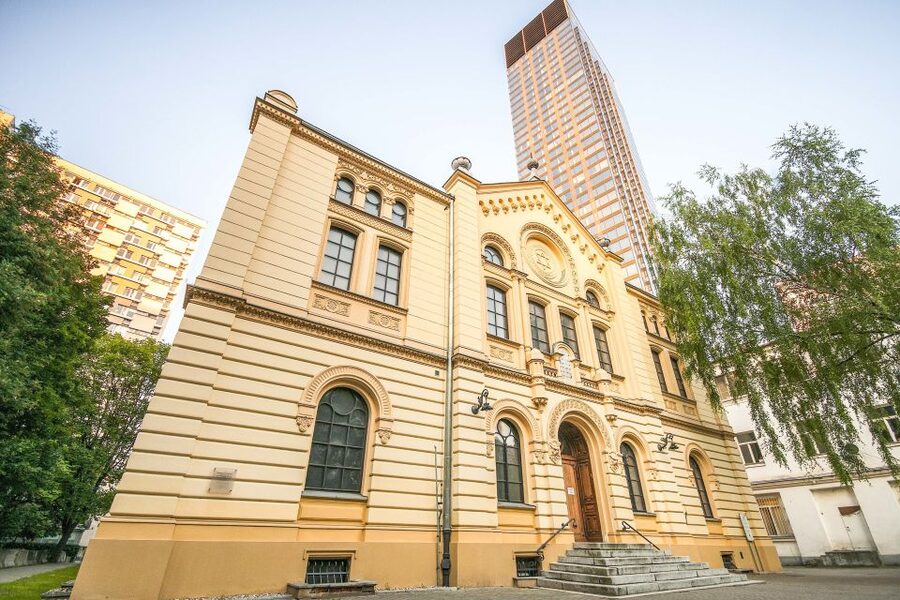
The tour includes a look at the only synagogue in the area that survived the war. The supplied information does not promise an extended interior visit, so think of this as a meaningful stop within the route rather than a separate synagogue tour.
Its survival is striking because the surrounding ghetto was largely destroyed. It offers a physical link to Jewish religious life, alongside the tour’s focus on forced confinement, resistance, and death. Ask your guide what can be seen during your visit, since entrance arrangements and fees are not included.
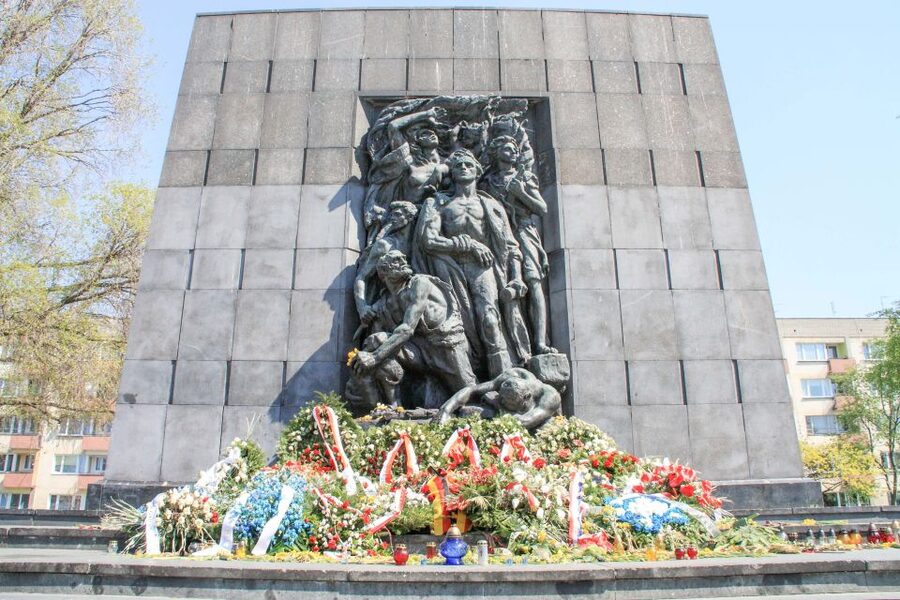
You will also learn about the Monument to the Ghetto Heroes. Its symbolism is central to how Warsaw remembers the uprising and those who fought in it. The monument is not simply a marker on the route. It helps frame the public memory of the ghetto and gives you a place to consider the contrast between commemoration and the near-total destruction of the original district.
The tour also discusses the Museum of the History of Polish Jews, usually known as POLIN. Even if your schedule is tight, it is worth understanding that the museum covers far more than the wartime period. The ghetto tour offers a focused walk through one chapter, while the museum gives a wider account of Jewish life in Poland.
What the two-hour format feels like
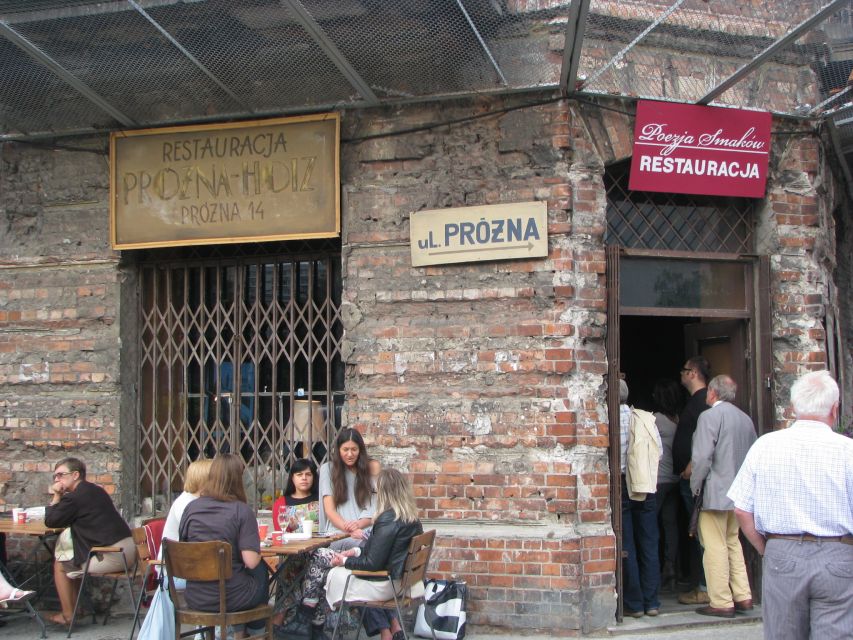
The tour lasts two hours and combines walking with public transport. That makes comfortable shoes important, but it also means the route is not simply a long uninterrupted walk. You should allow time for moving between locations and for the guide to keep the group on schedule.
Headsets are provided for groups of up to 20 people. This matters in a city setting, where traffic and street noise can make it hard to hear. The maximum group size is not stated beyond the headset limit, so the actual feel of your group can vary.
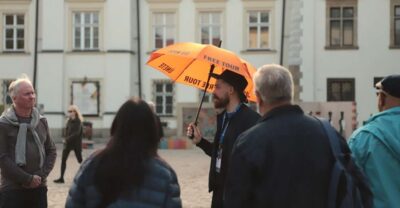
The guide waits at the meeting point with a PolinTours sign. English and German tours are available. Several bookings specifically praised Marzena for clear, detailed explanations, warm communication, and careful answers to questions. She may not be the guide on every departure, but her name is useful to know if you are selecting a time that lists her.
The route usually ends at POLIN Museum. The walk does not include museum entrance fees, public transport tickets, or lunch. Those costs are not large compared with the tour price, but they should be part of your planning.
Is $76 a fair price?
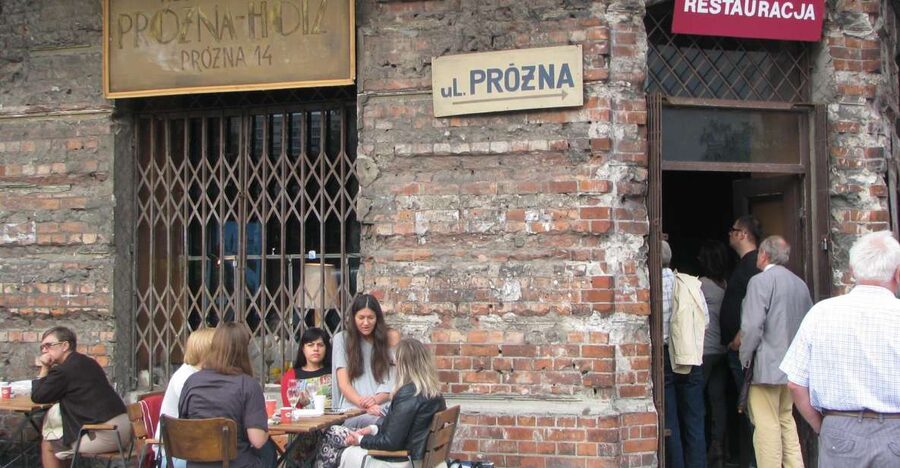
At $76 per person, this is not a bargain city stroll. You are paying for a licensed guide, a carefully linked route, interpretation of difficult material, and the convenience of connecting sites that are spread through the former ghetto area.
The value is strongest if you want historical explanation rather than a quick look at monuments. A map or self-guided reading can show you where Mila 18 and Umschlagplatz are, but it cannot easily explain how those places connect to forced daily life, the Footbridge, the wall, Oneg Shabbat, and the uprising.
The price is less attractive if you want to spend long periods at each site or if you already know the history well. Two hours is enough for a strong introduction, not enough for extended museum time or a slow study of every memorial.
I would also budget for POLIN separately. The core exhibition deserves at least 2.5 hours, according to the recommended visit time, so adding it turns this into a substantial half-day history program. Check museum hours carefully: it is open Monday, Wednesday, Thursday, Friday, and Sunday from 10 a.m. to 6 p.m., with last entry at 4 p.m.; Saturday hours run from 10 a.m. to 8 p.m., with last entry at 6 p.m.; Tuesday is closed.
Who should book this tour?
I would choose this tour if you are visiting Warsaw for the first time and want the former ghetto explained by someone who can connect individual sites. It also suits anyone who has seen The Pianist and wants to place parts of that story in the real city.
It is a good fit for adults and older teenagers, but it is not suitable for children under 12. The subject matter is severe, and the route asks you to listen, think, and move through places connected to mass death.
You should also book it if you want a focused introduction before visiting POLIN. The walk gives you a physical sense of the ghetto area, while the museum can then supply the wider historical setting.
I would skip it if you need a light sightseeing break, dislike walking with public transport, or prefer to explore quietly at your own pace. The tour is serious, and its success depends on the guide’s explanations rather than on grand ruins.
Practical tips for a respectful visit
Arrive at the meeting point in time to find the guide holding the PolinTours sign. Wear shoes suited to city walking, and leave large bags or oversize luggage behind because they are not allowed. Pets, smoking, alcohol, and drugs are also prohibited.
Try to schedule the tour when POLIN Museum is open. Since the walk usually finishes there, you can continue directly into the core exhibition rather than crossing the city later. Allow at least 2.5 hours for that visit, and remember that Tuesday is not an option.
You can cancel up to 24 hours before the start for a full refund, and the reserve-now, pay-later option gives you some planning flexibility. English and German are the available tour languages.
Most important, give the route your full attention. The surviving pieces are often small, and the city around them is modern. The history comes through the connections your guide makes between those fragments.
Should you book the Warsaw Ghetto daily-life tour?
Book it if you want a clear, human account of the Warsaw Ghetto, supported by real locations rather than only museum displays. The surviving street, wall fragments, Footbridge site, Mila 18, synagogue, Monument to the Ghetto Heroes, and Umschlagplatz form a powerful route, especially when paired with the story of the Oneg Shabbat archive.
At $76, the tour makes the most sense as the first part of a longer visit that continues at POLIN Museum. It is short, serious, and sometimes dependent on the guide to make modern streets speak. For that reason, I would book it for historical understanding, not casual sightseeing.
FAQ
How long does the Warsaw Ghetto tour last?
The tour lasts two hours.
What languages are available?
The tour is offered in English and German.
Where does the tour meet?
The guide waits at the meeting point with a PolinTours sign.
Does the tour include public transport tickets?
No. Public transport tickets are not included, and the tour uses walking combined with public transport.
Is entry to POLIN Museum included?
Entrance fees are not included. The tour usually ends at the Jewish Museum, and you can visit the museum separately.
Is POLIN Museum open every day?
No. POLIN Museum is closed on Tuesdays. It is open Monday, Wednesday, Thursday, Friday, and Sunday from 10 a.m. to 6 p.m., with last entrance at 4 p.m. On Saturdays, it is open from 10 a.m. to 8 p.m., with last entrance at 6 p.m.
Is the tour suitable for children?
The tour is not suitable for children under 12 years old.
More 2-Hour Experiences in Warsaw
- Warsaw: 2-Hour Guided Segway Tour
★ 4.8 · 34 reviews - Creepy Krakow: 2-Hour City Walking Tour
★ 4.7 · 1,131 reviews - Wroclaw: 2-Hour Private Guided Tour by Electric Car
★ 4.8 · 805 reviews - Wroclaw: Private Old Town Guided Walking Tour (2 hours)
★ 4.8 · 275 reviews
Just added around Warsaw
- Taste of Poland, food tour and guided walk with 12 tasting★ 5.0 · 3 reviews
- Skip-the-Line Warsaw Royal Castle Private Guided Tour★ 5.0 · 4 reviews
- Secrets of Warsaw 4-hour Bike Tour★ 5.0 · 25 reviews
- Warsaw: Live Show at Sabat Theatre★ 4.5 · 11 reviews
- Private Warsaw City Tour★ 4.9 · 4 reviews
- Warsaw: WWII Private Tour by Retro Minibus with Hotel Pickup★ 5.0 · 7 reviews
- Private Tour From Warsaw: Łowicz Mazovian Countryside★ 5.0 · 10 reviews
- Packrafting kayaking guided tour Vistula river Warsaw Poland★ 4.5 · 14 reviews
Jewish Ghetto Tours, compared.

Bike Tour of Old Town, Jewish Quarter and the Ghetto
Read our review →
Kazimierz, Schindler’s Factory & Ghetto Guided Tour
Read our review →
Full Bike Tour – the Old Town, Jewish Qtr & the Ghetto NEW BIKES
Read our review →
Warsaw Ghetto Private Walking Tour with Hotel Pickup
Read our review →
Bike Tour of the Old Town, Kazimierz, and the Ghetto
Read our review →
Browse the lists this tour appears in