
Reviewed · HISTORICAL TOURS
Gdansk: Jewish Heritage Guided Private Walking Tour
Gdansk’s Jewish story is told through both surviving places and painful absences. You’ll see where the Great Synagogue once served the city’s Jewish community, hear how Jewish veterans helped save it during Kristallnacht, and learn why the building was destroyed by the Germans in 1939. I like the private format, which gives you room to ask questions and set the pace. I also like the visit to the Jewish cemetery, where original walls, the entrance gate, and graves give this history a physical presence.
The main consideration is time. Four hours covers a lot, including transport to Wrzeszcz, so this is an overview rather than a full study of every Jewish site in Gdansk. Entrances are not included, although the main value here is the guide’s explanation and the places seen from outside.
Key points to know before booking
- The Great Synagogue site reveals how an impressive late-19th-century building became a symbol of destruction.
- The Jewish cemetery retains its original walls, entrance gate, and graves.
- The former ghetto area on Granary Island connects Gdansk’s city center with Holocaust history.
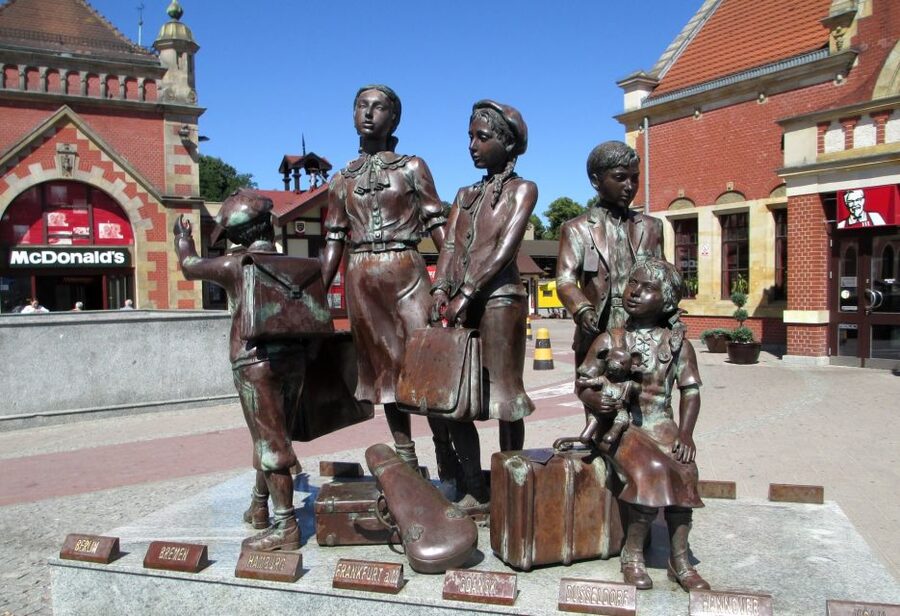
- The Kindertransports monument introduces the organized rescue of Jewish children before the Second World War.
- The New Synagogue in Wrzeszcz, built in 1926, is the city’s sole remaining synagogue.
- Private hotel pickup and transport make the four-hour route easier to manage, especially after a cruise or on a short stay.
Why Gdansk’s Jewish story needs a guided walk
Gdansk is often introduced through its handsome waterfront, ornate facades, and medieval trade routes. Those sights matter, but they can also make the city’s Jewish past easy to miss. This tour corrects that imbalance by placing Jewish life inside the wider story of Gdansk as a major Baltic port.
The Jewish presence in Gdansk may reach back as far as the 10th century. The city grew in economic, industrial, and cultural importance, and by the 15th and 16th centuries it was among Poland’s most prosperous cities. Jewish merchants were drawn to that success and contributed to trade, industry, and crafts.
I find that context useful because it keeps the tour from becoming only a sequence of wartime tragedies. You’ll learn about a community that helped build the city before learning how persecution and murder tore it apart. That makes the later stops more meaningful.
Your guide meets you in your hotel lobby, with your name, and the tour remains private from beginning to end. That matters on a subject that can raise difficult questions. You do not have to hold back because a large group is waiting, and you can ask for more explanation when a place feels especially important.
The tour is offered in English, Polish, French, Italian, Portuguese, Spanish, German, and Russian. Guides named in the tour’s feedback include Beata, Eva, and Luis. Beata was described as engaging and informative, while Eva was praised for being patient, clear, and responsive to the group’s preferences. Those details suggest that communication and flexibility are important strengths to look for when your guide is assigned.
A few more Gdansk trips to weigh up
- Gdansk: City Cruise on Historical Polish Boat
★ 4.8 · 2,913 reviews - Gdańsk: Sunset Cruise on a Historic Polish Boat
★ 4.9 · 977 reviews - Gdańsk City Sights & History Guided Walking Tour in English
★ 4.8 · 876 reviews
The Old Town: Jewish life behind the grand facades
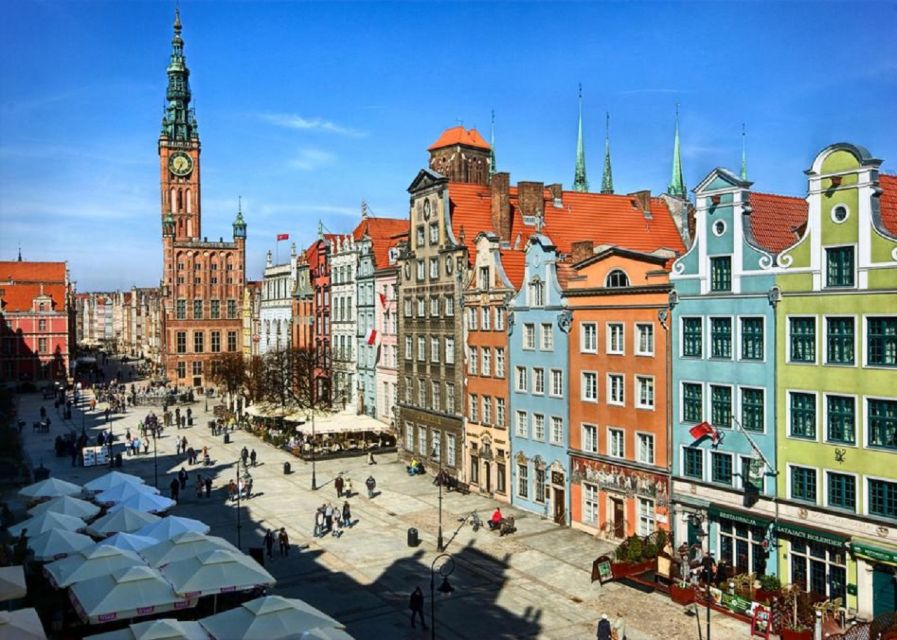
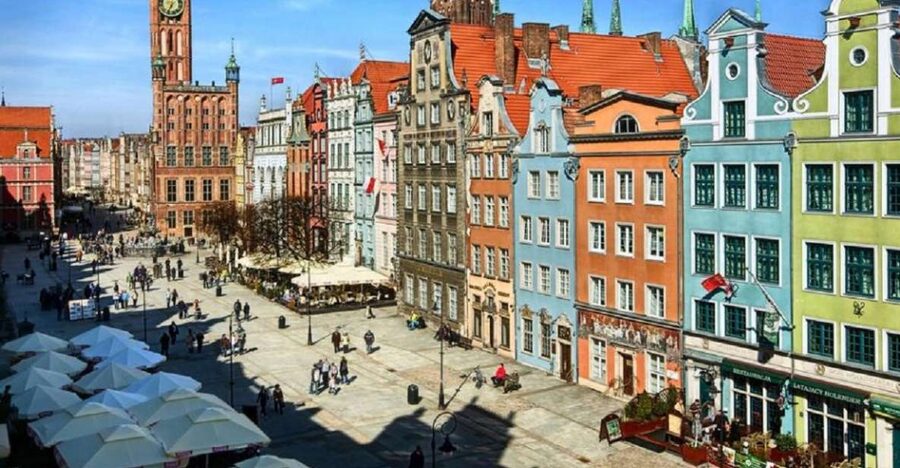
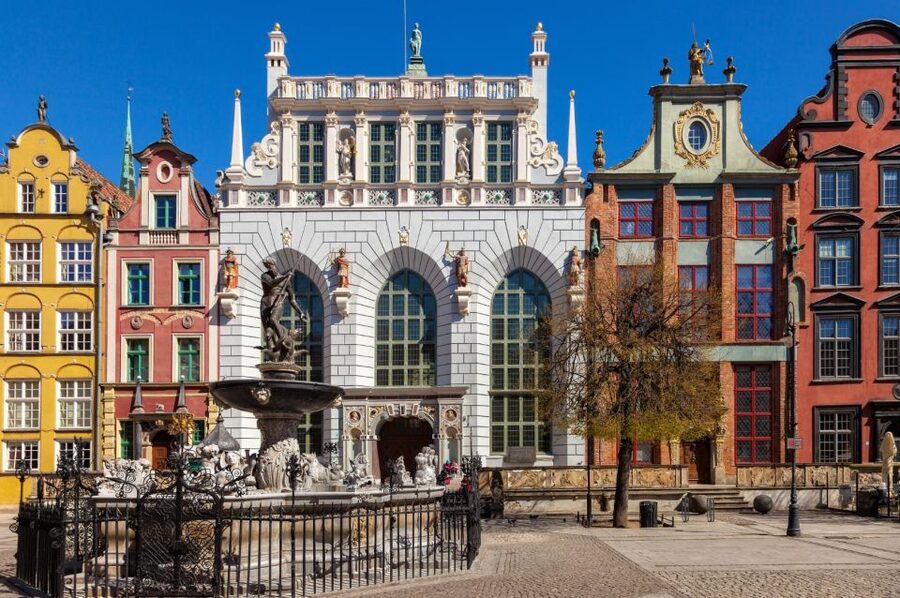
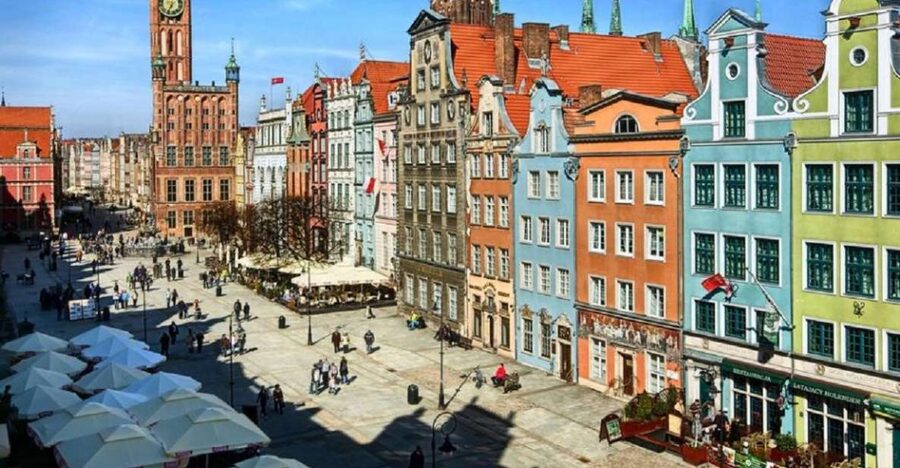
The walking portion begins in Gdansk’s Old Town, where magnificent art and architecture provide the setting for the city’s Jewish story. You’ll walk through streets shaped by centuries of trade, civic ambition, and changing political control.
The point is not simply to admire the buildings. Your guide uses the Old Town to explain where Jewish residents and merchants fit into the city’s commercial life. You’ll hear how Jewish people contributed to business, manufacturing, and skilled crafts as Gdansk expanded.
This is a good part of the tour for anyone who wants more than a Holocaust memorial visit. The Old Town gives you a longer view. It shows Jewish life as active and varied, rather than defining an entire community only by what happened during the Nazi period.
I would pay close attention to the transitions between architectural sights and historical discussion. A beautiful facade can feel disconnected from the people who once lived and worked nearby. A private guide can make that connection directly, explaining why the city’s wealth mattered and how Jewish merchants participated in it.
There is a practical limit here. The information provided does not promise interior visits to a long list of museums or historic buildings. Entrances are not included, so you should think of this as a guided outdoor heritage route with selected stops, not a museum-heavy day.
The Great Synagogue site and the story of Kristallnacht
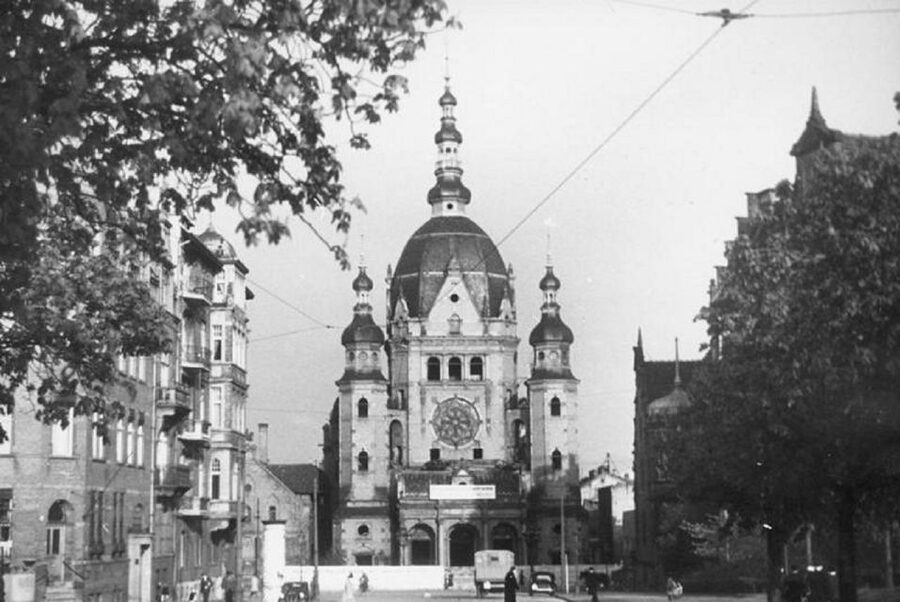
One of the most important stops is the place where Gdansk’s Great Synagogue once stood. Jewish residents built the synagogue at the end of the 19th century, and it became the largest synagogue in the city. It also represented the unity of Gdansk’s Jewish community.
The site carries a difficult story. You’ll hear about Jewish veterans who helped save the Great Synagogue during Kristallnacht, the anti-Jewish pogrom of November 1938. The building was later destroyed by Germans in 1939.
That sequence is worth hearing carefully. It shows that Jewish people were not passive figures in the city’s history. Jewish veterans acted to protect a major community building, even as organized persecution intensified around them. The synagogue’s destruction then marks the violence that followed.
Because the building no longer survives, the stop depends heavily on explanation. You will not get the same visual impact as you would inside a preserved synagogue. On the other hand, the absence itself becomes part of the lesson. The guide helps you picture what the building meant and why losing it changed the character of Gdansk’s Jewish community.
I like this stop for its combination of architecture, community history, and wartime memory. It also gives you a clear reason to ask questions about the city before 1939, rather than treating Jewish Gdansk as something that began and ended with the Holocaust.
The Jewish cemetery: surviving walls and graves
The local Jewish cemetery offers one of the tour’s most direct encounters with the past. The original walls, entrance gate, and graves remain, giving you a place where Jewish memory is tied to actual ground rather than only a plaque or an address.
A cemetery visit can be quiet and visually restrained, but that is part of its value. You’ll have the chance to consider individual lives and family memory alongside the larger story of merchants, religious institutions, and wartime destruction.
The information provided does not specify the number of graves, the condition of individual markers, or the length of the stop. I would therefore treat it as an important visit within a larger route, not as a complete cemetery study. Your guide’s explanation will help you understand what you are seeing.
This is also one place where a private tour can be more comfortable than a large group. You can pause, ask about the cemetery’s role in the Jewish community, and move at a respectful pace. I would wear comfortable shoes, since the overall experience includes several hours of walking as well as transport between parts of the city.
Same country, a completely different kind of day:
- Gdansk: Firearm Shooting Experience with Instructor
★ 4.8 · 866 reviews - Gdansk: Guided Round-Trip Cruise to Westerplatte
★ 4.3 · 865 reviews - Gdańsk: Sightseeing EcoCruise around the Old Town of Gdansk
★ 4.6 · 719 reviews - Main Town Gdańsk Walking Tour
★ 5.0 · 644 reviews
Granary Island and the former Jewish ghetto area
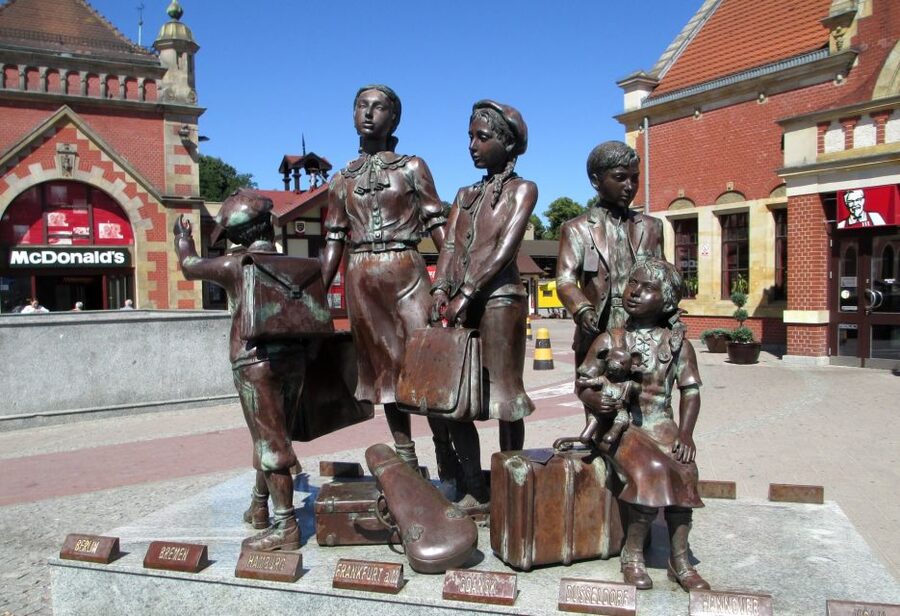
The route continues to the area of the former Jewish ghetto on Granary Island. This stop connects Gdansk’s central geography with Holocaust history, showing how persecution was imposed within the city rather than happening somewhere distant and abstract.
Your guide will explain what the ghetto area represents and how it fits into the city’s wartime story. The supplied information does not provide a detailed reconstruction of the ghetto or promise surviving structures, so you should expect a historical explanation connected to the location rather than a preserved district.
That distinction matters. Some visitors arrive expecting a complete historic quarter with intact buildings. Here, the meaning comes from knowing what happened in the area and recognizing how ordinary city spaces can carry painful memories.
For me, this stop is most useful when paired with the earlier discussion of Jewish prosperity and civic life. You first hear about Jewish participation in a successful port city. Later, you see how that community was confined and targeted. The contrast makes the damage easier to understand.
The Kindertransports monument and a rescue effort
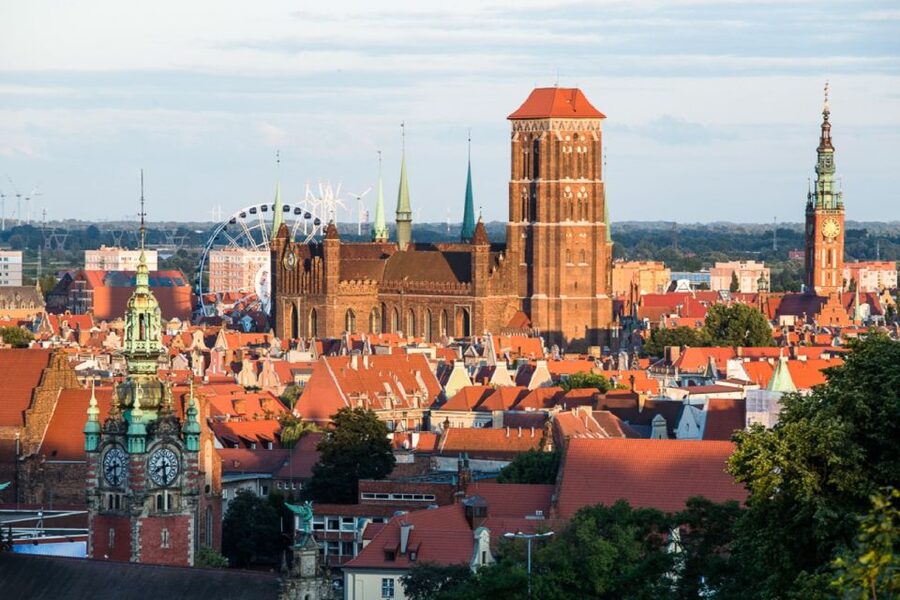
Another stop is the Kindertransports monument. Your guide will explain what the Kindertransports were and how they relate to Jewish children during the period before the Second World War.
The monument brings a different focus to the tour. The Great Synagogue and cemetery speak about community, worship, and memory. The Kindertransports story turns to children, separation, and rescue. It adds a human scale to the wider political history.
The information supplied does not state the monument’s exact design, date, or inscription, so I would not book this tour expecting a detailed art-history discussion of the memorial itself. Its strength is the story attached to the place and the chance to ask your guide how the rescue effort fits into Gdansk’s Jewish history.
If you are visiting with older children or teenagers, this may be one of the easier subjects to discuss than the most graphic aspects of the Holocaust. The tour still deals with serious material, but the monument provides a specific starting point for understanding what happened to Jewish children and families.
Jewish theater and cultural life beyond religion
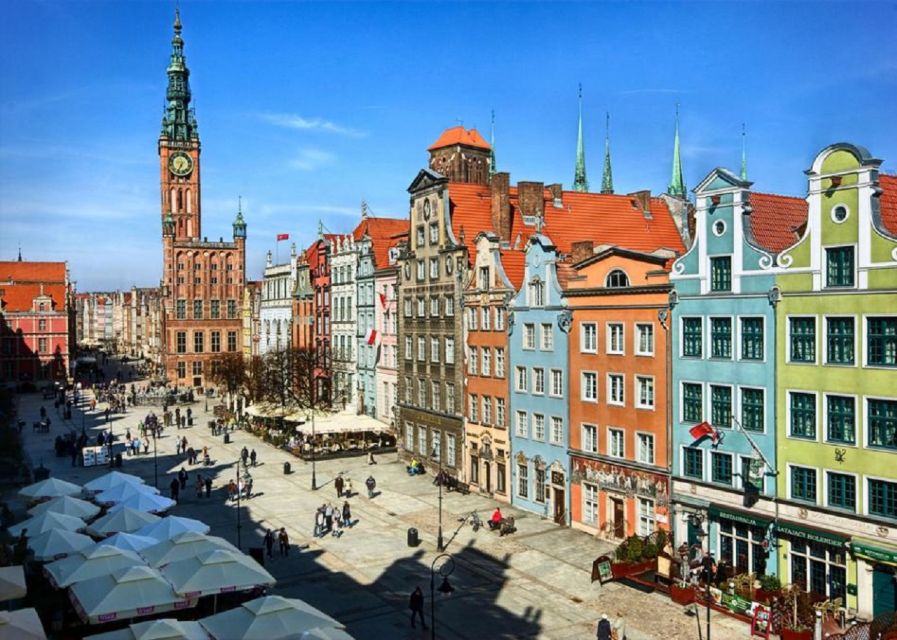
The tour also introduces the famous Jewish Theatre in Gdansk. This is a useful reminder that Jewish culture in the city was not limited to religious buildings or commercial activity.
A theater points to performance, language, public life, and shared identity. Your guide will explain its place in Gdansk’s story, adding a cultural layer to the tour. Since the information provided does not say that the theater remains open for a visit, you should expect to learn about it as part of the walking route rather than attend a performance or tour its interior.
I appreciate this inclusion because it widens the picture. A Jewish heritage tour can easily become a checklist of synagogues, cemeteries, and wartime memorials. The theater helps you remember that communities also create art, entertainment, and public institutions.
The New Synagogue in Wrzeszcz, built in 1926
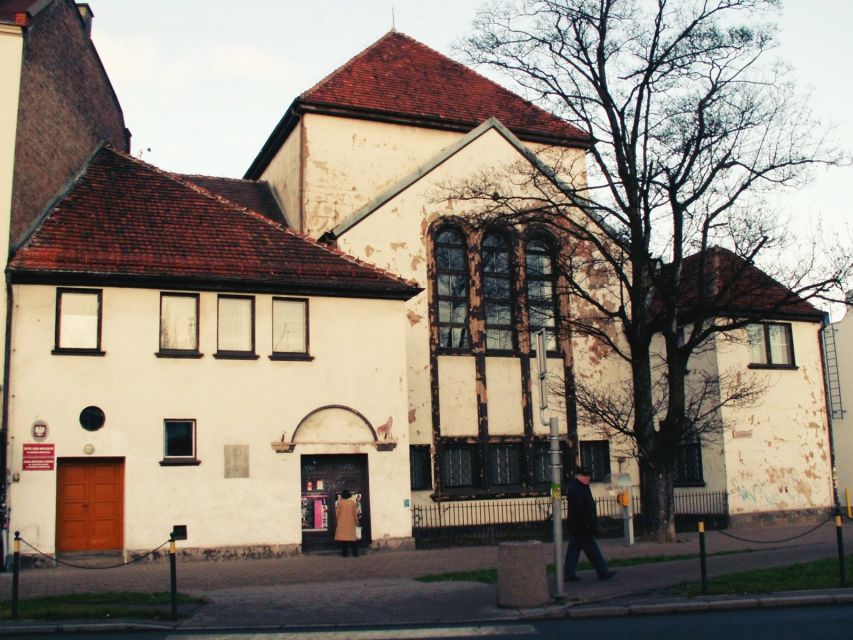
The tour ends at the New Synagogue in Wrzeszcz, built in 1926. It is described as the sole remaining synagogue in Gdansk, making it a particularly important final stop.
Its survival gives the tour a different closing note from the Great Synagogue site. Earlier, you see a place marked by destruction. Here, you see a synagogue that remains. The two sites help you understand both what was lost and what endured.
The available details do not confirm an interior visit or an entrance arrangement. Entrances are not included, so plan on seeing the building as part of the guided route unless your guide tells you otherwise. Even from outside, its role as the city’s remaining synagogue gives the stop real weight.
Ending in Wrzeszcz also shows why transportation is included. This is not only an Old Town stroll. Your guide provides transport as part of the experience, then returns you to your hotel afterward. That saves you from arranging a separate ride between the historic center and the final synagogue.
Four hours, private transport, and the $60 price
The tour lasts four hours and costs $60 per person. I consider that a reasonable price if you want a focused introduction to Gdansk’s Jewish heritage without arranging several separate visits yourself.
The value comes from the combination of a private guide, hotel pickup and drop-off, transport, and a route spread across different parts of the city. You are paying for interpretation as much as movement. A self-guided walk could take you to some of the same addresses, but it would not automatically connect the cemetery, synagogue sites, ghetto area, Kindertransports, and Jewish theater into one story.
The price is less compelling if you prefer to explore independently or already have strong knowledge of Gdansk’s Jewish past. You may find that four hours takes time away from the city’s other major sights. Since entrances are not included, additional admission costs could apply if a particular stop allows or requires access.
The private setup is especially useful for a couple, family, or small group with a shared interest in history. A cruise passenger can also benefit from the hotel pickup and return. One booking was made at the last minute after a cruise was delayed in Gdansk for an extra day, which shows how the tour can work as a focused addition to an altered schedule.
Free cancellation is available up to 24 hours before the tour for a full refund, and you can reserve now and pay later. Those terms help if your plans are still moving, but you should still be ready at the hotel lobby on time because the guide will be waiting with your name.
Who will get the most from this experience
I would recommend this tour to you if you want Jewish history explained in place, not only presented in a museum. It suits visitors who enjoy asking questions, connecting different sites, and understanding how a city changed over several centuries.
It is also a good choice for anyone who has only one open half-day. The route brings together major themes without requiring you to research addresses, arrange local transport, or work out how the Old Town connects with Wrzeszcz.
The tour may be less suitable if you want long periods inside historic buildings. The provided details focus on walking, outdoor locations, the cemetery, synagogue sites, monuments, and guided explanation. Entrances are not included, and no specific museum visit is promised.
The subject can be emotionally heavy. You’ll hear about the Holocaust, the former ghetto, Kristallnacht, and the destruction of the Great Synagogue. I would choose this tour when you have the attention and energy for serious history, not when you want a light introduction to Gdansk’s architecture.
The experience is wheelchair accessible, which is useful to know when planning a private route. Since the tour includes walking and transportation, you should still discuss your needs with the provider in advance.
Should you book the Gdansk Jewish Heritage Tour?
Book it if you want a clear, private introduction to Jewish Gdansk and value a guide who can explain the meaning of places that no longer look as they once did. The cemetery, Great Synagogue site, ghetto area, Kindertransports monument, and New Synagogue create a strong four-hour arc from community life to wartime destruction and survival.
I would be especially comfortable booking it for a first visit, a short stay, or a cruise schedule. Guides such as Beata and Eva received praise for being engaging, clear, patient, and responsive, while Luis was singled out for good guiding. The $60 price makes sense when you count the hotel transport and private attention.
Skip it if you want a long museum day, a self-guided walk, or detailed access to synagogue interiors. For most visitors interested in Gdansk’s Jewish past, though, this is a thoughtful way to see the city beyond its polished Old Town facades.
FAQ
How long does the Jewish heritage tour last?
The tour lasts four hours, including the guided sightseeing and transportation between locations.
What places are included on the route?
The route includes Jewish heritage sites in Gdansk’s Old Town, the former Great Synagogue site, the Jewish cemetery, the former Jewish ghetto area on Granary Island, the Kindertransports monument, the Jewish Theatre location, and the New Synagogue in Wrzeszcz.
Does the tour visit a Jewish cemetery?
Yes. The tour includes the local Jewish cemetery, where you can see the original walls, entrance gate, and graves.
Is the tour private?
Yes. It is offered for a private group, so you do not join a shared public walking group.
Is hotel pickup included?
Yes. Your guide meets you in the hotel lobby with your name and provides pickup and drop-off. Transportation is included.
Which languages are available?
Guiding is available in French, Italian, Portuguese, English, Polish, Spanish, German, and Russian.
Are entrance fees included?
No. Entrances are not included in the tour price.
Just added around Gdansk
- Guided Winter Kayak Tour in Gdańsk & Hot Chocolate Treat★ 5.0 · 51 reviews
- Gdansk Highlights Bicycle Tour★ 5.0 · 65 reviews
- Electric Scooter Tour: Old Town Tour – 1,5-Hour of Magic!★ 5.0 · 19 reviews
- Elblag Canal Tour from Gdansk★ 4.5 · 22 reviews
- #1 Polish Vodka Tasting Experience in Gdansk★ 5.0 · 87 reviews
- Delicious Gdansk Craft Beer Tour★ 5.0 · 4 reviews
- DAILY Stutthof Concentration Camp with Guide and Transport★ 4.5 · 10 reviews
- Cruises on the Motlawa River★ 4.5 · 66 reviews
Historical Tours, compared.
POLIN Museum of the History of Polish Jews Ticket
Read our review →
Gdańsk City Sights & History Guided Walking Tour in English
Read our review →

Small-Group Historical Guided Tour of Warsaw with pick up/drop off. Public Tour.
Read our review →Browse the lists this tour appears in