
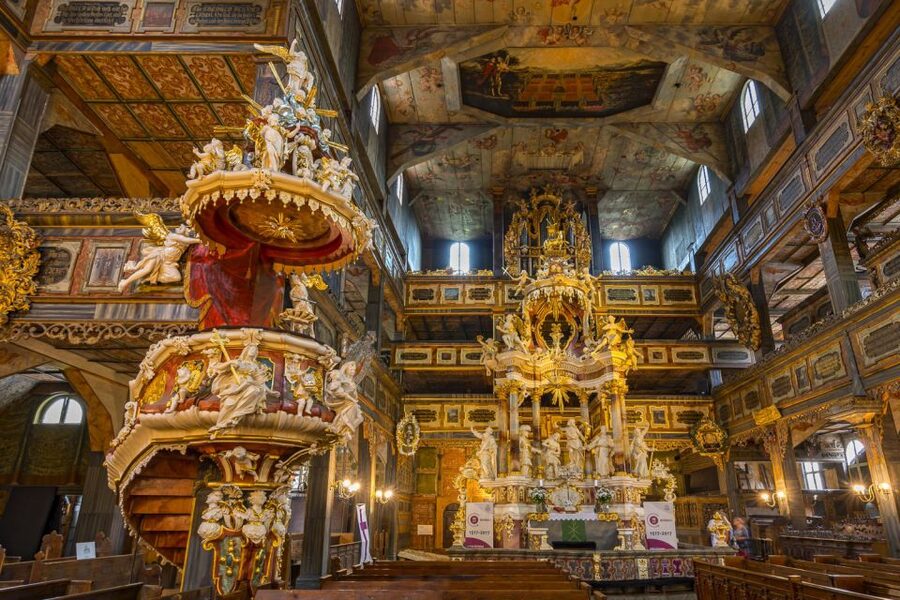
Reviewed · FULL-DAY
Jewels of Lower Silesia Full-Day Tour from Wroclaw
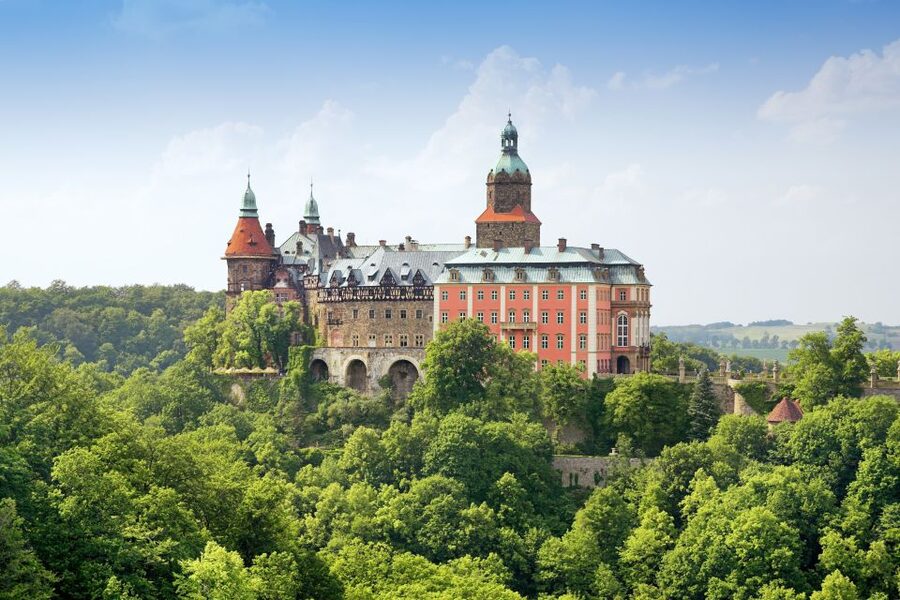
Ksiaz Castle gives this day its real punch. Poland’s third-largest castle rises above the Pelcznica Valley, with grand rooms, shifting architectural styles, family drama, and underground WWII tunnels. I like the mix of high-society castle stories and wartime mystery, followed by the striking Church of Peace in Swidnica.
I also like the small-group setup, capped at eight people, and the local guides who explain the region as you drive. Adam, Maciej, Mateusz, and others have been praised for clear directions, Polish history, and keeping the day moving. The main catch is physical: the tunnels are cold, humid, and reached by many stairs, so this is not an easy outing for everyone.
Key points to know before booking
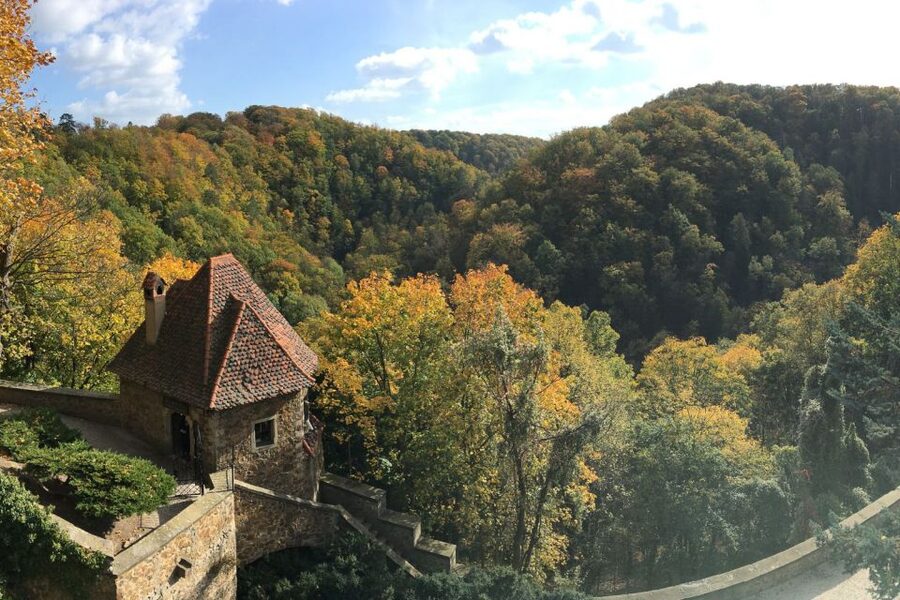
- Ksiaz Castle is the main event: Explore representative rooms, hear about the Hochberg family, and see why the castle is called the Pearl of Lower Silesia.
- The tunnels add a darker chapter: Expect 8 to 9°C temperatures, high humidity, and stairs comparable to climbing to about the fifth floor.
- Swidnica’s Church of Peace is genuinely unusual: This UNESCO site was built from wood, straw, and clay by Protestants in the 17th century.
- Small groups make the day personal: The vehicle carries no more than eight participants, with an English-speaking guide and driver.
- The $153 price covers useful essentials: Transport, a guide, castle entry, tunnel admission, and an English tunnel audio guide are included. Lunch is not.
- Plan for a full day away from Wroclaw: The tour lasts eight hours and begins near Nowe Horyzonty cinema, close to a bus stop.
Why Ksiaz Castle deserves the long day
Lower Silesia rewards you with a different side of Poland. Wroclaw is a lively city of bridges, churches, and market squares, but the countryside around it carries a complicated past shaped by Polish, German, Czech, and Prussian rule. Ksiaz Castle brings that story into focus through one extraordinary building.
The castle is the third-largest in Poland, and its position above the Pelcznica Valley gives the approach a strong sense of occasion. You are not simply visiting a furnished old house. You are entering a place that changed shape over centuries and passed through the hands of a wealthy family whose fortunes rose and fell with European politics.
Inside, the representative rooms provide the polished side of Ksiaz. Expect grand interiors, decorative details, and several architectural styles rather than one tidy period. That variety is part of the appeal. The castle’s appearance reflects repeated rebuilding, changing taste, and the ambitions of its owners.
Your guide fills in the human story. The rooms once received important figures such as John Quincy Adams, Winston Churchill, and the emperors of Germany and Russia. Those names help explain the castle’s social importance, but the better stories involve the people who lived there: money, family conflict, scandals, personal tragedies, and the unresolved questions that still surround the property.
I especially like this style of touring because a guide can connect the fine rooms to the people behind them. Without that context, you might notice only another ornate European residence. With it, the castle becomes a stage for power, social rank, and uncertain survival.
Allow yourself time to look around rather than treating the castle as a quick photo stop. The day includes several major sights, but the castle is important enough that rushing through it would weaken the experience. One practical point: an earlier participant wished the ticket had also included the terraces. Check exactly which areas are covered on your date, especially if outdoor views are a priority.
A few more Wroclaw trips to weigh up
- From Wrocław: Full-Day Auschwitz-Birkenau Guided Tour
★ 4.8 · 117 reviews - From Wroclaw: Full-Day Stolowe Mountains Trekking Tour
★ 3.9 · 3 reviews - From Krakow: Auschwitz-Birkenau Full-Day Guided Tour
★ 4.5 · 3,419 reviews
The Ksiaz tunnels reveal the castle’s wartime secrets
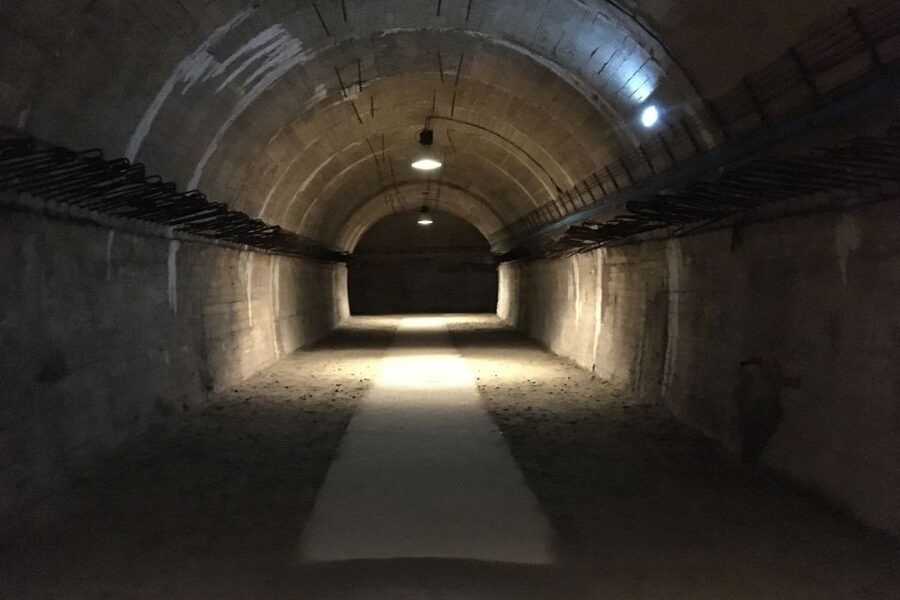
The underground section changes the mood completely. Above ground, Ksiaz feels regal and theatrical. Below ground, it becomes cold, plain, and unsettling.
The tunnels are linked to WWII work carried out beneath the castle. Their purpose and wartime story are part of the mystery surrounding Ksiaz, and the audio guide helps you follow the material in a structured way. English is included, along with German, Polish, Ukrainian, Spanish, and Italian options.
The temperature stays at about 8 to 9°C, or 46 to 48°F, with humidity above 80 percent. Bring a warm layer even if Wroclaw is mild. The cold is not a minor detail, and you will feel it more during a slow visit than during a brisk walk.
You also need to take the stairs seriously. Reaching the tunnels involves a significant descent and then a climb back up, comparable to walking to about the fifth floor. This is not the right excursion for anyone who struggles with stairs, and the tour is listed as unsuitable for people over 70. Children must be at least four years old to enter the underground area.
One useful timing tip comes from the way the day is organized. The guide may be explaining the castle when you need to move toward the tunnel entry. Pay attention to meeting times and directions so you do not arrive late or miss the chance to collect the interpretation headphones. The small-group format helps, but you still need to keep an eye on the clock.
The tunnels are worthwhile because they prevent Ksiaz from becoming just a pretty castle visit. They show how war can alter the meaning of a historic building, turning grand halls into part of a secret military project. If underground spaces make you uncomfortable, you can still value the castle, but this portion may not suit you.
Swidnica’s Church of Peace is the day’s great surprise
The final major stop is the Church of Peace in Swidnica, and it gives the tour a very different kind of drama. This is a Protestant church built in the 17th century from wood, straw, and clay. Its construction reflects strict conditions imposed on the Protestant community, yet the interior is richly decorated in the Baroque style.
That contrast is what makes the church memorable. The building materials sound humble, even fragile, while the inside aims for visual grandeur. You get a lesson in religious politics, engineering, and artistic ambition at the same time.
The church belongs to the UNESCO World Heritage list, but the label is less important than the experience of standing inside. Its form and decoration do not fit the usual idea of a grand stone European church. I like it precisely because it feels different. You see what a community created when resources and permissions were limited, but expectations for worship and beauty remained high.
Your guide can explain the religious conflicts that led to the church’s construction and place Swidnica within the wider story of Silesia. This is where a strong guide matters most. The building deserves more than a quick look at the ceiling and a photograph. The political background explains why such a large wooden church was built and why it matters.
Swidnica is also associated with Manfred von Richthofen, the WWI flying ace known as the Red Baron. You have the opportunity to see his modest house. It is a smaller, more personal detail after the scale of Ksiaz Castle, and it adds another layer to the town’s connection with European history.
A guide-led day that keeps the complicated parts clear
The guides are one of the strongest reasons to choose this tour instead of arranging the same route alone. Adam is repeatedly singled out for explaining Polish and Silesian history, helping with directions, and keeping the day comfortable from pickup through return. Maciej has also led repeat customers, with praise for his organization, patience, and clear instructions. Mateusz has been noted for explaining the countryside during the drive and answering questions in a friendly way.
That range of names matters less than the pattern: the guide is not only there to drive. You get historical explanation between stops, help with tickets and entry times, and reminders about where to meet. At a site with several sections, those small services save energy.
Silesian history can be difficult to follow because borders and ruling powers changed over time. A castle may have German owners, a Polish location, and connections to rulers from several countries. A local guide can put those pieces in order without asking you to read a long background chapter before breakfast.
The English-speaking guide is the main language provision described for the tour, while the driver speaks English and Polish. The tunnel audio guide offers a wider set of languages: English, German, Polish, Ukrainian, Spanish, and Italian. If you need interpretation in a language other than English, confirm how the live guiding and audio sections work before booking.
The small group, limited to eight participants, is a major comfort. It makes it easier to hear the guide, ask questions, and move through the day without the slow shuffle of a large coach. It also gives you some time to explore on your own. The balance is good: guided explanation when context matters, personal time when you want to look at rooms or details at your own pace.
Same country, a completely different kind of day:
- Wroclaw: E-Car Tour and Audio Guide
★ 4.6 · 1,738 reviews - Wroclaw: 2-Hour Private Guided Tour by Electric Car
★ 4.8 · 805 reviews - Wrocław: Old Town and Ostrów Tumski Walking Tour in English
★ 4.8 · 311 reviews - Wroclaw: Private Old Town Guided Walking Tour (2 hours)
★ 4.8 · 275 reviews
What the eight-hour schedule feels like
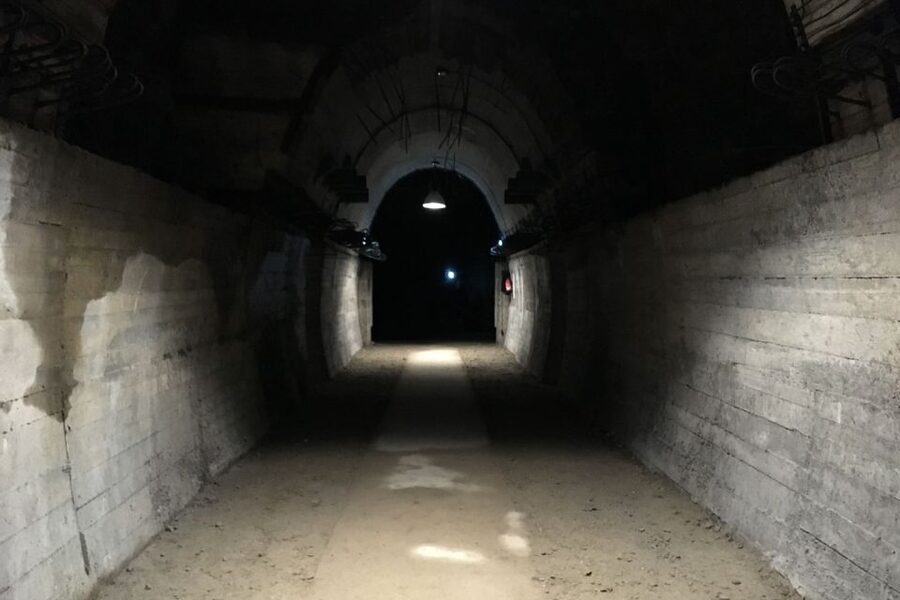
This is a full day, but it is not an exhausting coach excursion with a long list of rushed stops. The route focuses on two major places, with the castle and tunnels taking the larger share of attention.
You meet in front of Nowe Horyzonty cinema near a bus stop in Wroclaw. Transportation is included, so you do not need to work out separate regional connections to Ksiaz and Swidnica. That is valuable here because the sites are outside the city and require coordination.
The drive also has a purpose. Guides have explained the areas along the route, using the journey to give context about Poland, Wroclaw, and Lower Silesia. You can look out at the countryside and arrive with a better sense of the region rather than treating each stop as an isolated attraction.
At Ksiaz, the usual flow includes the representative castle areas, the underground tunnels, and time around the grounds. The gardens and Palm House have also been praised as worthwhile parts of the visit. If you want every terrace and outdoor section, check what your entry includes, since one visitor found the terraces were not part of the castle ticket.
The day finishes at the Church of Peace in Swidnica, with the possibility of seeing the Red Baron’s modest house. The sequence works well: grand residence first, stark wartime tunnels next, and a remarkable religious building last. Each stop has a different mood, so the day does not blur into a string of similar rooms.
Lunch is not included. You need to plan for that during the day, but no lunch arrangement is specified, so ask the operator how much free time is available for eating. Do not assume a restaurant stop is built into the schedule.
Is $153 a fair price?
At $153 per person, this is not the cheapest way to spend a day outside Wroclaw. The value depends on how much you want convenience and interpretation.
The price includes transportation, an English-speaking guide, castle admission, tunnel admission, and an English audio guide in the underground section. You are also paying for a small group of no more than eight people rather than a large vehicle. For a visitor who wants to avoid driving, finding regional connections, arranging timed entries, and sorting out the tunnel visit, those inclusions make the price easier to justify.
The guide is the key value. Ksiaz has enough layers to reward explanation, and Silesia’s past is not always simple to understand from signs alone. A guide who can discuss the castle family, WWII, Polish history, and the church’s religious setting turns the day into more than transportation between attractions.
The price is less attractive if you prefer to explore slowly, eat at your own pace, or spend a long time at one site. Eight hours covers a lot, but the schedule still has limits. You also pay separately for lunch, and the terraces may not be included in the standard castle ticket.
For a first visit to Wroclaw, I would see this as a worthwhile splurge if you have an extra day and want history beyond the city center. It offers three distinct subjects in one outing: aristocratic life, wartime construction, and Protestant religious architecture.
Who should book this Lower Silesia tour?
This tour suits you if you like history with strong physical settings. Ksiaz provides architecture and family drama, the tunnels bring wartime mystery, and the Church of Peace offers unusual design and religious history.
It is also a good choice if you want a small group and a guide who handles the practical details. People who value clear meeting instructions, help with Polish, and background stories during the drive will get more from it than someone who wants an independent day out.
You should be comfortable walking and climbing stairs. The tunnel section is the deciding factor. At 8 to 9°C and high humidity, it is cold, and the stairs are substantial. Children under four cannot enter the tunnels, and the activity is not considered suitable for people over 70.
Photography fans may enjoy the changing styles at the castle, the outdoor setting, and the Church of Peace’s unusual interior. Still, this is not just a picture-taking route. The strongest moments come when you understand why each place looks the way it does.
The tour also works well for people with limited time in Poland. You see an important castle and a UNESCO site without sacrificing another day to transport planning. The tradeoff is a fixed schedule and no included meal.
Simple ways to prepare
Wear shoes suited to stairs and uneven walking. Bring a warm sweater or jacket for the tunnels, even in summer, and consider carrying a small umbrella because rain can affect the outdoor portions.
Keep your schedule flexible after the tour. The day lasts eight hours, and the exact starting time depends on availability. You do not want to add a tightly timed evening reservation in Wroclaw.
Listen carefully when the guide gives tunnel instructions. One group lost time because an engaging castle explanation made some people late for the tunnel entry and headphones. You can enjoy the stories and still keep track of the next meeting point.
If you want to cancel, free cancellation is available up to 24 hours in advance for a full refund. You can also reserve now and pay later, which helps if your Wroclaw plans are still changing.
Should you book the Jewels of Lower Silesia tour?
I would book it if you want an efficient, well-guided day outside Wroclaw and the stairs do not worry you. Ksiaz Castle gives you scale and drama, the tunnels add a serious WWII layer, and the Church of Peace is unusual enough to justify the journey on its own.
I would skip it if you need a slow pace, dislike underground spaces, or want lunch and every castle area built into the price. For most active visitors, though, the combination of small-group transport, strong local guiding, and three very different historical settings makes $153 a reasonable price for a full day.
FAQ
How long does the tour last?
The tour lasts eight hours. Starting times vary, so you need to check availability when booking.
Where is the meeting point in Wroclaw?
The group meets in front of Nowe Horyzonty cinema, close to the bus stop.
What does the price include?
The price includes transportation, an English-speaking guide, entrance to Ksiaz Castle and the tunnels, and an English audio guide for the tunnels.
Is lunch included?
No. Lunch is not included in the tour price.
How cold are the Ksiaz Castle tunnels?
The tunnels remain at about 8 to 9°C, or 46 to 48°F, with humidity above 80 percent. Warm clothing is recommended.
Are the tunnels suitable for children and people with limited mobility?
Children must be at least four years old to enter the tunnels. The route involves many stairs, including a descent and climb comparable to reaching about the fifth floor. The activity is not suitable for people over 70.
Just added around Wroclaw
- Best of Wroclaw 3-Hour History and Culture Walking Tour★ 4.9 · 49 reviews
- From Wrocław: Świdnica Church of Peace Private Tour★ 4.7 · 3 reviews
- From Wroclaw: Polish Pottery and Jawor Church of Peace Tour★ 4.4 · 4 reviews
- Segway Tour Wroclaw: Full Tour (Old Town + Ostrów Tumski)★ 4.8 · 15 reviews
- Cathedral & Old Town★ 5.0 · 9 reviews
- Oder river cruise and walking tour of Wroclaw★ 4.8 · 5 reviews
- Night tour through Wroclaw★ 4.9 · 38 reviews
- Wrocław: Polish Craft Beer Walking Tour with Tastings★ 4.1 · 3 reviews
Full-Day, compared.
Auschwitz-Birkenau & Salt Mine Full-Day Guided Tour
Read our review →
Auschwitz Birkenau and Wieliczka Salt Mine Guided Full Day Tour
Read our review →
Auschwitz and Wieliczka Salt Mine Full-Day Trip
Read our review →
Full-Day Auschwitz-Birkenau & Salt Mine Guided Tour
Read our review →Auschwitz and Wieliczka Salt Mine Full-Day Trip
Read our review →
Full day Tour Zakopane Snowmobiles Thermal Baths from Krakow
Read our review →
Browse the lists this tour appears in