
Reviewed · FULL-DAY
Wrocław: Full-Day UNESCO Church of Peace Tour
The real prize here is Świdnica’s Church of Peace, a huge wooden Protestant church built in the 17th century and now protected as a UNESCO World Heritage site. This tour also gives you a good look at the older, stranger side of Lower Silesia, from Mount Ślęża’s pre-Christian worship sites to early Slavic settlements.
I like the mix of ancient archaeology and modern European history, and I like that the route includes time in Świdnica rather than rushing straight to the church. The main drawback is the fixed seven-hour schedule: you see several places, but none gets a long, leisurely visit. Lunch is also on your own.
Key points to know before booking
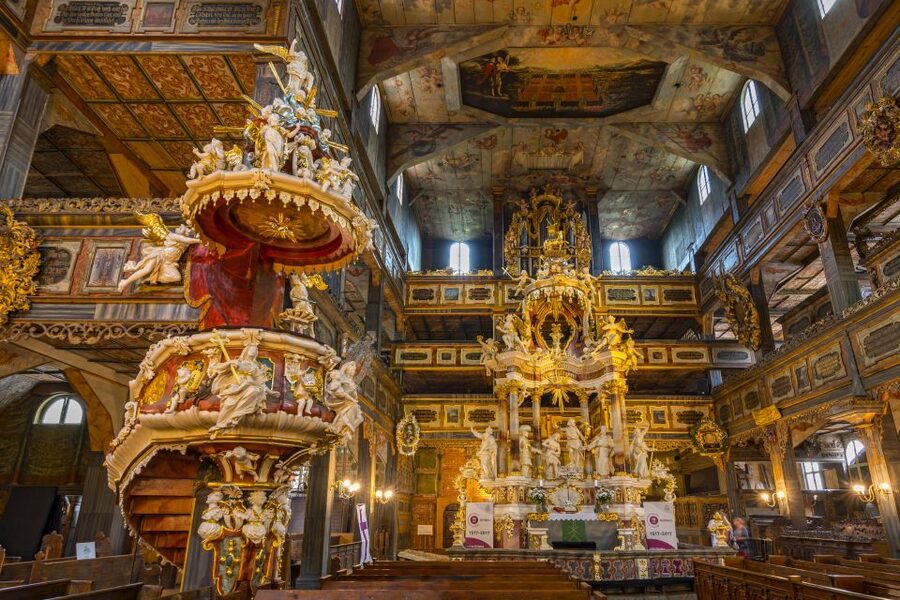
- Europe’s largest wooden church: The Church of Peace in Świdnica is the day’s main attraction and includes entrance in the tour price.
- Mount Ślęża at 718 meters: Learn why this isolated peak drew tribes and worshippers long before Poland became a Christian country.
- Będkowice’s early Slavic settlement: A short archaeological stop adds physical detail to the stories about the region’s first communities.
- Krzyżowa and the 1989 Reconciliation Mass: This stop connects Lower Silesian history with the rebuilding of Polish-German relations.
- Free time in Świdnica: You can explore the market square, see the cathedral, or find lunch before entering the Church of Peace.
- Seven hours by comfortable vehicle: The tour begins and ends in central Wrocław, with an English- or Spanish-speaking guide and scenic drives between stops.
Why the Church of Peace is worth a full day from Wrocław
The Church of Peace is not just another old church stop. Its story explains why the building looks so unusual and why it matters far beyond Świdnica.
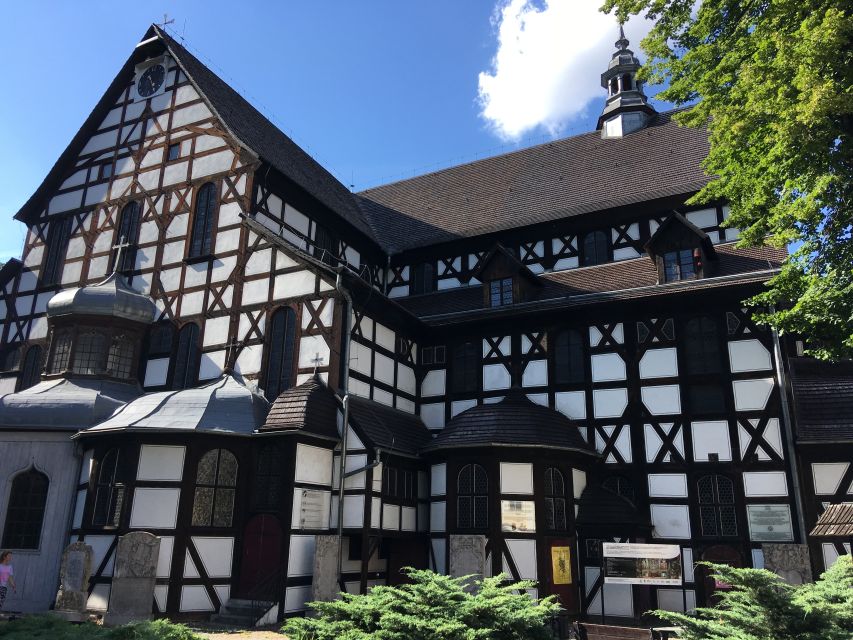
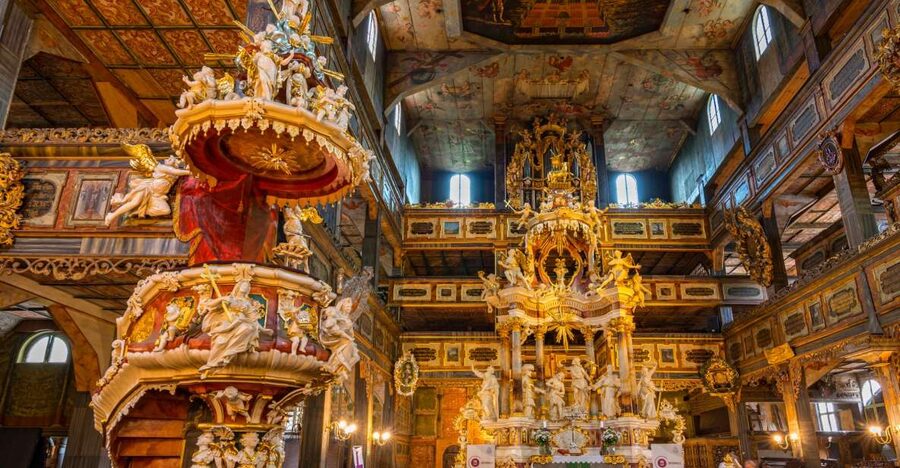
After religious conflicts in Europe, Protestant communities in Silesia were allowed to build churches under strict conditions. These churches had to be outside city walls, made largely from timber and other less permanent materials, and completed quickly. The result in Świdnica is remarkable: a vast church with the appearance of a grand European interior, yet a structure based on wood.
Inside, you can expect a richly decorated space rather than a plain rural chapel. The attraction is the contrast between the building’s humble construction rules and its impressive scale. It is this unusual combination that makes the stop memorable, even if you are not especially interested in church architecture.
Your admission is included, which matters because the church is the one major paid sight specified on the tour. The guide can place the building in its religious and political setting, helping you understand why a wooden church could become such an important monument.
I would allow your attention to slow down here. Look up, notice the timber structure, and take in the difference between the exterior and the interior. The visit may be the clearest reward for choosing this excursion instead of a simple city tour.
A few more Wroclaw trips to weigh up
- From Wrocław: Full-Day Auschwitz-Birkenau Guided Tour
★ 4.8 · 117 reviews - Jewels of Lower Silesia Full-Day Tour from Wroclaw
★ 4.8 · 66 reviews - From Wroclaw: Full-Day Stolowe Mountains Trekking Tour
★ 3.9 · 3 reviews
Mount Ślęża and the old beliefs of Sobotka
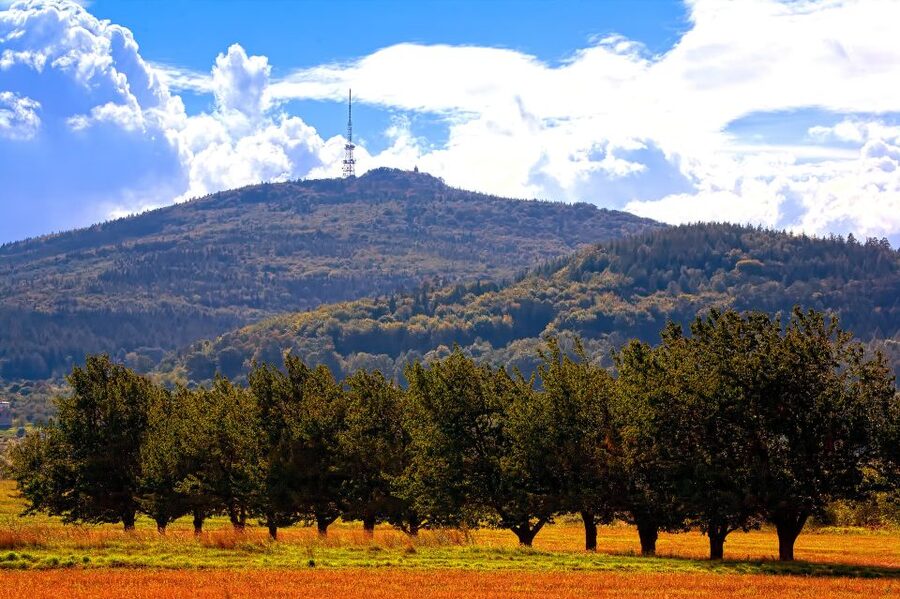
The drive from Wrocław heads toward Sobotka, a town at the foot of Mount Ślęża. At 718 meters, the mountain rises sharply above the flatter Silesian countryside. You do not climb it on this tour, but you get to see why it has dominated the area for centuries.
Mount Ślęża was a place of heathen worship before Christianity reached the region. Different tribes lived here from the Bronze Age onward, and the mountain became linked with religious practice. That gives the first part of the day a different feel from the church visit later on. You are moving from pre-Christian stone symbols to a major Christian building, with the same region connecting both.
In Sobotka, you explore the market square and hear about the communities that lived around Mount Ślęża. This is a useful opening stop because it gives you a sense of place before the tour moves into archaeological and political history.
You might find the stop most rewarding if you enjoy stories that raise questions rather than offer easy answers. The ancient stone sculptures were religious symbols, but the full meaning of old monuments is not always certain. That mystery is part of the appeal. You are not simply looking at decorative stones. You are seeing traces of people whose beliefs were formed long before written records explained them.
The town visit is also a practical break from the coach. Since the day includes several stops, a short walk in Sobotka helps divide the route into manageable sections.
Ancient stone sculptures and the Będkowice settlement
The tour includes a break at a mountain cottage, where you hear more about the ancient stone sculptures connected with Mount Ślęża. The setting gives the archaeological story a local scale. Instead of treating the sculptures as isolated museum objects, the guide connects them with the mountain and the people who used the area.
After Sobotka, the route continues to Będkowice, an archaeological site associated with early Slavic settlement. You make a brief stop to see what these early communities looked like. The word brief is important here. This is not a long archaeological visit or a full-day excavation tour, but it adds a useful visual layer to the historical explanation.
I like this part of the trip because it keeps the past grounded. You hear about tribes, worship, and settlement, then see a site that helps turn those ideas into something more concrete. For you, the value will depend on your interest in archaeology. If you prefer major monuments and polished interiors, Będkowice may feel modest. If you like seeing how people lived, it can be one of the more meaningful stops.
The tour’s route also matters. Lower Silesia is not just a collection of separate sights. The coach ride links mountain worship, village settlement, religious conflict, reconciliation, and city architecture in one day. You get a broad introduction to the region rather than a single isolated attraction.
Krzyżowa and a turning point in Polish-German relations
The next major stop is Krzyżowa, home to the Foundation for Mutual Understanding in Europe. This part of the visit shifts the focus from ancient history to the 20th century.
Krzyżowa is associated with the Polish-German Reconciliation Mass held on November 12, 1989. The event took place soon after the fall of the Berlin Wall and became an important public moment in the process of rebuilding relations between Poland and Germany.
That story gives the tour a welcome change of pace. You begin with pre-Christian worship and early settlements, then move through religious division and later arrive at an example of cooperation between two countries with a painful shared past. The stop is not simply about a building or a view. It is about how places can carry political meaning.
You should expect the guide to explain the setting and the importance of the mass rather than spend hours at a large museum complex. The supplied schedule does not promise a long independent visit, so keep your expectations focused on context and orientation.
For me, Krzyżowa adds real value to the day because it prevents the excursion from becoming only a church-and-countryside outing. You get a clearer idea of how Lower Silesia fits into both European history and present-day relations.
Same country, a completely different kind of day:
- Wroclaw: E-Car Tour and Audio Guide
★ 4.6 · 1,738 reviews - Wroclaw: 2-Hour Private Guided Tour by Electric Car
★ 4.8 · 805 reviews - Wrocław: Old Town and Ostrów Tumski Walking Tour in English
★ 4.8 · 311 reviews - Wroclaw: Private Old Town Guided Walking Tour (2 hours)
★ 4.8 · 275 reviews
A glimpse of the Red Baron’s family home
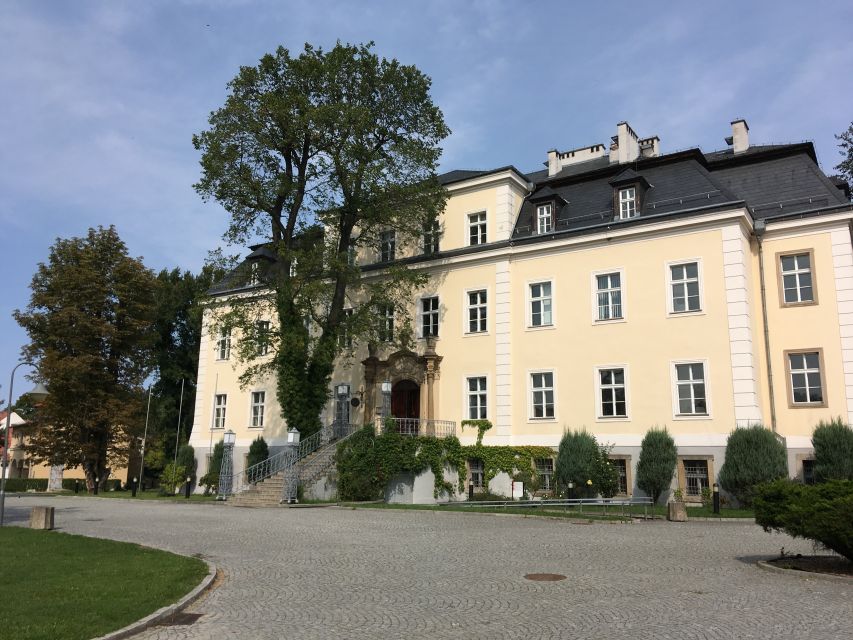
Along the route, you also see the former family home of Manfred von Richthofen, the famous World War I air force ace better known as the Red Baron. This is a quick historical detail rather than the central attraction, but it is the kind of unexpected connection that makes a coach route more interesting.
The information provided does not describe a dedicated interior visit, so you should treat this as a sight seen during the journey, not as a separate museum experience. Still, the link gives you another way to read the countryside. The area was home to families, estates, religious communities, and political figures whose stories reached far beyond Lower Silesia.
I would not book the tour solely for the Red Baron connection. If the subject interests you, though, it is a worthwhile extra detail to listen for as the guide explains the route.
Świdnica market square, cathedral, and lunch break
Świdnica is the day’s main town stop. You have free time to explore on your own, find lunch, or look around the picturesque market square. The city also has an impressive cathedral, so this section gives you a chance to compare Catholic and Protestant religious architecture before or after the Church of Peace visit.
The schedule does not include lunch, snacks, drinks, or other personal expenses. Plan for that when you compare the $108 price with the total cost of the day. You will need to choose and pay for your own meal in Świdnica, and the exact amount of free time may vary with road conditions and weather.
I like having this pause built into the route. Seven hours of continuous sightseeing can become tiring, especially when several stops involve historical explanations. Free time lets you walk at your own speed and choose what matters to you.
The tradeoff is that independent time can feel short if you want a full meal and a detailed look at both the cathedral and market square. You will need to keep an eye on the meeting time. This is a guided day trip, not an open-ended visit to Świdnica.
The city stop also gives you a more ordinary Polish setting after the archaeological sites. You can see how the grand church, cathedral, and market square fit into a living town rather than viewing them as detached monuments.
Entering the Church of Peace in Świdnica
The final major sightseeing stop is the Church of Peace itself. It is the largest wooden church in Europe, a claim that helps explain why the building receives such careful protection and why the visit is the centerpiece of the excursion.
The church’s size is the first surprise. Timber construction often suggests a small country chapel, but this building was designed to hold a large congregation. Its scale, decoration, and historical setting make it unlike most churches you will see in Poland.
The UNESCO designation is also significant. It recognizes not only the church’s appearance, but its place in the religious and political history of Silesia. The site shows how communities adapted to restrictions and still created a major house of worship.
Your entrance fee is included, and the tour guide accompanies the day in English or Spanish. That makes the visit easier to appreciate than a quick stop with no explanation. The building has enough unusual features that context matters. You will get more from it if you understand why it had to be built from wood and why its location outside the city was important.
I would save a little energy for this stop. The earlier sites explain the region’s long story, but Świdnica provides the strongest visual payoff. After the visit, you return to Wrocław by vehicle and the activity ends at the original meeting point.
What the $108 price includes
At $108 per person, this is not the cheapest way to reach Świdnica. The price includes a full day of sightseeing, transport in a comfortable vehicle, an English- or Spanish-speaking guide, and admission to the Church of Peace.
The value comes from the route rather than from the church alone. If you hired transport to Świdnica and tried to arrange the other stops yourself, you would need to plan the sequence, allow for road time, and research the archaeological and historical sites. Here, one guide ties everything together.
The price is easier to justify if you want interpretation. Sobotka, Mount Ślęża, Będkowice, Krzyżowa, the Red Baron connection, and Świdnica are not all equally famous. A guide helps explain why they belong in the same day.
It is less attractive if you only want to see the Church of Peace and spend several hours in Świdnica. In that case, a shorter or more independent visit might suit you better, though no alternative is included here.
Remember to budget separately for lunch and drinks. The tour does not cover personal purchases, and the schedule leaves the meal choice to you.
Timing, meeting point, and practical planning
The activity lasts about seven hours. It starts in front of the Nowe Horyzonty movie theater at Kazimierza Wielkiego 19a/21 in Wrocław and ends back at that same meeting point.
Check the departure time when booking because starting times depend on availability. Exact timings can change because of weather or road conditions. That matters on a route with several stops and countryside driving, so do not plan a tight appointment immediately after the scheduled return.
The vehicle is described as comfortable, which is useful because a large part of the day is spent moving between sites. You should still expect a road-based excursion rather than a long walking tour.
The guide language is English or Spanish. No individual guide names are supplied, so you should choose the language you can follow most easily when reserving. The itinerary does not state a group size, so do not assume a private tour.
Free cancellation is available up to 24 hours before departure for a full refund, and you can reserve now and pay later. Those terms help if your Wrocław schedule is still changing, but the more important decision is time: you need a full day available for the route.
Who will enjoy this Lower Silesian day trip
I would recommend this tour to you if you want more than Wrocław’s city center and enjoy a mix of archaeology, religion, politics, and regional scenery. It works especially well for first-time visitors who want a guided introduction to several parts of Lower Silesia without arranging separate transport.
It also suits people who appreciate unusual buildings. The Church of Peace is the clear highlight, and its wooden construction makes it very different from the stone cathedrals found elsewhere in Europe.
History-minded families may like the changing subjects, though younger children may find the explanations at Sobotka, Będkowice, and Krzyżowa demanding. The schedule is full, so this is better for people who are happy to keep moving.
I would hesitate to recommend it if you want a slow day, a long lunch, or extensive time at every stop. The route covers a lot. Its strength is variety, not depth at each individual site.
Should you book the Church of Peace tour?
Book it if you want the Church of Peace but also want the journey to explain the region around it. The combination of Mount Ślęża, ancient sculptures, Będkowice, Krzyżowa, Świdnica, and the Red Baron connection gives you a fuller picture than a direct church visit.
Skip it if your priority is complete freedom or a long independent stay in Świdnica. You will follow a set seven-hour plan, pay separately for lunch, and accept that road conditions may alter the timing.
For most visitors with one spare day in Wrocław, I see solid value in the $108 cost. You get transport, a guide, and the Church of Peace entrance, while the route adds several distinctive stops that would be difficult to connect efficiently on your own.
FAQ
How long does the tour last?
The tour lasts seven hours. Exact starting times depend on availability, and the schedule may change because of weather or road conditions.
Where does the tour start and finish?
You meet in front of the Nowe Horyzonty movie theater at Kazimierza Wielkiego 19a/21, 50-077 Wrocław. The activity ends back at the same meeting point.
Which languages are available?
The live guide speaks English or Spanish.
Is lunch included?
No. Lunch, snacks, drinks, and other personal expenses are not included. You have free time in Świdnica to find lunch or explore independently.
Is admission to the Church of Peace included?
Yes. The entrance fee to the Church of Peace in Świdnica is included.
Can I cancel the booking?
You can cancel up to 24 hours in advance for a full refund. The reserve-now-and-pay-later option lets you hold a place without paying immediately.
Just added around Wroclaw
- Wrocław: World War II and the non-existent city of Breslau★ 3.6 · 3 reviews
- Wrocław to Rock City in Adrspach and Project Riese day trip★ 5.0 · 5 reviews
- Wroclaw: WW2 Tour to Project Riese & Gross-Rosen Museum★ 4.8 · 26 reviews
- Wroclaw: University Baroque Tour★ 5.0 · 19 reviews
- Wroclaw : Walking Custom Tour with a Local Guide★ 4.8 · 3 reviews
- Wrocław: Tour of the Old Town in an Imperial E-car★ 4.3 · 13 reviews
- Wroclaw to Rock City in Adrspach and Ksiaz Castle day trip★ 4.9 · 16 reviews
- Wroclaw: 3-Hour Bike Tour in English or Polish★ 4.8 · 66 reviews
Full-Day, compared.
Auschwitz-Birkenau & Salt Mine Full-Day Guided Tour
Read our review →
Auschwitz Birkenau and Wieliczka Salt Mine Guided Full Day Tour
Read our review →
Auschwitz and Wieliczka Salt Mine Full-Day Trip
Read our review →
Full-Day Auschwitz-Birkenau & Salt Mine Guided Tour
Read our review →Auschwitz and Wieliczka Salt Mine Full-Day Trip
Read our review →
Full day Tour Zakopane Snowmobiles Thermal Baths from Krakow
Read our review →
Browse the lists this tour appears in