
Reviewed · SCHINDLERS FACTORY TOURS
Kazimierz, Schindler’s Factory & Ghetto Guided Tour
Kraków’s Jewish past comes into focus on this five-hour walk, which links Kazimierz’s synagogues with Schindler’s Factory and the former Ghetto in Podgórze. I like the way the route gives you the background first, then brings you to the wartime sites. I also like the mix of streets, religious buildings, museum displays, and memorials.
The main drawback is group size. Up to 25 people may enter the museum together, and in its narrow rooms you could hear the guide through an audio system without always seeing what the guide is pointing out. Arrive early, too: late arrivals cannot join once the group has entered.
Key points to know before booking
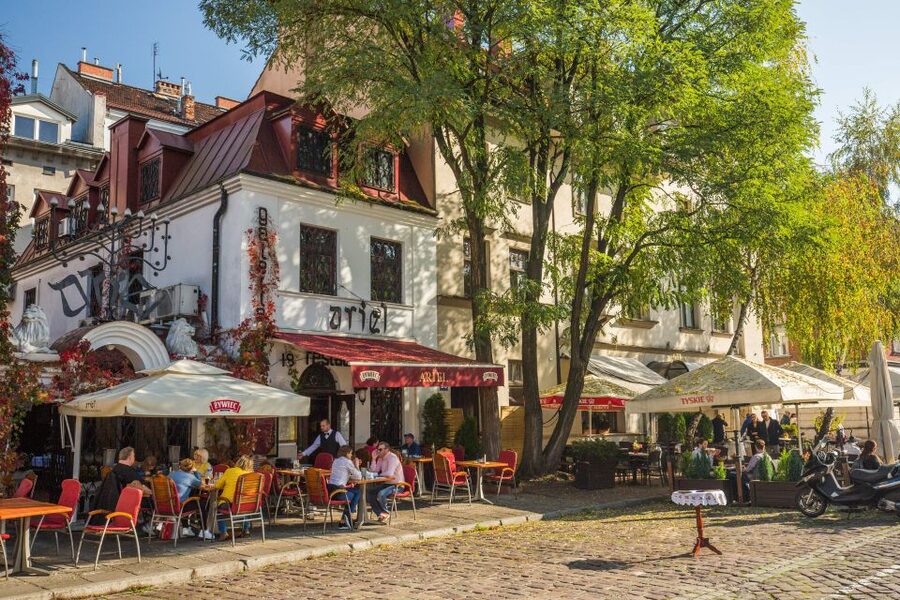
- Szeroka Street sets the scene: Begin among Kazimierz’s old synagogues and townhouses, where the district’s Jewish story is easiest to picture.
- Four important synagogues are part of the walk: You pass the Old, Remuh, Kupa, and Tempel synagogues, each linked to a different part of Jewish life.
- Schindler’s Factory is now a museum: Fast-track admission takes you into the exhibition Kraków under Nazi Occupation 1939-1945, not an original factory floor.
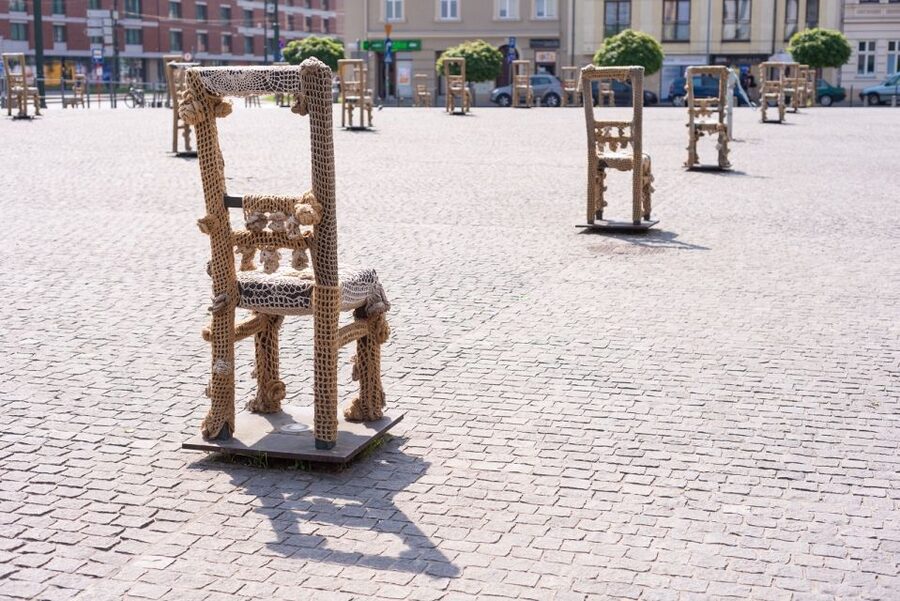
- The Ghetto Walls and empty chairs carry the weight: These are the most direct reminders of confinement, deportation, and lives lost.
- The guide provides the bridge between sites: The tour works best when you want the cultural background before confronting the wartime story.
- Languages and timing need care: Choose one tour language at booking, submit every participant’s full name, and allow for approximate start times.
Why this route works better than seeing the sites alone
This tour tackles a difficult subject in the right order. You begin with Jewish life in Kraków, not only with Nazi persecution. That matters because Kazimierz was not created as a war memorial. It was a real neighborhood shaped by worship, family life, trade, custom, and community.
From there, the route moves toward the German occupation and the destruction of that community. Schindler’s Factory then gives you a museum setting for the wartime story, while Podgórze provides physical reminders of the Ghetto itself.
I like this progression because it gives the final sites more meaning. A wall fragment or row of empty chairs can feel abstract if you have no sense of the people and traditions that came before. Here, the earlier walk helps you understand what was being torn apart.
The tour lasts five hours, so it is not a quick photo stop. You will spend a substantial part of the day on foot and inside the museum. That makes it a good choice if you want one serious introduction to Kraków’s Jewish heritage and World War II history, rather than several disconnected visits.
More Schindlers Factory Tours in Krakow:
- Krakow: Oskar Schindler’s Factory Entry Ticket & Guided Tour
★ 4.2 · 3,793 reviews - Krakow: Schindler’s Factory Tour with Entrance Ticket
★ 4.5 · 3,182 reviews - Krakow: Schindler’s Factory Skip-the-Line Ticket
★ 4.4 · 3,105 reviews
Starting on Szeroka Street in Kazimierz
Meet your guide on the steps of the Old Synagogue on Szeroka Street. Look for the Kazimierz Guided Tour sign, and arrive at least 10 minutes before the stated time.
Szeroka Street is a strong starting point. Historic synagogues and townhouses frame the street, creating a clear sense of Kazimierz as a former center of Jewish life. The buildings date from the 16th to the 18th centuries, so the setting itself helps establish how old the community was.
The Old Synagogue is the oldest preserved synagogue in Poland. It now operates as a museum of Jewish history, and even viewing it from outside gives the guide a useful place to explain Jewish worship and community life. The tour information does not promise entry to this synagogue, so think of it as a major exterior stop rather than an additional museum visit.
That distinction is useful. You are not buying a synagogue museum tour with several interior admissions. You are taking a guided walk through the district, with the guide explaining what you see and how the sites fit together.
Four synagogues, four clues to community life
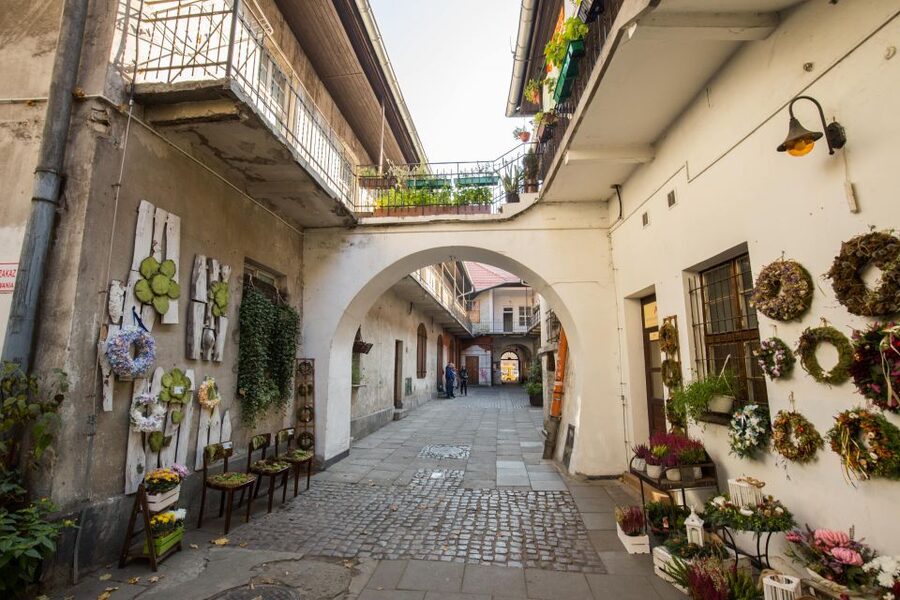
The route passes the Remuh Synagogue and Cemetery, one of the country’s most important Jewish religious sites. The cemetery adds another layer to the walk. It connects public worship with burial traditions and with the generations who lived in Kazimierz before the war.
You also pass Kupa Synagogue. It once served the poorest residents of the district, a detail that helps you see Kazimierz as a neighborhood with social differences, not a single uniform community. Jewish life included people with varying means, needs, and roles.
Tempel Synagogue offers another contrast. It is now an active center of cultural life, linking the district’s past with its continuing cultural presence. The point of these stops is not simply to collect synagogue names. It is to show how religious buildings reflected the changing needs of the community.
The walk ends in Plac Nowy, a lively square with cafés, markets, and local art. After the solemnity of the religious sites, this is a more everyday, present-day Kazimierz. The change in mood is helpful. It reminds you that the quarter is not frozen in the past.
You should not expect a quiet museum corridor throughout this section. Kazimierz is a lived-in district, and the square has a social, commercial feel. That makes the walk more authentic, though it can also mean background noise and distractions while the guide is speaking.
The guide’s role in making Kazimierz understandable
The strongest part of a tour like this is the explanation between the stops. The guide covers Jewish traditions, cultural heritage, and the long relationship between Jewish and Christian communities in Kraków.
One particularly useful element is the historical range. The story reaches from the Middle Ages through the Second World War, rather than treating 1939 as the beginning. That wider frame helps explain the significance of the buildings you pass and the scale of what was lost.
The guides are licensed, and the experience is offered in English, French, German, Spanish, and Italian. One group tour is conducted in one language, so select carefully when booking. A French-language tour, for example, will not be a multilingual group with commentary repeated in several languages.
A past tour guide named Aneta received especially strong praise for explaining Jewish life in Poland and Kraków, from the medieval period through the war. That kind of context is exactly what makes the first half of the route worthwhile. Still, guides can vary, and the booking information does not guarantee a particular guide.
More Kazimierz Jewish Quarter Tours in Krakow:
- Krakow: Jewish Quarter and Former Ghetto Tour
★ 4.9 · 1,441 reviews - Krakow: Bike Tour of Old Town, Jewish Quarter and the Ghetto
★ 4.9 · 1,155 reviews - Krakow: Kazimierz Jewish Quarter Walking Tour
★ 4.8 · 571 reviews - Krakow: Kazimierz, Schindler’s Factory & Ghetto Guided Tour
★ 4.8 · 460 reviews
Moving toward Schindler’s Factory
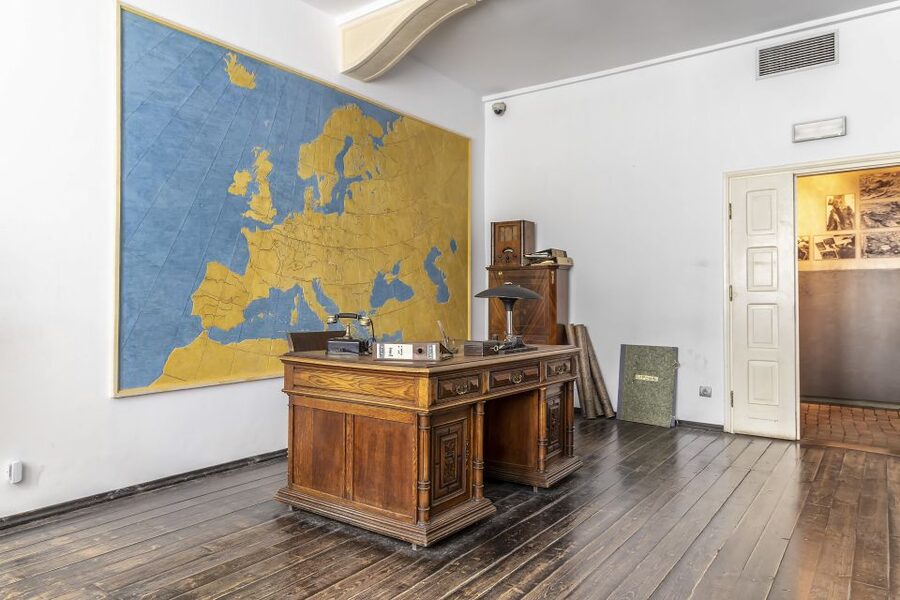
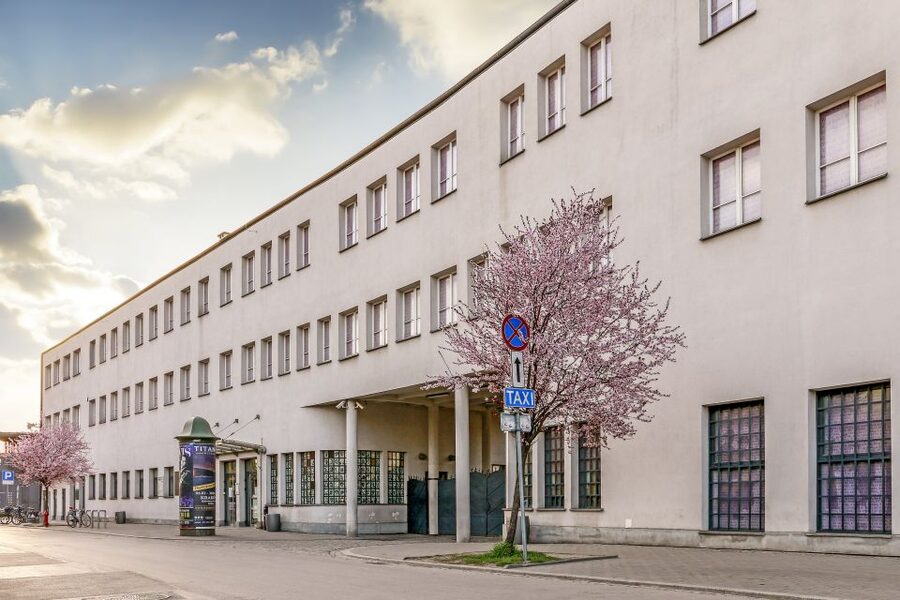
The route then turns to the area around Schindler’s Factory. The building now houses a museum and no longer contains the original production equipment. This is an important expectation to set before you go.
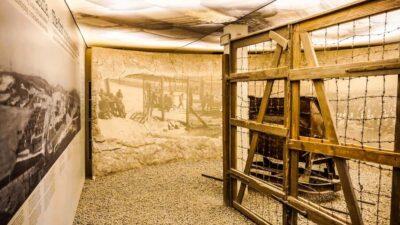
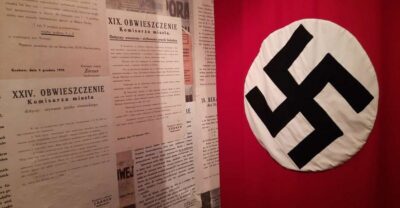
You are not visiting a preserved enamel factory floor or a working industrial site. You are visiting the exhibition Kraków under Nazi Occupation 1939-1945, which uses the building and its displays to tell the story of the city during the German occupation.
Fast-track admission is included. That saves time at a major Kraków museum, especially when your schedule is tight. It does not mean you skip the museum experience itself. You still need to remain with the group and follow the museum’s rules.
The shift from Kazimierz to the factory area also changes the story. The first section explains the community. The museum shows what happened to Kraków’s residents under occupation, including the pressure, fear, and uncertainty of daily life.
Inside the museum: Schindler, workers, and occupied Kraków
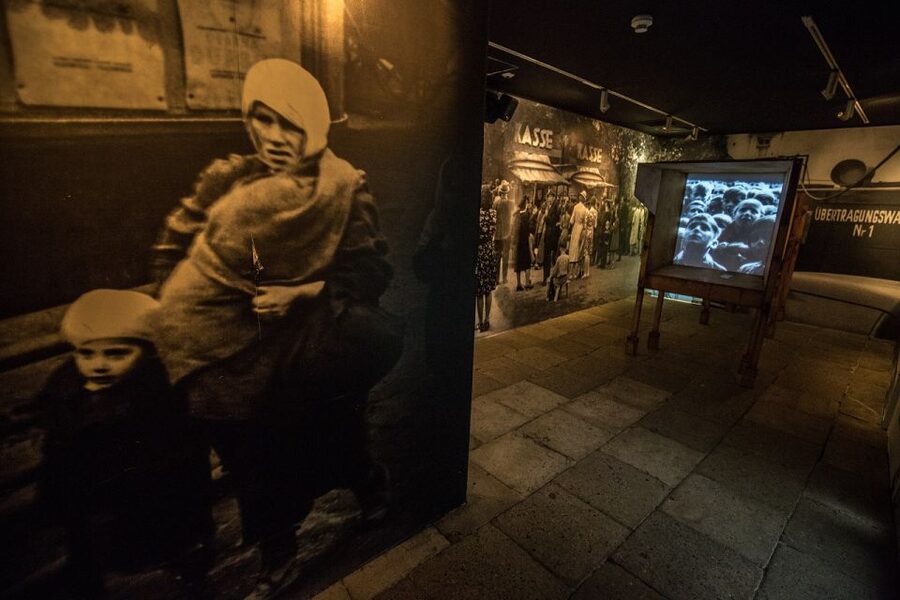
Oskar Schindler’s story sits at the center of the museum visit. He employed Jewish workers and used his position, influence, and resources to protect more than 1,000 men and women from deportation.
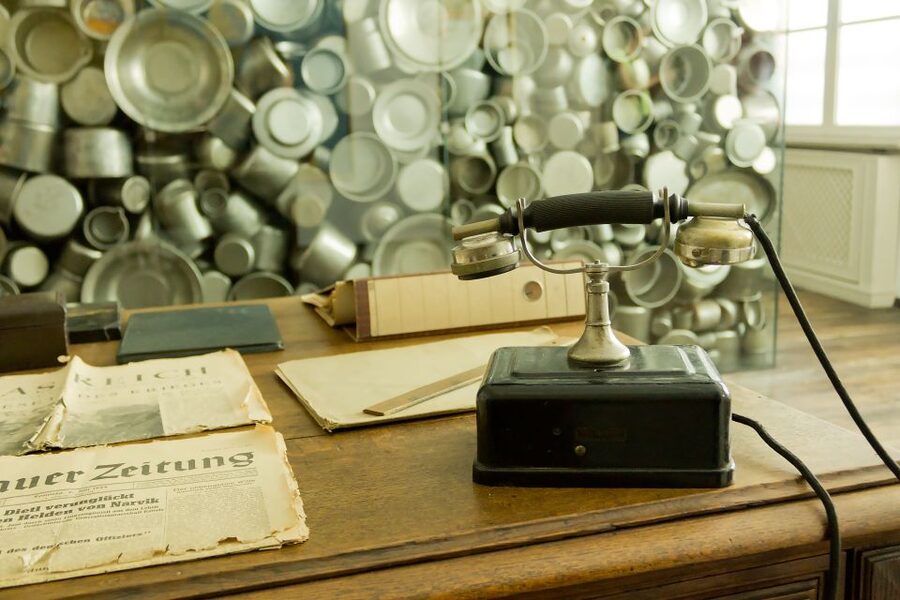
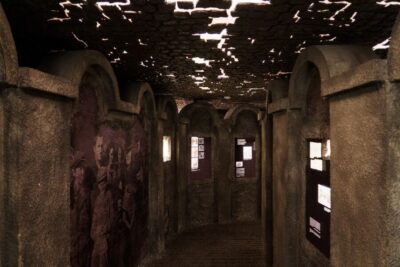
The exhibition presents this story within the larger experience of occupied Kraków. Photographs, personal objects, and reconstructed streets help show how ordinary life was restricted and transformed. The focus is not only on Schindler as an individual hero. It also brings attention to the Jewish workers often called Schindlerjuden, whose survival is part of the human story.
I find that balance important. A tour centered only on Schindler can turn a huge historical tragedy into one dramatic biography. Here, the museum setting places his choices beside the wider machinery of occupation and persecution.
The visit can be emotionally heavy. You will see material connected with fear, displacement, deportation, and loss. The guide’s earlier explanation of Jewish life gives those subjects a human setting, but you should still plan for a serious museum visit rather than a light attraction.
Group conditions matter most here. The museum has narrow, winding passages, and the maximum group size is 25. One practical problem is that a group originally smaller than 25 may be combined with another group before or during the museum portion. With 15 people becoming 25, it is possible to hear the guide through the audio system while having trouble seeing the object or display being discussed.
If you care greatly about close viewing, stay near the guide when the museum visit begins. Even then, the group may spread or compress in tight areas. The fast-track entry is valuable, but it does not guarantee a private or spacious experience.
The former Ghetto in Podgórze
After the museum, the tour continues toward the former Jewish Ghetto in Podgórze. This section brings the occupation story out of the exhibition and into the city itself.
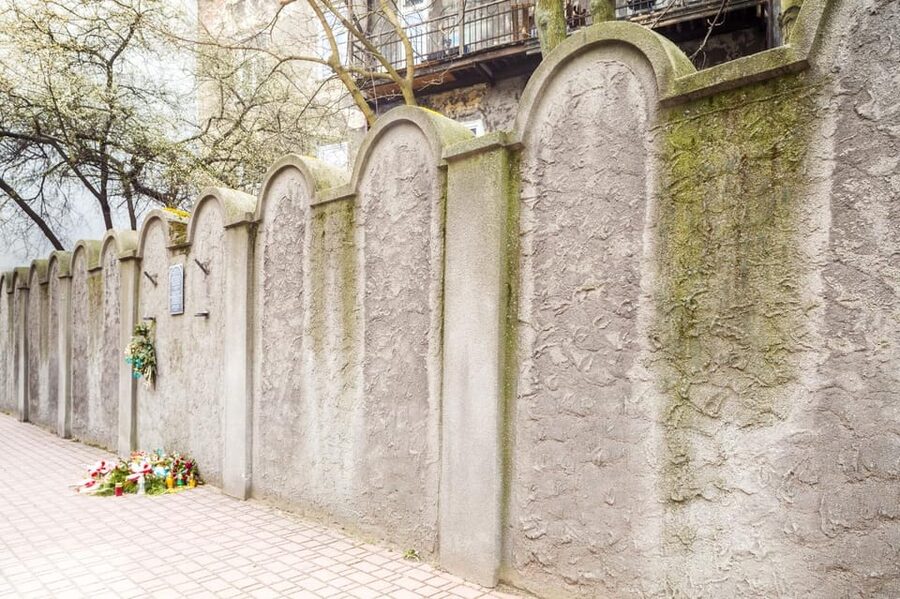
The remaining fragments of the Ghetto Walls are stark. They mark the physical boundary that confined Jewish residents and separated them from the rest of Kraków. A wall fragment cannot show every detail of daily life, but it gives you a direct sense of forced separation and restricted movement.
This is one of the tour’s most valuable contrasts. In Kazimierz, you see the places where Jewish community life developed. In Podgórze, you see the structures used to contain that population during the occupation. The distance between those two parts of Kraków becomes part of the lesson.
The route ends at Ghetto Heroes Square, once a central point in the Ghetto and a site linked to deportations. Today, empty metal chairs fill the square as a memorial. Their simple shape carries several meanings: belongings left behind, people removed from their homes, and lives that never returned.
The square is not an entertainment stop, and the tour should give you a moment to take in the memorial without rushing. It is also an active urban space, so the setting may not feel isolated or solemn in the way a cemetery does. That is part of the reality of visiting historic sites in a living city.
What five hours and $81 get you
At $81 per person, this is not the cheapest way to walk around Kraków. The price makes more sense if you plan to visit Schindler’s Factory anyway and want a guide to connect it with Kazimierz and Podgórze.
You are paying for five hours, a licensed guide, the walking route, fast-track museum admission, and commentary in your chosen language. Food and drinks are not included, so allow for your own refreshments during or after the tour.
The value is strongest for first-time visitors who want structure. You do not need to work out how the synagogues, factory, Ghetto Walls, and memorial square relate to one another. The guide provides that thread.
The value is weaker if you prefer to linger alone at each site or read every museum panel at your own pace. A five-hour group tour keeps moving, and the museum portion may feel crowded. You also do not receive a quiet, private guide experience.
The rating of 4.8 from nine reviews reflects very strong satisfaction, with repeated praise for the guides and the amount people learned. At the same time, the museum crowding issue is real enough to consider before paying the full price.
Who should book this walking tour
I would recommend it to you if you want a clear introduction to Kraków’s Jewish heritage and wartime history in one day. It suits visitors who value explanation, enjoy walking, and want to place Schindler’s story within the broader history of the city.
It is also a useful choice before visiting Auschwitz. One French-language participant found the background on Polish Jewish life and Kraków helpful preparation for understanding later wartime sites. That is a sound reason to take this tour early in your stay.
Families with older children and teenagers may find the route useful if they can manage five hours of walking and serious subject matter. The material is not presented as a casual sightseeing game, so younger children may find the museum and memorial sections difficult.
You should think twice if you dislike groups, crowded museums, or fixed timing. The group can reach 25 people, museum schedules may adjust the start time, and all participants must be named when booking because the museum issues personalized tickets.
Weather can also affect comfort. The tour includes outdoor walking through Kazimierz and Podgórze, so dress for the conditions and wear shoes suited to several hours on city streets.
My verdict: a strong history tour with one clear weakness
Book this tour if you want the full sequence: Jewish life in Kazimierz, the occupation at Schindler’s Factory, and the Ghetto’s physical remains in Podgórze. The route is thoughtful, the subject matter is important, and the guide’s context is the main reason to choose it over visiting the sites on your own.
The chief caution is the museum group. A full group may make it hard to see displays in tight rooms, even with an audio system. If you can accept that tradeoff, $81 is a fair price for a five-hour, guided overview with museum admission and a route that connects Kraków’s most important Jewish and wartime sites.
FAQ
Where does the tour begin?
Meet your guide on the steps of the Old Synagogue on Szeroka Street. The guide will hold a Kazimierz Guided Tour sign.
How long does the tour last?
The tour lasts five hours. Starting times depend on availability, and all times are approximate because museum or site schedules may require changes.
What places does the walking tour include?
The route includes Kazimierz, the former Jewish Ghetto in Podgórze, remnants of the Ghetto Walls, Ghetto Heroes Square, and Schindler’s Factory museum.
Is admission to Schindler’s Factory included?
Yes. The tour includes fast-track admission to Schindler’s Factory and a guided visit to the exhibition Kraków under Nazi Occupation 1939-1945.
Is Schindler’s original factory equipment still there?
No. The building now operates as a museum and no longer contains the original production equipment.
What languages are available?
Tours are available in English, French, German, Spanish, and Italian. Each group tour is conducted in one language, so choose your preferred language when booking.
How large can the tour group be?
Museum group tours are limited to a maximum of 25 participants. A smaller group may be combined with another group before the museum visit.
What information is needed when booking?
You must provide the full names of every participant because the museum issues personalized tickets. Missing names may result in denied entry.
What happens if I arrive late?
Arrive at least 10 minutes before the start time. Once the group has entered, late arrivals cannot be accommodated and their tickets are non-refundable.
More Jewish Ghetto Tours in Krakow
- Krakow: Schindler’s Factory & Ghetto Guided Tour
★ 4.7 · 1,694 reviews - Full Bike Tour – the Old Town, Jewish Qtr & the Ghetto NEW BIKES
★ 5.0 · 437 reviews - Krakow: Bike Tour of the Old Town, Kazimierz, and the Ghetto
★ 4.9 · 350 reviews - Krakow: Jewish Ghetto Walking Tour
★ 4.6 · 349 reviews
Just added around Krakow
- Tour to Wadowice: Hometown of Pope Saint John Paul II★ 4.6 · 12 reviews
- The Jewish Quarter – Walking Tour★ 5.0 · 4 reviews
- From Kraków; to Białka Thermal Baths private tour★ 5.0 · 5 reviews
- Krakow: Auschwitz-Birkenau and Wieliczka Salt Mine Day Trip★ 4.7 · 84 reviews
- St. Mary’s Basilica and more – a short walk with a guide★ 4.7 · 56 reviews
- Krakow: Skip-the-Line Wawel Castle & Old Town Guided Tour★ 4.9 · 23 reviews
- Krakow: Schindler’s Factory Guided Tour★ 4.2 · 12 reviews
- Shooting Range Experience!★ 4.8 · 66 reviews
Schindlers Factory Tours, compared.
Oskar Schindler’s Factory Entry Ticket & Guided Tour
Read our review →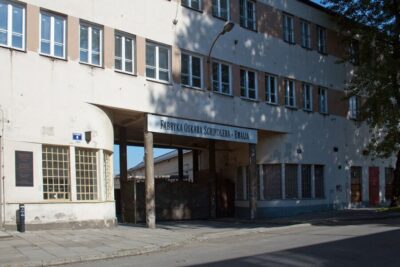
Schindler’s Factory Tour with Entrance Ticket
Read our review →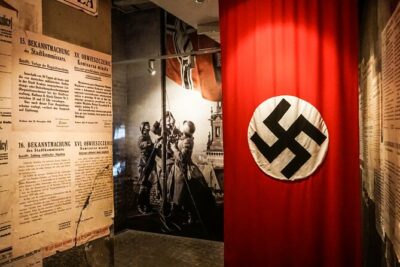
Schindler’s Factory in Krakow: Guided Tour & Skip the Line Ticket
Read our review →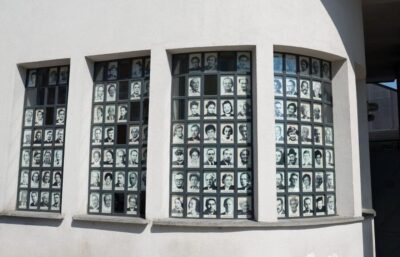
Schindler’s Factory Ticket with Guided Tour Option
Read our review →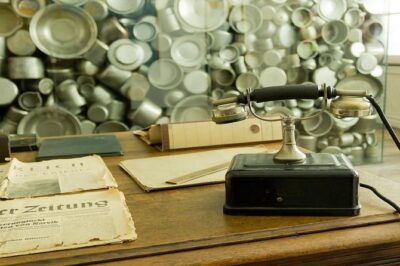
Krakow Schindler’s Factory Guided Tour with Admission Ticket
Read our review →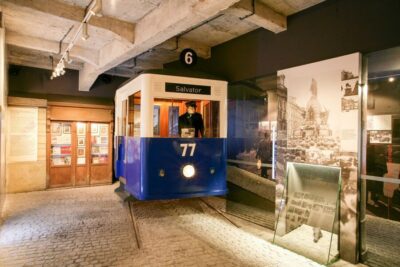
Schindler’s Factory Guided Tour with Entry Ticket
Read our review →Browse the lists this tour appears in