
Reviewed · SCHINDLERS FACTORY TOURS
Krakow: Schindler’s Factory & Ghetto & Plaszow Camp Guided Tour
Krakow’s wartime story becomes far more personal on this five-hour walk through Schindler’s Factory, the former Jewish ghetto, and Plaszow Camp. The route links museum rooms with real streets, a surviving wall fragment, the chair memorial at Ghetto Heroes Square, and the rough remains of the camp.
I like the way the tour moves beyond the familiar Schindler story, and I like that guides such as Dominika and Matthew bring local knowledge to places that are easy to miss alone. The main drawback is the physical side: Plaszow includes hills, mud, and uneven ground, while public transport is not included.
- Schindler’s Factory takes 90 minutes: The museum focuses on Krakow under Nazi occupation, not only Oskar Schindler’s biography.
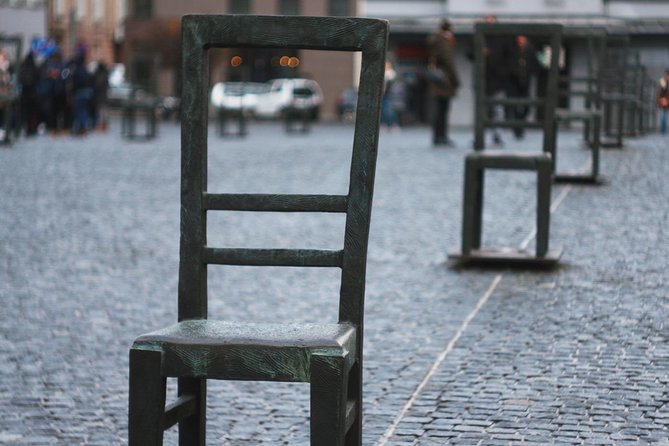
- Ghetto Heroes Square uses 70 metal chairs: The memorial represents belongings left behind after the ghetto was emptied.
- A surviving ghetto wall fragment makes the boundaries tangible: The 12-metre section carries a stark memorial plaque.
- Plaszow feels raw and unfinished: You see remaining traces, the Liban Quarry, and ground where the camp once operated.
- The route ends near Krakus Mound: The climb adds a broad view over Krakow after a serious history lesson.
- The small-group format keeps the tour manageable: No more than 25 people can join, and the entrance to Schindler’s Factory is included.
Why this Krakow tour reaches beyond Schindler
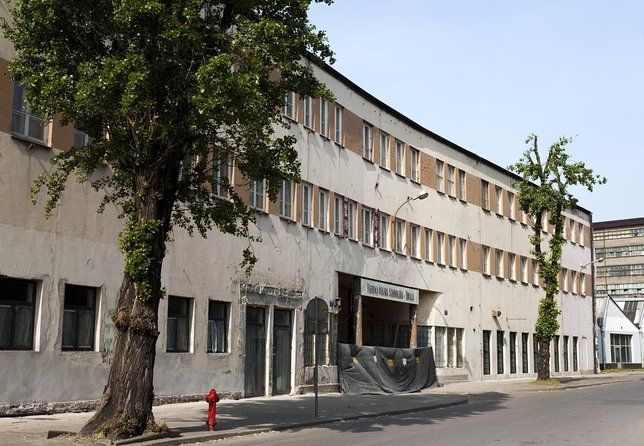
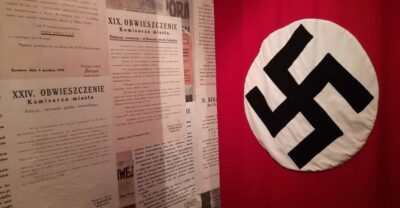
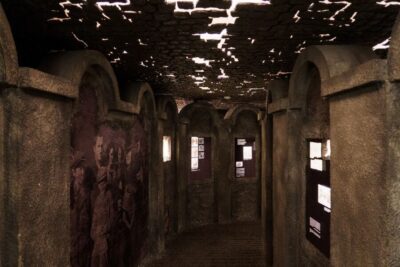
Many people arrive in Krakow knowing the name Oskar Schindler from the film. This tour gives you a wider frame. Schindler’s Enamel Factory matters, but the museum’s main exhibition is titled Krakow under Nazi Occupation 1939 to 1945. It looks at the city, its Jewish population, the German occupation, forced labor, resistance, terror, and daily survival.
That wider focus is the tour’s main strength. You are not simply following one industrialist through a dramatic wartime story. You are looking at how an entire city changed under Nazi rule, then following that story into Podgórze and the former Plaszow camp.
I also like the route’s mix of indoor and outdoor stops. The museum gives you organized displays and shelter. The ghetto wall, Ghetto Heroes Square, and Plaszow put the history in the actual places where it happened. The shift can be sobering, but it helps connect dates and names to streets, hills, and empty ground.
The tour has a 4.6 rating from 28 ratings, with 93 percent recommending it. That is a strong result, though the small number means I would still read the practical details carefully before booking.
Inside Schindler’s Factory at Lipowa 4
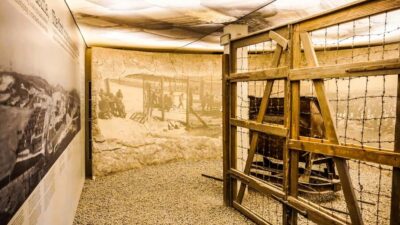
The tour begins at Lipowa 4, where Oskar Schindler’s former enamel factory now houses one of Krakow’s most popular museums. You receive the entrance ticket as part of the tour and spend about 90 minutes inside.
The important point is that this is not a biographical museum devoted solely to Schindler. You will learn about his actions and courage, but the exhibition’s subject is occupied Krakow. Expect the museum to place his story among the experiences of Jewish residents, Polish civilians, workers, and others living under German control.
That makes the museum useful even if you have already seen the film. It corrects the easy temptation to treat Schindler as the whole story. His role is important, but the exhibition asks you to think about the many people caught in the occupation and the Nazi destruction of Krakow’s Jewish community.
The museum visit is guided only in part, since you can keep your own pace while viewing it. Your guide introduces the setting and adds context, then you have time to take in the displays. That arrangement works well for a serious museum, where some visitors want to read every panel and others need time to pause.
One caution: do not expect a quick celebrity biography. If that is your main reason for coming, you might find the museum less direct than expected. If you want to understand Krakow during the war, the broader approach is much more useful.
The skip-the-line entry is also practical. Schindler’s Factory is a popular stop, and avoiding the long wait for individual visitors gives the tour a better chance of staying on schedule.
More Schindlers Factory Tours in Krakow:
- Krakow: Oskar Schindler’s Factory Entry Ticket & Guided Tour
★ 4.2 · 3,793 reviews - Krakow: Schindler’s Factory Tour with Entrance Ticket
★ 4.5 · 3,182 reviews - Krakow: Schindler’s Factory Skip-the-Line Ticket
★ 4.4 · 3,105 reviews
The 12-metre ghetto wall fragment
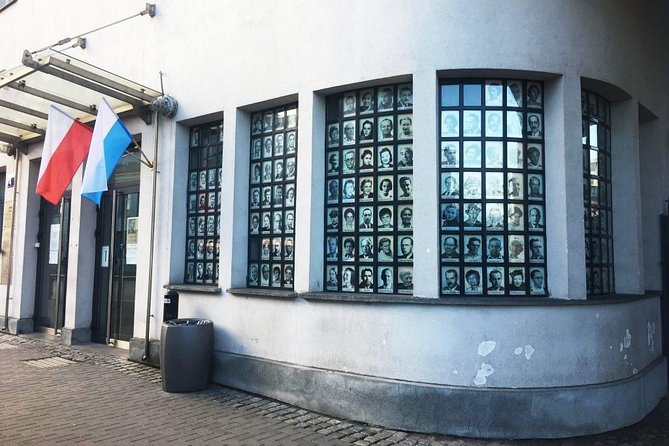
After the museum, the route moves into the former ghetto area. A remaining 12-metre section of the original wall is one of the clearest physical reminders of how the ghetto was separated from the rest of Krakow.
The fragment is not large, but that is part of its force. A single piece of wall makes the policy of confinement easier to picture than a general description in a book. A plaque in Hebrew and Polish recalls the people who lived, suffered, and died there, and the forced journey from the ghetto to the death camps.
You spend about 15 minutes at this stop. That may sound brief, but the value comes from the guide’s explanation and the way the wall fits into the larger route. You do not need a long stop to understand what it represents.
This is also a good place to listen closely rather than rush for photographs. The tour deals with murder, deportation, humiliation, and the destruction of a community. It calls for attention and restraint.
Ghetto Heroes Square and its 70 chairs
The next stop is Plac Bohaterów Getta, or Ghetto Heroes Square. During the German occupation, this was a concentration point for Krakow’s Jewish population before transports to camps.
Today, about 70 large metal chairs are spaced across the square. They represent furniture and personal belongings left scattered after the ghetto was liquidated. The memorial is simple, open, and easy to understand without a long explanation. The empty spaces between the chairs are as important as the chairs themselves.
I find this one of the tour’s most memorable modern memorials because it avoids clutter. You can walk around it and see how an ordinary public square has been turned into a place of remembrance. The guide’s context helps you understand why this location was chosen and what took place here.
The stop lasts around 15 minutes. Again, it is not a long visit, but it adds a human scale to the museum. The factory explains the occupation in broad terms. The square shows what the liquidation of the ghetto meant for people and property.
For anyone interested in Krakow’s Jewish heritage, this is an essential part of the route. It also gives you a clearer understanding of why the tour cannot be reduced to a film location visit.
Plaszow Camp, Liban Quarry, and the climb toward Krakus Mound
The longest outdoor section takes place at Plaszow, a former Nazi concentration camp in the southern suburbs of Krakow. The site began as a forced labor camp in 1940. It expanded in 1941 and became a concentration camp. From October 28, 1942, Jews deported from the Krakow ghetto began arriving there.
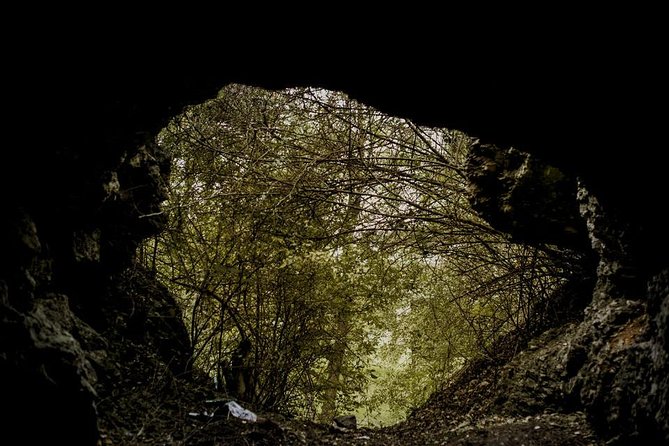
Plaszow supplied forced labor to military factories and a quarry. Unlike a purpose-built museum, the site does not present everything in a neat sequence. Much of what you encounter is open ground, traces, slopes, and the Liban Quarry. That lack of polished presentation can make the visit feel stark and difficult.
You should set your expectations before arriving. Plaszow is not Auschwitz, with its preserved buildings and large indoor exhibitions. It is less developed for tourism and may leave you with fewer visible objects. One visitor described the site as visually spare because much of it was blown up or removed. That is a fair warning, but it does not make the place unimportant.
The absence of obvious remains is part of the lesson. A guide is especially valuable here because the ground alone cannot explain the camp’s size, function, or place in the occupation. A good guide helps you read the site without pretending that every detail is still visible.
This is where the tour’s local focus matters most. Dominika has been praised for making the Plaszow area understandable, and Matthew is noted for connecting the wartime site with present-day Krakow. Those names are not a guarantee of who will lead your tour, but they show the type of guide the company has used.
The walk is physical. You may deal with hills, mud, and uneven paths, so wear sturdy, comfortable shoes. One practical comment from the experience is especially useful: do not arrive in city shoes and expect a smooth museum-style visit. The outdoor part can be tiring, especially in wet weather.
The route also includes a climb toward Krakus Mound. The mound gives you a chance to look over Krakow after spending hours confronting the city’s wartime past. It is not simply a scenic finish. The view helps you see how close the former camp was to the living city, and how the sites of memory sit within modern Krakow rather than outside it.
The exact pace will depend on the group and the guide. With 90 minutes at Plaszow, you have time for explanation and movement, but not endless wandering. That is a sensible length for a site that can feel emotionally and physically demanding.
More Jewish Ghetto Tours in Krakow:
- Krakow: Schindler’s Factory & Ghetto Guided Tour
★ 4.7 · 1,694 reviews - Krakow: Jewish Quarter and Former Ghetto Tour
★ 4.9 · 1,441 reviews - Krakow: Bike Tour of Old Town, Jewish Quarter and the Ghetto
★ 4.9 · 1,155 reviews - Krakow: Kazimierz, Schindler’s Factory & Ghetto Guided Tour
★ 4.8 · 460 reviews
The guides make or break the experience
The strongest praise for this tour centers on its guides, especially Dominika. She has been described as clear, warm, and able to explain difficult material in English. One account noted that she kept the tour meaningful despite bad weather.
That matters here. The subject is complicated and painful, and a guide who only repeats general facts will leave gaps. The best version of this tour links the ghetto’s operation, the movement of people, the camp’s labor system, and the destruction of Krakow’s Jewish population.
There has also been a negative experience involving a guide who seemed rushed and offered a broad account of the ghetto. That criticism is worth taking seriously. A history tour depends heavily on the person leading it, and a five-hour route cannot recover easily from a poor explanation at the first few stops.
I would ask for Dominika if she is available, though the company cannot promise a particular guide unless stated at booking. The available guide names include Dominika and Matthew, and both have been associated with strong local explanations.
The group limit is 25 people. That is not an intimate private tour, but it is far more workable than a large coach group. You can usually hear the guide more easily, and it should be possible to stay together through the outdoor sections.
Time, transport, and the $76.33 price
The tour lasts about five hours and costs $76.33 per person. That is a sizable addition to a Krakow city break, but the price includes the Schindler’s Factory entrance ticket, a professional guide, and a planned route through several places that are difficult to understand on your own.
Public transport is not included. Plan for a tram ticket and pay attention to the meeting and finishing points. The tour starts at Lipowa 4 and ends at Henryka Kamieńskiego 57, so you should not assume you will finish where you began.
The price makes the most sense if you value explanation and structure. You could visit some of these places independently for less, but the former camp and ghetto require research, navigation, and a clear sense of what you are seeing. The tour saves that preparation time and puts the stops into one connected story.
It is booked around 55 days in advance on average, which suggests that you should not leave it until the last day of a short visit. The minimum number of participants also matters. If that minimum is not met and the tour is canceled, you are offered another date or experience, or a full refund.
Free cancellation is available up to 24 hours before the start time. After that point, the payment is not refunded, and changes are not accepted. For a tour with a fixed five-hour route, that policy is normal, but keep it in mind when arranging your Krakow schedule.
Who should book this tour?
I would choose this tour if you want to understand Krakow under Nazi occupation, not just see a film-related attraction. It suits adults and older teenagers who can handle difficult subjects, steady walking, and an outdoor site with limited visible remains.
It is also a good choice if you have already visited Auschwitz or Wieliczka and want a different Krakow experience. Plaszow is less polished and less famous, but its location inside the city gives the history a close, local feel.
You may want to skip it if you dislike guided groups, want a quiet museum visit with no schedule, or have trouble walking over muddy and hilly ground. You should also choose another activity if your only interest is Schindler himself, since the museum focuses on occupied Krakow rather than offering a simple biography.
My verdict: book it for context, not spectacle
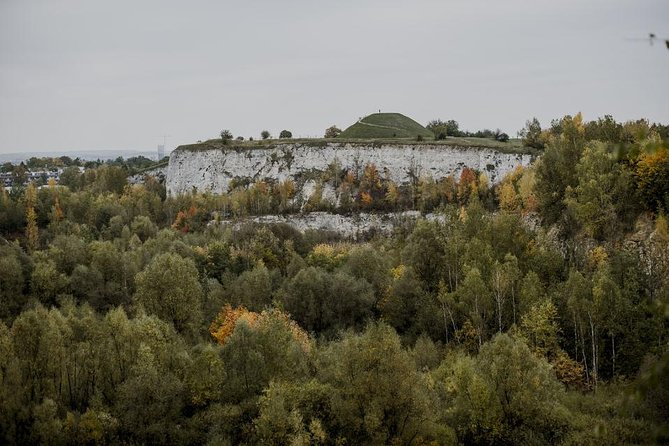
Book this tour if you want a serious, place-based account of Krakow’s wartime past. The museum, ghetto wall, chair memorial, Plaszow Camp, Liban Quarry, and Krakus Mound create a strong five-hour arc, and the best guides make the difficult material clear.
Go with sturdy shoes, bring a tram ticket, and allow yourself time to think. Do not expect Plaszow to look like a preserved museum site. Its rough, incomplete appearance is precisely why you need a good local guide. At $76.33, the tour is worth considering for the route and interpretation, especially if Dominika or another strong guide is leading it.
FAQ
How long does the Krakow Schindler’s Factory and Plaszow tour last?
The tour lasts approximately five hours.
What is included in the tour price?
The price includes a professional guide and admission to Schindler’s Factory Museum.
Is public transportation included?
No. A public transportation or tram ticket is not included.
Where does the tour start and end?
The tour starts at Lipowa 4, 32-051 Kraków, Poland, and ends at Henryka Kamieńskiego 57, 30-644 Kraków, Poland.
How large is the tour group?
The tour can have a maximum of 25 participants.
Can I cancel for a full refund?
Yes. You can cancel at least 24 hours before the experience start time for a full refund. Cancellations or changes made less than 24 hours in advance are not refunded or accepted.
Just added around Krakow
- From Krakow: Zakopane and Dunajec River Rafting Tour★ 4.6 · 31 reviews
- From Krakow: Zakopane Full-Day Tour with Lunch Option★ 4.4 · 62 reviews
- From Krakow: Zalipie and Painted Village Guided Tour★ 4.0 · 4 reviews
- From Krakow: Zakopane and Gubałówka Cable Car Private Tour★ 4.3 · 12 reviews
- From Krakow: Zakopane Tatra Mountains & Hot Springs Tour★ 3.0 · 29 reviews
- From Krakow: Zakopane and the Tatra Mountains★ 4.7 · 36 reviews
- From Krakow: Hot Springs and Zakopane with Gubałówka★ 4.7 · 25 reviews
- Zakopane & Tatra Mountains Private Full-Day Tour from Krakow★ 4.5 · 33 reviews
Schindlers Factory Tours, compared.
Oskar Schindler’s Factory Entry Ticket & Guided Tour
Read our review →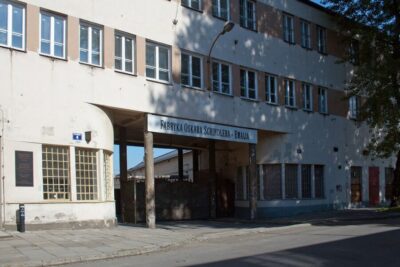
Schindler’s Factory Tour with Entrance Ticket
Read our review →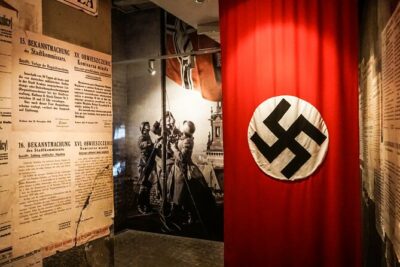
Schindler’s Factory in Krakow: Guided Tour & Skip the Line Ticket
Read our review →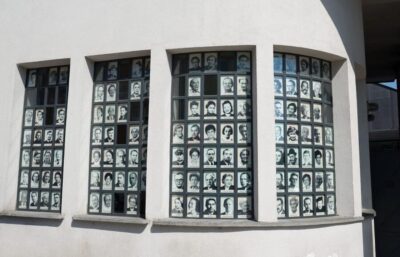
Schindler’s Factory Ticket with Guided Tour Option
Read our review →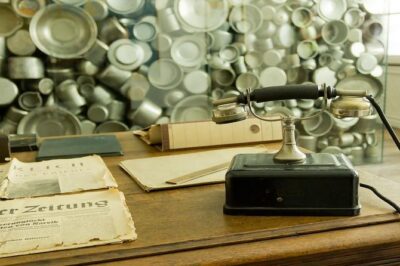
Krakow Schindler’s Factory Guided Tour with Admission Ticket
Read our review →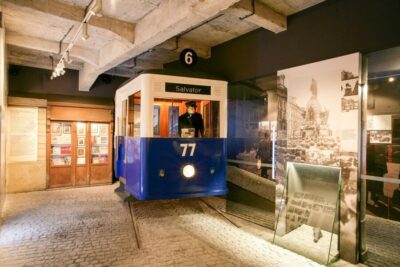
Schindler’s Factory Guided Tour with Entry Ticket
Read our review →Browse the lists this tour appears in