
Reviewed · WALKING TOURS
Private Walking Tour of Old Gdańsk with an architect-guide
Gdańsk makes more sense when you see its streets as parts of a working port city, not just as pretty façades. This private walk connects the Radunia Canal, the Great Mill, St. Mary’s Church, Mariacka Street, the old merchant quarter, and the city gates, with Agnieszka’s architect’s eye guiding the way.
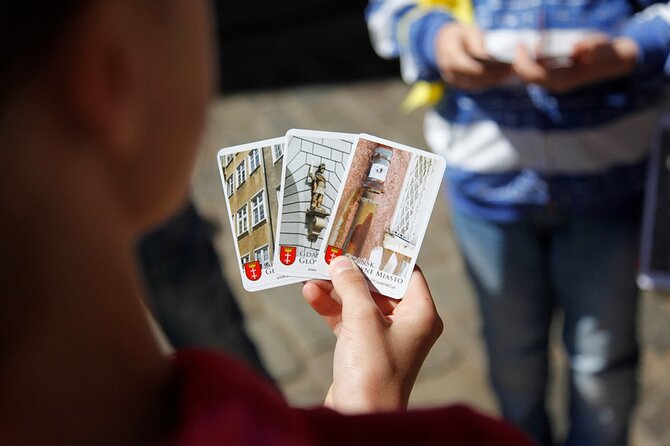
I like the use of old photographs, which helps you picture streets and buildings before the Second World War. I also like the flexible length: you can get a brisk 90-minute orientation or spend up to four hours with more explanation and museum advice. The main consideration is that several worthwhile interiors, including the Amber Museum and Artus Court, are optional and cost extra.
Key points at a glance
- Architecture with context: Agnieszka explains how buildings worked, not just when they were built.
- Old photographs included: Images help you compare present-day Gdańsk with the city before the Second World War.
- A private group of up to seven: You can ask questions and shape the pace more easily than on a large group walk.
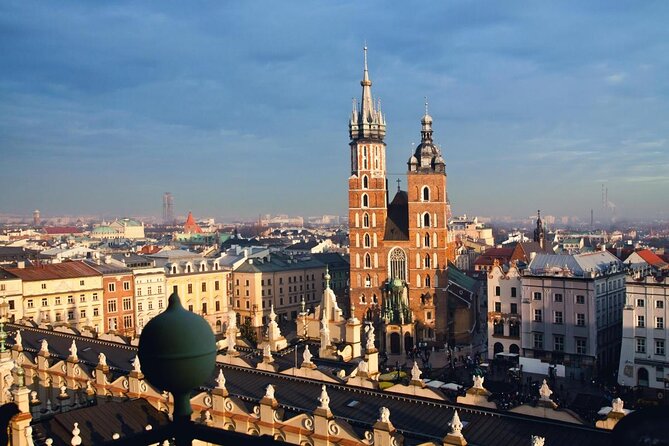
- A route across several historic areas: The walk begins near the Old Town and moves through the Main Town, the city’s grandest historic quarter.
- Important museums are optional: The Amber Museum, Uphagen’s House, Artus Court, and several towers may need separate time and admission.
- Flexible duration: Plan for about 1 hour 30 minutes to 4 hours, depending on how much you discuss and which stops you add.
Why an architect’s view changes Gdańsk
A standard city walk can leave you with a row of attractive buildings and a blur of dates. This experience is better suited to you if you want to understand why Gdańsk looks the way it does and how architecture reflects trade, religion, defense, and civic pride.
Agnieszka brings a professional eye to the route. Her strongest qualities, based on the information available, are energy, humor, and a clear passion for Gdańsk. She has also led walks in French, speaking it fluently after part of her childhood in France. The advertised language for this activity is English, so confirm your preferred language when booking if French matters to you.
The private format is a real advantage. The price is $264.35 per group for up to seven people, not per person. For one or two people, that is a fairly serious outlay. For a full group, the cost becomes much easier to justify, especially if you value a tailored pace and the chance to stop for questions.
The route also works well as a first look at the city. You receive an overview of Old Gdańsk, the Main Town, the port economy, religious buildings, defense walls, and museums. You will not see every interior in 90 minutes, but you should finish with a useful plan for the rest of your visit.
A few more Gdansk trips to weigh up
- Gdańsk City Sights & History Guided Walking Tour in English
★ 4.8 · 876 reviews - Main Town Gdańsk Walking Tour
★ 5.0 · 644 reviews - Discover Gdansk Walking Tour
★ 5.0 · 495 reviews
Starting beside the Radunia Canal and Old Town City Hall
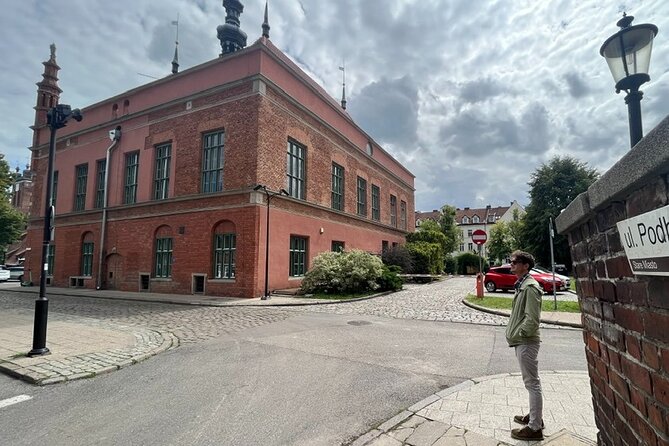
The meeting point is the Old Town City Hall at Korzenna 33/35. This places you near the Radunia Canal, an important early clue to Gdańsk’s practical side. Water was not simply scenery here. It powered industry and helped shape the city’s work and trade.
The opening stop also introduces the Teutonic Order. That gives you political and military background before the walk reaches the more polished merchant streets. The Old Town City Hall is a short opening visit, listed at about 12 minutes, and admission is free.
Do not confuse this area with the grander Main Town later in the route. Gdańsk’s historic center is not one simple block with one identity. The distinction between Old Town and Main Town helps explain why the walk moves through different kinds of streets and buildings.
The Great Mill and a useful Amber Museum tip
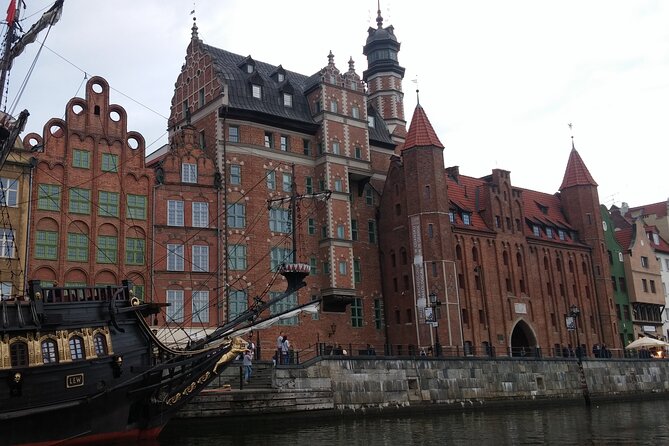
The Great Mill is one of the most practical stops on the walk. Its location beside water points to the city’s industrial past, while its scale shows how important milling was to urban life. Here, Agnieszka uses old photographs to show what the surroundings looked like before the Second World War.
That visual comparison is especially useful in Gdańsk, where war damage and postwar rebuilding changed the appearance of much of the city. You get a reminder that today’s carefully restored streets are part of a long process, not an untouched old-world scene.
The stop lasts about 10 minutes and does not include museum admission. I would seriously consider visiting the Amber Museum in the same building, either before the walk or afterward. It is not part of the tour, but the location makes it an efficient add-on. If you are interested in amber, allow separate time rather than expecting the walking tour to cover the museum.
The church tower option for strong legs
One optional stop takes you into a still-functioning church with the Museum of Turret Clocks in its tower. The collection includes centuries-old timekeeping devices, Poland’s biggest concert carillon, and the world’s first pulsar clock.
The tower climb requires strong legs, and this is not part of the standard tour. Discuss it with Agnieszka before or during your walk. The detail matters because the optional museum adds a special technical and musical layer to the city, but it also changes the pace and physical demands of the outing.
This is a good example of the tour’s flexible design. You are not forced into every attraction. You can choose the museums and towers that match your interests and energy.
Same country, a completely different kind of day:
- Gdansk: City Cruise on Historical Polish Boat
★ 4.8 · 2,913 reviews - Gdańsk: Sunset Cruise on a Historic Polish Boat
★ 4.9 · 977 reviews - Gdansk: Firearm Shooting Experience with Instructor
★ 4.8 · 866 reviews - Gdansk: Guided Round-Trip Cruise to Westerplatte
★ 4.3 · 865 reviews
Crossing from the Old Town into the Main Town
Another tower marks the highest point of the medieval fortifications of the Main Town. From here, the walk shifts from the Old Town to the larger and more imposing Main Town.
That change is one of the most useful parts of the route. It gives you a clearer sense of Gdańsk’s scale and explains why the center can feel like several historic cities placed side by side. The fortifications also help frame the city as a place that needed protection as well as trade.
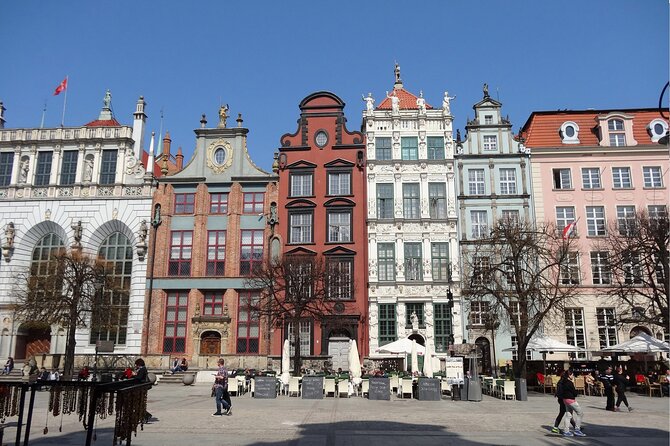
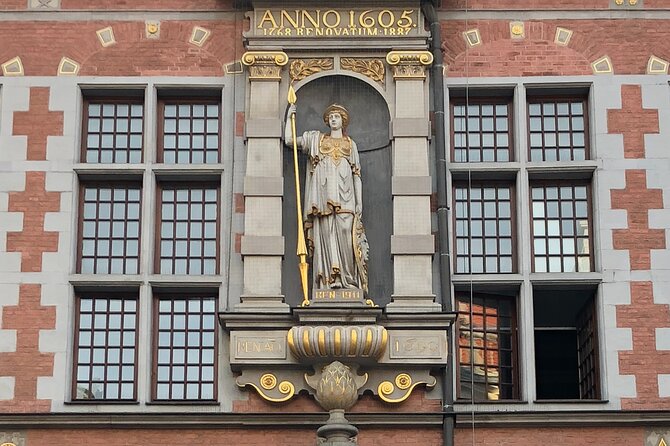
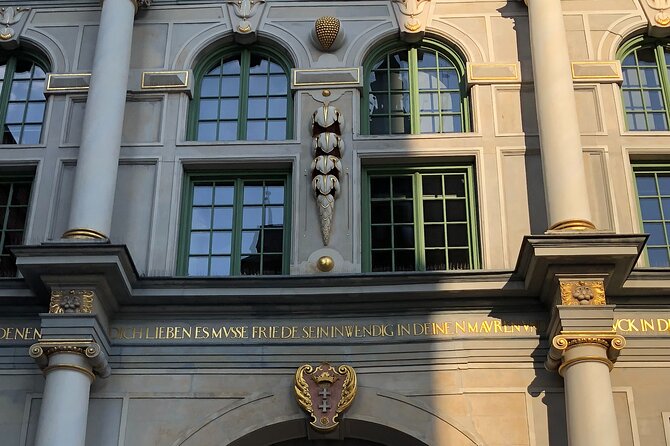
The route then reaches the Great Armoury, or Wielka Zbrojownia. Its exterior is a striking combination of architecture and military purpose, and its design reflects the city’s wealth during the Renaissance period. The building now houses the Academy of Fine Art, and it may open to the public during student exhibitions.
The exterior stop takes about five minutes and is free. Do not count on entering. The building’s importance is visible from the street, but an open exhibition is an occasional possibility rather than a guaranteed part of the walk.
St. Mary’s Church and the great astronomical clock
St. Mary’s Church is one of the route’s major landmarks. It is described as the biggest brick church in the world, and its scale is easy to understand even during a short visit.
Inside, the astronomical clock from the 15th century is the key detail to watch for. It chimes every day at noon, so timing your walk around that moment could add a memorable touch. The tour schedule does not promise a noon arrival, so treat it as a timing opportunity rather than a fixed feature.
The planned visit lasts about 15 minutes and admission is free. That is enough to see the main interior and receive an explanation, but not enough for a long, quiet examination of every detail. If churches and clocks are central interests for you, ask for extra time or return later on your own.
Mariacka Street, amber, and the old-city mood
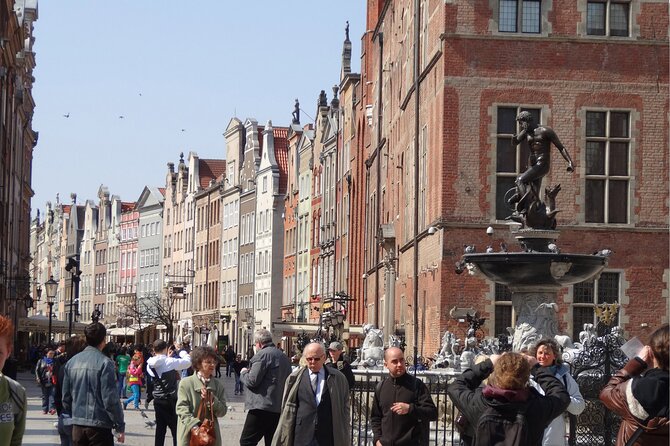
Mariacka Street is likely to be one of the most atmospheric parts of the route. Its historic façades and street details create a strong sense of the old city, and the walk allows about 20 minutes here.
This is also a useful place to think about Gdańsk’s connection with amber. The street is closely associated with amber shops and displays, although this walking experience focuses on the setting and history rather than offering a dedicated shopping visit.
I like that the route does not rush through Mariacka Street as a quick photo stop. Twenty minutes gives you time to notice the architecture and hear how the street fits into the larger story of Gdańsk. If you want to shop or visit a museum, plan additional time.
Through St. Mary’s Gate to the maritime quarter
Passing through Brama Mariacka, or St. Mary’s Gate, brings you toward the Long Seashore. This is where the tour turns more directly to maritime trade.
The gate is a short five-minute stop, but its position matters. It links the intimate street of Mariacka with the waterfront and helps you understand how merchants, goods, and ships were connected within the old city.
The walk does not promise a long waterfront stay or a boat trip. Instead, it uses the area to explain Gdańsk’s place on the Baltic coast. That makes it a strong historical stop, though you should not mistake it for a dedicated harbor tour.
The Green Gate and the merchant center
The Green Gate leads into the Great Market, described as the place to be in the historic city. This is one of the clearest points for discussing status, commerce, and public life.
The stop lasts around 10 minutes and is free. From here, the walk moves into the area around Artus Court and the Main Town Hall. Artus Court served as a meeting place for merchants and now functions as a museum of history and art. The Main Town Hall also has notable interiors.
Both buildings are important optional additions. The walking tour introduces their role and location, but you should not assume their entrance fees or full interior visits are included. If you want to see Artus Court or the town hall properly, ask Agnieszka how to fit them into your day.
Uphagen’s House and a glimpse of domestic life
Uphagen’s House offers a different view of Gdańsk. Instead of focusing on churches, gates, defenses, or public commerce, it gives you a look at a historic home.
Even a brief peek can suggest how an affluent household lived and how the city’s wealth appeared indoors. The stop is listed at about five minutes, with admission not included. You can decide during the walk if a separate visit fits your interests.
I would save this museum for you if you enjoy interiors, furniture, and everyday life. If your priority is the city’s major public buildings, you may prefer to spend the extra time at St. Mary’s Church, Artus Court, or the Main Town Hall.
Ending at the Prison Tower and Katownia
The walk ends at the Prison Tower, or Katownia, at Targ Węglowy 26. This is part of the old defensive and judicial complex, and the route closes on a darker note with the reminder that some lives ended here.
Admission is not included, and the stop lasts about 10 minutes. It is not a cheerful final sight, but it gives the tour a useful balance. Gdańsk was a wealthy and cultured city, yet it also had prisons, punishments, and hard civic rules.
The endpoint is near the series of gates that once led toward one of the Baltic coast’s wealthiest cities. That makes the ending practical as well as symbolic. You finish near a major historic boundary rather than being left in an unrelated neighborhood.
Timing, group size, and what the price means
The advertised duration ranges from 1 hour 30 minutes to about four hours. That is a wide spread, so clarify your preferred length before you begin. A shorter version can cover the main streets and landmarks. A longer walk gives you room for photographs, questions, optional church or museum discussions, and more architectural explanation.
The private group limit is seven people. That suits families, couples traveling with friends, and small groups who want control over the pace. It also means the $264.35 price can be reasonable when divided among several people. For a solo visitor, the same figure is harder to defend unless having an architect-guide is a major priority.
Pickup is offered, and the starting point is near public transportation. A mobile ticket is available. Most people can participate, and service animals are allowed. The route is still a walking tour through historic streets, with one optional tower museum specifically requiring strong legs.
You receive confirmation within 48 hours, subject to availability. Free cancellation is available until 24 hours before the start time. If you cancel or change the booking inside that window, you should not expect a refund.
Who should book this Gdańsk walk?
I would choose this tour if you want a personal explanation of Gdańsk’s architecture and past, not just a checklist of famous sights. It is especially suitable for first-time visitors, small groups, architecture fans, and anyone who likes seeing old photographs alongside present-day streets.
It also suits you if you want help deciding which museums deserve your limited time. Agnieszka can point out the Amber Museum, Artus Court, the Main Town Hall, Uphagen’s House, and the church tower museum, while leaving the final choice to you.
I would hesitate if you want every major interior included in one fixed price. Several of the most interesting buildings require separate admission, and the tour’s short version is too brief for a full museum program. I would also confirm the language in advance if you need French, since the supplied activity details advertise English even though Agnieszka has led fluent French-language walks.
Should you book it?
Book this private Gdańsk walking tour if your group can share the cost and you value an architect’s explanation, old photographs, and a flexible route through both the Old Town and Main Town. The strongest parts are Agnieszka’s lively delivery, the architectural focus, and the way the walk links mills, churches, merchants, defenses, and maritime trade.
Skip it if you prefer a low-cost group walk or want admission to several museums included. For everyone else, treat the 90-minute option as an orientation and the longer version as the better value. Before starting, decide which optional sights matter most, especially the Amber Museum, Artus Court, and St. Mary’s Church tower.
FAQ
How much does the private tour cost?
The price is $264.35 per group, with up to seven people participating.
How long does the walking tour last?
The duration is approximately 1 hour 30 minutes to 4 hours, depending on the version and optional discussions or visits you choose.
What language is offered?
The advertised tour language is English. Agnieszka has also conducted visits in French and speaks French fluently, so confirm your language needs when booking.
Are museum admissions included?
No. Admission is not included for the Amber Museum, Uphagen’s House, the Prison Tower, the church tower museum, Artus Court, or the Main Town Hall interiors. Several exterior stops are free.
Where does the tour start and finish?
The tour starts at the Old Town City Hall, Korzenna 33/35, near the Radunia Canal. It ends at Katownia, Targ Węglowy 26, by the historic gates of Gdańsk Main Town.
Can I cancel for a full refund?
Yes. You can cancel at least 24 hours before the local start time for a full refund. Cancellations or changes made less than 24 hours before the start time are not accepted for a refund.
Just added around Gdansk
- Guided Winter Kayak Tour in Gdańsk & Hot Chocolate Treat★ 5.0 · 51 reviews
- Elblag Canal Tour from Gdansk★ 4.5 · 22 reviews
- Gdansk Highlights Bicycle Tour★ 5.0 · 65 reviews
- Electric Scooter Tour: Old Town Tour – 1,5-Hour of Magic!★ 5.0 · 19 reviews
- #1 Polish Vodka Tasting Experience in Gdansk★ 5.0 · 87 reviews
- Delicious Gdansk Craft Beer Tour★ 5.0 · 4 reviews
- DAILY Stutthof Concentration Camp with Guide and Transport★ 4.5 · 10 reviews
- Cruises on the Motlawa River★ 4.5 · 66 reviews
Walking Tours, compared.
Gdańsk City Sights & History Guided Walking Tour in English
Read our review →
Browse the lists this tour appears in