
Reviewed · SCHINDLERS FACTORY TOURS
Schindler’s Factory and Jewish Ghetto Guided Tour
Schindler’s Factory tells a much bigger story than the one shown in the famous film. In three hours, you move from the factory museum into the former Jewish Ghetto, where preserved walls, deportation sites, and the pharmacy linked to Tadeusz Pankiewicz put Kraków’s wartime story into the streets.
I like the way the museum visit comes first, giving you useful context before the walking tour. I also like the personal scale of the stories, from the people Schindler protected to the Jewish residents helped by the Under the Eagle Pharmacy.
The main drawback is pace. The museum can feel crowded, and a guide-led group may move faster than you would alone. Arrive early, expect narrow passageways, and choose this tour for explanation and context rather than a slow, independent museum visit.
Key points to know before booking
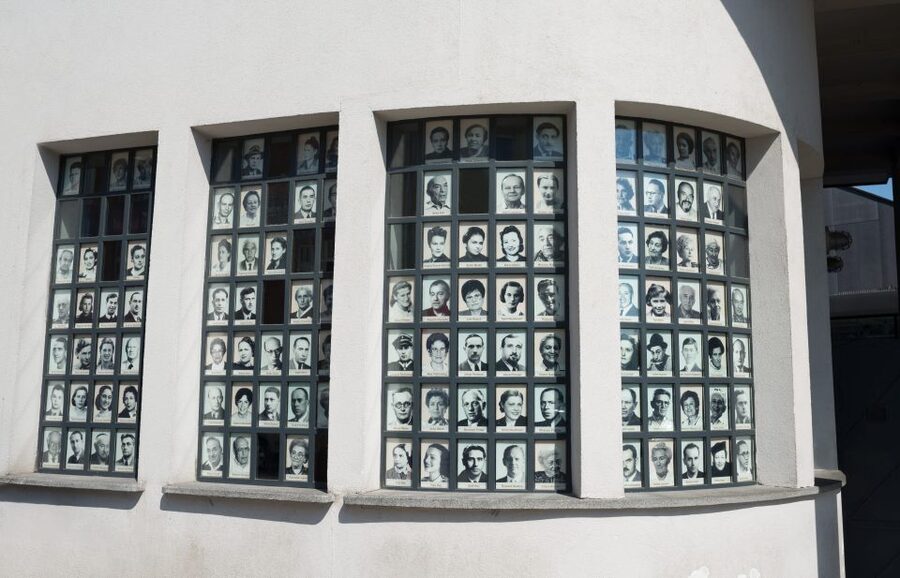
- Schindler’s Factory is now a museum: The building no longer contains the original factory equipment, but its exhibition uses photographs, objects, and period reconstructions.
- The tour covers two connected experiences: You visit the museum first, then walk through the former Jewish Ghetto.
- The ghetto walls are still visible: Preserved sections near Józefińska 41 make the forced enclosure easier to understand.
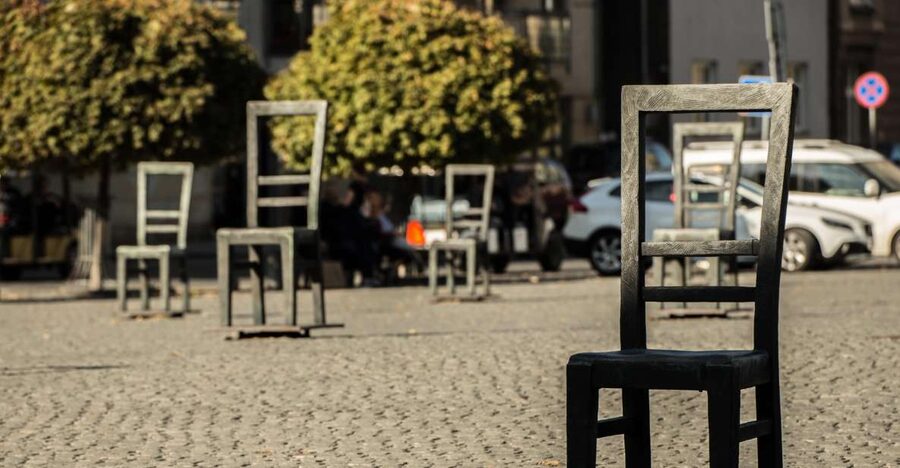
- Ghetto Heroes Square brings the story into sharp focus: The Chair Memorial marks a place linked to round-ups and deportations.
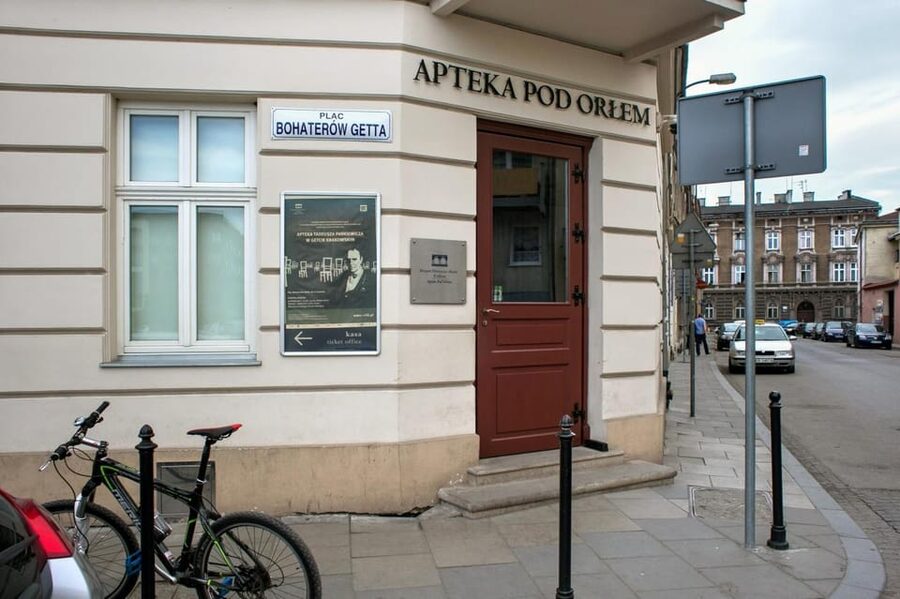
- The pharmacy is an exterior stop: You learn about Tadeusz Pankiewicz and his staff, but entry to Under the Eagle Pharmacy is not included.
- Guide quality is central: Guides such as Joanna, Alicja, Magda, Bartholomew, and Phil have received especially strong praise for clear English, warmth, and detailed storytelling.
Why this tour is more than a Schindler biography
Oskar Schindler is the familiar name here, but the museum does not treat him as the whole story. You learn how Kraków changed under Nazi occupation, how Jewish and non-Jewish residents faced daily pressure, and how survival often depended on luck, courage, connections, and small acts of help.
Schindler employed Jewish workers at his enamel factory and used his position and resources to protect more than a thousand people from deportation. The tour places those actions inside a wider account of a city under occupation. That matters, because it keeps the experience from becoming a simple tale of one heroic man.
I find this broader focus useful if your knowledge comes mainly from the film Schindler’s List. The exhibition gives you a better sense of ordinary life before, during, and shortly after the Nazi occupation. You see how political persecution became part of work, housing, food, movement, and family life.
The subject is painful, and the museum does not soften it. Expect an emotional visit rather than a light sightseeing stop. A good guide helps you follow the story without getting lost in names and dates, and this is where the tour’s strongest asset comes in.
More Schindlers Factory Tours in Krakow:
- Krakow: Oskar Schindler’s Factory Entry Ticket & Guided Tour
★ 4.2 · 3,793 reviews - Krakow: Schindler’s Factory Tour with Entrance Ticket
★ 4.5 · 3,182 reviews - Krakow: Schindler’s Factory Skip-the-Line Ticket
★ 4.4 · 3,105 reviews
Entering Schindler’s Factory Museum
Meet your guide in front of the main entrance, on the right-hand side. Look for the Schindler’s Factory Guided Tour sign, and arrive at least 10 minutes before departure. Once the group enters, late arrivals cannot be accommodated and the ticket cannot be refunded.
The tour includes fast-track admission, which saves you from dealing with the regular ticket line. That is valuable at a heavily visited museum, especially when your time in Kraków is limited. The tradeoff is that a group visit follows the guide’s rhythm.
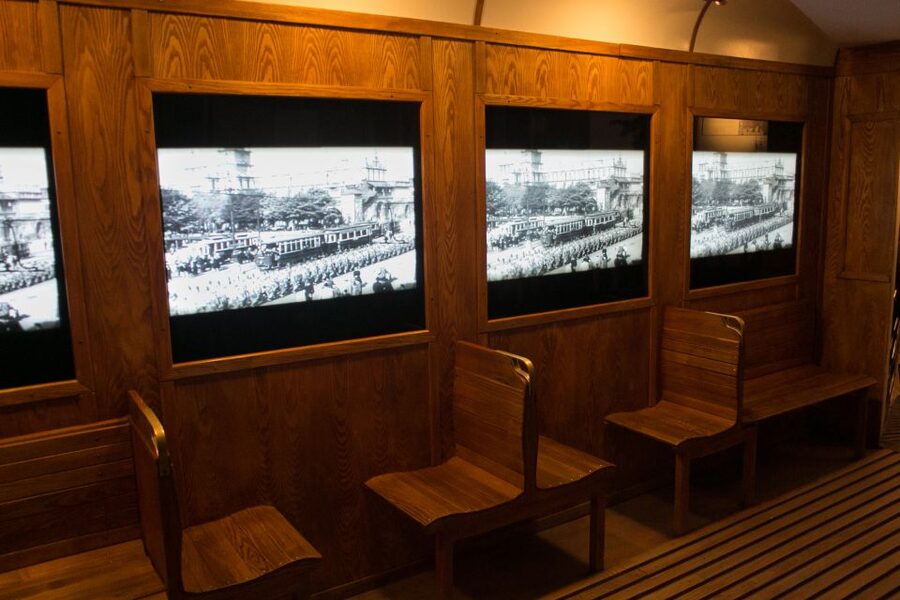
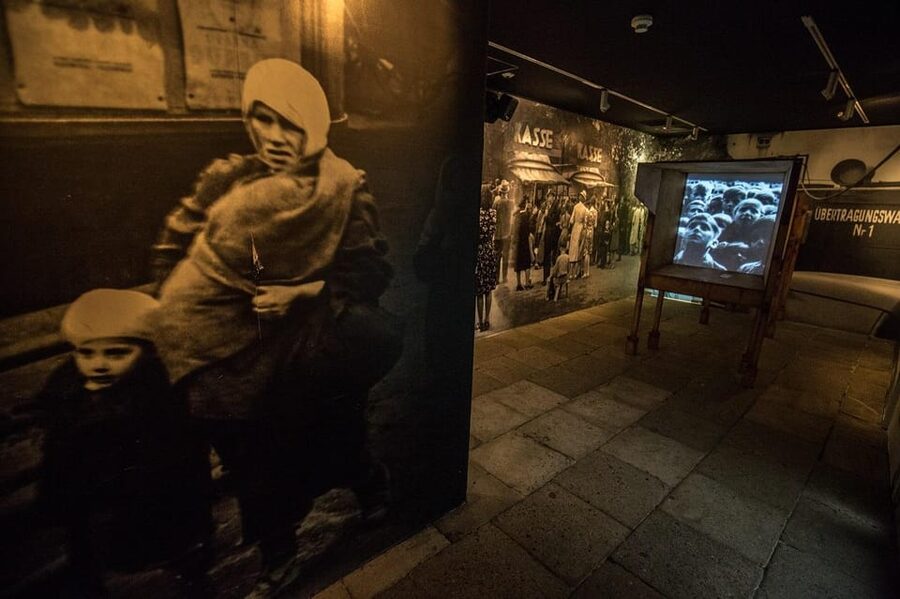
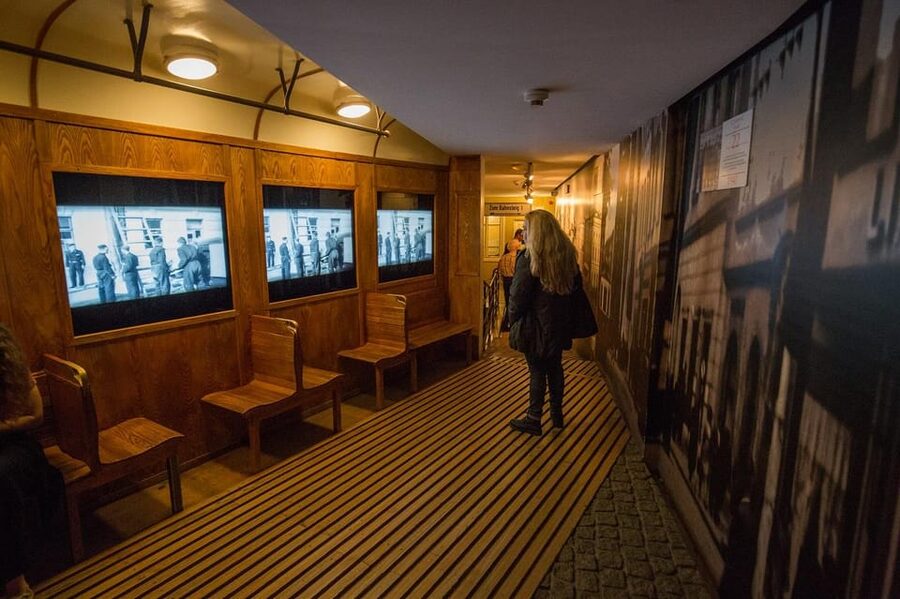
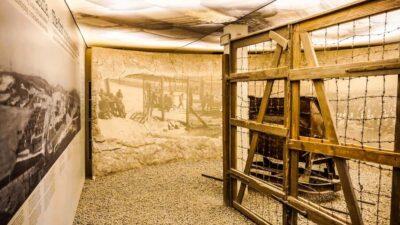
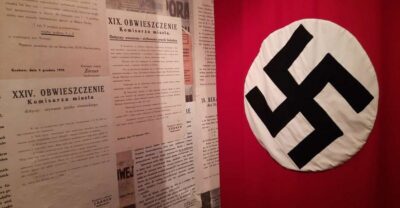
The exhibition is called Kraków under Nazi Occupation 1939 to 1945. It uses original artifacts, photographs, personal objects, and reconstructions of streets and rooms from the 1940s. These details help turn an enormous historical subject into something you can picture at human scale.
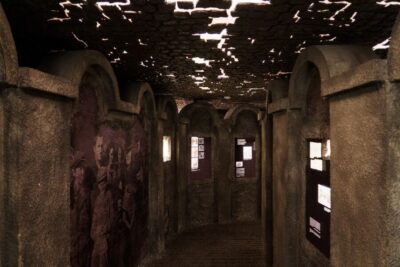
The building originally functioned as Schindler’s factory, but it is important to set your expectations. You are not walking through a preserved production floor filled with original machinery. The current museum presents the story through its exhibition design, and some of the reconstructions are deliberately atmospheric.
The layout includes narrow passageways. You may find the design effective for setting the mood, but it can make movement slow when the museum is busy. One of the practical frustrations reported about this format is that a group can block other visitors, and you may not have much time to stop at every photograph or display.
What you learn about Schindler and his workers
Your guide connects Schindler’s choices with the people who depended on them. The men and women he employed were not just background figures in his story. They were individuals caught in a system built around forced labor, deportation, and extermination.
The people he saved are often called Schindlerjuden. Their testimony gives the story a lasting human voice, and the exhibition helps you understand why Schindler’s protection mattered. His influence, money, and access could sometimes delay a deportation or create a safer place to work.
The guide also explains the limits of focusing on a single rescuer. Schindler’s actions were remarkable, but the exhibition is about Kraków under Nazi rule as well as his personal decisions. You hear about the wider population and the daily hardships that shaped life in the city.
This is where guides can make a major difference. Bartholomew has been praised for clear English and detailed explanations. Joanna has been singled out for giving useful context before the ghetto walk. Alicja has been praised for bringing Polish and Jewish experiences together in a thoughtful, personal way.
Other guides, including Magda and Phil, have also been noted for patience, clear speech, and the ability to answer questions. Your guide will depend on the departure, but the tour is conducted in one selected language, not as a multilingual group talk.
Walking through the former Jewish Ghetto
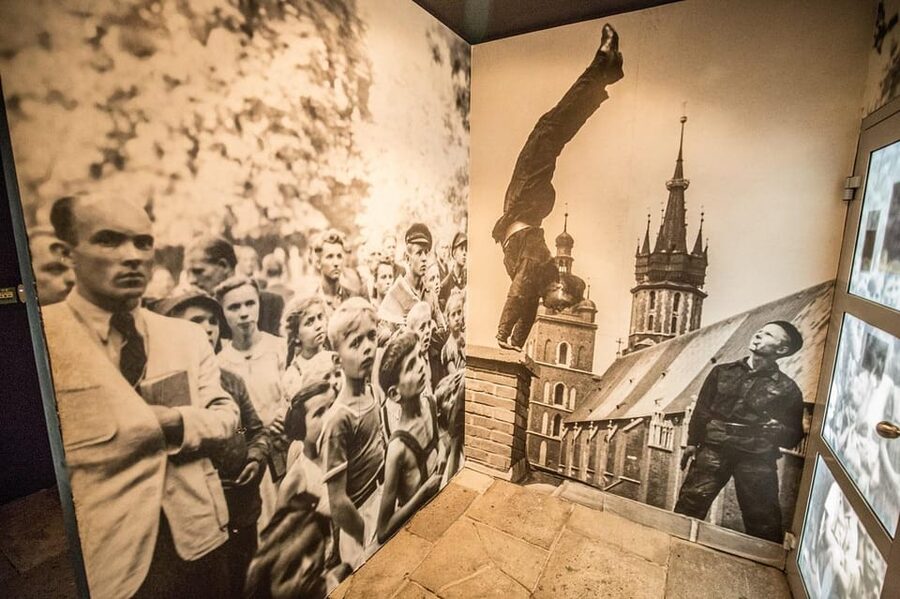
After the museum, the tour moves outdoors into the former Jewish Ghetto. This change of setting is important. Inside the museum, you study objects and reconstructions. Outside, you see the places where confinement and deportation shaped the city itself.
The walk includes the area around Józefińska 41. The building once served as an orphanage, welfare offices, and a hospital. Those functions show how many basic needs had to be handled inside the ghetto, often with very limited resources.
Nearby fragments of the original ghetto walls provide a stark physical marker. A map or museum display can explain forced separation, but a surviving section of wall shows how confinement entered the streets. The walls divided people from the rest of Kraków and helped enforce the control of Jewish residents.
You should not expect a long sequence of preserved buildings from the wartime period. Much of the value comes from connecting a few surviving locations with the guide’s explanation. The walk is strongest when you pay attention to how ordinary streets were turned into controlled space.
The outdoor section also gives you time to ask questions. Several guides have been praised for inviting questions and adding less familiar details. If you want more family stories or specific accounts of individual Jewish residents, ask directly. The information can otherwise remain more general than some people hope.
More Jewish Ghetto Tours in Krakow:
- Krakow: Schindler’s Factory & Ghetto Guided Tour
★ 4.7 · 1,694 reviews - Krakow: Jewish Quarter and Former Ghetto Tour
★ 4.9 · 1,441 reviews - Krakow: Bike Tour of Old Town, Jewish Quarter and the Ghetto
★ 4.9 · 1,155 reviews - Krakow: Kazimierz, Schindler’s Factory & Ghetto Guided Tour
★ 4.8 · 460 reviews
Ghetto Heroes Square and the Chair Memorial
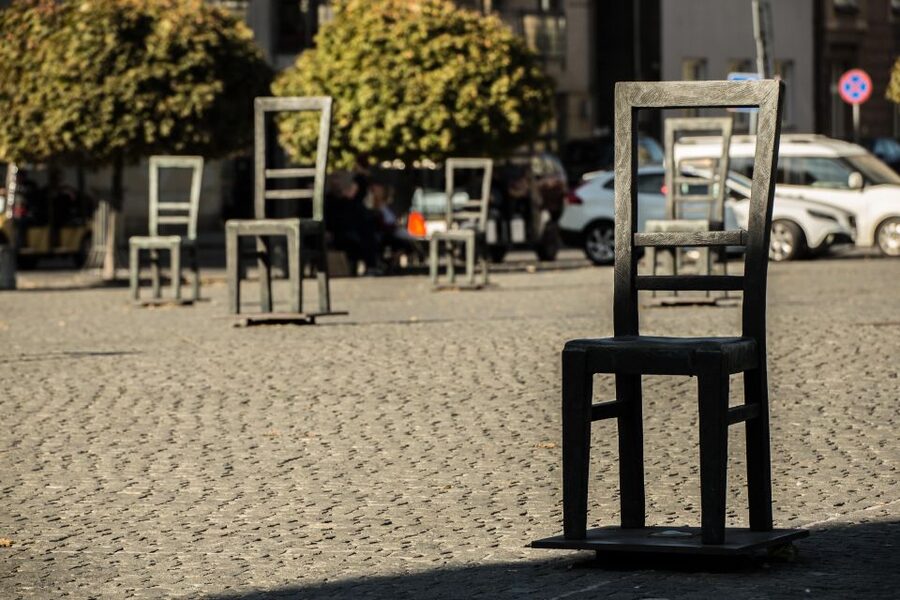
Ghetto Heroes Square is one of the most affecting stops. Today, the square is marked by the Chair Memorial, a group of empty chairs that recalls the belongings and furniture left behind when Jewish residents were forced from their homes.
The square was also connected with round-ups and deportations to concentration camps. Your guide explains how this open space became part of the machinery of removal. The contrast between a public urban square and the terrible events associated with it can be difficult to absorb.
This stop works best after the museum because you already have a basic framework. You understand the occupation, the ghetto, and the fate of many residents. The square then becomes more than a photo stop. It becomes a place where the museum’s story reaches into the present-day city.
The tour does not turn the memorial into entertainment. You will want to give it your attention, and respectful behavior is essential. If you need time to reflect or photograph the chairs, tell your guide, since the group schedule may not allow a long unscheduled pause.
Under the Eagle Pharmacy and Tadeusz Pankiewicz
Across from the square is the former Under the Eagle Pharmacy. Tadeusz Pankiewicz, the pharmacist, and his staff risked their safety to help Jewish residents. They provided medicine, shelter, information, and a place where people could find some measure of support.
The pharmacy gives the tour one of its clearest examples of practical courage. Help did not always look dramatic. Medicine, a warning, a hiding place, or a message could make a vital difference in a city where Jewish residents faced constant danger.
This tour stops outside the pharmacy. Entry is not included, so do not book expecting a full interior visit. If the pharmacy itself is a priority, you would need to check separately for an admission option and allow additional time, since this three-hour experience treats it as part of the walking route.
One useful improvement would be more time at this stop. The pharmacy’s story is powerful, but the outdoor explanation may feel brief if you want detailed accounts of specific families. Ask questions here, especially if you want to understand how assistance worked in daily life.
Guide quality and group size
The licensed guide is the main reason to choose this format instead of simply buying a museum ticket. A strong guide makes links between the exhibition, the ghetto walls, the square, and the pharmacy. The best guides also explain difficult subjects in clear language without turning the visit into a dry lecture.
The tour has received a 4.7 rating from 104 reviews, with repeated praise for guides who speak clearly, know the subject well, and bring the period to life. Names that have drawn particular praise include Bartholomew, Joanna, Alicja, Magda, and Phil. Guide assignment can vary, so treat those names as examples rather than a promise.
Group size is limited to 25 people. That is not a tiny group, and the museum’s narrow layout can make 25 feel larger. A group of about 20 may move reasonably well, but you should still expect occasional crowding around displays.
If you prefer to study every object at your own speed, an independent museum visit may suit you better. The guided option is stronger for structure, explanation, and the outdoor context. You are trading freedom to linger for a connected narrative.
Is $57 a fair price?
At $57 per person, this is not the cheapest way to see Schindler’s Factory. The price includes a licensed guide, fast-track museum admission, and the Jewish Ghetto walking tour, but not food, drinks, or entry into the pharmacy.
I think the value is fair if you want both the museum and the ghetto sites in one organized visit. You avoid arranging separate tickets and get a guide who explains how the locations relate. For a first visit to Kraków, that saved planning time has real value.
The price is less attractive if you mainly want to browse the museum’s exhibits slowly. The factory portion can feel rushed, particularly when the museum is crowded. You might get more from an independent visit if your priority is reading every label and studying each photograph.
The strongest value comes from the combined format. The museum explains the period, while the walk gives you physical places to connect with it. The experience is not simply a ticket to a famous building. It is a guided lesson in how occupation changed a city and its people.
Timing, language, and practical comfort
The activity lasts about three hours, though the schedule can shift because of museum or site operations. Check the available start times when booking, and do not cut your arrival close. The 10-minute early arrival rule matters here.
You can choose English, French, Spanish, German, or Italian. All group members hear the tour in one selected language, so pick the language in which you can follow complex historical explanations most comfortably.
Weather affects the walking section. Kraków can be very cold, as one January visit showed, so dress for outdoor conditions even if the museum is your main reason for booking. Comfortable shoes are sensible because the route includes walking through the former ghetto district.
The museum’s narrow passageways may be difficult for anyone who dislikes confined spaces or crowded interiors. The supplied information does not provide detailed accessibility guidance, so contact the provider before booking if you have specific mobility needs.
Free cancellation is available up to 24 hours before the start time, and you can reserve now and pay later. The museum requires the full names of all participants for personalized tickets. Missing names may lead to denied entry, so enter everyone’s details carefully.
Who should book this experience?
I would choose this tour if you want a clear introduction to Kraków’s wartime story and prefer having difficult material explained as you go. It suits first-time visitors, people with limited time, and anyone who wants to connect Schindler’s story with the Jewish Ghetto rather than see the museum in isolation.
It is also a good fit if you value personal stories and historical context more than a relaxed sightseeing pace. Guides have been especially strong at answering questions and explaining lesser-known details.
I would hesitate if you dislike group touring or need long, quiet stretches at museum displays. The 25-person limit is useful, but the exhibition can still feel crowded. Independent admission may be better for a second visit or for serious museum readers.
Should you book Schindler’s Factory and the Jewish Ghetto tour?
Book it if you want the museum and the surrounding wartime sites explained as one connected story. The preserved wall fragments, Ghetto Heroes Square, and the Under the Eagle Pharmacy add weight to the museum visit, while the museum gives the outdoor walk the context it needs.
Skip the guided format if your main goal is to move slowly through every exhibit. In that case, visit the museum independently and spend extra time at the displays. For most first-time visitors, though, the guide, fast-track entry, and combined route make $57 a reasonable price for a serious and moving half-day in Kraków.
FAQ
How long does the Schindler’s Factory and Jewish Ghetto tour last?
The tour lasts about three hours. Start times can change slightly because of museum or site scheduling.
What does the $57 price include?
The price includes a professional licensed guide, fast-track admission to Schindler’s Factory Museum, and a walking tour of the Jewish Wartime District.
Is food included?
No. Food and drinks are not included.
Where do I meet the guide?
Meet in front of the main entrance to Schindler’s Factory Museum, on the right-hand side. The guide will hold a Schindler’s Factory Guided Tour sign.
Which languages are available?
The tour is available in English, French, Spanish, German, and Italian. Each group tour is conducted in one selected language.
Do I visit the inside of Under the Eagle Pharmacy?
No. The tour stops at the pharmacy and explains its history, but entry is not included.
Is Schindler’s original factory equipment still inside?
No. The building now operates as a museum and does not contain the original production equipment.
How early should I arrive?
Arrive at least 10 minutes before the scheduled start. Late arrivals cannot be accommodated after the group enters, and the ticket is non-refundable.
Can I cancel or pay later?
You can cancel up to 24 hours in advance for a full refund. A reserve-now, pay-later option is also available.
Just added around Krakow
- Tour to Wadowice: Hometown of Pope Saint John Paul II★ 4.6 · 12 reviews
- The Jewish Quarter – Walking Tour★ 5.0 · 4 reviews
- From Kraków; to Białka Thermal Baths private tour★ 5.0 · 5 reviews
- St. Mary’s Basilica and more – a short walk with a guide★ 4.7 · 56 reviews
- Krakow: Auschwitz-Birkenau and Wieliczka Salt Mine Day Trip★ 4.7 · 84 reviews
- Krakow: Skip-the-Line Wawel Castle & Old Town Guided Tour★ 4.9 · 23 reviews
- Krakow: Schindler’s Factory Guided Tour★ 4.2 · 12 reviews
- Shooting Range Experience!★ 4.8 · 66 reviews
Schindlers Factory Tours, compared.
Oskar Schindler’s Factory Entry Ticket & Guided Tour
Read our review →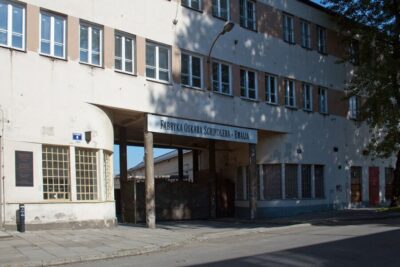
Schindler’s Factory Tour with Entrance Ticket
Read our review →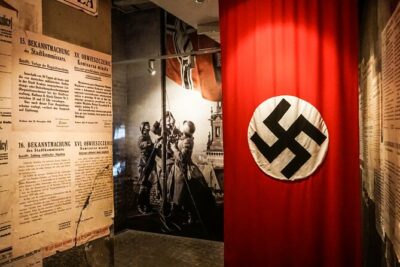
Schindler’s Factory in Krakow: Guided Tour & Skip the Line Ticket
Read our review →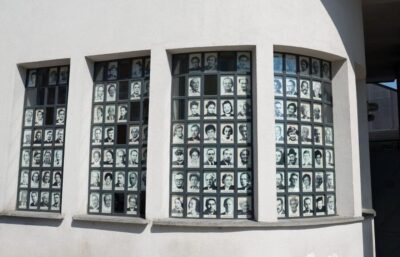
Schindler’s Factory Ticket with Guided Tour Option
Read our review →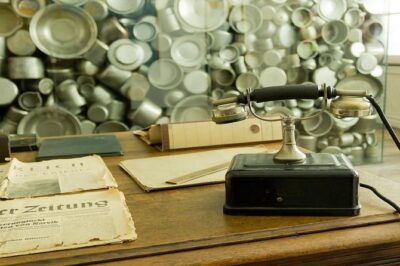
Krakow Schindler’s Factory Guided Tour with Admission Ticket
Read our review →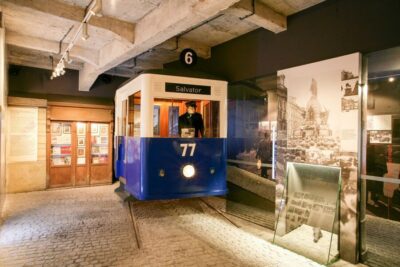
Schindler’s Factory Guided Tour with Entry Ticket
Read our review →Browse the lists this tour appears in