
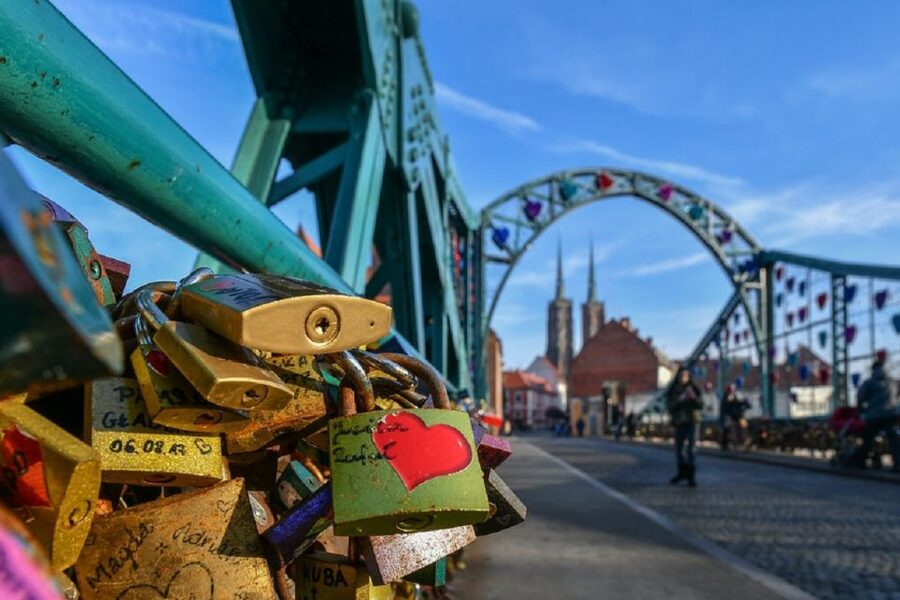
Reviewed · OLD TOWN WALKING TOURS
Wrocław: Ostrów Tumski and Old Town Highlights Private Tour
Wrocław’s oldest quarter is a fine place to begin, especially when the route takes you from cathedral towers and medieval gas lamps to the colorful Market Square. Ostrów Tumski gives you the city’s solemn, church-filled side, while the Old Town brings in bright façades, copper dwarves, and lively public spaces.
I like the private guide format, since you can ask about the details that catch your eye instead of following a fixed group. I also like the mix of grand monuments and small discoveries, from the Archbishop’s Palace to the city’s anti-Communist dwarf figures. The main consideration is time: the two-hour option is a brisk introduction, while the four-hour version gives the Old Town and St. Elisabeth’s Basilica room to breathe.
Key points to know before booking
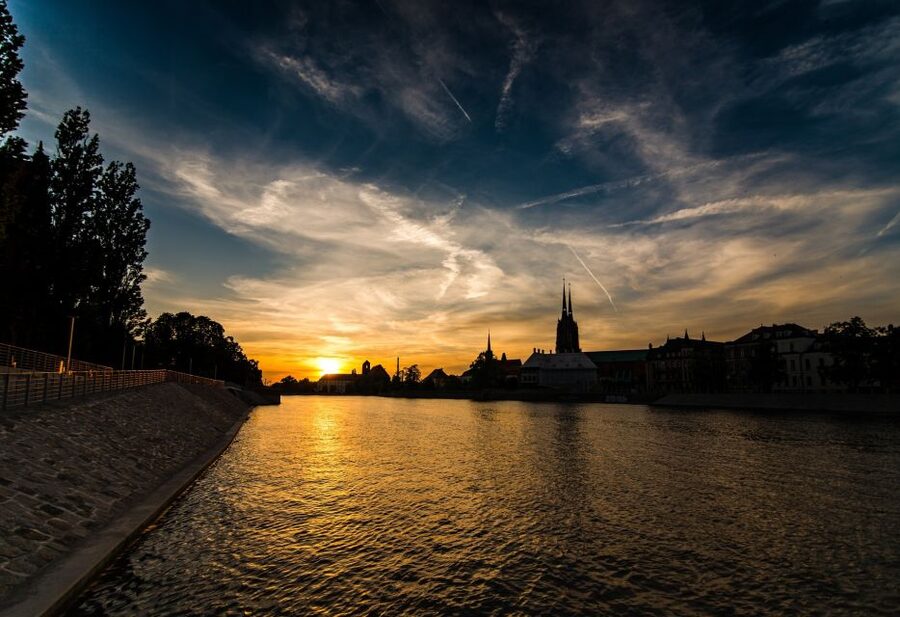
- Ostrów Tumski comes first: Begin among Wrocław’s grand cathedrals, monuments, and 16th-century buildings.
- The lamplighter is part of the scene: Keep watch for the person tending the medieval-style gas lamps.
- St. Elisabeth’s Basilica is included: The four-hour route includes entry and a look at its stained glass.
- Market Square brings a change of mood: Expect colorful buildings, the Town Hall, and plenty of copper dwarves.
- Aula Leopoldina costs extra: Entry is optional and costs €3, while a museum ticket is listed at €5.
- Private means personal: The tour is available in English, Spanish, French, German, Italian, Polish, and Russian.
Starting among Wrocław’s cathedral towers
Meet your guide beneath the Column of Christ the King at Plac Katedralny 14. The column is opposite the building, so look for that landmark rather than expecting a large tour desk or office. The activity ends back at the same meeting point, making it easy to plan the walk as a self-contained part of your day.
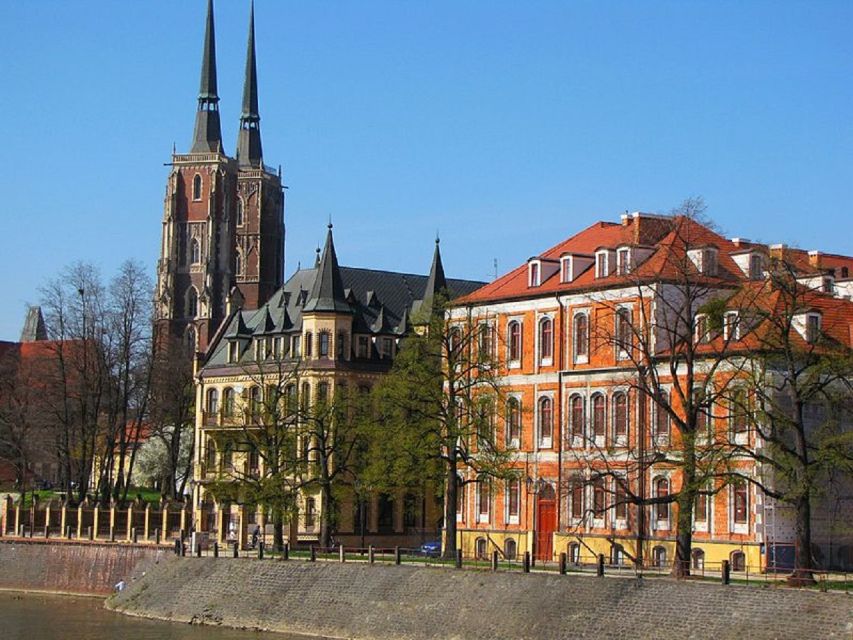
Ostrów Tumski means Cathedral Island, though its name can be a little misleading today. It is an island district in the historic heart of Wrocław, filled with churches, religious buildings, quiet lanes, and striking views. This is the oldest part of the city included in the route, and it sets a serious tone from the start.
The main sight is the Cathedral of St. John the Baptist. Its tall form and detailed architecture make it one of the clearest symbols of Wrocław. Your guide explains the background of the cathedral and the surrounding area, helping you see more than a handsome church façade.
You also pass the Archbishop’s Palace and several monuments. These stops matter because Ostrów Tumski is not simply a collection of old buildings. It is a working spiritual district, and the scale of the churches gives you a sense of how important religious life once was to the city.
The tour description promises views of the cathedral and other major buildings, but only entry to St. Elisabeth’s Basilica is specifically included. If entering St. John the Baptist Cathedral is important to you, ask the guide what is possible on your date rather than assuming admission is part of the price.
More Old Town Walking Tours in Wroclaw
- Wrocław: Old Town and Ostrów Tumski Walking Tour in English
★ 4.8 · 311 reviews - Wroclaw: Private Old Town Guided Walking Tour (2 hours)
★ 4.8 · 275 reviews - Old Town Wrocław Walking Tour
★ 5.0 · 249 reviews
The lamplighter and Wrocław’s evening character
One of the most charming details here is the lamplighter who operates the old-style gas lamps. The information provided does not promise a particular lighting schedule, so you should treat this as something to watch for, not a guaranteed performance.
Still, it is a useful detail to know. The lamps give Ostrów Tumski a distinctive character, especially when the district is quiet. You are not just ticking off cathedral names. You are also looking for small pieces of the city’s daily rhythm.
Your guide can add context about the area’s past and point out details that are easy to miss alone. That is where a private walking tour earns its keep. A plaque, statue, or unusual building may mean little without explanation, but a short story can make it memorable.
The guides are licensed and the tour can be arranged in seven languages. English, Spanish, French, German, Italian, Polish, and Russian are listed. Specific guides connected with this experience include Damian, Martin, and Andrej, though you should confirm who will lead your departure when booking.
The available feedback gives each of those names a different useful clue. Damian was praised for a first-class experience, Andrej for a very detailed explanation, and Martin for making Wrocław’s past easy and pleasant to discover. That points to the tour’s strongest feature: the quality of the personal guide matters as much as the route itself.
Crossing Tumski Bridge to Piasek Island
From Ostrów Tumski, you cross the attractive Tumski Bridge to Piasek Island. This is one of the route’s best transitions. You leave the cathedral district, cross the water, and gain a different view of Wrocław’s churches and riverfront.
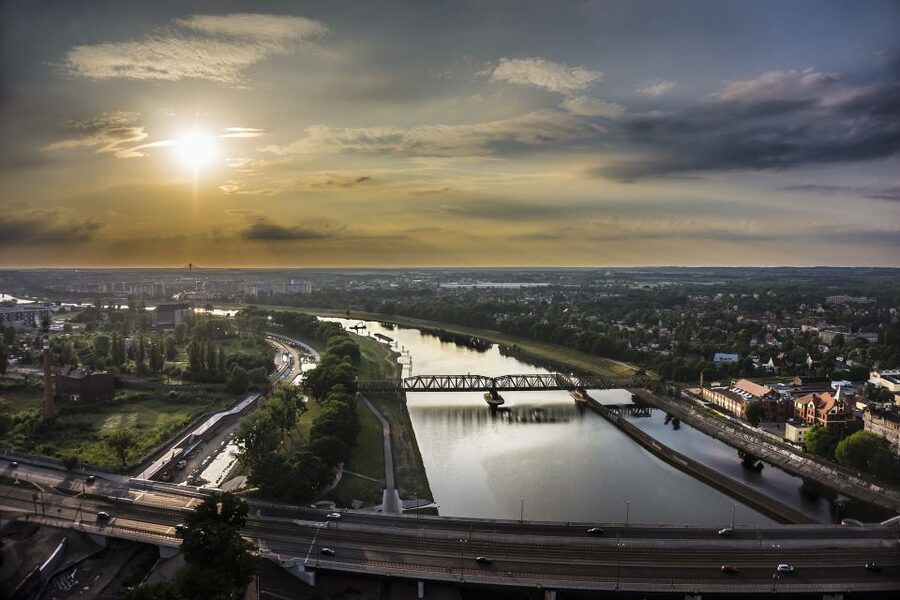
Piasek Island includes another impressive Roman Catholic church. The route then follows the Odra River toward Wrocław University. The river section gives you a break from looking straight up at church towers, with open views toward the water and islands.
I would pay attention here to the guide’s commentary rather than rushing from one landmark to the next. The river is part of Wrocław’s identity, and the sight of islands, bridges, and historic buildings helps explain the city’s shape.
The tour is on foot, so comfortable shoes are sensible. The activity is listed as wheelchair accessible, which is useful information for planning, though the exact condition of every surface and church entrance is not described. If you have particular mobility needs, confirm the route details before setting out.
Wrocław University and the optional Aula Leopoldina
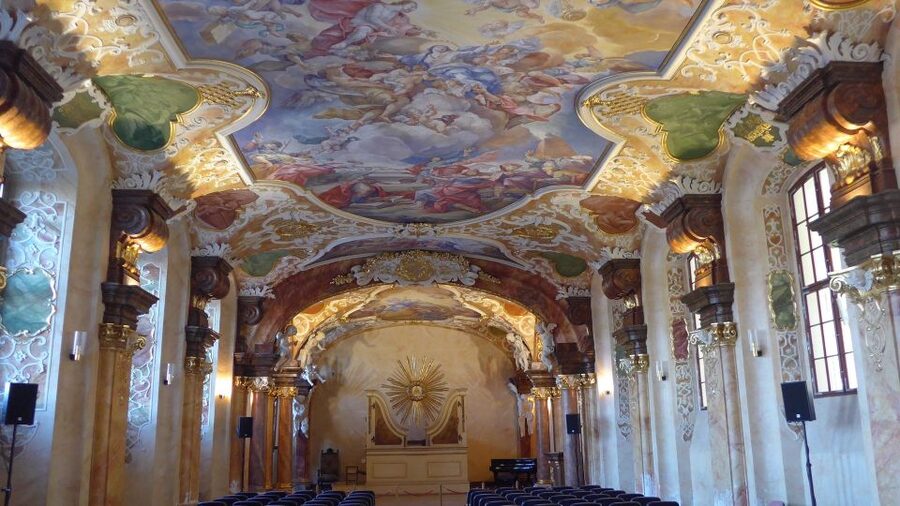
The walk continues to Wrocław University. The university is an important architectural stop and gives the tour a welcome change from religious monuments. If you choose the longer option, you may also visit Aula Leopoldina, one of the university’s best-known interiors.
Entry to Aula Leopoldina is not included in the stated tour price. It costs €3 if you decide to go inside. That modest extra charge can be worthwhile if you care about ornate academic interiors, but it is not essential to enjoy the outdoor route.
A museum ticket is also listed as an optional €5 expense. The supplied details do not specify which museum this applies to, so ask your guide exactly what it covers before paying. That simple question avoids confusion and keeps the advertised $115 price in perspective.
The university stop is a good example of the difference between the two tour lengths. On the shorter walk, you get the city’s main historic sights in a compact format. On the four-hour route, there is more time for interiors and added context, provided the optional entry fits your interests.
Same country, a completely different kind of day:
- Wroclaw: E-Car Tour and Audio Guide
★ 4.6 · 1,738 reviews - Wroclaw: 2-Hour Private Guided Tour by Electric Car
★ 4.8 · 805 reviews - Wroclaw: City Tour Sightseeing By Golf Cart Shared Or Privat
★ 4.8 · 189 reviews - Auschwitz-Birkenau Tour from Wrocław
★ 5.0 · 129 reviews
St. Elisabeth’s Basilica and its stained glass
The four-hour route includes the Basilica of St. Elisabeth. This is one of the strongest practical reasons to choose the longer option, since admission is included and you get a chance to see the interior rather than only admire the outside.
The basilica is described as one of Wrocław’s greatest churches, with attractive stained glass inside. Look up as you enter. The glass adds color and detail to a route that otherwise leans heavily toward stone façades, towers, bridges, and public squares.
A church visit also gives you a pause from walking. You can take in the interior at a slower pace while your guide explains its place in Wrocław’s story. The precise amount of time inside will depend on the day and the guide, so do not expect a long independent visit unless you arrange it.
The shorter option may not include this part in the same way. The description connects the four-hour choice with the Old Town and St. Elisabeth’s Basilica, so check the exact departure option before booking if this church is a priority.
Market Square, Town Hall, and the copper dwarves
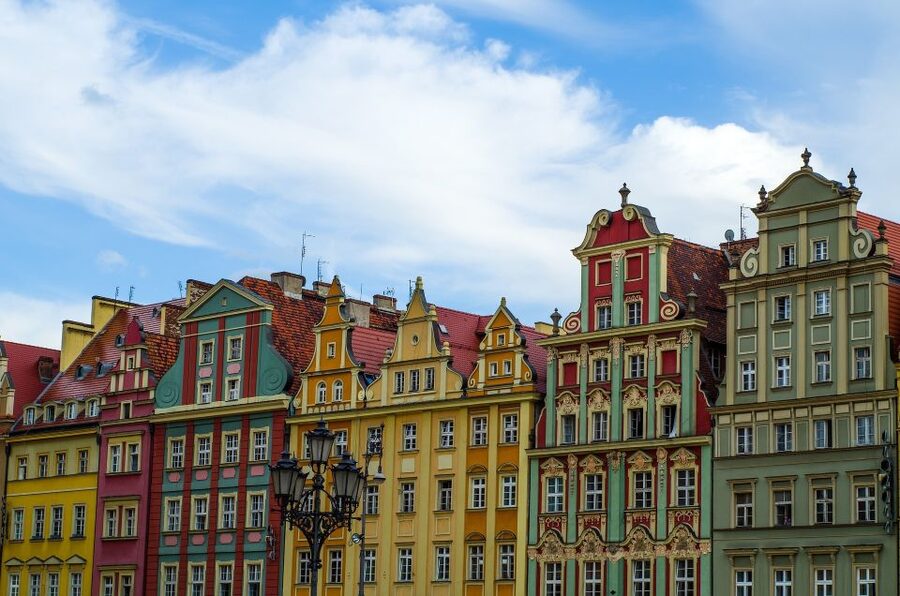
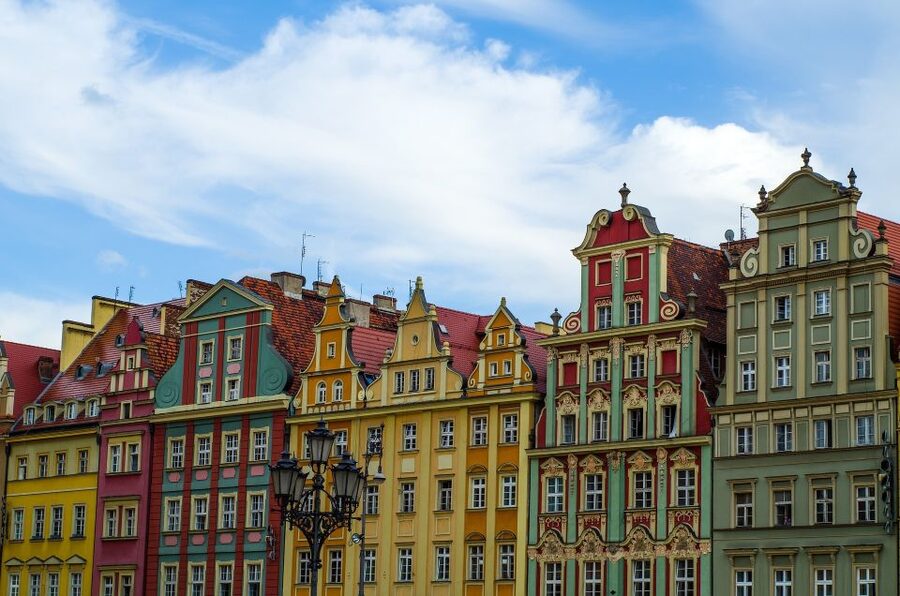
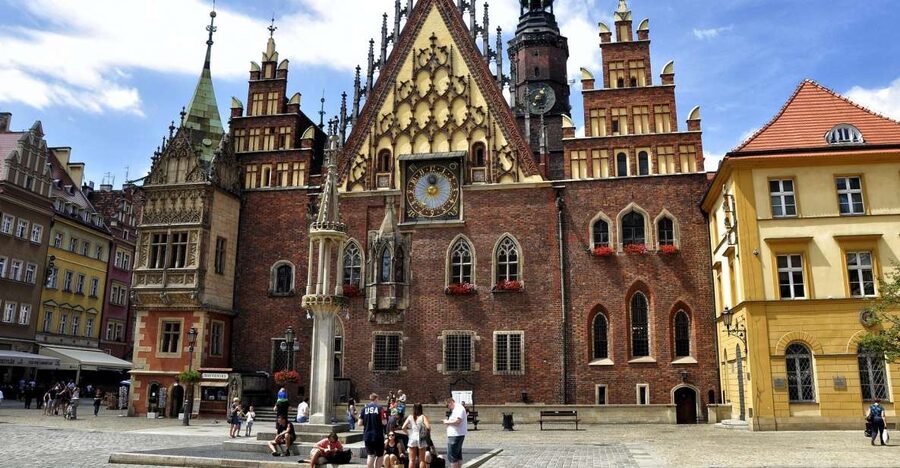
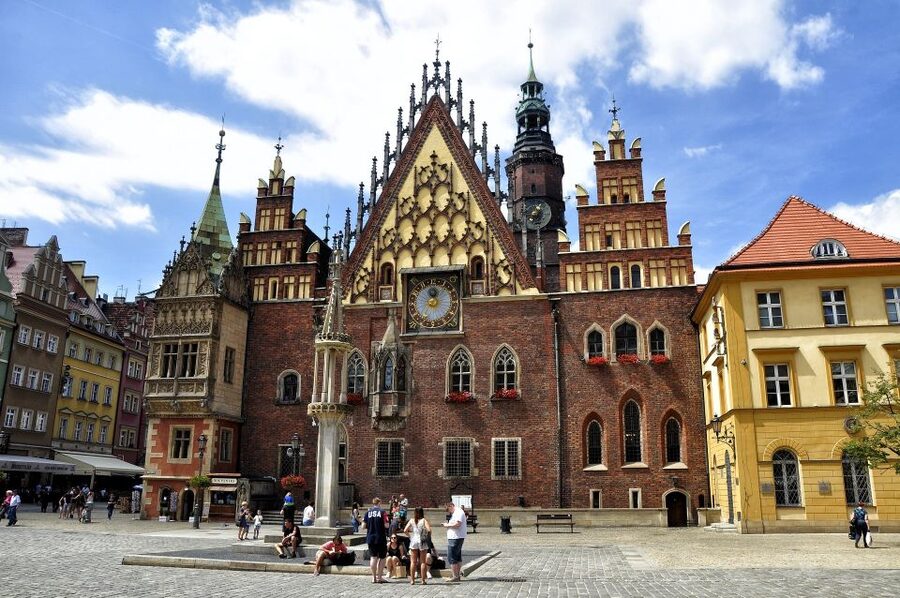
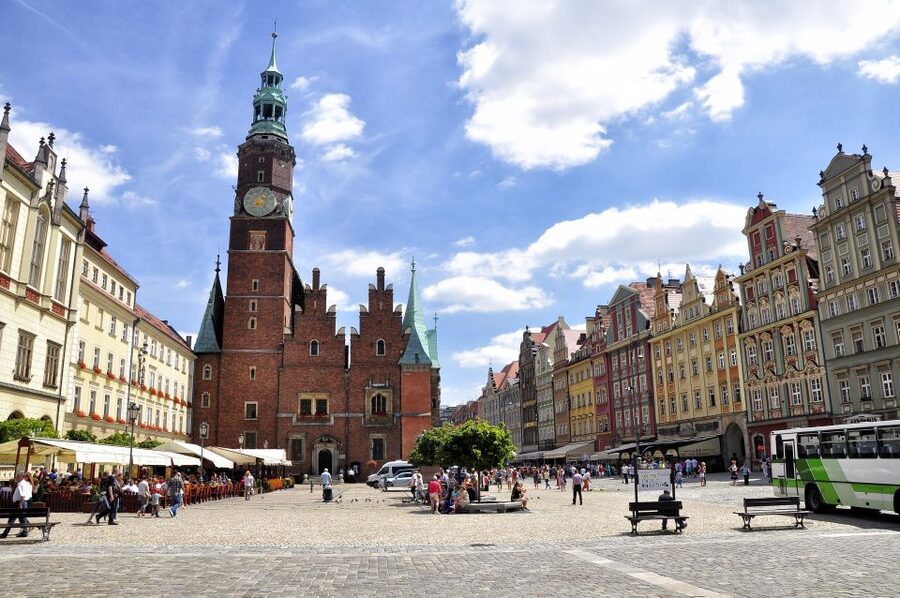
The route finishes its main sightseeing in Market Square. This is where Wrocław’s formal historic center becomes more social and colorful. The square is framed by painted buildings and anchored by the large Town Hall, giving you the classic city-center view.
The Town Hall is an especially useful point of reference. It helps you understand the scale of the square and the importance of the old commercial center. Your guide fills in the historical background while you look at the façades and absorb the atmosphere.
Then look down. Wrocław’s famous copper dwarves are scattered around the city. They were placed here as part of the anti-Communist Orange Alternative movement, and finding them adds a playful layer to an otherwise grand architectural walk.
The dwarves are not just decoration. They connect present-day sightseeing with a period of political protest and local creativity. Ask your guide to point out some of the more interesting figures, then keep your eyes open for others during the rest of your stay.
This is also the best part of the route for restaurant and café advice. The tour includes recommendations for local restaurants, bakeries, pubs, and souvenir shops. Those suggestions can be more useful than a generic list because you can ask for something suited to your budget, location, or appetite at that moment.
What the private format is worth at $115
At $115 per person, this is not the cheapest way to see Wrocław’s center. The price makes the most sense if you value a private licensed guide, a choice of languages, and the chance to ask questions as you walk.
The value improves when you choose the full four-hour route. You get more of the Old Town, entry to St. Elisabeth’s Basilica, and time for the university area. A private tour also gives you a better chance to adjust the pace, though the supplied details do not promise a fully customized itinerary.
The two-hour version suits you if you want an orientation at the start of your visit. It covers the essential areas, but you should expect a tighter schedule and less time inside churches or at optional sights.
One piece of feedback is worth taking seriously: Martin’s tour was described as too short by the person who took it. That is a clear warning for anyone who enjoys detailed explanations, photographs, or pauses inside churches. If you dislike being hurried, book the four-hour option.
The positive comments about Damian and Andrej also point to the guide as the main source of value. Their praise focused on a friendly manner and detailed explanations, not on luxury extras. In other words, you are paying for human interpretation of the city, not transport or a lavish package.
Timing, meeting details, and practical planning
The tour lasts two to four hours, with starting times depending on availability. Since the activity begins and ends at Plac Katedralny 14, it is easy to combine with other plans in central Wrocław.
Allow a few minutes to find the Column of Christ the King. The meeting point is described as being under the column, opposite the building. Having the address and landmark ready on your phone will make the start less stressful.
The tour is a walking experience, not a sightseeing bus ride. You move between Ostrów Tumski, Piasek Island, the river, the university, and the Old Town on foot. Wear shoes you can use comfortably for several hours and leave room in your schedule for stops.
The tour is wheelchair accessible according to the activity details. Because the information does not describe individual surfaces, steps, or restroom access, ask for a precise route check if those details affect your decision.
Cancellation is flexible up to 24 hours before the start for a full refund. You can also reserve now and pay later, which helps if your Wrocław plans are still changing. The synagogue is closed on Saturdays, so keep that in mind if your route or optional sightseeing includes it.
Who should choose the two-hour or four-hour route
Choose two hours if you want a clear first look at Wrocław’s oldest quarter and central sights. It is a good fit for a short stay, a first afternoon in town, or anyone who prefers a compact introduction before exploring alone.
Choose four hours if you enjoy church interiors, architectural detail, and longer explanations. The added time brings in the Old Town, St. Elisabeth’s Basilica, and the possibility of Aula Leopoldina, though the latter costs an extra €3.
Families and first-time visitors may appreciate the dwarf hunt around Market Square. The walk also suits history-minded people who want the anti-Communist Orange Alternative explained rather than simply photographed.
The language list is another strong point. If you are more comfortable in Spanish, French, German, Italian, Polish, or Russian than English, you have a better chance of receiving the tour in a language that lets you follow the detail.
This may be less suitable if you want a completely unscheduled stroll or a tour focused only on food. Restaurant, bakery, pub, and souvenir recommendations are included, but the core experience is architecture, churches, public squares, and local history.
Should you book this Wrocław walking tour?
Book it if you want Wrocław’s key historic areas explained by a private licensed guide, with a route that links cathedral island, the Odra River, Wrocław University, and Market Square. The included visit to St. Elisabeth’s Basilica makes the four-hour choice especially appealing.
I would choose four hours for the first day in town and two hours only when time is tight. Ask about the guide assigned to you, confirm whether the cathedral interior is included, and check the optional museum and Aula Leopoldina costs before starting.
The strongest reason to book is the personal guiding. Detailed, friendly explanations were the clearest positive feature attached to guides such as Damian, Martin, and Andrej. The main risk is choosing too short a version and wishing you had allowed more time.
FAQ
Where does the tour start?
Meet the guide under the Column of Christ the King at Plac Katedralny 14 in Wrocław. The column is opposite the building.
Where does the tour finish?
The activity ends back at the same meeting point.
How long does the tour last?
You can choose a two-hour or four-hour version. Starting times depend on availability.
Which languages are available?
The tour is offered in Spanish, English, French, German, Italian, Polish, and Russian.
Is entry to St. Elisabeth’s Basilica included?
Yes. Entry to the Basilica of St. Elisabeth is included in the tour.
Are other admission tickets included?
A museum ticket costs €5 as an optional extra. Entry to Aula Leopoldina costs €3 as an optional extra.
Is the tour wheelchair accessible?
Yes, the activity is listed as wheelchair accessible. The provided details do not describe every surface or entrance, so confirm specific access needs before booking.
Just added around Wroclaw
- Wrocław: World War II and the non-existent city of Breslau★ 3.6 · 3 reviews
- Wrocław to Rock City in Adrspach and Project Riese day trip★ 5.0 · 5 reviews
- Wroclaw: WW2 Tour to Project Riese & Gross-Rosen Museum★ 4.8 · 26 reviews
- Wroclaw: University Baroque Tour★ 5.0 · 19 reviews
- Wroclaw : Walking Custom Tour with a Local Guide★ 4.8 · 3 reviews
- Wrocław: Tour of the Old Town in an Imperial E-car★ 4.3 · 13 reviews
- Wroclaw to Rock City in Adrspach and Ksiaz Castle day trip★ 4.9 · 16 reviews
- Wroclaw: 3-Hour Bike Tour in English or Polish★ 4.8 · 66 reviews
Old Town Walking Tours, compared.
Bike Tour of Old Town, Jewish Quarter and the Ghetto
Read our review →
Sightseeing EcoCruise around the Old Town of Gdansk
Read our review →
Browse the lists this tour appears in