
Reviewed · OLD TOWN WALKING TOURS
Wroclaw: Ostrow Tumski & Old Town Highlights Private Walking Tour
Wroclaw reveals itself in layers: medieval churches on Cathedral Island, quiet river paths, university halls filled with ornate decoration, and a Market Square where colorful facades crowd around the Town Hall. This private walk gives you a useful first look at the city while adding the small stories you would likely miss on your own, including the tale of Wroclaw’s scattered gnomes.
I especially like the private format, since you can ask questions, slow down for a church, or ask for restaurant and bakery advice without holding up a large group. I also like the route’s range: Ostrow Tumski and the Old Town are the main attractions, but the walk reaches islands, bridges, monuments, and lesser-known corners.
The main consideration is the price, $115.68 per person, which is a serious outlay for a walk that can last about two hours. It makes better financial sense for a small group that values personal attention, flexible pacing, and a guide who can respond to your interests. One past booking praised guide Andrew for his facts and clear organization, while another found the tour slightly expensive despite enjoying it.
Key points at a glance
- Gnome spotting adds a playful thread: Look low, high, and around street furniture for figures linked to local trades and neighborhoods.
- Cathedral Island gives you Wroclaw’s oldest setting: Colorful buildings, major churches, wartime images, and river crossings shape the first part of the walk.
- The private guide can adjust the experience: You have direct access for questions and can ask for extra attention at churches, viewpoints, or university rooms.
- The route covers more than the usual square: Słodowa Island, Tumski Bridge, Ceglarski Bastion, Ossolineum, and several churches add variety.
- Some interiors cost extra or require a request: Aula Leopoldina costs 3 euros, the museum costs 5 euros if you choose to enter, and some church interiors are visited on request.
- Hotel pickup is limited: Pickup applies only to hotels in Wroclaw Market Square and Ostrow Tumski. Other accommodations require you to arrange transport to the meeting point.
Starting among the gnomes and Cathedral Island
The gnomes are not a single monument or a quick photo stop. They are spread around Wroclaw, sitting on the ground, perched on windowsills, or hanging from lampposts. Their clothing and tools often relate to the area around them, so the search gives you a reason to scan the city instead of walking with your eyes fixed ahead.
This is especially useful at the start of a visit. You begin noticing details in doorways, corners, and shopfronts. Children usually have an easy time with this part, but adults soon get competitive about spotting the next one.
The tour begins at Plac Katedralny 50, near the Column of Christ the King, opposite the building at Cathedral Square 14. If you are staying close to Cathedral Island, pickup may be possible. If you are elsewhere in Wroclaw, plan on reaching the meeting point yourself.
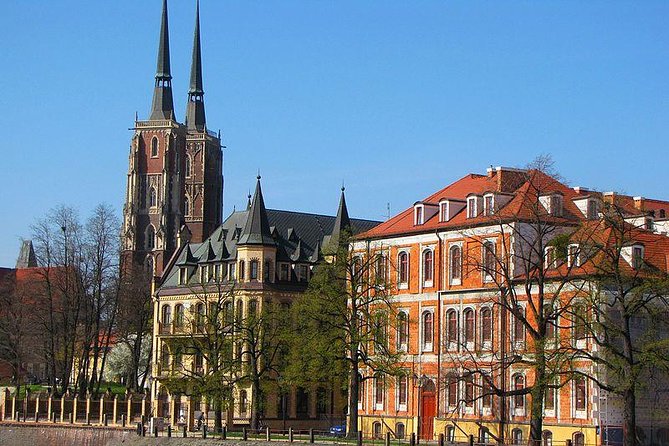
From there, the route moves into Ostrow Tumski, also called Cathedral Island. This is the oldest part of Wroclaw and one of the most atmospheric sections of the city. You will see colorful buildings, quiet streets, churches, and images showing how the area looked at the end of World War II.
The wartime photographs are an important part of the visit. They help you understand that the attractive streets and carefully restored buildings are not simply old scenery preserved untouched. Wroclaw endured severe destruction, and the contrast between past images and the present city gives the walk more weight.
More Old Town Walking Tours in Wroclaw
- Wrocław: Old Town and Ostrów Tumski Walking Tour in English
★ 4.8 · 311 reviews - Wroclaw: Private Old Town Guided Walking Tour (2 hours)
★ 4.8 · 275 reviews - Old Town Wrocław Walking Tour
★ 5.0 · 249 reviews
Cathedral towers, stained glass, and quiet church interiors
The Archcathedral of St. John the Baptist is one of the major sights on Ostrow Tumski. Its restored exterior and stained-glass windows make it worth seeing even if you are not planning a long church visit.
A tower visit can give you wide views across Wroclaw, but the admission ticket is not included. Ask the guide about the current arrangements if the view is a priority, and allow extra time if you want to go up.
The walk also includes the Parish of the Most Holy Name of Jesus, a Baroque church with a lavish interior. It is described as one of the most impressive churches in Europe, but the practical point is simple: request entry if you want to see inside. Not every interior visit is automatic, so tell your guide early that churches are important to you.
Church of Our Lady on the Sand brings a different mood. Its Gothic single nave and Gothic altarpieces create a more restrained setting. A moving nativity scene in one chapel adds an unusual detail, and an old nun may be attending it, depending on the visit.
The Church of the Holy Cross is architecturally unusual because it has two levels. Slender windows and tall towers give it a strong vertical look, while the nearby monument to St. John of Nepomuk makes a natural photo stop.
The Basilica of St. Elisabeth is included in the tour, and its large interior contains striking stained-glass windows. You can spend time looking at the scale of the building and its many details rather than treating it as a quick exterior stop.
Bridges, islands, and Wroclaw’s river views
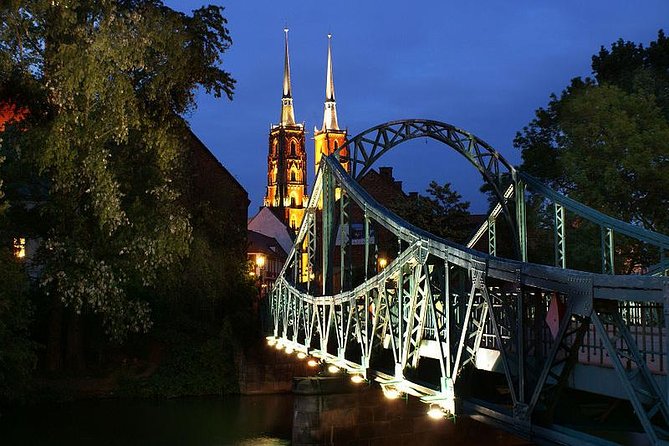
The Oder River is one of the best visual threads in this walk. It divides and surrounds parts of the city, creating islands, bridges, boat traffic, floating restaurants, and bars. These crossings break up the church and architecture stops with open views and room to breathe.
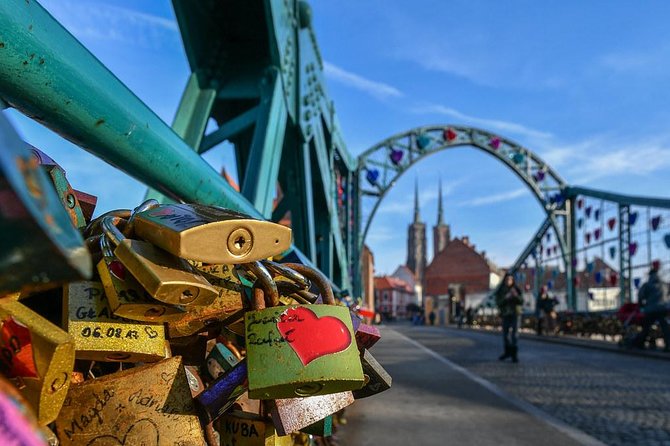
Tumski Bridge is famous for the many padlocks attached to its railings. It is a romantic spot and an easy place for photographs, though the locks can also make the bridge feel crowded with metal and clutter.
Ossolineum provides a more formal pause. The palace building and garden offer a change from the religious architecture around Cathedral Island. You can walk through the garden and admire the building from outside, while entry to the museum is optional and costs 5 euros if you choose it.
The route also passes the Greek Catholic cathedral. Its main Gothic form is relatively plain, but a Baroque chapel on the south side gives the building a more decorated focal point. This is a good example of why a guide helps: the significance of a quieter building can be easy to miss when you are moving between the larger churches.
Słodowa Island is a pleasant place to pause. It offers views of old buildings mixed with greenery and open river space, with benches for sitting. Nearby Bielarska Island is another calm stretch, with trees, shrubs, parkland, bridges, and views across the water toward remaining bastions.
These islands matter because they show a less formal side of Wroclaw. You are not only moving from one major building to the next. You also get a sense of how the river shapes daily life and gives the city places to rest.
University rooms with more than a pretty facade
Wroclaw University is worth looking at from both sides. The front presents the formal face of the institution, while the rear and interior reveal more architectural decoration and help explain the university’s place in the city.
The Wroclaw University Museum is smaller than many people expect. It has four rooms, including a tower room with city views. Entry may be possible on request, and the supplied details describe it as an optional visit rather than a guaranteed central stop.
Aula Leopoldina is the university’s showpiece interior. Its ornate decoration makes it one of the most memorable rooms on the route, and major student and academic events still take place there. Admission costs 3 euros and is not included, so bring some extra money if you want to go inside.
I would tell the guide at the beginning if Aula Leopoldina is a priority. The standard walking time is only about 2 to 4 hours, and optional interiors can change how much time remains for islands, churches, and the Market Square.
Same country, a completely different kind of day:
- Wroclaw: E-Car Tour and Audio Guide
★ 4.6 · 1,738 reviews - Wroclaw: 2-Hour Private Guided Tour by Electric Car
★ 4.8 · 805 reviews - Wroclaw: City Tour Sightseeing By Golf Cart Shared Or Privat
★ 4.8 · 189 reviews - Auschwitz-Birkenau Tour from Wrocław
★ 5.0 · 129 reviews
From Ceglarski Bastion to the Market Square
Ceglarski Bastion adds a historic viewpoint to the day. From the top, you can look toward Cathedral Island and its cathedral, making this one of the best places to connect the city’s separate sights in one view.
The Tiananmen Square Victims Monument offers a different kind of context. It remembers Chinese students and expresses Polish solidarity with people who resisted communism. It is not a decorative landmark, but it gives the walk a political and human dimension.
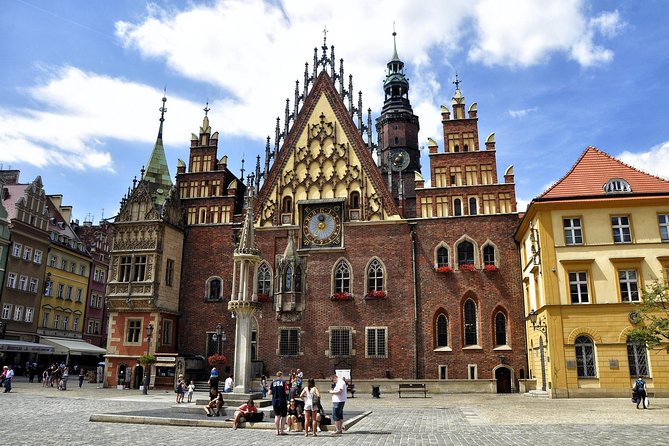
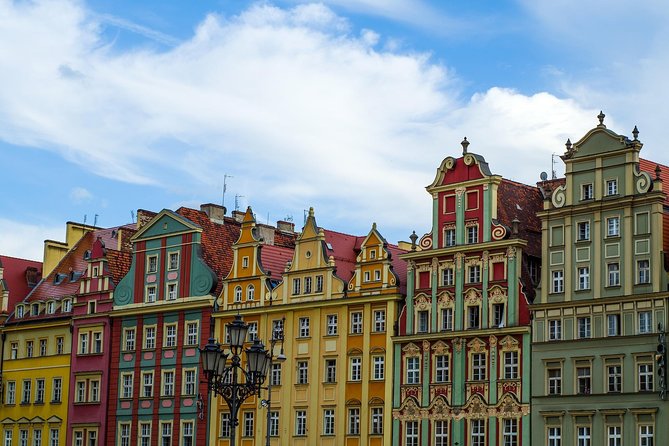
The route then reaches Rynek, Wroclaw’s large central square. Colorful facades, cafes, restaurants, meeting places, and busy pedestrian space surround the square. This is the spot where the city’s restored architecture and modern daily life meet most clearly.
Wroclaw Town Hall anchors the square. Its detailed exterior can look more like a church than a civic building, which is part of its appeal. Inside is a museum, and the building is also associated with one of the city’s oldest bars. Museum entry is not listed as part of the included experience, so ask the guide what can be visited during your time.
St. Elizabeth’s Basilica is close by. The scale of the church and its stained glass make it a worthwhile interior stop, and admission is included. If you are limiting paid extras, this is one of the easier places to focus your time.
Solny Square and the smaller details of the Old Town
Solny Square is smaller than Rynek but has its own character. Flower stalls, cafes, restaurants, and colored buildings make it a good place for a short break or a meal after the walk.
The tour also includes St. Mary Magdalene Church, known for its brickwork and stone details. Its viewpoint over Wroclaw can be a highlight, though entry is on request. Ask about the current access if you want to climb or see the church interior.
Some of the additional points on the route connect Wroclaw’s cultural life with its older architecture. You may hear about Adam Mickiewicz’s epic poem and its effect on modern ideas of Polish tradition and identity. The guide may also point out a small bar on a side street surrounded by old communist-era neon signs, with deck chairs outside in warm weather.
That mix is one reason I like the private setup. You can signal what interests you. If you care about old signs and everyday city life, ask for more of that. If you prefer churches and viewpoints, ask the guide to protect time for interiors and towers.
What the $115.68 price really buys
At $115.68 per person, this is not the cheapest way to see Wroclaw. You are paying for a private guide, not simply transportation between landmarks. The value depends heavily on your group size and how much you want personal attention.
For a couple or a small family, the cost may be worthwhile on your first day in the city. You get a route through the two areas most visitors want to understand, plus direct answers, local food suggestions, and help with choosing bakeries, pubs, restaurants, and souvenirs.
The price is harder to justify if you prefer to walk independently and read about buildings as you go. Many stops are free, and the Market Square, river islands, bridges, and several church exteriors can be explored without booking a tour.
The strongest case for booking is the guide’s ability to connect the sights. One guide, Andrew, has been praised for giving clear facts about Wroclaw and Poland, organizing the walk well, and answering questions. Another private booking found the route very extensive and appreciated that the guide responded to personal wishes instead of rigidly following a script.
You should also factor in the optional costs. Aula Leopoldina is 3 euros, the museum is 5 euros if you enter, and the cathedral tower may require its own ticket. Carry a little extra if interiors matter to you.
Timing, walking demands, and practical planning
The advertised duration is about 2 to 4 hours. That wide range matters. A quick walk focused on exteriors can fit closer to the shorter end, while church interiors, university rooms, photo stops, and questions can push the experience toward four hours.
Wear comfortable shoes. The route links Cathedral Island, river crossings, islands, university buildings, bastions, Rynek, Solny Square, and several churches. Even without a stated distance, the number of stops tells you to expect steady walking.
The meeting point is near public transportation, and the activity ends back at the starting point. Hotel pickup is available only for hotels in Wroclaw Market Square and Ostrow Tumski. If your hotel is outside those areas, arrange transportation in advance.
Check your email the day before. The tour asks you to do this for important updates, and access to churches or optional interiors may need to be discussed. Free cancellation is available if you cancel at least 24 hours before the start time. Changes or cancellations inside that window are not accepted for a refund.
Who should book this private walk
I would recommend it to first-time visitors who want to get their bearings quickly without spending the day studying a map. It also suits families, couples, and small groups who want to ask questions and adjust the pace.
History-minded visitors will appreciate the World War II images, communist-era memorial, university traditions, and wartime and postwar context. Architecture fans have plenty to examine, from Gothic churches and brickwork to Baroque interiors and the ornate Aula Leopoldina.
The tour is also a good fit if food planning matters to you. The guide provides recommendations for restaurants, bakeries, pubs, and souvenirs, which can save you from choosing at random after a long day.
I would hesitate if your main goal is a slow museum day. The route contains many possible interiors, but the basic experience is a walking overview rather than a full visit to every church and museum. Ask in advance about your priorities so the guide can use the two to four hours well.
Should you book the Ostrow Tumski and Old Town tour?
Book this tour if you want a private introduction to Wroclaw that combines major sights with small discoveries. The gnomes, river islands, padlock-covered Tumski Bridge, quiet gardens, university rooms, churches, and grand squares create a fuller picture than a simple Old Town loop.
The best value comes when your group can share the private guide cost and when you plan to ask questions. The price is high for a short walk, and optional admissions add a little more, but the route is broad and the guide can help you choose what deserves your limited time.
If you book, tell the operator where you are staying, confirm pickup arrangements, and say which interiors matter most. Ask about Aula Leopoldina, the cathedral tower, and church entry before the walk begins. That small bit of planning can turn a packed route into a much more personal visit.
FAQ
How long does the walking tour last?
The tour lasts approximately 2 to 4 hours, depending on the pace, questions, photo stops, and optional interior visits.
Is this a private tour?
Yes. Only your group participates, and you have direct access to the guide throughout the walk.
Where does the tour begin?
It begins at Plac Katedralny 50, 50-329 Wrocław, Poland. Guests staying near Cathedral Square may be directed to meet under the Column of Christ the King.
Where does the tour end?
The activity ends back at the meeting point.
Is hotel pickup included?
Pickup is available only from hotels in Wroclaw Market Square and Ostrow Tumski. If you stay elsewhere, you are encouraged to arrange transportation when booking.
Are admission tickets included?
The tour includes entrance to the Basilica of St. Elisabeth. Tickets for Aula Leopoldina and the optional museum visit are not included, and the cathedral tower may also require separate admission.
How much does Aula Leopoldina cost?
Entry to Aula Leopoldina costs 3 euros and is not included in the tour price.
Can I visit the churches inside?
Some church interiors can be entered on request. Tell the guide if you want to visit specific churches, including the Cathedral, the Parish of the Most Holy Name of Jesus, Church of Our Lady on the Sand, Church of the Holy Cross, or St. Mary Magdalene Church.
Does the tour include restaurant recommendations?
Yes. The guide provides recommendations for local restaurants, bakeries, pubs, and places to buy souvenirs.
What is the cancellation policy?
You can cancel for a full refund at least 24 hours before the experience start time. Cancellations or changes made less than 24 hours before the start time are not accepted for a refund.
More Walking Tours in Wroclaw
- Wroclaw Old Town Guided Walking Tour
★ 5.0 · 100 reviews - Group city tour (walking tour) through Wroclaw in German
★ 4.9 · 89 reviews - Wroclaw: Guided City Walk
★ 4.9 · 87 reviews - Wrocław: Long City Walk and River Cruise
★ 4.8 · 68 reviews
Just added around Wroclaw
- Wrocław: World War II and the non-existent city of Breslau★ 3.6 · 3 reviews
- Wrocław to Rock City in Adrspach and Project Riese day trip★ 5.0 · 5 reviews
- Wroclaw: WW2 Tour to Project Riese & Gross-Rosen Museum★ 4.8 · 26 reviews
- Wroclaw: University Baroque Tour★ 5.0 · 19 reviews
- Wroclaw : Walking Custom Tour with a Local Guide★ 4.8 · 3 reviews
- Wrocław: Tour of the Old Town in an Imperial E-car★ 4.3 · 13 reviews
- Wroclaw to Rock City in Adrspach and Ksiaz Castle day trip★ 4.9 · 16 reviews
- Wroclaw: Third Reich and World War Two Historical Tour★ 4.9 · 43 reviews
Old Town Walking Tours, compared.
Bike Tour of Old Town, Jewish Quarter and the Ghetto
Read our review →
Sightseeing EcoCruise around the Old Town of Gdansk
Read our review →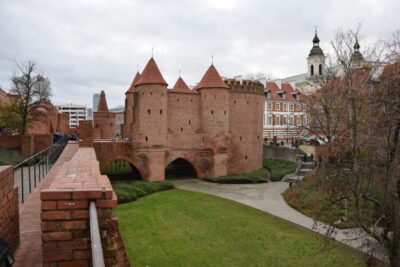
Browse the lists this tour appears in