
Reviewed · MUSEUMS
Wroclaw to Project Riese and Gross Rosen Museum – WW2 Tour including tickets
Project Riese is one of Poland’s most unsettling wartime mysteries: a vast underground construction project built by prisoners forced into slave labor. This tour pairs the Gross-Rosen Museum with the Osowka underground complex, giving you the human story first and the secretive engineering project second.
I like the private door-to-door transport, since these sites are well outside Wroclaw and awkward to connect by public transport. I also like the clear audio guides at both stops, which let you take in difficult material at your own pace rather than relying on a long lecture.
The main caution is that the driver may function more as transport than as a full historical guide. One backup driver spoke little English and could not explain the tunnel procedure clearly, so pay close attention when entering Osowka and ask questions before you set off.
Key points to know before booking
- Two very different World War II sites: Gross-Rosen explains forced labor and the camp system, while Osowka focuses on the unfinished underground Project Riese complex.
- Private transport from your hotel: Only your party rides in the air-conditioned minivan, with pickup and drop-off at hotels in Wroclaw.
- Audio guides are included: Both Gross-Rosen and Osowka provide audio commentary, but a local guide is not included.
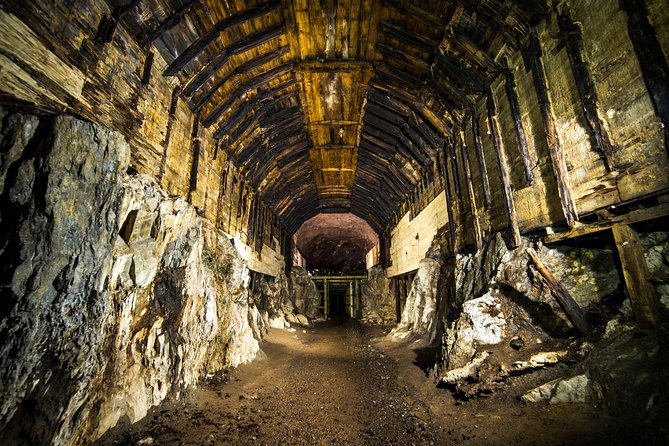
- Expect a cold underground visit: Temperatures in the Riese tunnels are about 8 to 10 C, even when Wroclaw is warm.
- A full day outside the city: The experience lasts about seven to eight hours, with roughly two hours at Gross-Rosen and one hour at Osowka.
- Good value for a small private group: At $170.31 per person, the price makes the most sense when you value private transport, included admission, and a simple one-day plan.
Why Project Riese is worth the long ride from Wroclaw
This is not a quick museum outing. You leave Wroclaw behind and head into Lower Silesia for a day focused on one of the darkest and least explained parts of the Second World War.
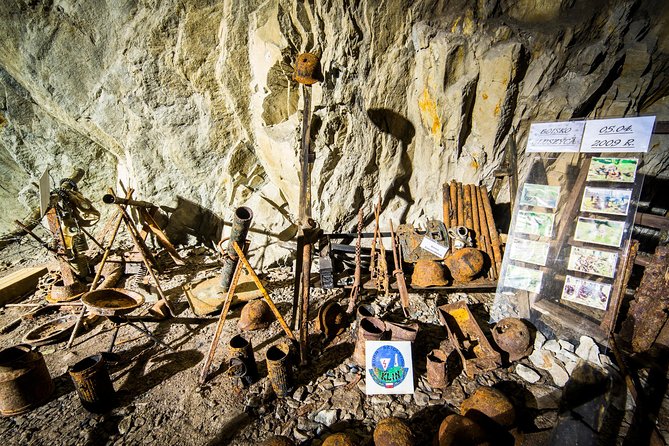
Project Riese was a huge German construction effort carried out during the war. Prisoners from Gross-Rosen were used as slave labor on the tunnels, along with work connected to Ksiaz Castle and factories. The purpose of the underground system remains uncertain, which gives the Osowka visit an unusual edge. You see the physical remains, but you are not handed a neat answer to every question.
I like that the day begins at Gross-Rosen. That order matters. The underground chambers can look like an engineering puzzle if you visit them without context. At the museum, you first learn about the people forced to build such projects. Osowka then becomes more than a set of tunnels. It becomes part of a system built through suffering.
The subject is hard. This is not a light sightseeing day, and the material may be painful to absorb. Still, the two stops work well together and give you a fuller picture than visiting either one alone.
A few more Wroclaw trips to weigh up
- Museum of Illusions Wroclaw Entrance Ticket
★ 5.0 · 42 reviews - Wroclaw: WW2 Tour to Project Riese & Gross-Rosen Museum
★ 4.8 · 26 reviews - Auschwitz-Birkenau Museum and Memorial Guided Tour from Krakow
★ 4.5 · 1,510 reviews
Gross-Rosen Museum: start with the human cost
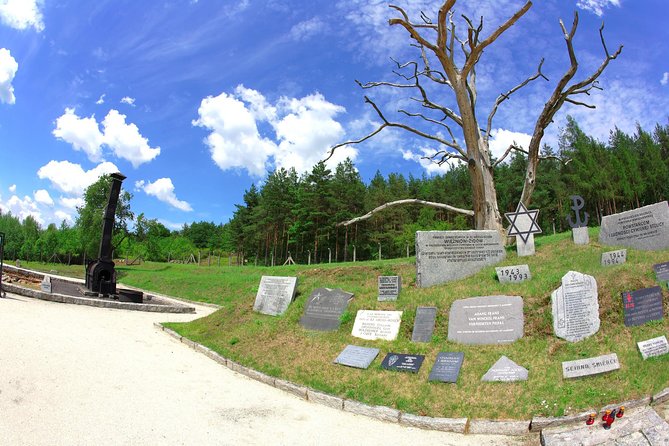
The first stop is the Gross-Rosen Museum in Rogoznica, where you spend about two hours. Admission is included, and an audio guide is provided.
Gross-Rosen was a concentration camp whose prisoners were used as a slave labor force for Project Riese, Ksiaz Castle, and factories. The museum gives the day its moral and historical center. Instead of beginning with theories about secret wartime construction, you begin with the forced labor that made the work possible.
Two hours is a useful amount of time here. You have enough room to listen to the audio guide, pause at the exhibits, and take in the site without being rushed through in a few minutes. The commentary is especially helpful because the subject includes people, places, and wartime projects that can be difficult to understand from signs alone.
You should expect a serious visit rather than an entertainment-style attraction. The site deals with imprisonment, exploitation, and death. If you prefer to process such material quietly, the audio guide allows you to move at your own pace, though your exact freedom to wander will depend on the museum’s arrangements that day.
The order of the stops also helps with emotional preparation. Gross-Rosen explains who did the work and under what conditions. Osowka shows one of the places where that labor was used.
Osowka underground town: cold tunnels and unanswered questions
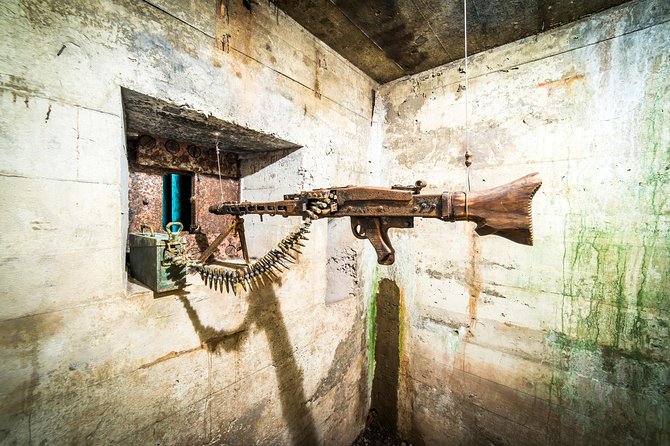
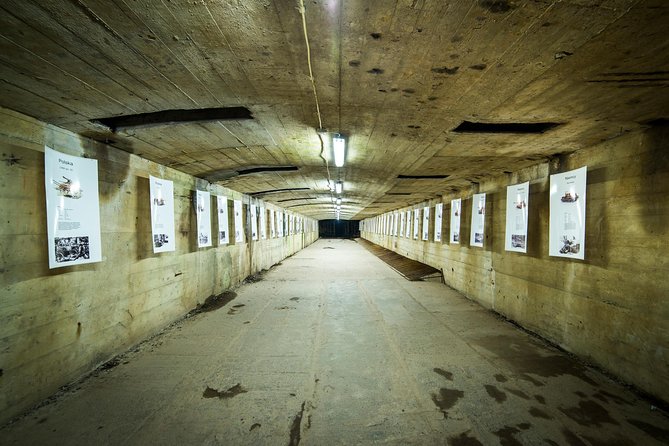
After Gross-Rosen, the tour continues to the Underground Town of Osowka, one of the Project Riese complexes. The underground visit lasts about an hour, admission is included, and a second audio guide explains what you are seeing.
The name Underground Town gives a sense of the scale and ambition of the project. Osowka is not simply a single wartime bunker. It is part of a larger complex that remains partly mysterious and attracts people interested in military history, architecture, and unresolved wartime questions.
Bring a warm jacket. The temperature inside the Riese tunnels is around 8 to 10 C. That is a real practical detail, not a minor footnote. Even if you set out from Wroclaw on a mild day, the underground environment will feel cold after you have been inside for a while.
The audio guide is useful, but the movement through the tunnels may need your attention. At least one part of the visit can involve joining a group or following instructions from staff. If an employee gives directions in Polish or uses hand signals, ask your driver or the staff member to clarify before moving ahead. It is better to lose a minute getting clear instructions than to wonder where you should go.
This is also where the driver’s role matters. Some drivers may know the route and the sites well, while others may mainly handle the driving. A substitute driver once had little English and was handling the tour for the first time, which led to confusion at the tunnel entrance. That does not make the site less worthwhile, but it means you should not assume the driver will explain every local procedure.
What the private minivan adds to the day
The tour includes pickup and drop-off at hotels in Wroclaw. Your group travels alone in an air-conditioned minivan, with bottled water provided.
That private setup is the main practical advantage. Gross-Rosen and Osowka are not next-door stops, and arranging both independently would mean working out transport, opening times, tickets, and the order of the day. Here, the road connections are handled for you.
A private vehicle also gives your party more breathing room than a large coach. You do not share the vehicle with other groups, and the pace is built around your own party. The published duration is about seven to eight hours, so door-to-door service can make the day feel much easier than trying to piece it together on your own.
Do not expect luxury transport to transform the tour into a guided lecture. The included driver is described as a driver/guide, but local guides are not included. English ability may vary. One driver named Arek received especially warm praise for being helpful, patient, conversational, and able to explain Poland during the drive. He also showed genuine interest in his passengers’ home country, Canada. If Arek is assigned to your group, you may get much more conversation between the sites, but you should not book on the assumption that a specific driver is guaranteed.
The difference between a quiet transfer and an informative one can be significant on a long day. Before leaving Wroclaw, ask what the driver will cover, confirm the order of the stops, and check how the Osowka entry works. Those simple questions can prevent the only major confusion reported about the experience.
Same country, a completely different kind of day:
- Wroclaw: E-Car Tour and Audio Guide
★ 4.6 · 1,738 reviews - Wroclaw: 2-Hour Private Guided Tour by Electric Car
★ 4.8 · 805 reviews - Wrocław: Old Town and Ostrów Tumski Walking Tour in English
★ 4.8 · 311 reviews - Wroclaw: Private Old Town Guided Walking Tour (2 hours)
★ 4.8 · 275 reviews
Audio guides instead of a full-time local guide
Audio guides are included at both locations. That is good news for independent visitors who like to stop, replay sections, and control the pace.
At Gross-Rosen, the audio guide helps explain the camp and the prisoners’ role in Project Riese. At Osowka, it provides context for the tunnels and the wider mystery around the complex. In both places, the commentary gives you more than you would get from looking at bare walls and concrete chambers.
The tradeoff is that an audio guide cannot answer a personal question or rescue you from a confusing instruction. Local guides are not included, and the driver may or may not provide much explanation during the journey. You should think of this as a private transport package with structured site interpretation, not as a private historian accompanying you at every step.
That arrangement suits me if I want control over the pace. It may frustrate you if you expect a detailed spoken history from Wroclaw to the sites and back. The experience works best when you are comfortable reading, listening, and asking for clarification when needed.
Price, timing, and who gets the best value
The listed price is $170.31 per person. That is not a budget attraction, but the comparison should include more than admission fees.
You are paying for a seven to eight-hour private day, hotel pickup and drop-off, an air-conditioned minivan, bottled water, two admission tickets, and audio guides. You also avoid planning transport between Wroclaw, Rogoznica, and Osowka. For a small group, those combined costs and the saved effort can make the price reasonable.
The value improves when two or more people share the private vehicle. Group discounts are offered, so check the price for your party rather than judging the per-person rate alone. A solo visitor pays more for the same private arrangement, while a couple or family can spread the transport cost across the group.
The tour is generally offered in English. Pickup is available from hotels in the city, and the published operating period runs from December 27, 2025, through December 23, 2026. The listed start window is from 8:00 a.m. to noon, while the whole experience lasts about seven to eight hours, so confirm the exact pickup time when booking.
The day may be tiring because of the drive, the serious subject matter, and the cold tunnels. That is part of the cost of seeing these sites in one day. If your time in Wroclaw is limited, combining them is efficient. If you have several days and prefer slow museum visits, an independent plan may give you more control.
Strengths and limits in plain terms
The strongest part of this experience is its pairing of sites. Gross-Rosen provides the historical and human context, while Osowka gives you a physical sense of the underground work linked to the project.
The second major strength is privacy. Door-to-door transfers remove the largest practical problem, and you do not share the minivan with strangers. A good driver can also turn the long road journey into useful time for learning about Poland. Arek, in particular, was praised for being warm, patient, and conversational.
The main limit is inconsistency in guiding. The included audio guides are useful, but the driver’s English and subject knowledge can vary. A driver who is new to the route may not know how staff organize the tunnel visit, and that can leave you unsure about where to go.
You should also be ready for a difficult subject. The museum is not merely an old building, and Project Riese is not just a curiosity for people who like secret tunnels. The places are tied to forced labor and wartime suffering. Give yourself time after the visit to process what you have seen.
Who should book this private history day
I would choose this tour if you have a serious interest in World War II, Nazi-era construction, concentration camp history, or unexplained military sites. It is also a sensible choice if you want to see both places but do not want to rent a car or manage rural transport.
Families can participate, but children must be accompanied by an adult. Think carefully about age and temperament because Gross-Rosen deals with painful material, and the underground visit can be cold and physically demanding in ways the short one-hour duration may not suggest.
This is a good fit for couples, families, and small groups who value convenience. It is also useful for people staying in Wroclaw who have already seen the city’s main sights and want a serious day trip with a clear historical focus.
I would be more cautious if you require a dedicated English-speaking historian, dislike audio guides, or want every movement through the tunnels explained in advance. In that case, confirm the guide arrangements before paying. The tour includes a driver/guide, but not a local guide.
Should you book it?
Book this experience if you want the simplest way to reach Gross-Rosen and Project Riese in one day, and if private transport matters to you. The included tickets, hotel pickup, audio guides, and small-group setting give the $170.31 price a fair case, especially with group discounts.
Before departure, bring a warm layer, ask how the Osowka visit will work, and do not assume the driver will give a full historical talk. If you accept those limits, this is a powerful and efficient day trip from Wroclaw, with two sites that are difficult to appreciate fully without context.
FAQ
Where does the tour begin?
Pickup is offered from all hotels in Wroclaw. Hotel pickup and drop-off are included.
How long does the experience last?
The full tour lasts approximately seven to eight hours.
How much time is spent at Gross-Rosen Museum?
The visit to Gross-Rosen Museum lasts about two hours.
How long is the Osowka underground visit?
The Underground Town Osowka visit lasts about one hour.
Are admission tickets included?
Yes. Tickets for Gross-Rosen Museum and Osowka are included.
Are audio guides provided?
Yes. An audio guide is provided at both Gross-Rosen Museum and Osowka.
Is the vehicle shared with other groups?
No. This is a private tour, and only your group participates.
How cold are the Project Riese tunnels?
The temperature in the Riese tunnels is around 8 to 10 degrees Celsius. Bring a warm layer.
Is food included?
No. Food and drinks are not included, although bottled water is provided.
Just added around Wroclaw
- Wrocław: World War II and the non-existent city of Breslau★ 3.6 · 3 reviews
- Wrocław to Rock City in Adrspach and Project Riese day trip★ 5.0 · 5 reviews
- Wroclaw: WW2 Tour to Project Riese & Gross-Rosen Museum★ 4.8 · 26 reviews
- Wroclaw : Walking Custom Tour with a Local Guide★ 4.8 · 3 reviews
- Wroclaw: University Baroque Tour★ 5.0 · 19 reviews
- Wrocław: Tour of the Old Town in an Imperial E-car★ 4.3 · 13 reviews
- Wroclaw to Rock City in Adrspach and Ksiaz Castle day trip★ 4.9 · 16 reviews
- Wroclaw: 3-Hour Bike Tour in English or Polish★ 4.8 · 66 reviews
Museums, compared.
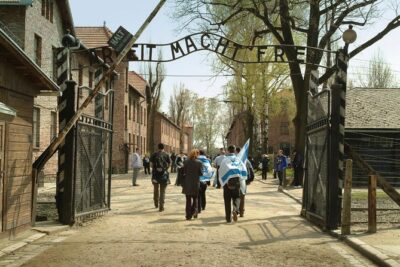
Auschwitz-Birkenau Museum and Memorial Guided Tour from Krakow
Read our review →
POLIN Museum of the History of Polish Jews Ticket
Read our review →

Krakow Schindler’s Factory Museum Guided Tour in English
Read our review →
Auschwitz Birkenau Museum Guided Tour with Pickup
Read our review →
Browse the lists this tour appears in