
Reviewed · CITY TOURS
Wrocław: World War II and the non-existent city of Breslau
Wrocław’s wartime story is unusually stark: a German city closely tied to the Nazi movement became Festung Breslau, a fortress that suffered heavy destruction in 1945. This private walk connects that past to places you can still see, from the Market Square and Hotel Monopol to Partisan Hill and Ostrów Tumski.
I like the route’s clear before-and-after view of the city, and I like having a guide for a small private group rather than being folded into a large crowd. The main caution is important: one recent booking rated the experience poorly after receiving what felt like a general city tour with too little focus on the war years. Ask your guide at the start to keep the subject firmly on World War II.
- See the city’s wartime story on foot: The two-hour route links the Market Square, Solny Square, plac Wolności, Hotel Monopol, Partisan Hill, the Dunikowski Boulevard, and Ostrów Tumski.
- Begin beside a rare survivor: Wrocław’s Market Square and Old Town Hall escaped the worst of the 1945 destruction.
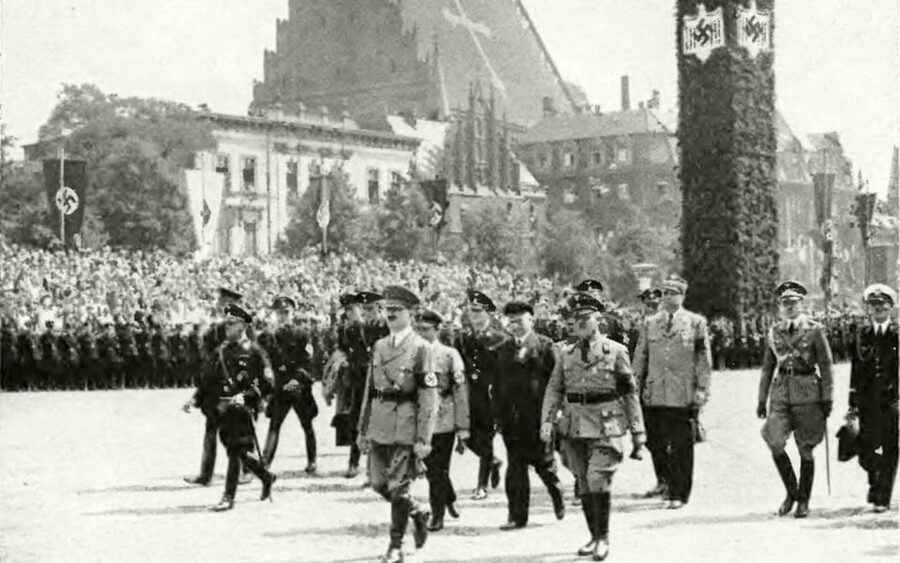
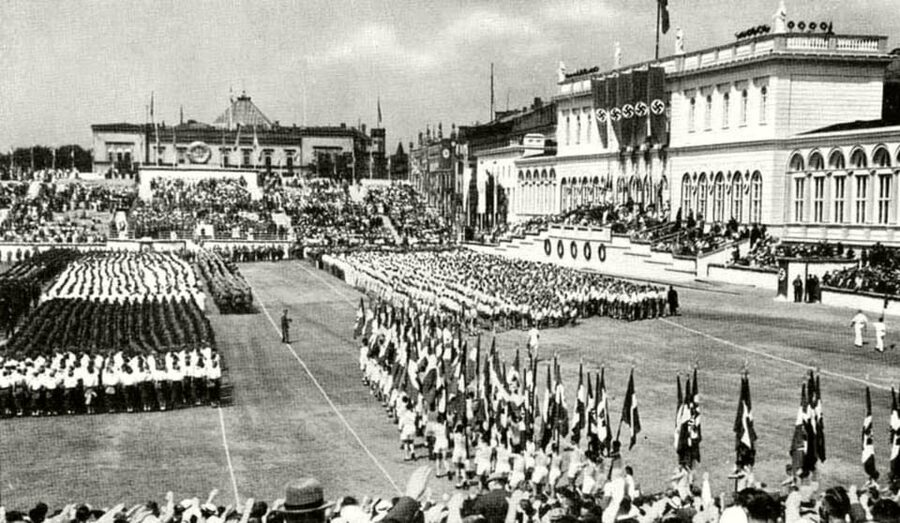
- Connect Nazi spectacle with daily life: Hear about parades, torchlight processions, Hitler’s visits, and the bunkers built for civilians.
- Visit former fortress ground: Partisan Hill was tied to the command of Festung Breslau and still has underground bunkers.
- End among restored monuments: Ostrów Tumski saw some of the fiercest fighting, yet today offers one of Wrocław’s most graceful views.
- Best for a private group: The price covers up to 14 people, making the cost easier to justify when shared.
From German Breslau to Polish Wrocław
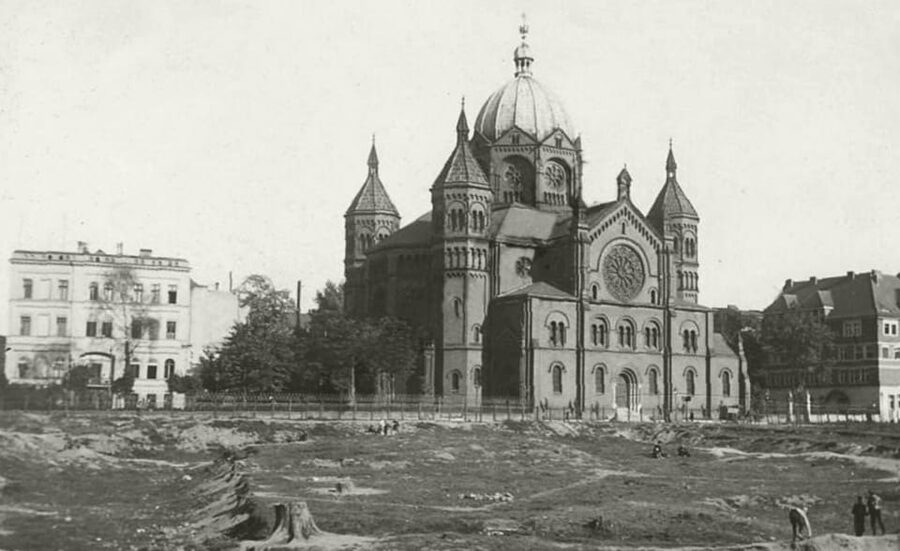
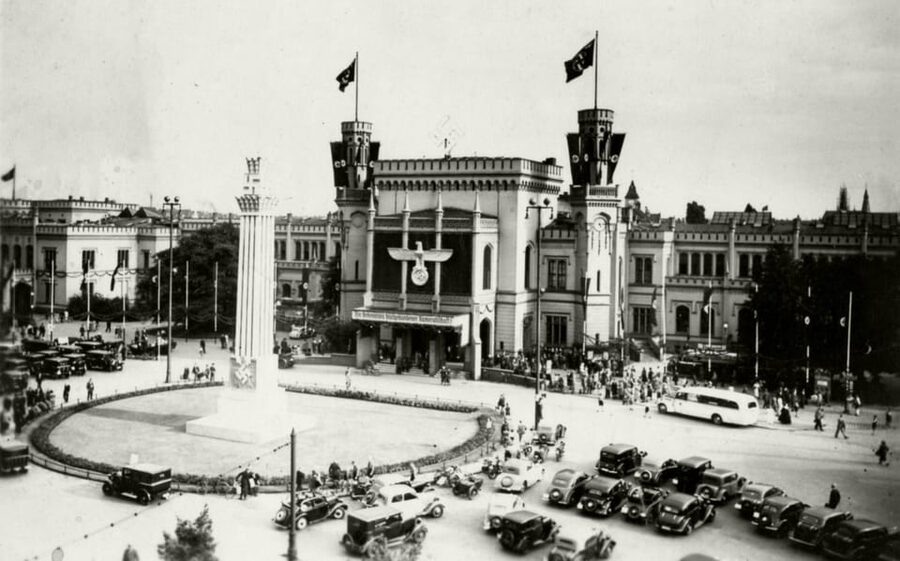
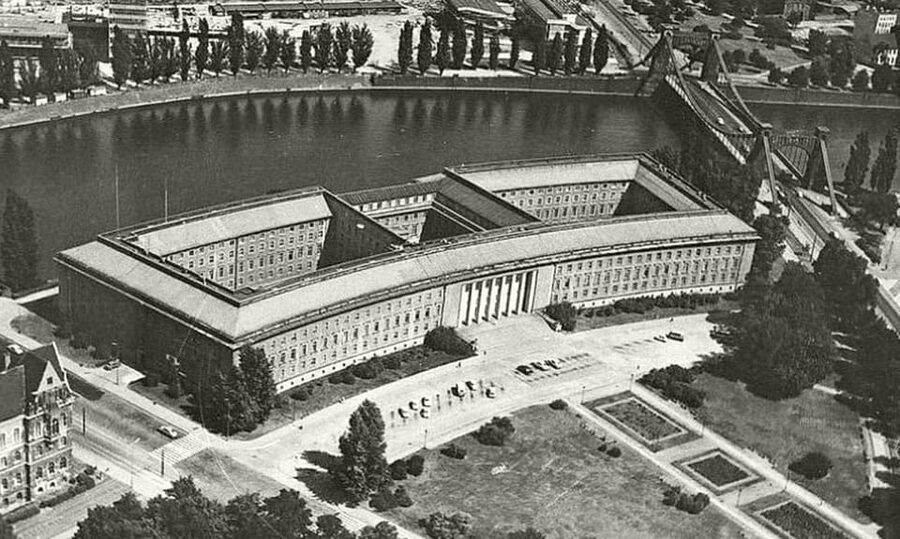
This tour deals with a city that changed identity as well as appearance. Before 1945, Wrocław was Breslau, the capital of Silesia and part of Germany. The city had a strong connection with the NSDAP from the early 1930s, and the largest NSDAP administrative headquarters in eastern Germany was located here.
That political background gives the walk its first layer. You are not simply looking at bomb damage. You are following a city where Nazi power was visible in public squares, on ceremonial streets, and in the lives of ordinary residents.
The guide also explains how people lived until 1945. That matters because the story is not limited to Hitler, party officials, and military orders. The tour promises attention to local inhabitants, civilian protection, the construction of bunkers, and the way the city’s residents experienced the war’s final phase.
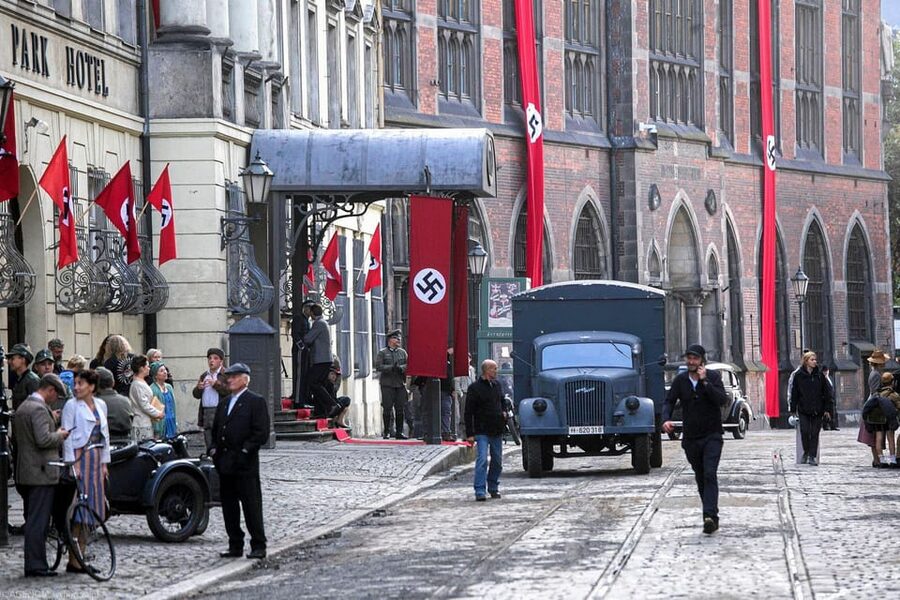
Hitler visited Breslau several times. His presence is tied especially to the former Castle Square and the Monopol Hotel, where he greeted supporters from a balcony. The same streets later saw Soviet forces enter the city. That contrast is one of the tour’s strongest ideas: a place used for Nazi pageantry became part of the visible collapse of German rule.
Starting at Piwnica Świdnicka and the Market Square
The meeting point is the entrance to the Piwnica Świdnicka restaurant, beside Wrocław’s Old Town Hall. It is a practical place to begin because you are already in the city’s best-known central square, and the guide can start the story without a long transfer.
The Market Square is also a useful visual lesson. Much of Wrocław was badly damaged during the final fighting, but this area miraculously survived. As you look around, the intact buildings can make the wartime destruction seem distant. Your guide’s job here is to explain that the preserved square is not a complete picture of what Breslau endured.
Plan on about 30 minutes around Rynek. That is a large share of a two-hour walk, so the opening discussion should set the tone for the rest of the experience. If you want a focused World War II tour, say so right away. The mixed feedback makes this more than a minor suggestion.
I would also pay attention to photographs from 1933 to 1945. They are part of the experience and can help you compare the modern streets with wartime scenes. A photograph is especially useful in a city where rebuilt facades and changed names can hide what happened here.
A few more Wroclaw trips to weigh up
- Wroclaw: City Tour Sightseeing By Golf Cart Shared Or Privat
★ 4.8 · 189 reviews - Group city tour (walking tour) through Wroclaw in German
★ 4.9 · 89 reviews - Wroclaw: Guided City Walk
★ 4.9 · 87 reviews
Solny Square and the first civilian bunkers
The next stop is Plac Solny, or Solny Square. The tour allows about 10 minutes here and focuses on the first bunkers built in Wrocław to protect local people.
This is a short stop, but it brings the war down to street level. Political history can feel abstract when it stays in the realm of parties and generals. Bunkers show the practical fear of air raids and the measures taken to protect civilians.
The key question is what remains. The description asks whether any traces of the early bunkers survive today, so the guide may point out visible remnants or explain how the structures fit into the modern city. Do not expect a long underground visit. This is a guided pass-by, not a bunker exploration.
For me, this stop is valuable because it shifts attention away from Nazi ceremony and toward the people who had to live with the consequences. It also reminds you that the tour is about both the years before 1945 and the destruction that came at the end.
Plac Wolności, Castle Square, and Hotel Monopol
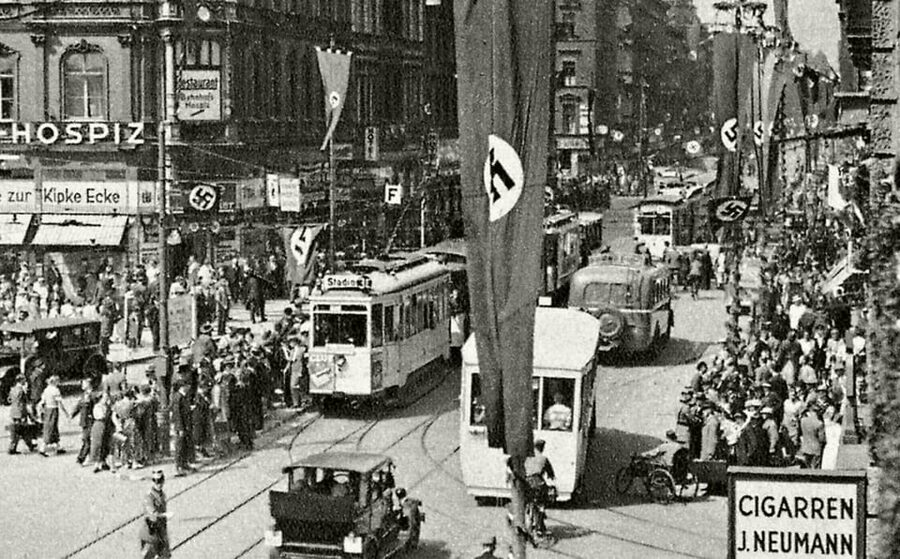
From Solny Square, the walk continues toward plac Wolności, the former Castle Square. This area once hosted regular Nazi parades and torchlight processions, known in German as Fackelzüge. The exact public setting matters. These events were designed to turn city streets into stages for political loyalty.
The tour then brings you to Hotel Monopol. Hitler greeted supporters from its balcony during visits to Breslau, making the hotel one of the most direct links between the city and Nazi leadership. You will pass the building rather than take part in a separate hotel visit, so the value lies in the guide’s explanation of what happened there and how the surrounding space was used.
About 10 minutes are assigned to plac Wolności and another 10 minutes to Hotel Monopol. That is enough for a sharp explanation, but not a full study of Nazi architecture or party organization. If those subjects are your main interest, ask how much detail the guide plans to provide.
The route is strongest when it places two moments side by side: the public enthusiasm of the 1930s and the arrival of the victorious Soviet Army in 1945. On Świdnicka Street, once Schweidnitzer-Strasse, residents welcomed Hitler during his visits. Later, Soviet forces entered along this representative route. The same street carried two entirely different political messages within a short span of years.
Partisan Hill and the command of Festung Breslau
Partisan Hill, formerly Lieblichs Höhe, receives roughly 30 minutes and includes a guided visit, a photo stop, and time to pass through the area. This is the tour’s most substantial stop after the Market Square.
In 1945, when Wrocław was declared Festung Breslau, the city was treated as a fortress. Partisan Hill was connected with the fortress command, and underground bunkers were located here. The bunkers remain today, although the supplied information does not promise that you will enter them. Expect the guide to explain their role and point out what can be seen.
The modern setting creates a sharp contrast. Partisan Hill is now a place where people relax, with cafes and beer gardens and a fine view over Wrocław. You can take photographs and notice how ordinary city life has replaced military control.
This is one of the best places to understand how Wrocław has changed since 1945. A site linked to command posts and underground defenses now serves as a pleasant urban lookout. The contrast is not decorative. It shows how the city has worked to live with its past without allowing wartime ruins to define every public space.
The stop is also a useful pause in a walking tour. The route is not long, but two hours on city streets can feel brisk when every stop includes historical explanation. Partisan Hill gives you time to take in the view and let the sequence of events settle.
Same country, a completely different kind of day:
- Wroclaw: E-Car Tour and Audio Guide
★ 4.6 · 1,738 reviews - Wroclaw: 2-Hour Private Guided Tour by Electric Car
★ 4.8 · 805 reviews - Wrocław: Old Town and Ostrów Tumski Walking Tour in English
★ 4.8 · 311 reviews - Wroclaw: Private Old Town Guided Walking Tour (2 hours)
★ 4.8 · 275 reviews
Świdnicka Street and the changing meaning of public space
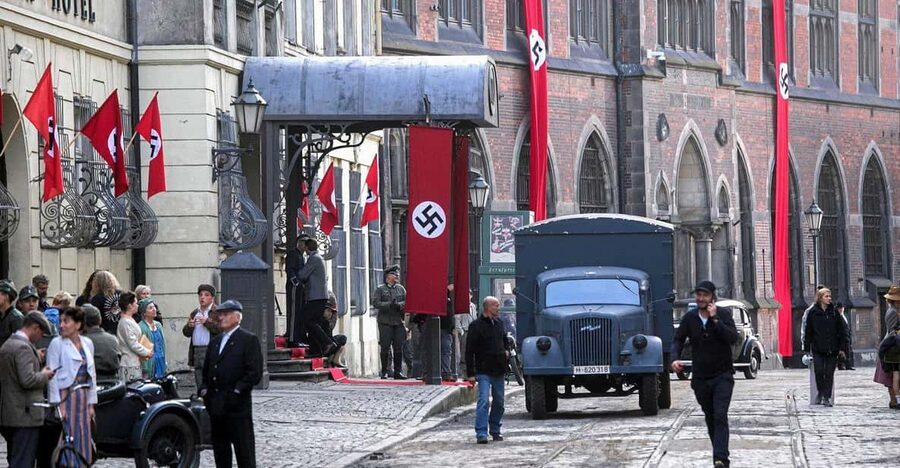
The walk along Świdnicka Street helps tie the separate stops together. It was one of Breslau’s representative streets, used for public welcomes and political display. In 1945, it also became a route for the Soviet Army entering the city.
I like this part of the experience because streets often reveal history better than isolated monuments. A square may be rebuilt, and a building may look polished, but a long avenue shows how power moved through the city. Your guide can connect Hitler’s visits, public ceremonies, and the end of German Breslau without sending you to a museum or archive.
The limitation is time. This is a thematic walk, not a full historical seminar. You will hear the main sequence of events, but the level of detail can depend heavily on the guide. The high praise for Norbert from a September 2025 booking suggests that guide quality can make a real difference. One other recent booking, however, felt the war period received too little attention. That gap explains why I would set your expectations clearly before setting off.
The Dunikowski Boulevard and the approach to Ostrów Tumski
From Partisan Hill, the route continues toward bulwar Xawerego Dunikowskiego, with about 20 minutes of guided walking. This section leads you toward the oldest part of the city and gives the tour a geographic sense of how the final fighting moved through Wrocław.
Ostrów Tumski, also called Dominsel, was the scene of some of the fiercest battles in 1945. The district is now known for its cathedral and carefully restored buildings, so you may need help reading the present city against its wartime past.
The tour makes a five-minute photo stop at Ostrów Tumski. That is brief, but the walk ends here, leaving you free to explore the island and its monuments on your own. This is a smart ending for anyone who wants to continue sightseeing rather than return to the Market Square.
You will also view the cathedral district from Ceglarskie Hill, formerly Holtei-Höhe. The elevated viewpoint helps you see why Ostrów Tumski mattered as a strategic area, while the restored skyline shows how thoroughly the city has been remade.
Do not expect the final stop to function as a full cathedral tour. The emphasis is on the wartime battles, the view, and the transition into independent exploration.
A two-hour private walk for up to 14 people
The price is $209 per group of up to 14 people. For one or two people, that is a serious cost for a two-hour walk. For a family or group of friends, the calculation changes: a full group would pay roughly $15 per person, before any currency conversion.
You receive a professionally licensed guide for your group alone. That private format is useful here because the topic may lead to questions about Nazi politics, civilian life, changing borders, and the postwar city. You can ask for more detail at the stops that matter most to you.
The tour is listed as wheelchair accessible. Still, the experience takes place on a walking route through squares, streets, hills, and riverfront areas. If mobility is a concern, confirm how the guide handles Partisan Hill and the exact route before booking, since accessibility is stated but the surface conditions and any bunker access are not described.
Tours are offered in Polish and German. A recent German-speaking booking specifically praised Norbert and described him as exceptionally good. That is useful evidence that the German option can be strong, but guide assignment is not guaranteed in the details provided.
You can cancel up to 24 hours ahead for a full refund, and you can reserve now while paying later. Those policies reduce the risk of booking early, especially if your Wrocław schedule is still shifting.
Who will get the most from this experience
I would choose this tour if you want a war-focused introduction to Wrocław and prefer to understand the city by walking through real locations. It suits visitors who have already seen the main Old Town sights and now want the political and military story behind the streets.
It is also a good fit for a private group with mixed interests. One person can ask about Nazi organization, another about the siege, and another about how Wrocław changed after 1945. The guide can adjust the pace more easily than on a fixed large-group excursion.
You should think twice if you want museum displays, extensive archival material, or a detailed account of every military operation. The tour includes historical photographs and significant places, but it remains a two-hour city walk. Its success depends on the guide giving enough attention to the promised wartime theme.
The 3.6 average from three ratings reflects that split. One booking praised the tour as informative and singled out Norbert. Another gave it two stars because it felt like a standard city walk with almost no discussion of the selected period. A third praised the small group, interesting content, and flexible guide. I read that as a clear planning message: the format has good potential, but the guide’s focus matters.
Should you book the Wrocław wartime walk?
Book it if your group can share the $209 price and you want a private route through the places where Nazi power, civilian defense, the siege of 1945, and postwar rebuilding meet. The Market Square, Hotel Monopol, Partisan Hill, and Ostrów Tumski give the story a strong physical shape.
Before you begin, tell the guide that World War II is your priority. Ask for the promised photographs, request detail about civilian life and the bunkers, and confirm how much time will be spent on the 1933 to 1945 period. With a focused guide, this can be a thoughtful way to understand why the German city of Breslau disappeared and how Polish Wrocław took its place.
If you are traveling alone or as a couple, the group price may be hard to justify. If you are traveling with several people, the private format and flexible discussion make the cost more reasonable.
FAQ
Where does the tour begin?
The meeting point is at the entrance to the Piwnica Świdnicka restaurant in Wrocław.
Where does the tour finish?
The walk ends in Ostrów Tumski, Wrocław, in front of the former building that housed the NSDAP authorities in Breslau. You can then explore Ostrów Tumski and its monuments independently.
How long does the experience last?
The tour lasts two hours.
What languages are available?
A live guide is available in Polish or German.
Is this a private tour?
Yes. The price covers a private group of up to 14 people with a professionally licensed guide.
Is the tour wheelchair accessible?
Yes, the activity is listed as wheelchair accessible. The route includes city streets, Partisan Hill, riverfront areas, and Ostrów Tumski.
Just added around Wroclaw
- Wrocław to Rock City in Adrspach and Project Riese day trip★ 5.0 · 5 reviews
- Wroclaw: WW2 Tour to Project Riese & Gross-Rosen Museum★ 4.8 · 26 reviews
- Wroclaw: University Baroque Tour★ 5.0 · 19 reviews
- Wroclaw : Walking Custom Tour with a Local Guide★ 4.8 · 3 reviews
- Wroclaw to Rock City in Adrspach and Ksiaz Castle day trip★ 4.9 · 16 reviews
- Wrocław: Tour of the Old Town in an Imperial E-car★ 4.3 · 13 reviews
- Wroclaw: 3-Hour Bike Tour in English or Polish★ 4.8 · 66 reviews
- Wroclaw: Third Reich and World War Two Historical Tour★ 4.9 · 43 reviews
City Tours, compared.
City Sightseeing Tour Eco Electric Buggy Golf Cart
Read our review →
Gdańsk City Sights & History Guided Walking Tour in English
Read our review →
Extended City Sightseeing Tour – Eco Buggy Golf Cart
Read our review →
Browse the lists this tour appears in