
Reviewed · MUSEUMS
Museum of the Second World War Gdansk Private Tour & Tickets
Gdansk’s Museum of the Second World War tells a huge global story through Poland’s painful experience. This private tour gives you a guide beside you as you move from the museum to the Polish Post Office memorial, shipyard landmarks, and sites tied to the later fight against communism.
I like the timed museum admission, which removes the ticket-office wait, and I like having one guide focused on your group rather than sharing explanations with strangers. Małgorzata, one of the guides named in the feedback, was praised for her punctuality, clear teaching, and willingness to spend time on questions.
The main consideration is the price: $153.49 per person is a serious outlay, especially for the two-hour choice. The four-hour version makes better use of the private format, but it includes a moderately long walk on uneven surfaces and in changing weather.
Key points to know before booking
- The museum is the heart of the tour: You get timed entry to the permanent exhibition and about two hours with a licensed guide.
- The four-hour option adds real context: It connects WWII with post-war communism, the Solidarity movement, and Gdansk’s shipyards.
- Your guide can follow your interests: A private format gives you room to ask about Poland, the Jewish community, occupation, resistance, or post-war politics.
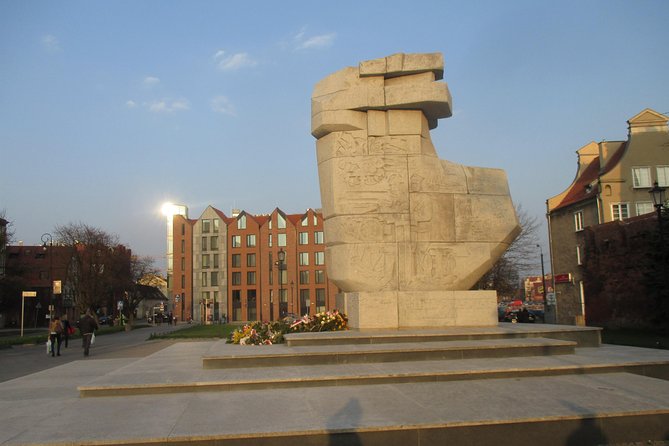
- The meeting point is easy to identify: Look for the Witold Pilecki monument in front of the Museum of the Second World War.
- Hotel pickup is limited: It is available only from accommodation in Gdansk Old Town, and only with the extended option.
- The mood is serious: Expect a thoughtful, sometimes painful history lesson rather than a light city stroll.
Why this Gdansk history tour works
Gdansk is a good place to study the collision of European powers, Polish independence, Nazi occupation, and post-war communist rule. The city’s story did not end in 1945, and this experience is strongest when you choose the four-hour version and let the guide connect the museum to the streets and shipyard.
The private setup matters here. WWII museums can feel overwhelming because they contain so many dates, countries, objects, and personal stories. A guide can tell you what deserves your attention, explain the Polish viewpoint, and pause when you want to ask about something that catches your eye.
The tour is offered in English and includes a five-star licensed guide fluent in your chosen language. The published rating is 4.9 from 24 reviews, with all listed respondents recommending it. That is a small sample, but the praise is consistent on the points that matter most: clear explanations, punctuality, strong command of the museum, and time for questions.
A few more Gdansk trips to weigh up
- Gdansk: Private Communism Tour with Solidarity Center Museum
★ 5.0 · 28 reviews - Gdansk Private WWII Tour with Museum of the Second World War
★ 4.9 · 22 reviews - Gdansk Private Communism Tour with Solidarity Center Museum
★ 5.0 · 14 reviews
Meeting the guide at the Pilecki monument
The tour begins at Plac Władysława Bartoszewskiego 1, outside the museum. More precisely, you meet at the monument to Witold Pilecki, a Polish resistance figure, in front of the building.
Allow a little extra time to find the monument and arrive before your booked entry slot. Your ticket is valid for a particular date and time. You skip the line at the ticket office, but not necessarily the security or entrance process, so arriving late is a poor gamble.
The meeting point is close to public transport. If you are staying in Gdansk Old Town, pickup may be possible within about 1.5 kilometers of the meeting point, but only with the extended tour. Outside the Old Town, you need to make your own way there.
Two hours inside the Museum of the Second World War
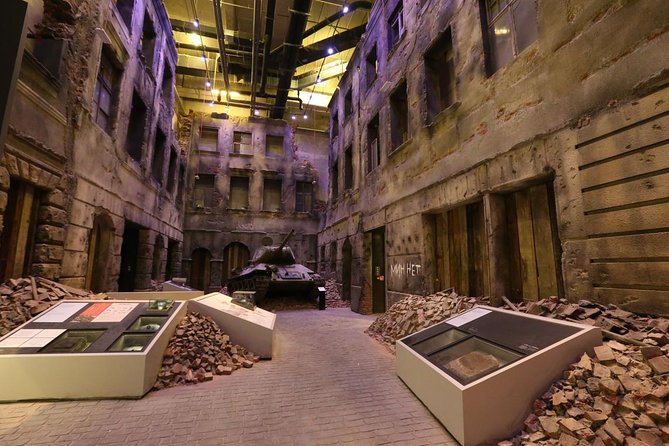
The museum visit takes about two hours and focuses on the permanent exhibition. It uses artifacts, documents, photographs, and interactive displays to explain WWII as a worldwide conflict while keeping Poland’s experience at the center.
That balance is important. You will not get only a military timeline. The exhibition also addresses the effect of war on ordinary people, the destruction caused by occupation, and the choices forced on civilians and resistance members. Poland’s position between Nazi Germany and the Soviet Union makes its wartime story especially difficult to reduce to a simple good-versus-bad narrative.
A private guide helps turn a large collection into a readable story. You can ask for more attention to Polish resistance, the Jewish community of Gdansk, the opening stages of the war, or the later political consequences. The tour description specifically includes discussion of Gdansk’s Jewish community, so this is a useful point to raise early if it matters to you.
The museum itself can be emotionally heavy. One piece of practical advice is to treat the two-hour visit as serious cultural time, not as a quick attraction squeezed between lunch and shopping. The feedback describes the experience as somber but informative, which is a fair expectation.
The guide’s role is not just to recite dates. One highly praised guide, Małgorzata, was described as educated, professional, punctual, and generous with answers. Another assessment highlighted a guide’s clear delivery and passion for Polish history. Those details suggest the strongest part of the experience is the human explanation beside the displays.
The Polish Post Office and Gdansk’s first wartime battles
The longer route continues beyond the museum to the Defenders of the Polish Post Office memorial. This site honors the people who fought in one of the first battles of WWII.
The stop adds scale to the museum story. Instead of seeing the war only through national borders and major armies, you consider what happened at a civic workplace in Gdansk. Your guide explains the event and places it within the city’s early resistance to Nazi occupation.
This portion is a walking tour, so the pace depends on your group and the guide’s route. The listed time is about 50 minutes for this section, though the full four-hour experience also includes later stops. You should wear shoes that can handle walking and some uneven surfaces or steps.
Same country, a completely different kind of day:
- Gdansk: City Cruise on Historical Polish Boat
★ 4.8 · 2,913 reviews - Gdańsk: Sunset Cruise on a Historic Polish Boat
★ 4.9 · 977 reviews - Gdańsk City Sights & History Guided Walking Tour in English
★ 4.8 · 876 reviews - Gdansk: Firearm Shooting Experience with Instructor
★ 4.8 · 866 reviews
St. James Church and the memory of resistance
The itinerary also passes by the Church of St. James. The supplied details do not promise a particular interior visit, so think of this as a historical stop rather than a guaranteed church tour.
Here, the guide continues the story of occupation and resistance. The value is the connection between individual places and the wider pressure placed on Gdansk’s population. If you have questions about religious life, civilian survival, or local resistance, a private guide gives you a natural chance to ask them.
This is one reason I prefer the extended option for people with a serious interest in history. The museum gives you the broad framework. These outdoor stops show how that framework touched specific buildings and communities.
Shipyard workers and the later fight for freedom
The Monument to the Fallen Shipyard Workers shifts the subject from wartime occupation to post-war opposition to communism. It honors workers killed during protests and helps explain why Gdansk later became such an important center of Poland’s fight for political freedom.
This part prevents a common mistake: treating 1945 as the clean end of the story. Poland’s wartime destruction was followed by decades under communist rule. The four-hour route shows how memories of war, state power, workers’ rights, and national independence remained connected.
You also stop near the European Solidarity Centre and the historic BHP Hall, where the August Agreements were signed. The tour description includes the striking Obrońca mural, a preserved WWII air raid shelter, and the Imperial Shipyard, where the route ends.
The stops outside the museum are included without separate admission charges. Their value comes from the guide’s explanation and the physical setting. You are not simply collecting landmarks. You are following a path from occupation, to post-war control, to organized resistance and the push for independence.
The two-hour or four-hour option?
The shorter version centers on the museum. It is the better match if you have limited time, want a focused history lesson, or are not keen on a longer walk. You still receive the private guide and skip-the-line museum entry.
The drawback is that you miss the added context of the Polish Post Office, shipyard memorials, Solidarity sites, the air raid shelter, and the Imperial Shipyard. You also miss the extended treatment of post-war communist history, which is specifically included only in the four-hour option.
The four-hour version is a moderate walking tour. It includes uneven surfaces and steps, and it runs in rain or shine. The guide can adjust the pace, but this is not a fully seated experience. Dress for the weather and wear comfortable shoes.
I would choose four hours if this is your main Gdansk history activity. The longer route makes the price easier to justify because you receive a museum visit plus a guided city walk with a clear historical thread.
Is $153.49 per person good value?
At $153.49 per person, this is not a budget museum visit. You are paying for a private experience, a licensed English-speaking guide, timed museum admission, and, with the longer option, several hours of guided walking.
Value depends heavily on group size and your priorities. For one or two people, the cost may feel high compared with visiting the museum independently. For a family or small group, the private format can make more sense, especially since the group can share one guide’s attention and ask questions without holding up strangers.
The four-hour option offers the strongest value because it adds several important Gdansk sites at no separate admission cost. The guide also saves you from working out how the museum fits with the city’s WWII and communist-era landmarks.
Skip-the-line wording needs a small reality check. You bypass the ticket-office queue, but the ticket is still tied to a reserved time, and you may encounter the normal entrance process. That is useful, but it is not permission to arrive whenever you like.
Who should book this private experience?
I would recommend it to you if you want history explained in plain language and prefer questions over a fixed audio guide. It suits first-time visitors who want to get their bearings quickly, as well as people already familiar with WWII who want to focus on Poland and Gdansk.
It is particularly suitable for:
- Couples or families who want a private pace
- English-speaking visitors seeking a licensed guide
- History fans interested in both WWII and communism
- Small groups that can share the cost
- Anyone who wants the museum connected to real city locations
You may prefer an independent museum visit if your budget is tight, you want to read every display at your own pace, or your schedule cannot accommodate a fixed entry time. The two-hour option also offers less walking, but it leaves out the citywide post-war story.
The tour can accommodate people with disabilities when possible, but you should contact the operator in advance. Since the longer version includes steps and uneven surfaces, tell the company about mobility needs before booking rather than hoping the route can be changed on the day.
Practical planning for the day
Check your email the day before for important information from Rosotravel Tours Gdansk. If you have a special request, contact customer support ahead of time.
Your group should arrive early at the Pilecki monument. Bring a phone with the mobile ticket available, wear comfortable shoes, and dress for the forecast. The tour operates in all weather, and the four-hour route spends meaningful time outdoors.
The activity ends back at the meeting point. That makes it easy to continue exploring from the museum area, though you should not count on hotel transport unless you are staying in the Old Town and have booked the extended option.
Free cancellation is available if you cancel at least 24 hours before the local start time. Changes or cancellations inside that window are not accepted for a refund.
Should you book it?
Book this tour if you want Gdansk’s WWII museum visit to become a connected story about occupation, local resistance, Jewish life, communist rule, shipyard workers, and the struggle for freedom. The guide’s individual attention is the main reason to choose it, and Małgorzata’s praise for clear explanations and patient answers sets a useful standard for what you should expect.
Choose the four-hour option if you can manage the walking and want the best historical value. Choose two hours if the museum is your priority or your schedule is tight. At $153.49 per person, it is a premium choice, but for a small group that wants a serious, well-explained introduction to Gdansk’s twentieth-century history, the added context can make the cost worthwhile.
FAQ
Where does the tour begin?
The tour begins at the Monument to Witold Pilecki in front of the Museum of the Second World War, at Plac Władysława Bartoszewskiego 1 in Gdansk.
Where does the tour end?
The activity ends back at the meeting point.
Is museum admission included?
Yes. Skip-the-line tickets to the Museum of the Second World War are included with all options. Admission covers the permanent exhibition.
Does skip-the-line mean I can arrive at any time?
No. The ticket is valid for a pre-booked date and time. You skip the ticket-office line, but not necessarily the entrance process, so arrive on time.
How long does the experience last?
The available options last about two or four hours. The exact itinerary depends on the option selected.
Is the tour private?
Yes. Only your group participates in the private tour.
Is hotel pickup available?
Pickup is available only from accommodation in Gdansk Old Town, within about 1.5 kilometers of the meeting point, and only with the extended version.
Is the extended walking tour included with the two-hour option?
No. The extended walk covering post-war communist history is included only with the four-hour option.
Is the tour offered in English?
Yes. The experience is offered in English, and a licensed guide fluent in your chosen language is included.
Is the tour suitable for people with mobility needs?
The operator can accommodate people with disabilities when possible, but you should contact customer support in advance. The four-hour route includes some uneven surfaces and steps.
Just added around Gdansk
- Gdansk, Gdynia, and Sopot: 8-Hour Private Sightseeing Tour★ 4.9 · 13 reviews
- Westerplatte private tour led by Expert-Guide (door to door)★ 5.0 · 5 reviews
- Whisky Tasting in Gdańsk★ 5.0 · 3 reviews
- Gdansk EVERYDAY Vodka Tasting Tour★ 5.0 · 6 reviews
- Westerplatte – 2h private trip by luxury car|★ 5.0 · 4 reviews
- Private WW2 Tour of Westerplatte,Gdansk and Stutthof Including Lunch★ 5.0 · 12 reviews
- Torun – City of Copernicus Private Tour★ 4.5 · 5 reviews
- Undercover City Games: Gdynia★ 5.0 · 34 reviews
Museums, compared.
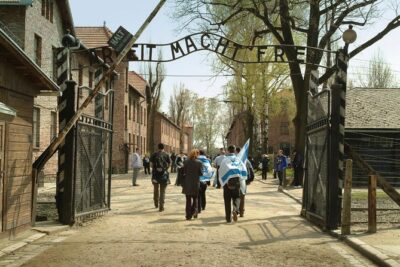
Auschwitz-Birkenau Museum and Memorial Guided Tour from Krakow
Read our review →
POLIN Museum of the History of Polish Jews Ticket
Read our review →


Krakow Schindler’s Factory Museum Guided Tour in English
Read our review →
Auschwitz Birkenau Museum Guided Tour with Pickup
Read our review →
Browse the lists this tour appears in