
Reviewed · WALKING TOURS
Private Walking Tour of Wroclaw
Wroclaw’s story unfolds best on foot, and this tour links its medieval market, baroque churches, old university quarter, and Cathedral Island in one well-packed walk. The most memorable thread is how much of the city’s past appears in small details, from an old butcher street to a statue of a swordsman with a tale behind it.
I like the private format, which lets your guide adjust the pace and focus. I also like the mix of major sights and less obvious stops, especially Jatki, Ossolineum, the Market Hall, and the tiny John and Margaret houses. Guides Michał and Damian receive especially warm praise for clear explanations, good humor, and patient answers.
The main consideration is pace. Three hours covers 14 stops, with roughly 180 minutes assigned to the listed visits before you count the walking between them. Admission tickets, food, and drinks are extra, and the tour may feel brisk if you want long interior visits.
Key points to know before you book
- Fourteen stops in three hours: You move from Rynek and Town Hall to the University, Market Hall, and Cathedral Island.
- A genuinely private outing: Only your group participates, with space to change the emphasis to suit your interests.
- Michał and Damian are named guides: Their strongest qualities are detailed explanations, friendliness, and a willingness to answer questions at length.
- A useful mix of city views and interiors: The route includes Gothic churches, baroque buildings, a library, a market hall, and historic squares.
- The price works best for groups: At $197.19 for up to 15 people, the per-person value improves as your party gets larger.
- Plan for extra costs: Food, drinks, and admission tickets are not included, though many outdoor stops are free.
Starting in Rynek, Wroclaw’s great public room
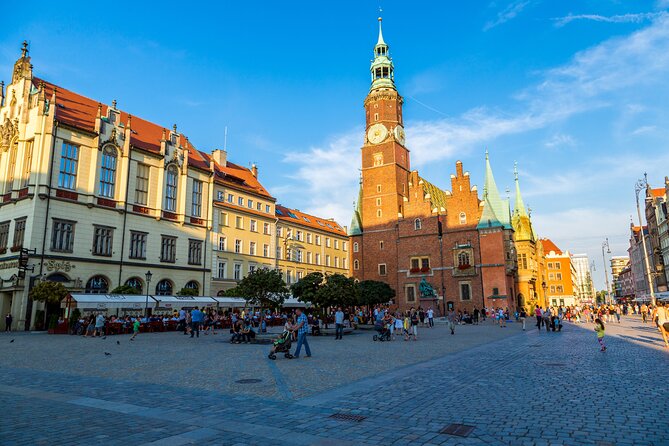
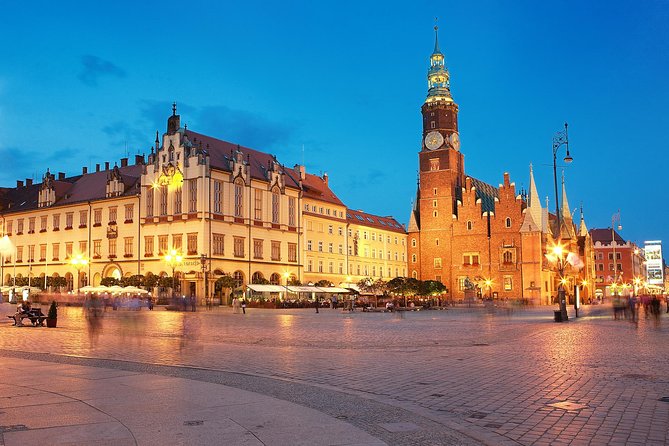
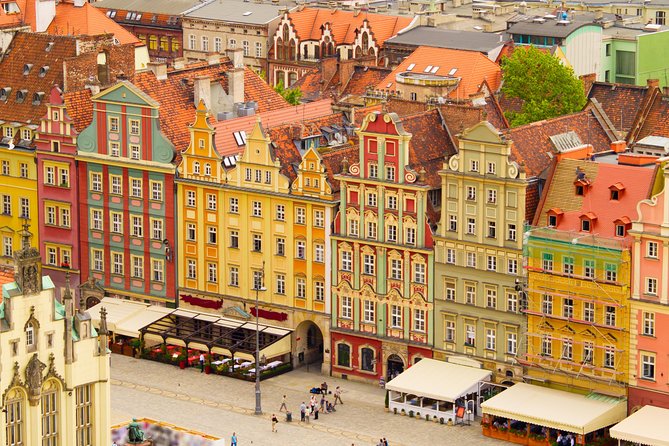
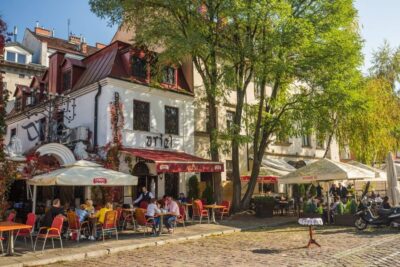
The tour begins at Rynek, the large market square laid out in the 13th century. This is the city’s natural starting point, not just because of its size, but because so much of Wroclaw’s daily life still gathers here. Restaurants and pubs line the square, and it remains a popular place to meet and go out.
You get about 20 minutes here, enough for your guide to explain the square’s role as an open-air market and point out the changing architectural faces around it. I like beginning here because you get the broad civic picture before the route narrows into lanes, churches, and smaller courtyards.
The square can be lively, so listen closely when your guide is speaking. A private group helps, since you can stop for questions without trying to keep up with a large crowd.
In the middle of Rynek is Wroclaw Town Hall, a large Gothic building that can look churchlike at first glance. It was built for city authorities, not religious services, and now houses a museum and a gallery devoted to notable citizens of Wroclaw.
The visit here is listed as a short five-minute stop, and admission is not included. That means you should think of it mainly as an exterior explanation unless you and your guide decide to spend extra time inside and buy a ticket.
A few more Wroclaw trips to weigh up
- Wrocław: Old Town and Ostrów Tumski Walking Tour in English
★ 4.8 · 311 reviews - Wroclaw: Private Old Town Guided Walking Tour (2 hours)
★ 4.8 · 275 reviews - Old Town Wrocław Walking Tour
★ 5.0 · 249 reviews
From salt sellers to fairy-tale houses
Solny Square sits close to the main market and adds a different piece of the city’s commercial past. It was created for selling salt, honey, and leather. Today, flower stalls operate there around the clock, giving the square a pleasant, everyday character.
The stop lasts about five minutes and is free. It is a small pause, but it helps you see how Wroclaw’s squares once had specific jobs rather than serving only as pretty open spaces.
Next come the John and Margaret houses, two narrow buildings with a storybook look. They were originally built for altarists who worked at St. Elizabeth’s Church. Their compact shape and placement make them easy to miss when you are walking independently, so this is the sort of detail a guide adds value to.
St. Elizabeth of Hungary Roman Catholic Parish has been damaged several times through its history. The tour allows about five minutes at the church, with free admission listed. You should expect a brief orientation rather than a long architectural study.
Beside the church is the Dietrich Bonhoeffer Memorial. Bonhoeffer was a Protestant theologian and part of the anti-Nazi opposition in Germany. This stop gives the walk a serious modern historical note after the medieval buildings and market squares.
Jatki and the University’s baroque interiors
Jatki is an old butcher street, one of those short urban fragments that makes the past feel practical rather than grand. The name and original trade tell you something about how neighborhoods functioned before modern shopping streets.
Only five minutes are assigned here, but I would pay attention to the scale and texture of the lane. It is a quick stop, yet it helps connect Wroclaw’s large public buildings with the ordinary trades that supported city life.
The route then reaches the University of Wroclaw, a former Jesuit university with baroque interiors. This is one of the stronger interior stops on the walk, with about 15 minutes planned. Admission is not included.
The university is a good place to ask your guide to explain how education and religious institutions shaped the city. Since the interior visit is short, check how much time you want to spend inside before the tour begins. If your priority is architecture, you may prefer to linger here. If you want to cover the full route, you will need to keep moving.
The statue and fountain called Szermierz, or the swordsman, follows. The stop lasts five minutes, but your guide has a particular story to tell about it. This is a useful example of why the private format works: a small monument becomes more than a photo stop when someone gives it a local tale.
Baroque churches and the Ossolineum
The Parish of the Most Holy Name of Jesus is another baroque church on the route. About 15 minutes are allotted, and admission is not included. Along with the University, this is one of the places where you may want to decide in advance how much interior detail matters to you.
The route is not limited to one architectural period. Gothic churches, medieval streets, baroque interiors, 19th-century civic life, and 20th-century political memory all appear within a compact part of Wroclaw. That range gives the walk more shape than a simple checklist of monuments.
Ossolineum occupies a former Jesuit gymnasium, or high school, and now houses the Ossolinski Institute, a major library and publishing house. The stop lasts about 15 minutes and is listed as free.
This is a quieter sight than the market square, but it helps explain the city’s role as a place of learning and books. If you like institutions with a continuing public purpose, give this stop your attention. It is also a useful change of pace after several churches and busy central streets.
Plac Nankiera follows, with about 15 minutes in an area of older baroque buildings. The square helps tie the university and religious buildings together. Rather than treating each monument as an isolated object, your guide can show you how this district fits together as an old center of education and worship.
Same country, a completely different kind of day:
- Wroclaw: E-Car Tour and Audio Guide
★ 4.6 · 1,738 reviews - Wroclaw: 2-Hour Private Guided Tour by Electric Car
★ 4.8 · 805 reviews - Wroclaw: City Tour Sightseeing By Golf Cart Shared Or Privat
★ 4.8 · 189 reviews - Auschwitz-Birkenau Tour from Wrocław
★ 5.0 · 129 reviews
A coffee pause at Hala Targowa
Market Hall, or Hala Targowa, is an old shopping place with distinctive construction. The tour allows about 20 minutes, and admission is free. It is also identified as a good place for a coffee break, which may be welcome after the first half of the walk.
I like this stop because it brings you back to everyday city life. Churches, libraries, and university buildings tell one kind of story. A market hall shows how people shop, pause, and use a building in the present.
Food and drinks are not included, so budget for your own coffee or snack. The break is optional in practical terms, but the hall gives you a natural chance to rest before the final section.
Cathedral Island, where Wroclaw began
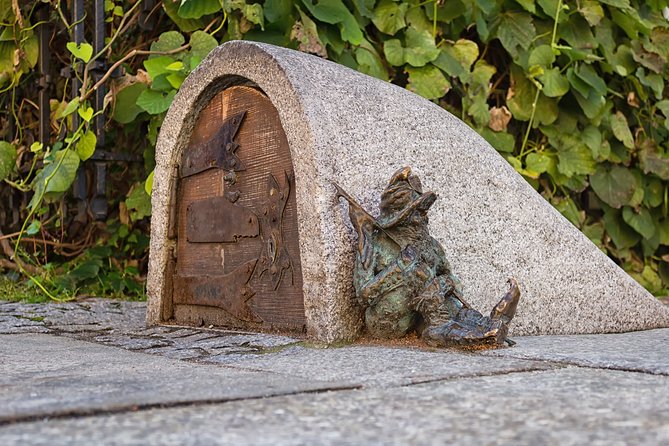
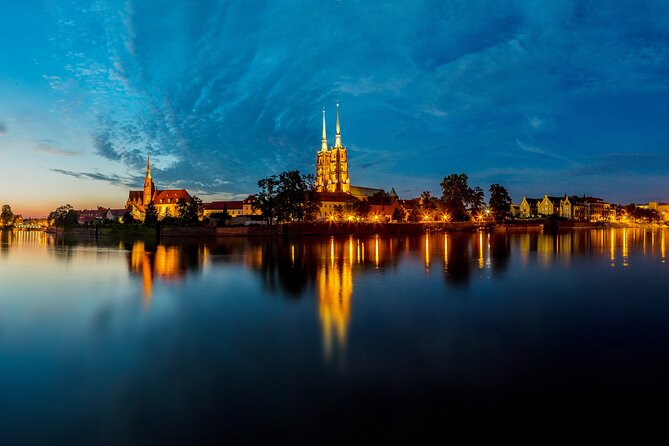
The last major stop is Ostrow Tumski, or Cathedral Island, described as the oldest part of the city and the place where Wroclaw began. Thirty minutes are planned here, making it the longest stop on the route.
This is the right place to finish. After the commercial center, university quarter, and market hall, Cathedral Island gives the walk a sense of origin and scale. The Gothic grandeur of St. John the Baptist Cathedral is a central attraction, and the tour description includes an ascent to the top of its large tower.
The supplied details do not list a separate tower admission price, so ask your guide what ticket is needed and how the ascent fits into your schedule. The climb may also affect how much time you want to spend at the other interior stops.
Cathedral Island is best approached with time to look around, not just with a camera in hand. The private setting makes it easier to ask about the area’s beginnings and to slow down if this becomes the part of Wroclaw you most want to understand.
What the guide adds to the walk
The strongest reason to book this experience is not simply the number of sights. It is the chance to connect them through explanation. Michał is praised for detailed information, engaging stories, friendliness, and a professional manner. Damian is also described as fun, informed, and able to make the city’s past enjoyable.
You should still tell the guide what you want. The tour is designed to be adjusted to your itinerary and suggestions, so mention if you care most about churches, architecture, wartime history, local legends, university life, or photography.
A private tour is especially useful if people in your group have different interests. One person can ask about the Bonhoeffer memorial, another can focus on baroque interiors, and everyone can pause for questions without holding up strangers.
The comments about the tour also point to an important strength: guides answer questions extensively. If you prefer a quick overview with minimal talking, this may feel information-heavy. If you like learning the reasons behind what you see, that depth is a real advantage.
Is $197.19 a fair price?
The listed price is $197.19 per group of up to 15 people. For a large family or group of friends, that is a reasonable structure because the price does not rise with each participant up to the stated limit. Split among 10 people, it works out to about $19.72 each. For 15, it is about $13.15 per person. For two people, the cost is about $98.60 each, so the value is less compelling.
The price includes local taxes and a professional local guide. It does not include meals, drinks, or admission tickets. You should allow extra money for the Town Hall, University, churches, or Cathedral tower if you choose to enter places requiring payment.
The tour is often booked about 92 days ahead, which suggests you should not leave a preferred date until the last minute. Operating hours are listed as Monday through Sunday, 9:00 a.m. to 8:00 p.m., for the stated operating period from August 1, 2025, through July 1, 2026.
Pickup is offered, and a mobile ticket is available. The meeting area is near public transportation. Confirmation arrives at booking, and free cancellation is available up to 24 hours before the start time. Changes or cancellations inside that window are not refundable.
Who will get the most from this Wroclaw walk?
I would choose this tour for a first visit, especially if you want a solid orientation before exploring Wroclaw on your own. The route covers the places most likely to anchor your map, while the smaller stops give you details you might otherwise walk past.
It also suits anyone who prefers conversation over a fixed audio guide. You can ask why a building matters, request more information about a memorial, or ask the guide to adjust the emphasis.
History and architecture fans should find plenty to hold their attention, from Gothic Cathedral Island to baroque churches and the old Jesuit university. People who like local stories will appreciate Jatki, the swordsman fountain, the flower stalls at Solny Square, and the fairy-tale houses.
The route may be less suitable if you want a slow museum day. Fourteen stops in three hours is a lot, and several interior visits have only 15 minutes. Food is not part of the experience, though Hala Targowa provides a convenient coffee pause.
Should you book the Private Walking Tour of Wroclaw?
Book it if you want a private introduction that joins Wroclaw’s main square, historic university quarter, old market traditions, and Cathedral Island in one outing. The best value comes with a larger group, and the strongest advantage is the guide’s ability to explain details and adjust the route.
Before booking, decide how much time you want indoors and ask about admission costs, especially for the cathedral tower and University. If you want to see as much of central Wroclaw as possible while learning the stories behind small monuments, this is a smart choice. If you prefer a slow pace and long visits inside every church, plan a follow-up day for the places that catch your attention.
FAQ
How long is the Private Walking Tour of Wroclaw?
The tour lasts approximately three hours.
How much does the tour cost?
The price is $197.19 per group, with up to 15 people allowed in the group.
Is this a private tour?
Yes. Only your group participates, and the guide can customize the route to your itinerary and suggestions.
Who are the guides?
The available information specifically names Michał and Damian as guides associated with the experience.
What places does the tour visit?
The route includes Rynek, Wroclaw Town Hall, Solny Square, the John and Margaret houses, St. Elizabeth’s Church, the Dietrich Bonhoeffer Memorial, Jatki, the University of Wroclaw, the Szermierz fountain, the Parish of the Most Holy Name of Jesus, Ossolineum, Plac Nankiera, Hala Targowa, and Ostrow Tumski.
Are admission tickets included?
No. Admission tickets are not included. Food and drinks are also excluded, while local taxes and a professional local guide are included.
Is pickup available?
Yes. Pickup is offered, and the tour is near public transportation.
Can I cancel for a full refund?
Yes, if you cancel at least 24 hours before the experience start time. Cancellations or changes made less than 24 hours before the start time are not accepted for a refund.
Just added around Wroclaw
- Wrocław: World War II and the non-existent city of Breslau★ 3.6 · 3 reviews
- Wrocław to Rock City in Adrspach and Project Riese day trip★ 5.0 · 5 reviews
- Wroclaw: WW2 Tour to Project Riese & Gross-Rosen Museum★ 4.8 · 26 reviews
- Wroclaw: University Baroque Tour★ 5.0 · 19 reviews
- Wroclaw : Walking Custom Tour with a Local Guide★ 4.8 · 3 reviews
- Wrocław: Tour of the Old Town in an Imperial E-car★ 4.3 · 13 reviews
- Wroclaw to Rock City in Adrspach and Ksiaz Castle day trip★ 4.9 · 16 reviews
- Wroclaw: 3-Hour Bike Tour in English or Polish★ 4.8 · 66 reviews
Walking Tours, compared.
Gdańsk City Sights & History Guided Walking Tour in English
Read our review →
Browse the lists this tour appears in