
Reviewed · OLD TOWN WALKING TOURS
Wroclaw Private Old Town Guided Walking Tour
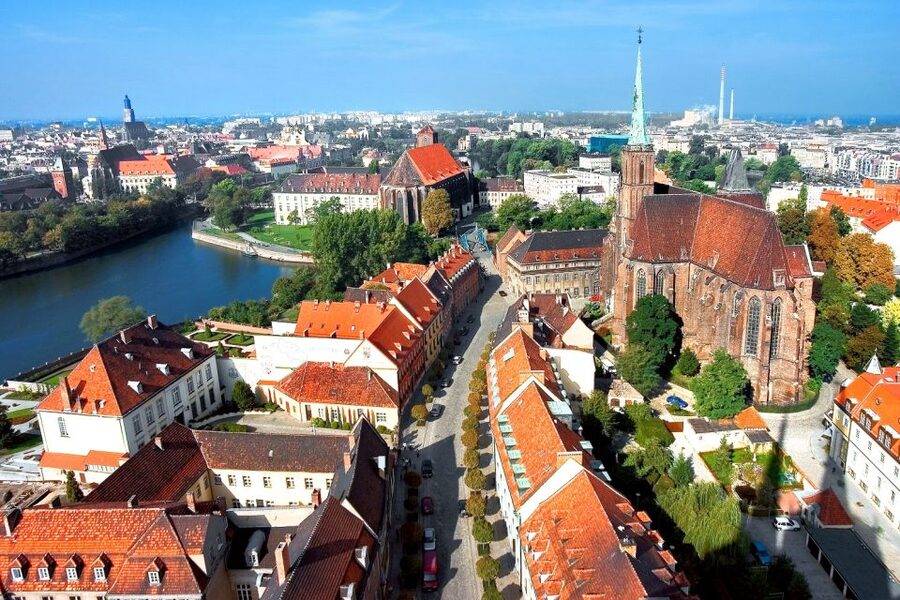
Wroclaw’s best introduction may be a walk from cathedral island to the Old Town, with the Oder River, grand bridges, baroque interiors, colourful townhouses, and tiny bronze dwarves all packed into three hours. I like the private format, which lets you ask questions and adjust the pace, and the dwarf hunt, a playful way to notice details you could easily miss. The main drawback is that entrance fees are not included, so seeing interiors such as Aula Leopoldinum may cost extra.
The route also gives you a useful first look at Wroclaw’s complicated past. The city has belonged to Poland, Bohemia, the Austrian Empire, Prussia, and Germany before becoming part of Poland again in 1945. Guides such as Mr. Cencora have been praised for adapting the walk to questions and for mixing history with local stories and legends.
Key points at a glance
- Start at St. John the Baptist Cathedral: Meet your guide at the main entrance on Ostrow Tumski, Wroclaw’s oldest area.
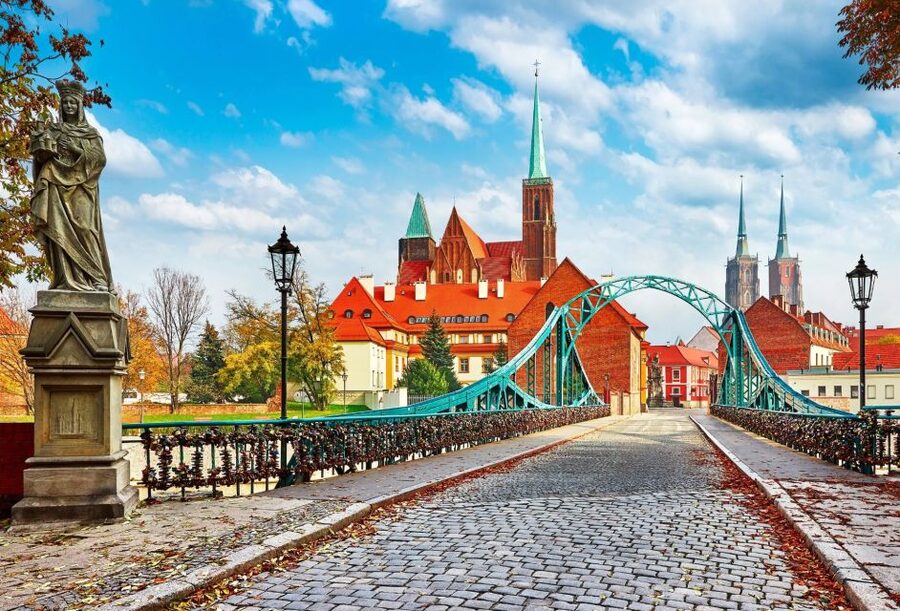
- Cross the Oder by historic bridges: The river crossings help explain why Wroclaw is often compared with Venice, Amsterdam, St. Petersburg, and Hamburg.
- See Aula Leopoldinum: Learn about the University of Wroclaw’s ornate baroque hall, designed by Italian architect Christophorus Tausch.
- Walk into Market Square: Take in one of Europe’s largest market squares, its late Gothic town hall, cafes, restaurants, and colourful townhouses.
- Visit Salt Square: Plac Solny adds a smaller, more intimate stop, with its well-known flower market.
- Hunt for bronze dwarves: Look around doorways, corners, and alleyways for Wroclaw’s most distinctive small-scale attraction.
Starting on Ostrow Tumski, Wroclaw’s oldest quarter
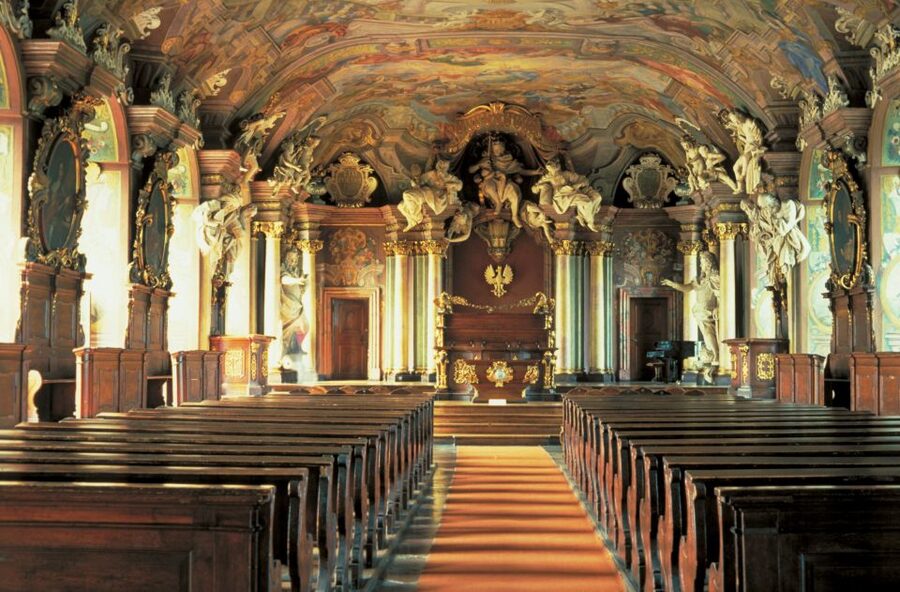
Your meeting point is easy to identify: the main entrance of the Cathedral of St. John the Baptist on Ostrow Tumski. Your guide waits with your name, so arrive on time and keep your meeting details handy.
Ostrow Tumski means Cathedral Island, though it is now connected to the rest of the city. This is the right place to begin because it gives the tour a sense of age before the route moves into the livelier Old Town. The area is known for its religious buildings, bridges, and calm streets near the Oder.
The cathedral itself dates from the 13th century and is marked by tall twin towers that rise sharply above the island. You can expect the guide to explain its place in Wroclaw’s story before leading you onward. The tour information does not promise a paid interior visit, and entrance fees are not included, so ask your guide what can be seen inside and what requires a ticket.
I like this opening because it avoids starting with the obvious Market Square. You first get a sense of the city’s oldest quarter, then watch Wroclaw open up as you leave the island. The one practical point to remember is that this is a walking tour from the start, with no transport between stops.
More Old Town Walking Tours in Wroclaw
- Wrocław: Old Town and Ostrów Tumski Walking Tour in English
★ 4.8 · 311 reviews - Wroclaw: Private Old Town Guided Walking Tour (2 hours)
★ 4.8 · 275 reviews - Old Town Wrocław Walking Tour
★ 5.0 · 249 reviews
Crossing the Oder by Wroclaw’s many bridges
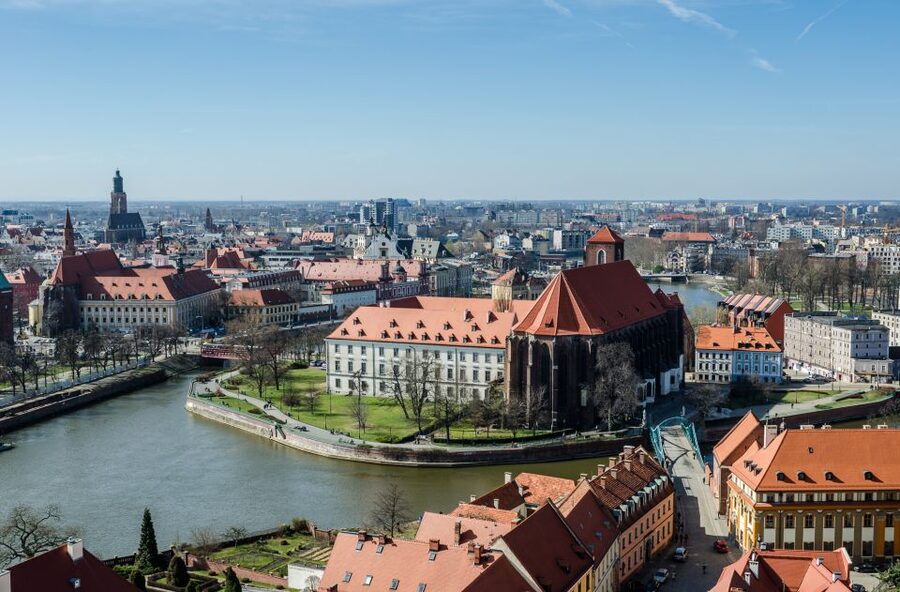
After Ostrow Tumski, you cross a bridge over the Oder River and enter the Old Town. Wroclaw has more than 100 road bridges and footbridges, a remarkable number for a city of its size. Only a few cities, including Venice, Amsterdam, St. Petersburg, and Hamburg, are said to have more.
The bridges are not just a passing detail. They explain the shape of Wroclaw, where water divides and connects different parts of the centre. From the crossing, you can look back toward the cathedral area and ahead to the urban streets, making this one of the clearest transitions on the route.
Your guide can also place the city’s political history in context. Wroclaw has carried Polish, Czech, Austrian, Prussian, German, and Polish identities over the centuries. Those changes are not presented as a single neat story, and that is part of the value of having a guide. You get help reading the city as a place shaped by shifting borders.
The comparison with Venice should not set up the wrong expectation. Wroclaw is not a canal city, and this tour does not include a boat ride. The comparison is about the number of bridges and the way the river affects the centre. Still, bridge crossings give the walk variety and provide some of the best changes of view along the route.
Aula Leopoldinum and the University of Wroclaw
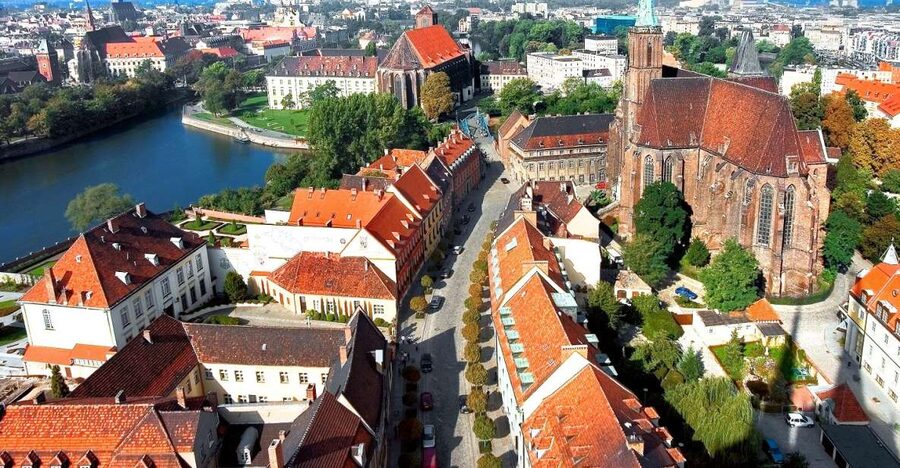
The next major stop is Wroclaw University, particularly Aula Leopoldinum. This is the university’s most representative hall, designed by the Italian architect Christophorus Tausch. Its baroque decoration gives the walk a strong visual change after the cathedral and river.
Aula Leopoldinum is important because it shows how outside influences shaped Wroclaw’s buildings. The hall reflects the grand style associated with the Austrian and wider Central European world, while the university itself remains part of the city’s Polish present.
Entrance fees are not included, so the practical question is whether the tour includes an exterior explanation only or whether you want to pay separately to enter. The supplied details identify Aula Leopoldinum as a key sight but do not promise admission. Budget accordingly if seeing the hall’s interior is a priority.
I like this stop because it adds more than another pretty facade. The university helps you understand Wroclaw as a place of learning and changing cultural influence. It also gives you a chance to ask focused questions in a private setting, rather than waiting for a guide to move on with a large group.
Cobblestones leading to the Market Square
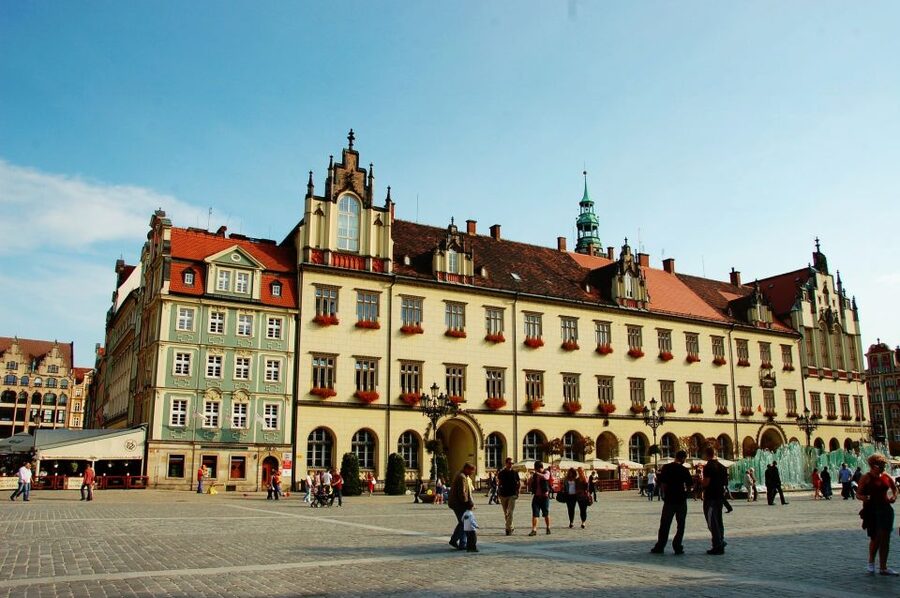
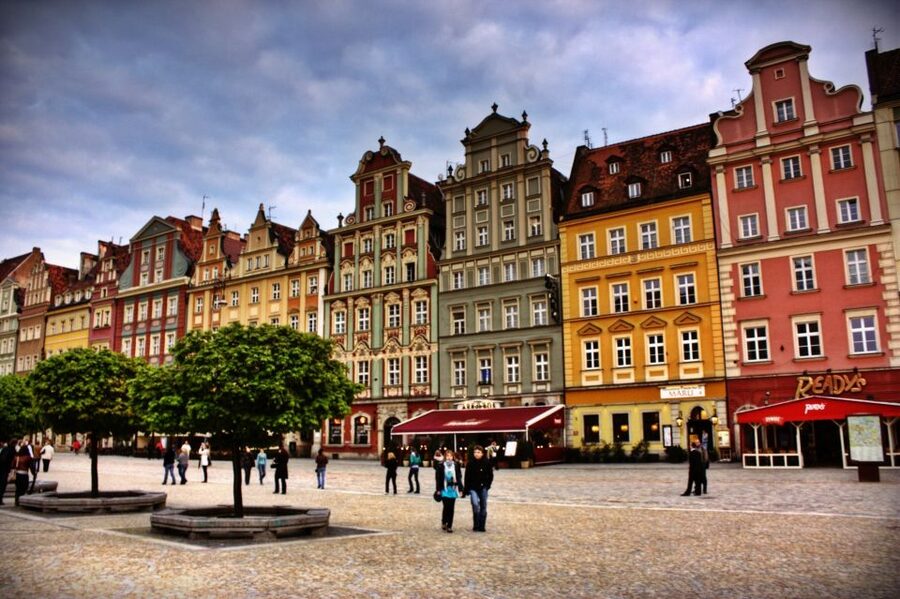
From the university, the route continues down medieval cobblestone streets toward the Market Square. This is where Wroclaw becomes more social and theatrical. The square is one of the largest in Europe and serves as the city’s municipal and cultural centre.
The square is surrounded by old tenement houses in bright colours and varied styles. Their facades create the familiar Wroclaw picture, but the guide adds the useful layer: these buildings are not just a backdrop for photographs. They frame a public space used for concerts, happenings, performance art, cafe tables, and restaurants.
You will have time to look up as you walk. The narrow street level can draw your eyes toward shop windows and terraces, but the upper floors show much of the square’s character. A private guide can point out details and explain how the buildings fit into the city’s changing story.
This is also the busiest part of the route, at least in terms of activity. The tour does not include a meal or a dedicated cafe stop, but the square is lined with places to eat and drink. Treat the three-hour walk as an orientation. You can return later for a longer meal once you know which streets and corners interest you.
Same country, a completely different kind of day:
- Wroclaw: E-Car Tour and Audio Guide
★ 4.6 · 1,738 reviews - Wroclaw: 2-Hour Private Guided Tour by Electric Car
★ 4.8 · 805 reviews - Wroclaw: City Tour Sightseeing By Golf Cart Shared Or Privat
★ 4.8 · 189 reviews - Auschwitz-Birkenau Tour from Wrocław
★ 5.0 · 129 reviews
The late Gothic Town Hall and its 1368 bell
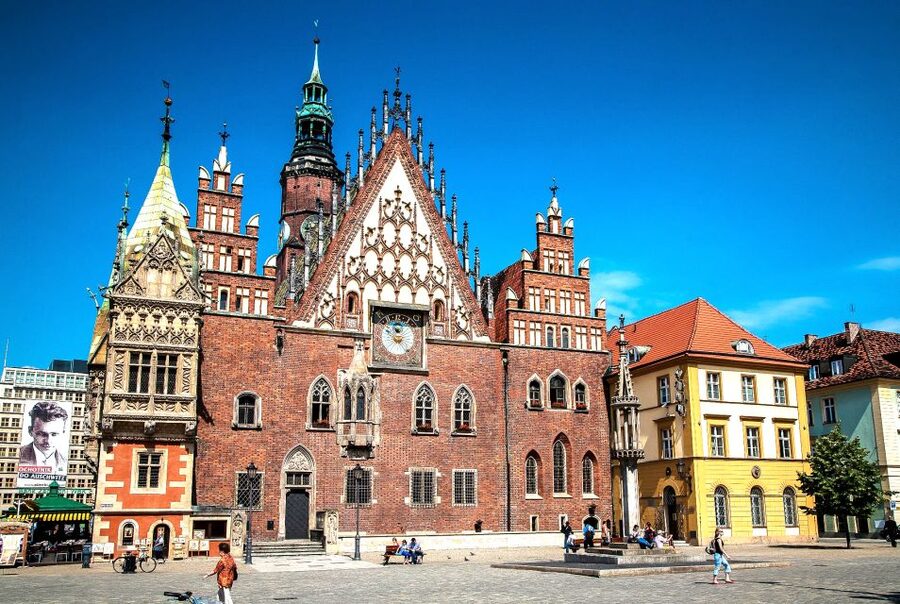
The huge late Gothic Town Hall is the main architectural focus of the Market Square. Its tower and elaborate exterior give the square a strong centre, and the guide can explain how the building served Wroclaw’s civic life.
One detail worth remembering is the town hall clock tower bell, installed in 1368. That date helps make the building’s age feel concrete. Instead of hearing only that the town hall is old, you can attach its story to a specific surviving feature.
The cellars are home to Piwnica Świdnicka, described as one of Europe’s oldest restaurants, dating to 1273. The restaurant is a useful reminder that the Market Square has long been a place for public life, food, trade, and conversation.
Do not assume the restaurant or town hall interiors are included. The tour includes a guide, while entrance fees are excluded. If you want to eat at Piwnica Świdnicka or visit a paid interior, plan that as a separate part of your day.
Salt Square and the flower market
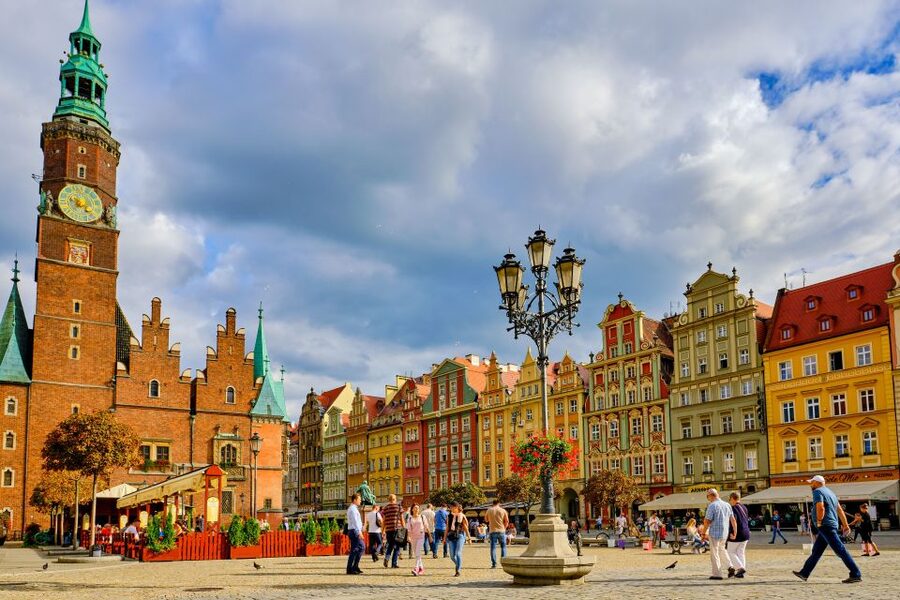
The walk continues to neighbouring Plac Solny, or Salt Square. Its name recalls the historic trade in salt, while its present identity is tied to the flower market.
Salt Square is smaller than the main Market Square, so it offers a different feel. After the grand scale of the town hall and surrounding tenements, this stop gives you a compact public space with a simple visual focus. It is also an easy place to pause and take photographs.
The flower market adds colour without requiring a long detour. I find stops like this useful on a walking tour because they connect the city’s older commercial role with everyday life now. You are not simply moving from monument to monument. You are seeing how the centre still functions as a public place.
The Wroclaw dwarf hunt
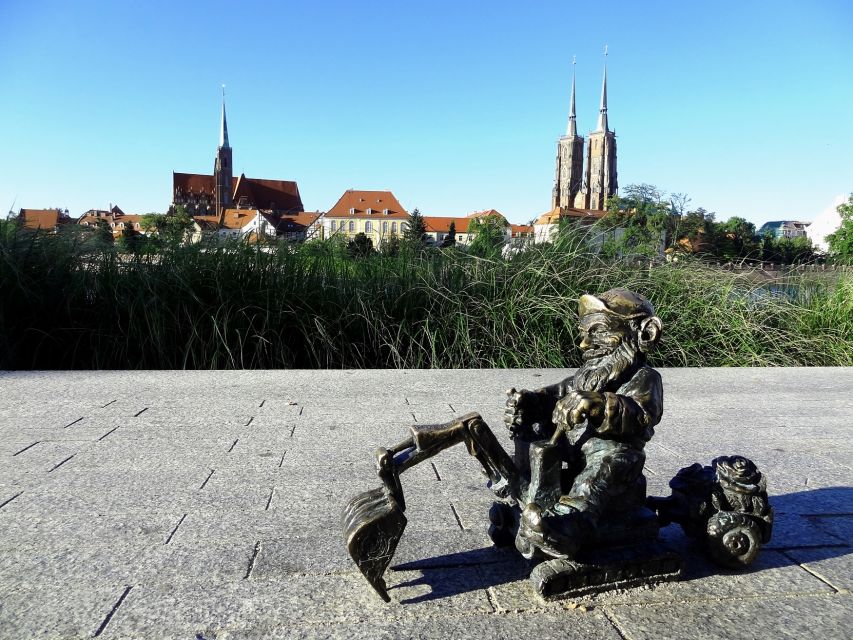
The most entertaining part of the tour is the search for Wroclaw’s dwarves. Small bronze gnomes appear around the city centre, tucked beside doorways, in alleyways, and near street corners. They are easy to walk past unless you know to look down.
Your guide turns the hunt into an active part of the walk. You can search for figures as you move between major sights, then stop for a selfie when you find one. This works especially well for families, but adults who enjoy small details and city traditions will have fun with it too.
The dwarves also make a useful point about sightseeing. Wroclaw is not only about large churches, formal squares, and historic facades. Its character also appears in small, modern touches scattered through the centre. You will not see every dwarf in three hours, and you should not expect a complete citywide hunt. The point is to learn how to spot them and continue looking after the tour.
A private three-hour format with room for questions
At $15 per person, this is a strong value if the advertised rate applies to your booking. You receive a private guide for three hours and cover several of Wroclaw’s central sights without paying for transport. The price is especially attractive for a small private group, since the cost is tied to a focused walking experience rather than a large coach or a fixed public group.
The low price needs one qualification: entrances are not included. That matters most at places such as Aula Leopoldinum, where you may want to see the interior. The tour still works well as a guided city orientation, but your final cost depends on which paid sites you add.
Private touring changes the experience in practical ways. You can ask about a particular period, request more explanation at a favourite stop, and get advice on what to see after the walk. Feedback for this experience repeatedly points to guides answering questions, adapting the route to the group, and mixing historical information with legends.
The three-hour length is long enough to cover the central route but short enough to fit into a day of sightseeing. Wear shoes suitable for cobblestones, arrive ready to walk, and avoid planning a tight appointment immediately afterward. The start time varies, so check availability when booking.
Languages, weather, and the guide’s approach
The tour can be conducted in French, Italian, Portuguese, Spanish, English, German, Polish, or Russian. That wide language choice is useful in Wroclaw, where the city’s history includes several national traditions and where small historical details can be easier to follow in your strongest language.
The guide’s style matters here. The most praised qualities include professional handling of poor weather, clear answers to questions, a good attitude, and stories that mix history with local legends. One German-language booking specifically names Mr. Cencora as an excellent city guide. If you are able to request a language or ask whether a particular guide is available, do so.
Weather can affect the walk because the experience is outdoors and lasts three hours. Rain does not remove the sights, but it can make cobblestones less pleasant and reduce the time you want to spend pausing in squares. A coat and comfortable shoes are sensible choices. The tour provider permits cancellation up to 24 hours before the start for a full refund, and you can reserve while paying later, which gives you some flexibility if the forecast looks poor.
Who will get the most from this walk?
I would choose this tour for a first visit to Wroclaw, especially if you want the main sights explained in a logical order. It suits couples, families, and small groups who prefer conversation over a fixed script.
It is also a good fit if you enjoy architecture but want some lighter moments. The cathedral, university hall, bridges, and town hall provide serious history, while the dwarves keep the pace relaxed and give you a reason to notice the street-level details.
You may want something else if your priority is extended time inside museums or historic buildings. This is a walking introduction, not an entrance-heavy sightseeing package. Since admissions are separate, you should use the tour to decide which interiors deserve a return visit.
Should you book the Wroclaw private walking tour?
Book it if you want a compact, private introduction to Wroclaw that combines the cathedral island, Oder bridges, university, Market Square, Salt Square, and dwarf hunt. The $15 per-person price offers good value for three hours of personal guiding, particularly when you plan to ask questions or want advice for the rest of your stay.
Skip it if you dislike walking on cobblestones, need every interior entrance included, or want a specialist tour devoted to one period of history. For most first-time visitors, though, this route gives you the city’s essentials and leaves you with a useful map in your head, plus a new habit of checking every doorway for a bronze dwarf.
FAQ
Where does the tour meet?
Meet your guide at the main entrance of the Cathedral of St. John the Baptist on Ostrow Tumski. The guide waits with your name.
How long does the tour last?
The walking tour lasts three hours.
Is the tour private?
Yes. The activity is offered for a private group.
What is the price?
The listed price is $15 per person.
Are entrance fees included?
No. The tour includes the guide, but entrance fees are not included.
Can I visit Aula Leopoldinum?
Aula Leopoldinum is part of the route at Wroclaw University. Any entrance fee is separate, and the tour information does not state that admission is included.
Which languages are available?
The tour is available in French, Italian, Portuguese, Spanish, English, German, Polish, and Russian.
Does the tour include the Market Square?
Yes. The route visits Wroclaw’s Market Square, including the late Gothic Town Hall and surrounding tenement houses.
Does the tour include the Wroclaw dwarves?
Yes. Searching for the city’s dwarves is part of the experience, including the chance to take a selfie with one.
Can I cancel the booking?
You can cancel up to 24 hours in advance for a full refund. You can also reserve now and pay later.
More Walking Tours in Wroclaw
- Wroclaw Old Town Guided Walking Tour
★ 5.0 · 100 reviews - Group city tour (walking tour) through Wroclaw in German
★ 4.9 · 89 reviews - Wroclaw: Guided City Walk
★ 4.9 · 87 reviews - Wrocław: Long City Walk and River Cruise
★ 4.8 · 68 reviews
Just added around Wroclaw
- Wrocław: World War II and the non-existent city of Breslau★ 3.6 · 3 reviews
- Wrocław to Rock City in Adrspach and Project Riese day trip★ 5.0 · 5 reviews
- Wroclaw: WW2 Tour to Project Riese & Gross-Rosen Museum★ 4.8 · 26 reviews
- Wroclaw: University Baroque Tour★ 5.0 · 19 reviews
- Wroclaw : Walking Custom Tour with a Local Guide★ 4.8 · 3 reviews
- Wrocław: Tour of the Old Town in an Imperial E-car★ 4.3 · 13 reviews
- Wroclaw to Rock City in Adrspach and Ksiaz Castle day trip★ 4.9 · 16 reviews
- Wroclaw: 3-Hour Bike Tour in English or Polish★ 4.8 · 66 reviews
Old Town Walking Tours, compared.
Bike Tour of Old Town, Jewish Quarter and the Ghetto
Read our review →
Sightseeing EcoCruise around the Old Town of Gdansk
Read our review →
Browse the lists this tour appears in