
Reviewed · MUSEUMS
Gdansk: Museum of World War II – True Story of a Living Hell
Gdansk’s Museum of World War II tells the story on a huge scale, yet keeps returning to small human details: a shop, a family room, a ration book, a child’s experience. The visit moves from the political causes of war to the suffering of ordinary people, with original objects ranging from an Enigma machine and a Sherman tank to Stalin’s pipe.
I like the way the museum connects Danzig’s unsettled status after the Treaty of Versailles with the outbreak of war, and I like having a private guide who can adjust the commentary to your interests. The main drawback is pace: three hours may still not cover everything, and some visitors find the many films, repeated themes, and dense displays tiring without breaks.
Key points to know before you book

- A 20-room main exhibition follows World War II through politics, combat, occupation, resistance, and civilian life.
- Danzig provides the starting point, with its unusual post-World War I status between Poland and Germany.
- A private English-speaking guide offers commentary on World War II in Poland and can tailor the visit to your group.
- Plan for at least three hours, especially if you want time for films, photographs, reconstructed rooms, and written panels.
- An audio guide can help, even on a guided visit, since it adds detail and is available in several languages.
- The museum is accessible from street level by lifts, but the main exhibition is reached below ground.
Why this museum matters in Gdansk
Gdansk is not just a convenient setting for a World War II museum. The city, known as Danzig under German rule, was caught in a difficult political position after World War I. The Treaty of Versailles left it outside both a newly restored Poland and the Germany that had controlled the region for more than a century.
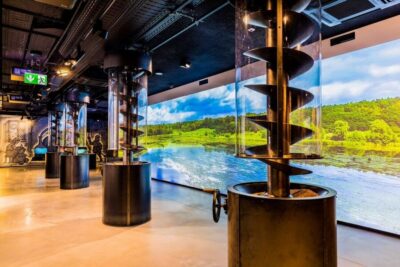
That background helps explain why the museum begins before the invasion of Poland. You first see the rise of totalitarian systems across Europe, presented on a semi-circular screen. The opening does useful work: it shows that the war did not appear from nowhere, but grew from political pressure, nationalism, dictatorship, and unresolved borders.
I value this broad opening because it gives you more than a sequence of battles. You see how large decisions reached homes, streets, schools, workplaces, and families. The museum keeps moving between the international story and the local one, so Gdansk remains central even as the display expands across Poland, Europe, and the wider world.
A few more Gdansk trips to weigh up
- Gdansk: Private Communism Tour with Solidarity Center Museum
★ 5.0 · 28 reviews - Gdansk Private WWII Tour with Museum of the Second World War
★ 4.9 · 22 reviews - From Gdansk: Stutthof Concentration Camp Museum Day Tour
★ 4.9 · 4 reviews
Meeting at the museum and starting underground
The tour begins in front of the Museum of the Second World War at plac Władysława Bartoszewskiego 1. You meet your guide there, and the activity ends at the same point.
The meeting arrangement is simple, but give yourself enough time to reach the building. The museum is near public transportation, and the entrance is at street level. From there, you use lifts to reach the lower exhibition levels, which matters if anyone in your group has difficulty with stairs.
The private format is one of the strongest reasons to book this particular experience. Only your group takes part, so you can ask about Poland, Danzig, military history, occupation, or civilian survival without trying to follow a guide speaking to a large crowd. The guide is licensed, speaks English, and provides expert commentary on World War II in Poland.
No guide’s name is supplied in the booking details, so you should not expect to request a particular person. What is clear is that the tour is designed around your group rather than a fixed public lecture.
The opening rooms explain how war became possible
The first major section sets out the political climate before 1939. The semi-circular screen showing the growth of totalitarian regimes gives the opening a strong visual impact, but the important point is the context it provides.
You learn about the forces that shaped Europe before the fighting spread. In Gdansk, the local story is tied to the city’s uncertain position and the wider settlement made after World War I. This makes the museum particularly useful for anyone who knows the war mainly through famous battles but wants to understand why Poland became such a crucial flashpoint.
The presentation is designed to be readable, with carefully arranged objects, photographs, film, and text. You are not asked to rely on one medium. Written panels explain the argument, films add voices and atmosphere, and objects give the story physical weight.
The museum uses a serious tone from the beginning. It does not treat the war as a collection of heroic set pieces. You see political power, military force, persecution, occupation, and the effect of policy on people who had little control over events.
Twenty rooms and one long corridor
The main exhibition occupies 20 rooms arranged on both sides of a long central corridor. That layout gives the visit a clear physical rhythm. You move through the rooms for the major themes, while the corridor carries you through everyday life during the war.
The corridor is one of the most effective parts of the design. Military equipment can explain how a war was fought, but ordinary objects show how it was lived. Recreated streets and shops help you picture a society under pressure. The visual scenes are not simply decoration. They give scale to facts that can otherwise feel remote.
You may see an Enigma machine, a Sherman tank, and Stalin’s pipe during the visit. These objects sit at very different points on the scale of war. The tank points to industrial combat. The Enigma machine suggests intelligence and secrecy. The pipe connects the story to a powerful political figure. Together, such objects keep the exhibition from becoming only a wall of dates and text.
I also like the way individual lives appear beside major events. A government decision may be followed by evidence of what it meant for a family or a neighborhood. That change of scale helps you understand why the war cannot be explained by military movements alone.
Same country, a completely different kind of day:
- Gdansk: City Cruise on Historical Polish Boat
★ 4.8 · 2,913 reviews - Gdańsk: Sunset Cruise on a Historic Polish Boat
★ 4.9 · 977 reviews - Gdańsk City Sights & History Guided Walking Tour in English
★ 4.8 · 876 reviews - Gdansk: Firearm Shooting Experience with Instructor
★ 4.8 · 866 reviews
Films, photographs, and reconstructed daily life

You should expect a great deal of visual material. Films and documentary clips run throughout the exhibition, and photographs add direct evidence of the period. Some clips repeat or play in loops, so you may encounter the same material more than once depending on your route and pace.
That visual approach makes the museum easy to follow, especially if you learn better from images than long blocks of text. It also gives the visit emotional force. The museum does not avoid the worst parts of the conflict, and some displays are difficult to see.
The reconstructed streets and shops are especially useful for younger visitors or anyone less familiar with daily life during wartime. They show how the conflict entered public and private spaces. You get a stronger sense of shortages, control, fear, and disruption than you would from weapons alone.
Still, the amount of information can be demanding. Some themes are repeated, and the display can feel too long if you try to read every panel and watch every film. I would treat the guide as a filter rather than trying to absorb every word. Ask for the most important rooms and return to details only if you still have energy.
Why an audio guide may still be worth using
A private guide gives you explanation and the chance to ask questions, but an audio headset can add another layer. The museum’s audio guide is described as easy to use and able to detect the places you visit. It is also available in several languages, including Italian.
You may find an audio guide useful if your group has different interests. One person can listen to extra background while another studies the objects. It also helps with material that the guide cannot cover during a three-hour route.
The practical value is clear: you can still read displays and inspect artifacts while listening. If English is not your strongest language, a headset may make the visit less tiring. It is worth asking at the museum whether the audio option is available alongside your private tour and whether it suits your group’s pace.
Do not assume that a guided visit means you need no preparation. The exhibition is large enough that a little planning helps. Tell your guide if you are most interested in Polish civilians, military technology, the Holocaust, the Soviet period, Gdansk, or the political causes of the war. The private setup should make that kind of adjustment possible.
Is three hours enough?

The advertised duration is about three hours, with roughly 10 minutes for meeting the guide and about 2 hours 50 minutes inside the museum. That is a sensible minimum for a first visit, not a promise that you will see every detail.
Several sections are dense, and the combination of films, objects, photographs, and written explanations takes time. If you stop often, three hours can pass quickly. Some people may finish the main route wanting to return for the final sections, while others may need pauses before then.
I would not schedule a demanding activity immediately afterward. The subject is heavy, and the museum asks for attention. Build in time for a pause, particularly if your group includes children, older adults, or anyone with a personal connection to wartime history.
There is a cloakroom and a café, which makes a longer visit easier. These are small but useful details. You do not need to carry everything through the exhibition, and a break can help you deal with the museum’s length and subject matter.
What the $217.08 price means
At $217.08 per person, this is not a cheap museum visit. The price includes admission, a private tour, a licensed English-speaking guide, commentary on World War II in Poland, and a visit tailored to your group. It does not include hotel pickup or drop-off.
The value depends heavily on your group size and your interest in guided history. For a larger private group, the cost may make more sense because you are sharing the private guide fee and avoiding a standard group tour. For one or two people, the price is harder to justify if you are comfortable reading displays and using an audio guide alone.
Transportation can be arranged for an additional 20 euros, but the tour already begins at the museum. Since the site is near public transportation, many visitors may prefer to make their own way there and keep the extra cost out of the budget.
The included admission is important. You are paying for more than entry, but you should compare the package with a self-guided visit, especially if you are visiting on a free-admission day. One supplied tip identifies Tuesdays as free, though you should confirm the current schedule before relying on that. A private guide remains the main added benefit, not the ticket itself.
Who will get the most from this visit
This tour suits you if you want a guided explanation of Poland’s wartime experience rather than a quick museum stop. It is also a good choice if you want to connect Gdansk’s prewar political position with the larger events of 1939 and beyond.
History enthusiasts could easily spend longer than three hours. The museum covers politics, military events, occupation, civilian life, photographs, film, and personal stories. You will have plenty to study, but the quantity can also feel overwhelming.
Families may appreciate the visual displays and reconstructed daily-life scenes, though the subject matter is serious and sometimes graphic. I would explain that clearly before booking for young children.
A private tour is most useful for people who want to ask questions or need help choosing what to focus on. If you prefer to move silently and slowly, stopping at every panel, a self-guided visit with the audio guide may give you more control.
Practical points that make the visit easier
Book with the free-cancellation rule in mind: you can cancel up to 24 hours before the start time for a full refund. Changes or cancellations within 24 hours are not accepted for a refund, and the cut-off uses local time.
The confirmation is sent at booking. The tour is offered in English, and only your group participates. Most people can take part, and lifts connect the street-level entrance with the lower exhibition areas.
Wear something comfortable and leave room in your schedule. The museum is large, and you may spend much of the time standing and walking between displays. Use the cloakroom if needed, and plan for the café as a place to pause rather than trying to force the entire exhibition into one uninterrupted stretch.
Ask your guide at the start how the route will work. You can then decide if you want the full chronological story or more time on Poland, Gdansk, military objects, or personal accounts.
Should you book the Rosotravel private tour?
I would book it if you want a serious, guided introduction to World War II in Poland and value the freedom to ask questions. The museum is powerful, well designed, and unusually good at linking political decisions with daily life. The private format gives the experience more focus than simply walking in alone.
I would skip the package if your main aim is low-cost entry and you are happy using an audio guide. At $217.08 per person, the private service needs to matter to you, especially for a small group.
For most history-focused visitors, the best plan is to allow the full three hours, use the English guide as your main thread, and consider the audio headset for extra detail. If you want only a quick look, this is the wrong museum and probably the wrong tour. If you want to understand why Gdansk and Poland suffered so much during the war, it is a strong use of time.
FAQ
Where does the tour begin?
The tour begins in front of the Museum of the Second World War at plac Władysława Bartoszewskiego 1, 80-862 Gdańsk, Poland.
Where does the tour end?
The activity ends back at the museum meeting point.
How long does the experience last?
The experience lasts approximately three hours. About 10 minutes are set aside for meeting the guide, with roughly 2 hours and 50 minutes in the museum.
Is the museum admission included?
Yes. Tickets to the Museum of World War II are included in the tour price.
Is the tour private?
Yes. Only your group participates in this private activity.
Is the tour offered in English?
Yes. The tour includes a licensed guide who is fluent in the selected language, and English is one of the offered languages.
Can I cancel for a full refund?
Yes. You can cancel at least 24 hours before the experience start time for a full refund. Cancellations or changes made less than 24 hours in advance are not accepted for a refund.
Just added around Gdansk
- Private 2-Hour Tour with City Game in Gdańsk★ 5.0 · 15 reviews
- Malbork Castle and Westerplatte Tour with Lunch★ 5.0 · 27 reviews
- Malbork Castle regular tour★ 4.5 · 23 reviews
- Malbork Castle Tour from Gdansk★ 4.5 · 52 reviews
- Malbork Castle Regular Audioguided Tour★ 4.5 · 15 reviews
- Limo Party & Club Package in Gdansk★ 5.0 · 9 reviews
- Malbork Castle Private Tour from Gdansk★ 5.0 · 25 reviews
- Hevelius Treasure | Scavenger Hunt★ 5.0 · 76 reviews
Museums, compared.
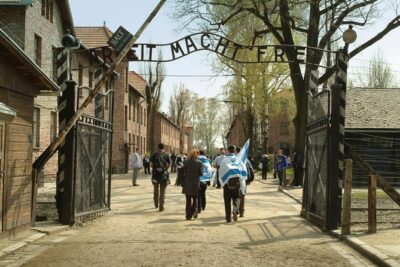
Auschwitz-Birkenau Museum and Memorial Guided Tour from Krakow
Read our review →
POLIN Museum of the History of Polish Jews Ticket
Read our review →


Krakow Schindler’s Factory Museum Guided Tour in English
Read our review →
Auschwitz Birkenau Museum Guided Tour with Pickup
Read our review →
Browse the lists this tour appears in