
Reviewed · MUSEUMS
Gdansk Private Communism Tour with Solidarity Center Museum
Gdansk’s shipyards are where Poland’s fight against communism became a force felt across Eastern Europe. This private tour connects the Solidarity movement to the places where workers struck, negotiated, and helped change the political order, ending at the excellent European Solidarity Centre.
I like the private format, which gives you room to ask questions, and I like the choice between a shorter museum visit and a longer walk through Sala BHP and the shipyard. The main caution is timing: one reported four-hour outing ended after about three hours, and a late guide made the visit feel rushed.
Key points to know before booking
- The 1980 shipyard strikes are the focus: Follow the story of Lech Wałęsa, Anna Walentynowicz, and the workers who challenged the Polish communist government.
- The four-hour option offers the fullest experience: It includes Sala BHP, the Gdansk Shipyard, a Polish vodka shot, and the European Solidarity Centre.
- The European Solidarity Centre gives the history structure: Original documents, photographs, and the 21 Postulates help turn a complex political story into a clear sequence.
- Pickup is limited to Gdansk Old Town: Your guide can meet you at accommodation within 1.5 kilometers of the meeting point.
- Weekdays matter: Gdansk Shipyard is closed on Saturdays and Sundays, so check the day carefully before booking.
- A private guide makes the difference: You have your own group, a choice of nine European languages, and more freedom to ask about difficult parts of Polish history.
Why Gdansk’s shipyards changed Europe
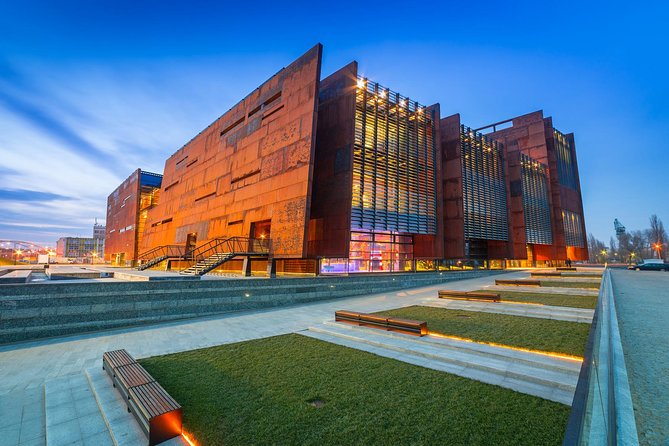
To understand modern Poland, you need to understand Gdansk’s shipyards. After World War II, Poland was governed as part of the Soviet-led Eastern Bloc. Political opposition was tightly controlled, independent unions were not allowed, and workers could pay a high price for protesting.
The shipyard became a place where economic complaints grew into a demand for civil rights. In 1980, workers at the Lenin Shipyard, now called Gdansk Shipyard, went on strike. Their demands were not limited to higher wages. They wanted the right to form an independent trade union, freedom of speech, and other basic changes.
That union became Solidarity. Led by figures including Lech Wałęsa and Anna Walentynowicz, it grew into a broad social movement. The story later reached the 1989 round table talks and Poland’s first pluralistic election since 1947.
This tour works best when you see the places first and then use the museum to arrange the story in your mind. The shipyard is not just scenery. It is the setting for a political struggle that changed daily life in Poland and helped weaken communist rule across the region.
A few more Gdansk trips to weigh up
- Gdansk: Private Communism Tour with Solidarity Center Museum
★ 5.0 · 28 reviews - Museum of the Second World War Gdansk Private Tour & Tickets
★ 5.0 · 24 reviews - Gdansk Private WWII Tour with Museum of the Second World War
★ 4.9 · 22 reviews
Meeting beneath the Monument to the Fallen Shipyard Workers
The tour begins beneath the Monument to the Fallen Shipyard Workers of 1970 at Plac Solidarności. This is a serious starting point, and rightly so.
The monument remembers shipyard workers killed during protests in 1970. The deaths became part of the memory carried into the strikes a decade later. Your guide explains why the monument matters and how the events of 1970 shaped the workers’ response in 1980.
You receive about 10 minutes here, so do not expect a long museum-style presentation. Instead, this stop gives you the basic setting and emotional weight before the walking tour continues.
If you are staying in Gdansk Old Town, pickup may be arranged from your accommodation. That service applies only within 1.5 kilometers of the meeting point. If your lodging is farther away, you need to reach the monument yourself, or the route may be adjusted.
Anna Walentynowicz and the people behind Solidarity
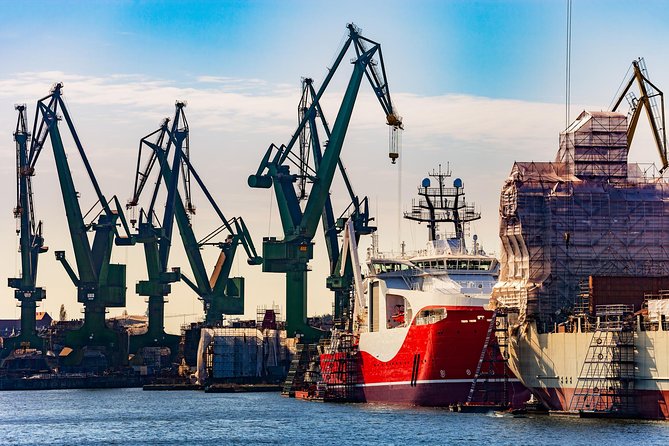
The next stop is the monument to Anna Walentynowicz, one of the key figures in the shipyard movement. Her story helps correct the common habit of reducing Solidarity to one famous man.
Lech Wałęsa became the movement’s best-known face, but the strikes depended on many workers and organizers. Walentynowicz was a shipyard worker whose dismissal helped trigger the 1980 strike. At this point, your guide places her role alongside Wałęsa’s and explains how other workers helped turn a workplace protest into a national campaign.
You spend about 20 minutes here. That is enough for an introduction, though your enjoyment depends on how much time your guide allows for questions. If you want to understand the movement as a group effort rather than a story about one leader, ask for more detail about the workers, women, and organizers who kept the strikes going.
The tours are offered in nine European languages. Choose the language in which you can comfortably discuss politics, religion, and recent history. A fluent explanation matters here because the story has many names, dates, and changes in political position.
Sala BHP and the agreement signed in 1980
The longer four-hour version includes Sala BHP, a particularly important stop. This was the site where the Gdansk Agreement was signed on August 31, 1980.
The agreement recognized demands made by the striking workers and marked a major moment in the relationship between the government and the public. Your guide also explains the Polish People’s Republic, often shortened to PRL, and how communist rule shaped work, public life, and political choice.
You have about an hour here. That makes Sala BHP one of the places where the longer option earns its extra time. The visit is not simply a quick photo stop. You get a chance to connect the demands of the strike with the building where negotiations took place.
I would choose this version if you have a real interest in twentieth-century Poland. The shorter tour may give you the main Solidarity story, but Sala BHP adds the physical setting of the agreement and helps explain why the strike became such a major political event.
The exact pace can vary. One experience was cut short, with the four-hour tour ending after roughly three hours. If this happens, politely confirm the planned route with your guide at the start. It is reasonable to ask how much time you will have at Sala BHP and the museum.
Same country, a completely different kind of day:
- Gdansk: City Cruise on Historical Polish Boat
★ 4.8 · 2,913 reviews - Gdańsk: Sunset Cruise on a Historic Polish Boat
★ 4.9 · 977 reviews - Gdańsk City Sights & History Guided Walking Tour in English
★ 4.8 · 876 reviews - Gdansk: Firearm Shooting Experience with Instructor
★ 4.8 · 866 reviews
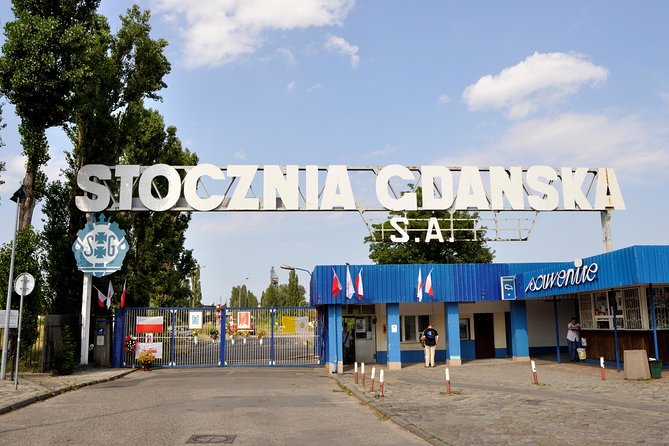
Walking through Stocznia Gdańska
The final outdoor stop is Gdansk Shipyard, or Stocznia Gdańska. In 1980, about 17,000 ship builders took part in the civil resistance against the communist regime.
This is the place where the tour’s earlier explanations come together. The size of the workforce helps you understand that the strike was not a small protest by a handful of activists. It involved thousands of people in a major industrial workplace.
The walk also gives you a sense of how the shipyard fits into present-day Gdansk. The meeting point is near the monuments and Solidarity Square, while the tour ends at Doki 1. You should be ready for a walking experience rather than a bus tour, although the information provided does not give a precise walking distance.
The four-hour option includes a shot of traditional Polish vodka. It is a small touch, but it fits the local setting and the tour’s attempt to connect political history with Polish customs. You can treat it as a brief cultural moment, not as the central reason to book.
Important scheduling detail: Gdansk Shipyard is closed on Saturdays and Sundays. Book this tour for a weekday if you want the full route with access to the shipyard.
The European Solidarity Centre puts the story in order
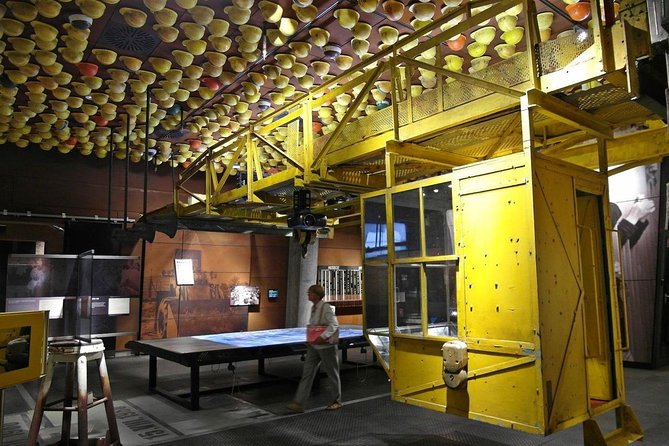
The European Solidarity Centre is the strongest part of the extended tour for many people. This modern museum explains communist-era Poland and the creation of democracy in the Eastern Bloc through documents, photographs, displays, and reconstructed settings.
You see the original Tables of the 21 Postulates. These were the written demands made by strikers at the Lenin Shipyard in 1980. They give you something concrete to study, rather than leaving the strike as a general story about freedom.
The museum follows the movement through the strikes, the 1989 round table talks, and Poland’s first pluralistic election since 1947. That sequence matters. Solidarity did not produce instant change. The movement faced pressure, negotiations, setbacks, and years of political tension.
The tour includes skip-the-line admission to the centre in the two-hour and four-hour options. The guide accompanies you and explains the exhibitions, which is useful if you prefer a clear path through a large museum.
Allow enough time to look at the displays yourself. The museum deserves attention, and a rushed visit weakens the value of the ticket. If your main interest is the museum, tell your guide early. One previous outing felt too hurried and did not use the full available time inside the centre.
Two hours or four hours?
The shorter option suits a tight Gdansk schedule. You can explore the main shipyard area and visit the European Solidarity Centre with a private guide. It gives you the main story without committing half a day.
The four-hour option is the better choice for most history-focused visitors. It adds Sala BHP, free entry to the shipyard, and the vodka tasting. You also get more time to discuss the PRL period and the workers’ demands.
The duration is listed as roughly two to four hours, so confirm the exact version you are selecting. The listed stops suggest a full route can occupy several hours, but the timing may vary with guide pace, museum time, and access conditions.
A private tour is especially helpful if your group has different levels of interest. You can ask for a broad introduction, focus on political history, or spend longer on the museum. With a large public group, you would have less control over that balance.
Is $139.10 per person good value?
At $139.10 per person, this is not a budget walking tour. The value comes from the private guide, hotel pickup within Gdansk Old Town, language choice, and the museum admission included in the relevant options.
For one or two people, the cost may feel high compared with entering the European Solidarity Centre alone. The price makes more sense for a small group that would otherwise need to arrange separate transport, museum tickets, and a guide.
Group discounts are available, which can improve the price for larger private parties. Since the tour is private, only your group participates. That gives you more freedom to ask questions and set the pace, but you should still make sure the longer route is clearly confirmed.
The experience has a 4.8 rating from 14 reviews, with 93 percent recommending it. The praise centers on the guides’ command of the subject, clear explanations, and personal connection to Gdansk and Poland’s recent past. One guide named Aneta was singled out for a warm and passionate presentation, while another guide gave first-hand accounts connected to the museum displays.
The lower rating points to the main risk: organization. A guide arriving 20 minutes late and finishing early can reduce the value of an expensive private experience. Read the day-before email, confirm the pickup address, and ask at the beginning how the schedule will run.
Who should book this Gdansk tour?
I would recommend it to you if you want more than pretty streets and medieval architecture. The Solidarity story is central to Gdansk, and this tour connects it to real buildings, monuments, workers, and documents.
It also suits first-time visitors who want a clear introduction to communist-era Poland. The guide can explain terms such as PRL, the Solidarity strikes, the 1989 talks, and the first pluralistic election without forcing you to piece the story together from separate signs.
The tour may be less suitable if you dislike walking, have only a short window in Gdansk, or want to explore the European Solidarity Centre at your own pace. The private format helps with flexibility, but it does not guarantee a long museum visit unless you make that priority clear.
Families with older children and teenagers may find the subject useful, though the information provided does not specify a minimum age. Most people can participate, and the tour is near public transportation.
Practical details before you reserve
Pickup is available only from accommodation in Gdansk Old Town within 1.5 kilometers of the meeting point. If you do not provide your address during booking, meet your guide under the Monument to the Fallen Shipyard Workers at Plac Solidarności.
The tour ends at Gdansk Shipyard, Doki 1. It does not return you to your hotel, so plan your next stop from the shipyard area.
Confirmation is provided at booking. Check your email the day before because important tour information may arrive then. The tour is offered in your selected language, with nine European languages available.
Free cancellation applies when you cancel at least 24 hours before the start time. Cancellations within 24 hours are not refunded, and changes made during that period are not accepted. The cutoff follows local Gdansk time.
Should you book it?
Book this tour if you want the human story behind Poland’s move from communist rule toward democracy. Choose the four-hour weekday option if Sala BHP, the shipyard, and a fuller museum visit matter to you.
Choose the shorter version if your schedule is tight, but protect enough time for the European Solidarity Centre. I would also confirm the start time and planned duration directly with the provider, especially after the report of a late arrival and an early finish.
For a group that values a private guide and clear historical context, $139.10 can be fair. For a solo visitor focused only on the museum, independent admission may cost less. The decisive question is simple: do you want to see where Solidarity happened and have someone explain why it mattered? If yes, this is one of Gdansk’s most worthwhile history-focused outings.
FAQ
Where does the tour begin?
It begins under the Monument to the Fallen Shipyard Workers of 1970 at Plac Solidarności in Gdansk.
Can I be picked up from my hotel?
Pickup is available from accommodation in Gdansk Old Town within 1.5 kilometers of the meeting point. You need to provide your accommodation address when booking for pickup to be arranged.
Where does the tour end?
The tour ends at Gdansk Shipyard, Stocznia Gdańska, at Doki 1.
How long does the tour last?
The experience lasts approximately two to four hours, depending on the option you book.
What is included in the four-hour option?
The four-hour option includes free entry to Sala BHP and Gdansk Shipyard, a shot of traditional Polish vodka, and skip-the-line admission to the European Solidarity Centre.
Is the European Solidarity Centre included?
Yes. Skip-the-line tickets to the European Solidarity Centre are included in the two-hour and four-hour options.
Is the tour private?
Yes. Only your group participates in the private activity.
Which languages are available?
The tour is available in nine different European languages. You select your preferred language when booking.
Can I take the tour on a weekend?
Gdansk Shipyard is closed on Saturdays and Sundays. Book a weekday if you want access to the full shipyard route.
Can I cancel for a refund?
You can cancel at least 24 hours before the start time for a full refund. Cancellations or changes made less than 24 hours before the experience are not refunded or accepted.
Just added around Gdansk
- Gdansk, Gdynia, and Sopot: 8-Hour Private Sightseeing Tour★ 4.9 · 13 reviews
- Whisky Tasting in Gdańsk★ 5.0 · 3 reviews
- Westerplatte private tour led by Expert-Guide (door to door)★ 5.0 · 5 reviews
- Gdansk EVERYDAY Vodka Tasting Tour★ 5.0 · 6 reviews
- Westerplatte – 2h private trip by luxury car|★ 5.0 · 4 reviews
- Private WW2 Tour of Westerplatte,Gdansk and Stutthof Including Lunch★ 5.0 · 12 reviews
- Torun – City of Copernicus Private Tour★ 4.5 · 5 reviews
- Undercover City Games: Gdynia★ 5.0 · 34 reviews
Museums, compared.
Auschwitz-Birkenau Museum and Memorial Guided Tour from Krakow
Read our review →
POLIN Museum of the History of Polish Jews Ticket
Read our review →


Krakow Schindler’s Factory Museum Guided Tour in English
Read our review →
Auschwitz Birkenau Museum Guided Tour with Pickup
Read our review →
Browse the lists this tour appears in