
Reviewed · OLD TOWN WALKING TOURS
Wroclaw Old Town Guided Walking Tour
Wroclaw’s story unfolds in layers, and this walk gives you a quick way to read them: Gothic city halls, Habsburg Baroque, market streets, church islands, and the scars left by World War II. You begin in the Market Square and finish at St. John the Baptist Cathedral, with the city’s oldest quarter between you and the starting point.
I like the route for two clear reasons. It covers a lot on foot without making you study a map, and the guides use maps, old photographs, stories, and humor to make the past easier to follow. I also like the stop at Market Hall, since it adds an ordinary local scene to the grand buildings.
The main drawback is the fixed ending at Cathedral Island. One person found the guide excellent but wished for more help getting back to the hotel afterward. The group can also reach 30 people, so ask questions early and stay close to the guide.
Key Points to Know Before You Book
- Start in Rynek: Meet at Rynek 30, beside Wroclaw’s large central Market Square.
- Finish at Cathedral Island: The walk ends in front of Wroclaw Cathedral, not back at the starting point.
- Expect about two to two hours 40 minutes: The route is manageable, but comfortable shoes still matter.
- The guide is the main attraction: Sean, Matthias, Igor, and other English-speaking guides have been praised for clear storytelling and local context.
- See major sights without admission fees: The City Hall, Salt Square, John and Margaret House, University, Market Hall, and Cathedral are all visited from the outside or as part of the walk.
- The group may reach 30 people: This keeps the price reasonable, but a smaller group is better for personal questions and easy listening.
Starting Beneath Wroclaw’s Late Gothic City Hall
The tour begins in Rynek, Wroclaw’s Market Square, at Rynek 30. This is the right place to start because the square gives you an immediate sense of the city’s scale and architectural mix.
Your first major sight is the Old Town’s late Gothic City Hall. Its detailed exterior is the sort of building that can blur into the background if you only walk past with a map in hand. A guide can point out what you are seeing and explain how the square functioned as the heart of civic and commercial life.
From here, the walk continues to Salt Square, a smaller space now known for its flower market. It is a pleasant contrast to the grand City Hall. The flowers bring a present-day touch to a place shaped by older trade, politics, and urban life.
This opening section lasts about 45 minutes and gives you the basic framework for the rest of the walk. Wroclaw has changed hands and political identities many times, so that early explanation matters. You are not simply looking at attractive façades. You are learning why the city looks the way it does.
More Old Town Walking Tours in Wroclaw
- Wrocław: Old Town and Ostrów Tumski Walking Tour in English
★ 4.8 · 311 reviews - Wroclaw: Private Old Town Guided Walking Tour (2 hours)
★ 4.8 · 275 reviews - Old Town Wrocław Walking Tour
★ 5.0 · 249 reviews
Finding Hansel and Gretel Beside St. Elizabeth’s
The next stop is the pair of narrow tenements known locally as Jaś i Małgosia, or Hansel and Gretel. Their names may be easier for English speakers to remember, but the buildings are more than a cute photo stop.
The houses were built in different centuries, one in the 16th century and the other in the 18th. Their connecting archway is often seen as two figures holding hands. The pair once formed part of a larger line of townhouses around the cemetery of St. Elizabeth’s, and they are now the surviving reminder of that older arrangement.
You have about 15 minutes here. That is enough time to hear the explanation, take a few pictures, and look closely at the relationship between the two façades. I like this stop because it turns a small architectural detail into a window on how the Old Town once worked.
It is also a useful reminder that Wroclaw’s most interesting details are not always its largest buildings. A good guide can help you notice the odd corners and leftover fragments that you could easily miss alone.
Crossing Medieval Streets to Wroclaw University
After the Market Square, you walk through medieval streets toward Wroclaw University. The route shifts from the open space of Rynek to a more enclosed city setting, where the age of the streets becomes easier to sense.
The university’s main building is a striking Baroque example from the Habsburg period. This is one of the places where the guide’s wider historical explanation pays off. Wroclaw’s past includes Polish, Bohemian, Austrian, Prussian, German, and modern Polish chapters, and the university helps connect the city to those changing rulers and cultural influences.
The scheduled stop lasts about 15 minutes. That may sound brief, but it works well for a walking tour that aims to cover a broad part of the center. You get the main architectural and historical points without turning the visit into a long lecture.
The strongest guides on this walk appear to be good at keeping information moving. Sean is repeatedly described as thorough, humorous, and well organized. Matthias is praised for linking historical facts with stories, while Igor is noted for a friendly, personal approach and useful suggestions about local food and places to go.
Guide assignments can vary, so you should not book only on the expectation of one named guide. Still, English fluency and storytelling are central strengths of this experience.
A Short Local Pause at Market Hall
The Market Hall, or Hala Targowa, adds a welcome change of pace. Instead of another church or grand civic building, you enter a working market space where colorful stands offer fresh fruit and vegetables.
You have around 15 minutes to look around. This is not presented as a cooking class or food tasting, so keep your expectations sensible. The value is in seeing a more everyday side of the city and taking a brief pause during the walk.
Several people have singled out the coffee or bathroom break as well timed. That small practical detail matters. A two-hour city walk is easier when the guide allows the group to pause instead of pushing from one landmark to the next.
The Market Hall stop may also be useful if you want to ask the guide about local eating habits or food recommendations. Igor, in particular, has been praised for sharing ideas about local dishes and places to eat. Such advice can be more useful early in your stay, before you have already made all your dining choices.
Same country, a completely different kind of day:
- Wroclaw: E-Car Tour and Audio Guide
★ 4.6 · 1,738 reviews - Wroclaw: 2-Hour Private Guided Tour by Electric Car
★ 4.8 · 805 reviews - Wroclaw: City Tour Sightseeing By Golf Cart Shared Or Privat
★ 4.8 · 189 reviews - Auschwitz-Birkenau Tour from Wrocław
★ 5.0 · 129 reviews
Ending Among the Churches of Cathedral Island
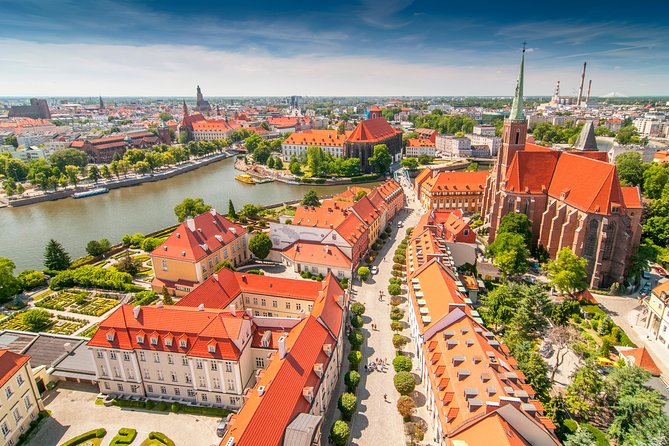
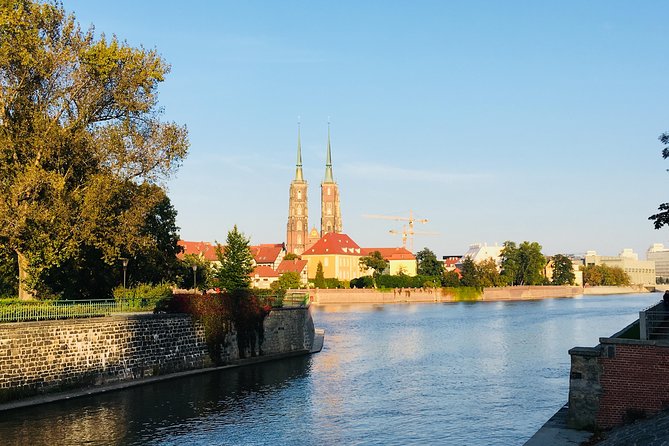
The final section takes you to Ostrów Tumski, or Cathedral Island, described here as the oldest part of Wroclaw. Despite its name, it is best understood as a historic quarter shaped by churches, convents, and other Catholic institutions.
The walk ends at the Cathedral of St. John the Baptist on Plac Katedralny 18. You are not returned to Rynek. That matters when planning the rest of your day, especially if you have a dinner reservation, train to catch, or hotel on the other side of the center.
The cathedral stop lasts about 15 minutes. Here the guide explains the beginnings of Christianity in Poland and the severe damage the building suffered during World War II. That combination gives the stop real weight. You see an important religious building, but you also learn how war altered Wroclaw’s buildings and identity.
Cathedral Island has a different mood from the Market Square. Rynek is civic and commercial, while this quarter feels quieter and more religious. Ending here gives the tour a strong sense of progression, from the public center of the medieval city to its oldest spiritual district.
One practical weakness is that the guide’s formal role may end outside the cathedral. If you do not know the area, save the cathedral address before you set out and keep your phone ready for directions afterward. The end point is easy to identify, but it is not the same place where you began.
How Much History Fits Into Two Hours
This is a history-led tour, not simply a procession of photo stops. The best guides use maps, historical photographs, and old images to show how Wroclaw changed over time. That approach is particularly useful here because modern streets can conceal earlier city plans.
You should expect a broad introduction rather than a specialist lecture on one period. The walk aims to connect roughly 1,000 years of local events with the buildings around you. The result is useful if you are arriving in Wroclaw for the first time and want a framework for later independent exploring.
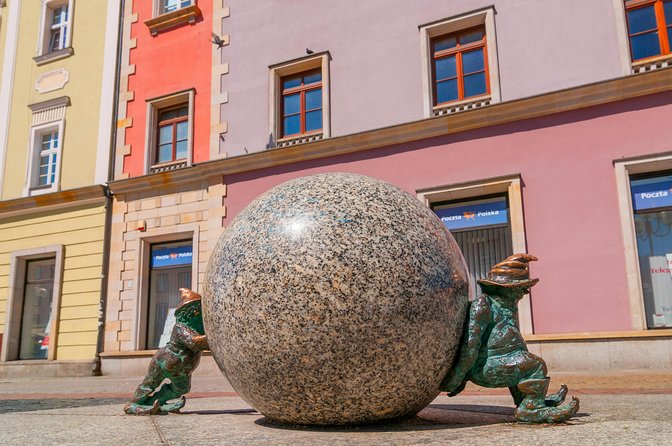
The gnomes of Wroclaw may also enter the walk. One account specifically notes monuments, churches, and gnomes, so keep an eye out as you move through the center. They add a playful layer to an otherwise serious route.
The strongest feedback centers on the guides’ ability to explain a great deal in a short time without making the walk feel overloaded. That is a real skill. The pace needs to be brisk enough to cover the route but relaxed enough for photographs and questions.
You should still be realistic about the format. With a group of up to 30, you may not get a long personal conversation at every stop. Smaller groups can feel more flexible, and one booking even became a very personal experience because it included only a couple. The standard group, however, is likely better value for the price.
Is $42.33 Good Value for Wroclaw?
At $42.33 per person, this is not the cheapest way to see Wroclaw’s center. You can walk around Rynek and Cathedral Island without paying for entry, and many façades can be admired independently.
The fee pays for something different: a local expert who organizes the route, explains the city’s changing past, and keeps you moving between sights. You also save the time required to research the City Hall, Salt Square, Hansel and Gretel Houses, University, Market Hall, and Cathedral on your own.
I see the value most clearly if you have only a short stay. In roughly two to two hours 40 minutes, you cover a large section of the historic center and finish in a part of town worth exploring further. The walk can also give you restaurant ideas and a better sense of where to return later.
The value is less clear if you prefer to set your own pace, spend an hour inside each building, or avoid group walks. Admission is not included for paid attractions, and the tour is chiefly about seeing the city and hearing its story from the streets.
Group discounts may make the price more appealing for families or larger parties. Tips are not included, so plan for that separately if the guide provides the level of service you feel deserves it.
Pace, Weather, and What to Wear
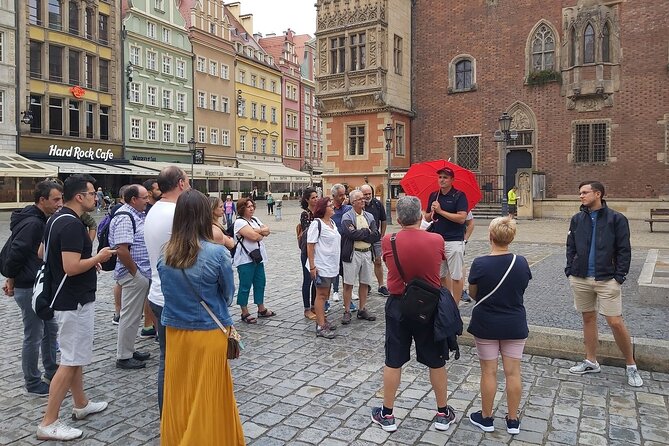
The tour is described as a walking experience with a moderate length and a route through the Old Town. Wear comfortable shoes. Even a gentle city walk can become tiring when you are standing at several stops and moving over historic streets.
The walking itself is not described as strenuous, and one account calls it a not-too-demanding way to see the center. Still, the total time can stretch close to two hours 40 minutes. A coffee or bathroom pause may be included, but do not rely on that as a substitute for preparing properly.
Good weather is required. If poor weather causes cancellation, you are offered another date or a full refund. This policy makes sense for an outdoor tour, but it means you should keep some flexibility in your schedule.
You can cancel for a full refund up to 24 hours before the start time. Changes or cancellations inside that 24-hour window are not accepted for a refund. The experience also requires a minimum number of participants, so a cancellation for that reason leads to another date, another experience, or a full refund.
The meeting point is near public transportation, and service animals are allowed. Most people can take part, but the experience remains a continuous city walk, so consider your own comfort with walking and standing.
Who Will Get the Most From This Walk?
I would choose this tour as an opening activity in Wroclaw. It gives you a clear mental map and places the main Old Town sights in context before you return to them alone.
It suits you especially well if you:
- Have two or three hours for a first look at the city
- Enjoy history, architecture, and stories about changing borders
- Want an English-speaking guide
- Prefer walking to using a bus or car
- Like a structured route with no map work
- Want restaurant and local-area suggestions during your stay
It may not suit you if you want extensive interior visits, a private guide, or a very slow photography walk. The route covers many landmarks, but the short stops mean you will not study every building in detail.
The tour can work for families and mixed-age groups, provided everyone is comfortable walking. It is also a sensible choice after arriving in Wroclaw, since the route covers the central sights without requiring you to master public transport.
Should You Book the Wroclaw Old Town Guided Walking Tour?
I would book it if you want a strong first orientation and enjoy history delivered through stories rather than a dry list of dates. The best part is the guide’s ability to link old photographs, maps, buildings, war damage, religion, and daily life into one moving walk.
The price is fair for the amount of ground covered and the English-language guidance, particularly if you are in Wroclaw for a short visit. The main cautions are the possible 30-person group, the weather requirement, and the fact that you finish at Cathedral Island rather than returning to Rynek.
Book this tour early if your schedule is fixed, since it is often reserved well ahead of the date. Choose it for context, efficient sightseeing, and a lively introduction to Wroclaw. Skip it only if you would rather explore independently and spend your time inside individual monuments.
FAQ
Where does the Wroclaw Old Town Guided Walking Tour start?
It starts at Rynek 30, 50-102 Wrocław, Poland, in the Market Square.
Where does the tour finish?
The tour finishes in front of Wroclaw Cathedral at Plac Katedralny 18, 50-329 Wrocław, Poland, in Cathedral Island.
How long does the walking tour last?
The experience lasts approximately two hours to two hours 40 minutes.
Is the tour offered in English?
Yes. The tour includes a friendly English-speaking guide and a local expert.
What sights are included on the route?
The route includes Wroclaw’s Old Town and Market Square, the late Gothic City Hall, Salt Square, the John and Margaret Houses, Wroclaw University, Market Hall, Cathedral Island, and St. John the Baptist Cathedral.
How many people can join the tour?
The maximum group size is 30 people.
Can I cancel for a full refund?
Yes. You can cancel at least 24 hours before the local start time for a full refund. Cancellations or changes made less than 24 hours before the start time are not refunded.
More Walking Tours in Wroclaw
- Group city tour (walking tour) through Wroclaw in German
★ 4.9 · 89 reviews - Best of Wroclaw 3-Hour History and Culture Walking Tour
★ 4.9 · 49 reviews - Legends of Old Town 1 Hour Walking Tour in Wroclaw (English)
★ 4.9 · 20 reviews - Wroclaw: City Walk and Cruise by Luxury Solar Catamaran
★ 4.8 · 6 reviews
Just added around Wroclaw
- Best of Wroclaw 3-Hour History and Culture Walking Tour★ 4.9 · 49 reviews
- From Wrocław: Świdnica Church of Peace Private Tour★ 4.7 · 3 reviews
- From Wroclaw: Polish Pottery and Jawor Church of Peace Tour★ 4.4 · 4 reviews
- Segway Tour Wroclaw: Full Tour (Old Town + Ostrów Tumski)★ 4.8 · 15 reviews
- Cathedral & Old Town★ 5.0 · 9 reviews
- Oder river cruise and walking tour of Wroclaw★ 4.8 · 5 reviews
- Night tour through Wroclaw★ 4.9 · 38 reviews
- Wrocław: Polish Craft Beer Walking Tour with Tastings★ 4.1 · 3 reviews
Old Town Walking Tours, compared.

Bike Tour of Old Town, Jewish Quarter and the Ghetto
Read our review →

Sightseeing EcoCruise around the Old Town of Gdansk
Read our review →
Browse the lists this tour appears in