
Reviewed · MUSEUMS
Gdansk: Private Communism Tour with Solidarity Center Museum
Gdańsk’s Solidarity story began not in a palace or parliament, but among shipbuilders who challenged a Communist regime from inside their workplace. This four-hour private tour connects the museum displays to the actual shipyard sites, including Sala BHP, where the Gdańsk Agreement was signed on August 31, 1980.
I like the skip-the-line entry to the European Solidarity Centre, and I like having a guide explain people such as Lech Wałęsa and Anna Walentynowicz instead of leaving you to decode a large museum alone. The main consideration is scheduling: Gdańsk Shipyard is closed on Saturdays and Sundays, so the full itinerary works best on a weekday.
Key points to know
- The European Solidarity Centre: See the original 21 Postulates and follow the movement from strikes to the 1989 round table talks.
- Sala BHP: Visit the building where the Gdańsk Agreement was signed in 1980.
- The shipyard setting: Walk through the place where 17,000 shipbuilders began civil resistance against Communist rule.
- A private guide: Choose English, German, Polish, or Russian, with French provided by guide Małgorzata according to the available guide experience.
- Old Town pickup: Hotel pickup and drop-off are included for accommodations within 1.5 kilometers of the meeting point.
- A small PRL ritual: The four-hour tour ends with a shot of traditional Polish vodka.
Why Gdańsk is the right place to study Communism
Gdańsk gives this subject a human scale. You are not only looking at dates on a museum wall. You are walking through the shipyard where workers organized strikes, made demands, and forced the authorities to negotiate.
The key date is August 31, 1980. On that day, representatives of the striking workers and the Communist government signed the Gdańsk Agreement. The deal allowed the creation of an independent trade union, later known as Solidarity, and marked a major break with political life in the Eastern Bloc.
The movement did not produce instant freedom. Martial law followed in 1981, and the Communist government continued to restrict opposition. Yet Solidarity survived underground and returned to public life during the 1989 round table talks. Poland then held its first pluralistic election since 1947, helping set off political change across Eastern Europe.
A good guide makes this sequence easier to grasp. I would especially value the private format if you are unfamiliar with Poland’s Communist period, since the same event can mean different things depending on whether you know about labor rights, censorship, Catholic opposition, or the wider Cold War.
A few more Gdansk trips to weigh up
- Gdansk Private WWII Tour with Museum of the Second World War
★ 4.9 · 22 reviews - From Gdansk: Stutthof Concentration Camp Museum Day Tour
★ 4.9 · 4 reviews - Stutthof Concentration Camp and Museum of WWII: Private Tour
★ 4.7 · 3 reviews
Starting beneath the 1970 shipyard monument
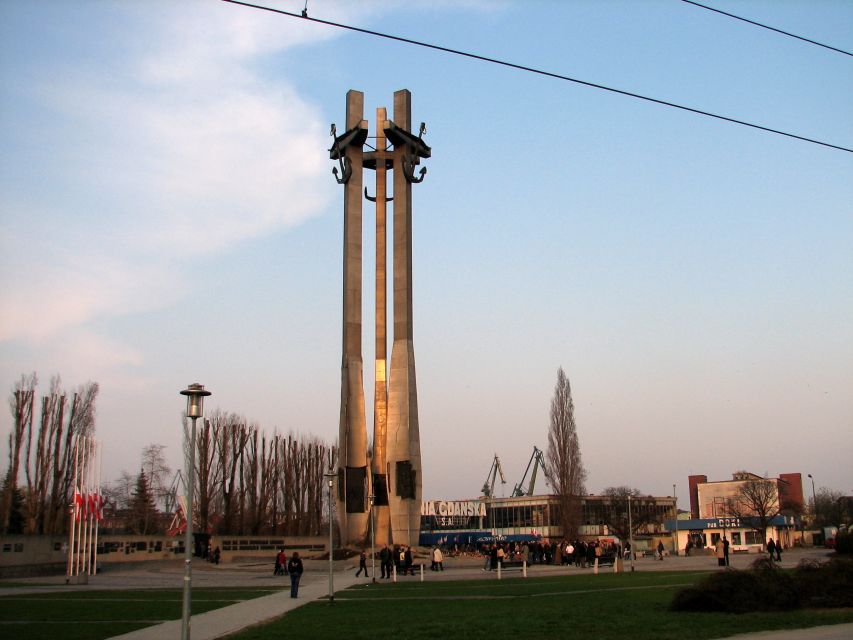
The meeting point is beneath the Monument to the Fallen Shipyard Workers of 1970 at Plac Solidarności. This is an effective place to begin because it introduces the cost of protest before you enter the museum.
The monument honors shipyard workers killed during protests in December 1970. The tragedy belongs to an earlier wave of unrest, but it helped shape the anger and memory that later fed the 1980 strikes. Your guide can connect the two moments, showing that Solidarity did not appear out of nowhere.
If your accommodation is in Gdańsk Old Town and within 1.5 kilometers of the meeting point, the guide can pick you up and return you there by car. Give the accommodation address when booking if you want this arrangement. If you do not, meet the guide at Plac Solidarności.
The pickup limit matters. A hotel farther away is not automatically covered, and the route may be adjusted if the address falls outside the stated area. Check your email the day before for the final meeting details.
Reading the 21 Postulates at the European Solidarity Centre
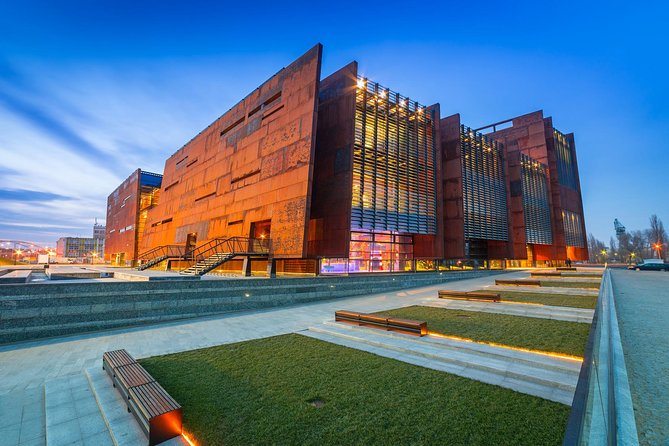
The European Solidarity Centre is the main indoor stop. Skip-the-line entry saves time, but the real benefit is having a private guide help you sort the material into a clear story.
One of the most important objects is the original list of 21 Postulates. These were the workers’ written demands during the 1980 strike at the Lenin Shipyard, now called Gdańsk Shipyard. The requests addressed practical workplace concerns as well as wider civil rights and political freedoms.
Seeing the actual document helps explain how a labor dispute grew into a national movement. The workers were not simply asking for higher pay. Their demands challenged the state’s control over unions, public speech, and civic life.
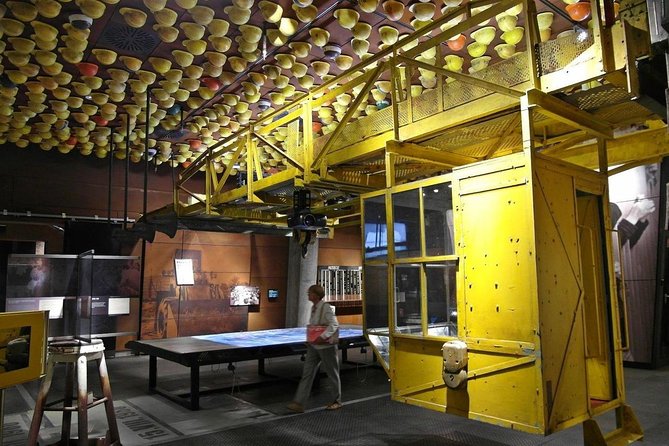
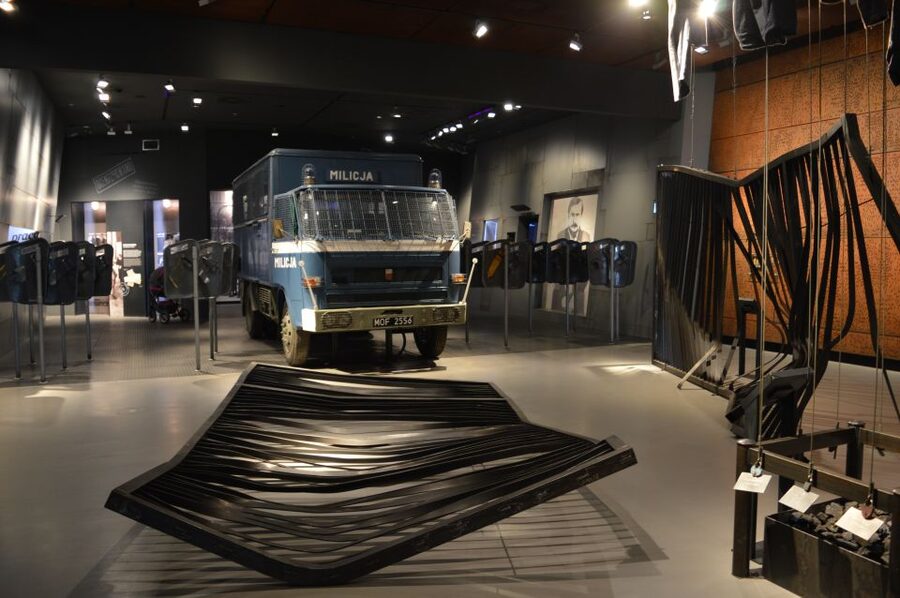
Inside the museum, you can follow the movement through strikes, official pressure, opposition activity, and the 1989 round table talks. Photographs and documents bring the period closer, while the guide supplies the connections between individual events.
The museum also introduces the people behind the movement. Lech Wałęsa is the best-known name, but Anna Walentynowicz and other organizers are essential to the story. A private guide can give more attention to the figures and episodes that interest you, instead of forcing the whole group to follow one pace.
The museum is modern and substantial, so a guide is useful even if you normally prefer to explore museums alone. Four hours gives you time for the museum and outdoor sites, but you should not expect to study every display at length. The tour is designed to identify the most important material and explain its setting.
Solidarity Square and the memory of 1970
After the museum, the tour moves into Solidarity Square. Here, the monument to the fallen shipyard workers becomes more than a meeting point. It is a public reminder that the state’s use of force had not erased the workers’ grievances.
The three tall crosses and anchors are among Gdańsk’s best-known symbols of the Solidarity era. This is a place where the timeline becomes physical: the deaths of 1970, the strikes of 1980, and the movement’s later political impact all meet in one open square.
Your guide can also explain why public memorials mattered under Communist rule. Commemorating the dead was not just a private act. It was a way of preserving facts and honoring victims when official accounts were tightly controlled.
I would not rush this stop. The square is most useful when you pause to connect the monument with the objects you have just seen inside the European Solidarity Centre. Without that link, it can look like a quick photo stop. With it, the site carries much more weight.
Same country, a completely different kind of day:
- Gdansk: City Cruise on Historical Polish Boat
★ 4.8 · 2,913 reviews - Gdańsk: Sunset Cruise on a Historic Polish Boat
★ 4.9 · 977 reviews - Gdańsk City Sights & History Guided Walking Tour in English
★ 4.8 · 876 reviews - Gdansk: Firearm Shooting Experience with Instructor
★ 4.8 · 866 reviews
Sala BHP and the document that changed Poland
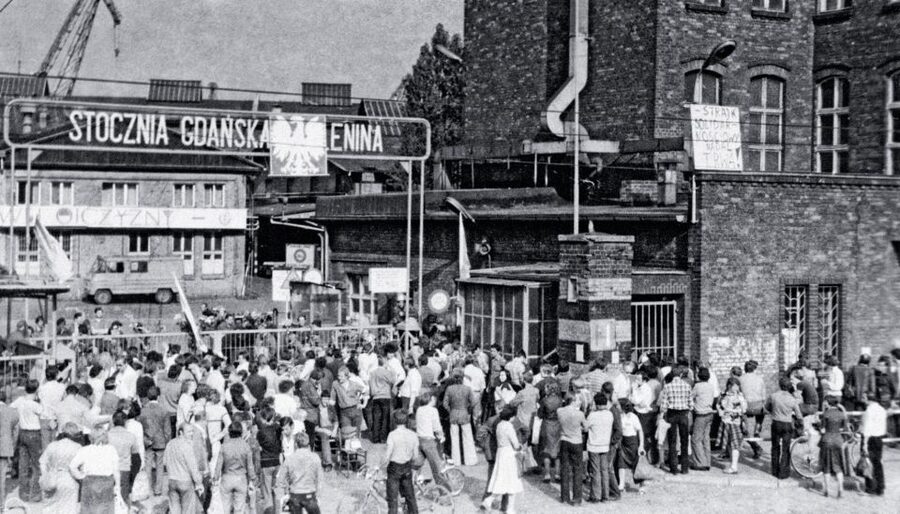
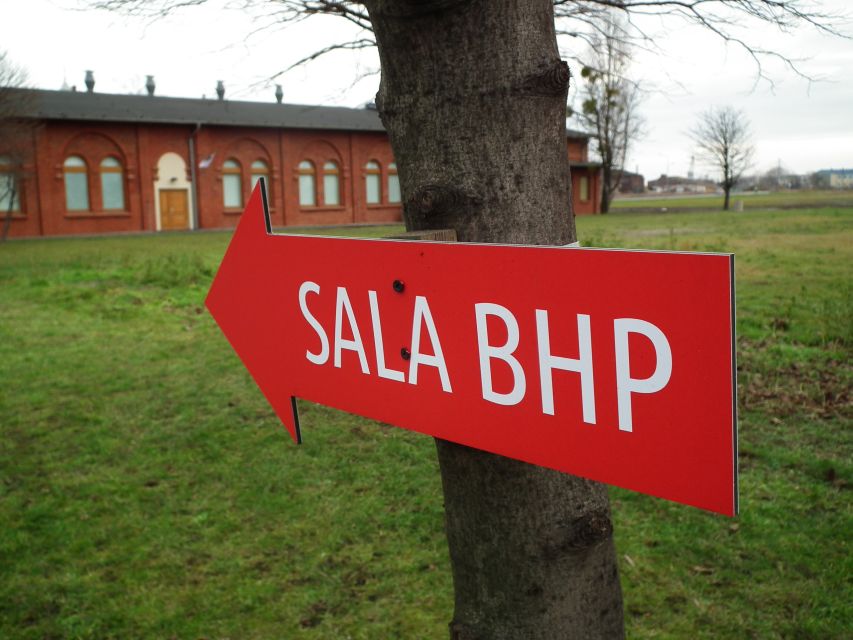
The four-hour option includes Sala BHP, the former Center of Worker Protection of the Gdańsk Shipyard. This is where the Gdańsk Agreement was signed on August 31, 1980.
For me, this is one of the tour’s most valuable stops because it places you in the room connected to the agreement itself. The museum explains the movement in a polished, organized way. Sala BHP gives you the setting where negotiation actually happened.
The building’s importance comes from what took place there, not from grand decoration. Workers and government representatives faced one another while Poland watched. The agreement allowed an independent trade union to operate, a major concession in a Communist state.
A private guide is particularly helpful here. The document can seem abstract if you only hear that it was signed. The guide can explain what the agreement meant for shipyard workers, how it affected the authorities, and why the result reached far beyond Gdańsk.
Access to Sala BHP is included only in the four-hour option. If you are comparing the shorter version with this one, this is one of the clearest reasons to choose the longer tour.
Walking through Gdańsk Shipyard
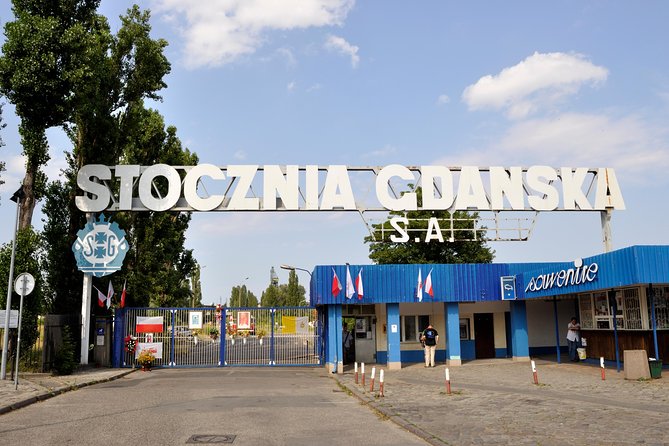
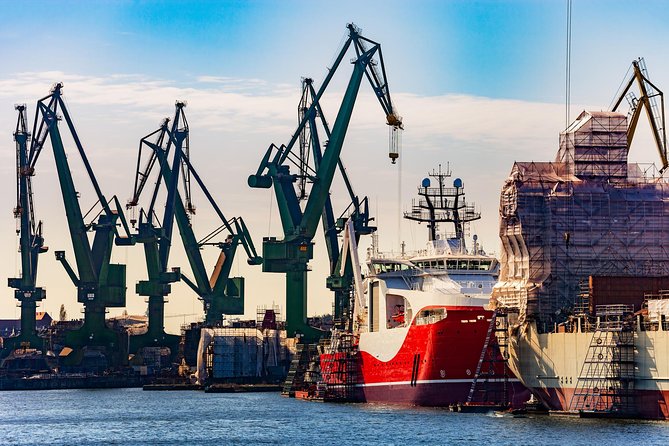
The final main stop is Gdańsk Shipyard, known in Polish as Stocznia Gdańsk. This is where about 17,000 shipbuilders began civil resistance against the Communist regime in 1980.
The shipyard is not simply a museum compound frozen in time. The area is changing, and that makes a guide valuable. A French-speaking guide named Małgorzata is described as knowing the site’s history and its changing layout particularly well. Guide availability can vary, but the tour offers English, German, Polish, and Russian.
The outdoor portion also gives you a better sense of scale. A display case can show a document, but a shipyard shows the setting in which thousands of workers could act together. That physical context is central to understanding why the strikes mattered.
Expect some walking between the shipyard sites. The tour includes car transport, but it is not a ride-only experience. Wear comfortable shoes and allow for outdoor conditions. The supplied information confirms wheelchair accessibility, though the shipyard is a changing industrial area, so it is sensible to confirm any specific mobility needs before booking.
The shipyard is closed Saturdays and Sundays. This is the most important scheduling restriction. A weekend booking may require a changed route, so choose a weekday if seeing the full shipyard and Sala BHP is essential to you.
The private format and the guide’s role
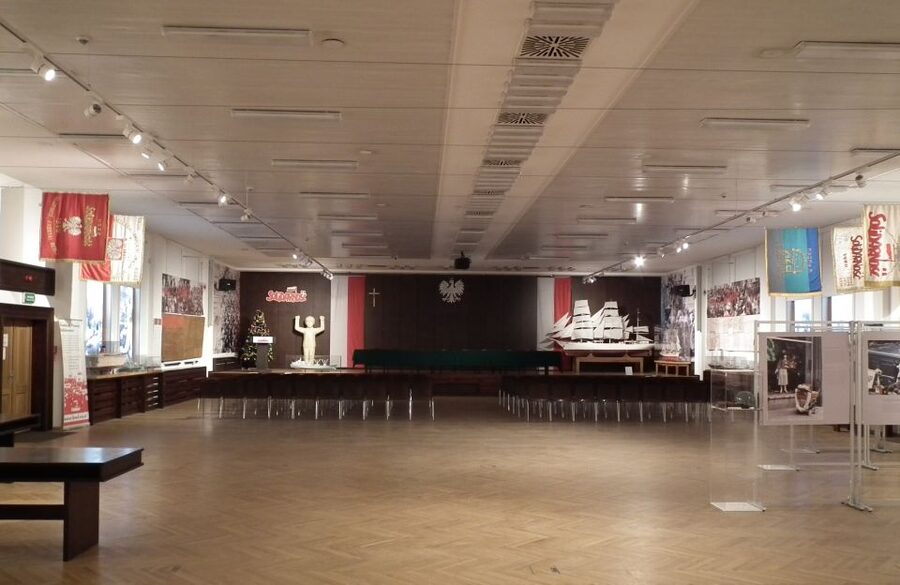
This is a private tour with a licensed history guide, not a general sightseeing walk with a few Communist-era facts added on. That distinction matters.
The subject includes names, organizations, political changes, and several overlapping periods. A guide can stop to explain a term such as PRL, the common abbreviation for the Polish People’s Republic, or clarify why the 1980 agreement was so important even though full political change came later.
The guide can also adjust the emphasis. If you want more on everyday life under Communism, ask for it. If you are most interested in the shipyard strikes, the 1989 election, or the role of Lech Wałęsa and Anna Walentynowicz, say so early.
The available languages are English, German, Polish, and Russian. The guide Małgorzata has led the experience in French, with especially strong command of the subject and language noted in the supplied guide information. If language is central to your booking, confirm the requested language and guide assignment in advance.
Private does not always mean a tiny outing for only two people. One German-language booking involved a group of 18, so ask about the arrangement if you are booking for a large party. The private format does mean your group receives its own guide rather than being combined with unrelated groups.
Is $184 per person a fair price?
At $184 per person, this is not a cheap way to fill four hours in Gdańsk. Its value depends on how much you want from the subject.
The price includes hotel pickup and drop-off in the defined Old Town area, a private Communist-themed tour, a licensed guide, skip-the-line entry to the European Solidarity Centre, and the four-hour entries to Sala BHP and Gdańsk Shipyard. A traditional Polish vodka shot is also included in the longer version.
If you would otherwise buy museum entry, arrange transportation, and hire a private guide separately, the package can make financial sense. It is especially useful for couples, families, or small groups who want direct explanations rather than a large group schedule.
The value is weaker if you only want to see the European Solidarity Centre. The museum can occupy much of your attention, and the shorter option may suit you better if you do not need Sala BHP or the shipyard.
For a group, compare the total cost rather than looking only at the per-person figure. One guide for a private party may be worthwhile when several people are sharing the experience, particularly if the group includes people with different levels of background knowledge.
Small practical details that affect your day
The stated duration is four hours, and starting times depend on availability. Plan around the weekday shipyard closure rather than treating the schedule as flexible.
Pickup is limited to Gdańsk Old Town accommodations within 1.5 kilometers of the meeting point. Outside that zone, the itinerary may change. If you prefer certainty, use the listed meeting point beneath the 1970 monument.
You can cancel up to 24 hours in advance for a full refund, and the reserve-now, pay-later option lets you keep plans open without paying at the time of booking. These terms are helpful when your Gdańsk schedule may shift, but you should still check the final email the day before.
The vodka tasting is brief, not a separate food or drink activity. Think of it as a small nod to PRL-era tradition at the end of a serious historical tour. If you do not drink alcohol, confirm how the stop can be handled before you go.
Who should book this Gdańsk history tour?
I would recommend it most strongly to anyone who wants the political story behind Gdańsk rather than only its old streets and waterfront. It suits first-time visitors who want a clear introduction to Poland’s road from Communist rule toward democracy.
It is also a good choice for people with a family connection to Poland, Cold War history, labor movements, or Eastern European politics. The museum, monuments, documents, and shipyard sites work together better than any one stop alone.
The tour is less suitable if you prefer unstructured museum time, dislike guided interpretation, or only have a short window in Gdańsk. At four hours, it asks for a serious block of your day. The shipyard closure on weekends may also be a dealbreaker.
The guide quality is central to the experience. Kevin’s booking praised the guide’s strong command of the subject, while the German-language group of 18 found its guide’s personal stories clear and entertaining. Małgorzata’s French-language tour is noted for strong explanations in both French and the history of the shipyard. These details suggest that guide selection and language matching matter as much as the route.
Should you book it?
Book this tour if you want the Solidarity story explained at the places where it happened, and if you value private transport and a guide who can answer questions. The European Solidarity Centre alone is worthwhile, but Sala BHP and Gdańsk Shipyard give the history a stronger sense of place.
I would choose the four-hour weekday version, arrive ready to walk, and provide your Old Town accommodation address when booking. Skip it if you only want a quick museum visit or if $184 per person is beyond your budget. For anyone serious about understanding modern Gdańsk, this is a focused and useful way to spend half a day.
FAQ
How long does the Gdańsk Communism tour last?
The featured option lasts four hours. Availability depends on the starting time you select.
What is included in the four-hour option?
It includes hotel pickup and drop-off within the stated Gdańsk Old Town area, a private tour, a licensed history guide, skip-the-line entry to the European Solidarity Centre, entry to Sala BHP and Gdańsk Shipyard, and a shot of traditional Polish vodka.
Where does the tour meet?
The meeting point is beneath the Monument to the Fallen Shipyard Workers of 1970 at Plac Solidarności, 80-001 Gdańsk.
Is hotel pickup available?
Yes, pickup is available from accommodations in Gdańsk Old Town within 1.5 kilometers of the meeting point. If you provide your address when booking, the guide can meet you there. Otherwise, meet at the specified meeting point.
Is Gdańsk Shipyard open every day?
No. Gdańsk Shipyard is closed on Saturdays and Sundays. The itinerary may need to change if you book on a weekend.
What languages are available?
The live guide service is available in English, German, Polish, and Russian. French-language guiding has also been provided, so confirm the language you need when booking.
Just added around Gdansk
- Guided Winter Kayak Tour in Gdańsk & Hot Chocolate Treat★ 5.0 · 51 reviews
- Gdansk Highlights Bicycle Tour★ 5.0 · 65 reviews
- Electric Scooter Tour: Old Town Tour – 1,5-Hour of Magic!★ 5.0 · 19 reviews
- Elblag Canal Tour from Gdansk★ 4.5 · 22 reviews
- #1 Polish Vodka Tasting Experience in Gdansk★ 5.0 · 87 reviews
- Delicious Gdansk Craft Beer Tour★ 5.0 · 4 reviews
- DAILY Stutthof Concentration Camp with Guide and Transport★ 4.5 · 10 reviews
- Cruises on the Motlawa River★ 4.5 · 66 reviews
Museums, compared.
Auschwitz-Birkenau Museum and Memorial Guided Tour from Krakow
Read our review →
POLIN Museum of the History of Polish Jews Ticket
Read our review →


Krakow Schindler’s Factory Museum Guided Tour in English
Read our review →
Auschwitz Birkenau Museum Guided Tour with Pickup
Read our review →
Browse the lists this tour appears in